


This post may contain affiliate links. If you buy through them, we may earn a small commission at no extra cost to you.
The rucking vs running question comes up the moment someone realises walking with weight raises their heart rate as much as a slow jog. Both build aerobic fitness. They cost your joints, your calendar and your recovery very different amounts, and the right answer depends on which of those you have least of.
This is not a verdict piece. It is seven honest comparisons, so you can pick the one that fits your body and your week, or combine them without wrecking yourself. If you are new to loaded walking entirely, start with our rucking guide for beginners and come back once you have four weeks under a pack.
Table of Contents
The Short Answer
Run if you want the fastest aerobic gains per hour and your joints tolerate impact. Ruck if you want most of that aerobic benefit with a fraction of the impact, plus carrying strength that running does not build. Do both if your week has room, which for most people means two runs and two rucks rather than four of either. If neither appeals, soft hiking is the third door into the same room.
The honest summary is that running is more efficient and rucking is more forgiving. Everything below is a variation on that trade.
Rucking vs Running: 7 Ways to Choose
1. Your Joints
Running lands each stride with two to three times your body weight through the ankle, knee and hip. Rucking never leaves the ground, so even carrying 30 pounds the peak load through a joint is lower than an unloaded run. If your knees complain after a 5k, that is the whole argument, and it is why so many people move to loaded walking in their forties rather than quitting. The long term picture in what distance does to the body is worth reading before you decide impact is free.
2. The Time You Actually Have
Running wins on efficiency. Thirty minutes of running does more for your aerobic base than thirty minutes of rucking, because you cover more ground at a higher intensity. Rucking needs 45 to 90 minutes to produce a comparable training effect. If your window is genuinely half an hour, run. If you have an hour and would rather not be wrecked afterwards, ruck.
3. What You Are Training For
If the goal is a road race, run: nothing prepares you for running except running. If the goal is a multi day hike, a big pack and a long day on your feet, rucking is the specific training and running is the general fitness. Anyone building toward a first backpacking trip gets more transfer per hour from a loaded walk.
4. The Ground You Have
Rucking works anywhere you can walk: pavement, a park loop, a hill behind the house, an airport terminal at a push. Running on hard pavement is where most running injuries come from, so if the only surface near you is concrete, weight on your back at walking pace is kinder than repeated impact. If you have soft trail nearby, trail running removes much of that objection, and the right footwear removes a good deal of the rest.
5. Injury History and Coming Back
Rucking is the better return path after most lower limb injuries, because you control the load precisely and there is no flight phase to land from. Start at 10 pounds and short, and add one variable a week. It is also the better option while carrying a niggle you do not want to turn into a real problem, which running has a habit of doing.
6. Whether You Want Company
A rucking pace is a talking pace, so you can bring anyone of any fitness level and adjust with weight rather than speed. Two runners of different abilities cannot run together comfortably; two ruckers can, because the faster one just carries more. That is a bigger factor in staying consistent than most training advice admits.
7. What Your Week Already Holds
If you already lift twice a week, rucking stacks better: it does not fight your legs for recovery the way running does. If your training is otherwise all strength work and you need a cardio stimulus in the least time, running is the more efficient addition. Look at the whole week rather than the single session.

What Each One Does To Your Body
Heart and Lungs
Both raise your heart rate into the aerobic zone and both improve it. Running gets you there faster and higher; rucking holds you in the low to middle of the zone for longer. For general health the total time in the zone matters more than how you got there, which is the quiet reason rucking works so well for people who dislike running.
Legs, Back and Posture
Rucking loads your calves, glutes, spinal erectors and traps in a way running does not, because you are holding a mass upright for an hour. That is carrying strength and it is exactly what a heavy pack on day three of a trip asks for. Running builds more in the way of elastic strength and running specific economy, which does not transfer backwards. Carrying strength is the half that shows up when you shoulder a loaded backpacking pack.
Impact and Joints
This is the clearest difference. Running is a series of controlled landings; rucking has no landings at all. The trade off is that rucking compresses the spine under sustained load, so form matters: stand tall, keep the weight high in the pack, and stop when your posture goes rather than when your legs do.
Calories, Honestly
Running burns more per minute. Rucking closes much of the gap because you do it for longer and the load raises the cost of every step, and it leaves you far less depleted afterwards, so you are more likely to do it again on Thursday. Consistency beats intensity over a season, and the fuel rules in our hiking nutrition guide apply to both.
Doing Both Without Breaking Yourself
A Workable Week
Two runs and two rucks, with the hard run and the heavy ruck separated by at least 48 hours. Keep one of the four genuinely easy. Most people who get hurt combining the two do it by making all four sessions moderately hard, which is the least productive way to train and the most reliable way to accumulate fatigue.
Order Matters
Put the run before the ruck when they fall on consecutive days. A heavy ruck leaves your calves and lower back stiff enough to change your running gait the next morning, and running with an altered gait is how people find out about their achilles. In the other order there is no such problem.
Signs You Are Doing Too Much
Shin soreness that does not clear overnight, a resting heart rate creeping up week on week, and losing interest in sessions you used to look forward to. Drop one session, keep the easy ones, and reassess in a fortnight. The same fatigue signals show up when training for elevation at sea level.
The Kit Each One Needs
For Rucking
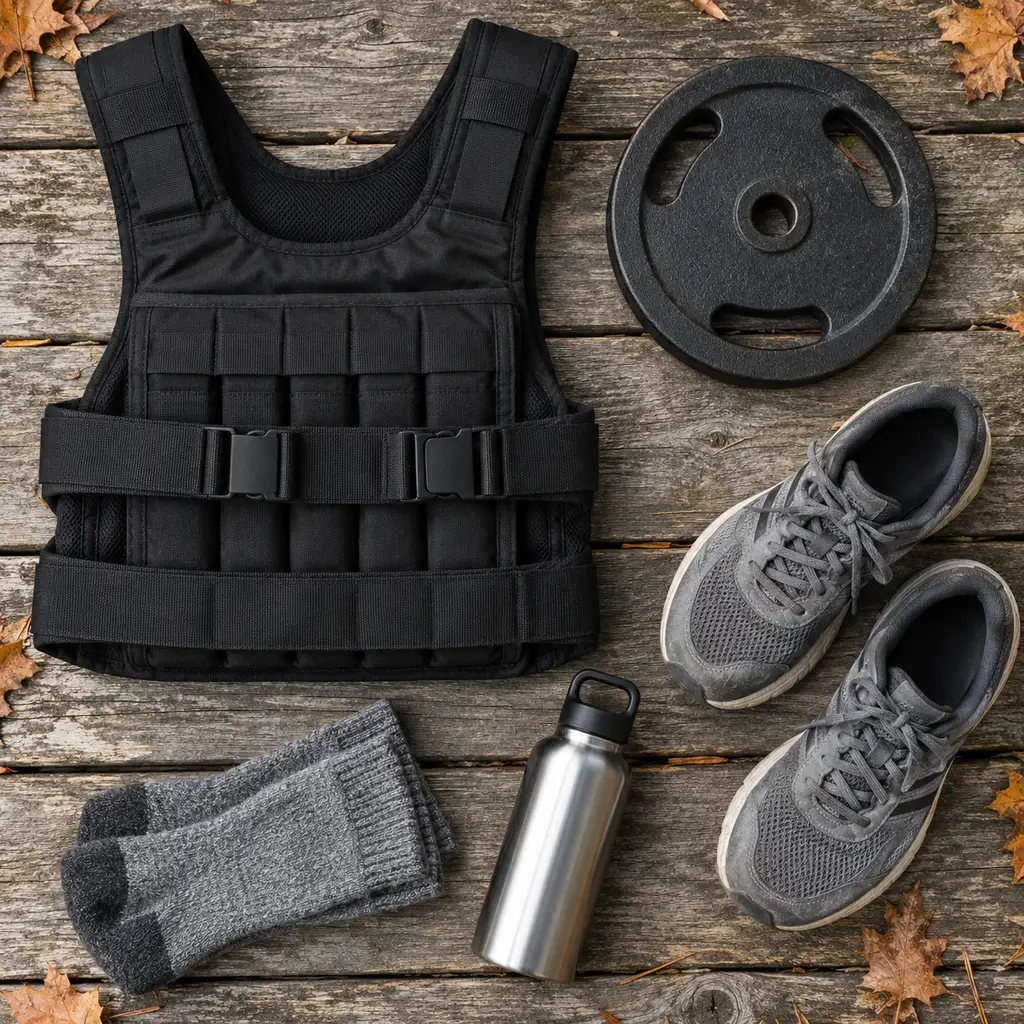
A pack that holds weight high, a plate or something dense to fill it, and shoes you can walk in for an hour. If you would rather carry the load on your chest and back than on your shoulders alone, a weighted vest is the alternative. Budget: the ZELUS weighted vest starts at 6 pounds and is the cheapest honest way to try it. Mid range: the ERIC FLAG 40 lb adjustable vest scales from empty to 40 pounds. Purpose built: the GORUCK rucking weighted vest is curved for walking rather than lifting. Our round up of the best weighted vests for rucking compares six, and the pack round up covers the other way of carrying it.
For Running
Shoes, and after that very little. Road shoes for pavement, trail shoes for anything softer or steeper, and socks that are not cotton. If you run in the dark from here into winter, add a headlamp and take the advice in our after dark guide seriously.
Shared
Layers you can move in, which is the same problem as layering for hiking, and water. Autumn tempts people to under drink because they are not hot, and the numbers in our hydration guide do not change just because the weather did.
Common Mistakes
- Treating a ruck as a run with a bag on. If you are jogging under load, the weight is too light or the plan is wrong.
- Starting both at once, at volume, in the same week. Add one, hold it for a month, then add the other.
- Carrying the weight low in the pack, which turns an hour of walking into an hour of lower back work. See how to load a pack properly.
- Running the day after the heaviest ruck of the week, on stiff calves and a tired lower back.
- Comparing calorie numbers instead of comparing what you will actually keep doing in November.
- Skipping the easy session because it feels pointless. The easy session is what lets the hard ones happen.
A Week That Includes Both
A template for someone with a base of four weeks under a pack and the ability to run 5k comfortably.
| Day | Session | Effort | Notes |
|---|---|---|---|
| Monday | Ruck, 45 minutes | Easy | 20 lb, flat, conversational |
| Tuesday | Rest or strength | Legs stay fresh for Wednesday | |
| Wednesday | Run, 30 minutes | Moderate | Steady, not a race |
| Thursday | Rest | ||
| Friday | Ruck, 60 to 75 minutes | Moderate | 25 lb, add a hill |
| Saturday | Run, 20 minutes | Easy | Short and genuinely easy |
| Sunday | Long walk or rest | Easy | Unloaded, on your feet |
Hold that for a month before changing anything. If it feels too easy in week three, add ten minutes to the Friday ruck rather than adding a session, and take it onto real ground for an autumn day hike when the week allows.
Frequently Asked Questions
Is rucking as good as running for cardio?
Per hour, no. Per unit of joint stress and per session you will actually complete, often yes. Rucking holds you in a lower aerobic zone for longer, which builds a very similar base if you give it the extra time.
Can rucking replace running entirely?
For general fitness, hiking and health, comfortably. For running performance, no: if you want to race a 10k you have to run. Many runners use rucking as their easy volume and keep two proper runs a week.
Which burns more calories, rucking or running?
Running burns more per minute. A long ruck can match or beat a short run in total, because the sessions are longer and the load raises the cost of each step. Neither is a shortcut, and both are beaten by consistency.
Can I run with a weighted vest?
You can, and mostly you should not. Adding load to the flight phase multiplies impact through your knees and achilles, which is the opposite of why most people took up rucking. Save the weight for walking and run unloaded.
How long before rucking makes a difference?
Three to four weeks at three sessions a week is when most people notice the hills feel shorter and a pack sits more comfortably. Visible changes take longer, as they do with anything.
The rucking vs running answer for most people is not one or the other but a ratio, and the ratio should follow your joints and your calendar rather than anyone’s opinion. Start with whichever you will do on a wet Tuesday in November, and add the other when that one is a habit. Our beginner rucking guide covers the first month under a pack, and poles make the hilly version of either one kinder on the knees.
Discover more from Maive Verse
Subscribe to get the latest posts sent to your email.