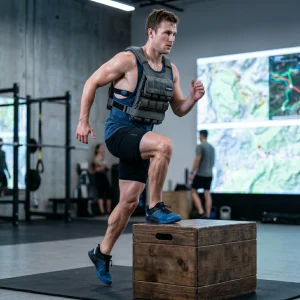
Master training for elevation from sea level. Learn 11 technical rules, including cardiovascular protocols, eccentric quad conditioning, and hypoxic science.
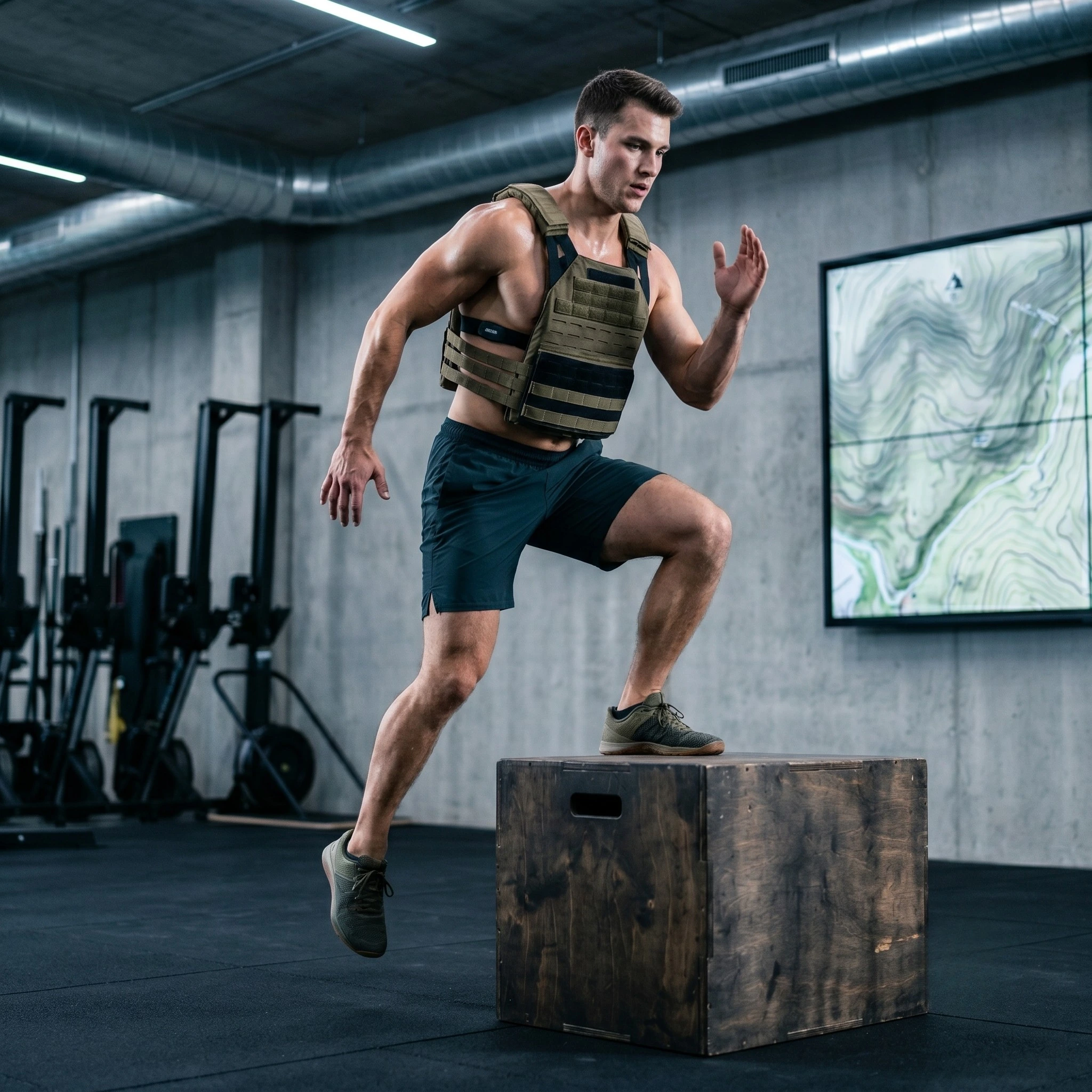
Table of Contents
Introduction: The Physiological Challenge of Hypoxia
Developing a structured protocol for training for elevation is a critical requirement for any sea-level athlete preparing to ascend into high-altitude environments. When traveling above $5,000\text{ feet}$ ($1,524\text{ meters}$), the human body is subjected to a decrease in barometric pressure, which subsequently reduces the partial pressure of oxygen. Without proactive conditioning, this atmospheric shift leads to rapid physical exhaustion, cognitive decline, and potentially life-threatening altitude illnesses. For those who have already established a baseline conditioning routine through a Bikepacking Training Plan, adjusting for elevation demands an advanced understanding of respiratory and cardiovascular bioenergetics.
The objective of altitude preparation from sea level is to maximize the efficiency of the body’s oxygen transport and utilization systems. While a sea-level athlete cannot easily replicate the low-oxygen air of the mountains, they can manipulate specific variables—such as capillary density, stroke volume, and respiratory muscle strength—to compensate for the decreased pressure. This preparation is the physiological equivalent of the Bikepacking Mindset Guide required to overcome long-distance fatigue. This guide provides a detailed, data-driven analysis of 11 rules designed to prepare your body for high-altitude ascents.
The Science of Altitude: Understanding Hypoxia and Pressure Changes
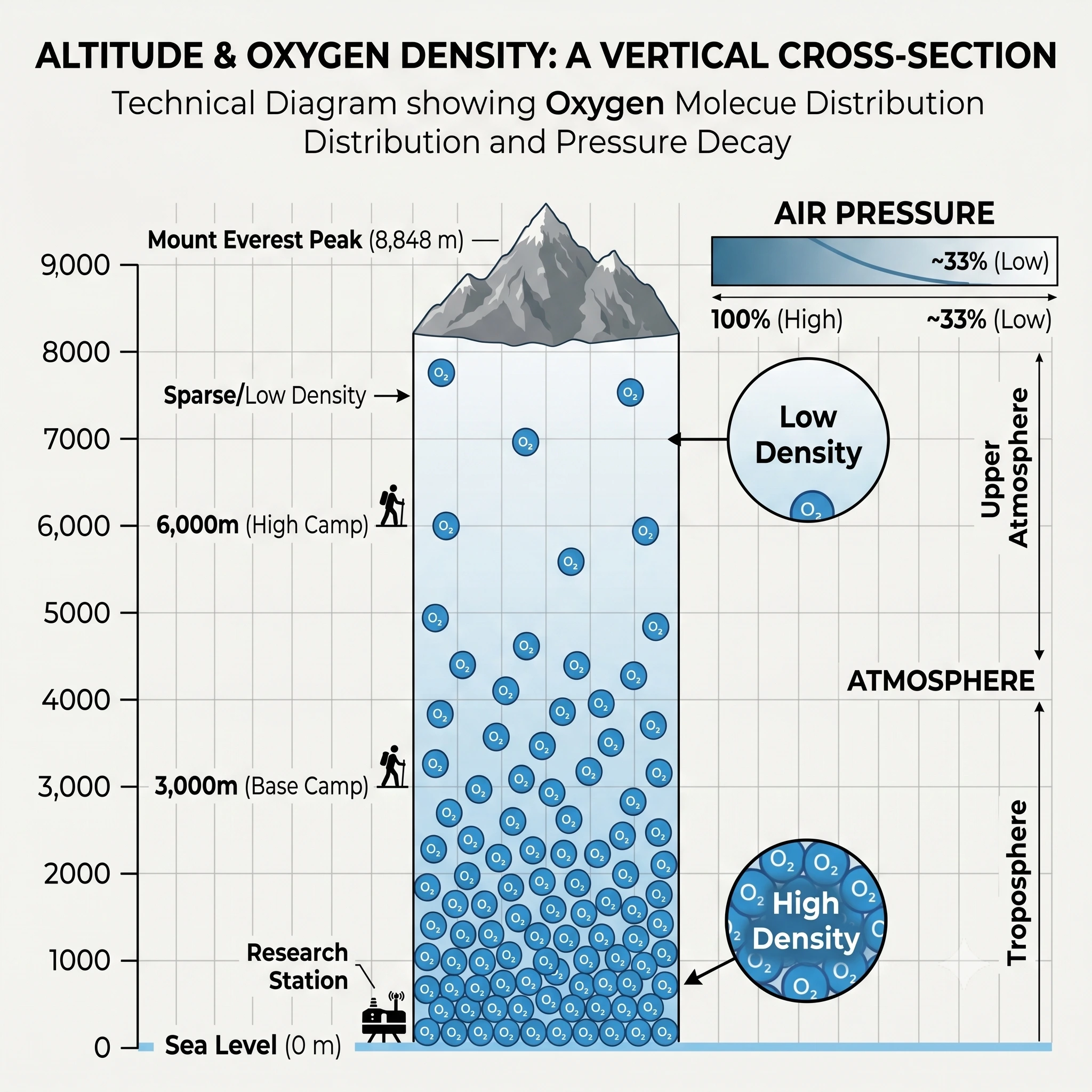
At sea level, the air consists of approximately $20.9\%\text{ oxygen}$, with a barometric pressure of $760\text{ mmHg}$. As elevation increases, the percentage of oxygen in the air remains constant at $20.9\%$, but the density of the air molecules decreases. This is a crucial distinction for understanding how to prepare for high-altitude climbs.
The Partial Pressure of Oxygen ($P_{\text{O}_2}$)
The decrease in barometric pressure directly reduces the partial pressure of oxygen ($P_{\text{O}_2}$) in the lungs. This relationship is governed by Dalton’s Law of Partial Pressures:$$P_{\text{O}_2} = (P_{\text{B}} – P_{\text{H}_2\text{O}}) \times F_{\text{O}_2}$$
Where:
- $P_{\text{B}}$ is the barometric pressure at a given altitude.
- $P_{\text{H}_2\text{O}}$ is the vapor pressure of water in the lungs ($\approx 47\text{ mmHg}$ at body temperature).
- $F_{\text{O}_2}$ is the fractional concentration of oxygen ($0.209$).
At sea level, the inspired $P_{\text{O}_2}$ is approximately $149\text{ mmHg}$. At $10,000\text{ feet}$ ($3,048\text{ meters}$), barometric pressure drops to $523\text{ mmHg}$, reducing the inspired $P_{\text{O}_2}$ to approximately $99\text{ mmHg}$. This significant drop reduces the pressure gradient between the alveoli in the lungs and the blood, slowing the rate of oxygen diffusion into the bloodstream.
Acute Mountain Sickness (AMS) and Arterial Saturation ($S_{\text{a}}\text{O}_2$)
When the oxygen diffusion rate slows, arterial oxygen saturation ($S_{\text{a}}\text{O}_2$) drops below the typical sea-level baseline of $98\%$. If $S_{\text{a}}\text{O}_2$ drops below $90\%$, the individual enters a state of hypoxia. This condition triggers Acute Mountain Sickness (AMS), characterized by headaches, nausea, peripheral edema, and sleep disruption.
To mitigate these risks, sea-level training must focus on increasing the volume of oxygen the blood can carry and the efficiency with which muscle cells extract that oxygen. This preparation ensures that even with a reduced gradient, the muscles receive sufficient fuel to navigate Difficult Routes safely.
Rule 1: Build a Superior Aerobic Engine (Zone 2 Cardio)
The most critical of all rules when training for elevation is the development of a massive aerobic base. Because high altitude reduces the maximum oxygen available, the body must be highly efficient at low-intensity power generation.

Low-Intensity Steady State (LISS) Mechanics
Aerobic base building relies on Zone 2 cardiovascular training, defined as $60\%\text{ to }70\%$ of an individual’s maximum heart rate. At this intensity, the body relies primarily on the aerobic energy system, using fat oxidation as the main fuel source.
Zone 2 training should be performed for 3 to 5 sessions per week, with a minimum duration of 60 minutes per session. This low-intensity volume is the foundation of long-distance stamina, a protocol also emphasized in our Soft Hiking Guide.
Capillary Density and Mitochondrial Biogenesis
The primary physiological adaptations of Zone 2 training are:
- Mitochondrial Biogenesis: An increase in the size and number of mitochondria (the cellular powerhouses) within the muscle fibers.
- Capillary Density: The growth of new microscopic blood vessels surrounding the muscle fibers, which reduces the diffusion distance for oxygen.
- Increased Myoglobin: An increase in the oxygen-binding proteins within the muscle cells, facilitating faster transport of oxygen from the cell membrane to the mitochondria.
These adaptations ensure that even when arterial oxygen saturation drops at high altitudes, the muscle cells can extract and utilize every available molecule of oxygen.
Rule 2: Maximize Oxygen Processing (VO2 Max and High-Intensity Intervals)
While Zone 2 build-up increases efficiency, High-Intensity Interval Training (HIIT) increases the absolute capacity of the cardiorespiratory system. A higher VO2 Max (the maximum volume of oxygen a person can utilize during intense exercise) provides a larger buffer when altitude reduces performance.

High-Intensity Interval Training (HIIT) Protocols
To elevate VO2 Max, the sea-level athlete must perform structured intervals that force the heart to operate near its maximum stroke volume. A highly effective protocol is the “4×4” interval format:
- Warm-up: 10 minutes of low-intensity movement.
- Interval: 4 minutes of high-intensity effort ($85\%\text{ to }95\%$ of maximum heart rate).
- Recovery: 3 minutes of active recovery (low-intensity walking or spinning).
- Repetitions: Repeat this cycle 4 times.
- Frequency: Limit this high-stress protocol to 1 or 2 sessions per week to prevent overtraining.
Enhancing Stroke Volume and Cardiac Output
During high-intensity intervals, the heart is forced to pump maximum blood volume per beat (stroke volume). This stretches the left ventricle over time, increasing its volume. The relationship between cardiac output ($Q$), stroke volume ($SV$), and heart rate ($HR$) is expressed by:$$Q = SV \times HR$$
By increasing stroke volume at sea level, the heart can deliver the same amount of oxygen to the muscles with fewer beats per minute at high altitudes, reducing the overall stress on the cardiovascular system. This cardiovascular efficiency is also a key objective of our Ski Fitness: 8-Week Plan.
Rule 3: Simulate Vertical Ascent (Progressive Overload and Incline Work)
Cardiovascular training is only part of the requirement; the muscles of the lower body must be conditioned for the specific mechanical demands of climbing. Sea-level athletes must use progressive overload on incline surfaces to build this localized muscular endurance.

The Weighted Pack Stair-Climbing Protocol
Stair climbing with a weighted pack is the most specific simulation of mountain hiking available at sea level. The movement targets the glutes, hamstrings, and calves in the identical planes of motion used on mountain trails.
- Progressive Load: Start with a light pack ($10\text{ lbs}$) and increase the weight by $2\text{ to }3\text{ lbs}$ weekly, up to a maximum of $25\%\text{ of body weight}$.
- Cadence Control: Focus on a slow, consistent step rate ($40\text{ to }50\text{ steps per minute}$) rather than sprinting. This matches the sustained output needed for high Bikepacking Routes.
Treadmill Incline and Step-Up Biomechanics
If stairwells are unavailable, the athlete should utilize a treadmill set to its maximum incline ($12\%\text{ to }15\%$) or perform weighted step-ups on a $12\text{-inch}$ box. The biomechanical focus must remain on:
- Neutral Pelvic Tilt: Avoid arching the lower back under the weight of the pack.
- Glute Activation: Drive through the heel of the stepping foot to engage the posterior chain, rather than relying solely on the quadriceps.
- Ankle Flexion: Ensure the ankle joint is fully engaged to build strength in the Achilles tendon.
Rule 4: Prepare the Lower Body for Eccentric Braking and Deceleration
While the climb is cardiovascularly demanding, the descent is what causes the most muscular damage and joint stress. The sea-level athlete must prepare their legs for the eccentric forces of walking downhill.

Eccentric Loading and Quadriceps Conditioning
When walking downhill, the quadriceps must contract while lengthening to slow the body’s descent. This is known as an eccentric contraction, and it causes significantly more microscopic muscle tear (and subsequent soreness) than concentric climbing.
- Tempo Squats: Perform squats with a slow, controlled $5\text{-second}$ eccentric (lowering) phase, followed by a fast $1\text{-second}$ concentric (rising) phase.
- Weighted Step-Downs: Stand on a box and slowly step down to touch the heel of one foot to the floor before rising back up using only the standing leg.
Stabilizing the Patellofemoral Joint and Core
The repetitive impact of descending steep trails can lead to patellofemoral pain syndrome (runner’s knee). Stabilizing the joint requires strengthening the vastus medialis obliquus (VMO) and the gluteus medius.
Incorporating lateral band walks and single-leg balance exercises is a primary protective measure. This stability ensures that the rider can handle the descent safely, a protocol also emphasized in our Solo Safety Protocols.
Rule 5: Respiratory Muscle Training (RMT) and Breath Control
At high altitudes, the body compensates for lower oxygen levels by hyperventilating (increasing breathing rate). This places a massive workload on the diaphragm and intercostal muscles.

Inspiratory Muscle Training (IMT) Devices
Inspiratory Muscle Training (IMT) involves breathing against a calibrated resistance, similar to weightlifting for the diaphragm. Studies published by the National Institutes of Health (NIH)) confirm that IMT improves breathing efficiency and delays the onset of respiratory muscle fatigue.
- Protocol: Perform 30 deep breaths through an IMT device at a resistance of $50\%\text{ of maximum inspiratory pressure}$, twice daily.
- The Benefit: Strengthening the diaphragm reduces the “respiratory muscle metaboreflex”—a physiological response where fatigued breathing muscles steal oxygenated blood from the legs.
Rule 6: Simulate Hypoxic Stress with Blood Flow Restriction (BFR)
Blood Flow Restriction (BFR) training is an advanced technique that allows sea-level athletes to simulate some of the local muscular adaptations of high altitude without leaving home.
The Science of BFR and Muscular Hypoxia
BFR involves wrapping a specialized pneumatic cuff around the upper thigh or arm during low-intensity exercise. This cuff restricts venous outflow while maintaining arterial inflow, creating a localized state of hypoxia within the muscle tissue.$$\text{Pressure} \approx 60\%\text{ to }80\%\text{ of Arterial Occlusion Pressure}$$
This localized oxygen depletion forces the body to recruit high-threshold fast-twitch motor units at very low workloads, stimulating muscle hypertrophy and capillary growth.
BFR Safety and Implementation Protocols
Because BFR alters blood flow, it must be executed with precise safety protocols:
- Use Calibrated Cuffs: Never use non-elastic bands or random straps; only use wide, pneumatic cuffs with pressure gauges.
- Low Workloads: Perform light bodyweight squats or low-intensity cycling ($20\%\text{ to }30\%\text{ of VO2 Max}$) for 15 to 20 minutes maximum.
- Strict Supervision: Beginners should perform their first BFR sessions under the guidance of a certified physical therapist.
Rule 7: Nutritional Conditioning and Iron Optimization
High-altitude acclimatization is a nutrient-intensive process. The body cannot produce the extra red blood cells required to transport oxygen without the correct raw materials.

Iron, Ferritin, and Red Blood Cell Production
When the kidneys detect low oxygen levels, they secrete erythropoietin (EPO), a hormone that stimulates the bone marrow to produce red blood cells. However, this process requires iron.
- Ferritin Checks: Sea-level athletes should request a serum ferritin test at least 8 weeks before a trip. Optimal levels for altitude travel are above $50\text{ ng/mL}$.
- Supplementation Strategy: If levels are low, daily oral iron supplements should be taken with vitamin C to maximize absorption.
Dietary Nitrates for Vasodilation
Dietary nitrates, found in high concentrations in beetroot juice, are converted into nitric oxide ($NO$) in the body. Nitric oxide promotes vasodilation, widening the blood vessels and improving oxygen delivery to the working muscles under hypoxic stress. Consuming beetroot juice for 6 days prior to an ascent is a scientifically validated method for improving altitude tolerance.
Rule 8: Pre-Acclimatization and Altitude Simulation Gear (Affiliate Picks)
While nothing replaces actual mountain exposure, specific technical tools can help sea-level athletes prepare their respiratory systems and monitor environmental changes.
1. Training Mask 3.0 Performance Breath Trainer
The Training Mask 3.0 uses a patented flux valve system to restrict airflow, forcing the respiratory muscles to work harder during sea-level training.
Key Features

Pros
Cons
2. Kestrel 3500 Weather Meter (Barometric Trend Tracking)
To understand how pressure shifts as you ascend, the Kestrel 3500 provides real-time barometric pressure and altitude measurements, allowing you to monitor the atmospheric density of your environment.
Key Features

Pros
Cons
3. Lifestraw Peak Series Collapsible Squeeze Bottle
Hydration is critical for altitude safety, and this collapsible filter bottle ensures you can safely process water from any mountain source.
Key Features

Pros
Cons
Rule 9: Hydration and Electrolyte Protocols at Altitude
Dehydration is one of the most common triggers for Acute Mountain Sickness. At high elevations, the air is extremely dry, and the body must hyperventilate to secure adequate oxygen, leading to rapid fluid loss through respiration.
The Biology of Altitude-Induced Fluid Loss
Because the air is dry, sweat evaporates instantly, often preventing the hiker from realizing how much fluid they are losing. This fluid loss reduces blood volume, making the heart work harder to deliver oxygen.
The Sodium-to-Potassium Ratio
Riders must consume at least $4\text{ to }5\text{ liters of water}$ daily. This high volume can flush out essential electrolytes, so the fluid must be supplemented with a high-sodium electrolyte mix. Maintaining a proper sodium-to-potassium balance prevents hyponatremia and muscle cramping, a protocol detailed in our Heat Hacking Guide.
Rule 10: The S.T.O.P. Psychological Framework for Ascent
The psychological weight of climbing in a low-oxygen environment can be overwhelming. When the brain detects oxygen depletion, it triggers a survival fear response, which can lead to panic and poor decision-making.
The Stop-Think-Observe-Plan Protocol
If disorientation or anxiety peaks, the individual must immediately execute the S.T.O.P. protocol:
- S (Sit): Halt all physical movement immediately. Sit down on a safe, stable surface to reduce cardiac demand.
- T (Think): Take slow, controlled nasal breaths. This activates the parasympathetic nervous system, lowering the heart rate.
- O (Observe): Check your physical symptoms. Do you have a headache? Is your breathing returning to normal? Look at your surroundings.
- P (Plan): Determine the next safe step. This may involve descending $500\text{ feet}$ or resting for 30 minutes before continuing.
Applying this framework is as critical as the physical preparation taught in our Solo Safety Protocols.
Rule 11: Real-World Altitude Acclimatization Timelines
No amount of sea-level training can completely replace the need for real-world acclimatization. The body requires time to adjust to the physical reality of the altitude.
The “Climb High, Sleep Low” Rule
When planning an ascent above $10,000\text{ feet}$, the hiker should follow the classic mountaineering rule: climb to higher elevations during the day to stimulate adaptation, but return to a lower elevation to sleep. This minimizes the risk of nocturnal hypoxia and sleep apnea.
Sizing Up the Elevation Profile
- Daily Gain Limit: Above $10,000\text{ feet}$, limit your sleeping elevation gain to no more than $1,000\text{ feet}$ ($305\text{ meters}$) per 24-hour period.
- Rest Days: Take a dedicated rest day every $3,000\text{ feet}$ of total gain to allow the kidneys to adjust bicarbonate levels. This planning is a primary pillar of professional Backcountry Travel safety.
Technical Comparison: Sea Level vs. Altitude Training Metrics
To assist with your preparation, the following table summarizes the key physiological differences between sea level and high-altitude environments.
| Metric | Sea Level Baseline | Altitude Impact ($10,000\text{ ft}$) | Core Training Focus |
|---|---|---|---|
| Inspired $P_{\text{O}_2}$ | $149\text{ mmHg}$ | $99\text{ mmHg}$ | Aerobic Base (Zone 2) |
| Arterial Oxygen ($S_{\text{a}}\text{O}_2$) | $98\%$ | $88\%\text{ to }92\%$ | Iron & Red Blood Cell Production |
| Respiration Rate | $12\text{ to }16\text{ breaths/min}$ | $20\text{ to }25\text{ breaths/min}$ | Respiratory Muscle Training |
| Heart Rate (at fixed work) | Baseline | Elevated ($+15\%\text{ to }20\%$) | VO2 Max Intervals |
| Fluid Loss Rate | Baseline | Double (dry air + breathing) | Hydration & Electrolytes |
Conclusion: Bridging the Elevation Gap from Sea Level
Mastering training for elevation from sea level is a calculated exercise in biological adaptation and physical preparation. By prioritizing a robust Zone 2 aerobic base (Section 1), maximizing your VO2 Max (Section 2), and conditioning your diaphragm with specialized training devices (Section 5), you can effectively bridge the atmospheric gap. The success of a mountain expedition is not determined at the summit, but during the disciplined weeks of preparation completed at sea level.
Remember that technology is a tool, not a replacement for real-world caution. Always monitor your physical symptoms, respect the acclimatization timeline (Section 11), and utilize NOLS Wilderness Medicine protocols if symptoms of AMS develop. Keep your physical systems maintained and your environmental ethics high by following Leave No Trace Principles.
The peaks are waiting, and with the right training foundation, you are ready to conquer them safely. Treat the mountain with respect, plan with precision, and enjoy the unique clarity of high-altitude adventure. The transition from a sea-level hiker to a backcountry expert is a path paved with preparation. Step onto the trail with a plan, respect your physiological limits, and embrace the unparalleled freedom of the high-altitude world.
Discover more from Maive Verse
Subscribe to get the latest posts sent to your email.


