This post may contain affiliate links. If you buy through them, we may earn a small commission at no extra cost to you.
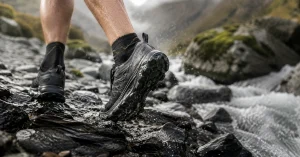
The best trail running shoes are not the ones with the most aggressive tread. They are the ones matched to the ground you actually run on, because a deep lugged mud shoe is unstable on rock and a soft trail cruiser slides straight off a wet grass bank. Get that pairing right and the shoe disappears underneath you, which is the entire point of buying a good one.
Three things separate a trail shoe from a road shoe: rubber that grips loose and wet ground, a sole stiff enough that sharp stone does not bruise the foot, and an upper that holds the foot in place when the trail tilts sideways. Everything else, the stack height, the drop, the rock plate, is a set of trade offs around how technical your terrain is and how far you intend to go.
Below are six trail shoes genuinely stocked on Amazon right now, each chosen for a different kind of runner and a different kind of ground rather than ranked one to six. Ratings and specifications were checked at the time of writing. If you are new to the surface, our guide to trail running for beginners covers the technique that matters considerably more than the shoe does.
Table of Contents
What Separates the Best Trail Running Shoes
Four things, in roughly this order of importance for most runners.
- Outsole rubber and lug depth. Soft, sticky compounds hold on wet rock. Deep lugs of four to six millimetres bite into mud and loose dirt, but feel unstable on hardpack and wear quickly on anything firm.
- Underfoot protection. A rock plate or a firm midsole stops sharp stone bruising the foot. Close to essential on rocky trail, unnecessary weight on smooth forest path.
- Upper security. The foot has to stay put when the ground slopes away sideways. Overlays, a snug midfoot and a proper heel counter do that work.
- Fit and toe box. Feet swell over distance and slide forward on descents. A cramped toe box costs toenails on anything long.
Weight matters less than people expect. The gap between a light and a heavy trail shoe is a couple of ounces, and a shoe that grips and protects properly saves far more energy than those ounces cost. The same logic drives our advice in how to choose hiking boots, where fit beats the spec sheet almost every time, and it is the opposite of the thinking behind ultralight packing, where every gram genuinely does count.
The Best Trail Running Shoes at a Glance
| Shoe | Outsole | Best terrain | Standout feature | Best for |
|---|---|---|---|---|
| ALTRA Lone Peak 9 | MaxTrac | Mixed and long distance | Zero drop, wide toe box | Best overall |
| Salomon Speedcross 6 GTX | Contagrip | Mud and wet grass | Deep self clearing lugs | Soft ground |
| Brooks Cascadia 18 | TrailTack Green | Rocky and technical | Rock shield and Trail Adapt | Technical trail |
| Saucony Peregrine 15 | PWRTRAC | Steep and loose | 5mm lugs, 4mm drop | Maximum grip |
| Merrell Agility Peak 5 | Vibram MegaGrip | Wet rock and slabs | Deep FloatPro cushioning | Long days |
| ASICS Gel-Venture 11 | Moulded rubber | Dirt path and fire road | AMPLIFOAM PLUS comfort | Best budget |
The Six Best Trail Running Shoes in Detail
ALTRA Lone Peak 9: Best Overall
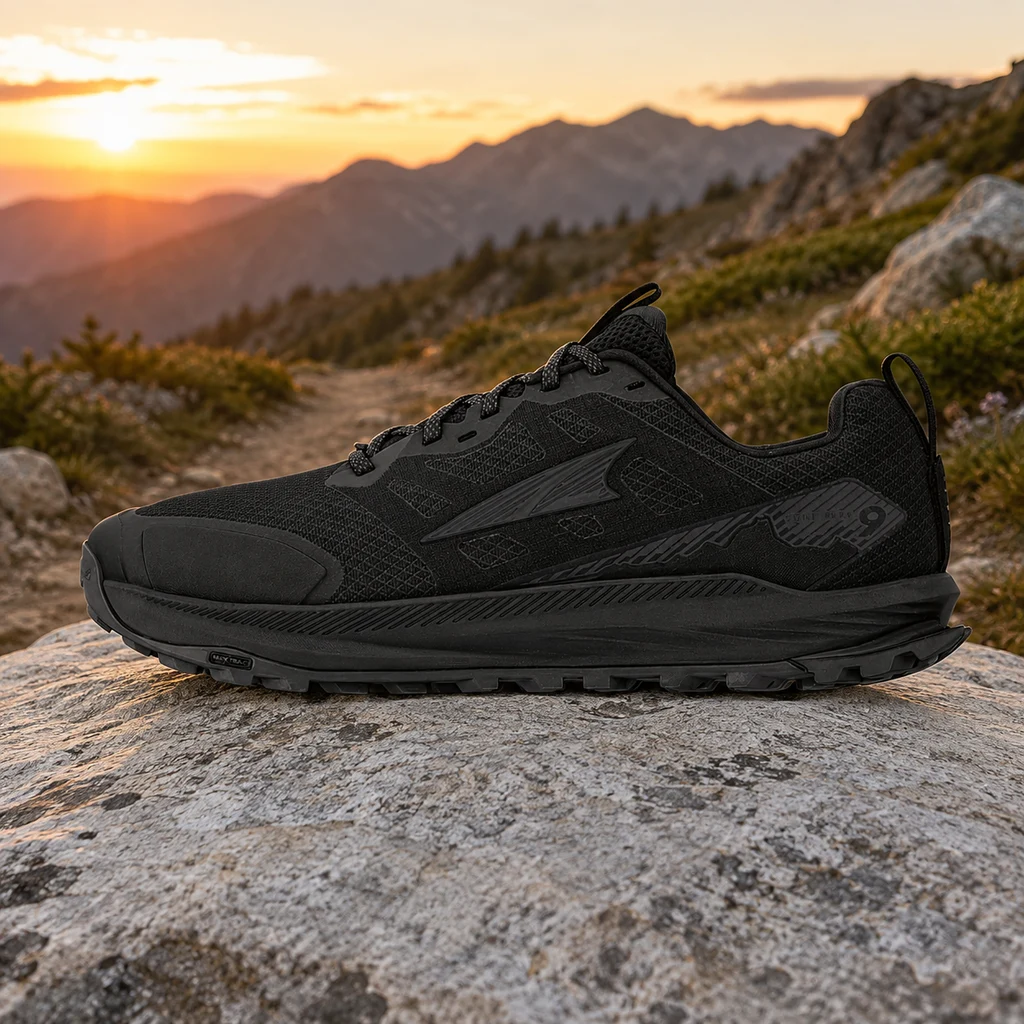
The Lone Peak has converted more road runners to trail than any other shoe, and the ninth version keeps the two things that did it. The first is the FootShape toe box, which is genuinely foot shaped rather than tapered, so your toes spread on landing instead of being squeezed towards a point. On a long descent, when your feet have swollen and are sliding forward, that space is the difference between finishing comfortable and losing a toenail.
The second is Balanced Cushioning, Altra’s term for a zero drop platform where heel and forefoot sit the same distance from the ground. It encourages a flatter, quieter landing, and it takes real adaptation if you have run in a raised heel for years. Give it a fortnight of short runs before anything long, because your calves and achilles will notice immediately.
The version listed here wraps the foot in a weather resistant eVent bootie, which shrugs off wet grass and puddles without the sweatiness of a full waterproof membrane. At 4.6 stars across more than eleven hundred ratings it is also the highest placed shoe on this list inside Amazon’s own trail running category, currently sitting at number two.
Specs That Matter
- Zero drop Balanced Cushioning platform, heel and forefoot at equal height
- FootShape toe box that lets the toes spread on landing
- Weather resistant eVent bootie construction
- MaxTrac outsole with moderate lugs suited to mixed ground
- 4.6 stars from over 1,100 ratings, ranked number two in men’s trail running shoes
Who It Is For
Runners going long, anyone whose toes cramp in conventional shoes, and road runners willing to spend two weeks adapting to a zero drop platform.
Salomon Speedcross 6 GTX: Best for Mud and Wet Ground
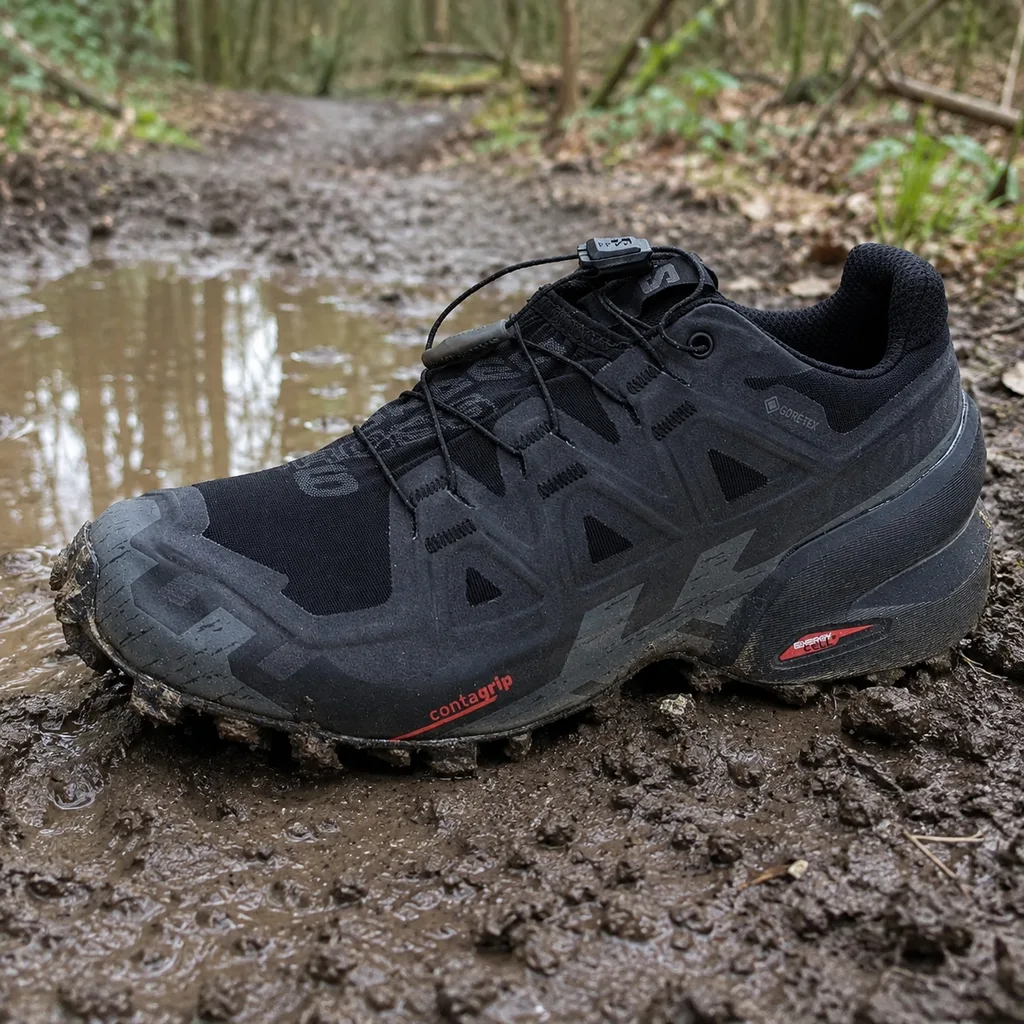
There is no subtlety to the Speedcross and that is exactly why it works. The Contagrip outsole carries deep, widely spaced chevron lugs that sink into soft ground and, just as importantly, shed it again as the shoe swings through. Shoes that clog turn into slicks inside a mile. This one does not.
The GTX version adds a Gore-Tex membrane, which is the right call for winter fields, bogs and wet grass and the wrong call for a hot dry summer when your feet need to breathe. Salomon rebuilt this generation lighter than the Speedcross 5 with a revised upper, and the single pull lacing tightens the whole foot at once, which is genuinely useful with cold hands.
The trade off is hard ground. Those tall lugs give you less contact area on rock and pavement, so the shoe feels tippy on dry technical trail and wears down quickly on road sections. Buy it for soft ground and accept that it is a specialist. At 4.7 stars it is the highest rated shoe here.
Specs That Matter
- Contagrip outsole with deep chevron lugs that clear mud as you run
- Gore-Tex waterproof and breathable membrane
- Single pull lacing system that tightens the whole foot at once
- Lighter than the Speedcross 5 with a revised upper
- 4.7 stars from over 300 ratings
Who It Is For
Runners on mud, wet grass and soft winter ground, and anyone who wants dry feet more than they want ventilation.
Brooks Cascadia 18: Best for Rocky Technical Trails
The Cascadia’s job is stability on ground that will not hold still. Brooks calls the system Trail Adapt: an integrated midsole with an articulated ballistic rock shield and zonal outsole pods, which in practice means the shoe flexes where the ground demands it while a plate stops sharp stone reaching your foot.
Underneath sits TrailTack Green rubber, a compound built for wet surfaces and made with a quarter recycled content. Above it, DNA LOFT v2 foam keeps the ride soft enough for long days out. A TPU mudguard and toecap block the debris that rocky trail throws at the front of the shoe, which is precisely where cheaper shoes fail first.
It is the least exciting shoe on this list and the one most people should probably own. Brooks positions it for mountain hikers as well as runners, and at 4.4 stars across more than eight hundred ratings it has the review depth to back that up. It is also a carbon neutral certified product.
Specs That Matter
- Trail Adapt system with an articulated ballistic rock shield
- TrailTack Green outsole rubber with 25 percent recycled content
- DNA LOFT v2 midsole cushioning for long days
- TPU mudguard and toecap for debris protection
- 4.4 stars from over 800 ratings
Who It Is For
Runners on rocky, root filled or genuinely technical trail, and anyone who wants one shoe that also handles mountain hiking.
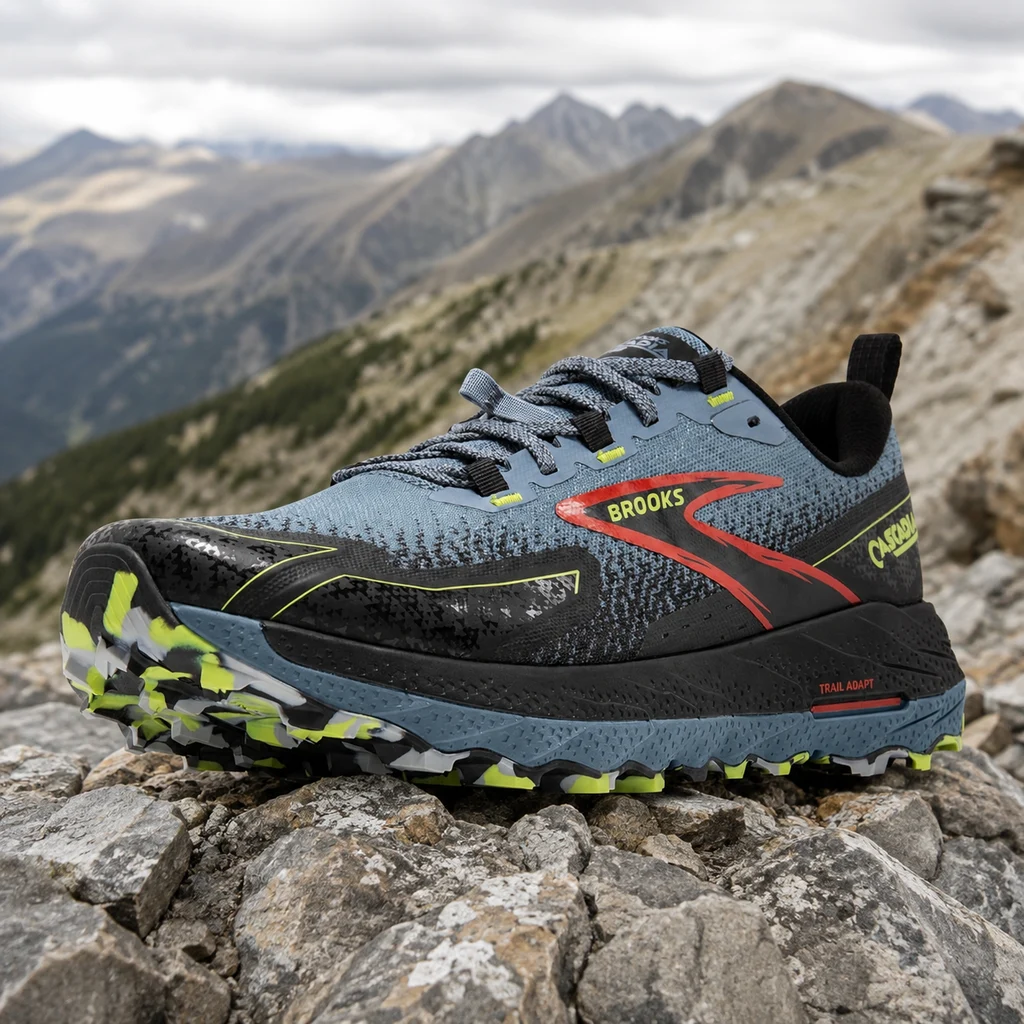
Saucony Peregrine 15: Best Grip
Five millimetre lugs on PWRTRAC rubber is the most aggressive traction here short of the Speedcross, and unlike the Speedcross the Peregrine stays composed on hard ground. That combination is why it has been a default choice for trail racing for years.
The platform is low and fast: 28mm at the heel, 24mm at the forefoot, a 4mm drop. That is much closer to the ground than a cushioned trainer, and it is what gives the shoe the feel needed to place a foot precisely on technical terrain. PWRRUN foam and a PWRRUN+ insole take enough edge off the impact to keep it usable over distance.
Saucony describe it as their core neutral cushioning trail shoe, built for tough terrain in a light, low profile package. It is the shoe to reach for when the run is a race rather than an outing.
Specs That Matter
- PWRTRAC rubber outsole with 5mm non slip lugs
- 4mm heel to toe offset, 28mm heel and 24mm forefoot
- PWRRUN midsole cushioning with a PWRRUN+ insole
- Low profile build for ground feel on technical terrain
- 4.3 stars from over 200 ratings
Who It Is For
Runners who want maximum traction without committing to a mud specialist, and anyone racing on steep or loose terrain.

Merrell Agility Peak 5: Best Cushioned Long Run
Vibram MegaGrip is the reason to look at this one. It is the reference rubber for wet rock, the compound most premium mountain shoes reach for, and here it appears underneath a deep, soft midsole rather than a racing platform.
FloatPro Foam does the cushioning, and FLEXconnect grooves cut into the midsole in two directions so the sole still bends with the ground rather than fighting it. The upper is engineered mesh with TPU reinforcement, and the collar and tongue use a mesh and SBR blend chosen for low water absorption, so the shoe does not gain weight after a stream crossing.
It is the most comfortable shoe here over three or four hours, and the one to pick if your trails involve wet rock and slabs rather than deep mud. The review count is the lowest on this list at just under two hundred, but the rating holds at 4.4.
Specs That Matter
- Vibram MegaGrip outsole for wet and dry rock
- FloatPro Foam midsole built for long distance cushioning
- FLEXconnect dual directional flex grooves in the midsole
- Low water absorption collar and tongue for stream crossings
- 4.4 stars from nearly 200 ratings
Who It Is For
Long runs and all day efforts, especially on wet rock, slabs and mixed mountain ground.

ASICS Gel-Venture 11: Best Budget
The Gel-Venture is the shoe most people should start with, and it is honest about what it is. This is a light trail and daily wear shoe rather than a mountain tool: a moulded rubber outsole with modest tread, rearfoot GEL for shock absorption, and AMPLIFOAM PLUS in the midsole sitting on a stack two millimetres higher than the previous version.
The result is a comfortable, forgiving ride on dirt path, fire road and gravel, and a shoe you can wear to the shops afterwards. It will not hold a wet grass bank and it will not protect you on sharp scree, but neither of those is where a first season of trail running actually happens.
The upper is mesh with no sew detailing, and the OrthoLite Hybrid Max Lite sockliner handles moisture. At 4.4 stars across more than eleven hundred ratings it is one of the most reviewed options here, and comfortably the cheapest way to find out whether you like running off road.
Specs That Matter
- Rearfoot GEL technology for impact absorption
- AMPLIFOAM PLUS midsole on a stack 2mm higher than the previous version
- OrthoLite Hybrid Max Lite sockliner for moisture management
- Moulded rubber outsole suited to dirt path, fire road and gravel
- 4.4 stars from over 1,100 ratings
Who It Is For
First trail shoes, dry and moderate terrain, and anyone who wants one pair that works for running and everyday wear.

How to Choose Between Them
Your Very First Pair
Start with the ASICS Gel-Venture 11. It is comfortable, cheap enough that a wrong guess does not hurt, and perfectly capable on the dirt paths and fire roads where most people spend a first season. Buy the specialist shoe second, once you know what your local ground is really like. Those same paths are usually shared with walkers and cyclists, so it is worth reading up on trail etiquette before your first busy weekend.
Mud, Bog and Wet Grass
The Salomon Speedcross 6 GTX, and it is not close. Deep chevron lugs that clear themselves are the only thing that works on genuinely soft ground, and the waterproof membrane earns its place through a wet winter. Accept that it will feel awkward the moment you hit rock, and that knowing the ground conditions in advance matters more than the shoe does, which is where predicting trail weather earns its keep.
Rocky and Technical Ground
The Brooks Cascadia 18 for all day stability and rock protection, or the Saucony Peregrine 15 if you want the same terrain handled faster and closer to the ground. The Cascadia protects more, the Peregrine tells you more about what you are standing on.
Long Days and Ultra Distance
The ALTRA Lone Peak 9 if toe splay and a zero drop platform suit you, the Merrell Agility Peak 5 if you would rather have deep cushioning and Vibram rubber underfoot. Both are built to be comfortable in hour four, which is a different problem from being fast in hour one. If those long days involve real climbing, our guide to training for elevation from sea level covers the fitness side of it.
One Shoe for Everything
The Cascadia 18. It is the most versatile shoe here, competent on almost any surface and outstanding on none, which is exactly what a single pair should be. Pair it with the layering approach in our guide to fall hiking and it will cover most of an autumn, including the shorter evenings covered in our night hiking guide.
Lugs, Drop and Rock Plates: What the Specs Mean
Lug Depth Is a Terrain Choice, Not a Quality Score
Lugs are the rubber studs on the outsole. Three millimetres or less suits hardpack, gravel and fire road. Four to five millimetres is the mixed terrain middle ground. Six millimetres and above is mud specific, and will feel unstable and wear quickly anywhere firm. Spacing matters as much as depth, because widely spaced lugs shed mud while tightly packed ones hold onto it.
Drop Changes Where the Load Goes
Drop is the height difference between heel and forefoot. A higher drop of eight to ten millimetres shifts load towards the knee. A low or zero drop shifts it towards the calf and achilles. Neither is better in the abstract. What matters is that changing it suddenly is how people get hurt, so move to a lower drop across several weeks of short runs. The same slow tissue adaptation is why the body takes weeks to adjust to long distance rather than days.
Rock Plates Buy Protection at the Cost of Feel
A rock plate is a thin, firm sheet sitting between midsole and outsole. On sharp rock it is the difference between finishing and limping. On smooth trail it deadens the ground feel that makes technical running enjoyable in the first place. Rocky local trails mean you want one. Forest paths mean you do not need to pay for it.
Rubber Compound Beats Lug Depth on Wet Rock
On wet stone, grip comes from the softness of the compound rather than the depth of the tread. Vibram MegaGrip is the benchmark, and most brands run an in house equivalent such as Contagrip or TrailTack. Deep lugs on hard rubber will still slide, which is why a mud shoe is the wrong tool on a wet slab.
Sizing, Break In and When to Replace
Buy trail shoes about half a size larger than your road pair. Feet swell over distance and slide forward on every descent, and a shoe that fits perfectly in the shop will bruise your toes on a long downhill. Check the fit standing on a slope rather than on a flat floor, and do it at the end of the day when your feet are already swollen.
There is no break in period worth the name on a modern trail shoe, but there is an adaptation period for your legs if you change drop or move to zero drop. Two weeks of short runs before anything long is the sensible minimum, and it is the single most common reason a good shoe gets blamed for an injury it did not cause. Socks matter more than most people allow for here, and our guide to what to wear on the trail covers the fabrics that do not blister.
Most trail shoes last three hundred to five hundred miles, and on trail the outsole usually gives up before the midsole does. Replace them when the lugs have rounded off rather than waiting for the cushioning to flatten, because grip is the thing keeping you upright. If you are heading into steeper ground, our guides to trekking poles and how to use them cover the other half of the traction problem, and daypack fit matters once the run turns into an all day outing.
Frequently Asked Questions
Can I use road running shoes on trails?
On smooth, dry dirt path, yes. The moment the surface turns loose, wet, rocky or off camber, road shoes lose grip and leave the foot unprotected against sharp stone. Most people manage a handful of runs before the limitation becomes obvious.
Do I need waterproof trail running shoes?
Only if your ground is genuinely wet for months at a time. A membrane keeps splash and wet grass out, but it also traps heat and, once water comes over the collar, it keeps that water in. Non waterproof mesh drains and dries far faster, which is usually the better trade in summer, and doubly so in the conditions we describe in our hot weather hiking tips.
How much bigger should trail running shoes be?
About half a size up on your road shoe, sometimes a full size for long distance. You are leaving room for feet that swell over hours and slide forward on descents. There should be a thumbnail of space in front of the longest toe when you are standing.
How long do trail running shoes last?
Three hundred to five hundred miles for most runners, though rocky terrain wears an outsole faster than soft ground does. Judge by the lugs rather than the mileage. Once they are rounded over, the shoe has lost the grip that made it a trail shoe.
Are trail running shoes good for hiking?
For day hikes with a light pack, they are excellent, and many long distance hikers now use them instead of boots. They are lighter, they dry faster and they need no breaking in. Heavy loads and weak ankles are the case where a boot still wins, which we cover in our round up of the best hiking boots and in our guide for beginner hikers.
Match the shoe to the ground rather than to the review score and any of these six will serve you well. If your trails are mixed and you only want one pair, the Cascadia 18 is the safest answer. If you are still deciding whether trail running is for you at all, start cheap with the Gel-Venture 11 and spend the money once you know what you need. Our guide to trail running for beginners is the place to start, and AllTrails will find you somewhere near home to try them out.
Discover more from Maive Verse
Subscribe to get the latest posts sent to your email.


