


This post may contain affiliate links. If you buy through them, we may earn a small commission at no extra cost to you.
Rucking is walking with weight on your back, and it is the cheapest way to get stronger for the trail without a gym membership. This guide to rucking for beginners walks you through the first steps in order, from the pack you already own to the weight you add in week three, so you build the habit before you build the load.
September is the month it clicks for most people. The heat has broken, the evenings are cool, and a loaded pack that felt punishing in July suddenly feels like a good hour outside. If you already hike, you have most of the kit, down to the layers you already walk in. If you do not, a school backpack and two bottles of water will get you through your first two weeks.
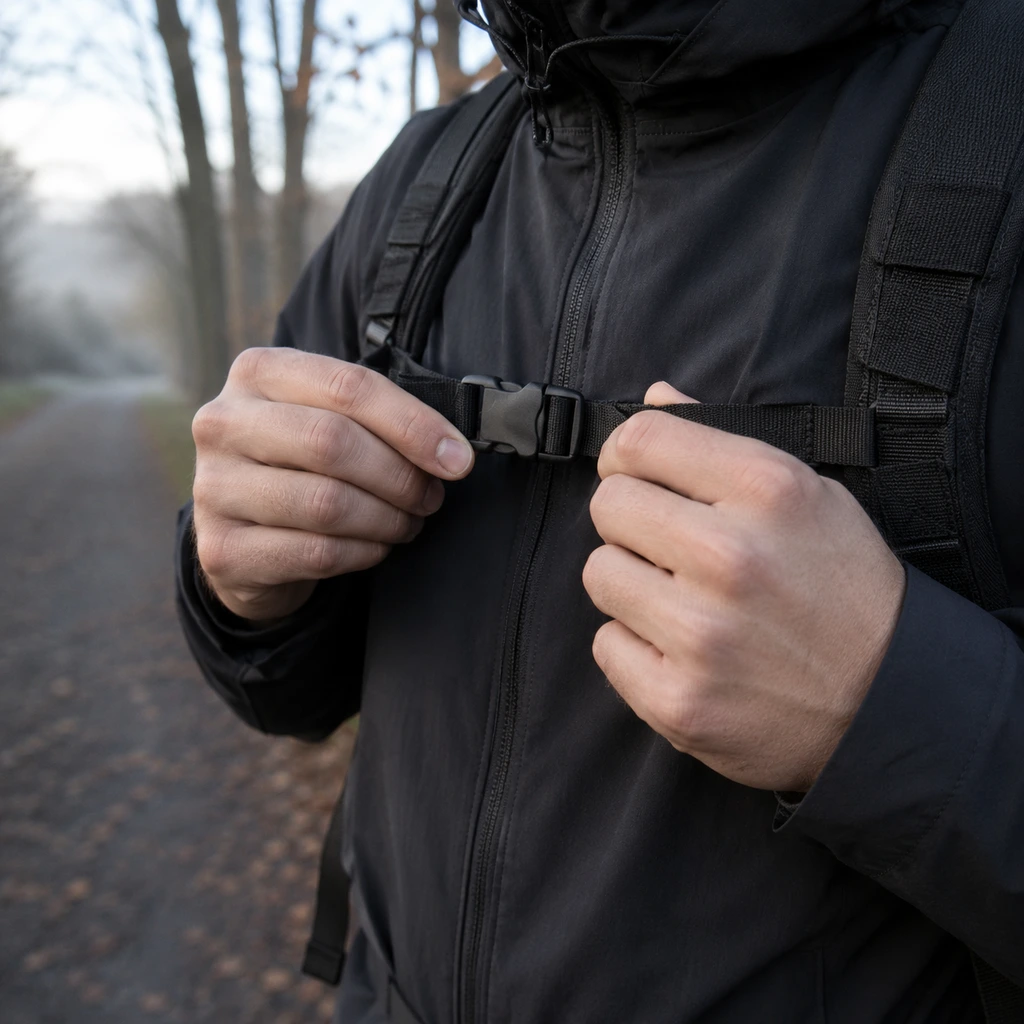
Table of Contents
What Rucking Actually Is
Rucking comes from the military rucksack march, where soldiers cover distance carrying a loaded pack on a clock. Stripped of the clock and the drill sergeant, it is simply loaded walking. You put 10 to 30 pounds in a backpack, you walk at a pace you could hold a conversation at, and you keep doing it a few times a week.
The appeal is that it sits between walking and running. Walking is easy on the joints but light on training effect once you are used to it. Running builds fitness fast and beats up knees and shins just as fast. Adding weight to a walk raises your heart rate into the same zone a slow jog would, at a fraction of the impact, which is why so many hikers use it in the shoulder season. If your knees have already ruled out picking up trail running, this is the version of the same training effect they will tolerate.
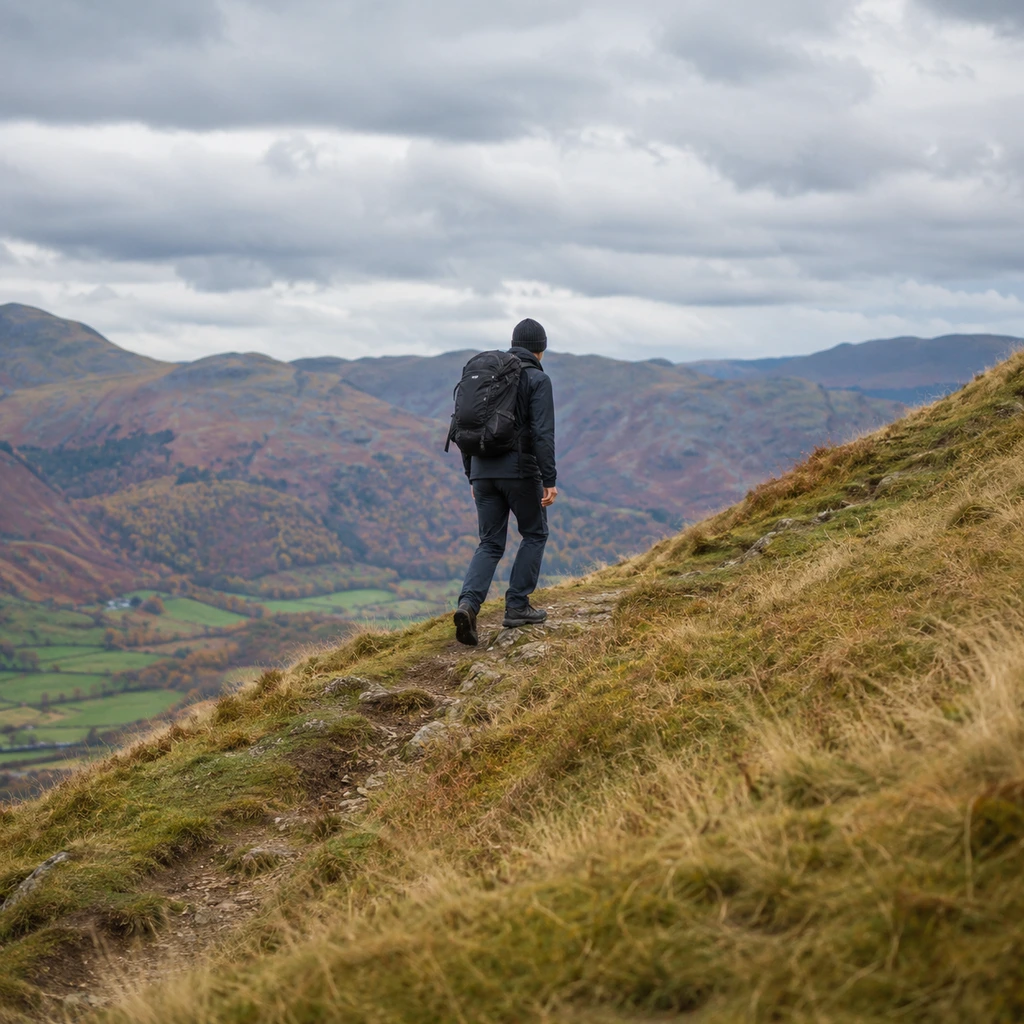
For hikers the carryover is direct. Your pack straps stop biting after a few weeks, your posture under load improves, and the hills on an autumn day hike stop being the part you dread. If you are working toward multi day trips, this is the training that makes the difference, and it pairs neatly with training for elevation at sea level.
Rucking for Beginners: The 9 First Steps
Do these in order. Each one removes the most common reason people quit in the first month.
1. Start With the Pack You Already Own
Your first ruck does not need a purpose built pack. Any daypack with padded straps and a sternum strap will hold 15 pounds for half an hour. Use it for two weeks and let the walking, not the shopping, be the thing you commit to. If your daypack is a loose, unstructured sack, borrow a better one before you buy, and read our daypack picks when you are ready to upgrade.
2. Use Weight You Can Control
Water is the beginner’s best weight because you can pour it out at the turnaround if you have overcooked it. Two 1 liter bottles are about 4.4 pounds. Bags of rice, wrapped in a towel, work too. Avoid loose dumbbells and free weights: they shift, they dig, and they land on your lower back at exactly the wrong angle.
3. Keep the Weight High and Tight
Load carried low sits on your lumbar spine and pulls you into a slouch. Load carried high, between the shoulder blades, sits over your centre of mass and lets you walk upright. Pack the heavy item against the back panel at shoulder blade height, stuff a jacket underneath it so it cannot slide, and cinch the compression straps until nothing moves when you jump.
4. Walk 30 Minutes Before You Add Anything
Your first three sessions are 30 minutes at 10 to 15 pounds. That is it. The goal is to find out how your feet, shoulders and hips respond to load, not to prove anything. If you finish those three feeling fine the next morning, you have earned the right to make it harder.
5. Set a Pace You Can Talk Through
A good rucking pace is a brisk walk you could hold a full sentence at, usually 15 to 20 minutes per mile depending on terrain and load. If you are gasping, you are either too heavy or walking too fast, and both fix the same way: slow down first, lighten second.
6. Add Weight or Distance, Never Both
Change one variable per week. Add 5 pounds, or add 10 minutes, and then hold that for a full week before you touch anything else. Most beginner injuries come from a single enthusiastic week where the pack got heavier and the walk got longer at the same time.
7. Protect Your Feet Before They Complain
Weight multiplies every small friction point in a shoe. Wear the socks you hike in, not cotton, and lace so your heel is locked back in the shoe on descents. If your boots already give you hot spots unloaded, they will give you blisters loaded, and it is worth working through how to choose hiking boots before you add another 20 pounds.
8. Drink and Eat Like It Is a Hike
An hour under load in cool weather still costs you most of a litre of water. Carry it, which is convenient because water is also your weight. The maths in our hydration guide works the same under load. Anything over 90 minutes wants a snack in the second half, and the same rules as hiking nutrition on long days apply.
9. Take Two Rest Days a Week
Three rucks a week is the sweet spot for a beginner: enough to adapt, not enough to accumulate damage. Loaded walking is deceptive because nothing hurts during it. The soreness shows up in your calves and traps the following morning, and that is the signal you are training rather than just walking.
How Much Weight Is Right
The honest answer is less than you think for longer than you want. Here is how to pick a number and when to move it.
The 10 Percent Rule
Start at roughly 10 percent of your body weight. For a 160 pound person that is 16 pounds, which sounds trivial and will not feel trivial at minute 40. Work up to 20 percent over two to three months. Beyond a third of body weight you are into specialist territory that has more to do with military selection than fitness.
Plate, Sandbag or Just Gear
A cast iron ruck plate is flat, sits high, and does not move, which makes it the most comfortable option per pound. A sandbag is cheaper and conforms to your back, but it settles downward as you walk. Ordinary gear, meaning water, books and a rolled jacket, is free and perfectly good for the first month as long as you pack it tight, which is the same packing logic behind smart daypack loading.
When to Add More
Move up when your current load stops producing any next day signal and your pace at that weight has drifted faster on its own. That usually takes two to four weeks per step. If your form breaks down in the last 10 minutes, that weight is still teaching you something and it stays.
Form That Keeps You Off the Injury List
Posture Under Load
Stand tall, ribs stacked over hips, eyes up the trail rather than at your feet. The pack should pull you slightly forward from the ankles, not fold you at the waist. If you catch yourself leaning from the hips, the load is too low in the pack or too heavy for today.
Cadence and Stride
Take shorter steps than you would unloaded and let your cadence carry the pace. A long reaching stride lands your heel far in front of your body and sends the shock of the extra weight straight up the shin. Short steps keep the load over your feet.
Hills and Descents
Uphill, lean from the ankles and shorten the stride further. Downhill is where loaded walking does its damage: control the pace, keep the knees soft, and consider poles on anything steep. If you have never used them under load, the pole technique guide covers the grip and length changes that matter, and our pole picks covers what to carry them with.
The Kit That Earns Its Place
You can ruck for a month on gear you own. When you do buy, buy in this order.
The Pack
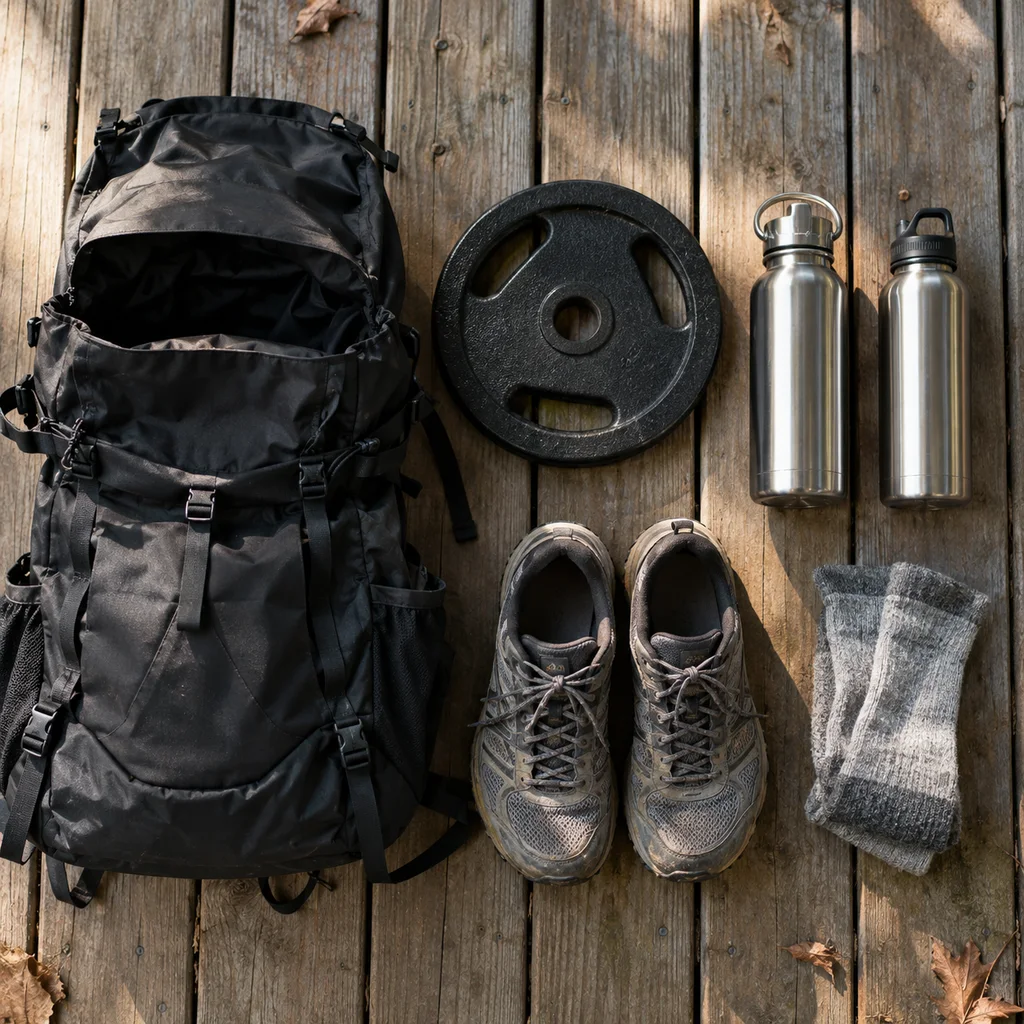
A rucking pack is built around a sleeve that holds weight high against your spine, with wide padded straps that spread the load across your shoulders instead of cutting into your neck. Budget: the Hannibal Tactical 30L assault pack covers the basics with a padded back panel and a hydration sleeve. Mid range: the RuckBuddy RuckPack 25L adds dedicated plate pockets and a removable hip belt for heavier loads. Premium: the GORUCK Rucker 4.0 is the purpose built option, with an elevated plate pocket and 1000D CORDURA that outlives most of what you will put it through. Our full round up of the best rucking backpacks compares all six.
The Weight
Cast iron ruck plates come in 10, 20 and 30 pound steps and sit flat against the back panel. Buy one step above your starting weight so you have somewhere to grow, and use water bottles to fill the gap in between. Check that the plate size matches your pack’s sleeve before you order.
Shoes and Socks
Trail runners work well for road and gravel rucking and dry fast. Boots make more sense once you are over 30 pounds or on uneven ground, where the ankle support earns its weight. Either way, merino or synthetic socks, never cotton. If you are choosing between the two, our trail shoe picks and the fall boot round up both apply here.
Common Beginner Mistakes
- Starting at 40 pounds because it sounded like a real number. Shoulders and shins disagree by week two.
- Packing the weight at the bottom of the bag, which turns every step into a small tug on the lower back.
- Rucking every day. Three sessions a week beats seven, because adaptation happens on the rest days.
- Wearing cotton socks and finding out what a loaded blister feels like at mile three.
- Chasing pace instead of time on feet. Distance under control builds more than a fast, ragged hour.
- Rucking into the dark in September without a light. Sunset arrives earlier every week, so read the night hiking rules and carry a headlamp.
- Skipping the warm up entirely. Five minutes of unloaded walking before you shoulder the pack is enough.
- Ignoring the shoulder strap adjustment and blaming the pack for a load that was never cinched.
A Simple First Month
Four weeks, three sessions a week, one variable at a time. Adjust the weights down if you are starting from a low base.
| Week | Load | Session Length | Focus |
|---|---|---|---|
| Week 1 | 10 to 15 lb | 30 minutes | Flat ground, find your pace |
| Week 2 | 15 to 20 lb | 35 to 40 minutes | Same route, hold the pace |
| Week 3 | 20 lb | 45 minutes | Add one gentle hill |
| Week 4 | 20 to 25 lb | 60 minutes on one session | Longer walk, same weight |
At the end of week four, one hour at 25 pounds is a genuine base. From there most people either push the long session toward two hours or start rucking their local trail loop, which is where it starts to feel like fall hiking with training benefits attached. It is also the base that makes a first overnight trip realistic, which is where backpacking for beginners picks up.
Frequently Asked Questions
Is rucking better than running?
Neither is better, they cost different things. Rucking builds carrying strength and aerobic base at low impact, which suits hikers and anyone with cranky knees. Running builds top end fitness faster. Many people do both, keeping the ruck for the days their legs are too tired to run well.
How much weight should a beginner ruck with?
Start at 10 percent of your body weight, usually 10 to 20 pounds, and hold that for at least two weeks. The first month is about your feet, shoulders and connective tissue getting used to load, and none of that adapts faster because you added another plate.
How often should I ruck?
Three times a week with a rest day between sessions. That is enough for steady progress and leaves room for hiking, running or the gym without piling fatigue onto the same tissues.
Can I use a normal backpack for rucking?
Yes, for the first month at least. Any daypack with padded shoulder straps and a sternum strap will handle 20 pounds if you pack the weight high and cinch the compression straps. Purpose built packs matter more once you are carrying a plate regularly, or once you are training with a loaded backpacking pack for a specific trip.
Does rucking build muscle?
It builds endurance in your legs, back and shoulders and it strengthens the postural muscles that hold a pack up, which is exactly what a long trail day asks for. It is not a substitute for strength training if your goal is size.
The whole plan for rucking for beginners fits in one line: start this week with a pack you already own, 15 pounds of water, and half an hour on the flattest route near you. Add one thing at a time after that, and by the time the leaves are down you will be walking your local hills under load without noticing the load. If you want the trail to go with it, our complete hiking guide and rain jacket picks will keep you out there through autumn.
Discover more from Maive Verse
Subscribe to get the latest posts sent to your email.