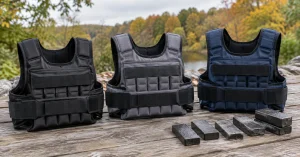
The best weighted vests for rucking laid out on decking with cast iron weight bricks

Best Weighted Vests for Rucking: 6 Top Picks for 2026

This post may contain affiliate links. If you buy through them, we may earn a small commission at no extra cost to you.

The best weighted vests for rucking split the load across your chest and back instead of hanging it off your shoulders, which is why so many people who gave up on a loaded backpack get on with a vest. It sits closer to your centre of mass, it does not swing, and it leaves your hands and hips free.

We compared six vests that people actually walk in rather than only train in, from a 6 pound starter to a 45 pound adjustable rig. Every one was checked on its listing for stock, rating and real specifications. If you are weighing a vest against a pack, our rucking backpack round up covers the other side, and rucking vs running covers whether to be doing this at all.
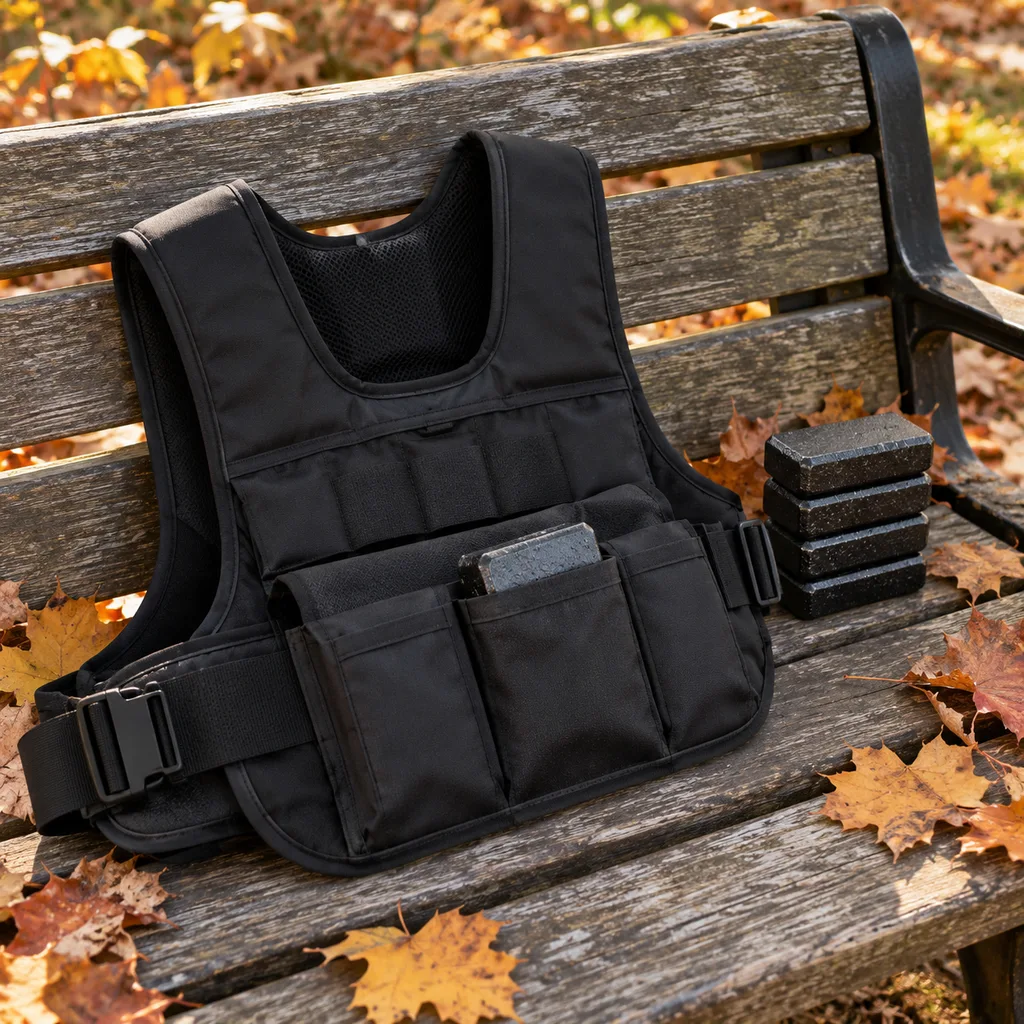
One of the best weighted vests for rucking open on a park bench with weight bricks

What Separates the Best Weighted Vests for Rucking

A vest built for lifting and a vest built for walking an hour are different objects, and most listings do not tell you which one you are buying.

Bounce is the first thing. A vest that shifts a centimetre on every step will have rubbed your collarbones raw by mile three. What stops it is a snug adjustable closure, weight held in fitted pockets rather than a loose pouch, and padding that sits on the shoulder rather than beside it.

Adjustability is the second. Fixed weight vests are cheaper and you outgrow them; vests with removable bricks let you start at 10 pounds and work to 40 without buying twice. For a beginner following a first month under load, that range is the difference between one purchase and three.

Breathing room is the third and it is the one people miss. A vest wraps your ribcage, so a design that pulls tight across the diaphragm will limit your breathing on hills in a way a daypack never does. Curved panels and a cut away chest matter more than the fabric weight.

The Best Weighted Vests for Rucking at a Glance

VestWeight RangeAdjustableMaterialBest For
ERIC FLAG 40 lb0 to 40 lb16 x 2.4 lb bricks1000D OxfordBest overall
GORUCK Rucking VestPlate basedPlates sold separately500D CORDURABuilt for walking
MVRK 35 lb0 to 35 lb16 x 2.18 lb bricksReinforced nylonNo bounce fit
HANZOUp to 45 lbRemovable bricks1000D OxfordHeavy loads
ZELUS6 to 30 lbFixed per sizeSpandex blendBest budget
Zeerun6 to 30 lbFixed per sizeNeopreneGradual progression
Six weighted vests compared on the specifications that decide comfort over a long walk.

The Six Best Weighted Vests for Rucking in Detail

ERIC FLAG 40 lb Adjustable: Best Overall

This is the one to buy if you want a single vest to cover your next two years. Sixteen removable 2.4 pound iron weights sit in sixteen pockets, eight front and eight back, so you can run it empty at 1.6 pounds or loaded to 40 and step through every increment in between.

The shell is 1000 denier Oxford nylon, which is the heavier of the two fabric grades in this round up and the reason it shrugs off being dropped on gravel and dragged out of a car boot. An adjustable strap pulls it snug across a wide range of body shapes, and the even front to back distribution is what keeps it from rocking as you walk.

At 4.8 stars across more than a thousand reviews it is also the best reviewed vest here by some margin, and the kit arrives complete, so there is no separate plate purchase to work out before your first session.

Specs That Matter

  • Weight: 0 to 40 lb via 16 removable 2.4 lb iron weights
  • Empty weight: 1.6 lb, so the vest itself adds almost nothing
  • Pockets: 16, eight front and eight back for even distribution
  • Shell: 1000D Oxford nylon, tear and abrasion resistant
  • Rating: 4.8 stars across 1,096 reviews

Who It Is For

Anyone buying one vest and wanting the full useful range without a second purchase.
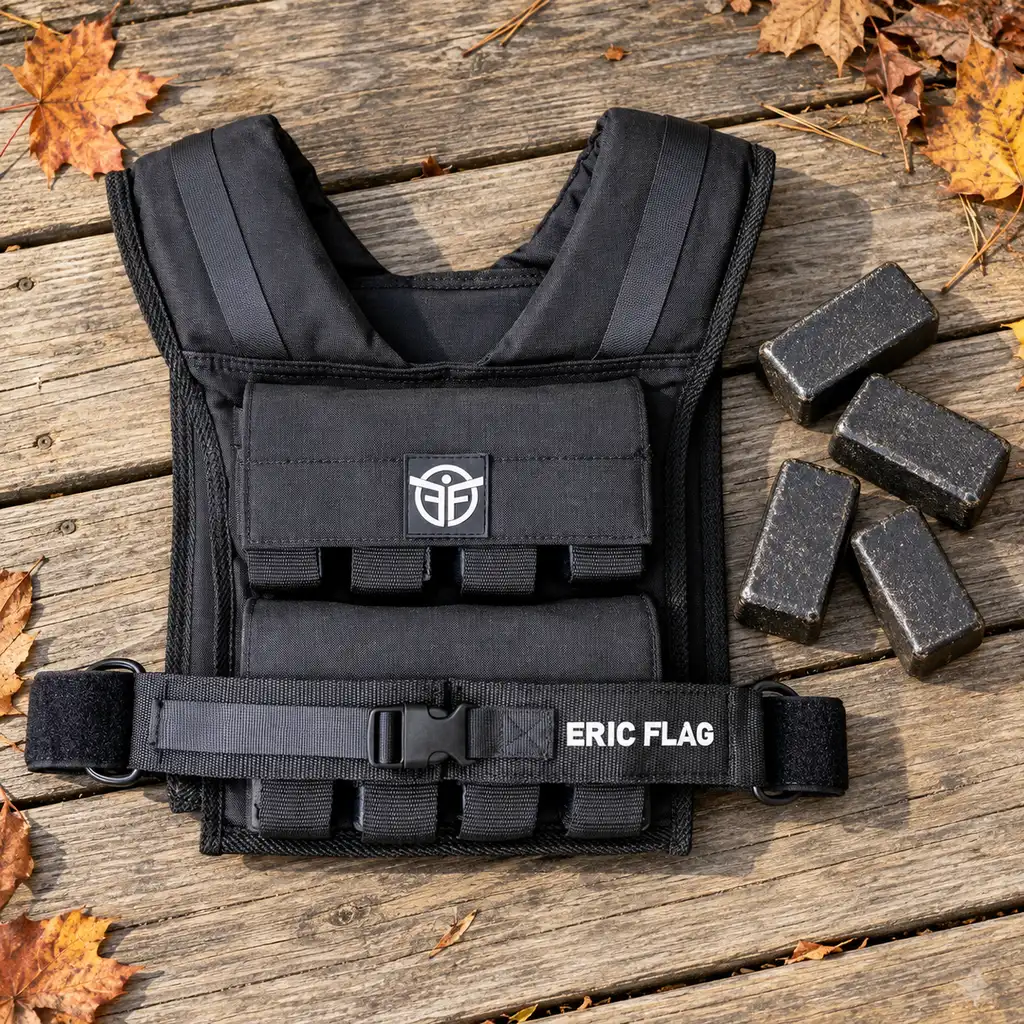
ERIC FLAG 40 lb adjustable weighted vest open on decking beside cast iron weights

GORUCK Rucking Weighted Vest: Built for Walking

Everything else here is a training vest that also works for walking. This one is the other way round, and the design choices show it. The panels are curved to follow your torso rather than sitting flat against it, which removes the pressure points that a rectangular vest creates over an hour on your feet.

The detail that gives the game away is the plate. There is a hole cut through the middle of it to take weight off your diaphragm, which is a problem you only encounter walking uphill under load for a long time, and never encounter doing twenty push ups. The company holds a patent on the design.

Materials match the pack line: 500 denier CORDURA outside, 210 denier inside. The front and back panels are 11 inches wide by 13 inches tall, and the L / XL fits most men and women, with the sizing difference in the straps rather than the panels.

Specs That Matter

  • Design: curved panels that follow the torso, for walking rather than lifting
  • Plates: cut through the centre to free the diaphragm under load
  • Materials: 500D CORDURA exterior, 210D CORDURA interior
  • Panels: 11 in wide by 13 in tall, L / XL fits most
  • Rating: 4.5 stars across 86 reviews

Who It Is For

Ruckers who walk far rather than train in circles, and anyone who has felt a flat vest press on their breathing on a climb.
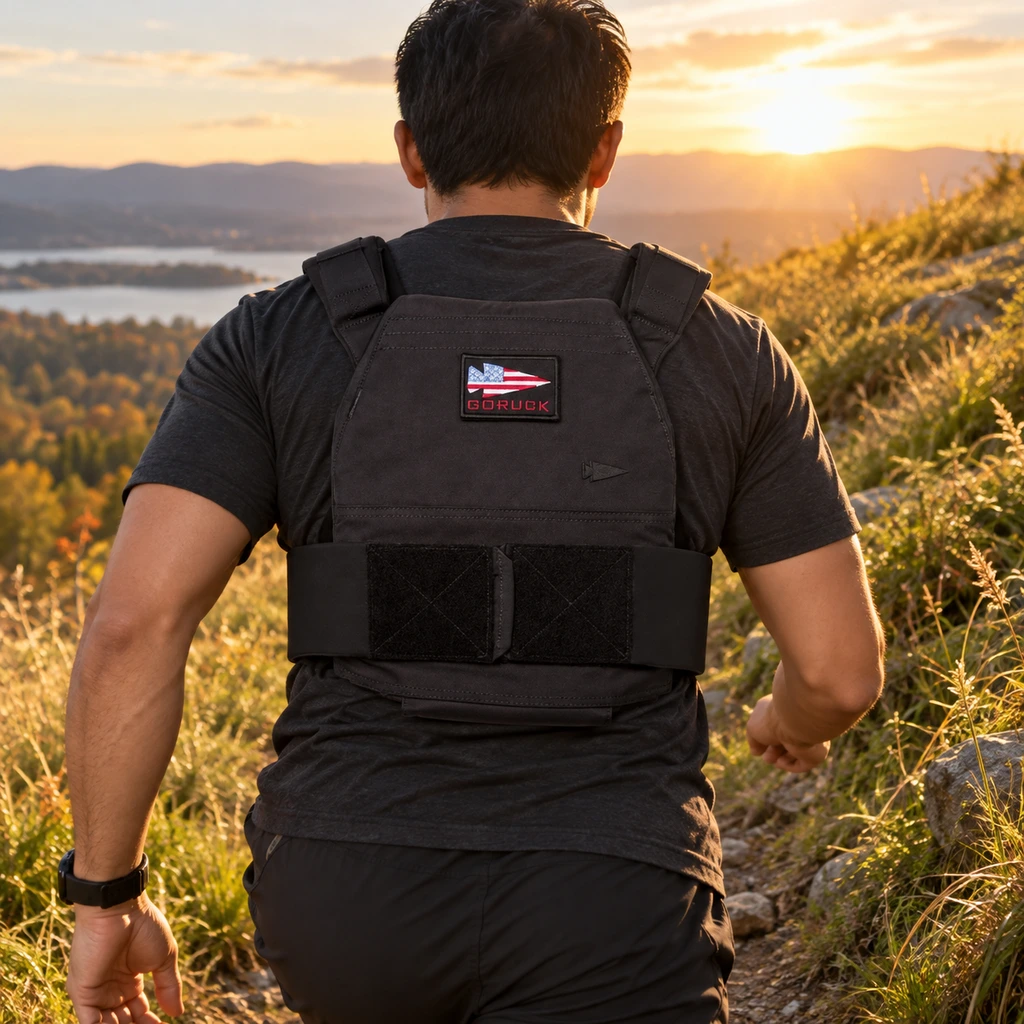
GORUCK rucking weighted vest worn on a hill path at golden hour

MVRK 35 lb: Best No Bounce Fit

The MVRK is built around the problem that ruins long walks in a vest, which is movement. Reinforced stitching at every stress point and heavy duty buckles hold the load where you set it, and the sixteen iron blocks at roughly 2.18 pounds each sit in fitted pockets rather than sliding around in a pouch.

The range runs from empty to 35 pounds, which covers the whole span most ruckers ever use. Eight blocks front and eight back keep it balanced, and pulling four out for a recovery day takes under a minute.

It is worth knowing the care instructions before you buy: weights out, hand wash, hang dry. That is true of most of these vests and it is the step people skip, which is how a vest ends up smelling like a gym bag by January.

Specs That Matter

  • Weight: 0 to 35 lb via 16 removable iron blocks at about 2.18 lb each
  • Balance: eight blocks front and eight back
  • Construction: reinforced stitching at all stress points, heavy duty buckles
  • Care: remove weights, hand wash with soap, hang dry
  • Rating: 4.7 stars across 627 reviews

Who It Is For

Anyone who has been rubbed raw by a vest that moved, and people mixing walking with calisthenics in the same session.
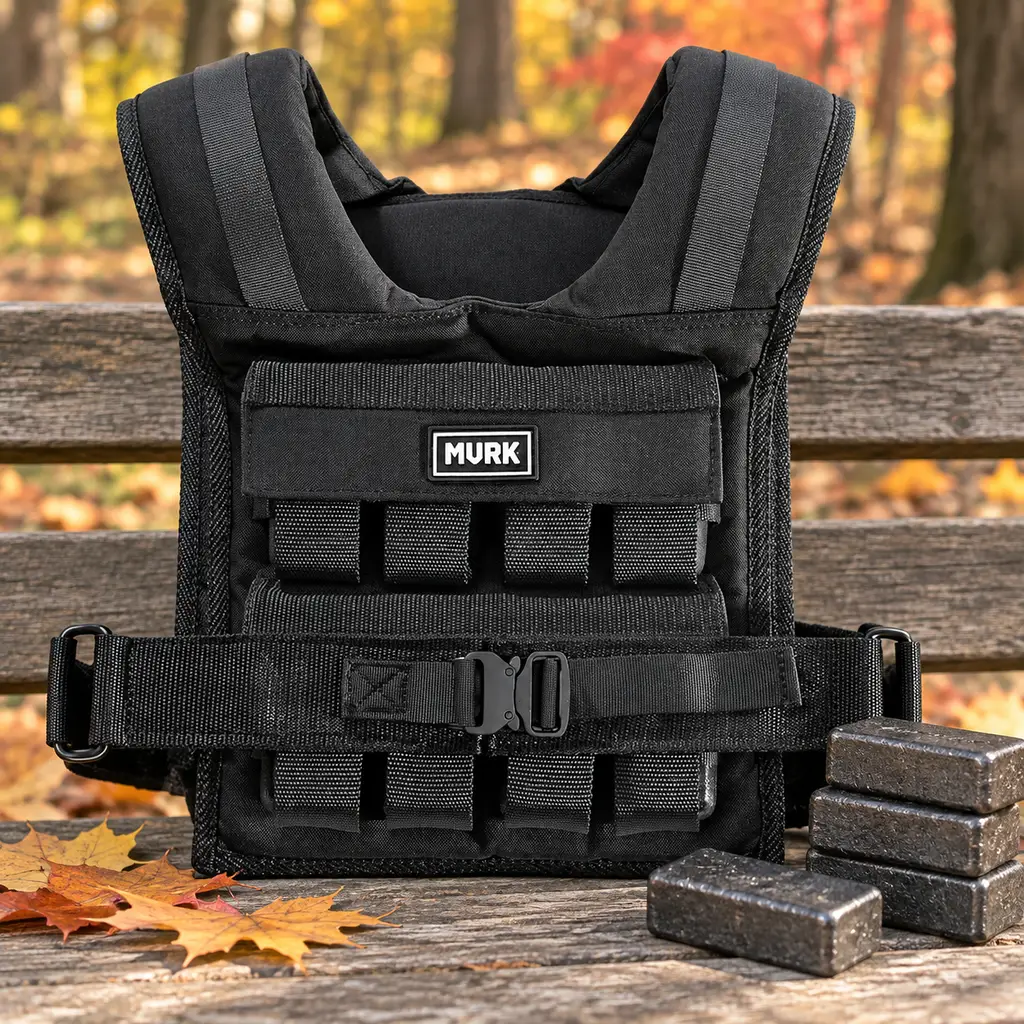
MVRK weighted vest upright on a park bench beside stacked iron weight bricks

HANZO Adjustable: Best for Heavy Loads

If your plan runs past 40 pounds, this is the pick. It takes up to 45 pounds of bricks and the shoulders are double padded to cope with it, which is the part that decides whether heavy is bearable or just heavy.

The brick system swaps in seconds, so the same vest covers a light recovery walk and a deliberately hard session without any faffing. The full set of weights is included, which is not true of every vest at this weight, and there are no add on purchases to discover later.

The shell is reinforced 1000 denier Oxford nylon with heavy duty stitching. At a 45 pound ceiling you are into loads where form matters more than gear, so build up to it over months rather than weeks and keep your posture honest.

Specs That Matter

  • Weight: up to 45 lb of adjustable resistance, full brick set included
  • Shoulders: double padded, balanced profile to stay secure while moving
  • Adjustment: bricks add or remove in seconds between sessions
  • Shell: reinforced 1000D Oxford nylon with heavy duty stitching
  • Rating: 4.7 stars across 457 reviews

Who It Is For

Ruckers already comfortable at 30 pounds who want somewhere to grow, and anyone training for a loaded event.

HANZO adjustable weighted vest flat on a concrete step with weight bricks lined up

ZELUS: Best Budget

Nearly eighteen thousand reviews at 4.5 stars makes this the most tested vest here by a distance, and it is the cheapest way to find out whether you like walking under load at all. Sizes run from 6 to 30 pounds, filled with evenly distributed iron sand rather than removable bricks.

That fixed fill is the trade off. You cannot scale one vest through a training year, so buy the weight you will use in three months rather than the one that feels comfortable today. The adjustable buckle straps fit chests from 31.5 to 45 inches.

The details are aimed at walkers and runners rather than lifters: soft spandex fabric against the body, reflective strips for low light, an armband pouch and a rear mesh pocket for a phone, keys or a snack. For autumn evenings that reflective detail earns its place.

Specs That Matter

  • Weight: fixed fill from 6 to 30 lb depending on the size you buy
  • Fill: evenly distributed iron sand rather than removable bricks
  • Fit: adjustable buckle straps for 31.5 to 45 in chest
  • Extras: reflective strips, armband pouch and rear mesh pocket
  • Rating: 4.5 stars across 17,696 reviews

Who It Is For

First timers testing the idea, and anyone who wants a light vest for walking and jogging rather than a training platform.

ZELUS weighted vest with reflective stripes over a park bench at dusk

Zeerun: Best for Gradual Progression

Zeerun sells this in eight steps between 6 and 30 pounds, which is the finest grained ladder in the round up. If you are the sort of person who wants to move up 2 pounds at a time rather than 5, the option exists here and nowhere else on this list.

The shell is neoprene rather than nylon, which changes how it feels: softer against the body and less prone to chafe on bare skin, with internal sealing specifically to stop iron particles working their way out over time. That leak is a real failure mode on cheap sand filled vests and it is good to see it addressed.

Thickened shoulder pads spread the load, and an elastic band plus adjustable buckle pull it against the curve of your body so it does not shake. Double stitched reinforced seams handle the rest.

Specs That Matter

  • Weight: eight fixed options between 6 and 30 lb
  • Shell: skin friendly neoprene with internal sealing against particle leak
  • Comfort: thickened shoulder pads, elastic band and adjustable buckle
  • Construction: double stitched reinforced seams
  • Rating: 4.5 stars across 3,924 reviews

Who It Is For

People who want to step the weight up in small increments, and anyone who finds nylon vests chafe.

Zeerun neoprene weighted vest resting on a rock beside a gravel park path

How to Choose Between Them

One Vest for the Next Two Years

The ERIC FLAG. Zero to 40 pounds in 2.4 pound steps covers a beginner’s first walk and a third year session, and the 1000 denier shell will still be here for both.

Long Walks Rather Than Workouts

The GORUCK. It is the only vest here designed around an hour on your feet rather than a circuit, and the cut away plate is a real advantage on climbs. Pair it with the pacing in our beginner guide.

Trying It Without Committing

The ZELUS. It is the cheapest honest way to find out whether you enjoy this, and if you do, the money is not wasted because a light vest still has a job on recovery days.

Going Past 40 Pounds

The HANZO, for the 45 pound ceiling and the double padded shoulders. At that load, consider whether a pack would serve you better: the pack round up explains where each carries better.

You Chafe in Everything

The Zeerun. Neoprene against the skin behaves differently from nylon, and the sealed construction means no iron dust in your base layer, which matters if you wear merino under it as in a normal layering setup.

Vest or Pack: Which Carries Better

A vest holds weight against your chest and upper back, close to your centre of mass, so it does not swing and it leaves your hips completely free. That makes it better for mixed sessions, for anything involving getting on the floor, and for people who find shoulder straps intolerable. It is also the friendlier option on an autumn day walk where a jacket goes on and off without unloading everything.

A pack holds everything behind you, which means you can carry more before it becomes unpleasant, you can put a jacket and water in it, and a hip belt can move a third of the load onto your pelvis. For long distance and for anything resembling backpacking training, the pack wins.

The practical answer for most people is a vest under 30 pounds and a pack above it. If you already own a decent daypack, start there and buy the vest when you know what you want from it.

Bricks, Fabric and Fit: What the Specs Mean

Removable Bricks Beat a Fixed Fill

A fixed weight vest is filled with iron sand and sold at one number. It is cheaper and it is finished the day you outgrow it. A brick vest holds individual iron blocks in pockets, so one purchase covers your first walk and your third year. Unless you are certain you want a light vest and nothing more, the adjustable version is the cheaper decision over two seasons, in the same way that buying a pack that fits the trips you will grow into is.

Denier Is the Durability Number

Denier measures yarn thickness. The 1000D Oxford and CORDURA shells here are what military packs use and they survive iron being dropped into them several times a week. Neoprene and spandex vests trade that toughness for comfort against bare skin. Neither is wrong, they fail differently: nylon chafes, soft shells wear through.

Where the Weight Sits Decides Everything

Weight split evenly front and back sits over your centre of mass and does not rotate you. Weight concentrated low at the front pulls your shoulders forward and undoes your posture within twenty minutes, which is the same failure as packing a rucksack bottom heavy. If a vest has eight pockets front and eight back, fill them symmetrically and resist the urge to load only the back because it feels easier.

Fit Is a Safety Spec, Not a Comfort One

A snug vest is a safe vest. Movement is what causes chafing, and chafing is what ends a walk early, but a loose vest also changes your gait as you compensate for it swinging. Check the chest range before buying, and expect to retighten mid walk as you warm up, the same way you would adjust pole length on changing ground.

Wearing It Safely and Making It Last

Build up slowly. Ten percent of body weight for the first fortnight, and add weight or time but never both in the same week. A vest compresses your ribcage in a way a pack does not, so if your breathing feels restricted on a climb, take weight out rather than pushing through it. The progression rules are the same ones in training for elevation at sea level.

Check the closure every time. A vest that fits at the start of a walk loosens as you warm up and move, and a loose vest is what rubs. Tighten it at the first sign of movement rather than at the first sign of soreness, and wear a proper base layer under it rather than cotton, as in any sensible outdoor kit.

Take the weights out before washing, hand wash, hang dry, and never put a weighted vest in a machine or a dryer. Store it flat and unloaded rather than hanging with the bricks in, which stretches the pockets over a season. The same principle as storing camping gear: dry, unloaded, out of the sun.

If you walk into dusk from here into winter, wear something reflective over the vest and take the after dark rules seriously, with a headlamp rather than a phone torch.

Frequently Asked Questions

Is a weighted vest better than a rucksack for rucking?

Below about 30 pounds a vest is more comfortable, because the load sits closer to your centre of mass and cannot swing. Above that a pack carries better, because a hip belt can take a share of the weight and your shoulders cannot.

How heavy should a weighted vest be for walking?

Start at roughly 10 percent of your body weight and work toward 20 percent over two to three months. For most people that means starting between 10 and 20 pounds, which is why the adjustable vests here are worth the extra over a fixed one.

Can I run in a weighted vest?

You can, and it is not a good idea for most people. Adding load to the impact of running multiplies the force through your knees and achilles. Keep the weight for walking, as covered in rucking vs running.

Do weighted vests hurt your back?

Not if the weight is sensible and the vest is snug. Problems come from too much weight too soon, and from a loose vest that shifts on every step and pulls you out of posture. Both are fixable before they become injuries.

How long do weighted vests last?

A 1000 denier Oxford or CORDURA vest used three times a week should last years. The failure points are stitching at the weight pockets and the buckles, so check both occasionally, and keep the iron out of a wet vest between sessions.

If you want one vest and no further thought, buy the ERIC FLAG. If your rucking is genuinely walking rather than training, the GORUCK is the one built for it. And if you are still deciding whether any of this beats simply going for a run, we compared the two, while the pack round up covers the other way to carry the weight.


Discover more from Maive Verse

Subscribe to get the latest posts sent to your email.

Discover more from Maive Verse

Subscribe now to keep reading and get access to the full archive.

Continue reading