The best backpacking backpacks lined up on a rock ledge at a mountain pass

Best Backpacking Backpacks: 6 Top Picks for 2026

This post may contain affiliate links. If you buy through them, we may earn a small commission at no extra cost to you.

The best backpacking backpacks are chosen by torso length, not by litres. A 65 litre pack that does not match your back will hurt at mile six regardless of how good the materials are, while a correctly fitted pack moves the load onto your hips and largely disappears. Capacity is the easy decision; fit is the one that decides whether you enjoy the trip.

The second thing that matters is how the frame carries weight. A ventilated mesh backpanel is cooler but holds the load slightly further from your spine. A closer, more rigid frame carries heavy loads better and sweats more. Neither is better in the abstract; they suit different trips and different people.

Below are six packs genuinely stocked on Amazon right now, chosen for different bodies and different loads rather than ranked one to six. Ratings and specifications were checked at the time of writing. If this is your first kit, our guide to backpacking for beginners covers the decisions that matter more than the pack does.
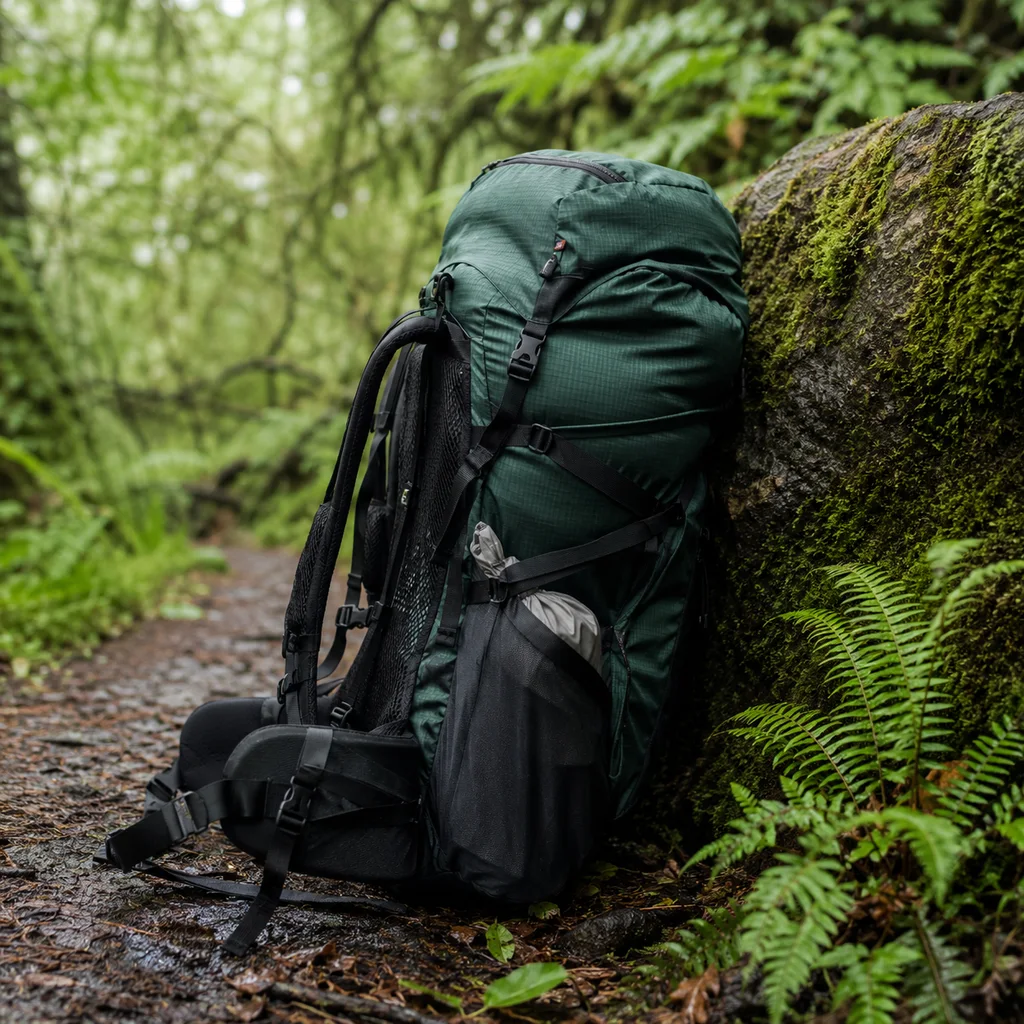
The best backpacking backpacks, a loaded pack propped against a mossy boulder

What Makes the Best Backpacking Backpacks

Four things, in the order they actually affect you.

  • Torso length, not height. Packs are sized by the distance from the C7 vertebra to the top of your hip bones. Two people the same height can need different sizes. Measure it before anything else.
  • Hipbelt fit. Around eighty percent of the load should sit on your hips. The belt must wrap the top of the iliac crest, not the waist, and it needs to fit your shape rather than just your circumference.
  • Capacity for the trip. 50 to 65 litres covers one night to a long weekend for most people. Bigger packs get filled simply because the space is there.
  • Suspension type. Ventilated mesh keeps your back cooler; a closer frame carries heavy loads more stably. Decide which problem you actually have.

Empty weight matters less than fit. A pack a pound lighter that fits badly will feel heavier all day. The same principle runs through our advice on ultralight packing: cut weight from the contents first, and from the carrying system last. For shorter trips the sizing rules in our daypack guide apply the same way.

The Best Backpacking Backpacks at a Glance

PackCapacityEmpty weightSuspensionBest for
Osprey Atmos AG 6565L4.61 lbAnti-Gravity meshBest overall
Osprey Aura AG 6565L4.6 lbAnti-Gravity meshBest for women
Osprey Rook 6565L3.7 lbAirSpeed meshBest value
Kelty Coyote 6565L4 lb 10 ozPerimeter frameHeavy loads
Gregory Zulu 6565LNot listedFreeFloat meshBest ventilation
Teton 65L Scout65LNot listedInternal frameBest budget
Specifications are taken from each product listing at the time of writing.

The Six Best Backpacking Backpacks in Detail

Osprey Atmos AG 65: Best Overall

The Atmos is the pack most often recommended to someone buying their first serious load carrier, and the reason is the Anti-Gravity backpanel. A single continuous piece of mesh runs from the shoulders through to the hipbelt, so the load is spread across a large area of your back and hips rather than pressed onto a few contact points. The practical result is that a heavy pack stops feeling like a heavy pack.

Fit-on-the-Fly is the other half. Both the harness and the hipbelt adjust after purchase, so you are not stuck with whatever the shop had in stock, and you can retune the fit on the trail as your load changes over a trip. There is a zippered sleeping bag compartment with a removable divider, curved side zip access into the main compartment on both sides, and an internal hydration sleeve with a centre back exit port.

It weighs 4.61 pounds, which is heavier than a minimalist pack and is where the comfort comes from. The integrated raincover is included rather than an accessory. At 4.7 stars it is the highest rated pack on this list.

Specs That Matter

  • 65 litre capacity, 4.61 lb empty weight
  • Anti-Gravity continuous mesh backpanel from shoulders to hipbelt
  • Fit-on-the-Fly adjustable harness and hipbelt
  • Zippered sleeping bag compartment with removable divider
  • Integrated raincover and dual curved side zip access

Who It Is For

Anyone carrying thirty pounds or more regularly, and anyone who wants the fit to be adjustable after they buy it.
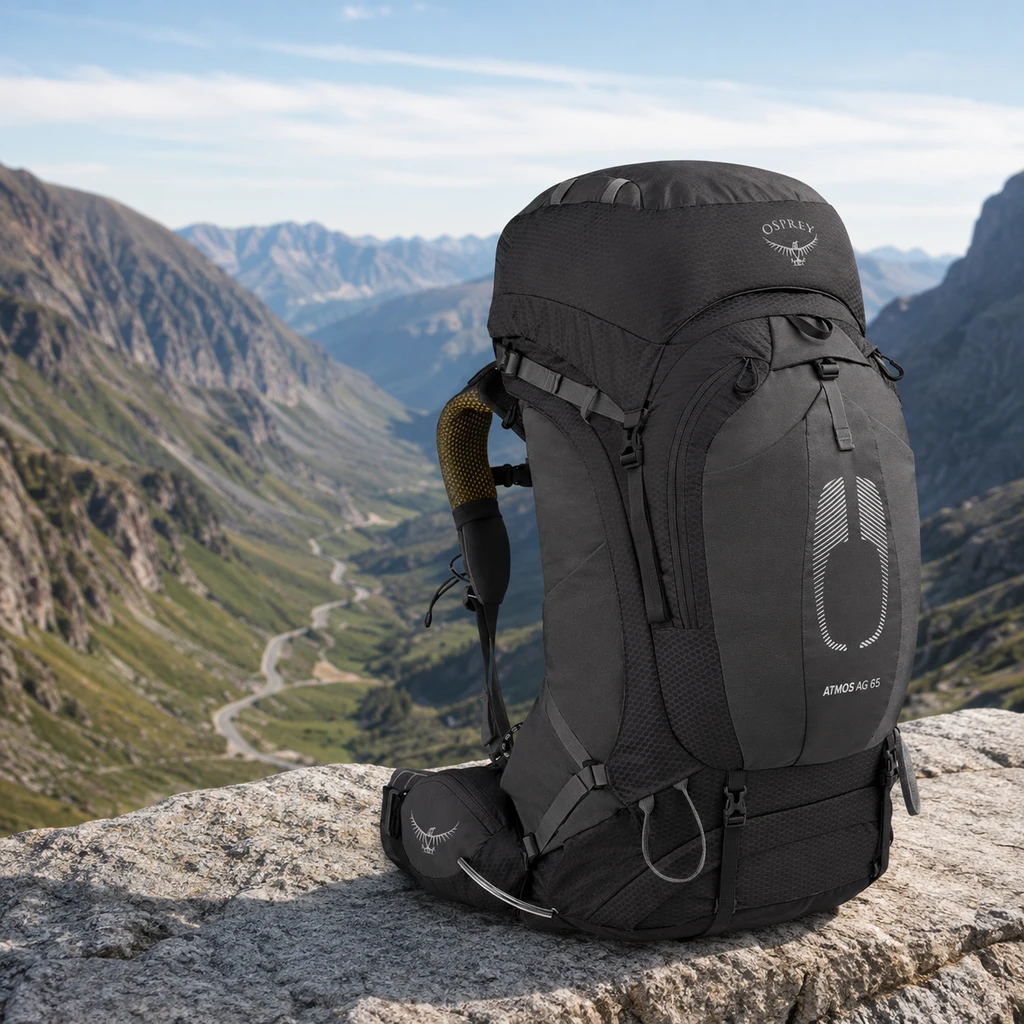
Osprey Atmos AG 65 backpacking pack on a granite ledge at a mountain pass

Osprey Aura AG 65: Best for Women

Mechanically this is the Atmos, built on a women’s specific frame. That means a shorter torso range, shoulder harness curvature shaped for a narrower chest, and a hipbelt angled for a different iliac crest shape. Those are not cosmetic changes; hipbelt geometry is the usual reason a unisex pack refuses to sit comfortably.

Everything that makes the Atmos work carries over: the Anti-Gravity mesh backpanel spreading load across the whole back, Fit-on-the-Fly adjustment on both harness and hipbelt, the zippered sleeping bag compartment with removable divider, and dual curved side zips into the main compartment.

Empty weight is 4.6 pounds and the integrated raincover is included. It holds the same 4.7 star rating as the men’s version. If a pack has ever dug into your hips or pulled at your shoulders, the fit rather than the load is usually the reason, and this is the fix.

Specs That Matter

  • 65 litre capacity, 4.6 lb empty weight
  • Women’s specific frame, harness curvature and hipbelt geometry
  • Anti-Gravity continuous mesh backpanel
  • Fit-on-the-Fly adjustable harness and hipbelt
  • Integrated raincover, sleeping bag compartment, hydration sleeve

Who It Is For

Women carrying moderate to heavy loads, and anyone who has found unisex hipbelts sit wrong.
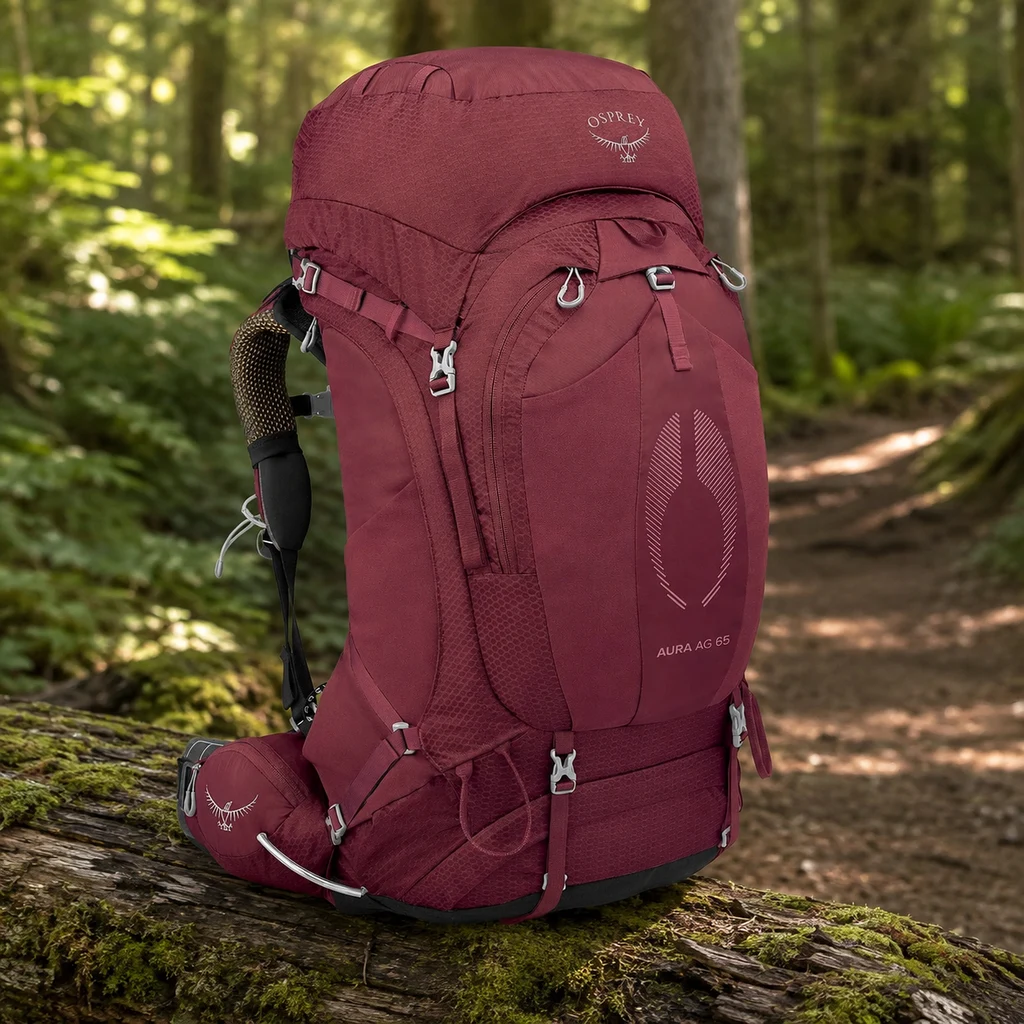
Osprey Aura AG 65 women's backpacking pack on a mossy log by a woodland trail

Osprey Rook 65: Best Value

The Rook is what happens when a good pack is stripped of the features most beginners never use. You keep the important parts, an adjustable tensioned mesh backpanel, a LightWire frame that transfers load to the hipbelt, and an integrated raincover, and you lose the fine adjustment and the extra access zips.

What you gain is weight. At 3.7 pounds it is almost a pound lighter than the Atmos, which is a meaningful saving on a first kit where the contents are already heavier than they need to be. The AirSpeed suspension is adjustable for a range of torso lengths and ventilates well, and there is still a zippered sleeping bag compartment with a floating divider.

For a one to three night trip with a load in the twenties, this is the pack that makes the most sense for the money. At 4.6 stars from over three hundred ratings it earns the recommendation without being anyone’s idea of a luxury item.

Specs That Matter

  • 65 litre capacity, 3.7 lb empty weight, the lightest here
  • Adjustable AirSpeed tensioned mesh backpanel
  • LightWire frame transferring load to the hipbelt
  • Integrated removable raincover that stows in its own pocket
  • Zippered sleeping bag compartment with floating divider

Who It Is For

A first backpacking pack, weekend trips, and anyone who wants a well built pack without paying for adjustability they will not use.
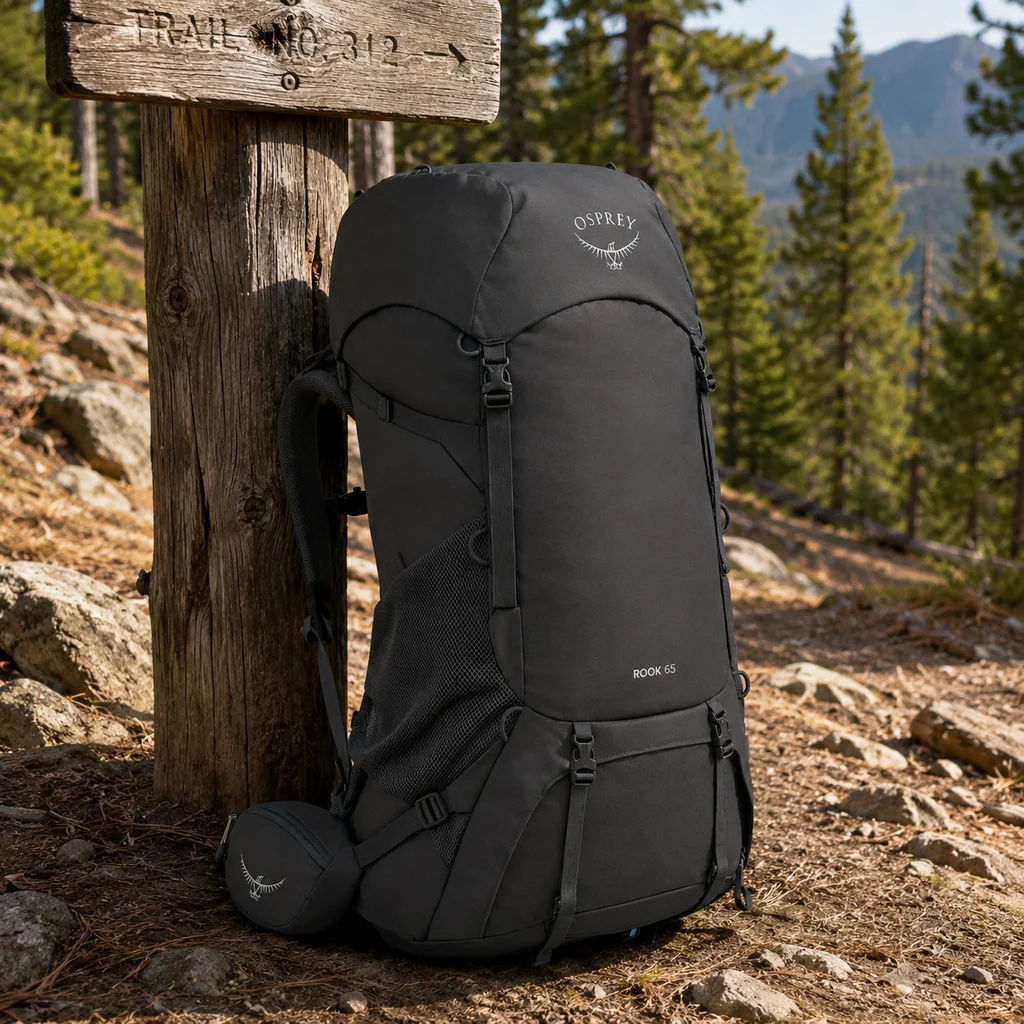
Osprey Rook 65 backpacking pack propped against a wooden trail signpost

Kelty Coyote 65: Best for Heavy Loads

Kelty publish an optimal carry weight of thirty to fifty five pounds for the Coyote, and that range is the whole point. Most 65 litre packs start to feel vague above forty pounds; this one is built around an advanced perimeter frame with an aluminium stay that keeps its shape under a load that would make a lighter pack sag.

Fit Pro torso adjustment can be changed on the fly rather than requiring a rebuild, which matters because torso fit changes as a heavy hipbelt settles. The Amp Flow ventilated back panel keeps some air moving despite the closer frame, and the pack is hydration compatible.

Organisation is unusually good: Kelty signature wing pockets on the hipbelt, two front zippered pockets, large J-zip top loading access into the main compartment, daisy chains, water bottle pockets and a sleeping bag compartment. It weighs 4 pounds 10 ounces and measures 30 by 18 by 12 inches. At 4.6 stars, it is the pack to pick when the load is genuinely heavy.

Specs That Matter

  • 65 litre capacity, 4 lb 10 oz empty weight
  • Optimal carry weight of 30 to 55 pounds on a perimeter frame with aluminium stay
  • Fit Pro torso adjustment that can be changed on the trail
  • Amp Flow ventilated back panel, hydration compatible
  • Wing pockets, two front zip pockets and J-zip main compartment access

Who It Is For

Heavier loads, longer trips, and anyone carrying shared group gear such as a tent and food for two.

Kelty Coyote 65 backpacking pack standing on dry grass at a high camp

Gregory Zulu 65: Best Ventilation

If your problem is a soaked back rather than a sore one, the Zulu is the answer. A full length tensioned mesh panel creates a genuine air gap between you and the pack body, and Gregory build the frame around tension and compression so the perimeter stays stable while the mesh does the contact work.

The FreeFloat hipbelt is the distinctive part. It links the hipbelt to the frame through a panel designed to flex with your body, so the belt follows your hips as you walk rather than fighting them, and the 3D hipbelt shaping conforms to your shape instead of clamping. On uneven ground the difference is noticeable.

Torso adjustment covers 3.5 inches, so one size fits a real range of bodies without losing support. The rating is 4.4 from a smaller sample than the Osprey packs, which reflects a newer listing rather than a weaker pack.

Specs That Matter

  • 65 litre capacity with 3.5 inches of torso adjustment
  • Full length tensioned mesh backpanel for genuine airflow
  • Patented FreeFloat hipbelt that flexes with the body
  • 3D shaped hipbelt that conforms rather than clamps
  • Perimeter frame built on tension and compression for stable support

Who It Is For

Hot climates, humid summers, and anyone whose main complaint about packs is sweat rather than weight.

Gregory Zulu 65 backpacking pack on a sunlit rock slab beside an alpine stream

Teton 65L Scout: Best Budget

With over seven thousand ratings at 4.7 stars, this is by a wide margin the most reviewed pack here, and it is the one that gets people onto the trail without a large outlay. It is an internal frame pack with multi position torso adjustment sized for medium and tall adults, and it comes with a rain cover included rather than sold separately.

The comfort features are more thorough than the price suggests: a durable open cell foam lumbar pad with moulded channels for airflow, a large sleeping bag compartment, multi directional compression straps, and a hydration pocket. The Scout comes in 45, 55 and 65 litre versions, so you can size to the trip rather than defaulting to the largest.

It is heavier and less refined than the Osprey packs, and the materials will show wear sooner under hard use. For a first season, or for someone who is not yet sure how often they will go, that is an entirely reasonable trade.

Specs That Matter

  • 65 litre capacity, also available in 45L and 55L
  • Internal frame with multi position torso adjustment
  • Open cell foam lumbar pad with moulded airflow channels
  • Rain cover included, plus a hydration pocket
  • 4.7 stars from over 7,300 ratings, the most reviewed pack here

Who It Is For

A first pack, occasional trips, and anyone testing whether backpacking is for them before spending more.

Teton Scout 65 backpacking pack leaning against a log at a forest campsite

How to Choose Between Them

Your Very First Pack

The Teton 65L Scout if money is tight, the Osprey Rook 65 if it is not. Both carry a first kit comfortably, and neither asks you to understand adjustments you have not yet needed. Spend what you save on the sleeping system, which is where a bad night actually comes from; our round up of sleeping pads covers the R values that matter.

Carrying Thirty Five Pounds or More

The Kelty Coyote 65, built around a stated thirty to fifty five pound carry range, or the Osprey Atmos AG 65 if you want that weight spread more evenly across your back. If you are regularly at the top of that range, look hard at what is in the pack as well; our notes on how the body adapts to long distance explain why cumulative load matters more than any single day. A pair of poles takes real strain off the knees under a heavy pack, and our round up of trekking poles covers the options.

Hot and Humid Trips

The Gregory Zulu 65 for the full length air gap, with the Rook as a lighter second choice. Ventilation is the one comfort problem that gear genuinely solves, and it pairs with the clothing advice in our guide to what to wear on the trail and the tactics in our hot weather hiking tips.

If Packs Have Never Fitted You

The Osprey Aura AG 65 for women, or the Atmos with Fit-on-the-Fly for men. Both let you change the harness and hipbelt after purchase, which is the difference between adapting the pack to you and adapting yourself to the pack. The same reasoning drives how to choose hiking boots, where fit beats the spec sheet.

One Pack for Everything

The Atmos AG 65, or the Aura AG 65. They are the most versatile packs here, comfortable across the widest range of loads, and the adjustability means they still fit if your kit changes. Pair one with the layering approach in our guide to fall hiking and it will cover three seasons.

Torso Length, Capacity and Frames: What the Specs Mean

Torso Length Is the Only Size That Matters

Measure from the bony bump at the base of your neck down to the level of the top of your hip bones. That number, not your height, is what pack sizes refer to. A short torso on a tall frame puts the hipbelt above your hips, which moves the load onto your shoulders and produces exactly the ache people blame on weight. If you are assembling a first kit around the pack, our guide for beginner hikers covers what goes in it.

Capacity Expands to Fill Itself

Fifty to sixty five litres is the right range for one to four nights. Buying seventy five for a future trip is a common mistake, because the empty space gets filled with things you would otherwise leave behind. Size for the trips you actually do now.

Ventilated Mesh Versus a Closer Frame

A tensioned mesh backpanel holds the pack body a couple of centimetres off your spine, which keeps you cooler but moves the centre of mass slightly further out. A closer frame keeps heavy loads more stable and makes you sweat more. Under about thirty pounds the mesh is usually the nicer choice; above forty, stability tends to win.

Empty Weight Is the Last Thing to Optimise

The spread between these packs is about a pound, while a first kit is routinely five to ten pounds heavier than it needs to be. Fix the contents first. A pack that fits and carries well is worth more than the pound you would save by dropping to a frameless design you are not ready for.

Fitting, Loading and Looking After a Pack

Fit it loaded, never empty. Put twenty five pounds in it, loosen everything, settle the hipbelt on top of your hip bones and tighten it first, then the shoulder straps, then the load lifters at roughly forty five degrees, then the sternum strap last. If the shoulder straps are carrying real weight after that, the torso length is wrong rather than the adjustment. Poles change the balance again once loaded, which our guide to using trekking poles covers.

Load heavy items in the middle of the pack and tight against your spine, bulky light items low, and daytime items in the lid and hipbelt pockets. This matters as much as the pack itself, and it is the single easiest thing to get wrong on a first trip. Our guide to hydration is worth reading alongside it, because water is both the heaviest and the most movable thing you carry.

Wash a pack by hand in cold water, never in a machine, and dry it out of direct sun before storing it loosely rather than compressed. Rain covers keep the worst out but nothing is genuinely waterproof under sustained rain, so line the inside with a bin bag and see our notes on camping in the rain. The general advice in storing outdoor gear applies to packs too.

Frequently Asked Questions

What size backpack do I need for backpacking?

Fifty to sixty five litres covers one night to a long weekend for most people, which is why every pack here is 65. Go smaller only once your kit is genuinely light, and larger only for winter trips or when carrying group gear. The best backpacking backpacks are the ones sized to the trips you actually take.

How do I measure my torso length?

Find the bony bump at the base of your neck and measure straight down your spine to the level of the top of your hip bones. Someone else measuring is far more accurate than doing it yourself. That measurement in inches maps directly onto small, medium and large sizing.

Should the weight sit on my shoulders or my hips?

Hips, by a long way. Around eighty percent of the load should be carried on the hipbelt, with the shoulder straps mainly stabilising. If your shoulders ache first, either the hipbelt is sitting on your waist instead of your hip bones, or the torso length is wrong.

Do I need a rain cover?

Yes, and it is not sufficient on its own. Covers shed showers but water still runs down your back and in through the panel against you. Most experienced backpackers use a cover plus a liner bag inside the pack, and keep the sleeping bag in its own dry bag regardless. Knowing what is coming helps, which is what our notes on predicting trail weather are for.

Is a women’s specific pack actually different?

Yes. The torso range is shorter, the shoulder harness is curved differently, and the hipbelt is shaped for a different pelvis angle. The hipbelt is the important one, because it carries most of the load. Plenty of people are best served by whichever fits, regardless of the label on it.

Measure your torso, then fit the pack loaded before you commit. If you want one answer: the Osprey Atmos AG 65, or the Aura AG 65 on a women’s frame, will carry almost anything you are likely to take. Start with the Teton Scout if you are still finding out whether you like sleeping outside. Our guide to backpacking for beginners covers the first trip, and dispersed camping covers where to sleep once you are past established sites.


Discover more from Maive Verse

Subscribe to get the latest posts sent to your email.

Discover more from Maive Verse

Subscribe now to keep reading and get access to the full archive.

Continue reading