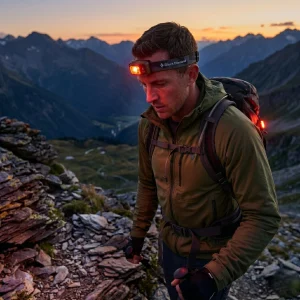
Master the trail after dark with our night hiking guide. Learn 11 technical rules for vision, navigation, and thermal safety during sunset hikes in 2026.
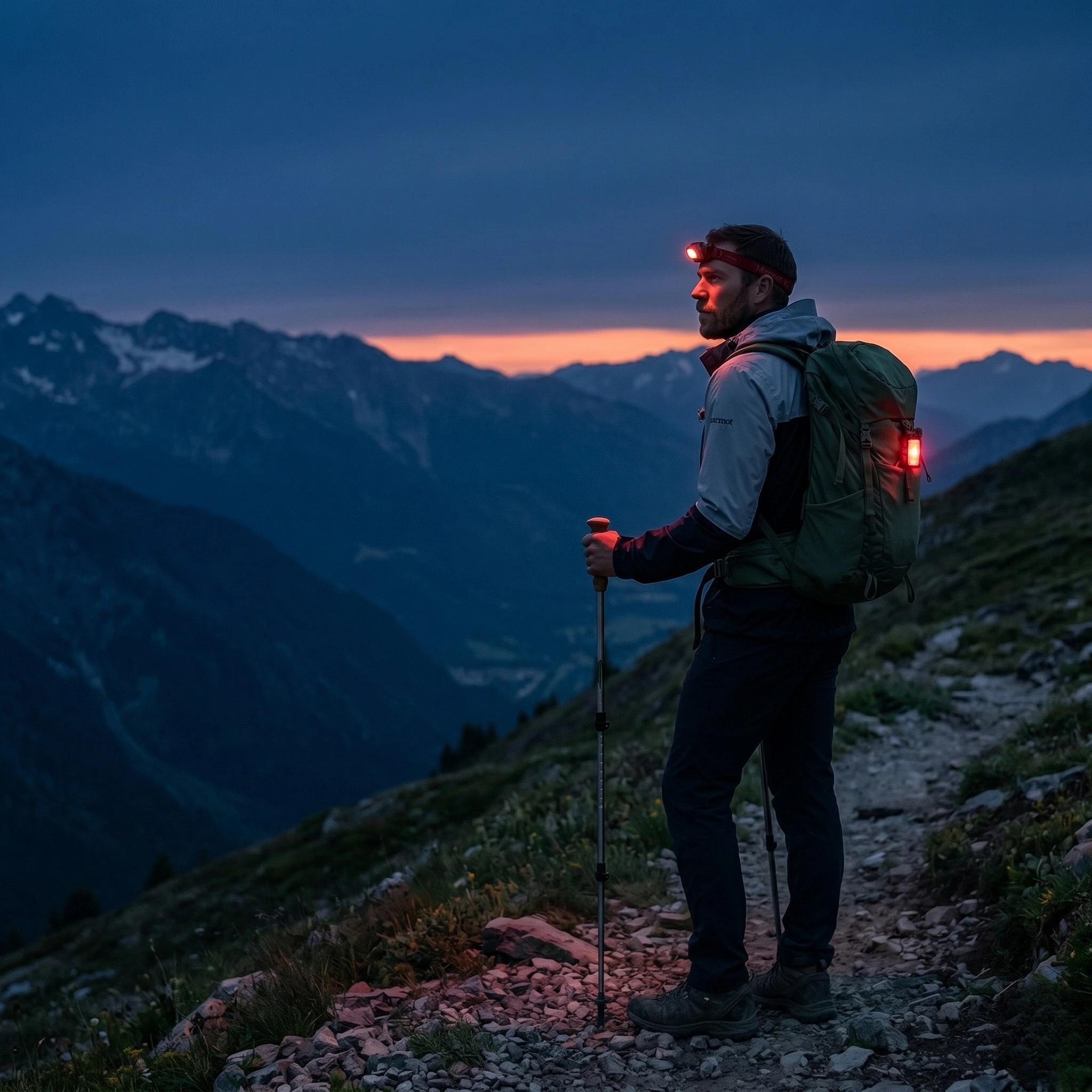
Table of Contents
Introduction: The Nocturnal Transformation of the Trail
Implementing a structured night hiking guide is a fundamental requirement for backcountry travelers looking to extend their operations past daylight hours. In the wilderness, the transition from day to night is not merely a change in illumination; it is a profound environmental transformation. Ambient temperatures drop rapidly, wind patterns shift, and the visual cues required for navigation are eliminated. For those who have already mastered the Bikepacking for Beginners Guide or extended multi-day trips, managing the trail after dark is the next step in achieving true self-sufficiency.
The primary objective of nocturnal hiking is the mitigation of risk in low-visibility environments. When the sun dips below the horizon, the brain’s ability to process depth, contrast, and distance is severely degraded. To compensate, a hiker must utilize specialized lighting hardware, adapt their physical pace, and implement redundant navigation systems. This prepared approach is identical to the Bikepacking Mindset required to overcome long-distance physical stress. This guide analyzes eleven rules designed to ensure a safe, efficient, and successful sunset adventure.
The Physics of Wilderness Illumination and Human Vision
To safely navigate after dark, one must understand how light behaves in the wild and how the human eye processes low-intensity environments.
Understanding Luminous Flux and Lux Decay
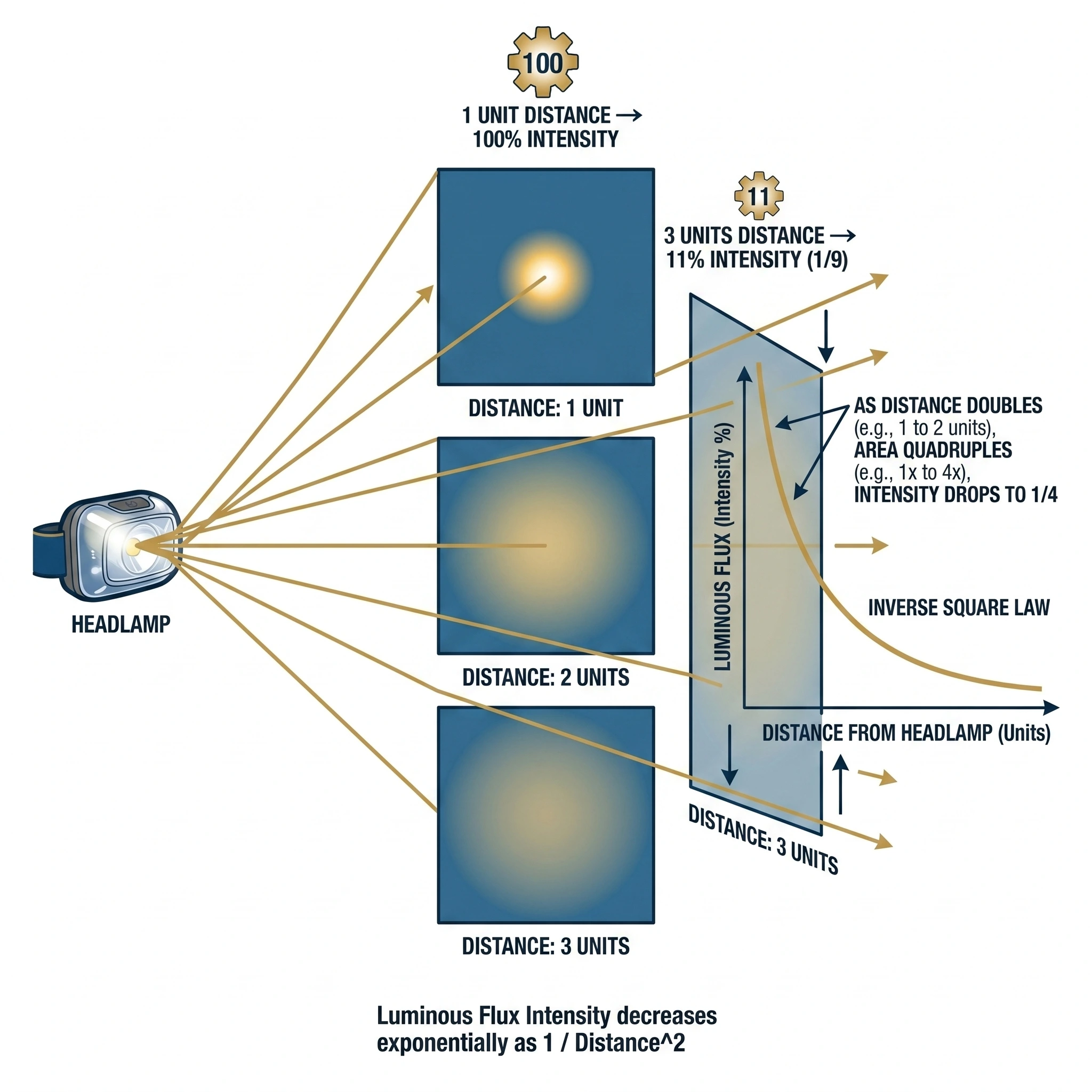
The illumination provided by a headlamp is measured in lumens (luminous flux), while the actual light falling on a trail surface is measured in lux (lumens per square meter). The decay of light over distance is governed by the Inverse Square Law:$$E = \frac{I}{d^2}$$
Where:
- $E$ is the illuminance (lux).
- $I$ is the luminous intensity (candela or lumens per steradian).
- $d$ is the distance from the light source in meters.
As a result of this exponential decay, a headlamp that provides $100\text{ lux}$ of illumination at $1\text{ meter}$ will provide only $0.01\text{ lux}$ at $100\text{ meters}$. This stark drop-off limits peripheral vision, making the trail look like a narrow tunnel. This tunnel vision makes the identification of vertical landmarks highly difficult, demanding that the hiker rely on the precise spatial data found on a Trail Weather Prediction Guide map or GPS unit.
Human Adaptation: Rhodopsin and Dark Adaptation Mechanics
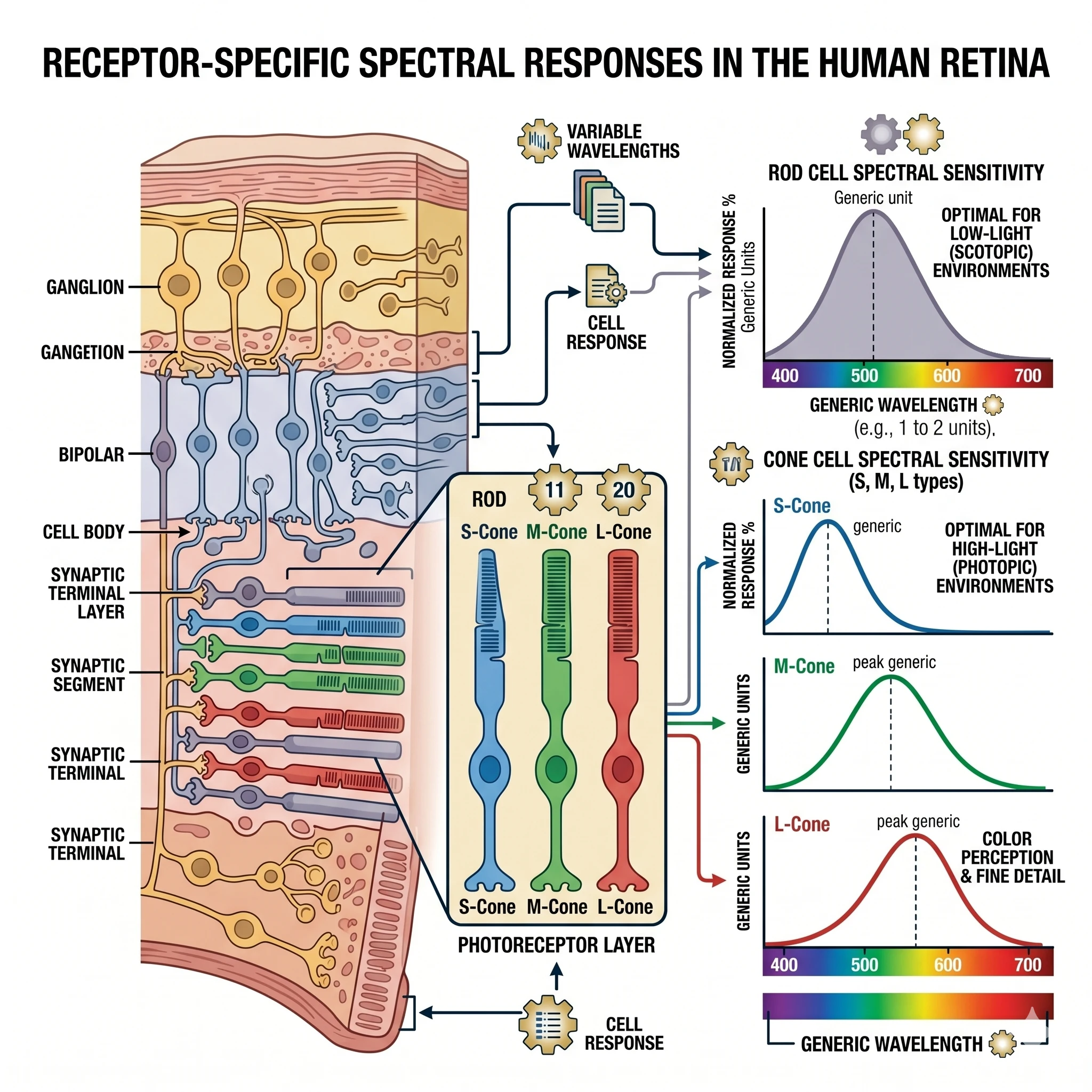
The human eye requires up to 30 to 45 minutes of complete darkness to achieve maximum low-light sensitivity. This physiological process relies on the accumulation of rhodopsin—a light-sensitive receptor protein in the rod cells of the retina.
Even a brief exposure to white light can instantly bleach this rhodopsin, resetting the adaptation process and leaving the hiker temporarily blind. This chemical transition is why the International Dark-Sky Association advocates for the minimization of white artificial light in natural preserves.
1. Implement the Red-Light Protocol for Vision Preservation
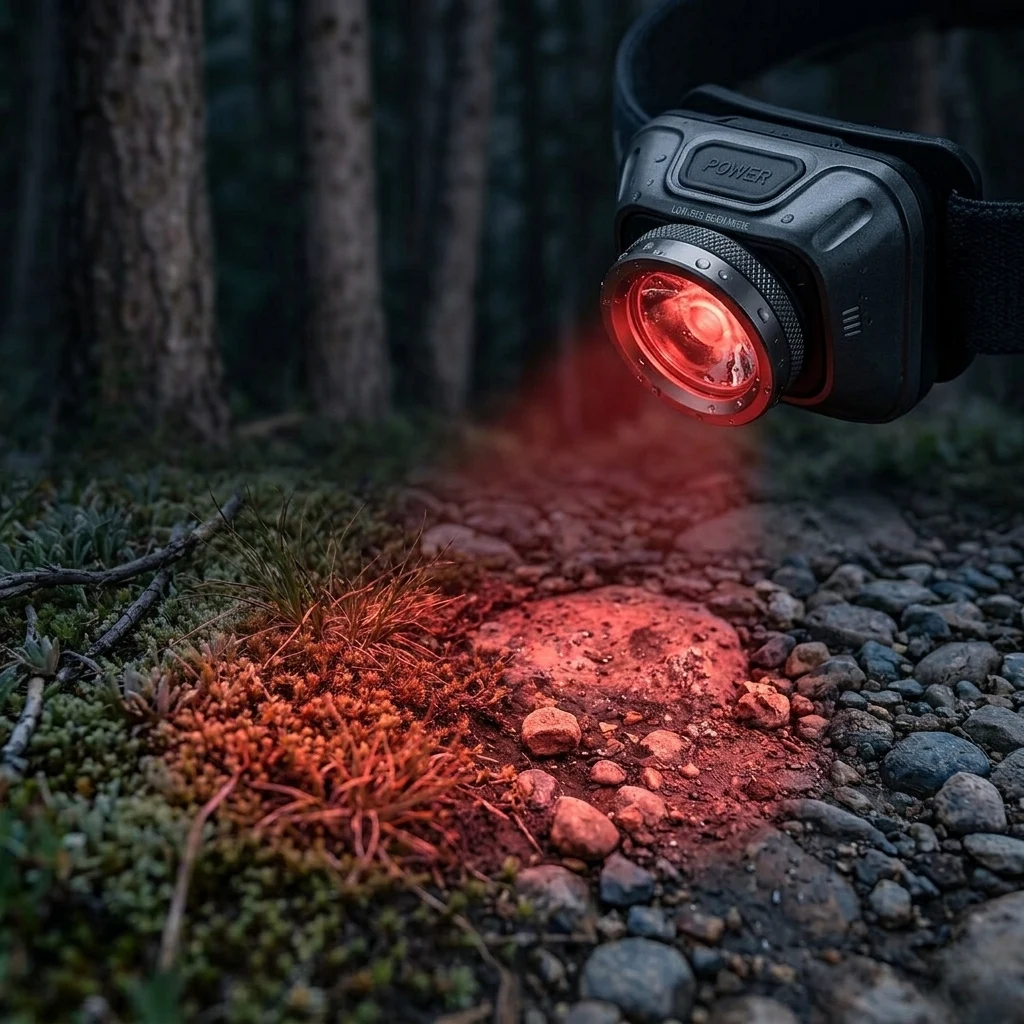
The primary rule of the night hiking guide is the strict utilization of red light whenever possible. Because red light has a longer wavelength ($\approx 620\text{ to }750\text{ nm}$), it does not stimulate the rod cells to the same degree as white light, allowing the eye to retain its dark adaptation.
- Saves Energy: Red-light LEDs consume up to 50% less battery than high-power white LEDs, preserving your Portable Power Bank reserves.
- Reduces Eye Strain: Red light minimizes the high-contrast glare that causes visual fatigue during long nights.
- Promotes Melatonin Stability: Unlike blue-tinted white light, red light does not suppress melatonin production, helping the hiker maintain sleep cycle stability when using a Bikepacking Sleeping System later.
2. Navigational Redundancy for Zero-Visibility Paths
When vertical reference points are swallowed by the dark, the risk of wandering off-trail increases exponentially. A solo hiker must implement the same navigational redundancy required for Solo Bikepacking Safety missions.
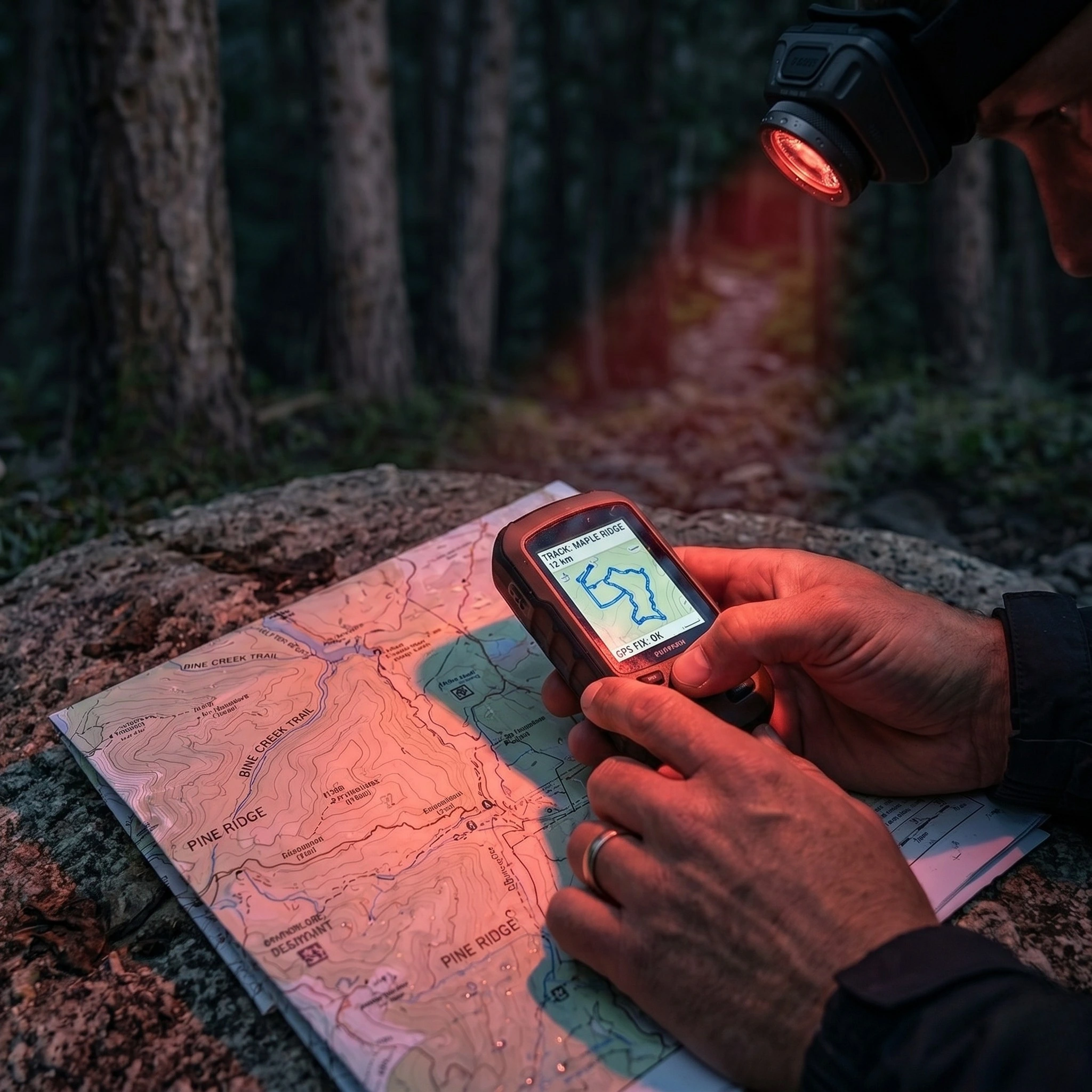
The hiker should use a dedicated GPS device as their primary tool, backed up by a smartphone with offline Bikepacking Navigation maps. Additionally, carrying a physical topographic map from the USGS Mapping Resources and a compass is a mandatory safety protocol. In the dark, a simple trail junction can look completely different than it does during the day; verifying your heading with an analog compass prevents the risk of backtracking.
3. Topographic and Microclimate Planning Rules
Before embarking on a sunset hike, the terrain must be vetted with extreme scrutiny. Steep ridges, narrow cliff-side trails, and water crossings should be avoided after dark.
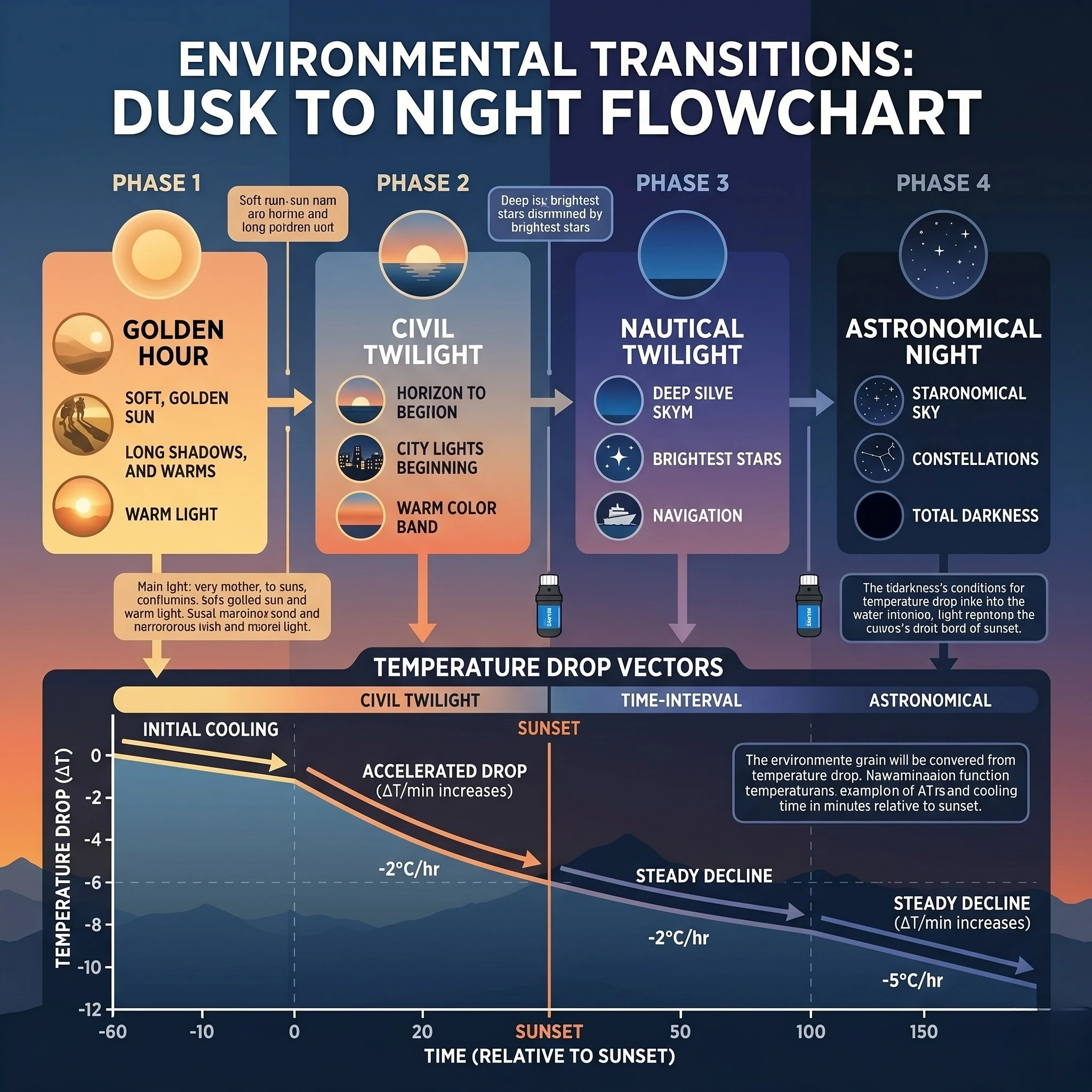
Orographic cooling causes temperatures to drop significantly faster on high peaks than in valleys. This temperature drop can be modeled by the dry adiabatic lapse rate of approximately $9.8^\circ\text{C}$ per kilometer of elevation gain. This atmospheric cooling, as analyzed in our Trail Elevation Prep Guide, can quickly lead to hypothermia if a storm approaches. Utilizing resources from the NOAA Weather Monitoring service helps identify localized fronts before departure.

4. Cold-Weather Thermal Regulation Strategies
The human body loses heat rapidly when the sun sets, primarily through radiation and convection. To maintain core temperature, a hiker must understand the rate of heat loss, which can be modeled by Newton’s Law of Cooling:$$\frac{dT}{dt} = -k(T – T_a)$$
Where:
- $T$ is the body’s temperature.
- $T_a$ is the ambient temperature of the environment.
- $k$ is a positive heat-transfer constant.
- $t$ is time.
As the ambient temperature ($T_a$) drops, the rate of heat loss increases. To combat this, the hiker must utilize a technical layering system, wrapping themselves in a hardshell jacket and carrying a synthetic insulated mid-layer. This protocol is detailed in our Wet Weather Bikepacking Guide. A dry, insulated core prevents the shivering that degrades muscular coordination on technical descents.

5. Wildlife Interactions and Nocturnal Animal Protocols
Many predatory animals—including mountain lions, coyotes, and bears—are crepuscular or nocturnal, meaning they are most active during twilight and night hours. A hiker must respect this biological reality.
- Make Consistent Noise: Use a trekking pole on rocks or speak out loud to avoid surprising animals.
- Keep Eyes Moving: Animal eyes contain a reflective layer called the tapetum lucidum, which glows brightly when hit by a headlamp beam. Scanning the woods with a quick white-light pulse can help identify animals from a safe distance.
- Carry Protection: Keep bear spray or personal defense tools in an accessible location, as recommended in our Eco-Friendly Bikepacking Guide. Following the wildlife guidelines from the National Park Service ensures safety for both the hiker and the ecosystem.

6. Sizing and Selection of Technical Lighting Gear (Affiliate Picks)
Selecting high-quality illumination is the most critical step in your night hiking guide checklist. The following options are vetted for durability, weight, and battery efficiency.
1. Petzl Actik Core Headlamp
Key Features

Pros
Cons
2. Black Diamond Storm 500-R
Key Features

Pros
Cons
3. Anker PowerCore 10000 Portable Charger
Key Features

Pros
Cons
7. Strategic Hydration and Metabolic Demands of Night Travel
Because the air is cooler, many hikers do not realize they are losing fluid through respiration and sweat. Dehydration accelerates the onset of hypothermia and compromises physical coordination.
- Consistent Sips: Drink water every 20 minutes, even if you do not feel thirsty. Use a Bikepacking Hydration Guide setup for easy access.
- Caloric Focus: Digestion generates internal heat. Pack high-protein, calorie-dense foods like those reviewed in our Hiking Nutrition Guide to maintain metabolic energy levels.
- Water Treatment: If refilling from natural sources, always filter your water using a Sawyer Squeeze Filter (Affiliate Link) to avoid waterborne pathogens, as recommended by the CDC Wilderness Travel agency.

8. Group Communication and Audible Signaling Rules
In the dark, visual communication is highly limited. A group must establish specific audible and lighting signals before leaving the trailhead to maintain contact.
The American Hiking Society recommends using a safety whistle as your primary emergency signal. The universal distress signal is three short blasts, repeated at regular intervals. Additionally, the group should maintain a slow, steady pace, following the principles of Soft Hiking. This pace prevents the group from stretching out and losing track of the trailing hiker.

Technical Comparison: Day Hiking vs. Night Hiking Dynamics
To assist with your preparation, the following table summarizes the primary operational differences between day and night wilderness travel.
| Metric | Day Hiking | Night Hiking | Core Safety Protocol |
|---|---|---|---|
| Visual Range | Limited only by topography | Limited to light beam ($$< 50\text{ meters}$$) | Use redundant light sources |
| Navigation Focus | Landmarks, trail signs | GPS coordinates, compass headings | Satellite Messenger monitoring |
| Environmental Hazard | High Heat Hacking risk | Rapid cooling, cold exposure | Technical wind-blocking shell |
| Wildlife Risk | Low-to-moderate | High (nocturnal predators) | Carry bear spray, make noise |
| Metabolic Focus | Glycogen replenishment | Thermal heat generation | High-protein Hiking Nutrition |

Conclusion: Mastering the Quiet Trail
Mastering the lessons in this night hiking guide transforms the dark trail from a source of anxiety into a calculated, self-reliant adventure. By prioritizing the red-light protocol (Section 1), establishing redundant navigation systems (Section 2), and carrying high-quality lighting and backup power (Section 6), any adventurer can safely witness the quiet beauty of the sunset wilderness. The success of a night mission is not measured by the speed of the ascent, but by the level of safety and technical preparation maintained throughout the trip.
Remember that technology is a tool, not a replacement for real-world caution. Always monitor your physical symptoms, respect local wildlife boundaries, and adhere to Leave No Trace Principles to preserve the environment. Keep your physical training high and your environmental footprint low by following the Eco-Friendly Hiking Guide.
The mountain is waiting, and with the right safety foundation, you are ready to explore it safely after dark. Treat the night with the same respect you would a high-altitude climb. Plan with precision, pack with intention, and enjoy the unique clarity of the moonlit wilderness.
Discover more from Maive Verse
Subscribe to get the latest posts sent to your email.


