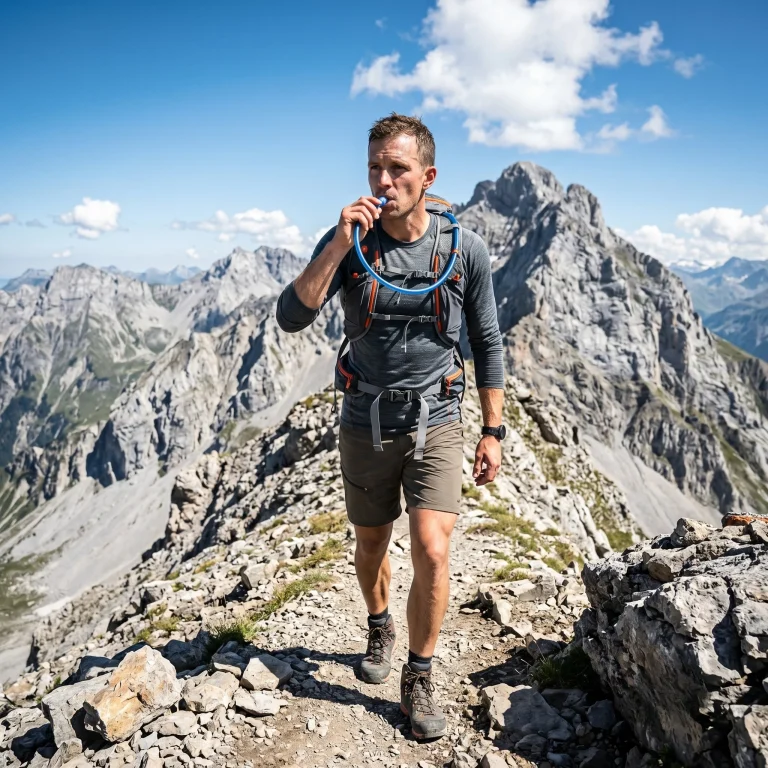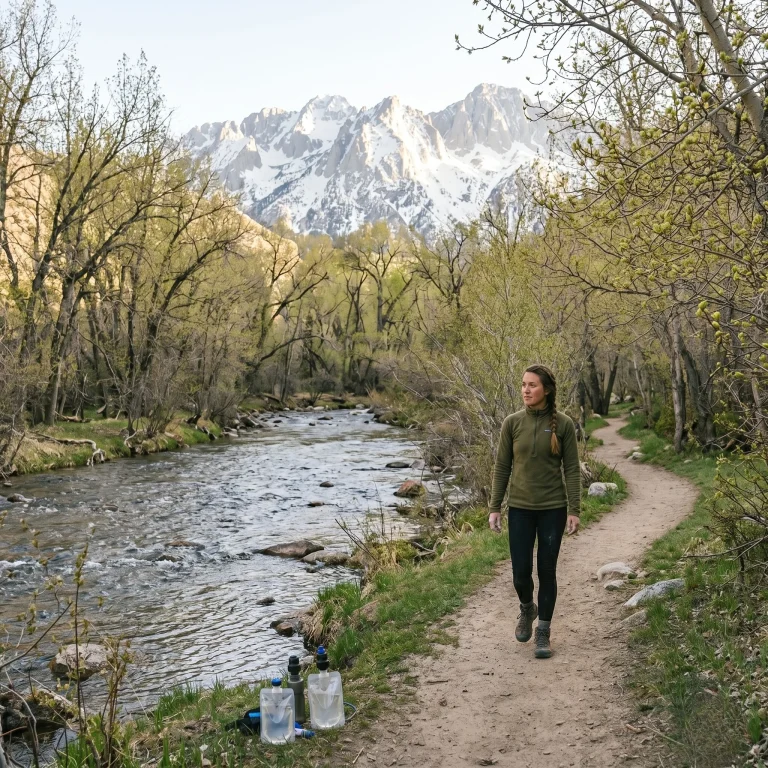

Discover 11 ultralight packing hacks to drop 5lbs from your day pack. Master gear weight, volume distribution, and safety redundancy in 2026.
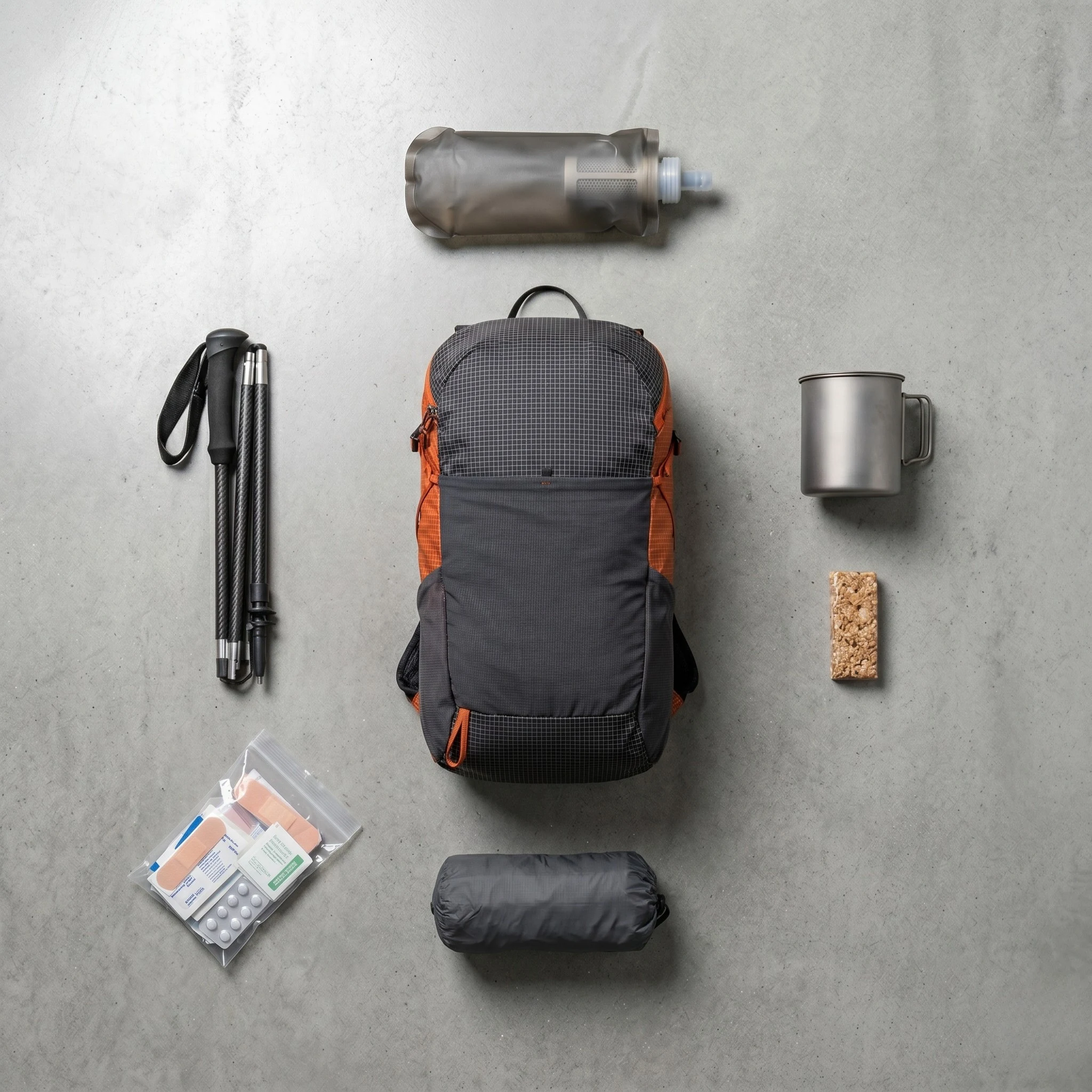
Table of Contents
Introduction: The Physics of the Gravitational Load
Implementing systematic ultralight packing hacks is a technical requirement for reducing physiological fatigue and preventing musculoskeletal injuries during long days on the trail. Many recreational hikers operate under the false assumption that a heavier pack is a necessary byproduct of safety and preparedness. In reality, carrying excess mass increases the energy expenditure required to navigate vertical terrain, accelerating exhaustion and compromising joint stability. For those who have already transitioned through the Bikepacking for Beginners framework, the mechanics of weight minimization are a familiar and vital discipline.
The biological cost of carrying a loaded pack is directly proportional to the slope gradient and the total mass of the system. By treating gear weight as a variable to be engineered, a hiker can significantly reduce the work required by the cardiovascular system. This guide provides a technical analysis of how to drop five pounds from a standard day pack without compromising essential safety margins. This methodology aligns with the data-driven approaches found in our Ultimate Gear List tutorials, shifting the focus from survival to calculated athletic performance.
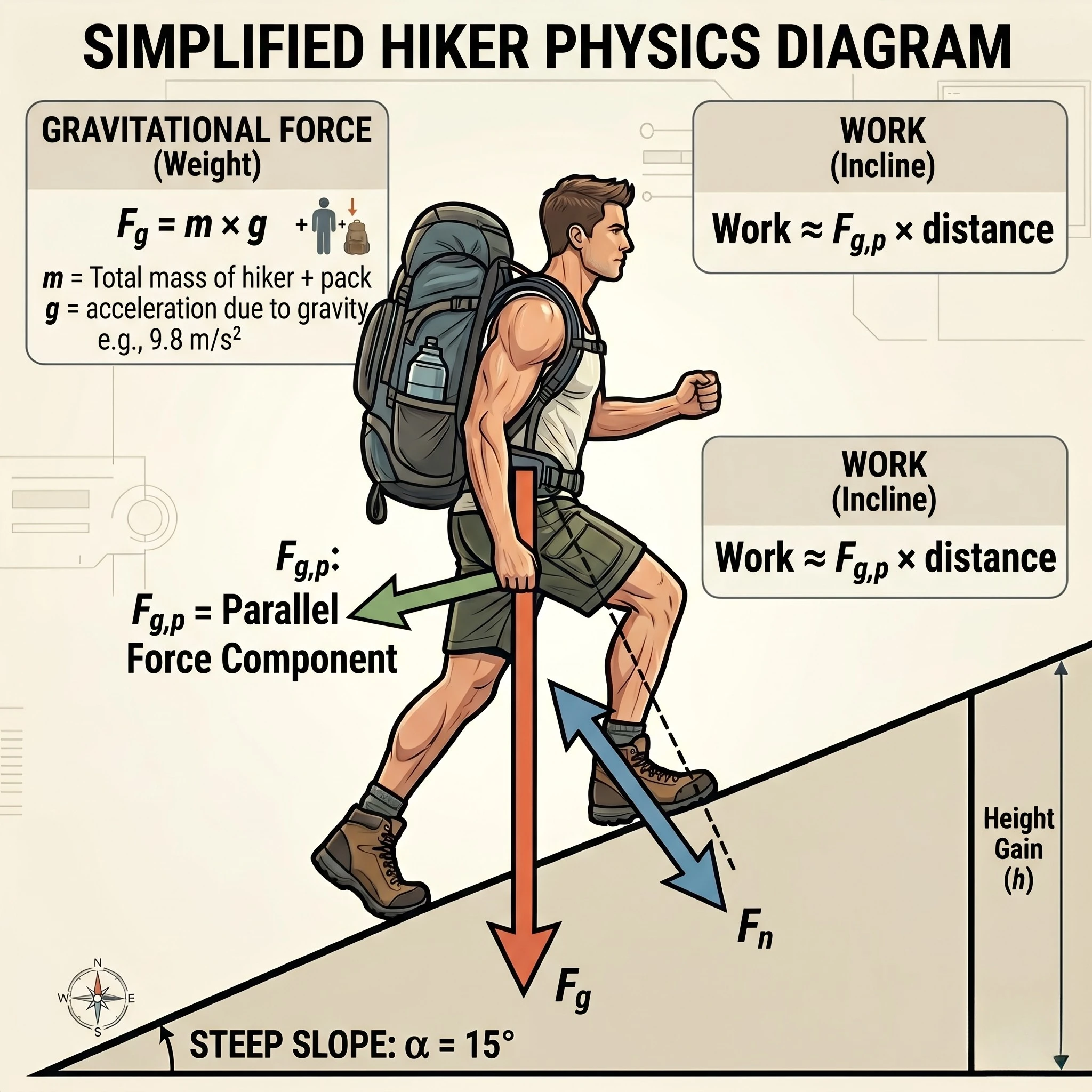
The Mathematics of Base Weight Reduction
To understand the mechanical benefit of weight reduction, the hiker must analyze the work ($W_g$) required to lift a load against gravity over a specific horizontal distance ($d$) and slope angle ($\theta$):$$W_g = m \cdot g \cdot d \cdot \sin(\theta)$$
Where:
- $m$ is the total mass of the hiker and their equipment in kilograms.
- $g$ is the acceleration due to gravity ($9.81 \text{ m/s}^2$).
- $d$ is the total distance traveled in meters.
- $\theta$ is the average incline angle of the trail.
For example, on a $10,000 \text{ meter}$ hike (approx. 6.2 miles) with a sustained $10^\circ$ incline, dropping just $2.27 \text{ kg}$ (5 pounds) of equipment reduces the physical work required by the body by approximately $38.7 \text{ kilojoules}$ of energy. This energetic conservation directly reduces the rate of glycogen depletion, preventing the physical “bonking” analyzed in our Hiking Nutrition Guide. Furthermore, during the descent, this mass reduction decreases the kinetic impact force on the patellofemoral joint, which can be modeled as:$$F_{\text{impact}} = c \cdot m \cdot g \cdot \cos(\theta)$$
Where $c$ is a dynamic shock absorption coefficient (ranging from 2.5 to 4.0 during downhill stepping). Reducing $m$ directly lowers the cumulative mechanical stress on the knees, preserving long-term joint health.
1. Upgrade the Core Container (The Pack Itself)
The first and most effective of all ultralight packing hacks is to evaluate the empty weight of the day pack. Traditional day packs are often over-engineered with heavy internal frames, thick padding, and excessive pockets, resulting in an empty weight of 3 to 4.5 pounds.
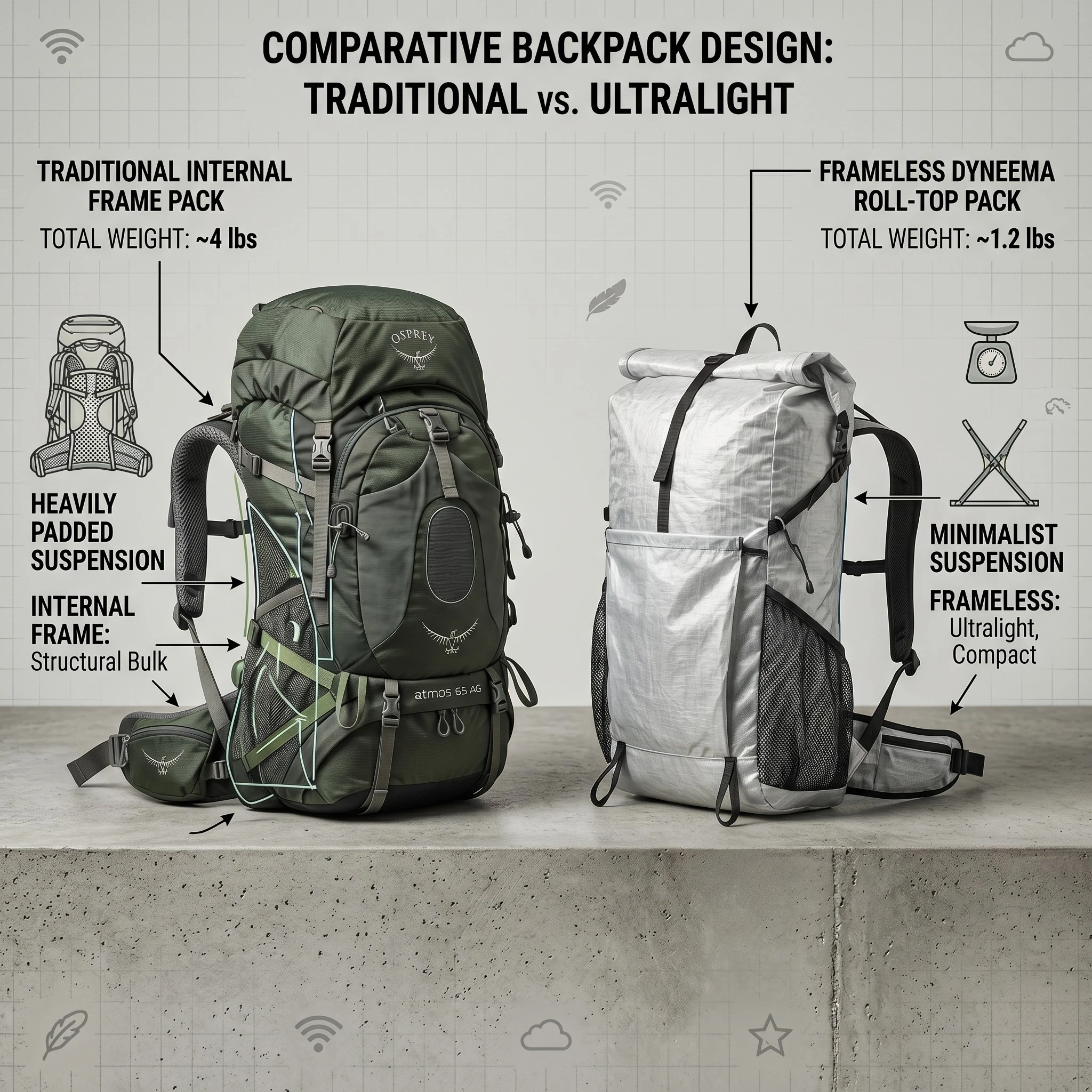
Choosing Frameless vs. Lightweight Internal Frames
For day hikes where the total load remains under 15 pounds, an internal suspension frame is mechanically redundant. Switching to a frameless pack constructed from high-tensile fabrics like Dyneema Composite Fabric (DCF) or Robic nylon can immediately save 2 to 3 pounds of base weight.
These materials offer exceptional water resistance and tear strength without the weight of polyurethane coatings. This structural optimization ensures that the container itself does not contribute significantly to the total gravitational load.
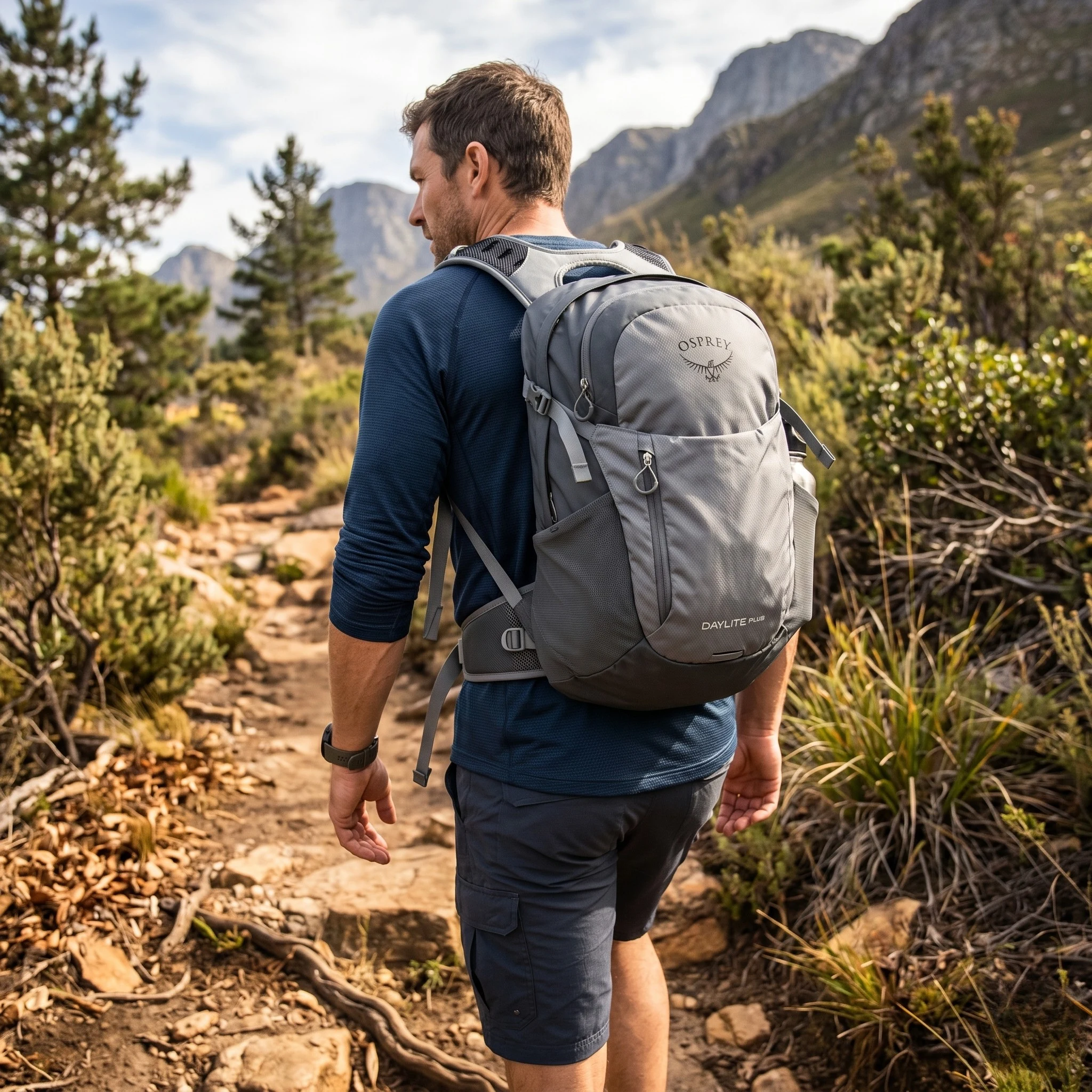
Recommendation: Osprey Talon 22 Daypack
Key Features
Pros
Cons
2. Implement the “Three-Item” Rule for Clothing
Many beginners pack multiple spare layers “just in case” the weather shifts. This habit is a primary source of unnecessary pack weight. A technical layering system relies on versatility rather than quantity.
Managing Thermal Layers and Technical Shells
The “Three-Item” rule dictates that a hiker should only carry three core layers: one worn, and two packed.
- The Base Layer (Worn): A high-wicking synthetic or merino wool shirt that manages moisture.
- The Insulating Mid-Layer (Packed): A lightweight fleece or micro-grid hoodie that traps warm air.
- The Protective Shell (Packed): A highly packable, windproof, and waterproof jacket.
By utilizing this system, the hiker can handle a wide temperature range without carrying duplicate thermal layers. This is the same layering strategy used in Wet Weather Bikepacking scenarios to maintain thermal equilibrium in cold storms.
3. Decentralize and Optimize Your Water Storage
Water is a critical resource, but carrying it in heavy, rigid bottles is an inefficient use of weight and pack volume. Standard hard-plastic bottles can weigh up to 6 ounces empty, whereas collapsible flasks weigh less than 1 ounce.
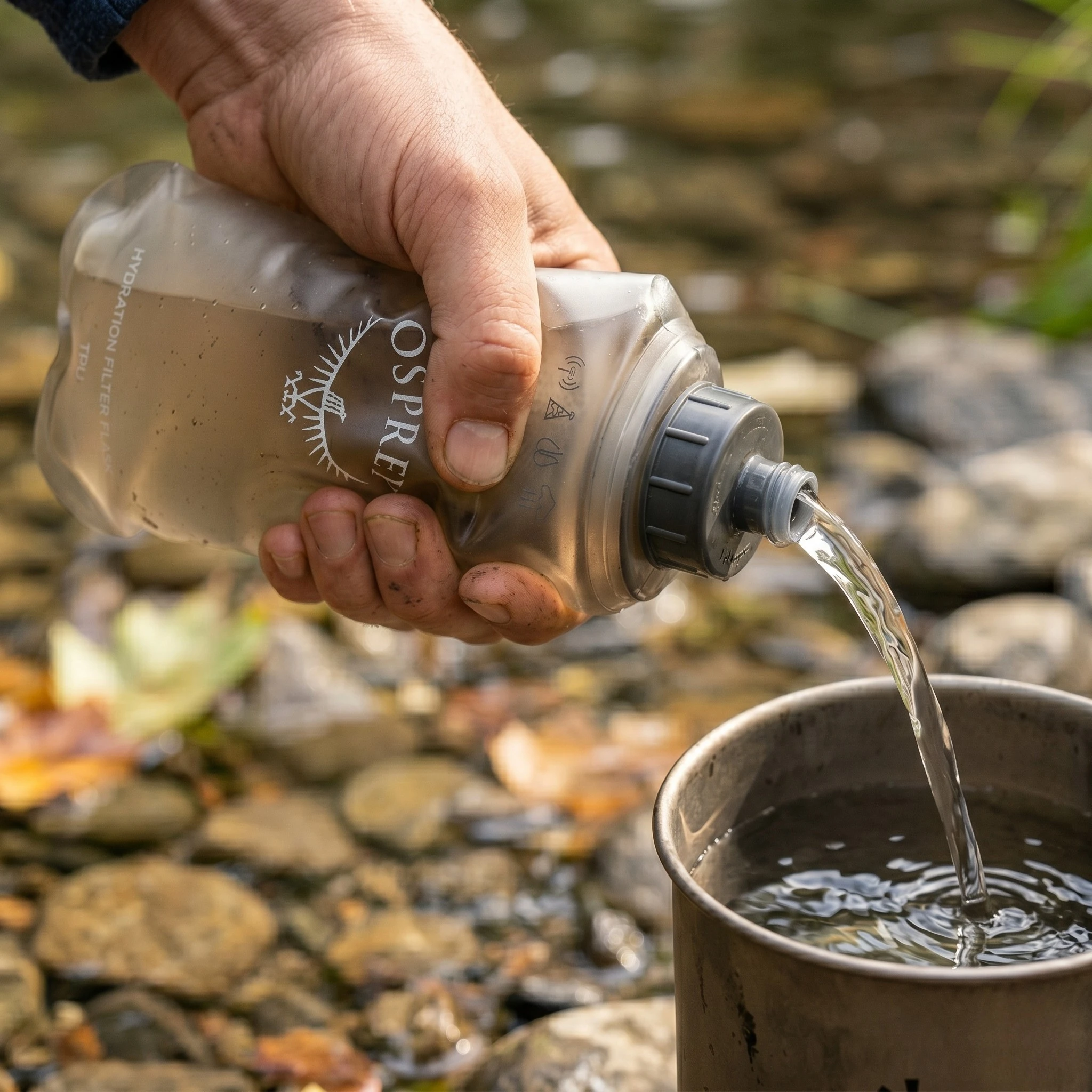
Replacing Rigid Bottles with Collapsible Flasks
Collapsible TPU (thermoplastic polyurethane) flasks compress as they are emptied, eliminating the sloshing sound and space requirements of rigid bottles. This centralized volume management is a core principle discussed in our Bikepacking Hydration Guide.
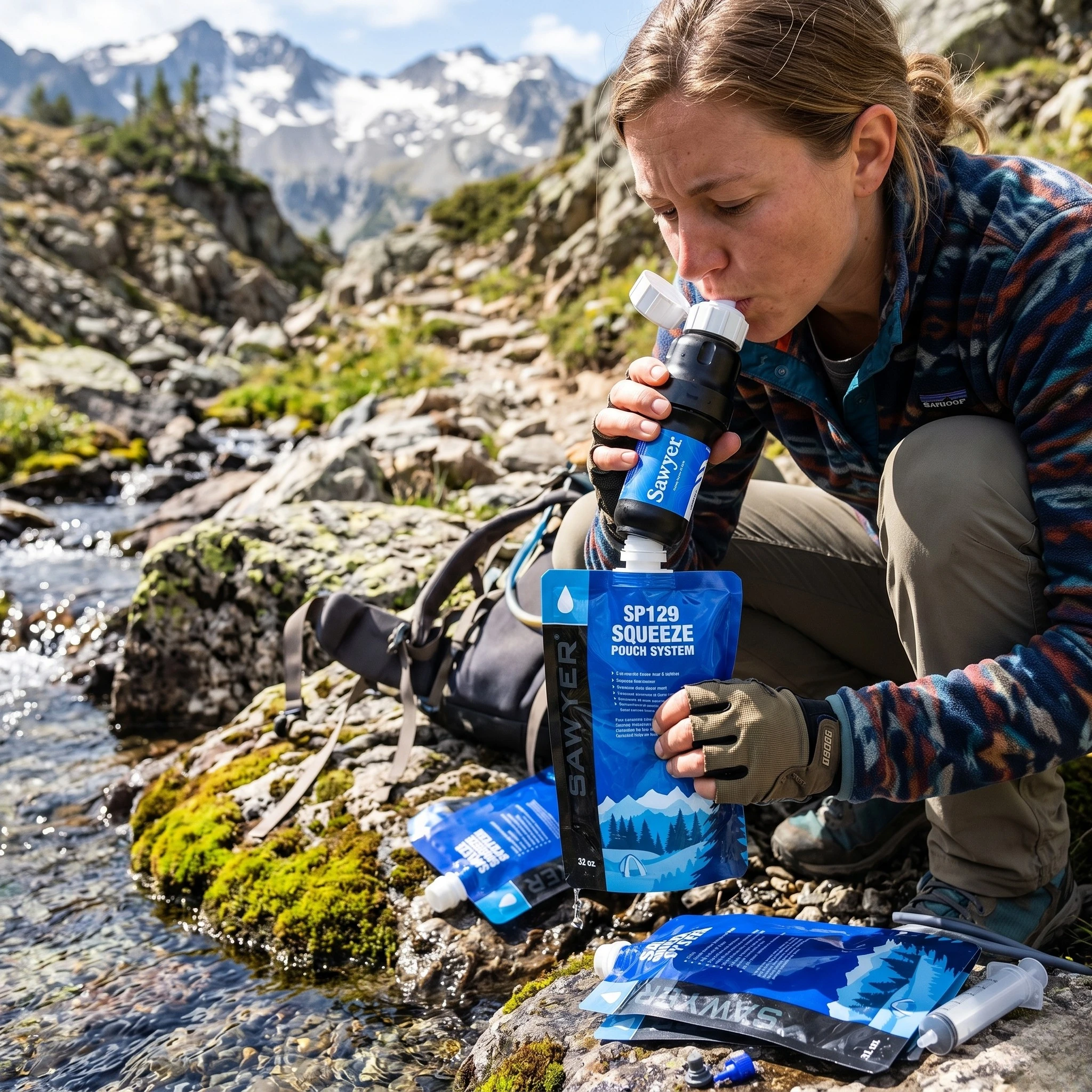
Furthermore, carrying a lightweight, fast-flow filter allows the hiker to harvest water on the trail rather than carrying a full day’s supply from the trailhead, saving up to 4.4 pounds ($2 \text{ kg}$) of water weight.
Recommendation: Sawyer Squeeze Water Filtration System
Key Features
Pros
Cons
4. Repackage All First Aid and Emergency Kits
Pre-packaged first aid kits sold in retail stores are notoriously inefficient. They often contain heavy plastic cases, duplicate bandages, and manuals that the hiker does not need.
Deconstructing Pre-Packaged Medical Packs
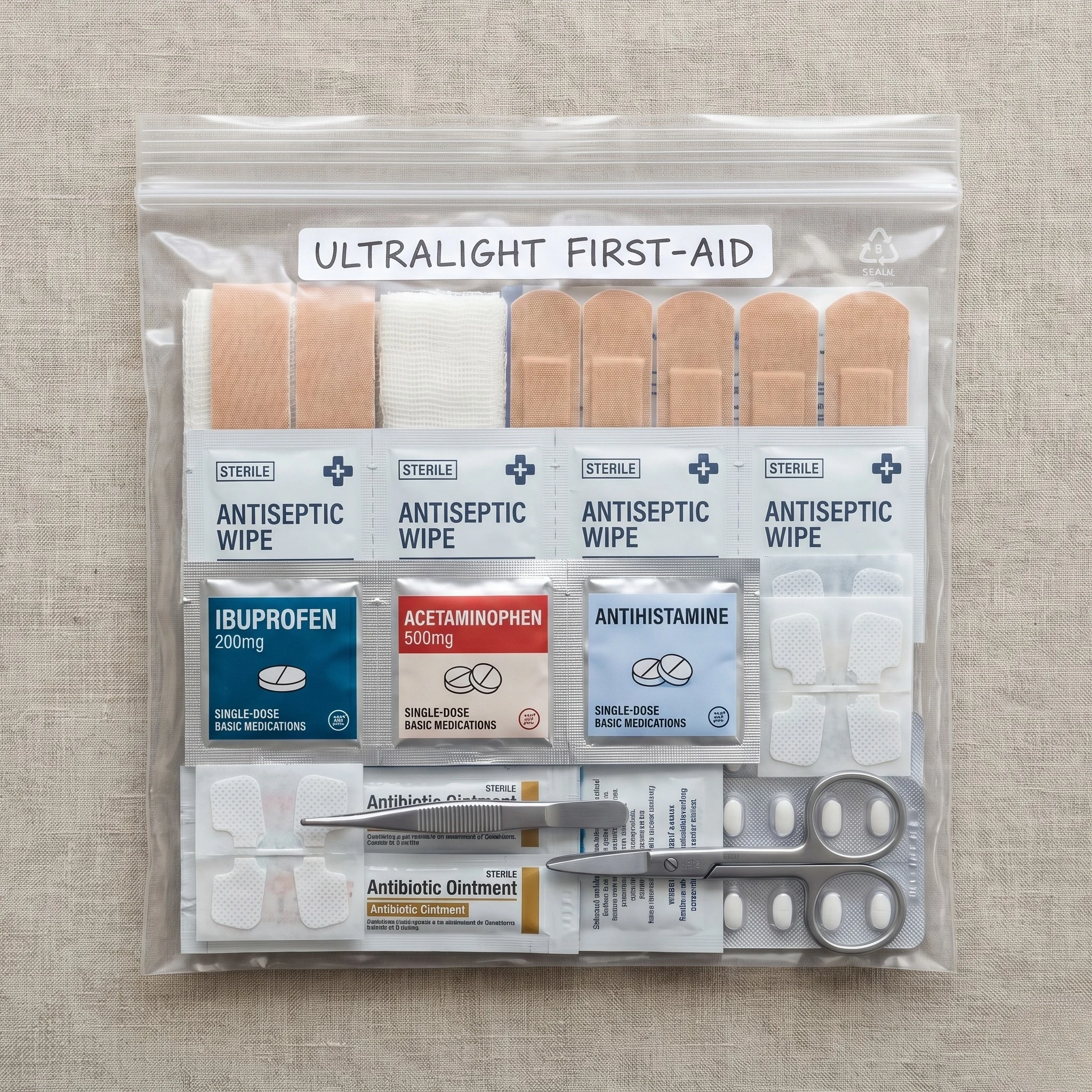
A professional first aid kit should be “deconstructed” and repackaged into a simple, waterproof zip-top freezer bag. The hiker should remove the outer cardboard packaging from all medications and carry only the necessary quantities of:
- Wound Care: Sterile gauze pads, medical tape, and cohesive bandages.
- Medications: Ibuprofen (for inflammation), antihistamines (for allergic reactions), and rehydration salts.
- Blister Prevention: Moleskin or leukotape pre-cut into usable shapes.
This custom assembly ensures total readiness without the weight of unnecessary packaging, a standard also taught in the NOLS Wilderness Medicine curriculum.
5. Transition to Multi-Use Tool Configurations
Carrying separate tools—such as a pocket knife, a pair of scissors, a flathead screwdriver, and a file—creates redundant weight. The modern hiker must look for tools that consolidate these functions into a single, high-leverage chassis.
Leveraging High-Torque Multi-Tools
A compact multi-tool designed for outdoor use should prioritize structural reliability over the number of functions. For those who also engage in off-road cycling, the selection of the Best Bike Multi-Tool can serve as a dual-purpose device for both hiking repairs and mechanical adjustments.
Avoiding heavy, full-sized pliers-style tools in favor of minimalist folding units can save up to 8 ounces of weight from the day pack.
6. Audit and Deconstruct Your Trail Kitchen
If the day hike involves a hot meal or warm beverage, the cooking equipment must be audited with extreme scrutiny. A heavy steel pot and a standard canister stove can easily add 1.5 pounds to your pack.
The Efficiency of Minimalist Titanium Stoves
Titanium is the preferred material for ultralight camp kitchens due to its high strength-to-weight ratio.
- The Pot: A single $550\text{ml}$ titanium cup with a lid serves as both the cooking vessel and the drinking mug.
- The Stove: A micro canister stove weighing less than 1.5 ounces can boil water in under three minutes.
- The Utensil: A single long-handled titanium spoon is the only eating utensil required.
This minimalist configuration reduces the kitchen weight to under 6 ounces (excluding fuel), a technical optimization also detailed in our Bikepacking Sleeping Systems and cooking guides.
7. Ditch the “Just In Case” Items (The Fear Pack)
The “Fear Pack” is the collection of items carried out of anxiety rather than actual necessity. This includes excessive spare batteries, multiple knives, heavy flashlights, and survival guides.
Overcoming the Psychological Weight of Over-Preparedness
To maintain a healthy Bikepacking Mindset of calm self-reliance, the hiker must replace physical gear with knowledge. Understanding how to build a shelter or navigate without electronics is far lighter than carrying physical gear to solve every hypothetical problem.
Every item in the pack must be justified: if an item has not been used in the last three trips, and is not a critical emergency item (like a first-aid kit or space blanket), it must be removed.
8. Transition to High-Calorie, Low-Moisture Food
Water content is the primary driver of food weight. Carrying fresh fruit, canned goods, or heavy pre-made meals adds significant water mass to the day pack.
Caloric Density Calculations for Energy Storage
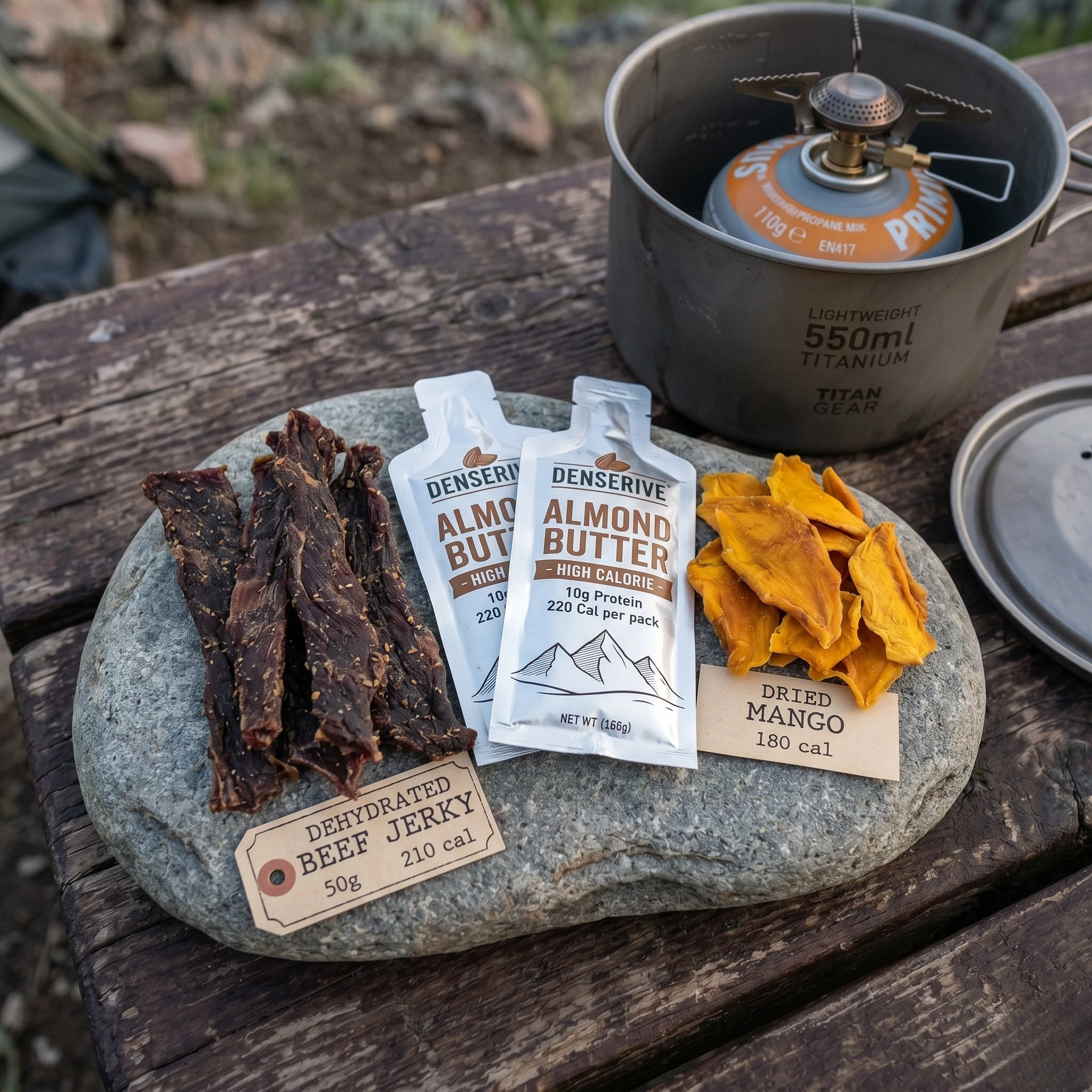
A technical trail menu prioritizes foods with a high caloric density—ideally greater than $4.5\text{ calories per gram}$ ($120\text{ calories per ounce}$). This is achieved by selecting low-moisture, high-fat options:
- Macadamia Nuts: $\approx 7.2\text{ cal/g}$
- Almond Butter: $\approx 6.0\text{ cal/g}$
- Dehydrated Jerky: $\approx 4.1\text{ cal/g}$ (high protein)
By utilizing these energy-dense selections, the hiker can satisfy their metabolic needs while reducing their food pack weight by over 50%. This strategy is discussed in detail in our High-Protein Snacks nutrition guide, which is designed to optimize muscle recovery on long days.
9. Utilize Dual-Purpose Trekking Poles
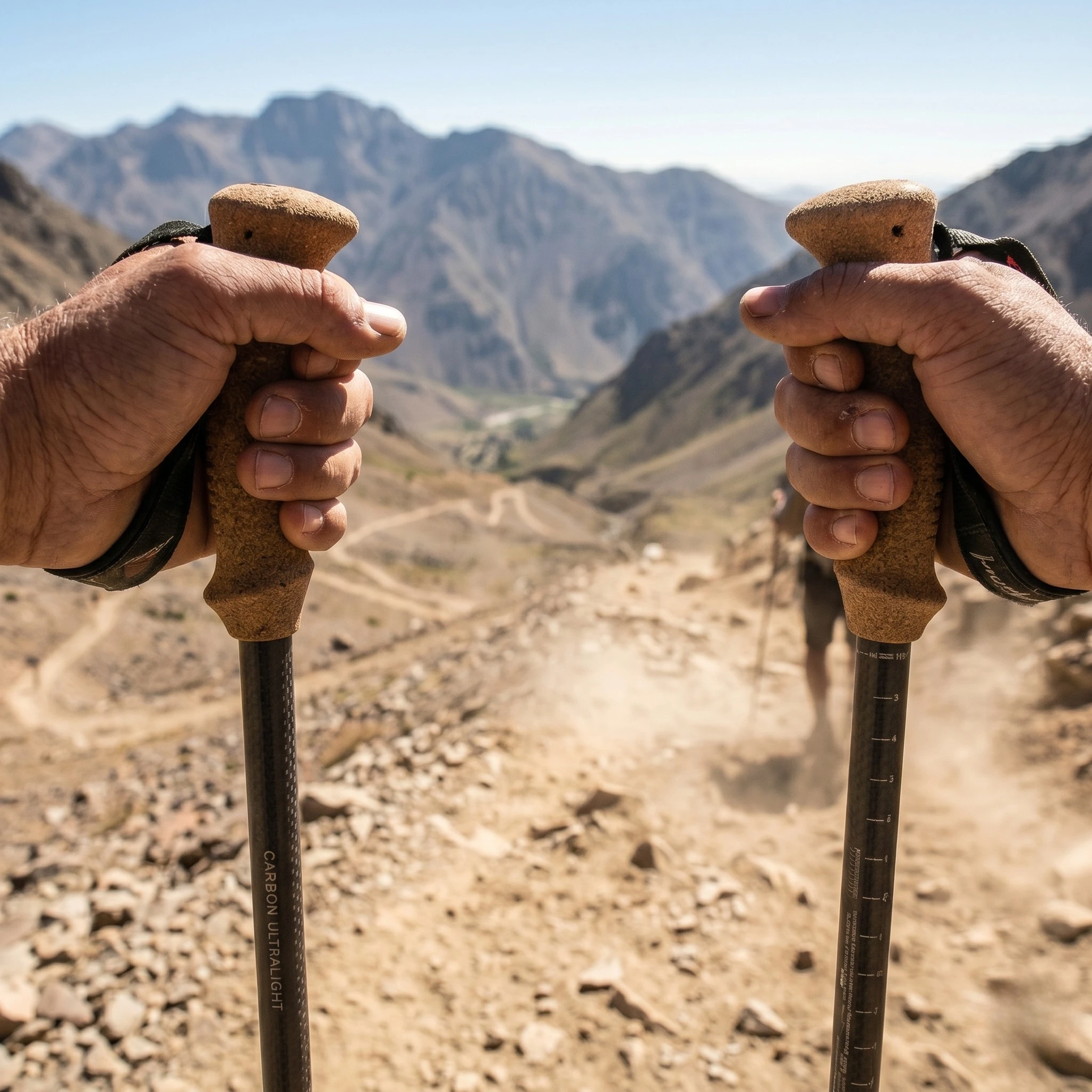
Trekking poles are often viewed as extra gear, but when used correctly, they function as a structural extension of the musculoskeletal system, transferring weight away from the joints.
Structural Load Transfer Physics
According to the American Hiking Society, using trekking poles reduces the impact force on the knees by up to 25% on downhill slopes. This is because a portion of the vertical impact force is transferred through the arms and poles to the ground.
Furthermore, some ultralight shelters can be pitched using a single trekking pole, eliminating the need to carry dedicated tent poles. This dual-use capability is a primary tenet of the Soft Hiking movement, which prioritizes joint preservation.
10. Implement Digital Navigation Redundancy
Heavy paper guidebooks, printed maps, and dedicated GPS units can add up to 1.5 pounds of weight to your setup. In 2026, the smartphone serves as a highly capable primary navigation tool.
Eliminating Heavy Paper Maps and Guidebooks
By downloading offline topographic maps via applications like Gaia GPS or Komoot, the hiker can navigate with high-resolution GPS tracking without cellular service. This digital transition is a key recommendation in our Off-Road Navigation guides.
To ensure safety and address the risk of battery failure, the hiker should carry a ultra-lightweight power bank and a single, printed paper map of the immediate trail corridor as a backup, rather than a full guidebook.
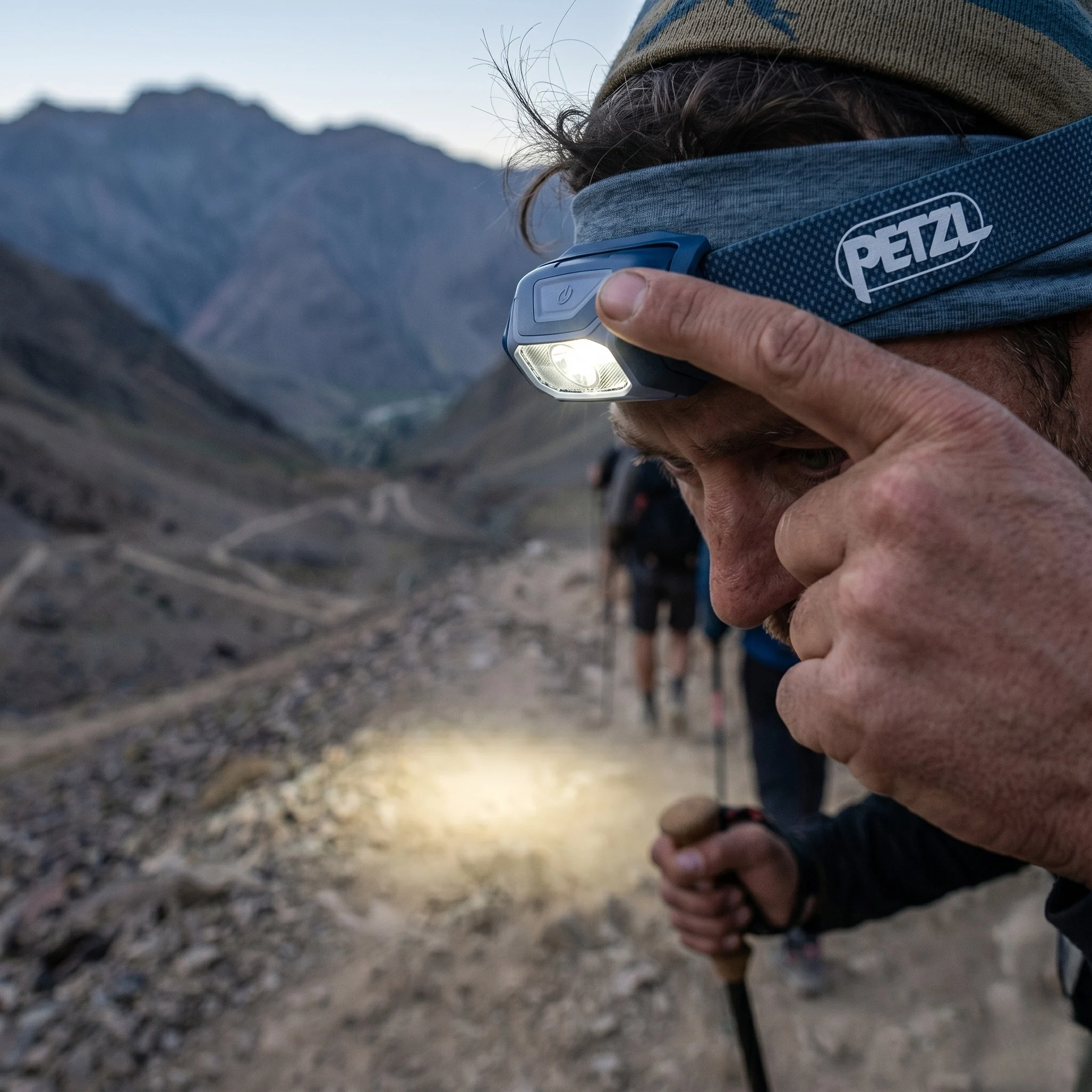
Recommendation: Petzl Actik Core Headlamp
Key Features
Pros
Cons
11. Practice Eco-Friendly Trail Minimalisms
The final of our ultralight packing hacks is the implementation of environmental stewardship. A lighter pack makes it easier to stay on the designated trail surface, reducing erosion and trail damage.
When hikers carry heavy, unstable packs, they are more likely to step off the trail to catch their balance, leading to the destruction of fragile root structures and soil compaction. Staying centered on the trail is a key safety and ethical protocol detailed in our Eco-Friendly Hiking Guide.
Furthermore, carrying a Satellite Messenger Safety device ensures that help is always reachable, reducing the need to carry excess “survival” gear. Following Leave No Trace Principles ensures that your physical presence leaves no permanent mark on the land.
Conclusion: The Liberation of the Lightened Load
Mastering the use of ultralight packing hacks is the definitive step toward a more sustainable and physically comfortable trail experience. By upgrading the core container (Section 1), implementing the three-item clothing rule (Section 2), and optimizing water storage (Section 3), any hiker can easily drop five pounds of base weight from their pack. The success of an expedition is not measured by the volume of gear you carry, but by the efficiency and safety of your movement through the natural world.
Remember that gear is an iterative system that must be tested and refined. Use your next local overnight or short day hike to test your new, lighter configuration. Refer to the National Park Service Stewardship Guidelines to stay updated on localized safety regulations before your next adventure. Keep your physical training high and your pack weight low, allowing the mind to focus entirely on the tranquility of the trail.
The peaks are waiting, and with a lighter pack, you are ready to explore them with unmatched freedom. Treat the environment with respect, pack with precision, and enjoy the unique liberation of a well-balanced day. The transition from a heavy-laden walker to a nimble backcountry expert is a path paved with preparation. Step onto the trail with a plan, respect your limits, and embrace the unparalleled power of minimalist wilderness travel.
[Image Prompt 10: A final inspiring shot of a hiker standing on a high mountain ridge at sunset. They are carrying a small, perfectly balanced daypack and looking out over a vast valley, looking relaxed, strong, and completely at peace.]
Discover more from Maive Verse
Subscribe to get the latest posts sent to your email.