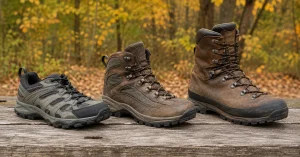

This post may contain affiliate links. If you buy through them, we may earn a small commission at no extra cost to you.
Learning how to choose hiking boots is mostly a process of narrowing down, not of finding one perfect pair. Two people can stand on the same trail in wildly different footwear and both be right, because the boot that works is the one matched to your terrain, your load and the shape of your foot. Get those three things lined up and almost any well made boot will treat you kindly.
The order that works: decide where you hike, pick a height and material to suit it, then spend the real effort on fit. Fit is what ruins trips and it is what most buyers rush. Our guide to hiking for beginners covers the rest of the kit.
Start With the Hiking You Actually Do
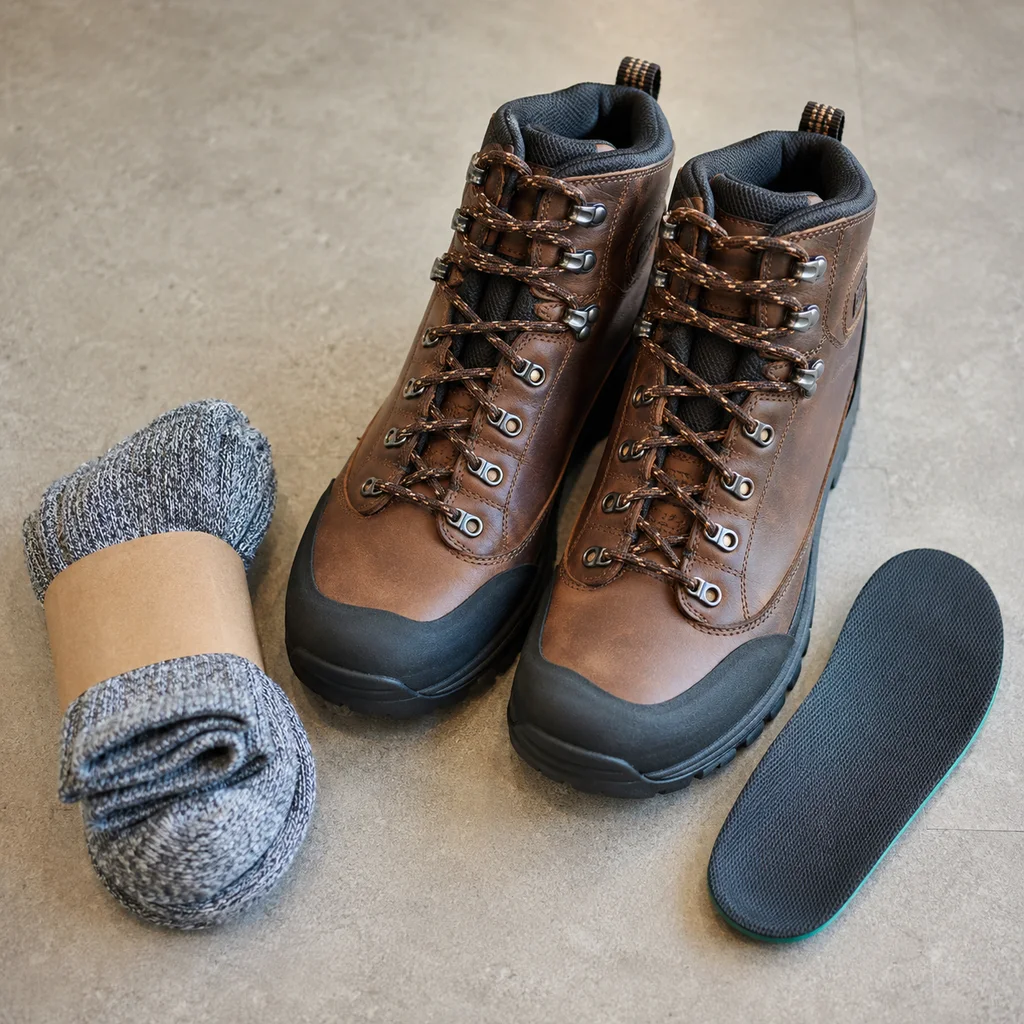
Be honest about your normal weekend, not the trip you keep meaning to take. Boots built for a week in the Sierra are heavy and slow on a flat forest loop, and a light trail shoe is out of its depth under a fifty pound pack. Buy for the hiking on your calendar, whether that is short loops with kids or long solo days.
Day Hikes on Maintained Trails
Graded paths, a light daypack and a few hours out means you want cushioning and low weight far more than armour. A flexible mid boot or even a hiking shoe is plenty. This is the majority of hiking in the United States, and it is exactly the terrain covered in our low elevation trail guide and our autumn day hiking plan.
Rough Ground and Overnight Loads
Scree, roots, stream crossings or anything over about twenty five pounds on your back changes the maths. Weight on your shoulders presses your foot into the footbed and rolls your ankle harder in a stumble, so you want a stiffer midsole, a real shank and more upper. Trimming pack weight helps as much as stiffer boots do, which is the whole point of our ultralight packing hacks, and the elevation training plan is worth a read before you upgrade.
Boot Height: Low, Mid or High
Height is less about ankle protection than the marketing suggests. A mid cuff does not stop a bad roll on its own. What it does is keep grit out and give the lacing leverage to lock your heel down.
- Low cut: lightest and coolest, best for groomed trails, dry conditions and fast walking.
- Mid cut: the default for day hiking. Keeps debris out, laces down firmly, still flexes.
- High cut: heavy packs, snow, off trail scrambling. Stiff, hot and slower, but stable under load.
Most readers should start mid and only move up if the load or the terrain forces it.
Materials and Waterproofing
Uppers come down to a trade between durability and breathability, and there is no free lunch between the two.
Leather, Synthetic or a Mix
Full grain leather resists abrasion and weather best and moulds to your foot over a season, but it is heavy and needs the longest break in. Synthetic and mesh boots are light and comfortable immediately, but wear through sooner at the flex points. Most boots split the difference with a suede and mesh upper.
When a Waterproof Membrane Helps and When It Hurts
A waterproof membrane is genuinely useful in wet grass, shoulder season mud, snow and drizzle. It is a liability in summer heat, because the same layer that blocks water slows the escape of sweat, and a soaked lining dries far more slowly than plain mesh. If your hiking is mostly hot and dry, non waterproof boots are the smarter buy, since wet feet from the inside blister just as fast, which is part of why managing water and heat matters. The REI expert advice on boot construction and the American Hiking Society footwear notes are good technical companions.
How to Choose Hiking Boots That Fit
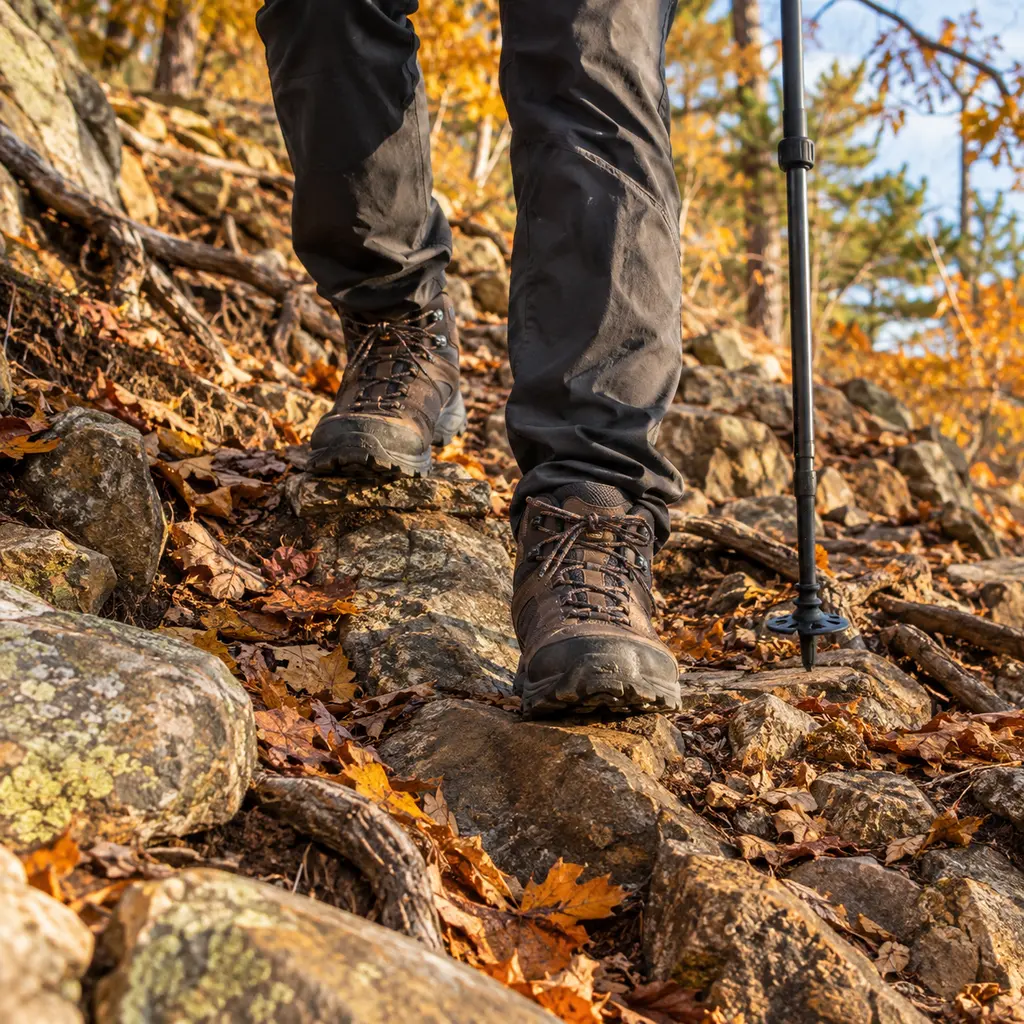
This is the part of how to choose hiking boots that people skip, and it is where nearly every bad boot story starts. Brands last their boots differently, so your size in one is not your size in another, and the box number matters far less than what happens walking downhill. Solo days raise the stakes, which is why a satellite messenger belongs in the pack.
Measure Late in the Day, Then Size Up
Feet swell over a day of walking, so measure in the evening and try boots on then. Most hikers land half a size to a full size above their street shoe. You want a thumb width in front of the longest toe with the boot laced and the heel pushed back.
Lock the Heel Before You Judge the Toe
Lace the boot properly, then walk. The heel should lift no more than a few millimetres. Heel slip is the best predictor of blisters, and no sock or insole reliably fixes a heel pocket that is too roomy. Between two close sizes, take the one that holds the heel.
The Downhill Toe Test
Walk down a ramp or a stair in them. If your toes hit the front, the boot is too short or the lacing is too loose, and a long descent will take your toenails. Retie with a heel lock knot before writing the boot off.
Socks, Insoles and Lacing Do More Than You Think
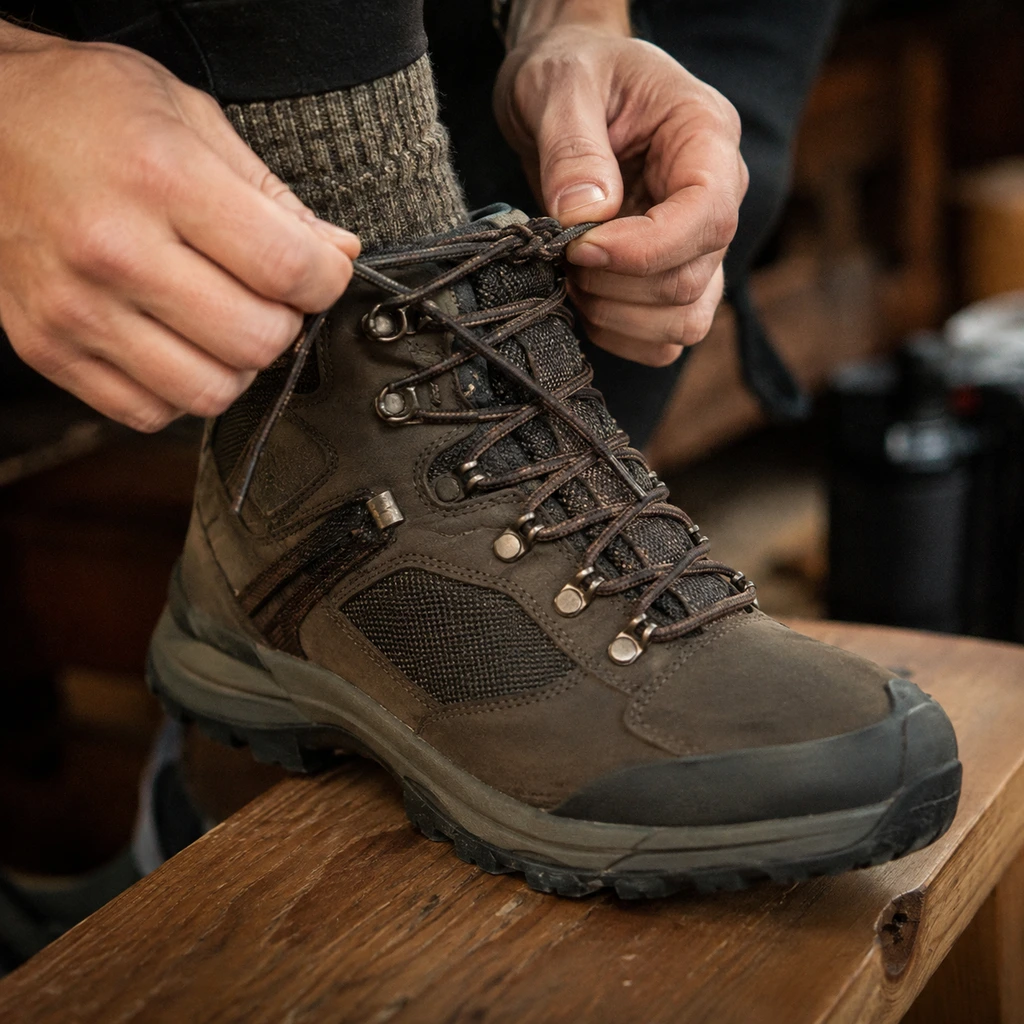
A boot is a system, and three cheap parts change how the whole thing feels.
- Merino or synthetic socks only. Cotton holds water against your skin and is the fastest route to a blister.
- Try boots on with the socks you will actually hike in, since sock thickness easily shifts fit by half a size.
- Aftermarket insoles fix a flat footbed and take up volume in a boot that is fractionally too deep.
- Sun and wind change comfort too, the same way the right trail shirt does on a long exposed climb.
- A heel lock lacing knot through the top eyelets solves most heel slip without changing size. See our hiking outfit guide for how the rest of the layers fit around it.
Break Them In Before the Trail Does It for You
Synthetic boots need very little break in, but leather needs real time. Wear them around the house, then on a short local walk with a loaded daypack. Two or three short outings will surface a hot spot while you can still return them.
Rinse off mud and dry them at room temperature, never beside a fire, because heat cooks the adhesives and cracks leather. Store them dry and ventilated, the same logic as storing the rest of your gear.
Mistakes First Time Buyers Make
- Buying by brand reputation instead of by last shape. The best boot in the world in the wrong last will still hurt.
- Ordering true to street size and hoping. Sizing up is the norm, not the exception.
- Choosing a stiff backpacking boot for gentle day hikes, then blaming the boot for being heavy.
- Taking waterproofing as a default. In hot, dry hiking it costs you breathability for nothing.
- Wearing them straight out of the box on a big trip, which is how a good boot earns a bad reputation.
- Forgetting that low light changes footing. Read the night hiking guide before an evening descent.
- Ignoring the trail conditions on the day. A quick check with a trail weather app should shape which pair goes on.
Frequently Asked Questions
Should you size up when buying hiking boots?
Usually yes, by about half a size to a full size over your street shoe. Feet swell on the trail and hiking socks are thicker than everyday socks. Judge by the thumb width of room in front of your toes rather than by the number.
Is it better for hiking boots to be loose or tight?
Snug through the heel and midfoot, roomy at the toes. A loose heel causes blisters and a tight toe box costs you toenails on descents, so those two areas want opposite treatment.
What is the difference between hiking shoes and hiking boots?
Hiking shoes are low cut, lighter and more flexible, which suits day hikes on decent trails. Boots add cuff height and midsole stiffness, which pays off under a heavy pack or on broken ground. Many hikers own both and pick by trip.
How long do hiking boots last?
Roughly five hundred to a thousand miles, sooner on rocky ground. Watch the tread lugs and midsole creases rather than the upper, since cushioning dies quietly long before a boot looks worn out. Retiring a pair well is part of hiking with a lighter footprint.
Work through it in that order, terrain first and fit last, and the shortlist gets short fast. To compare real pairs, our roundup of the best hiking boots for this fall lines up six models against the use cases above. Then put in a few slow local miles before the big trip.
Discover more from Maive Verse
Subscribe to get the latest posts sent to your email.