
This post may contain affiliate links. If you buy through them, we may earn a small commission at no extra cost to you.
Rucking in cold weather is one of the best ways to keep your fitness through the winter, and it can be more comfortable than a summer ruck once you get the layers right. The pack on your back keeps your core warm, steady walking generates heat without the soaking sweat of running, and a crisp, quiet morning on frozen trails is hard to beat. If you are new to the sport, start with our rucking for beginners guide first.
Cold rucking does need a different approach, though. Sweat management, traction on ice, protecting your hands and feet, and adjusting your pace and load all matter more when the temperature drops. This guide covers how to dress, what to carry, how to stay safe on snow and ice, and how to adapt your training until spring.
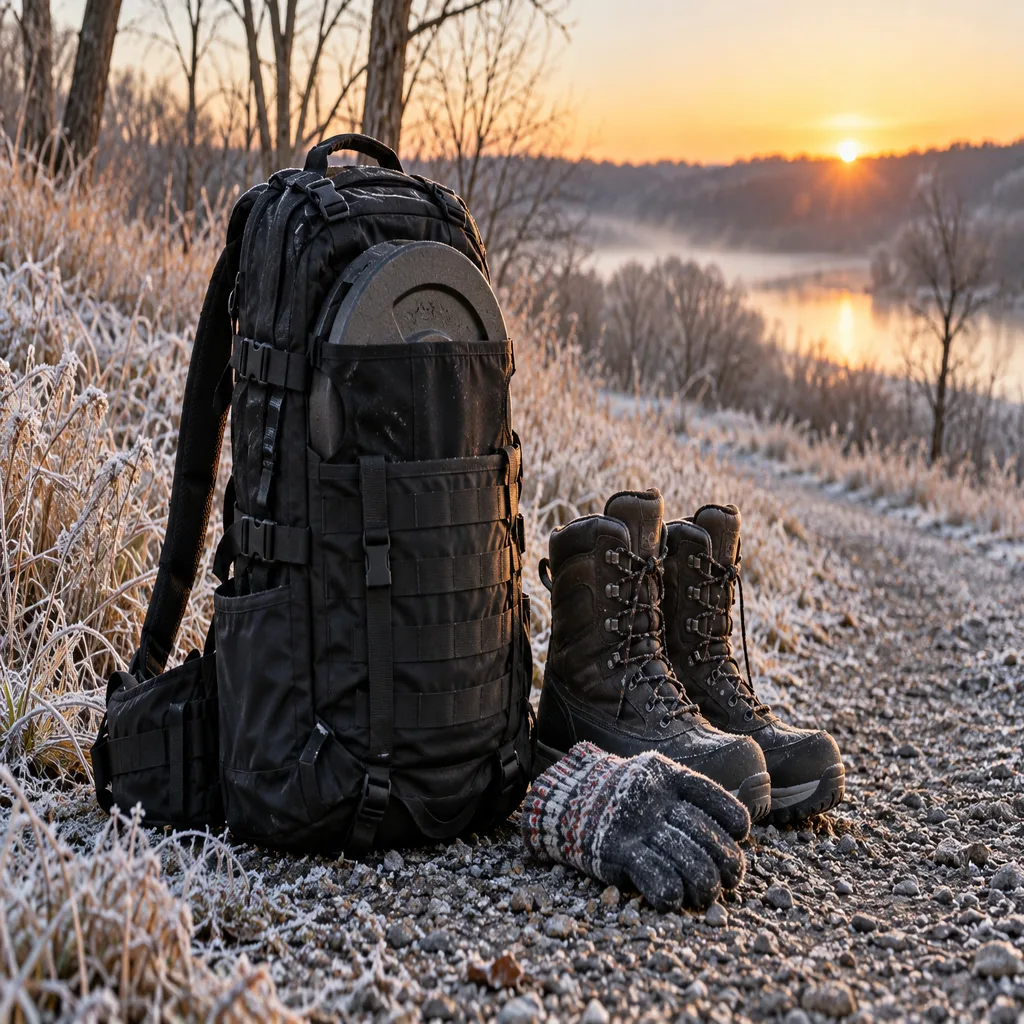
Table of Contents
Why Rucking in Cold Weather Works So Well
You Stay Warmer Than You Expect
A loaded ruck makes your body work harder than plain walking, so you produce a lot of heat at a moderate pace. The pack itself acts like an insulating layer over your back. Most people find they are comfortable in surprisingly light clothing after the first ten minutes.
It Burns More Calories
Moving with weight through snow and cold burns more energy than the same walk in summer, as your body works to keep warm and to push through softer ground. If your goal is fat loss, our guide to rucking for weight loss explains how to make the most of it.
It Is Easy on the Joints
Unlike running on icy roads, rucking keeps one foot on the ground at all times, which is safer on slick surfaces and kinder to knees. Our comparison of rucking vs running goes deeper into the differences.
How to Dress for a Cold Ruck
The golden rule is to start cold. If you feel comfortably warm standing at the door, you will be sweating within a mile, and wet clothing is what makes winter exercise dangerous. Our guide on how to layer for hiking explains the layering system in detail, and it works exactly the same way for rucking.
Base Layer
Wear a snug merino wool or synthetic base layer that wicks sweat away from your skin. Never cotton. A long sleeve top is usually enough above about 25 degrees Fahrenheit, with base layer leggings added below that.
Mid Layer
A light fleece or grid fleece adds warmth while breathing well. Many ruckers skip the mid layer while moving and carry it for stops instead.
Outer Layer
A wind resistant shell blocks the wind chill without trapping much heat. Save a heavy puffy for breaks and emergencies, and carry it in the ruck. Our list of the best insulated jackets for hiking includes light, packable options that suit this perfectly.
Hands, Head and Feet
Your extremities get cold first. Wear a warm hat or headband, and bring two pairs of gloves, a light pair for moving and a warm pair or mittens for stops. Merino socks are a must, and our roundup of the best hiking socks includes a warm, full cushion pair. Boots or shoes should leave room for your toes to move, since tight footwear cuts circulation.
Rucking on Snow and Ice
Add Traction
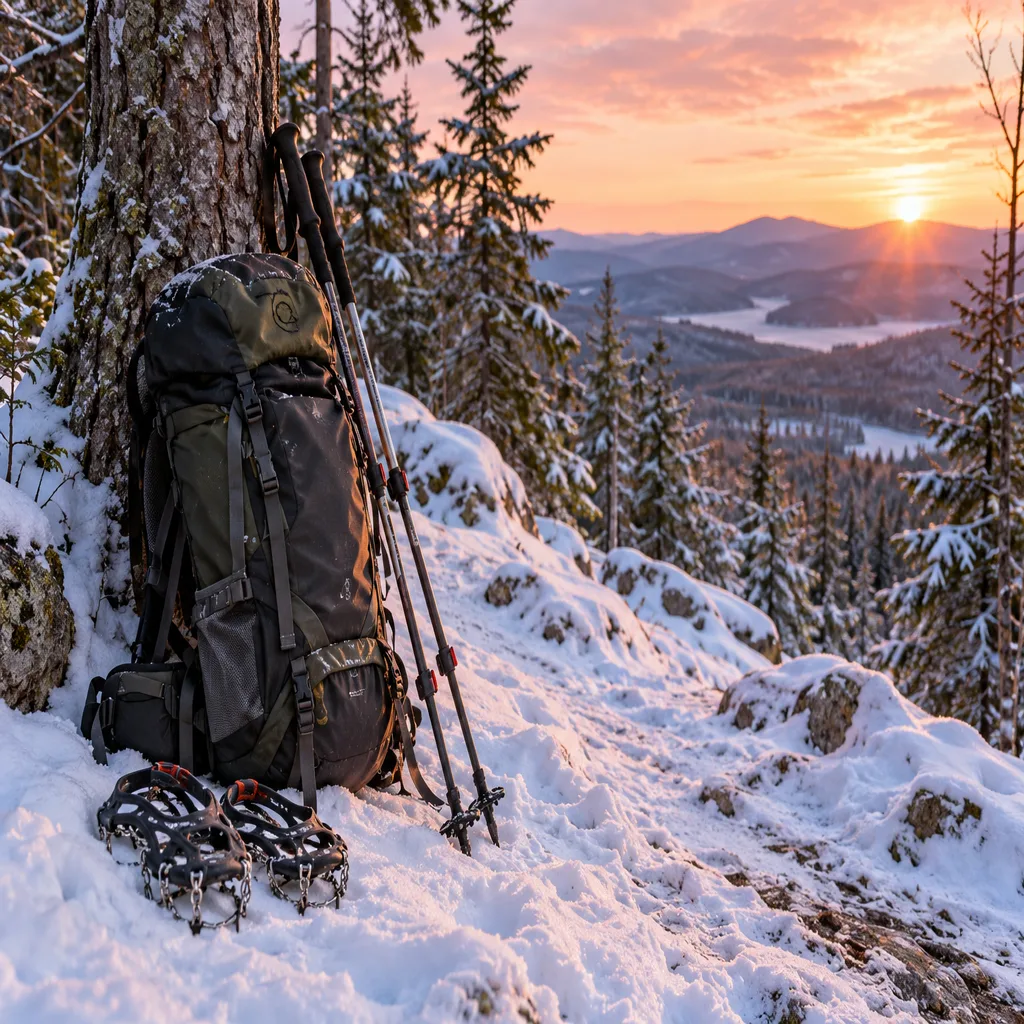
Ice is the biggest real danger of winter rucking, because a fall with weight on your back is harder to recover from. Slip on traction devices whenever trails or sidewalks are icy. Lightweight spikes work for packed snow and icy roads, and chain style spikes such as Kahtoola MICROspikes are better for trails. Our guide to hiking in snow and ice explains how to judge conditions.
Shorten Your Stride
Take shorter, flatter steps and keep your weight over your feet on slick ground. Trekking poles add two more points of contact, which is a big help on icy hills, and our guide on how to use trekking poles shows the technique.
Choose the Right Footwear
Waterproof hiking boots or insulated trail shoes with a grippy sole are ideal. Our picks for the best rucking shoes cover what to look for, and for deep snow a pair of gaiters keeps your socks dry.
Adjusting Your Ruck Training for Winter
Lighten the Load
Snow, ice and cold all make every step harder, so drop your usual weight by 10 to 20 percent, especially early in the season. Our guide on how much weight to ruck gives starting points, and if you use plates, our list of the best ruck plates includes options that are easy to swap.
Focus on Time, Not Pace
Expect to move 10 to 25 percent slower on snow. Track time on your feet rather than miles per hour, and keep the same weekly structure from your rucking workout plan.
Warm Up Indoors
Cold muscles and tendons are more prone to strain. Spend five minutes doing squats, lunges and leg swings inside before you head out, then start your ruck at an easy pace for the first ten minutes.
Use the Right Pack
Your ruck needs to fit well over bulkier layers. Loosen the shoulder straps a little at the start and readjust once you warm up. Our list of the best rucking backpacks highlights packs with adjustable harnesses, and a weighted vest worn over a base layer is another good winter option.
A Sample Week of Winter Rucking
Winter is a great time to hold your fitness rather than chase new records. A simple structure keeps you consistent without piling on risk when the weather turns. Here is a sample week for someone who already rucks two or three times a week in warmer months.
- Monday: rest or an easy unweighted walk.
- Tuesday: 30 to 45 minute ruck at a comfortable pace with 10 to 20 percent less weight than usual.
- Wednesday: indoor strength work, focusing on legs, core and upper back.
- Thursday: 30 minute ruck with a few short hills, wearing traction if paths are icy.
- Friday: rest.
- Saturday: a longer ruck of 60 to 90 minutes on trails, carrying a puffy, spare gloves and a warm drink.
- Sunday: easy walk or mobility session.
If a storm rolls through, swap days rather than skipping the week, and treat fresh snow as a bonus workout, since breaking trail is harder than any hill. Keep a simple log of time, weight and conditions. By spring you will be surprised how strong those snowy miles have made you, and you can add the weight back as the trails clear.
Cold Weather Safety
Know the Signs of Frostbite and Hypothermia
Numb, white or waxy skin on fingers, toes, nose or ears is an early sign of frostbite. Uncontrollable shivering, confusion, clumsiness and slurred speech are signs of hypothermia. The CDC has a clear guide to cold weather illness. If you notice any of these signs, get warm and dry immediately.
Check the Wind Chill
The wind chill, not the air temperature, tells you how fast exposed skin loses heat. Check the National Weather Service wind chill chart before you go, and cover all exposed skin when the wind chill drops below about zero degrees Fahrenheit.
Stay Visible in the Dark
Short days mean many winter rucks happen in the dark. Wear a bright headlamp and reflective gear, and face oncoming traffic on roads. Our list of the best running headlamps and our guide to trail running at night cover lighting in detail.
Carry the Essentials
- A warm puffy jacket and a spare pair of gloves.
- An insulated water bottle or a bottle carried upside down so the lid does not freeze.
- A charged phone kept in an inside pocket, since cold drains batteries fast.
- A small snack, because your body burns more fuel in the cold.
Blisters still happen in winter, especially when feet get damp. Our guide on how to prevent blisters when hiking applies equally to rucking.
Frequently Asked Questions
Is rucking in cold weather safe?
Yes, with the right clothing, traction and planning. Dress in layers, cover exposed skin, add traction on ice, and turn back if you start shivering or lose feeling in your hands or feet.
How cold is too cold to ruck?
Many experienced ruckers go out down to about zero degrees Fahrenheit. Below that, or with a wind chill below about minus 15, frostbite can happen in under 30 minutes, so most people move training indoors.
Should I carry less weight in winter?
Usually yes. Drop 10 to 20 percent of your normal load on snow and ice, then build back up as you adapt to the conditions.
What should I wear rucking in winter?
A wicking base layer, a light fleece, a wind shell, a warm hat, gloves and merino socks, with a puffy jacket in your pack for stops.
Do I need special boots for winter rucking?
Not necessarily. Waterproof hiking boots or trail shoes with a grippy sole work for most winter rucks, as long as they leave room for warm socks. Add traction devices for ice, gaiters for deep snow, and consider insulated boots if you often ruck in temperatures below about 15 degrees Fahrenheit or stand around at the end.
Discover more from Maive Verse
Subscribe to get the latest posts sent to your email.