
This post may contain affiliate links. If you buy through them, we may earn a small commission at no extra cost to you.
The best rucking shoes are the ones that still feel stable at mile six with thirty pounds on your back. A ruck changes what a shoe has to do: every step lands heavier, your heel works harder to stay planted, and your feet swell more than they would on an easy walk. A soft, flexible road shoe that feels great on a run can turn sloppy under load, while a heavy boot can make a five mile ruck feel like ten.
Below are six shoes worth rucking in, from a proven hiking shoe to a foot-shaped trail runner and a tactical option, each checked for stock, rating and what the listing actually says. If you are new to loaded walking, start with our rucking for beginners guide and our advice on how much weight to ruck before you worry about footwear.
Table of Contents
What Separates the Best Rucking Shoes
Stability under load comes first. Extra weight magnifies every wobble, so the best rucking shoes have a firm midsole and a platform that does not roll when you land on uneven ground. Very soft, tall cushioning feels plush unloaded and mushy loaded.
Then heel hold. A heel that slips a few millimeters on every step will raise a blister within a couple of miles once a pack is pushing you forward. Look for a structured heel counter and a lacing system that locks the midfoot.
Then toe room. Feet swell on long rucks, and a pack shifts your weight forward, so toes need space to spread without hitting the front of the shoe on descents. A roomy toe box is one of the most underrated features for rucking.
Last, outsole and durability. Pavement wears soft rubber fast, while trails need lugs that grip gravel and dirt. A protective toe cap and a tough upper help a shoe survive the extra abuse that carrying weight brings.
The Best Rucking Shoes at a Glance
| Shoe | Type | Waterproof | Reviews | Best For |
|---|---|---|---|---|
| Merrell Moab 3 | Hiking shoe | No (this version) | 4.6 stars, 15,198 | Best overall |
| Altra Lone Peak 8 | Trail runner | No | 4.4 stars, 1,179 | Wide, foot-shaped fit |
| Salomon XA PRO 3D Gore-Tex | Trail shoe | Yes, Gore-Tex | 4.4 stars, 11,459 | Wet weather |
| Brooks Cascadia 19 | Trail runner | No | 4.5 stars, 461 | Cushioned trail rucks |
| NORTIV 8 Wide Toe Box | Trail runner | No | 4.4 stars, 1,416 | Budget |
| Merrell Chameleon 8 Stretch Tactical | Tactical shoe | Yes, per listing | 4.5 stars, 1,315 | Tactical and events |
The Six Best Rucking Shoes in Detail
Merrell Moab 3: Best Overall
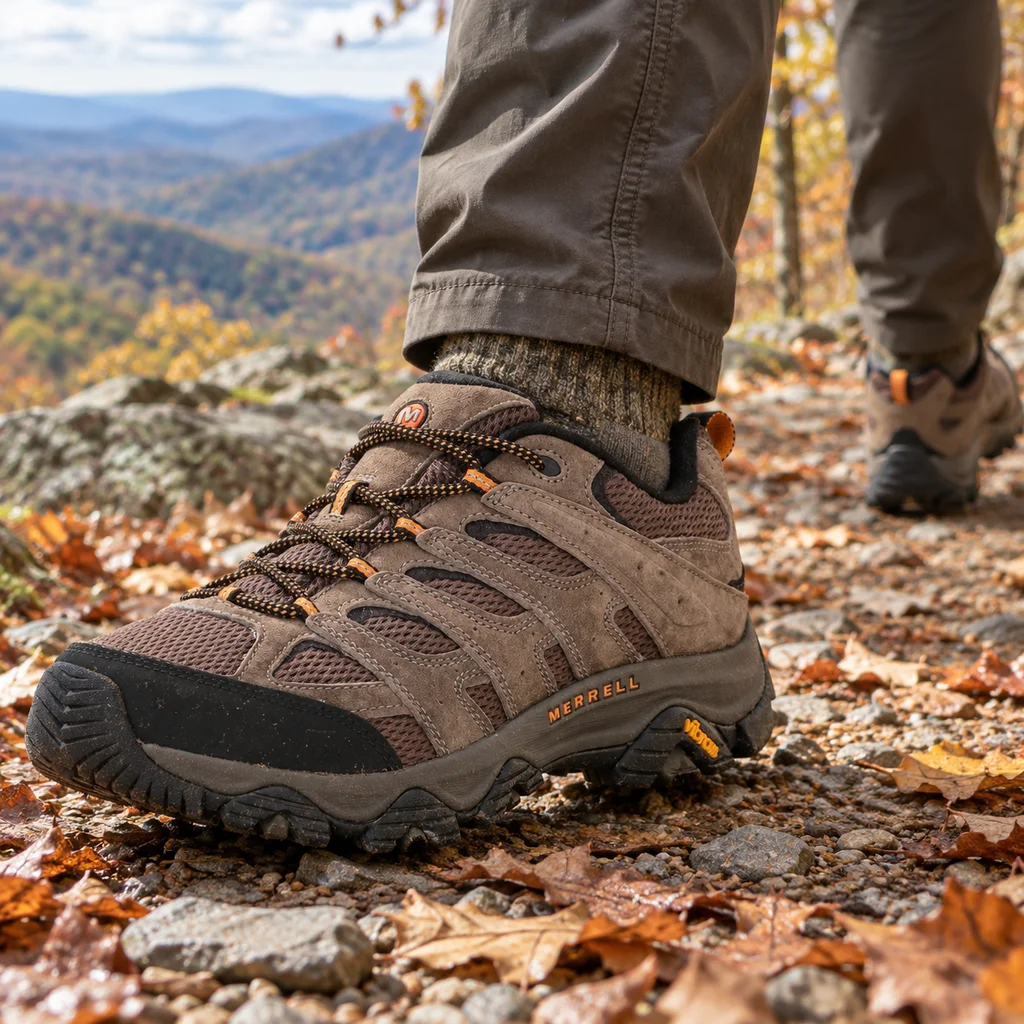
Over fifteen thousand reviews at 4.6 stars makes the Moab 3 the most proven shoe on this list, and it earns the top spot because it is built like a hiking shoe rather than a running shoe. That means a stable platform, a protective toe cap and a bellows tongue that keeps grit out on gravel paths.
The pigskin leather and mesh upper is more structured than a trail runner, which helps the shoe hold its shape under a loaded pack. The Kinetic Fit ADVANCED insole is removable and contoured with reinforced heel cushioning, so you can swap in your own insole if you prefer.
It is heavier and stiffer than the running shoes here, which is the tradeoff. For rucks where stability and durability matter more than speed, that is the right trade.
Specs That Matter
- Upper: pigskin leather and mesh
- Toe: protective toe cap
- Tongue: bellows tongue keeps out debris
- Insole: removable Kinetic Fit ADVANCED, reinforced heel
- Lining: recycled mesh
Who It Is For
Most ruckers, especially on mixed pavement and gravel, who want one durable shoe.
Altra Lone Peak 8: Best Wide Toe Box
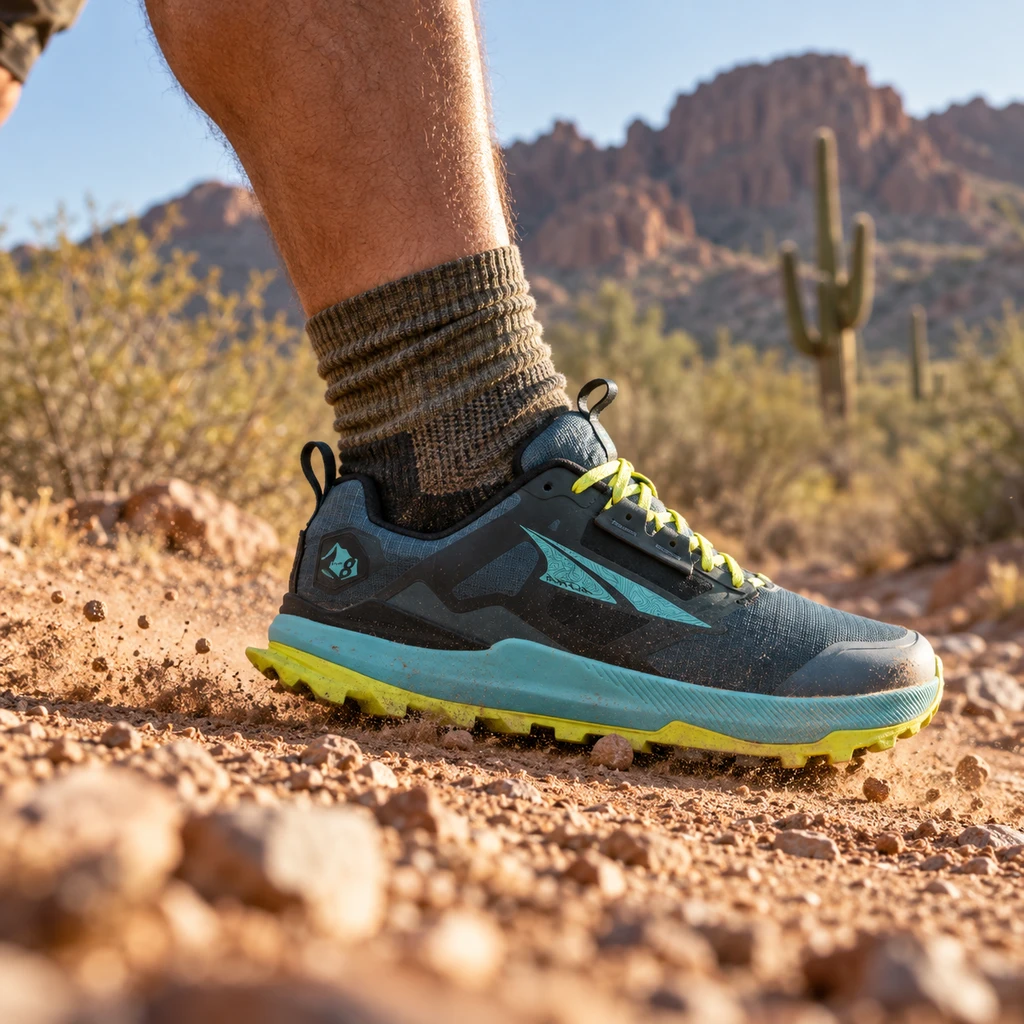
Altra builds shoes around the shape of a foot, and the Lone Peak 8 pairs a wide toe box with a balanced zero-drop platform. For ruckers whose toes get cramped or numb on long walks, that extra room is the whole argument.
The listing quotes a 25mm stack height with a lightweight EGO midsole, a MaxTrac outsole with TrailClaw lugs, and a reinforced ripstop mesh upper built to resist abrasion. That is a solid package for dirt and gravel rucks.
Zero drop is the caveat. If you are used to a traditional heel-to-toe drop, your calves and Achilles need time to adapt, and adding a pack before you have adapted is asking for trouble. Build up gradually.
Specs That Matter
- Platform: zero drop, 25mm stack per listing
- Fit: wide toe box
- Midsole: EGO foam
- Outsole: MaxTrac with TrailClaw lugs
- Upper: reinforced ripstop mesh
Who It Is For
Ruckers with wide feet or cramped toes who are already comfortable in low-drop shoes.
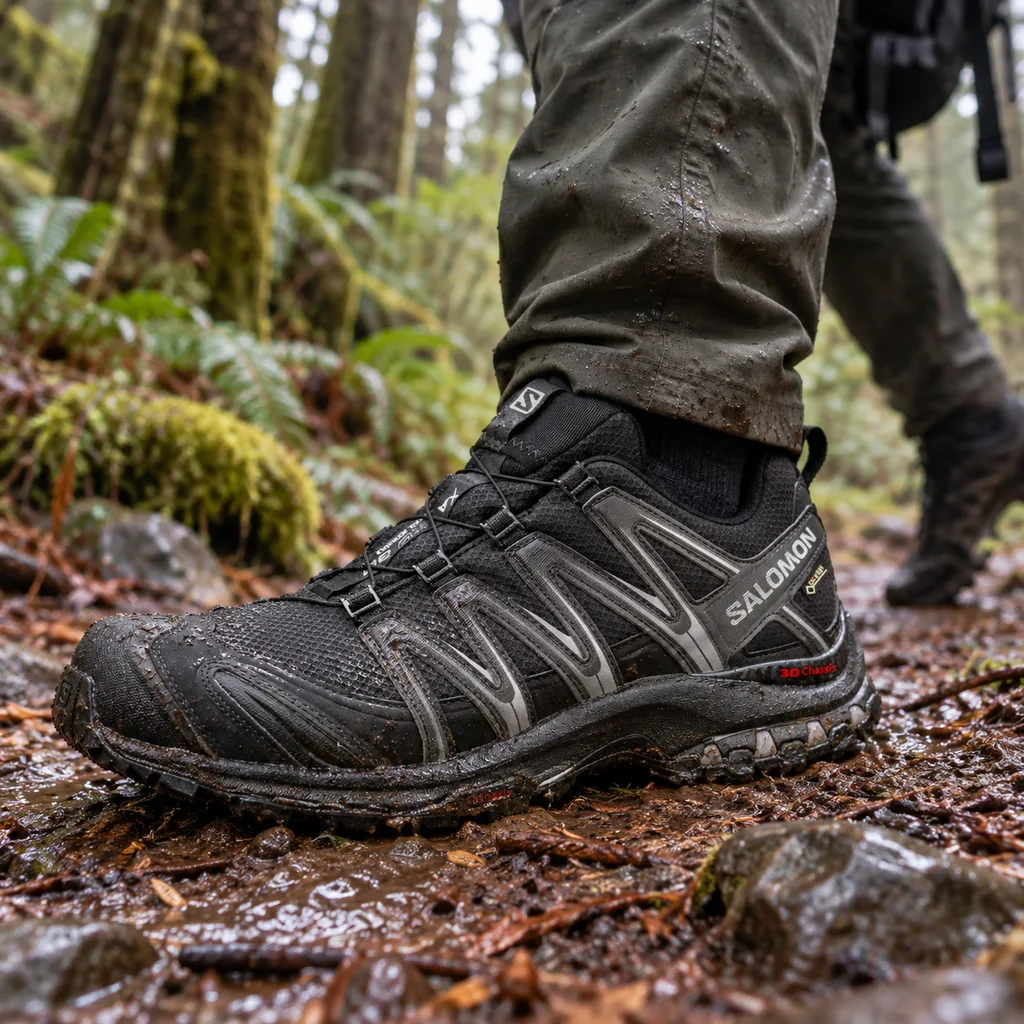
Salomon XA PRO 3D Gore-Tex: Best Waterproof
With more than eleven thousand reviews, the XA PRO 3D is one of the best known trail shoes there is, and this version adds a Gore-Tex membrane for wet weather. For fall and winter rucks through puddles and wet grass, dry feet are worth a lot.
The 3D Advanced Chassis sits between midsole and outsole to control motion and add underfoot protection, which is exactly the stability a loaded ruck asks for. A Contagrip outsole and a reinforced toe cap round it out.
Waterproof shoes run warmer and dry slower once water gets in over the top. For hot summer rucks, a breathable non-waterproof shoe is usually the better choice.
Specs That Matter
- Membrane: Gore-Tex waterproof
- Stability: 3D Advanced Chassis
- Outsole: Contagrip all-terrain
- Toe: reinforced toe cap
- Use: mixed terrain and wet conditions
Who It Is For
Ruckers who train through rain, mud and cold months.
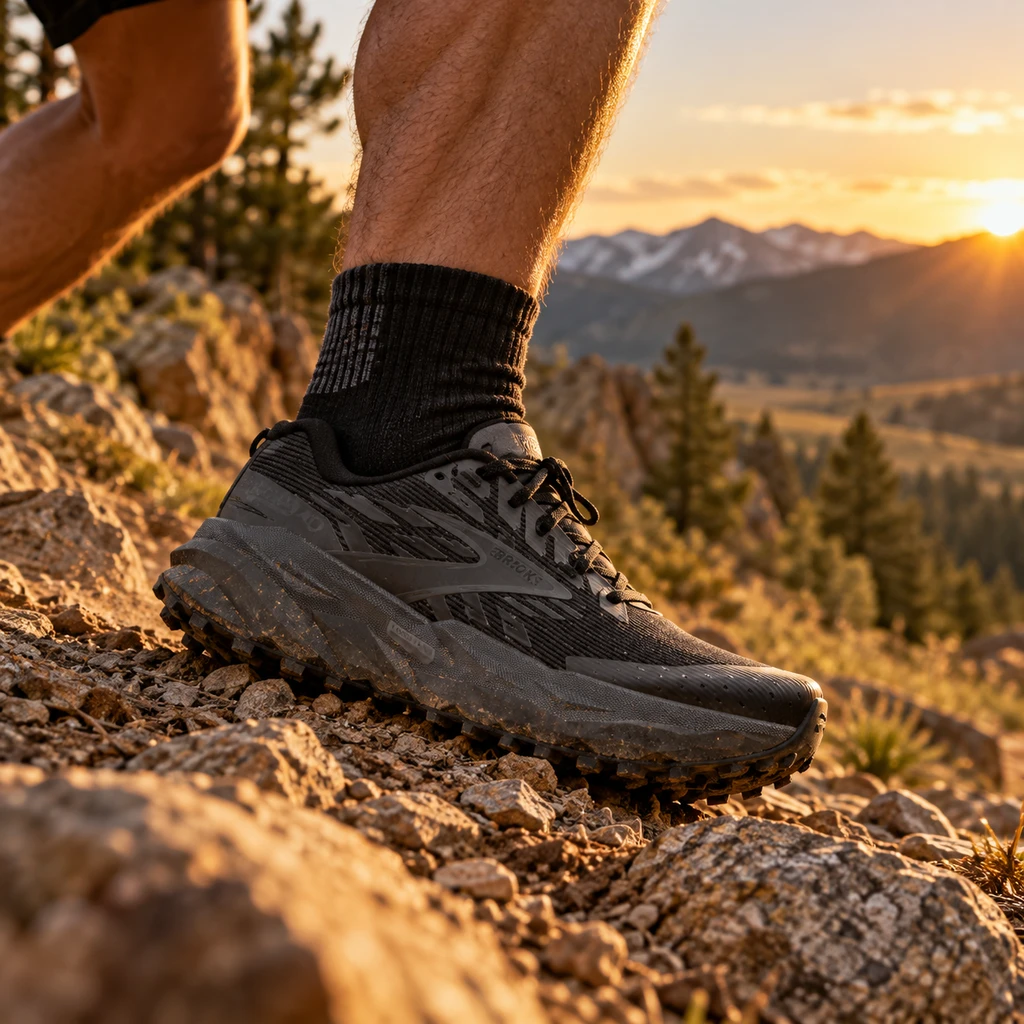
Brooks Cascadia 19: Best Cushioned Trail Shoe
The Cascadia has long been Brooks’ rugged trail shoe, and version 19 adds more nitro-infused DNA LOFT v3 cushioning in the heel and forefoot. Under a pack, that extra cushioning softens long miles on hard-packed trails.
Crucially for rucking, the cushioning comes with structure. The Trail Adapt System pairs a flexible, articulated Ballistic Rock Shield with the midsole for stability on uneven ground, and the TrailTack Green outsole grips in wet and dry conditions.
A reinforced toe cap and mudguard protect the upper. At 461 reviews the base is smaller than the Merrell or Salomon, but the 4.5 star average is strong.
Specs That Matter
- Cushioning: DNA LOFT v3
- Stability: Trail Adapt System with Ballistic Rock Shield
- Outsole: TrailTack Green rubber
- Upper: air mesh with 3D print overlays
- Protection: toe cap and mudguard
Who It Is For
Ruckers covering longer distances on trails who want more cushioning without losing stability.
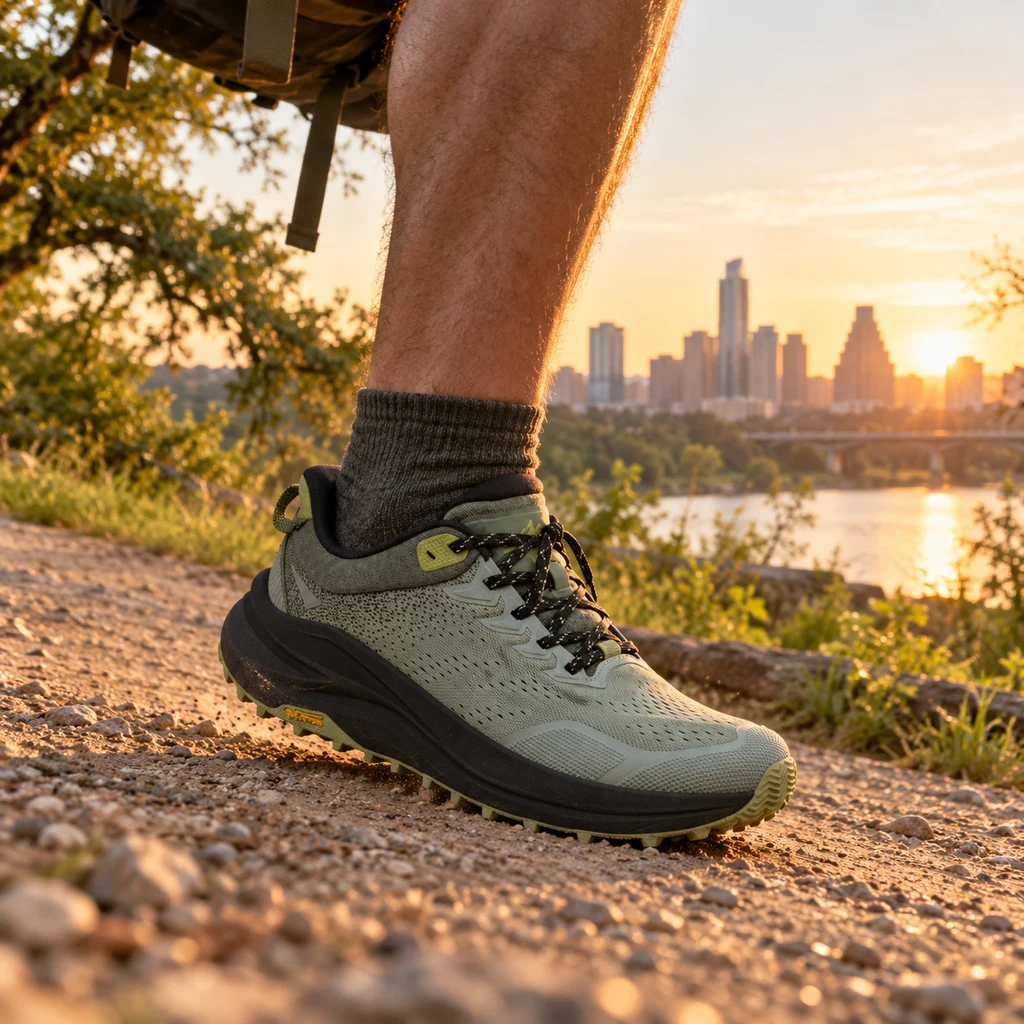
NORTIV 8 Wide Toe Box: Best Budget
If you want to try rucking without spending much on shoes, the NORTIV 8 is the obvious place to start. It has 1,416 reviews at 4.4 stars and a roomy toe box that lets toes spread on long walks.
The listing describes an arch support insole, a lightweight EVA midsole aimed at absorbing shock for heavier users, a breathable Jacquard mesh upper, and a rubber outsole with 4mm lugs that handles trails and pavement.
Expect it to wear faster than the premium shoes here, particularly the outsole on pavement. Treat it as a starter shoe, and upgrade once you know rucking is a habit.
Specs That Matter
- Fit: wide toe box
- Midsole: lightweight EVA
- Insole: arch support
- Outsole: rubber, 4mm lugs
- Upper: Jacquard mesh
Who It Is For
Beginners testing rucking on a budget, especially with wider feet.
Merrell Chameleon 8 Stretch Tactical: Best Tactical
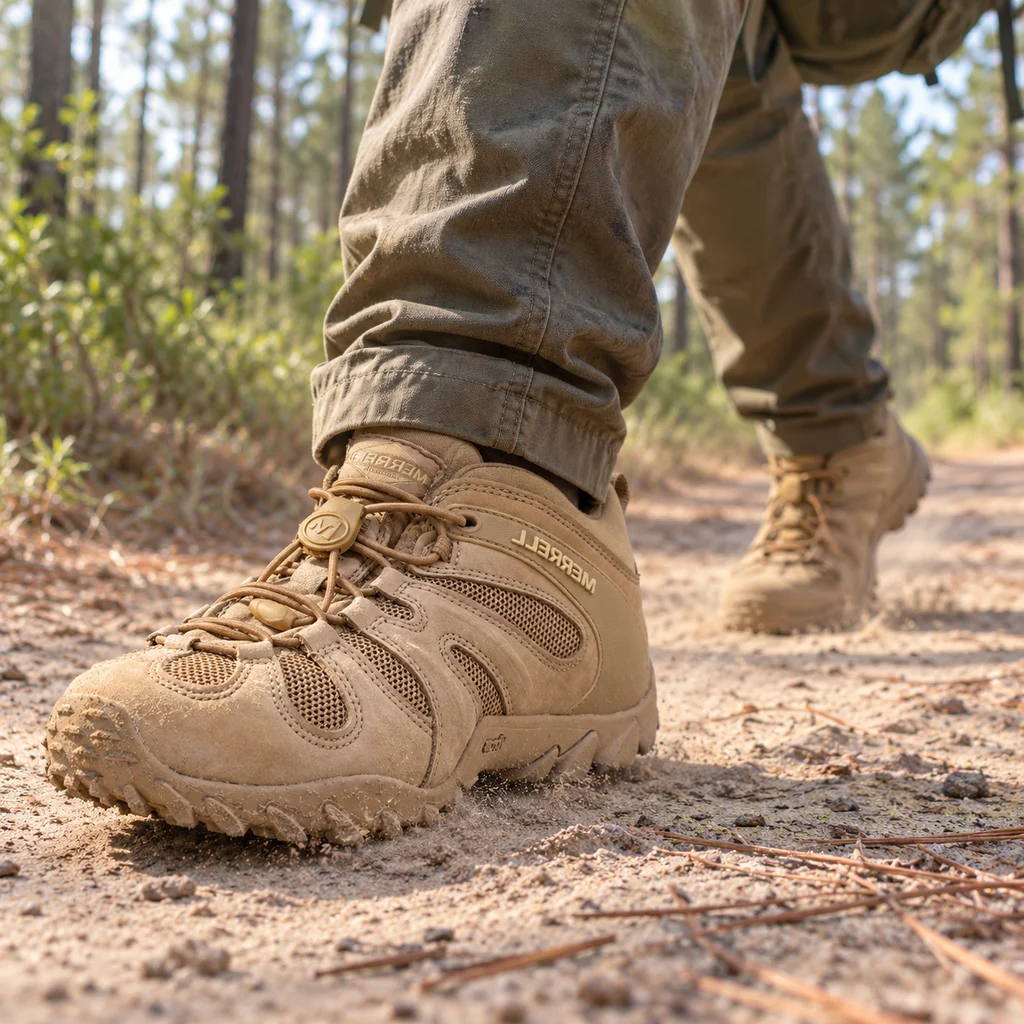
Rucking grew out of military training, and plenty of ruckers want a shoe that looks and works like tactical gear. The Chameleon 8 Stretch Tactical is a low shoe with a waterproof nubuck and mesh upper, according to the listing.
A Vibram XS Trek Evo outsole gives grip, an EVA midsole adds stability, and the elastic cord with lock lacing plus a neoprene stretch collar make it fast to put on and take off, which is handy at events and early starts.
It is a tactical work shoe first, so it is stiffer than a trail runner. That suits ruckers who want protection and a locked-in fit over flexibility.
Specs That Matter
- Upper: waterproof nubuck and mesh
- Outsole: Vibram XS Trek Evo
- Midsole: EVA foam
- Fit: elastic cord with lock lacing, stretch collar
- Insole: COMFORTBASE contoured footbed
Who It Is For
Ruckers who want tactical styling, waterproofing and a quick on-off fit.
How to Choose the Right Rucking Shoe
Mostly Pavement and Sidewalks
Pavement is hard on outsoles and on joints. Prioritize a stable platform and durable rubber over deep lugs. The Merrell Moab 3 is the safe pick here, and our rucking workout plan builds pavement miles gradually so your feet keep up with your fitness.
Trails and Gravel
Off pavement, grip and toe protection matter more. The Brooks Cascadia 19, Altra Lone Peak 8 and Salomon XA PRO 3D all have aggressive outsoles and toe caps. If you also run, our list of the best trail running shoes overlaps heavily with what works for trail rucking.
Events and Long Distances
For long organized rucks, test shoes on training rucks of similar length first, never on the day. Pair them with the load you plan to carry, using one of the best rucking backpacks or a vest from our weighted vest picks, so the fit reflects real conditions.
Boots or Shoes?
Most ruckers do better in shoes. They are lighter, so each step costs less energy, and modern trail shoes give plenty of support for loads up to around a third of body weight. A hiking boot makes sense for heavy loads on rough terrain or ankle-deep mud. Our guide on how to choose hiking boots covers that side, and our best hiking boots list has options if you go that way.
What the Specifications Mean
Heel-to-Toe Drop
Drop is the height difference between heel and forefoot. Zero-drop shoes like the Altra put more load on the calves and Achilles tendon, which is fine once adapted but risky if you jump straight into heavy rucks. Traditional drops spread the load differently and feel more familiar to most people.
Lugs and Outsole Rubber
Deeper lugs grip dirt and mud but wear quickly on pavement. Shallow lugs, like the 4mm lugs on the NORTIV, are a reasonable compromise for mixed use. Harder rubber lasts longer on roads; softer rubber grips better on wet rock.
Waterproof Membranes
A membrane keeps puddles out but also keeps heat and sweat in. Choose waterproof for cold, wet seasons and breathable mesh for warm months. Once water comes in over the collar, a waterproof shoe takes much longer to dry.
Last Width and Toe Box
The last is the foot-shaped form a shoe is built on, and it decides how much room your forefoot gets. Wide or foot-shaped lasts, as on the Altra and NORTIV, suit ruckers whose feet swell or splay under load. Check the brand’s sizing chart before ordering.
Fit, Foot Care and When to Replace
Many ruckers go up half a size from their everyday shoe, because feet swell over long distances and a pack pushes toes forward on descents. Try shoes on later in the day, wearing the socks you will ruck in, and make sure you have a thumb width of space in front of your longest toe.
Break new shoes in on short unweighted walks before adding a pack. Wear moisture-wicking socks, never cotton, and treat hot spots the moment you feel them, before they become a blister. If you get heel pain that lingers into the morning, back off the load; it can be an early sign of plantar fasciitis.
Replace shoes when the midsole feels flat, the outsole lugs are worn smooth, or the heel counter has softened enough that your heel slides. Loaded miles wear shoes faster than running miles, so expect a shorter life than the box suggests. Our guide to rucking vs running explains why the stresses differ.
Packing well helps your feet too: a load that rides high and tight shifts less and puts less stress on your stride. Our guide on how to pack a backpacking pack covers the same principles, and the best ruck plates keep weight compact and close to your spine.
Frequently Asked Questions
What shoes are best for rucking?
Stable hiking shoes or structured trail shoes with good heel hold, a roomy toe box and durable outsoles. The Merrell Moab 3 is the best all-round choice for most people; the Altra Lone Peak 8 suits wide feet.
Can I ruck in running shoes?
Yes, for light loads and short distances, especially in trail running shoes with firm midsoles. Very soft road running shoes become unstable under heavier packs.
Should I ruck in boots or shoes?
Shoes for most rucks, because they are lighter and less tiring. Boots make sense for heavy loads, rough terrain, deep mud or when ankle protection matters more than speed.
Should rucking shoes be a size bigger?
Often half a size bigger than your everyday shoe, to allow for swelling and toes moving forward under load. Fit them with your rucking socks on and check you have space in front of your toes.
How long do rucking shoes last?
Less than the same shoe used for walking, because the extra load compresses the midsole faster. Watch for flattened cushioning, worn lugs and a heel that no longer holds, rather than going by miles alone.
For most people, the Merrell Moab 3 tops our list of the best rucking shoes: stable, protective and proven by thousands of buyers. Choose the Altra Lone Peak 8 if your toes need room, the Salomon XA PRO 3D Gore-Tex for wet seasons, and the NORTIV 8 if you want to start rucking without a big outlay. Whatever you pick, break it in before you add weight.
Discover more from Maive Verse
Subscribe to get the latest posts sent to your email.