
This post may contain affiliate links. If you buy through them, we may earn a small commission at no extra cost to you.
The best hiking socks do more for your comfort on the trail than almost any other piece of gear, and they cost a fraction of what boots do. A good pair wicks sweat, cushions the ball and heel of your foot, stays put without bunching, and keeps blisters away mile after mile. If you have ever finished a hike with sore, damp feet, the socks were probably part of the problem. Our guide on how to prevent blisters when hiking explains why.
We checked six of the most trusted hiking socks on Amazon for rating, stock and what the listings actually say about materials, cushioning and warranties. You will find a pick for cold weather, hot weather, blister prone feet and tight budgets. Pair them with boots that fit well, and our list of the best hiking boots is a good place to look.
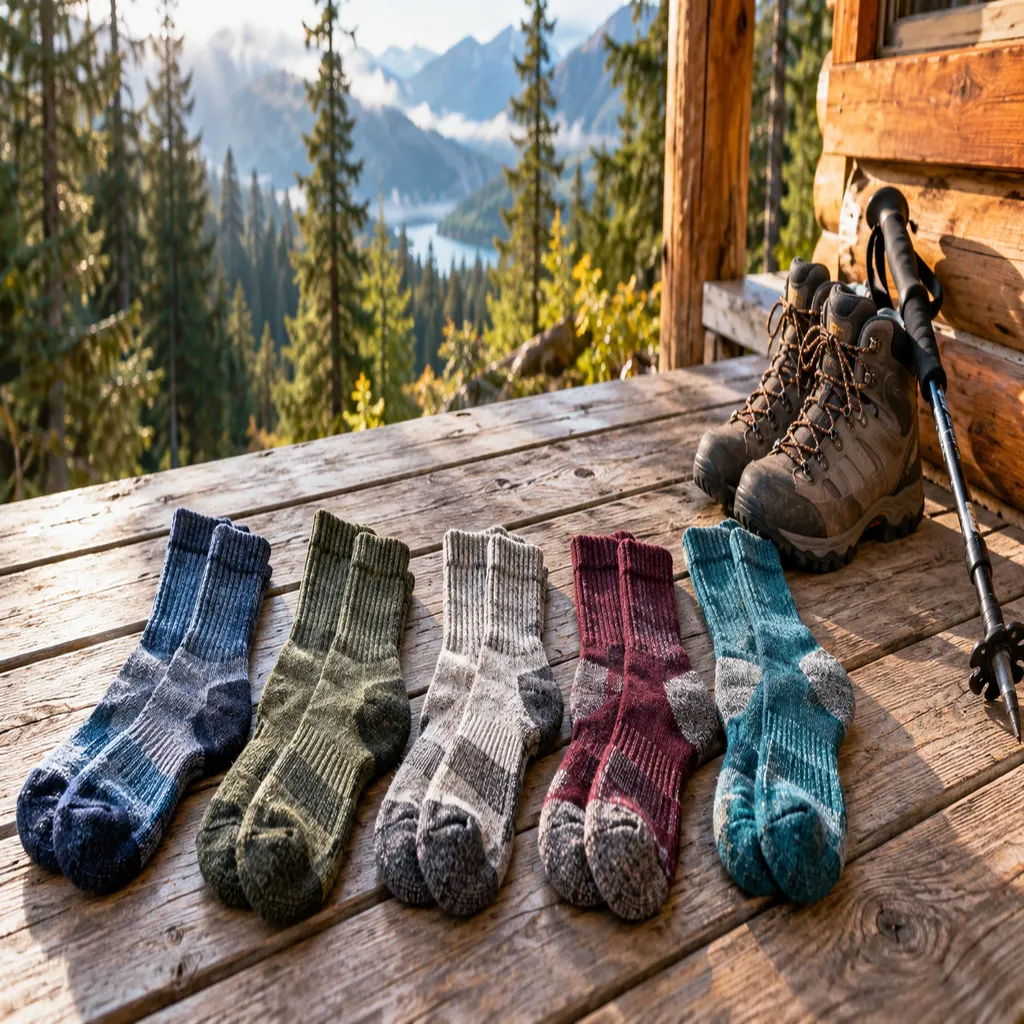
Table of Contents
What Makes the Best Hiking Socks Different
Everyday socks are usually cotton, loosely knit and cushioned in the wrong places. Hiking socks are built around four things. Material comes first: merino wool or synthetic blends that move sweat away from skin and stay warm when damp. Cushioning comes second, placed under the heel and ball of the foot where impact is highest. Fit is third, with elastic arch bands and shaped heels that stop the sock twisting or sliding. Durability is the fourth, using nylon reinforcement in the heel and toe so a good pair lasts for years.
Merino wool is the standout fiber. It is fine enough not to itch, regulates temperature in heat and cold, and resists odor so you can wear a pair for several days on a backpacking trip. The merino sheep behind it were bred for exactly this kind of soft, fine wool.
The Best Hiking Socks at a Glance
| Sock | Best For | Cushion | Material | Rating |
|---|---|---|---|---|
| Darn Tough Hiker Micro Crew | Best overall | Midweight | 63% merino wool | 4.7 (12,000+) |
| Smartwool Hike Classic Light Cushion | Best for warm weather | Light | Merino wool blend | 4.6 (1,000+) |
| Injinji Trail Midweight Crew | Best toe sock | Midweight | CoolMax synthetic | 4.7 (2,800+) |
| Wrightsock Escape Crew | Best for blister prone feet | Light, double layer | Recycled polyester blend | 4.6 (380+) |
| Farm to Feet Boulder | Best American merino | Medium | US merino wool | 4.7 (230+) |
| Wigwam Merino Comfort Hiker | Best value for cold weather | Full | Merino wool blend | 4.5 (1,100+) |
Our Six Hiking Sock Picks in Detail
Each pick links to its current Amazon listing, where you can choose your size and color. Most of these brands also make women’s versions with a narrower heel and foot.
Darn Tough Hiker Micro Crew: Best Overall
Darn Tough is the sock most experienced hikers end up wearing, and the Hiker Micro Crew is its signature model. It is knit in Vermont from a fine gauge blend of 63 percent merino wool, 35 percent nylon and 2 percent spandex, with midweight cushioning under the foot and seamless toes. The micro crew height sits just above a standard hiking boot collar, which keeps grit out without the bulk of a full crew.
The real reason people swear by them is the guarantee. If they ever wear through, tear or develop a hole, Darn Tough replaces them, no conditions. With more than 12,000 ratings at 4.7 stars, and the women’s version rated 4.8, few pieces of outdoor gear have a better track record.
Specs That Matter
- Material: 63% merino, 35% nylon, 2% spandex
- Cushion: midweight under foot
- Height: micro crew
- Warranty: lifetime
Who It Is For
Almost everyone. Day hikers, backpackers and anyone who wants to buy socks once and forget about them.
Smartwool Hike Classic Light Cushion: Best for Warm Weather
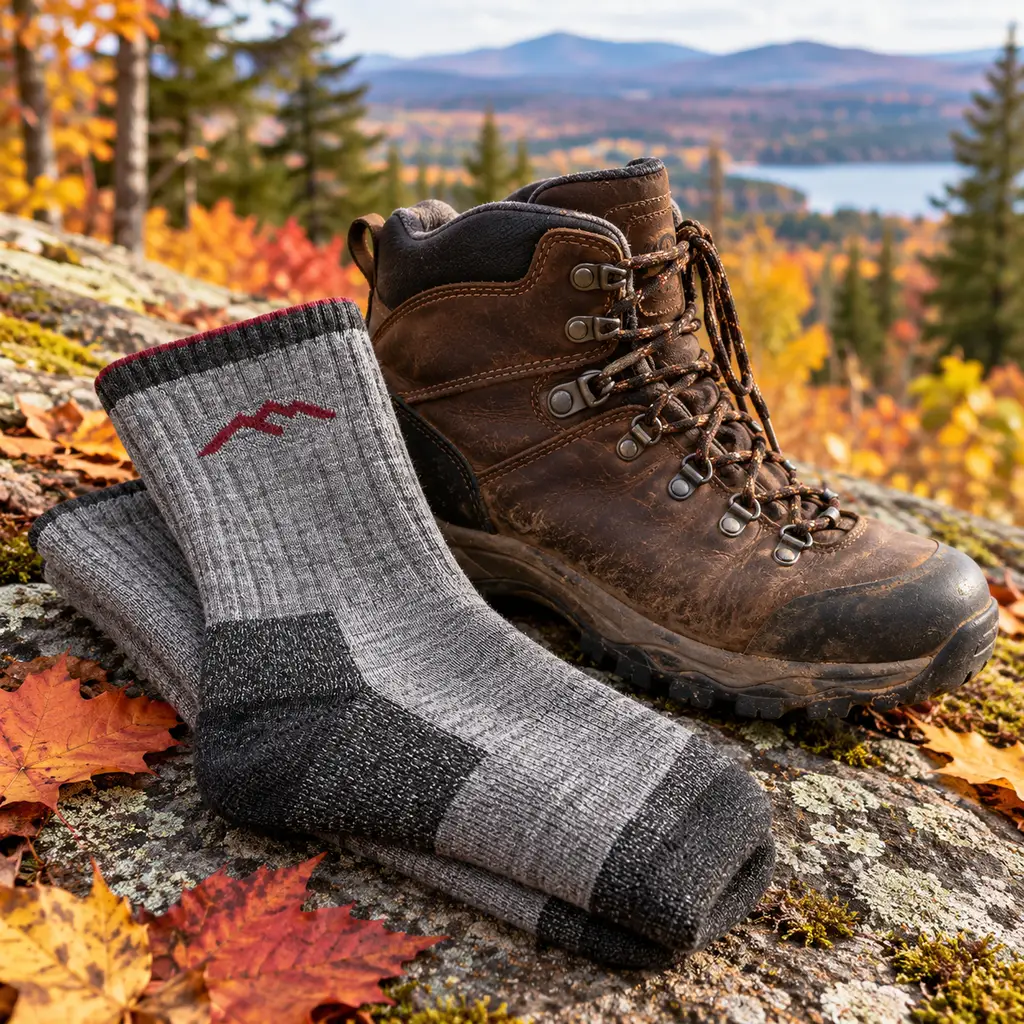
Smartwool’s Hike Classic Edition, formerly the well known PhD Outdoor line, uses light cushioning across the whole bottom of the foot. That keeps feet cool on summer trails and leaves more room inside a snug trail runner or low hiking shoe. The 4 Degree Elite Fit System uses elastic bands to hold the sock in place so it never slides down into your shoe.
A virtually seamless toe removes the ridge that rubs on long descents, and Smartwool’s Indestructawool construction reinforces the high wear zones. It is a softer, thinner feel than the Darn Tough, which many hikers prefer from late spring to early fall.
Specs That Matter
- Material: merino wool with recycled nylon
- Cushion: light, full bottom
- Fit: 4 Degree Elite Fit System
- Toe: virtually seamless
Who It Is For
Warm weather hikers, trail runners and anyone wearing low cut hiking shoes or a snug boot.
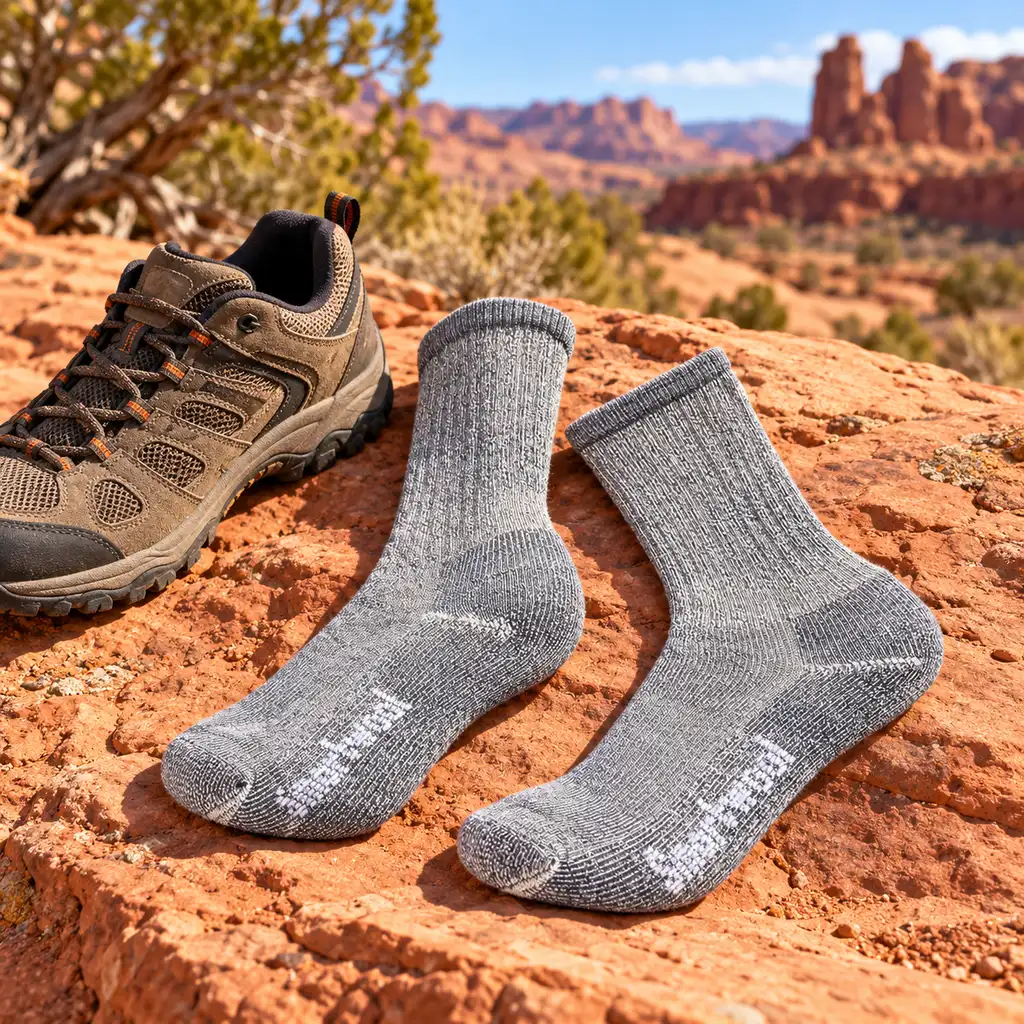
Injinji Trail Midweight Crew: Best Toe Sock
If your blisters show up between your toes or on top of them, a toe sock is the fix, and Injinji is the brand that made them mainstream. Each toe sits in its own sleeve, so skin never rubs against skin. The midweight trail version adds cushioning under the foot for rocky ground.
It is knit from CoolMax, nylon and Lycra rather than wool, so it dries very quickly after creek crossings or a sweaty climb. Getting them on takes a minute of practice, but most people who try toe socks for blisters keep wearing them.
Specs That Matter
- Design: five toe sleeves
- Material: 39% CoolMax, 58% nylon, 3% Lycra
- Cushion: midweight
- Height: crew
Who It Is For
Hikers and trail runners who get blisters between their toes, and anyone who crosses a lot of water.
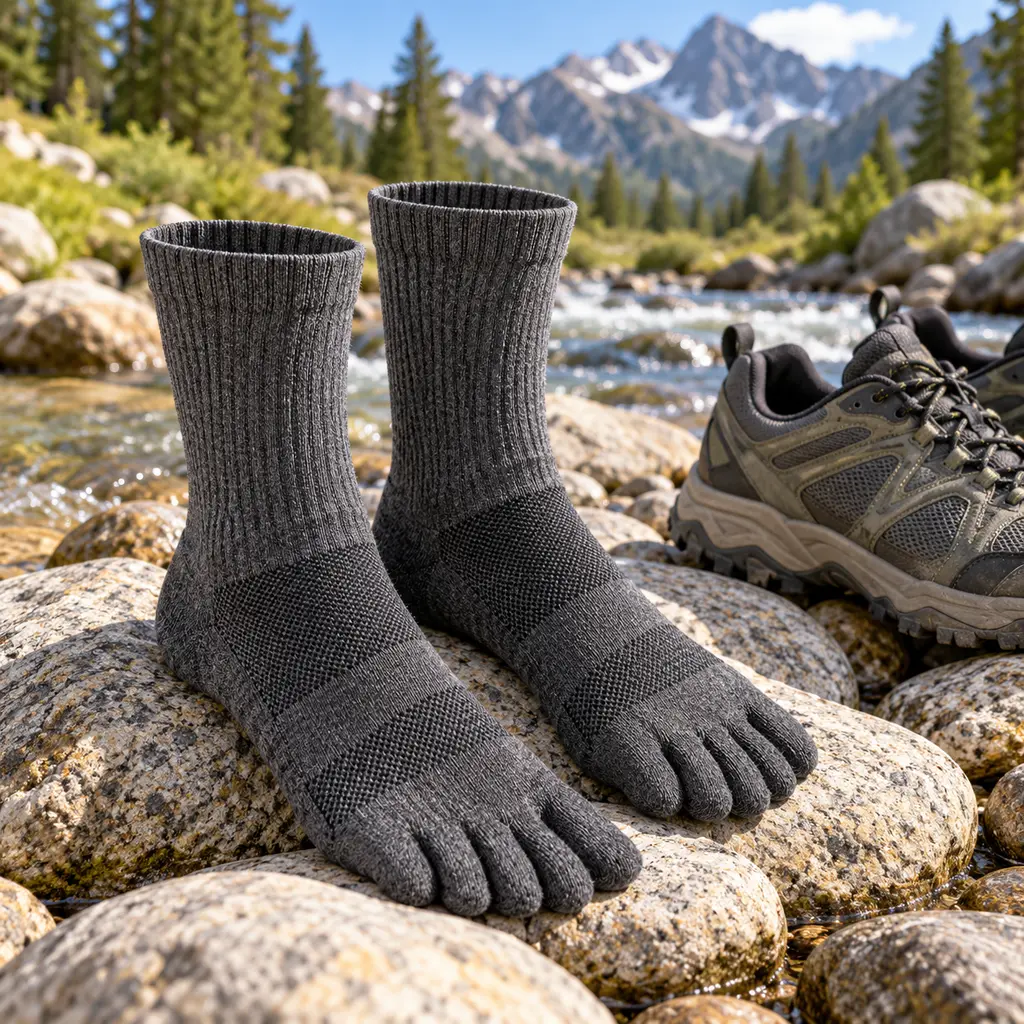
Wrightsock Escape Crew: Best for Blister Prone Feet
Wrightsock builds two layers into one sock. The inner layer moves with your foot and the outer layer moves with your shoe, so friction happens between the layers of fabric instead of against your skin. That is the same idea as wearing a liner sock, without the fuss of two pairs.
The Escape has light terry cushioning from heel to toe, wicks moisture well, and is made in the USA from recycled polyester, nylon and Lycra. Wrightsock backs it with a blister free guarantee. If you have tried good wool socks and still blister, try these next.
Specs That Matter
- Design: double layer
- Cushion: light terry heel to toe
- Material: recycled polyester, nylon, Lycra
- Guarantee: blister free
Who It Is For
Anyone who blisters easily, especially on the heel, and hikers breaking in new boots.
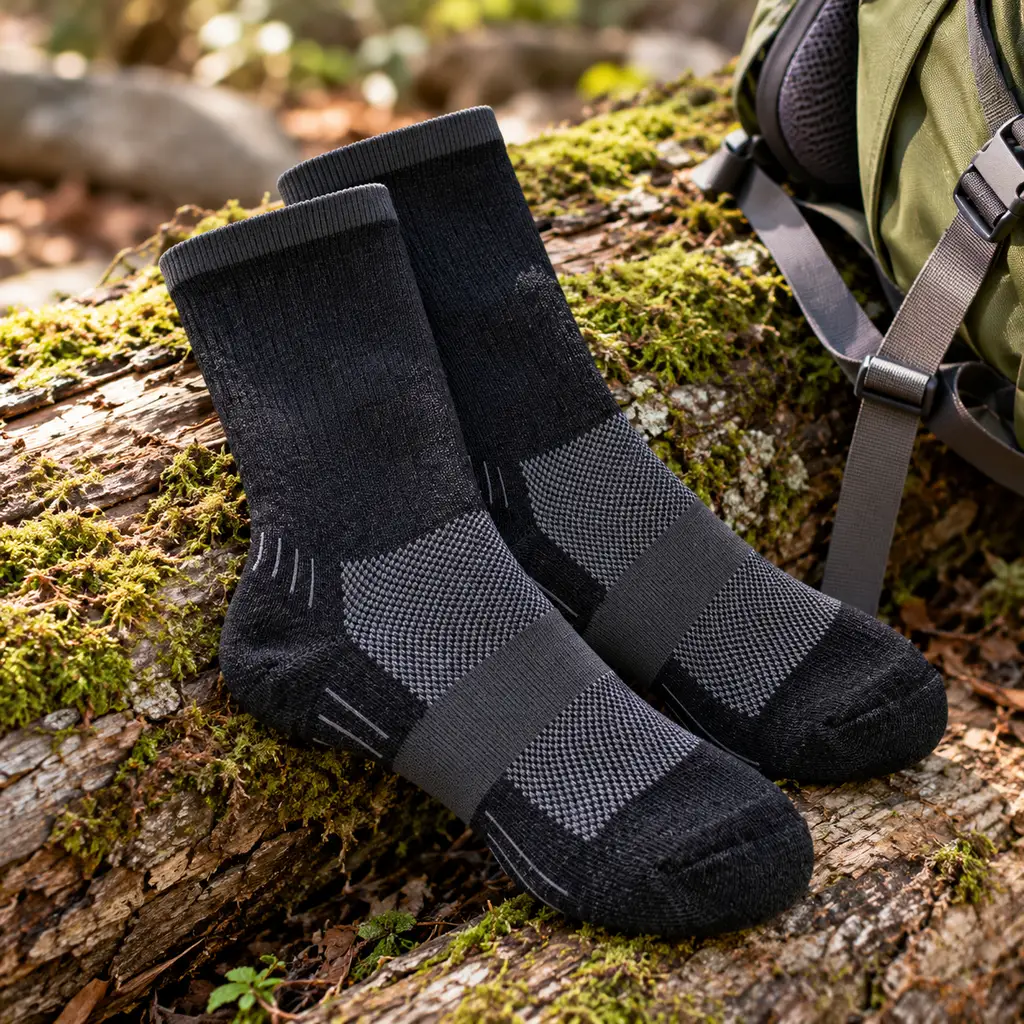
Farm to Feet Boulder: Best American Merino
Farm to Feet sources all of its merino wool from American sheep farms and knits its socks in North Carolina. The Boulder is its classic medium weight hiking sock, with reinforced heels and toes and low stress seam placement that adds years of wear.
The toe closure is completely seamless, which removes one of the most common causes of toe blisters. The listing is a two pack, which makes it a sensible way to try the brand. With a 4.7 rating, it holds up well against bigger names.
Specs That Matter
- Material: US merino wool blend
- Cushion: medium
- Toe: seamless closure
- Pack: 2 pairs
Who It Is For
Hikers who want American made merino, and anyone looking for an all season sock for three season trips.
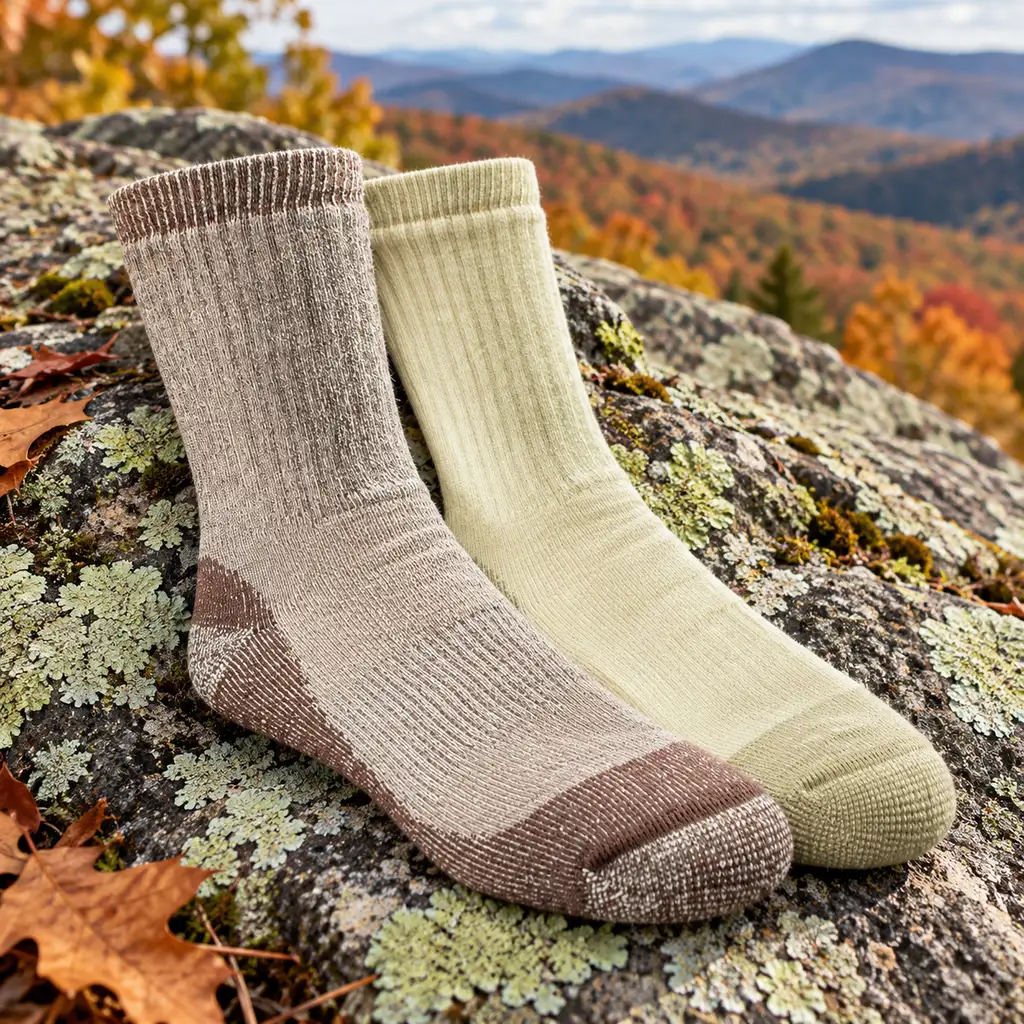
Wigwam Merino Comfort Hiker: Best Value for Cold Weather
Wigwam has made socks in Wisconsin for more than a century, and the Merino Comfort Hiker is a lot of sock for the money. It is fully cushioned, which makes it warm and soft inside stiff winter boots, and the wool is treated so it does not itch or shrink in the wash.
The extra cushion makes it a little bulky for snug summer shoes, but that is exactly what you want for snowshoeing, winter hikes and cold mornings in camp. It is also backed by a lifetime warranty.
Specs That Matter
- Material: merino wool blend
- Cushion: full
- Care: no itch, no shrink
- Warranty: lifetime
Who It Is For
Winter hikers, snowshoers and anyone on a budget who wants warm, durable wool socks.
How to Choose the Right Hiking Socks
Pick a Cushion Level
Light cushion suits warm weather and snug trail shoes. Midweight cushion is the all rounder for most day hikes and backpacking. Full cushion is for cold weather and heavy boots. When in doubt, start with midweight.
Match the Height to Your Footwear
The sock should always rise above the top of your shoe so the collar never rubs bare skin. Quarter and micro crew heights work with trail runners and mid boots, while full crew socks suit tall leather boots and colder weather.
Choose Your Material
Merino wool wins for comfort, temperature control and odor resistance. Synthetic socks dry faster and are often tougher. Blends give you a bit of both. Avoid cotton for hiking entirely, as it holds sweat and causes blisters.
Get the Fit Right
A hiking sock should feel snug with no wrinkles, and the heel pocket should sit exactly on your heel. If you are between sizes, size down. Always wear the socks you plan to hike in when you try on boots, as our guide on how to choose hiking boots explains.
Hiking Socks for Every Season
Summer
Choose light cushion merino or synthetic socks, and carry a spare pair to change into at lunch. Our summer hiking tips cover the rest of staying cool on hot trails.
Fall
Midweight merino handles cool mornings and warm afternoons. It is the most versatile sock to own, and it suits the mixed conditions covered in our fall hiking guide.
Winter
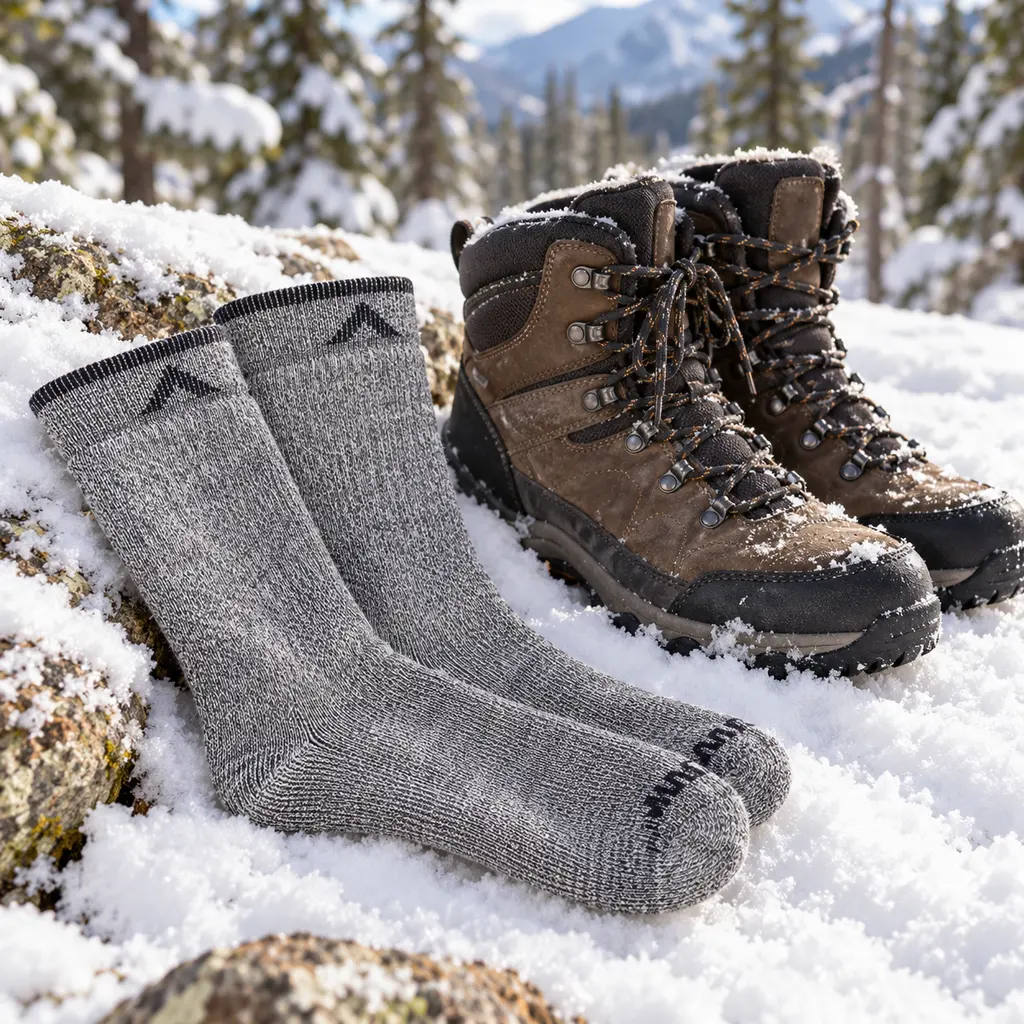
Go to full cushion wool and make sure your boots still have room for your toes to wiggle, since tight boots cut circulation and make feet colder. Our guides on hiking in snow and ice and how to layer for hiking cover the rest of a winter setup.
Multi Day Trips
Bring two pairs of hiking socks plus a dedicated dry pair for sleeping. Rotate and dry the hiking pairs on the outside of your pack. Our backpacking for beginners guide covers what else to bring.
How to Make Hiking Socks Last
Wash merino socks inside out on a cool, gentle cycle and air dry them, or tumble dry on low. Skip fabric softener, which clogs the fibers and reduces wicking. Rotating two or three pairs gives the cushioning time to recover between hikes. When your socks are thin at the heel or the cushion has flattened, it is time to replace them, or claim the warranty if you bought Darn Tough or Wigwam.
Good socks also help on other adventures. Rucking puts extra weight on your feet, so our guide to the best rucking shoes pairs well with these picks, and trail runners should look at our list of the best trail running shoes. If you are just starting out, our hiking for beginners guide puts it all together.
Sizing deserves a minute of attention before you order. Hiking socks are sized by shoe size ranges, usually small, medium, large and extra large, and the ranges differ between brands and between men’s and women’s versions. Check the size chart on the listing against your hiking shoe size, not your everyday shoe size, since many people wear hiking boots a half size larger. A sock that is too big will bunch under the toes and fold at the heel, which is exactly where blisters start. A sock that is too small pulls the heel pocket down under your foot and wears through fast. If your foot is at the top of one range, the smaller size usually fits better, because merino relaxes slightly with wear.
It is also worth owning more than one pair. Three pairs in rotation means one on your feet, one drying and one clean in the drawer, and the cushioning lasts much longer when it gets a day off between hikes.
Frequently Asked Questions
Are merino wool socks worth it for hiking?
Yes. Merino wicks moisture, stays warm when damp, resists odor and is soft enough not to itch. Most hikers who try a good merino sock never go back to cotton or cheap synthetics.
Should I wear two pairs of socks when hiking?
Only if one is a thin liner. A liner under a hiking sock reduces friction, but two thick socks will crowd your boot and cause pressure points. A double layer sock like the Wrightsock gives you the same benefit in one pair.
How often should I replace hiking socks?
When the heel or ball of the foot thins out, or the cushioning feels flat. For most hikers that is every one to three years. Socks with lifetime warranties can simply be swapped out.
What are the best hiking socks for blisters?
Toe socks like the Injinji help with blisters between the toes, and double layer socks like the Wrightsock help with heel blisters. Combine them with the habits in our blister prevention guide for the best results.
Can I wear hiking socks for everyday use?
Absolutely. Light and midweight merino socks are comfortable for work, travel and errands, especially in cooler months. Many people end up wearing them every day.
Discover more from Maive Verse
Subscribe to get the latest posts sent to your email.