


This post may contain affiliate links. If you buy through them, we may earn a small commission at no extra cost to you.
A rucking workout plan turns walking with a loaded pack from something you do when you feel like it into training that actually builds strength and endurance. Rucking is simple, but simple is easy to get wrong: too much weight too soon, the same route every day, or a long ruck on legs that never recovered from the last one. A little structure fixes all three.
This six week program is built for beginners who have done a few rucks and want to progress safely. If you have not rucked at all yet, start with our rucking for beginners guide and our breakdown of how much weight to ruck, then come back here for the plan.
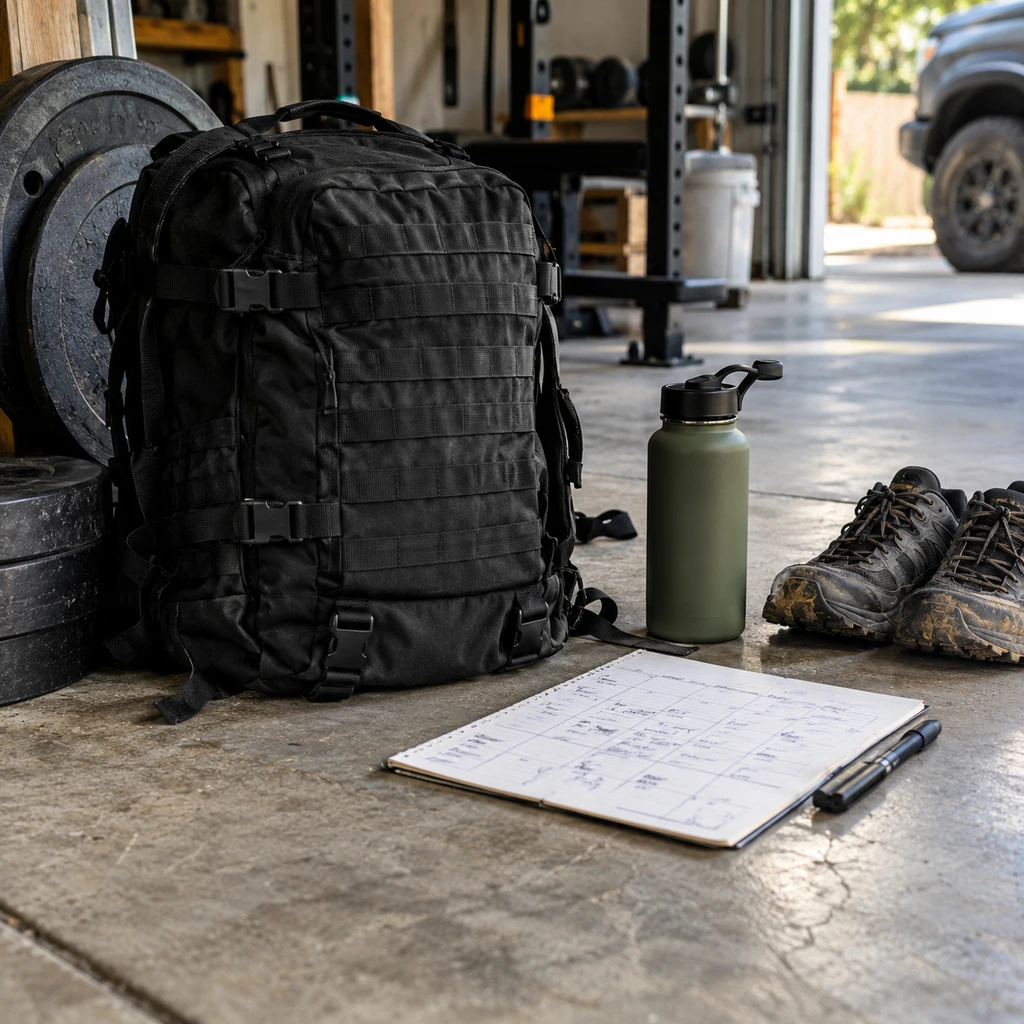
Table of Contents
How a Weekly Rucking Workout Plan Is Built
Every week in this program uses the same five building blocks. The weights and distances change; the shape of the week does not, which makes it easy to fit around work and family.
Easy Rucks
Two short rucks a week at a conversational pace. These build the base: your feet, ankles, hips and shoulders getting used to carrying weight. You should finish an easy ruck feeling like you could do it again.
Hill or Stair Rucks
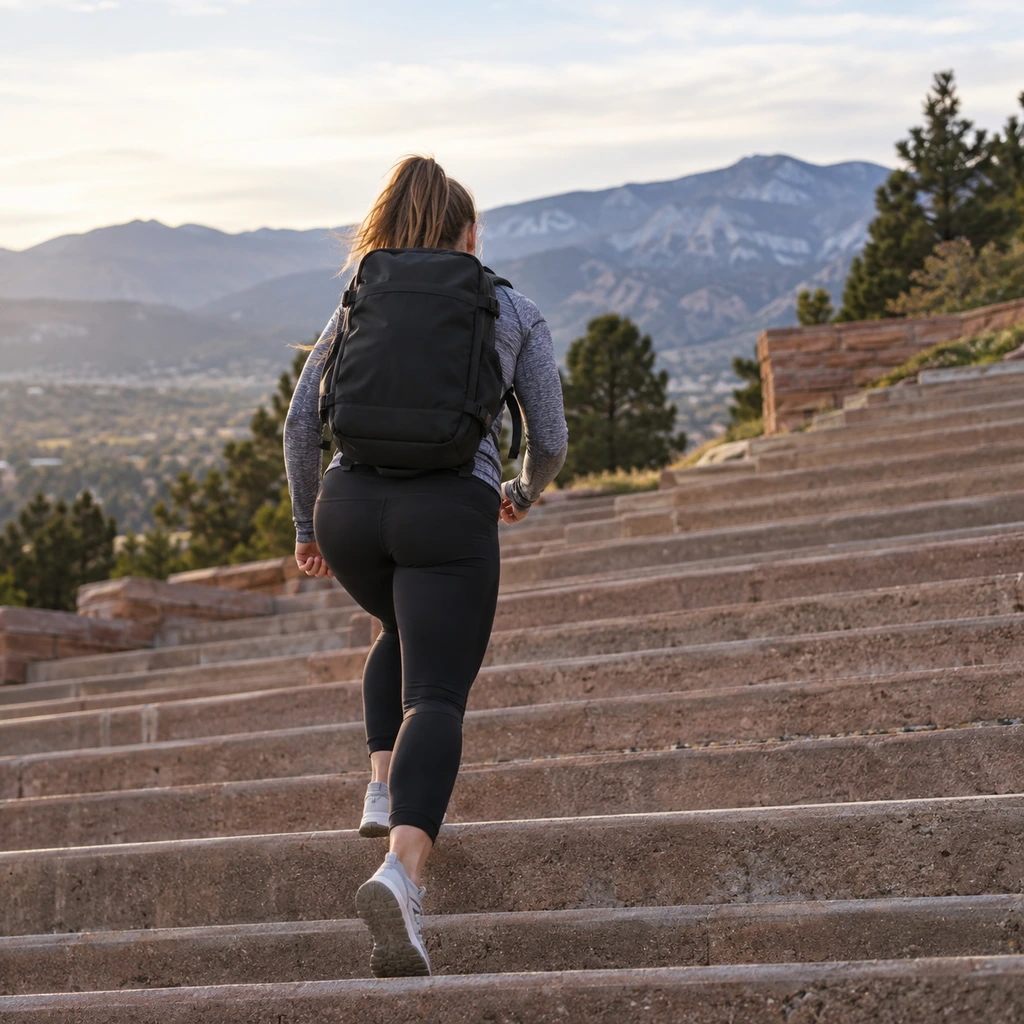
One session a week on hills or stairs. Climbing under load builds leg strength and conditioning faster than flat walking, and stair climbing is the easiest way to get vertical gain in a city. Keep the weight the same as your easy rucks; the hill provides the extra work.
The Long Ruck
One longer ruck at the weekend at an easy pace. This is the session that builds real endurance and the one where you learn what your feet, pack fit and fueling need over a couple of hours.
Strength Days
Two short strength sessions, which can be done with the ruck itself. Stronger legs, hips and core make the rucking easier and protect your joints. Twenty to thirty minutes is plenty.
Rest Days
At least one full rest day a week, and two in the first few weeks. Adaptation happens during recovery, not during the workout. Skipping rest is the most common reason beginners stall or get hurt.
The 6-Week Program, Week by Week
Weights are given as a percentage of body weight, in line with our guide on how much weight to ruck. Treat this as general guidance, not medical advice, and stay at a week longer if anything feels sore rather than tired.
| Week | Easy Rucks (x2) | Hill or Stair Ruck | Long Ruck | Load |
|---|---|---|---|---|
| 1 | 30 min | 20 min, gentle hills | 45 min | About 10% of body weight |
| 2 | 30 min | 25 min | 60 min | 10% |
| 3 | 35 min | 25 min, steeper | 70 min | 10 to 12% |
| 4 | 35 min | 30 min | 80 min | 12% (deload: shorter long ruck if tired) |
| 5 | 40 min | 30 min, stairs | 90 min | 12 to 15% |
| 6 | 40 min | 35 min | 100 to 120 min | 15% |
Change only one thing at a time. If you add weight, keep the distance the same that week; if you add distance, keep the weight. Increasing both at once is the classic way to end up with sore knees or a stress injury.
A Sample Week
- Monday: rest
- Tuesday: easy ruck
- Wednesday: strength day
- Thursday: hill or stair ruck
- Friday: easy ruck or rest
- Saturday: long ruck
- Sunday: strength day or rest
Adjusting the Plan to Your Schedule
Busy weeks happen. If you can only manage three sessions, keep the long ruck and the hill session and drop one easy ruck. If you miss a whole week, repeat the last week you completed rather than jumping ahead. The plan only works if the progression is earned, so it is always better to be a week behind than a week sore.
Weather matters too. In heat, shorten the long ruck and move it to early morning. In cold or wet conditions, keep the same time but slow the pace, because footing and layering take more attention. A treadmill set to a modest incline is a fine substitute for a hill session when the weather is truly bad.
What to Do After Week 6
Repeat weeks four to six with slightly more weight or distance, but not both. Many people settle at 15 to 20 percent of body weight for regular training and only go heavier for specific events. This rucking workout plan also pairs well with running; our comparison of rucking vs running explains how to combine them.
Warming Up and Ruck Form
A Five Minute Warm Up
Walk the first five minutes without rushing, then add a few leg swings, hip circles and ankle rolls. Cold tendons under load are what complain first, especially in fall mornings.
Posture Under Load
Stand tall with your shoulders back and the weight high and tight against your back. A slight forward lean from the ankles is fine on hills; hunching at the waist is not. If you cannot stand upright with the pack on, it is too heavy.
Pack Fit Matters
The plate should sit high, between your shoulder blades, not bouncing at the bottom of the pack. A dedicated plate sleeve helps; see our picks for the best rucking backpacks and the best weighted vests for rucking if your current bag lets the load swing.
Adding Strength Work With the Ruck
You do not need a gym. The ruck makes a decent weight for basic moves, and these build exactly what rucking demands. Aim for two or three sets of eight to twelve reps, with good form over heavy load, in keeping with the principle of progressive overload.
Ruck Squats
Wear the pack or hug it to your chest and do a standard squat. Keep your knees tracking over your toes and your chest up.
Ruck Lunges and Step Ups
Forward or reverse lunges and step ups onto a bench or stair build single leg strength and balance, which is what protects your knees on uneven ground.
Do strength work on the days between rucks, not right before a long ruck. Tired legs on a long ruck change your gait, and a changed gait under load is where overuse problems start.
Presses, Rows and Carries
Overhead presses, bent over rows and suitcase carries with the ruck build the upper back and core that keep you upright late in a long ruck. Finish with a short plank.
The Gear You Actually Need
Weight
A purpose built plate stays put and fits a plate sleeve. The GORUCK Ruck Plate is the benchmark, the Yes4All cast iron ruck weight is the widely bought value option, and the flexible HYPERWEAR FlexLoad adjusts in small steps, which suits a progressive plan. Our full guide to the best ruck plates compares them.
Shoes and Socks
Supportive walking shoes or trail shoes work for most rucks; save boots for rough terrain. Our guides on the best trail running shoes and choosing hiking boots cover fit. Wool blend socks reduce friction and moisture.
Water and Layers
Carry water on anything over 45 minutes, and dress so you start slightly cool. The layering rules in our guide on how to layer for hiking apply directly to rucking.

Recovery, Feet and Fueling
Foot Care
Most rucking problems start at the feet. Tape hot spots early, before they become blisters, keep toenails trimmed, and break in new shoes on easy rucks, never on the long one. Heel pain that lingers in the morning can be an early sign of plantar fasciitis; back off rather than push through.
Soreness Versus Pain
General muscle soreness a day or two after a hard session, known as delayed onset muscle soreness, is normal. Sharp or localized pain in a joint, shin or foot is not. Stop, rest and drop the weight when you return.
Eating and Drinking
For rucks over an hour, eat something small every 45 minutes or so to keep glycogen topped up, and drink to thirst. On hot days add electrolytes to avoid dehydration. Our hydration guide and hiking nutrition guide have the details.
Sleep and Rest Days
Seven to nine hours of sleep does more for your progress than any extra session. If you feel flat for several days in a row, take an extra rest day or repeat the previous week.
Common Rucking Plan Mistakes
- Adding weight and distance in the same week.
- Doing every ruck at the same hard pace.
- Skipping rest days in the first month.
- Letting the load sit low and swing in the pack.
- Breaking in new shoes on the long ruck.
- Ignoring a sharp joint pain because the plan says to keep going.
Fix those and almost any sensible rucking workout plan will work. If you want to mix in some running, our guides on trail running for beginners and how to run uphill make good companions, and the climbing work transfers straight to your hill rucks. Training for a mountain trip? See our training for elevation guide.
Frequently Asked Questions
How many times a week should I ruck?
Three or four rucking sessions a week is plenty for most beginners: two easy, one hill or stair session and one long ruck, with strength work and rest days in between.
How much weight should I start with?
Around 10 percent of your body weight is a sensible starting point for most people, then progress slowly. Our guide on how much weight to ruck explains the reasoning and the upper limits.
Can I ruck every day?
Light, short rucks can be done most days once you are adapted, but a structured plan with rest days gets better results and lowers injury risk, especially in the first two months.
Is rucking enough of a workout on its own?
It builds endurance and leg strength well, but adding two short strength sessions a week makes you stronger, more resilient and better at rucking.
What should I do if my knees hurt?
Drop the weight, shorten the distance and avoid steep downhills for a week. Check that the load is high and tight. If pain is sharp or persists, see a physical therapist before continuing.
A good rucking workout plan is mostly patience: easy sessions, one hard climb, one long ruck and enough rest to absorb it. Follow the six weeks, change one variable at a time, and you will finish stronger than you started. For your next backpacking trip, our list of the best backpacking tents and our backpacking for beginners guide put that fitness to use.
Discover more from Maive Verse
Subscribe to get the latest posts sent to your email.