

This post may contain affiliate links. If you buy through them, we may earn a small commission at no extra cost to you.
The best ruck plates do one simple job well: they put a fixed amount of weight flat against your back and keep it there. That sounds basic until you have rucked with a bag of bricks or a stack of books, which slide, bounce and dig into your spine. A dedicated plate, usually cast iron or steel with handles cut into the ends, sits in a pack sleeve and turns a lumpy load into one that feels like part of the bag.
Below are six plates and plate alternatives, from a made in the USA cast iron classic to a flexible modular option and a water bladder for travel, each checked for stock, rating and what the listing actually says. Not sure how heavy to go? Start with our guide on how much weight to ruck before you buy.
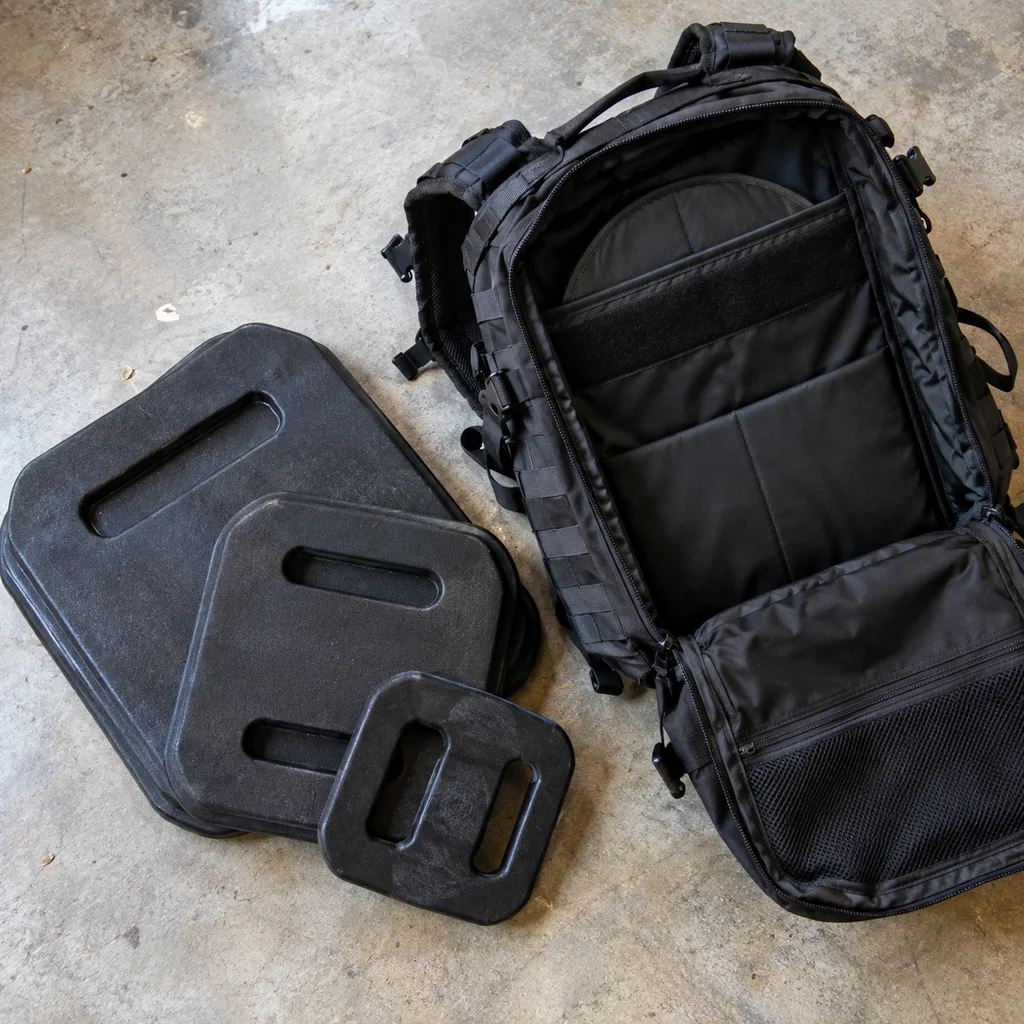
Table of Contents
What Separates the Best Ruck Plates
Fit comes first. A plate has to match the sleeve or pocket in your pack or vest. Many rucking packs are built around a plate of roughly laptop size, and most plates are designed to slide into a standard laptop compartment, but brand specific packs sometimes want brand specific plates. Measure the sleeve before you order.
Then shape and edges. Rounded corners protect your pack fabric and your back. A thin, flat profile keeps the weight close to your spine, which is where you want it. Thick, blocky weights push the load away from your body and make it feel heavier than it is.
Then handles and finish. Wide handle cutouts make a plate easy to pull out of a tight sleeve, and a powder coated or painted finish resists rust from sweat and rain. Bare iron will rust quickly once it gets wet.
Last, adjustability. A fixed plate is simple and durable, but every increase means buying another one. Stackable and modular plates let you build up in smaller steps, which suits the slow progressive overload that keeps rucking injury free.
The Best Ruck Plates at a Glance
| Plate | Material | Adjustable | Reviews | Best For |
|---|---|---|---|---|
| GORUCK Ruck Plate | Cast iron | No | 4.8 stars, 229 | Best overall |
| Yes4All Cast Iron Ruck Weight | Cast iron | No | 4.8 stars, 4,077 | Best value |
| Yes4All Stackable Rucking Plate | Cast iron | Stackable | 4.8 stars, 635 | Building up in steps |
| HYPERWEAR FlexLoad | Steel shot in flexible shell | Yes | 4.2 stars, 45 | Comfort and fine tuning |
| LEKÄRO Steel Plates (2 PC) | Powder coated steel | No | 4.6 stars, 481 | Weighted vests |
| ModGear Water Weight | Water in PEVA bladder | Yes, to 20 lb | 4.4 stars, 72 | Travel |
The Six Best Ruck Plates in Detail
GORUCK Ruck Plate: Best Overall
GORUCK essentially defined modern rucking, and its plate is the benchmark. It is cast iron with a matte black powder coat, rounded edges and extra wide grab handles, and GORUCK quotes a break strength of over 90,000 pounds. In other words, you are not going to wear it out.
It is made in the USA, designed in Jacksonville Beach, Florida and produced in Mankato, Minnesota, and it is shaped to fit GORUCK packs such as the Rucker and the Ruck Plate Carrier precisely. That snug fit is the real advantage: the plate does not shift, rattle or sag to the bottom of the sleeve.
Four point eight stars across 229 reviews. If you use a non GORUCK pack, check the sleeve dimensions first, because the plate is designed around GORUCK sizing.
Specs That Matter
- Material: cast iron, matte black powder coat
- Edges: rounded, with super wide handles
- Fit: designed for GORUCK packs
- Made in: USA
- Listed break strength: over 90,000 lb
Who It Is For
Ruckers with a GORUCK pack, or anyone who wants the plate that sets the standard.
Yes4All Cast Iron Ruck Weight: Best Value
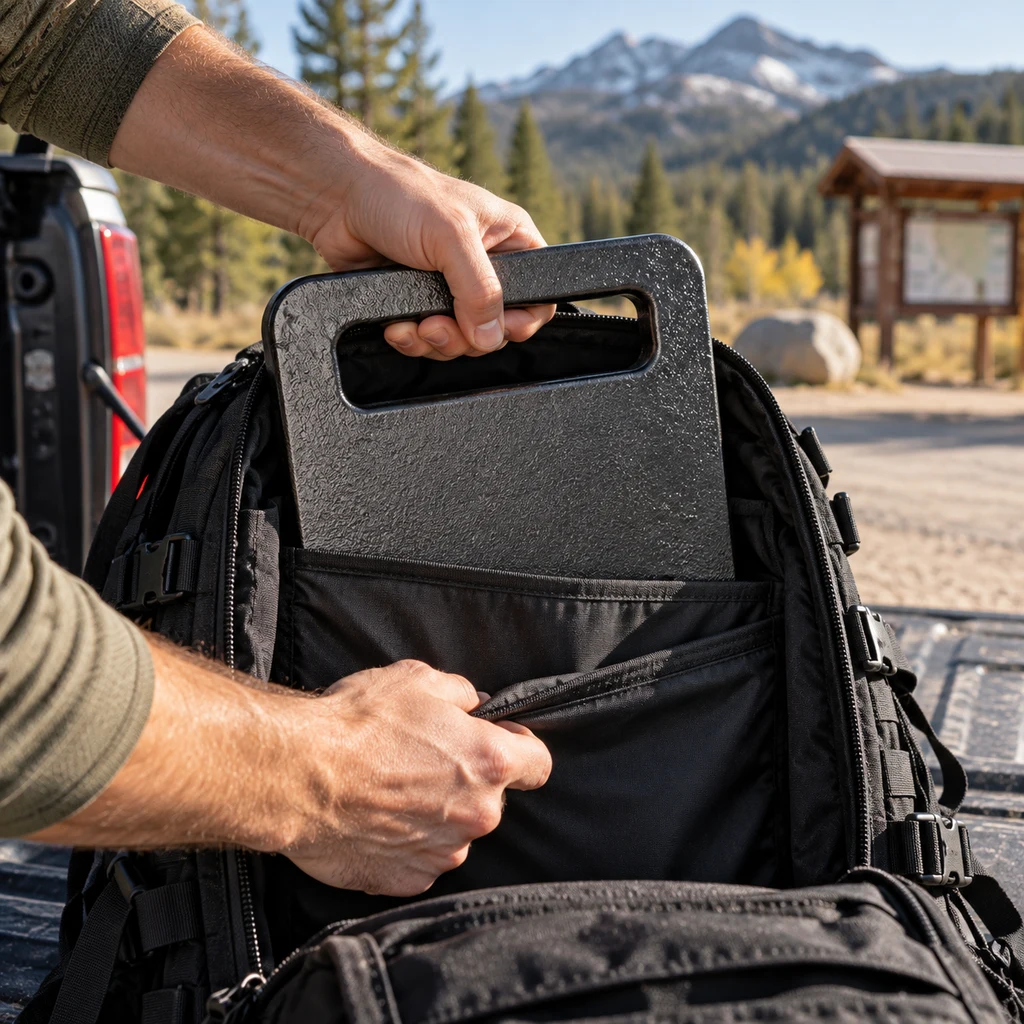
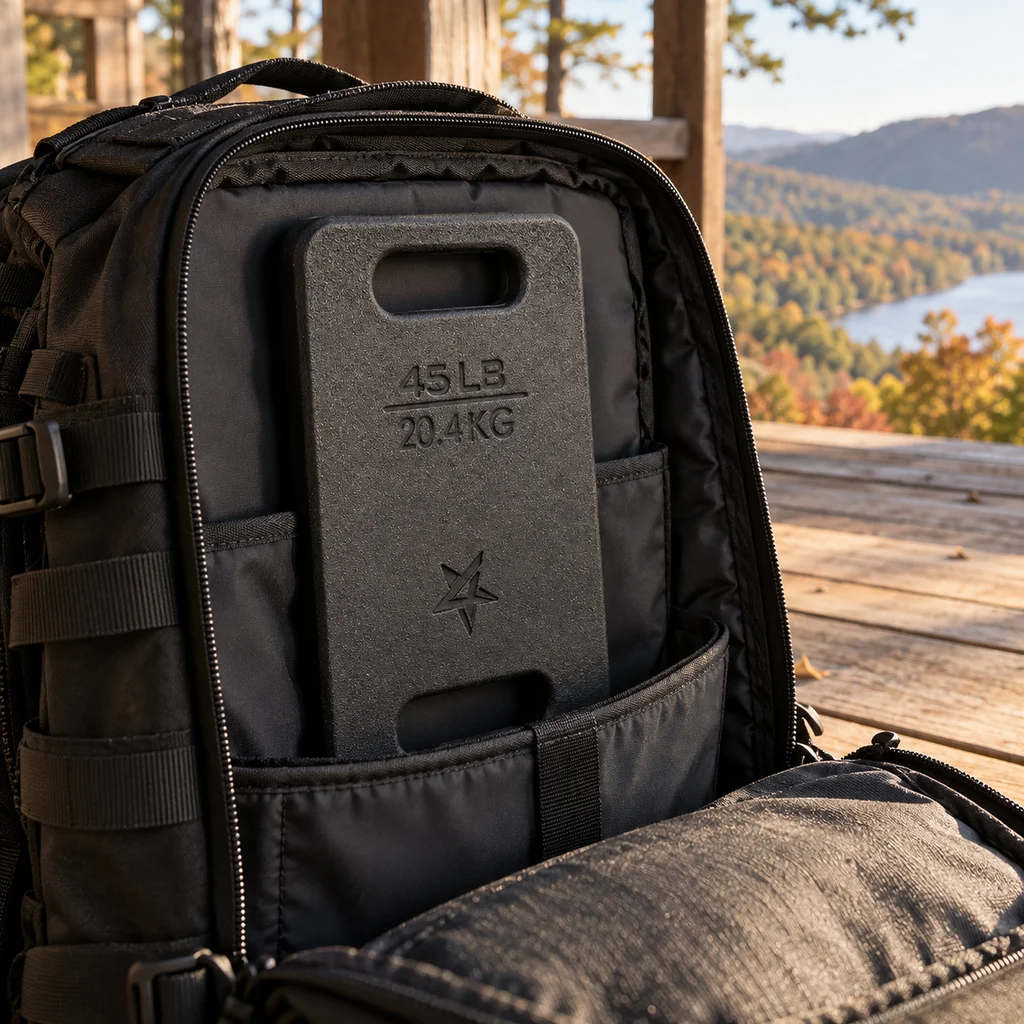
With 4,077 reviews at 4.8 stars, this is the most widely bought ruck plate here, and for good reason. It is a black coated cast iron plate with wide handles at both ends, a textured surface that is easy to grip, and four rounded edges to protect your pack.
Yes4All makes it in seven weights, 10, 15, 20, 25, 30, 35 and 45 pounds, so you can buy exactly the load you need and step up in five pound increments later. The listing says it fits standard laptop compartments, which covers most daypacks and rucking packs.
It does not have the brand fit of a GORUCK plate in a GORUCK pack, but in a general purpose rucksack it does the job at a lower price.
Specs That Matter
- Material: cast iron, black coated
- Weights: 10 to 45 lb in 5 lb steps
- Handles: wide, at both ends
- Edges: four rounded edges
- Fit: standard laptop compartments
Who It Is For
Most ruckers, especially anyone who wants a proven plate without paying for a brand name.
Yes4All Stackable Rucking Plate: Best for Building Up
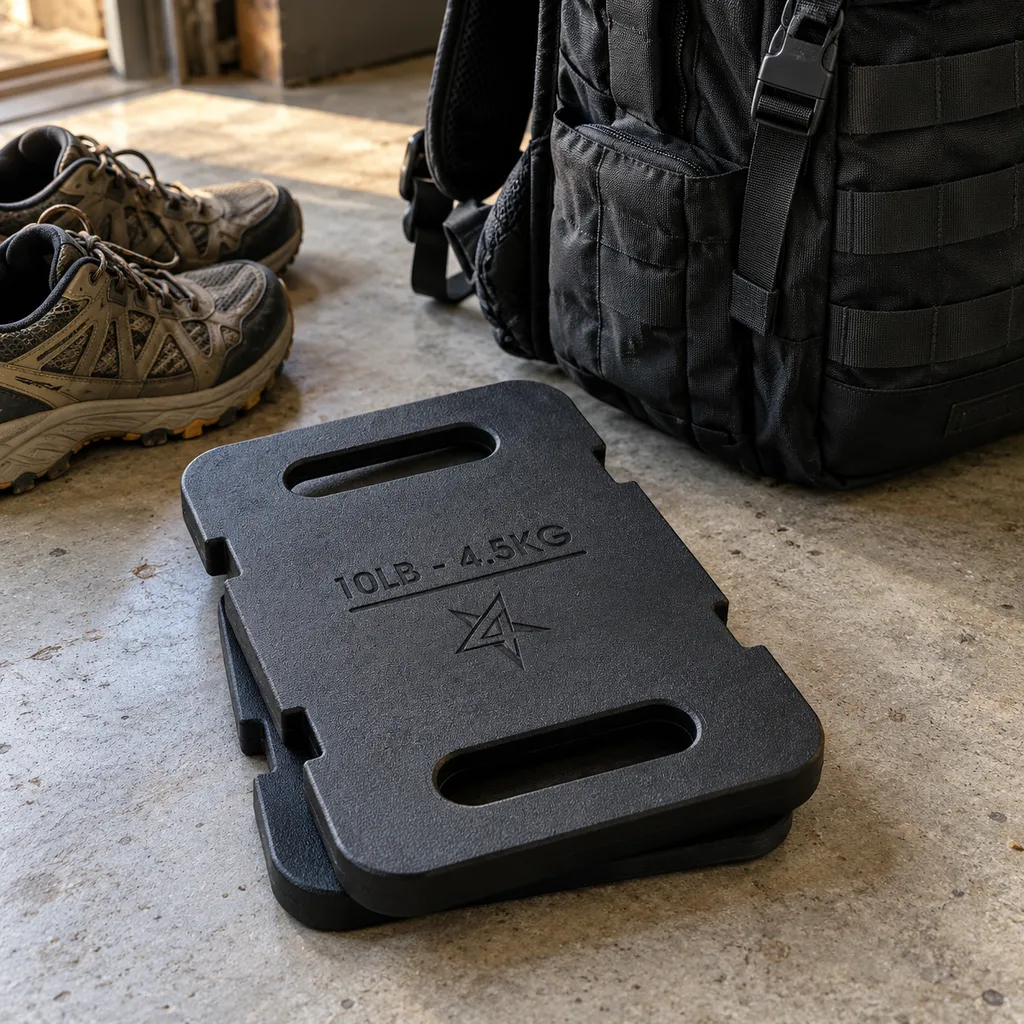
This 10 pound Yes4All plate is designed to be combined. Recessed sides let two or more plates sit flush against each other, and dual strap slots let you strap them together into a single block so they do not slide around the sleeve.
That makes it a clever way to progress. Buy one plate to start at 10 pounds, add a second when you are ready for 20, and so on, without ending up with a pile of single use plates of different sizes.
It shares the handles, textured grip and rounded edges of the standard Yes4All plate, and it holds 4.8 stars across 635 reviews.
Specs That Matter
- Material: cast iron
- Weight: 10 lb per plate
- Design: recessed sides for stacking
- Strap slots: yes, for joining plates
- Fit: standard laptop compartments
Who It Is For
Beginners who plan to add weight gradually and would rather stack plates than replace them.
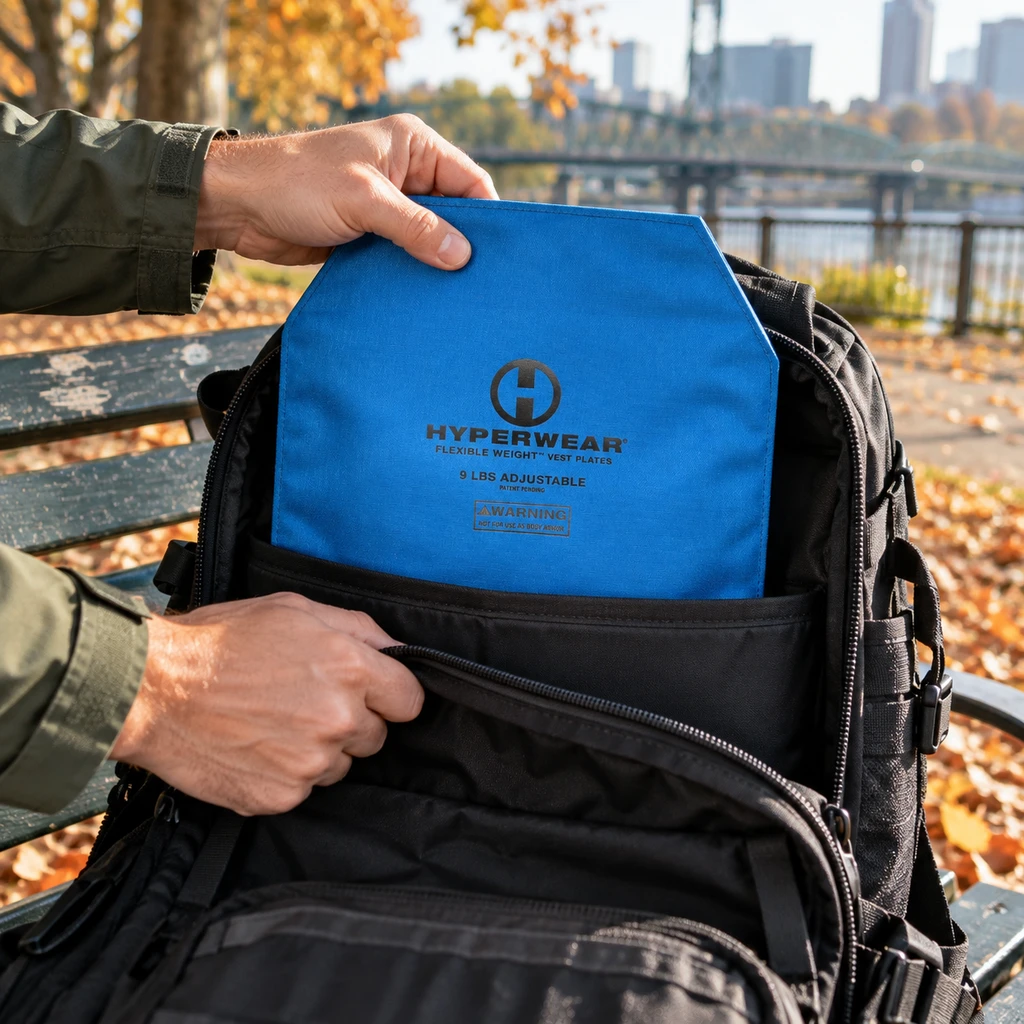
HYPERWEAR FlexLoad: Best for Comfort
The FlexLoad takes a different approach to a ruck plate. Instead of solid iron, it is a shell of ripstop nylon and flexible plastic with channels that hold individual half pound weights, which are PVC containers filled with recycled USA made steel shot.
Because the plate bends, it curves against your back rather than sitting on it like a board, and Hyperwear says it reduces pressure points, bouncing and noise. Because the weights are removable, you can fine tune your load in half pound steps rather than five pound jumps.
Sizing needs care. The 6 pound size is small and fits many GORUCK, Wolf Tactical, Rogue and 5.11 carriers, while the 9 and 10 pound sizes fit Hyperwear gear but may not fit other brands. It has 4.2 stars across 45 reviews and stock was running low when we checked.
Specs That Matter
- Shell: ripstop nylon and flexible plastic
- Weights: removable half pound steel shot units
- Sizes: 6, 9 and 10 lb
- Largest size: 12.25 x 10.5 x 0.75 in
- Fit: check sleeve compatibility by size
Who It Is For
Ruckers who find rigid plates uncomfortable or want to adjust load in small steps.
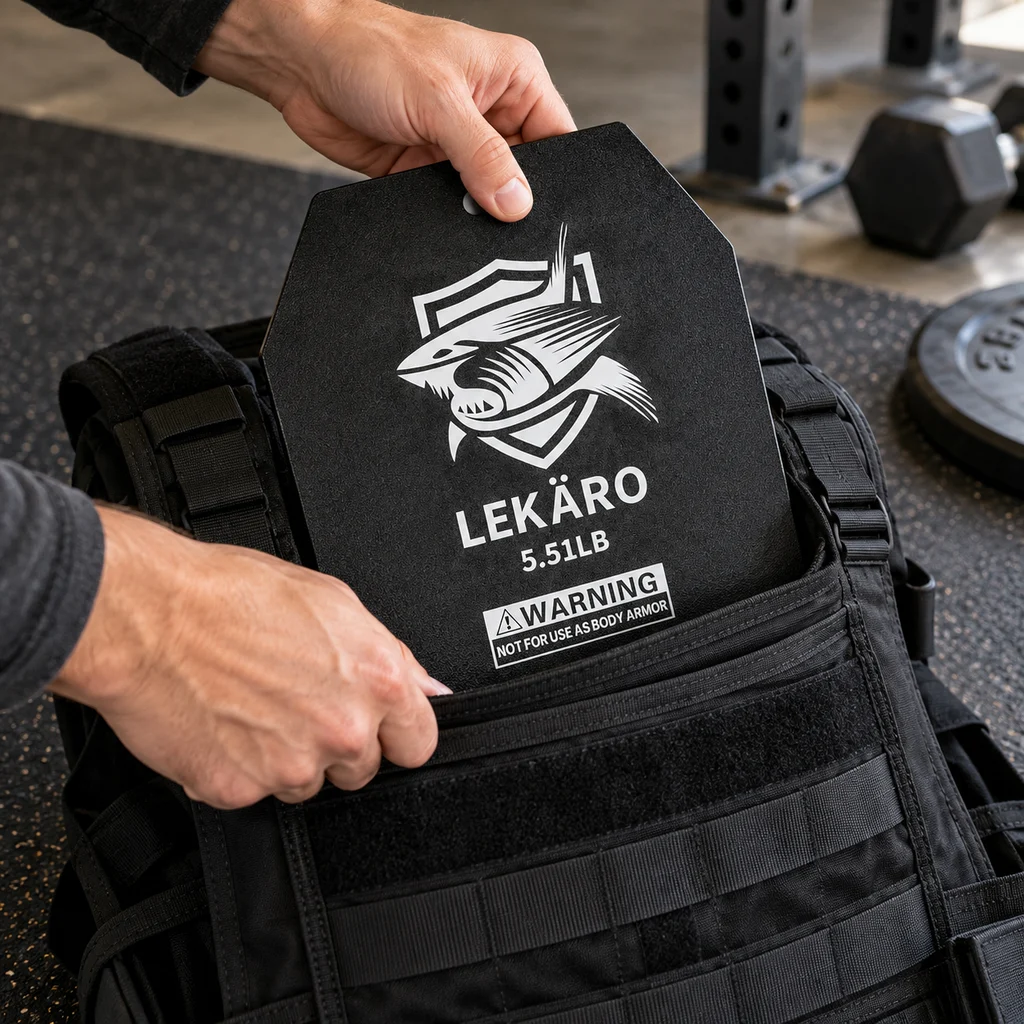
LEKÄRO Steel Plates: Best for Weighted Vests
These are sold as a pair of 9.8 by 11 inch laser cut steel plates, sized for the front and back pockets of most weighted vests and plate carriers. Pair weights are 5.51, 8.81, 15.43 and 20.94 pounds, so the lightest set is a gentle start.
The flat profile sits flush against your body, which matters when you are moving quickly or doing workouts in the vest. A powder coated finish resists rust from sweat and outdoor use, and the smooth surface is kind to vest linings.
Four point six stars across 481 reviews. The listing is clear that these are exercise weights with no protective properties, and it asks you to confirm your vest pocket fits 9.8 by 11 inches before ordering.
Specs That Matter
- Material: laser cut steel, powder coated
- Size: 9.8 x 11 in
- Sold as: a pair
- Pair weights: 5.51, 8.81, 15.43 or 20.94 lb
- Fit: most weighted vests and plate carriers
Who It Is For
Anyone rucking in a plate carrier or weighted vest rather than a backpack.
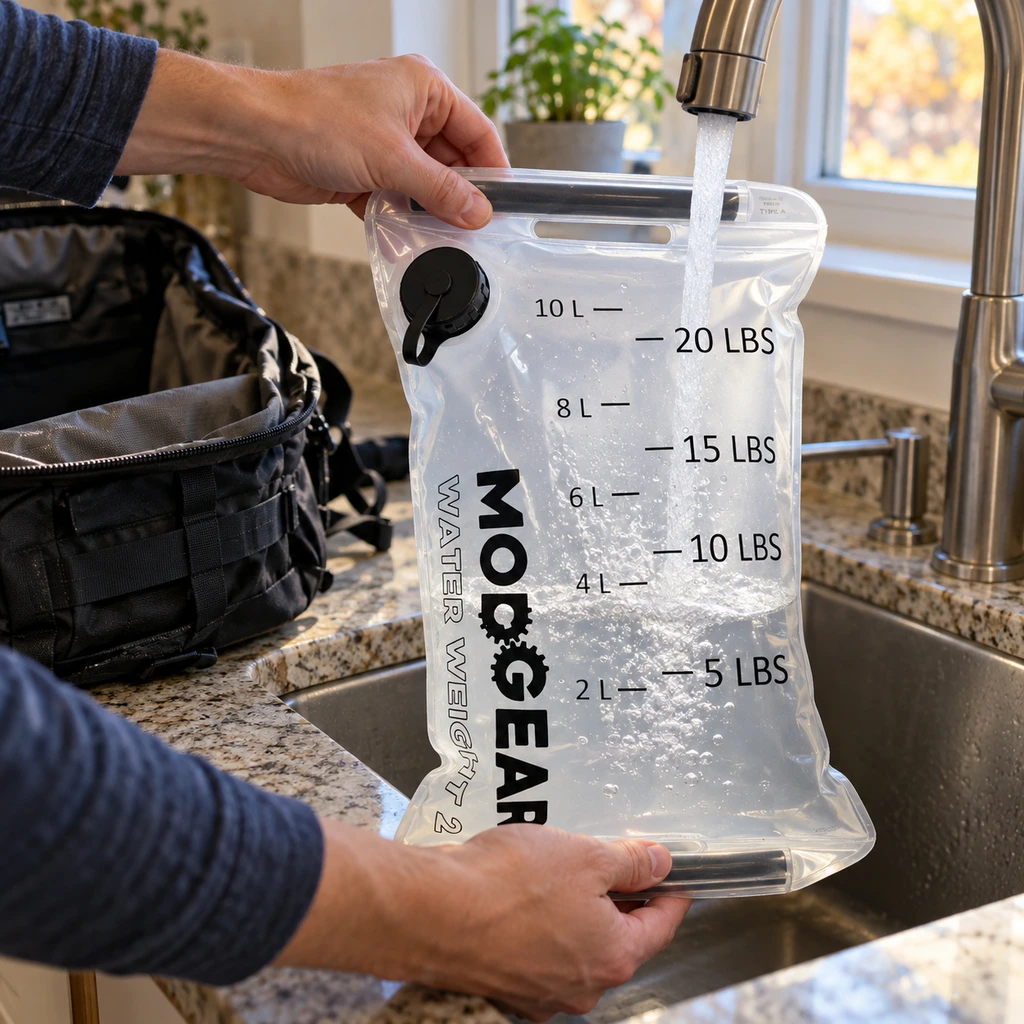
ModGear Water Weight: Best for Travel
Not a plate at all, and that is the point. The Water Weight is a heat sealed PEVA bladder that holds up to 20 pounds of water, with 5 pound graduation marks so you can set the load exactly. PEVA is a chlorine free plastic closely related to EVA, and the listing says the bladder is free of BPA.
Empty, it weighs 10 ounces and folds to about 12 by 6 by 1 inches, so you can pack it in a suitcase and fill it at the hotel. It fits most packs over 20 liters and includes a hanging strap to hold it upright.
It carries a lifetime guarantee against manufacturing defects and comes with a repair patch. Water moves more than iron, so it will never feel quite as solid as a plate, but for travel and trying rucking before committing, it is hard to beat.
Specs That Matter
- Capacity: up to 20 lb of water
- Markings: 5 lb graduations
- Empty weight: 10 oz
- Folded: about 12 x 6 x 1 in
- Fit: packs over 20 L
Who It Is For
Travelers, and anyone who wants adjustable weight without buying several plates.
How to Choose the Right Ruck Plate
Match the Plate to Your Pack
Measure the plate sleeve in your pack or vest before anything else. A GORUCK pack wants a GORUCK plate; a general purpose pack usually takes a Yes4All plate in its laptop sleeve; a weighted vest wants flat pairs like the LEKÄRO plates. Our round-ups of the best rucking backpacks and the best weighted vests for rucking note which carry plates well.
Pick a Starting Weight, Then a Path Up
Most beginners should start around 10 to 20 pounds. If you know you will build up, stackable plates or the adjustable FlexLoad save you buying and storing several fixed weights. Our rucking for beginners guide walks through the first weeks.
Think About Where You Will Ruck
Cast iron is the most compact and durable option for everyday rucks. Water weight wins for travel. A flexible plate is the most comfortable on long days. If your rucks are training for trail days, our backpacking for beginners guide helps you match training loads to real pack weights.
What the Specifications Mean
Cast Iron Against Steel
Cast iron plates are dense and nearly indestructible, which makes them compact for their weight. Laser cut steel plates are thinner and flatter for the same footprint, which is why they suit vests. Both need a coating to resist rust, and both last indefinitely if kept dry.
Why Plate Size Matters
A plate that is too large will not fit the sleeve, and one that is too small will slide to the bottom and sit low on your back, which is the worst place for weight. Look for a plate that fills the sleeve height so the load stays between your shoulder blades.
Fixed, Stackable or Adjustable
Fixed plates are simplest and most durable. Stackable plates let you combine identical plates into heavier loads. Adjustable options, such as removable weight units or water, give the finest control but add a little bulk or movement.
Coatings and Finishes
Powder coating and paint protect the metal from sweat and rain and stop it marking your pack. Chips happen over time; touch them up or keep the plate dry after wet rucks to stop rust spreading.
Using Ruck Plates Well
Load the plate high in the pack and tight against your back, then cinch the shoulder straps and sternum strap so the pack does not swing. A plate riding low pulls you backward and forces you to hunch forward, which is how sore lower backs happen.
Add weight slowly: five pounds at a time, holding each load for a couple of weeks while you rebuild distance. It is the same progression our guide to training for elevation uses for hikers building toward mountain days, and the same logic behind the loaded forced march in military training, just at a sensible scale.
Remember that water and gear count too. Two liters of water add about four and a half pounds, so plan your plate weight around the total load. Our hydration guide will help you decide how much to carry, and good footwear matters more with every pound, as our guide on how to choose hiking boots explains.
After wet rucks, take the plate out and let both it and the pack dry. Store plates flat so they do not tip onto floors or toes, and check the pack sleeve occasionally for wear at the corners. For a broader look at loaded walking versus other training, see rucking vs running.
Frequently Asked Questions
What weight ruck plate should I start with?
Ten to twenty pounds for most adults, or roughly 10 percent of body weight. Start at the lower end if you are new to walking long distances, and increase in five pound steps.
Do ruck plates fit any backpack?
Most plates are designed to fit a standard laptop sleeve, so they work in many packs. Brand specific plates fit their own packs best. Always measure the sleeve before buying.
Are ruck plates better than bricks or sandbags?
For regular rucking, yes. Plates sit flat and stay put, with rounded edges and handles. Bricks and sandbags shift, bounce and can wear through your pack, though they work as a free way to try rucking.
Can I use a weighted vest plate in a backpack?
Often, yes, if the size fits the sleeve. Thin steel vest plates can work well in a backpack, but lighter pairs may not be heavy enough on their own for a backpack ruck.
Will a cast iron ruck plate rust?
Coated plates resist rust, but chips in the coating can rust if left wet. Dry the plate and pack after wet rucks and it will last for years.
For most ruckers, the GORUCK Ruck Plate tops our list of the best ruck plates if you have a GORUCK pack, and the Yes4All cast iron plate is the best value in any standard pack. Stack Yes4All plates to build up gradually, choose the FlexLoad for comfort, the LEKÄRO pair for a vest and the Water Weight for travel. Then set your load with our guide on how much weight to ruck.
Discover more from Maive Verse
Subscribe to get the latest posts sent to your email.