

This post may contain affiliate links. If you buy through them, we may earn a small commission at no extra cost to you.
Learning how to identify woodpeckers is one of the most rewarding skills a backyard birder can pick up, because these birds stay put all winter and come right up to the feeder. Most of North America has five or six regular species, and once you know what to look at, the head pattern, the bill, the back and the sound, you can name nearly every one in a few seconds. If you are brand new to birding, our birdwatching for beginners guide covers the basics first.
This guide walks through the woodpeckers you are most likely to see in the United States, the field marks that separate the confusing pairs, how to use drumming and calls, and the signs they leave on trees. Late fall is the easiest time to practice: the leaves are down, insects are scarce, and woodpeckers spend more time at suet and in the open.
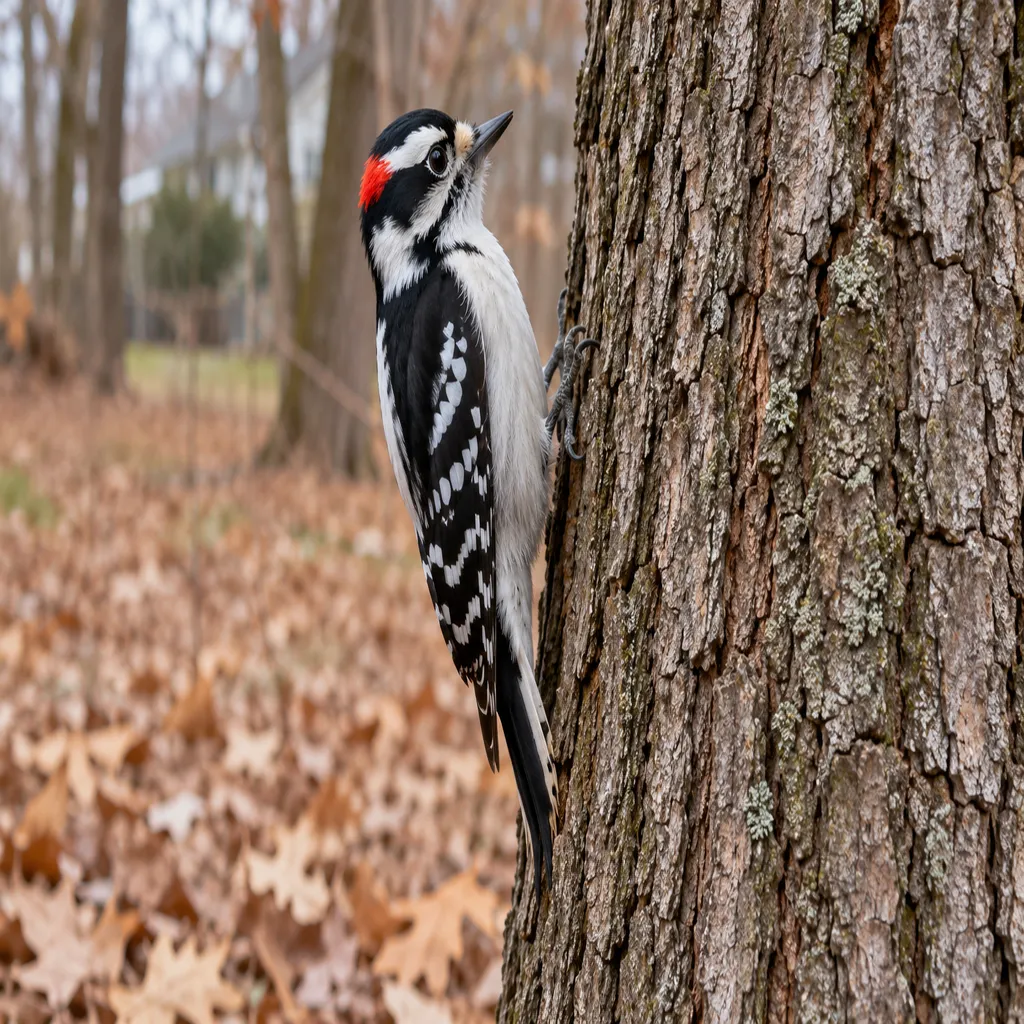
Table of Contents
How to Identify Woodpeckers in Five Quick Checks
Before you reach for a field guide, run through the same five checks every time. Together they narrow the list from a dozen candidates to one or two, and with practice they take about as long as the bird stays on the trunk.
Size Compared to Birds You Know
Compare the bird to a sparrow, a robin and a crow. A downy woodpecker is sparrow sized, a hairy woodpecker and a red-bellied woodpecker sit near robin size, a northern flicker is a little bigger than a robin, and a pileated woodpecker is as large as a crow. Size alone separates more species than people expect.
Bill Length
Hold the bill against the head in your mind. A bill that is shorter than half the depth of the head points to a downy. A bill about as long as the head front to back points to a hairy. This single check solves the most common woodpecker identification problem in the country.
Where the Red Is
Most males carry red somewhere, and its position is a strong clue. A small square on the back of the head says downy or hairy male. A red cap running from the bill over the crown says red-bellied male. A whole red head with no white on it says red-headed woodpecker. A tall red crest says pileated.
Back Pattern
Look at the back while the bird faces the trunk. A clean white stripe down the middle belongs to downy and hairy. Fine black and white zebra bars belong to red-bellied. A brown back with black bars belongs to the flicker. Solid black with big white wing patches suggests a red-headed woodpecker.
Behavior and Habitat
A woodpecker hopping on the lawn and probing for ants is almost always a flicker. One drilling neat rows of small holes is a sapsucker. One feeding on goldenrod galls or weed stems is likely a downy, the only common species light enough to work those thin stalks.
The Common Woodpeckers of North America
These seven species cover the large majority of woodpecker sightings in the lower 48. The links go to the Cornell Lab species pages, which have range maps and sound recordings worth bookmarking.
Downy Woodpecker
The downy woodpecker is the smallest and most common woodpecker at feeders across the US. Look for a white back stripe, a tiny bill, and black spots on the white outer tail feathers. Males have a small red patch on the back of the head. Downies visit suet, peanuts and sunflower hearts, and they often join winter flocks of chickadees and nuthatches.
Hairy Woodpecker
The hairy woodpecker looks like a downy that went to the gym. It is about a third larger, with a long, chisel shaped bill and clean white outer tail feathers with no spots. Hairies are warier, tend to land on the far side of the trunk, and are more often seen in mature woods than tiny suburban lots.
Red-bellied Woodpecker
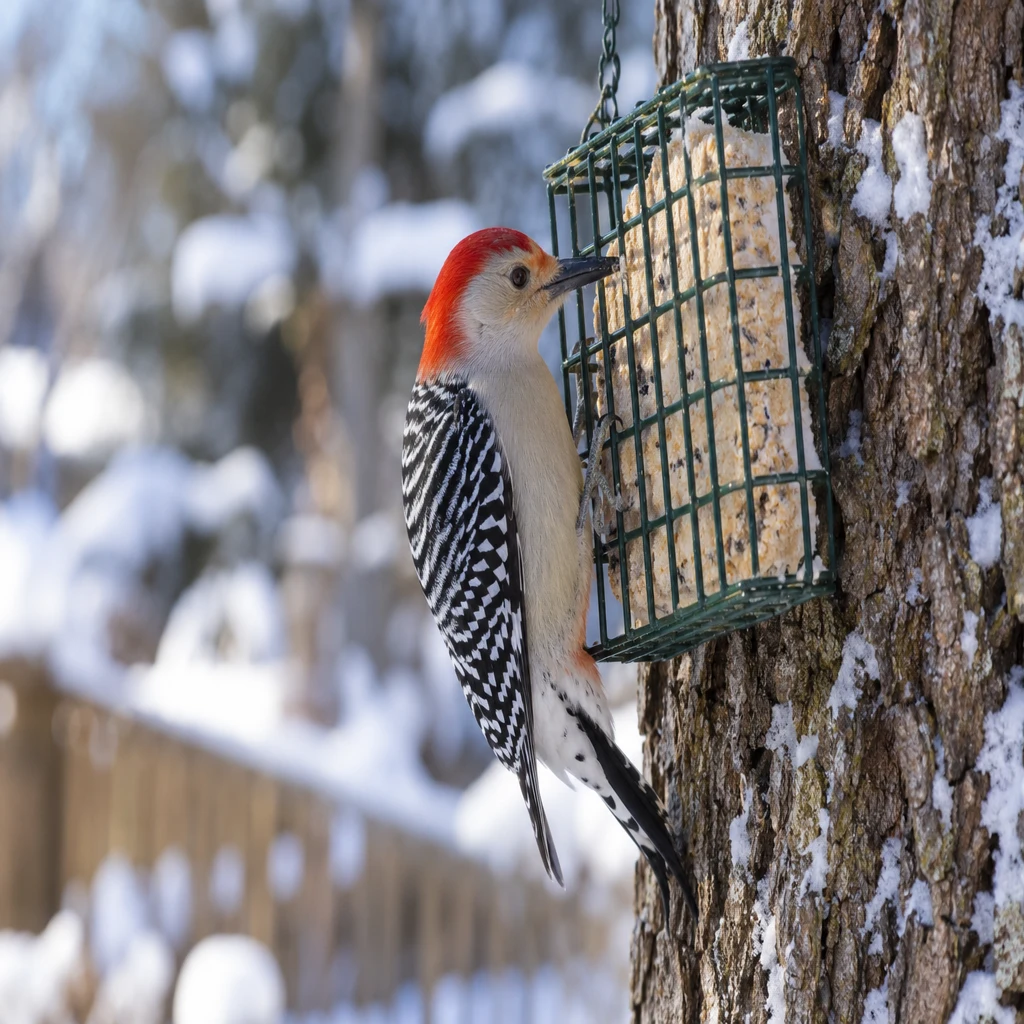
Despite the name, the red on the belly of a red-bellied woodpecker is a faint blush you rarely see. Identify it by the zebra striped back, pale tan face and the red that runs over the head. Males are red from bill to nape, while females have red only on the nape. Its rolling “kwirr” call is one of the most common sounds in eastern woods in winter.
Northern Flicker
The northern flicker is a brown woodpecker with a black bib, a spotted belly and a bright white rump that flashes when it flies. Eastern birds show yellow under the wings and tail, western birds show salmon red. Flickers feed on the ground more than any other North American woodpecker, mostly on ants.
Pileated Woodpecker
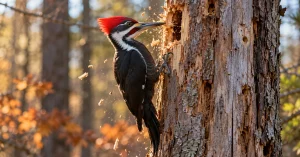
The pileated woodpecker is crow sized, mostly black, with white stripes on the neck and a flaming red crest. Males add a red mustache. In flight the large white underwing patches are obvious. If you find fresh rectangular holes and piles of wood chips at the base of a dead tree, a pileated has been working it.
Red-headed Woodpecker
Adult red-headed woodpeckers have an entirely crimson head, a black back and big white wing patches that make a flying bird look like it is wearing a checkered flag. They prefer open woods, oak savannas and scattered dead trees, and they cache acorns for winter. Many beginners call any red-capped woodpecker by this name, but true red-headed birds are much less common.
Yellow-bellied Sapsucker
The yellow-bellied sapsucker drills shallow, evenly spaced rows of wells and returns to lick the sap and the insects it traps. It shows a long white wing stripe and a bold black and white face. Most sapsuckers spend the winter in the southern US, so November is when birders in the Southeast start seeing them.
Telling Look-Alike Woodpeckers Apart
Downy vs Hairy
This is the pair that trips everyone up. Use the bill first: short and stubby means downy, long and strong means hairy. Then check the outer tail feathers for black spots, which only downies have. Calls help too, since the downy gives a soft “pik” and the hairy a sharper, louder “peek”.
Red-bellied vs Red-headed
A red-bellied woodpecker has red only on the top and back of the head, with a pale face and a barred back. A red-headed woodpecker has a fully red head, including the face and throat, and a solid black back. If the face is pale, it is a red-bellied.
Flicker vs Everything Else
A brown bird on the lawn that flies off flashing a white rump is a flicker. No other common US woodpecker is mostly brown, so once you know the shape, flickers are easy. Juvenile sapsuckers can look brownish in fall, but they show the long white wing stripe that flickers lack.
Identifying Woodpeckers by Sound
Sound is often how you notice a woodpecker in the first place. If you have not tried birding by ear yet, our guide on how to identify birds by song explains the method, and the free Merlin Bird ID app can suggest a match from a recording.
Calls
- Downy: a soft “pik” and a descending whinny that sounds like a tiny horse.
- Hairy: a sharp, emphatic “peek” and a fast rattle that stays on one pitch.
- Red-bellied: a rolling “kwirr” or “churr”, often repeated.
- Northern flicker: a loud “kyeer” and a long, steady “wick wick wick”.
- Pileated: a wild, ringing “wuk wuk wuk” that rises and falls.
Drumming Patterns
Drumming is not feeding. It is how woodpeckers claim territory and attract mates, and it picks up in late winter. Downies drum in short, even rolls. Hairies drum faster and louder. Pileated drumming is slow, deep and slows down at the end. Sapsuckers drum in an uneven rhythm, a quick burst followed by a few spaced taps, like Morse code.
Signs Woodpeckers Leave Behind
Even when you cannot see the bird, the tree tells you who was there. Learning these signs turns a quiet winter walk into a puzzle.
Rectangular Holes
Large, deep, oblong excavations, often several inches long, are the classic pileated woodpecker sign. They are chasing carpenter ants deep in the wood, and the wood chips below can be the size of a thumb.
Rows of Sap Wells
Neat horizontal rows of small holes, sometimes oozing sap, are made by sapsuckers. Hummingbirds, warblers and squirrels use these wells too, so sapsucker trees can be surprisingly busy.
Flaked Bark and Round Cavities
Bark flaked off a dead tree in patches often means a hairy or downy has been scaling it for beetle larvae. Perfectly round entrance holes high on a dead limb are nest or roost cavities, and they may be used by owls, bluebirds and chickadees later. Our guide on how to find owls explains how to check them without disturbing anyone inside.
Where and When to Find Woodpeckers
Backyards in Late Fall and Winter
November through February is peak woodpecker season at feeders, because natural insect food is hard to find. A window suet cage, peanuts and black oil sunflower bring in downy, hairy and red-bellied woodpeckers, and occasionally a flicker or pileated. Our winter bird feeding guide explains what to offer, our list of the best suet feeders covers the gear, and our guide on how to attract birds to your yard explains why leaving a dead snag standing is one of the best things you can do.
Woods, Parks and Trails
Mature woods with standing dead trees hold the most species. Walk slowly and listen for tapping. A pair of good birding binoculars makes a huge difference for checking bill length and tail spots at a distance, and a spotting scope helps on distant snags. Quiet, slow walking also has benefits of its own, as our guide to mindful hiking explains.
Reporting What You See
Logging your sightings in eBird builds a personal record and helps researchers track populations. Red-headed woodpeckers in particular have declined sharply, and every checklist adds to the picture. Spring and fall also bring migrants through, which our fall bird migration guide covers in detail, and our guide on how to identify hawks is a natural next step once woodpeckers feel easy.
Common Mistakes When You Identify Woodpeckers
- Calling every red-capped bird a red-headed woodpecker. Check the face: if it is pale, it is a red-bellied.
- Judging size alone. A fluffed up downy in January can look bigger than it is, so always check the bill.
- Ignoring females. Many species show little or no red on females, so learn the back and face patterns too.
- Assuming all tapping is a woodpecker. Nuthatches also hammer seeds into bark, and they climb down trunks headfirst, which woodpeckers never do.
A simple feeder you can see clearly from indoors makes practice much easier. Seed and suet can sit side by side, and a heated bird bath brings in even more visitors once water freezes. Our roundup of the best bird feeders is a good place to start.
Frequently Asked Questions
What is the most common woodpecker in the US?
The downy woodpecker is the most widespread and most frequently seen at feeders. It lives in nearly every state and is comfortable in small suburban yards.
How can you tell a male woodpecker from a female?
In most species the male has more red. Male downy and hairy woodpeckers have a red patch on the back of the head that females lack, and male red-bellied woodpeckers have red over the whole crown instead of only the nape.
Why do woodpeckers peck on houses?
Usually for one of three reasons: drumming to claim territory, looking for insects in the siding, or trying to excavate a roost hole. Metal gutters and chimney caps are popular drumming spots because they are loud.
Do woodpeckers migrate?
Most do not. Downy, hairy, red-bellied and pileated woodpeckers stay year round. Yellow-bellied sapsuckers and northern populations of flickers move south for winter.
What is the easiest way to learn how to identify woodpeckers?
Put out suet, watch the same birds every day, and practice the five checks: size, bill, red placement, back pattern and behavior. Within a few weeks you will be naming them on sight.
Discover more from Maive Verse
Subscribe to get the latest posts sent to your email.