
This post may contain affiliate links. If you buy through them, we may earn a small commission at no extra cost to you.
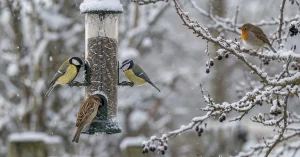
Winter bird feeding is the one time of year when what you put out genuinely matters. A small bird burns most of its fat reserves overnight just staying warm, and it has a short cold day to replace them before doing it again. Thermoregulation at that body size is brutally expensive, which is why a reliable feeder in January draws birds that ignored your garden in July.
Eight things below that actually change how many birds visit and how long they stay, in rough order of how much difference they make. None of it is complicated, and most of it costs nothing. If you are starting from an empty garden, attracting birds to your yard covers the groundwork first.
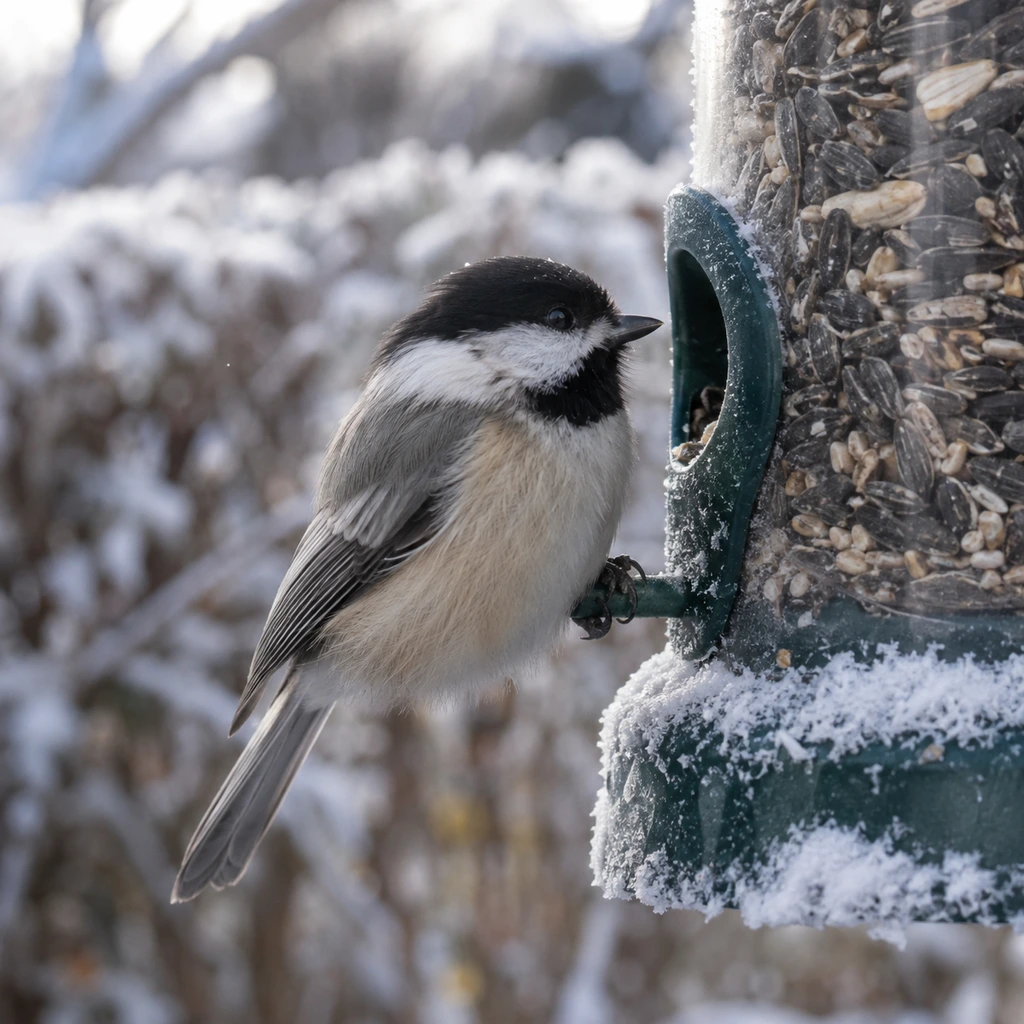
Table of Contents
Why Winter Changes the Rules
The Overnight Deficit
A chickadee can lose close to a tenth of its body weight in a single cold night and has to put it back before the next one. That is the whole logic of winter feeding: the bird is not hungry in the way you are hungry, it is running a deficit on a very short clock. A black capped chickadee weighs about as much as two sheets of paper, which is why the margin is so thin.
Natural Food Runs Out, Then Gets Buried
Seed heads, berries and insects are gone or under snow by midwinter, and the ground feeders lose access first. This is why the mix of feeders matters more in winter than the total amount of food: a hanging tube serves finches perfectly and serves a junco not at all.
Daylight Is the Real Limit
Short days mean fewer hours to forage. Birds arrive at first light already in deficit and need to feed hard again before dusk. Keeping feeders full at both ends of the day matters more than keeping them full in the middle.
Winter Bird Feeding: 8 Things That Work
1. Switch to High Fat Food
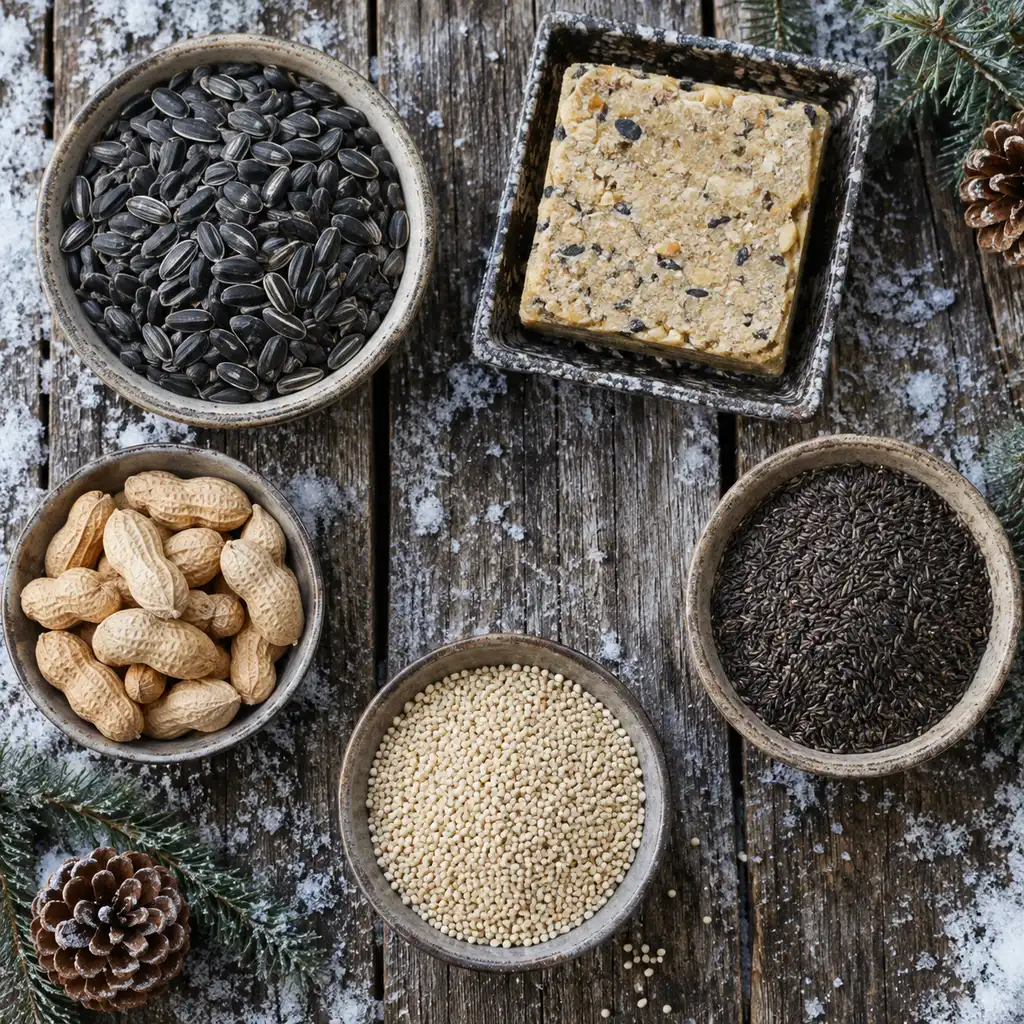
Black oil sunflower is the single most useful seed, because the shells are thin enough for small beaks and the kernels are close to half fat. Sunflower seed outperforms every cheap mix with red milo and wheat filler in it, and the filler mostly ends up on the ground.
Add suet and you cover the birds sunflower does not reach. Suet is rendered fat, it is the densest energy you can hand a bird, and it is the reason woodpeckers appear in gardens that otherwise never see one.
2. Offer Three Feeder Types, Not Three Feeders
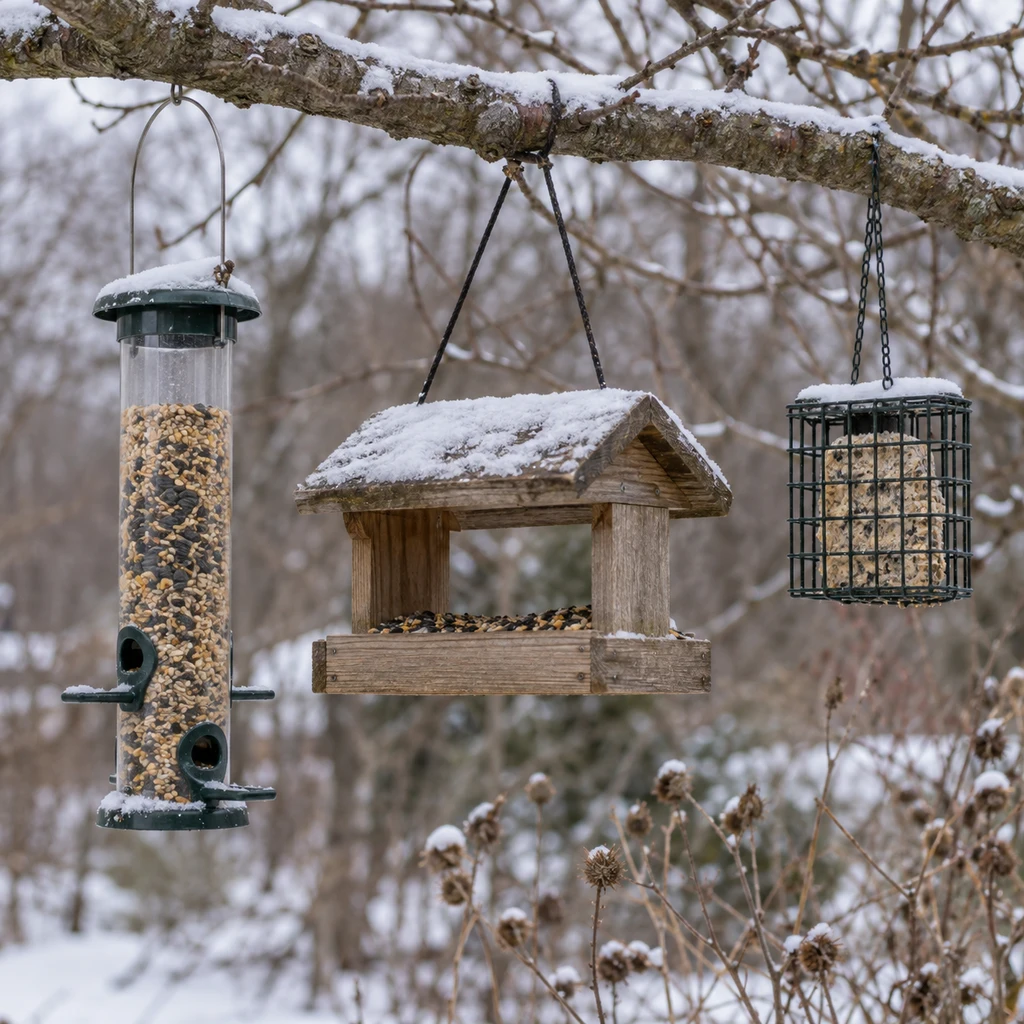
A tube for finches and small perching birds, a hopper or platform for cardinals and jays that will not cling, and a suet cage for woodpeckers and nuthatches. Three of the same tube feeds one guild three times over; three different designs triples the species list.
Ground feeders like juncos and sparrows want spilled seed on a cleared patch or a low tray, which is free. Our feeder round up compares the hanging options in detail.
3. Put a Feeder Where You Will Actually Refill It
The best placed feeder is the one you pass every day, because an empty feeder in February teaches birds to stop checking. A window feeder on the glass you already look through solves both problems at once, and something like the suction cup window feeder puts birds close enough to identify without optics.
Ten feet from cover is the rule of thumb: close enough that a bird can dive into a hedge, far enough that a cat cannot launch from it. Either put it within three feet of a window or beyond ten, since those are the two distances that reduce collisions.
4. Keep It Full at Dawn and Dusk
Fill in the evening so the feeder is loaded before first light, which is when birds arrive at their worst deficit of the day. A large capacity feeder does this for you across a cold week, which is most of the appeal of a hopper like the Perky-Pet cardinal feeder over a small tube you refill daily.
5. Add Water, Not Just Food
Open water is scarcer than food in a hard freeze, and birds need it both to drink and to keep feathers in condition, because a dirty feather insulates badly. A heated bath or simply breaking the ice each morning draws species that never touch a feeder. See our bird bath guide for the winter options.
6. Deal With Squirrels Once
Squirrels will empty a feeder in a day and then chew the ports so it never works properly again. A baffle above a pole mounted feeder, or a weight activated design, settles it permanently. Hanging a feeder from a thin branch does not, and greasing a pole is worse than useless.
7. Site the Suet Where Big Birds Can Brace
Woodpeckers use their tail as a third point of contact and cannot feed properly from a cage that swings freely. A suet feeder with a tail prop, such as the Birds Choice pileated feeder, is the difference between downy woodpeckers only and the larger species using it too.
8. Clean the Feeder Every Two Weeks
Wet seed, droppings and crowding at a feeder spread disease efficiently, and winter concentrates birds exactly where the risk is highest. Scrub with hot water and a weak bleach solution, rinse hard and dry fully before refilling. If you see a visibly sick bird, take the feeder down for a fortnight.
What to Put Out, and What to Skip
| Food | Who It Brings | Worth It |
|---|---|---|
| Black oil sunflower | Chickadees, finches, cardinals, nuthatches | Yes, the default |
| Suet cake | Woodpeckers, nuthatches, wrens | Yes, highest energy |
| Nyjer thistle | Goldfinches, siskins | Yes, in a dedicated feeder |
| Peanuts, shelled | Jays, titmice, woodpeckers | Yes, in a mesh feeder |
| White millet | Juncos, sparrows, doves | Yes, scattered low |
| Bread | Almost nothing useful | No, near zero nutrition |
| Cheap mix with red milo | Mostly the ground below | No, filler birds reject |
Nyjer deserves its own note. The seed comes from Guizotia abyssinica and it is small enough to fall straight through a standard tube, so it needs a fine mesh feeder. Get that right and American goldfinches will hold on it all winter.
Who Turns Up, and What They Want
Knowing the guild explains the feeder choice. Clinging birds, perching birds and ground birds are three different problems.
| Bird | Feeder | Food |
|---|---|---|
| Chickadee, titmouse | Tube or any perch | Sunflower, peanuts |
| Nuthatch, woodpecker | Suet cage with tail prop | Suet, peanuts |
| Cardinal, jay | Hopper or platform | Sunflower, peanuts |
| Goldfinch, siskin | Fine mesh nyjer feeder | Nyjer thistle |
| Junco, sparrow | Ground or low tray | White millet, spilled seed |
A northern cardinal will not cling to a tube and will not use a swinging perch well, which is why gardens with only tube feeders rarely see one. Give it something flat.
Common Mistakes
- Cheap seed mixes full of red milo and wheat, which most birds throw on the ground.
- Letting the feeder run empty in a cold snap, which is exactly when birds cannot afford a wasted trip.
- One feeder type, which serves one guild and ignores the rest.
- Feeders left dirty, which turns a crowded winter garden into a disease vector.
- Putting bread out, which fills a bird up without feeding it.
- Siting a feeder between three and ten feet from a window, the worst distance for collisions.
- Forgetting water, which is harder for birds to find than food in a freeze.
Watching What Turns Up
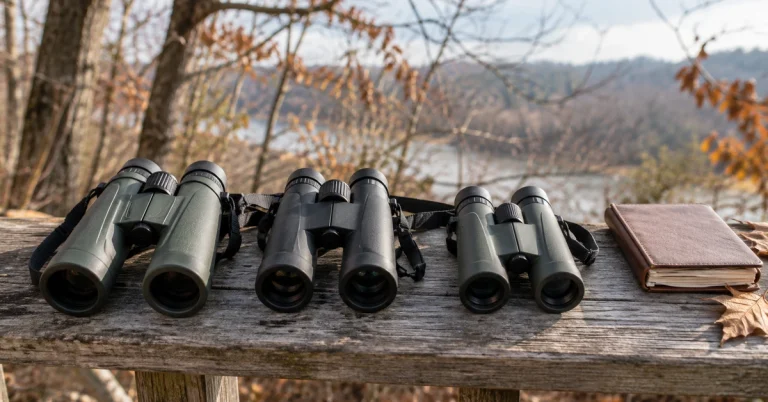
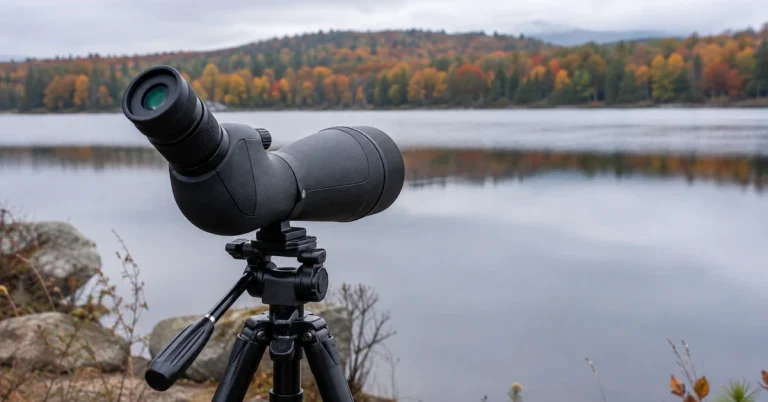
Half the point of feeding in winter is that the birds come to you, at a distance where you can finally see plumage detail properly. A close focusing pair matters more than a powerful one at feeder range, which is covered in our binocular round up, and birdwatching for beginners covers what to do with them.
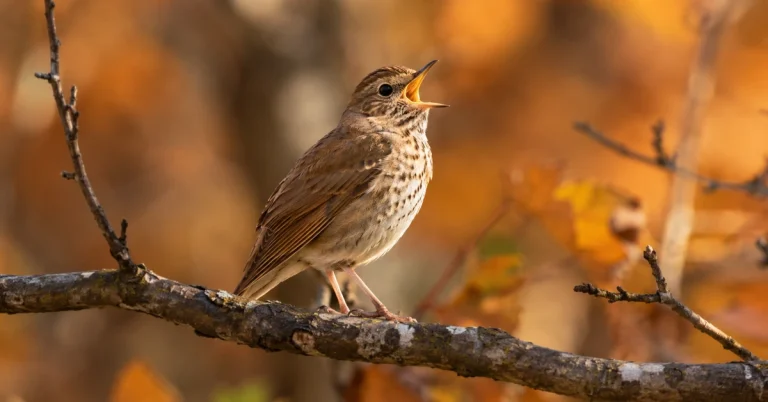
Logging what you see is worth the small effort. eBird turns casual counts into usable data, the Christmas Bird Count run by Audubon has been running since 1900, and park birding resources are a good guide to what should be present in your region. For the birds you hear but never see, song identification does more than any feeder.
Frequently Asked Questions
When should I start winter bird feeding?
As soon as natural food starts thinning, typically late autumn, and then keep going without gaps. The start date matters less than the consistency, because birds learn which gardens are reliable and route their day around them.
Does feeding birds make them dependent?
No. Studies of feeder birds consistently find they take only part of their daily energy from feeders and keep foraging naturally. What feeding does change is survival through severe cold snaps, which is when it counts.
What is the best single food for winter?
Black oil sunflower, with suet as the close second. Between them they cover clinging birds, perching birds and the high fat requirement that cold weather creates.
Should I stop feeding in spring?
You do not have to. Feeding through migration and spring supports birds at another expensive time of year. The one rule is to keep feeders clean, because warm weather raises the disease risk.
How do I stop squirrels emptying the feeder?
A baffle on a pole mounted feeder, or a weight activated feeder that closes under a squirrel’s mass. Both work permanently. Hanging from a branch, greasing the pole and hot pepper seed all work poorly or not at all.
Winter bird feeding comes down to four things: high fat food, more than one feeder type, water, and never letting it run empty in a cold snap. Do those and the garden fills up. Then our feeder round up covers the hardware, bird baths covers the water, and the best binoculars for birdwatching covers seeing any of it properly.
Discover more from Maive Verse
Subscribe to get the latest posts sent to your email.