
This post may contain affiliate links. If you buy through them, we may earn a small commission at no extra cost to you.
The best bird baths bring in more species than any feeder will, and that surprises most people. Seed only interests seed eaters. Water interests everything, so a shallow dish pulls in warblers, thrushes and flycatchers that would never touch a feeder in their lives.
Below are six that are genuinely stocked on Amazon right now, chosen for different gardens and different seasons rather than ranked one to six. Ratings and specifications were checked at the time of writing. If you are still setting the garden up, our guide to attracting birds to your yard explains why water comes before everything else.
Table of Contents
What Separates the Best Bird Baths
Almost every bird bath that fails does so for one of four reasons, and none of them is price. The same practical thinking applies to choosing a feeder, where the mechanism matters far more than the badge.
- Depth. This is the one that decides everything. Birds want two to three inches at the deepest point and a gently sloping edge. Anything deeper is a hazard rather than a bath, which is why so many ornamental basins sit unused.
- Grip. Birds will not land on a slick surface they cannot stand on. Textured basins, rim grip holes or a few stones dropped in the bottom turn an ignored bath into a busy one.
- Stability. A pedestal that tips in wind or under a squirrel gets abandoned. Look for a wide base, ground stakes or a hollow pole you can fill with sand for ballast.
- How easily the bowl comes off. Water needs changing every two or three days. If the basin does not lift or twist off, you will not do it, and stagnant water is worse than no water.
Moving water is the upgrade that changes the results rather than the maintenance. Birds find water by sound and by glint, so a dripper or a fountain pulls birds from much further away than a static bowl. Cheap floating solar pumps are tempting but their reviews are noticeably weaker than the baths themselves, because small panels stall in shade and the intakes clog. A bath with an integrated fountain is the more reliable route. The Cornell Lab All About Birds guide is a good reference for which species you can expect to turn up, and our beginner birdwatching guide covers what to do once they do.
The Best Bird Baths at a Glance
Rule four of them out here, then read the two that are left. Material and season are the two questions that matter, because a resin bath left full through a hard freeze is a cracked bath by spring. Pair whichever you choose with a decent pair of binoculars for birding and the garden becomes a hide.
| Bird bath | Material | Bowl | Standout feature | Best for |
|---|---|---|---|---|
| VIVOHOME Pedestal | Polyresin | 20 inch, 2.4 inch deep | Fillable pole plus 3 ground stakes | Best overall |
| VIVOHOME Solar Fountain | Polyresin | 20 inch, 2.4 inch deep | Solar pump with 4 nozzles | Moving water |
| GESAIL Heated | Plastic with heater | Shallow, detachable | 75W thermostatic heater | Winter |
| Daoeny Metal 35 inch | Iron | 12 inch, 2 inch deep | Doubles as a feeder | Metal build |
| OUISJYER 13 inch Staked | Metal | 13 inch, 3 inch deep | Adjustable height on a stake | Small spaces |
| Backyard Expressions 30 inch | Polyresin | 30 inch | Largest basin here | Big gardens |
The Six Best Bird Baths in Detail
Each is picked for a different garden rather than ranked one to six.
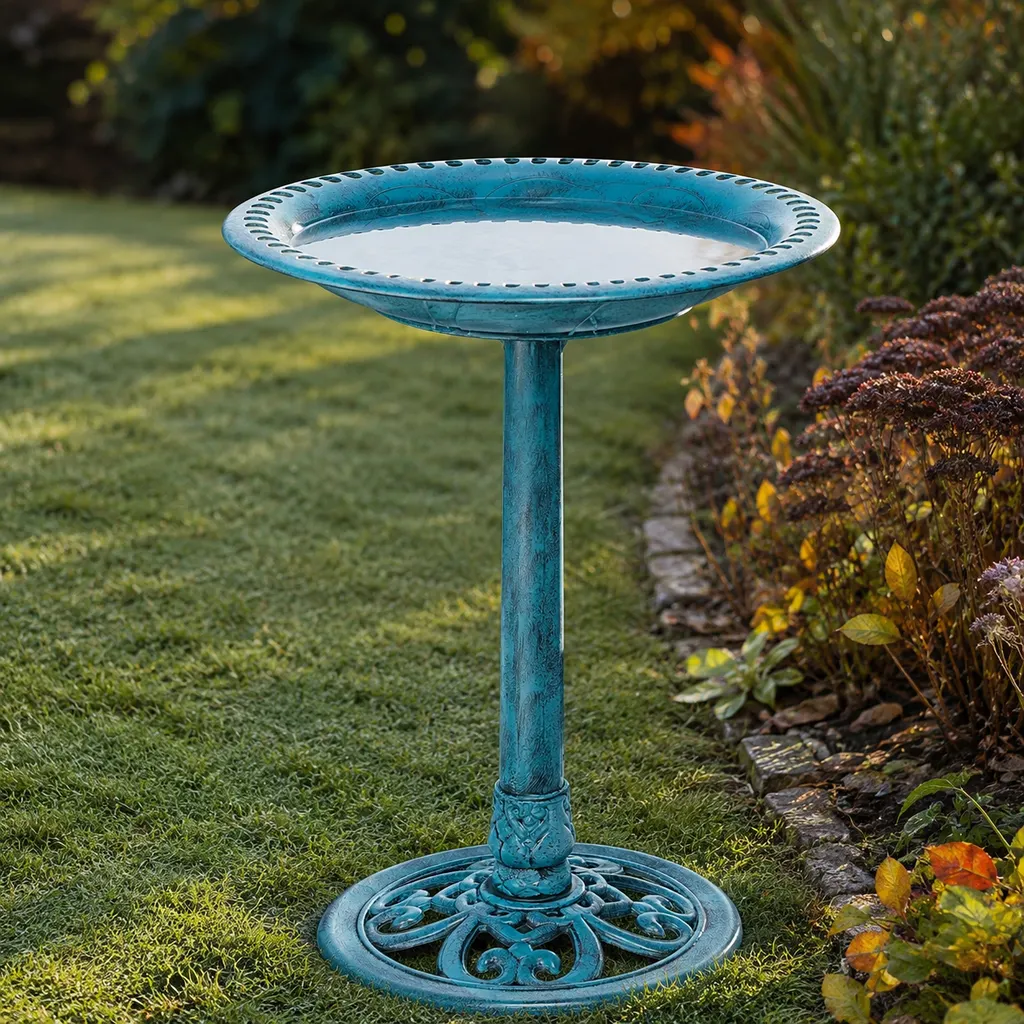
VIVOHOME Polyresin Pedestal: Best Overall
This is the one to buy if you want a classic pedestal that birds actually use. The bowl is 20 inches across and 2.4 inches at its deepest, which sits exactly in the range birds prefer, and the edges slope gently so small birds can wade in from the rim rather than dropping into deep water.
The stability engineering is better than the price suggests. There is a 15 inch base, the support pole is hollow so you can fill it with sand, gravel or water for ballast, and three ground stakes anchor the whole thing. A pedestal bath that stays upright in wind is not a given at this level.
Maintenance is the quiet reason it works long term. The bowl twists off along a threaded connection, so changing water takes seconds without dismantling the stand, and that is the difference between a bath you refresh every other day and one you do not. It assembles in about a minute with four screw-together parts and no tools.
Specs That Matter
- 20 inch bowl, 2.4 inches at its deepest
- Sloped edges and rim grip holes for perching
- Hollow fillable pole, 15 inch base and 3 ground stakes
- Bowl twists off for fast water changes
- Weather resistant polyresin, tool free assembly
Who It Is For
Anyone wanting one dependable pedestal bath that birds will use and that is quick enough to clean that you will.
VIVOHOME Bird Bath with Solar Fountain: Best for Moving Water
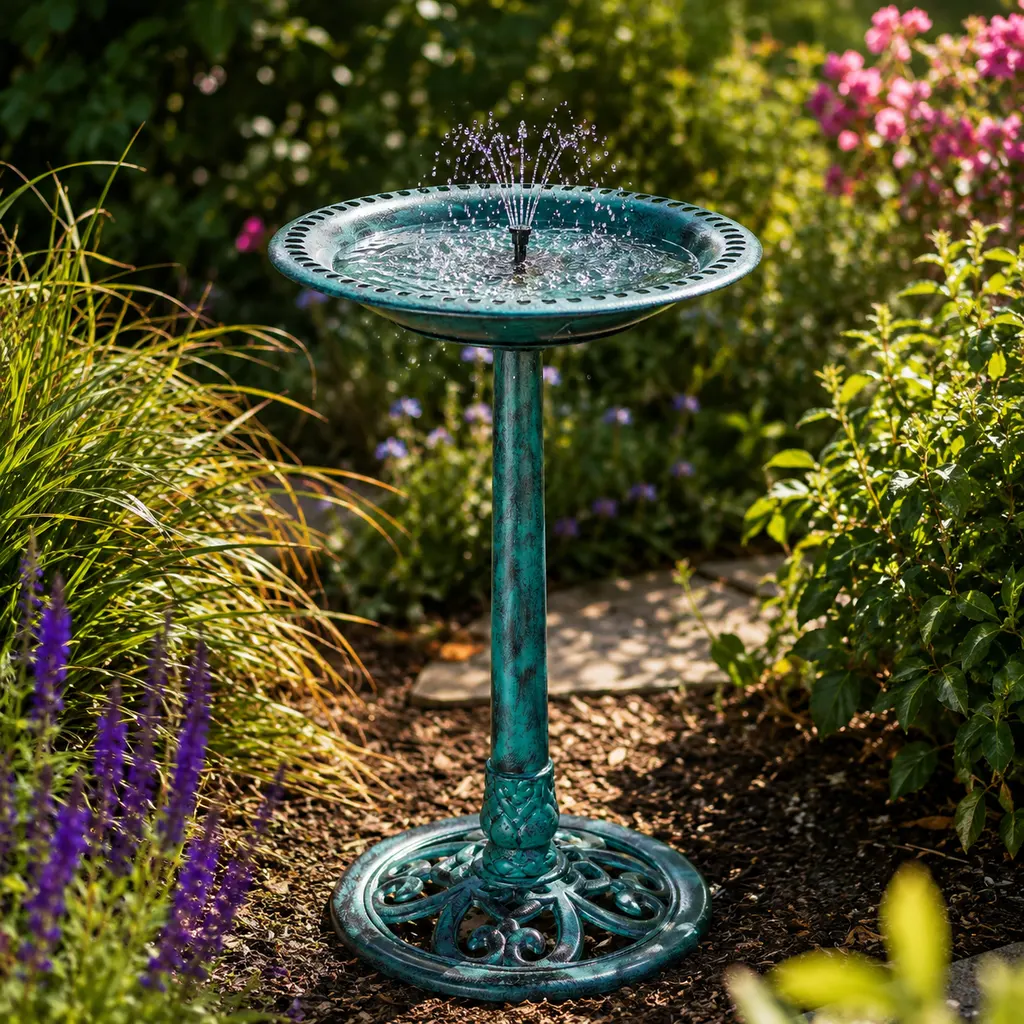
Same well judged bath as the pedestal above, with the upgrade that actually brings more birds in. Moving water carries much further than still water, both as sound and as flashes of light, so a fountain widens the radius from which birds notice your garden at all.
The execution avoids the usual failure of cheap solar fountains. Rather than a free floating disc that drifts and clogs, four detachable rods fasten the pump to the bowl, so wind and splashing do not move it out of position. Four nozzles let you pick a gentle effect rather than a jet, which matters because a strong spray will keep birds away instead of attracting them.
Spray height rises and falls with sunlight and can be set manually, and there is an auto shut off to protect the pump when the water runs low. Be realistic about solar in general: in a shaded garden it will run intermittently, which is a limit of the technology rather than this model.
Specs That Matter
- Solar pump with 4 nozzles and adjustable spray
- 4 detachable rods hold the fountain steady in wind
- Auto shut off protects the pump when water is low
- 20 inch bowl, 2.4 inches deep, polyresin
- Bowl twists off for cleaning, one minute assembly
Who It Is For
Gardens with decent sun where you want the extra pull of moving water without wiring anything in.
GESAIL Heated Bird Bath: Best for Winter
Open water in a hard frost is scarcer than food and will draw birds from a remarkable distance. That is the whole argument for a heated bath, and it makes this the most useful item here between December and February.
The heating element is 120 volts and 75 watts, sealed and enclosed, and thermostatically controlled so it runs only when the temperature actually demands it rather than continuously. That keeps the running cost sane and stops the water sitting warm, which birds do not want either.
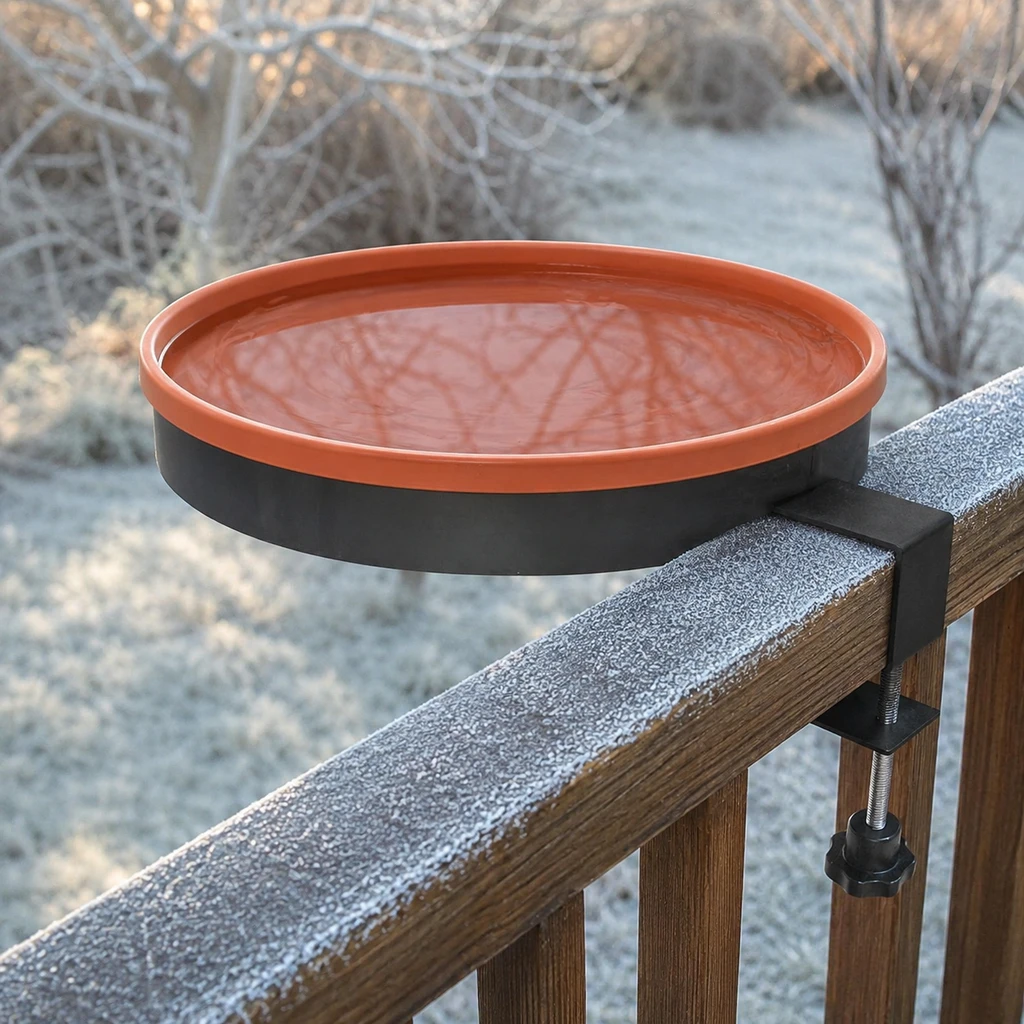
The mounting flexibility is the other reason to pick it: deck mount, clamp mount or ground legs, with hardware included, so it works on a balcony rail or in a border. The basin lifts off the pedestal for cleaning, and the cord tucks away so you can run it as an ordinary bath through spring and summer.
Specs That Matter
- 75W thermostatically controlled heater, sealed element
- Three mounting options: deck, clamp or ground legs
- Basin detaches from the pedestal for cleaning
- Cord stows away for year round use
- Shallow basin design suited to small birds
Who It Is For
Anyone in a region with real freezes who wants to be the only open water for streets around.
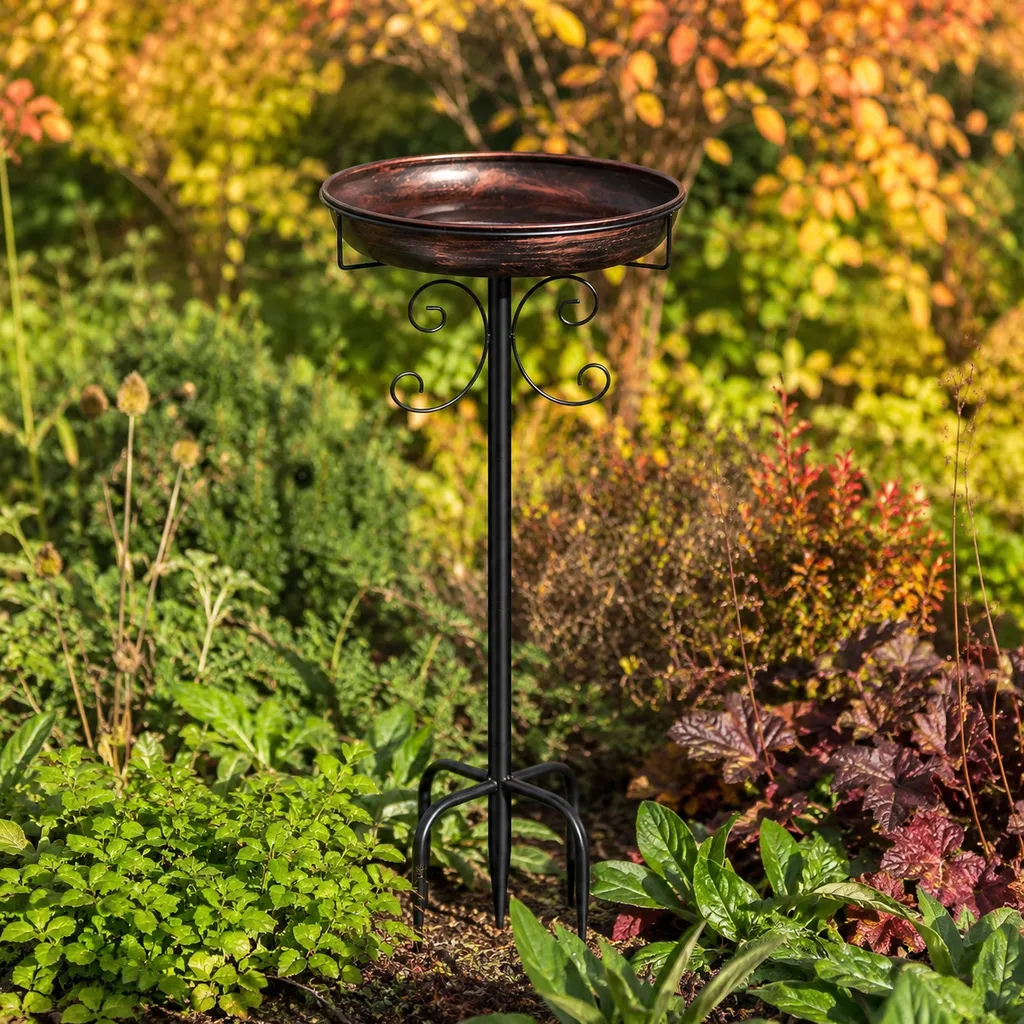
Daoeny 35 Inch Metal Bird Bath: Best Metal Build
Resin is the default at this price, and metal is the upgrade if you would rather not replace a cracked basin after a bad winter. This is an all iron structure with a protective coating, and it is noticeably more rigid than plastic or resin alternatives.
The bowl is a circular platform 12 inches across and about 2 inches deep, which is shallower than the pedestal baths and genuinely bird friendly. Because it is a flat platform rather than a cone, it holds usable water across its whole width instead of only in the middle, and it doubles as a seed tray if you would rather use it as a feeder in winter.
The upgraded five pronged base is the part worth paying attention to. Staked baths tip easily in soft ground, and five prongs spread the load enough to keep it upright. The bowl lifts off the steel ring for cleaning, with no tools needed for assembly.
Specs That Matter
- All metal iron construction with protective coating
- 12 inch circular platform bowl, about 2 inches deep
- Upgraded 5 pronged stake base resists tipping
- Doubles as a seed feeder tray
- Removable bowl, tool free assembly
Who It Is For
Gardens with hard winters, and anyone who wants one fitting that works as both bath and feeder.