
This post may contain affiliate links. If you buy through them, we may earn a small commission at no extra cost to you.
Learning how to identify finches is one of the most rewarding skills a backyard birder can pick up, because finches are some of the most common, colorful and lively visitors at any feeder. They are also some of the most confusing. A red bird at the sunflower feeder might be a house finch, a purple finch or, out west, a Cassin’s finch, and a drab olive bird in January might be the same goldfinch that glowed bright yellow in July. If you are just starting out, our guide to birdwatching for beginners covers the basics of getting started.
This guide walks through the finches you are most likely to see in North America, the field marks that separate them, how they sound, what they eat at feeders, and how to tell the trickiest look alikes apart. You will also learn why some winters bring flocks of northern finches far south of their usual range, and how to set up your yard so you see more of them.
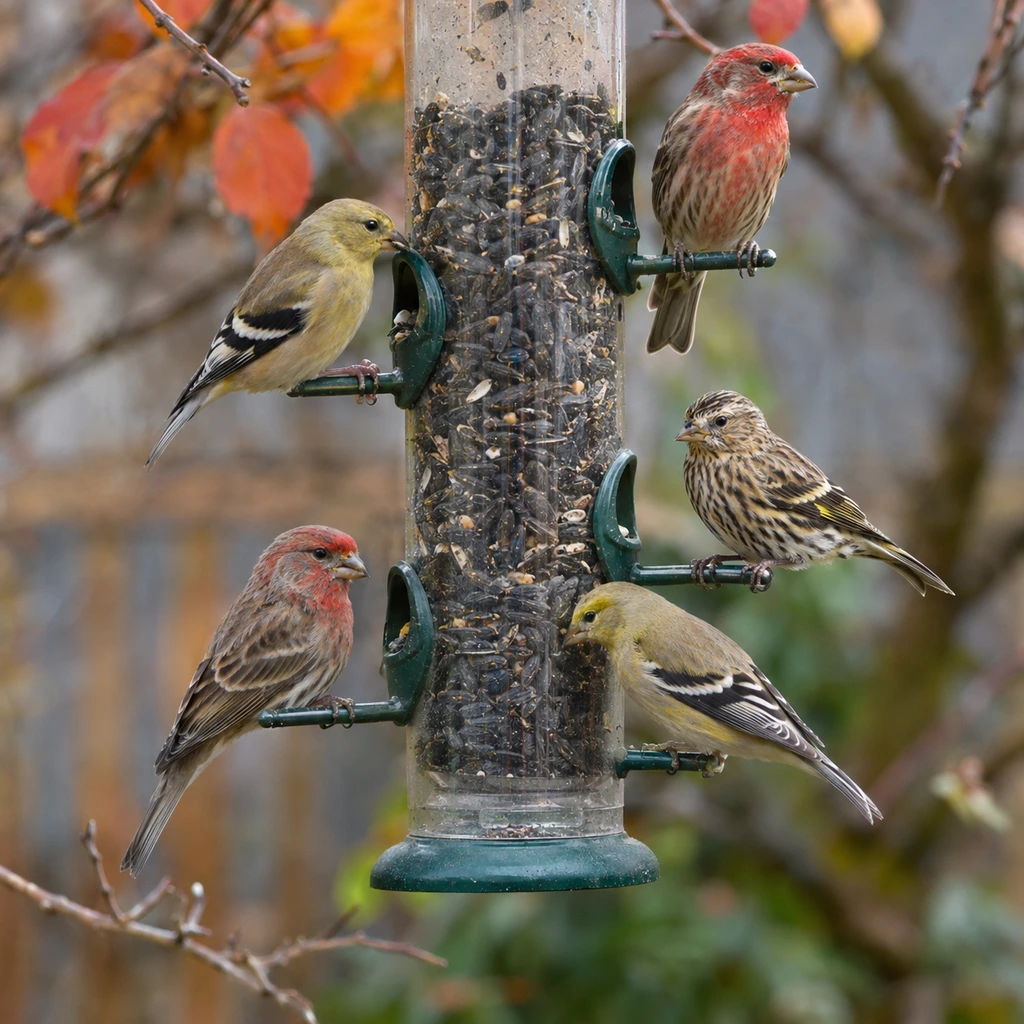
Table of Contents
What Makes a Bird a Finch
True finches belong to the family Fringillidae. They are small to medium songbirds with short, thick, cone shaped bills built for cracking seeds. That bill is the first clue. If a small bird at your feeder has a stout, triangular beak and spends its time shelling seeds, there is a good chance it is a finch.
Look at the Bill First
Finch bills vary with diet. Goldfinches and siskins have small, sharply pointed bills for pulling tiny seeds from thistle and flower heads. House and purple finches have thicker bills for sunflower seeds. Crossbills have crossed tips for prying open cones, and evening grosbeaks have huge, pale bills that can crack cherry pits.
Check the Tail and Wings
Most finches have a notched or forked tail. Look for wing bars, the pale stripes across the folded wing, and for yellow or white patches in the wings and tail, which show best when the bird flies.
Watch How They Fly
Many finches fly in a bouncy, undulating pattern, rising with a few quick wingbeats and dipping as they glide. American goldfinches often call on each upswing, which makes them easy to pick out overhead.
How to Identify Finches You Will See Most Often
These are the finches most backyard birders across North America encounter. Start with them and the rarer species become easier, because you will know what normal looks like.
House Finch
The house finch is the most widespread finch in North America and the one most people see first. Males have a red, orange or sometimes yellowish head, breast and rump, with blurry brown streaks on the belly and flanks. Females are plain gray brown with heavy, blurry streaking and no strong face pattern. House finches are noisy and social, often arriving in groups, and males sing a long, cheerful, rambling warble that usually ends in a buzzy note.
Purple Finch
Male purple finches look as if they were dipped in raspberry juice. The rosy pink color covers the head, back and wings, not just the head and breast, and the belly is clean with little streaking. Females are the easier ID: they have a bold white eyebrow and a dark cheek patch, with crisp, sharp streaks on a white belly. Purple finches breed in northern and mountain forests and visit many eastern feeders in winter.
Cassin’s Finch
In the mountains of the West, Cassin’s finch adds a third red finch to the mix. Males have a bright red crown that often looks peaked, contrasting with a browner neck, and a longer, straighter bill than a house finch. Females resemble female purple finches but have finer streaks that extend onto the undertail.
American Goldfinch
In summer, male American goldfinches are unmistakable: lemon yellow with a black cap and black wings with white bars. Females are duller olive yellow. In fall both sexes molt into a plain, brownish olive winter plumage, and many people assume their goldfinches have left. Look for the black wings with pale wing bars and the small, conical bill, and you will find them at your feeder all winter.
Lesser Goldfinch
Found in the Southwest and along the Pacific coast, the lesser goldfinch is smaller than the American goldfinch. Males have a black cap and bright yellow underparts, with a green back in the West and a black back in Texas. They stay yellow below all year and have a white patch at the base of the primaries.
Pine Siskin
Pine siskins look like heavily streaked, brown sparrows with a thin, pointed bill. The giveaway is the flash of yellow in the wings and at the base of the tail. They arrive in noisy flocks, often mixed in with goldfinches, and give a rising, buzzy zreeee call.
Northern Finches and Irruption Years
Some finches live in the boreal forests of Canada and only come south in large numbers in certain winters, when cone and seed crops fail up north. These movements are called irruptions, and they are one of the most exciting events in winter birding.
Common Redpoll
Redpolls are small, streaky brown finches with a bright red cap, a tiny black chin and, in males, a pink wash on the breast. They travel in tight, restless flocks and love nyjer and birch seeds. In an irruption winter they can show up at feeders well into the northern states.
Red Crossbill
Crossbills have bills with crossed tips that pry open conifer cones. Males are brick red with dark wings and females are olive yellow. They are often found in pines and spruces rather than at feeders, and you may hear their sharp kip kip calls before you see them.
Evening Grosbeak
Evening grosbeaks are big, chunky finches with enormous pale bills. Males are golden yellow with a dark head, a bright yellow eyebrow and large white wing patches. Females are grayer with black and white wings. Flocks can empty a sunflower feeder fast.
Following the Winter Finch Forecast
Each fall, the Finch Research Network publishes a winter finch forecast based on cone and seed crops in the boreal forest. When crops are poor, expect more siskins, redpolls, crossbills and grosbeaks in the south. Fall is also when many other birds move, as covered in our guide to fall bird migration.
House Finch vs Purple Finch
This is the identification question birders ask most. Use these points together, not just one.
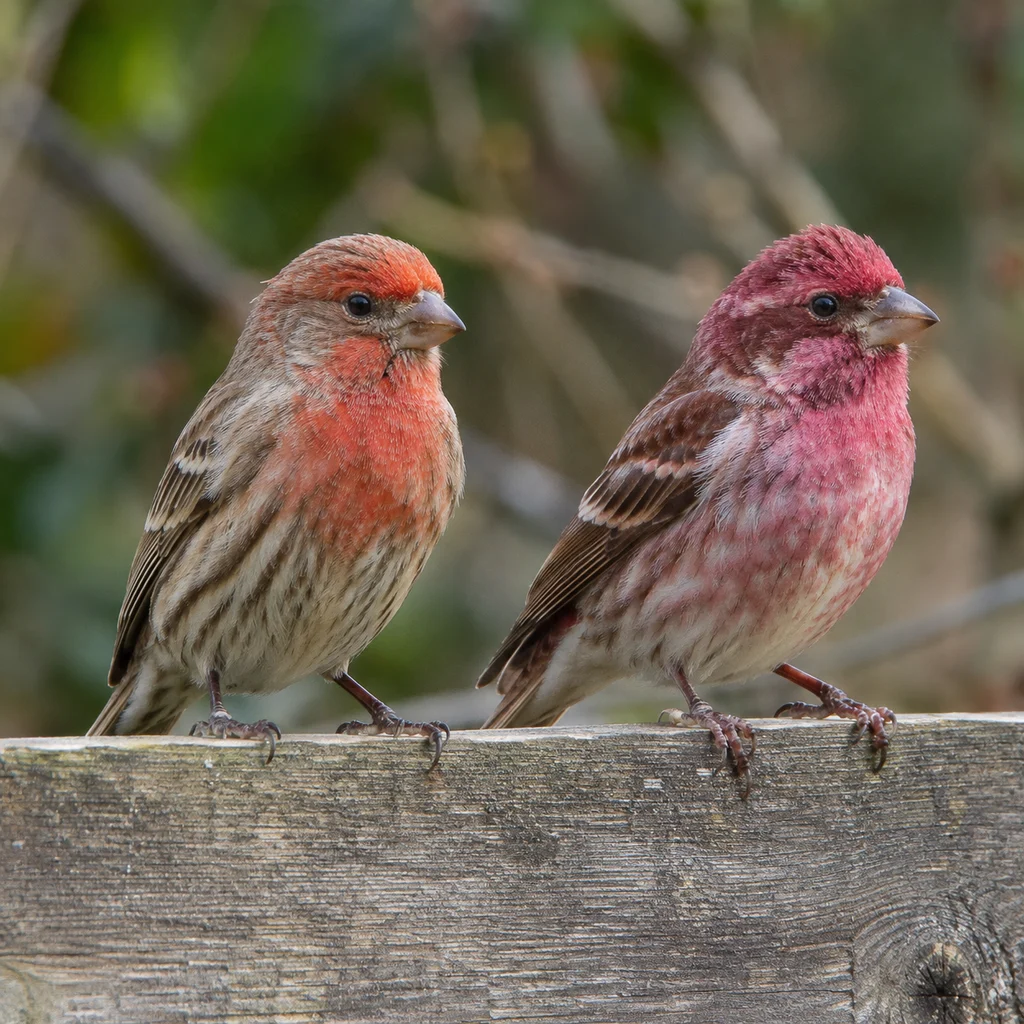
- Color: male house finches are red to orange on the head and breast. Male purple finches are a rosier raspberry color that spreads over the back and wings.
- Streaking: house finches have blurry brown streaks on the flanks and belly. Purple finches are cleaner below.
- Face: female purple finches have a bold white eyebrow and dark cheek. Female house finches have a plain, featureless face.
- Bill: the house finch bill is short with a curved top edge. The purple finch bill is longer and straighter.
- Tail: purple finches have a more deeply notched tail. House finch tails look square.
Listening helps too. Our guide on how to identify birds by song explains how to learn calls and songs, and good binoculars for birdwatching make the fine details much easier to see. The free species accounts at All About Birds from the Cornell Lab of Ornithology include photos and recordings of every finch in this guide.
Attracting Finches to Your Yard
Finches are seed eaters, so the right food brings them in. Once you know how to identify finches, a few changes to your feeders will let you practice every day.
Nyjer for Goldfinches and Siskins
Nyjer, often sold as thistle, is a tiny black seed loved by goldfinches, siskins and redpolls. Offer it in a tube feeder with small ports or a mesh sock feeder so it does not spill. Keep it fresh, since finches ignore stale nyjer.
Sunflower for House and Purple Finches
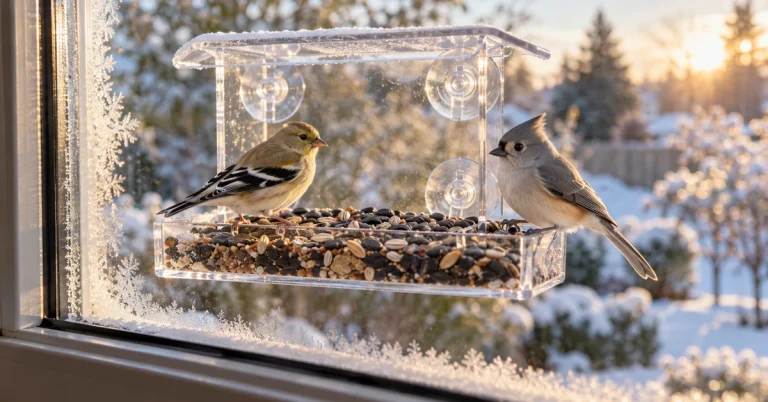
Black oil sunflower seed attracts house finches, purple finches, grosbeaks and nearly every other feeder bird. Hulled sunflower chips work well for goldfinches and leave less mess. Our list of the best bird feeders and our window bird feeders picks include good tube feeders for finches.
Offer Water in Winter
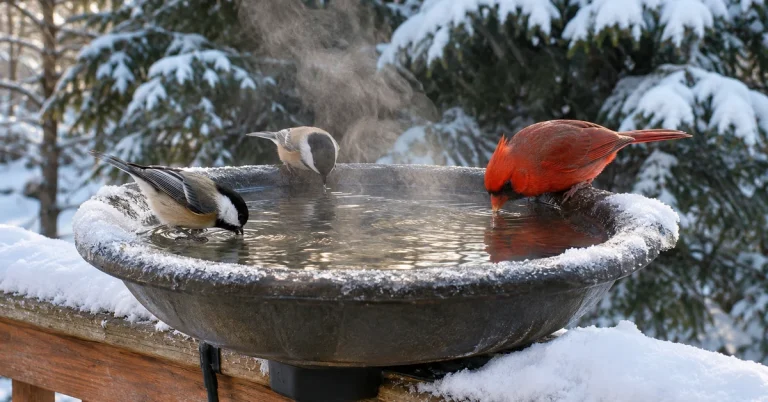
Water is scarce when everything freezes, and finches drink and bathe often. A heated bath such as the GESAIL heated bird bath keeps water open all winter. Our list of the best bird baths covers summer options. Our guides to winter bird feeding and attracting birds to your yard cover more ways to help birds through the cold.
Keep Feeders Clean
House finches are prone to a bacterial eye disease called mycoplasmal conjunctivitis, which causes swollen, crusty eyes. It spreads at crowded, dirty feeders. Clean feeders every two weeks with a dilute bleach solution, rake up old seed, and take feeders down for a while if you see sick birds.
Common Identification Mistakes
- Calling every red finch a house finch. Check the back, the belly streaking and the female’s face pattern.
- Thinking goldfinches leave for winter. They just change into dull olive plumage.
- Mistaking pine siskins for sparrows. Look for the thin, pointed bill and yellow wing flashes.
- Using color alone. Light, molt and diet all change how red or yellow a bird looks.
Once finches are second nature, try other tricky groups such as woodpeckers and hawks. Our suet feeders list brings woodpeckers right to your window.
Frequently Asked Questions
What is the small red bird at my feeder?
In most of North America it is a male house finch. If the red is rosy and covers the back and wings with a clean belly, it may be a purple finch. In western mountains, consider Cassin’s finch.
Where do goldfinches go in winter?
Many stay put. They molt into a dull olive brown plumage, so they are easy to overlook. Look for black wings with pale wing bars.
How do you identify a female finch?
Look at the face and streaking. Female purple finches have a white eyebrow and dark cheek, while female house finches have a plain face with blurry streaks.
When is the best time to learn how to identify finches?
Winter is ideal, because finches crowd feeders and northern species may visit. A busy winter feeder gives you lots of practice in a short time, and a spotting scope helps with distant flocks in treetops.
Discover more from Maive Verse
Subscribe to get the latest posts sent to your email.