
This post may contain affiliate links. If you buy through them, we may earn a small commission at no extra cost to you.
The best window bird feeders put chickadees, cardinals and finches a few inches from your coffee cup, which makes them the easiest way to start watching birds at home. You do not need a yard, a pole or a ladder, only a clean pane of glass. For apartment dwellers, renters and anyone who wants to learn how to identify woodpeckers and other backyard birds up close, nothing else comes close.
The catch is that window feeders vary a lot. Suction cups fail, trays fill with rainwater, and some designs are too small for anything bigger than a goldfinch. We checked six popular models for rating, stock and what each listing actually promises, and picked one for each kind of buyer. If you want a hanging or pole feeder instead, see our roundup of the best bird feeders.
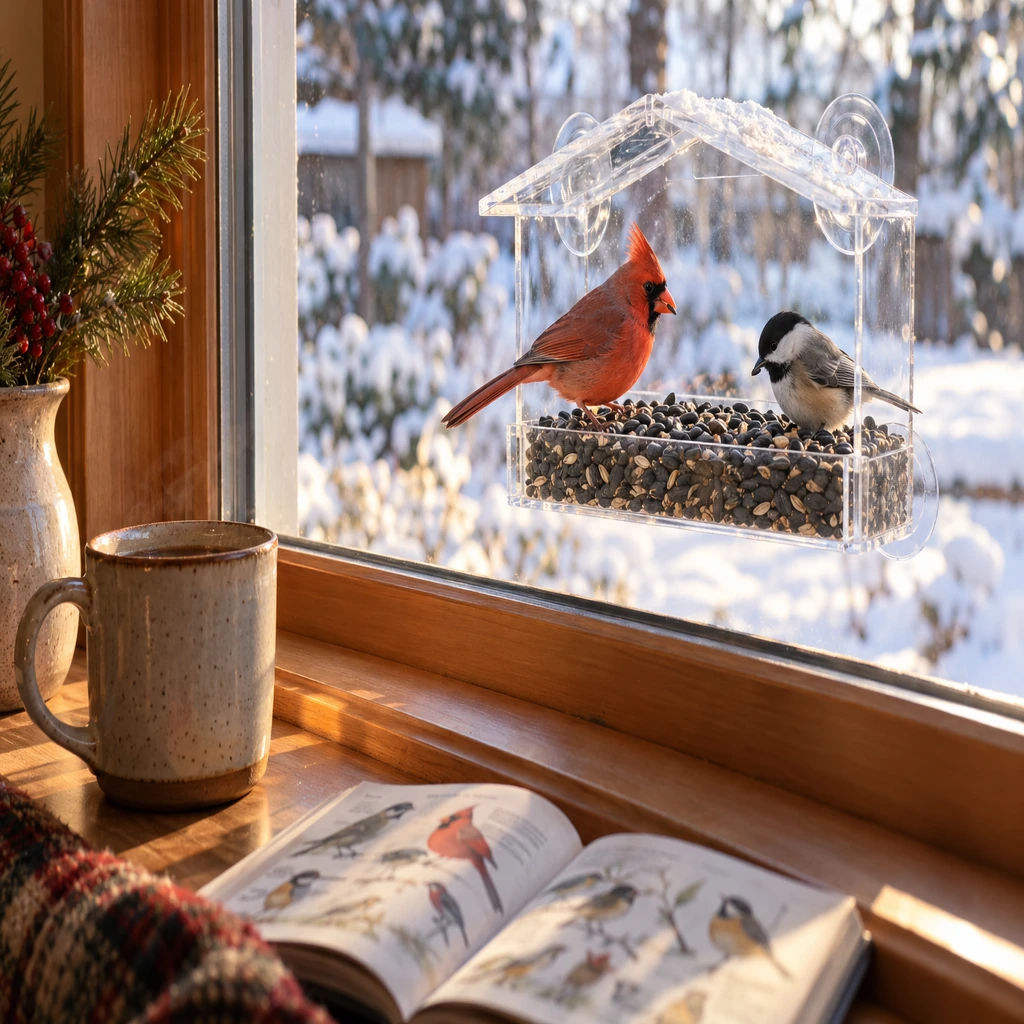
Table of Contents
What Makes the Best Window Bird Feeders Stand Out
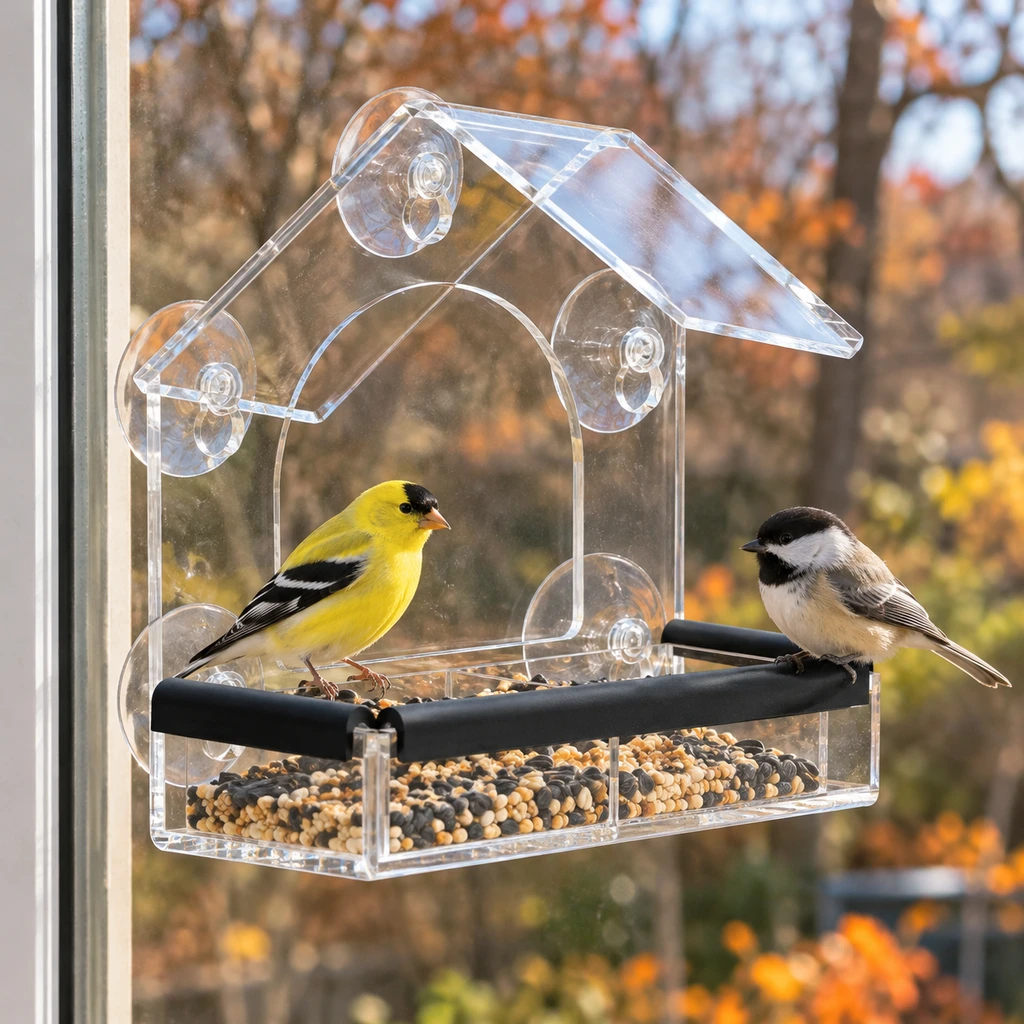
Four things separate a window feeder you will love from one that ends up on the ground. First, suction cup quality and count: more and larger cups hold through wind and cold snaps. Second, a removable tray, which makes refilling and cleaning a quick job instead of a balancing act on a step stool. Third, drainage and a roof, because wet seed clumps and molds within days. Fourth, size: a roomy tray brings in cardinals and jays, while a tiny box only suits small songbirds.
Clear acrylic is the standard for a reason. You see the whole bird, and many birds treat the feeder as a perch rather than a hazard. A feeder fixed right on the glass also helps with window strikes. The American Bird Conservancy notes that birds feeding very close to a window cannot build up enough speed to be badly hurt if they hit it.
The Best Window Bird Feeders at a Glance
| Feeder | Best For | Mount | Standout Feature | Rating |
|---|---|---|---|---|
| Nature’s Hangout Window Bird Feeder | Best overall | 3 suction cups plus 3 spares | Holds over 4 cups of seed | 4.5 (22,000+) |
| D.F. Omer 3 Section Window Feeder | Best for seed variety | 4 suction cups | Three tray sections and a roof | 4.6 (3,600+) |
| Nature Gear Sliding Tray Feeder | Best for easy refills | Suction cups | Removable sliding tray, metal perch | 4.6 (2,700+) |
| DY-SKTY Clear Window Feeder | Best for windy windows | 5 suction cups | Sloped roof and drainage holes | 4.6 (4,500+) |
| Wildlife Sciences Window Suet Cage | Best for woodpeckers | 2 suction cups or hanger | Comes with an 11 oz peanut suet cake | 4.1 (200+) |
| Perky-Pet Window Hummingbird Feeder | Best for hummingbirds | Suction cup or nail | 8 oz nectar, bee resistant ports | 4.4 (7,200+) |
Our Six Window Feeder Picks in Detail
Each pick below links to its current Amazon listing. Prices move often, so check the listing for today’s price.
Nature’s Hangout Window Bird Feeder: Best Overall
This is the window feeder most people should buy. It is cut from quarter inch cast acrylic, noticeably thicker than the budget boxes, and the tray holds more than four cups of seed, so a busy feeder does not need refilling every morning. The size matters for birds too: cardinals, blue jays and even a red-bellied woodpecker have room to land.
The slide out tray lifts free for rinsing without taking the feeder off the glass, and the company ships three spare suction cups with a lifetime suction guarantee. With more than 22,000 ratings at 4.5 stars, it has the longest track record of any feeder here.
Specs That Matter
- Material: quarter inch cast acrylic
- Capacity: over 4 cups of seed
- Mount: 3 suction cups plus 3 spares
- Tray: slide out for cleaning
Who It Is For
Anyone who wants one feeder that handles big birds, holds a lot of seed and keeps sticking through the winter.
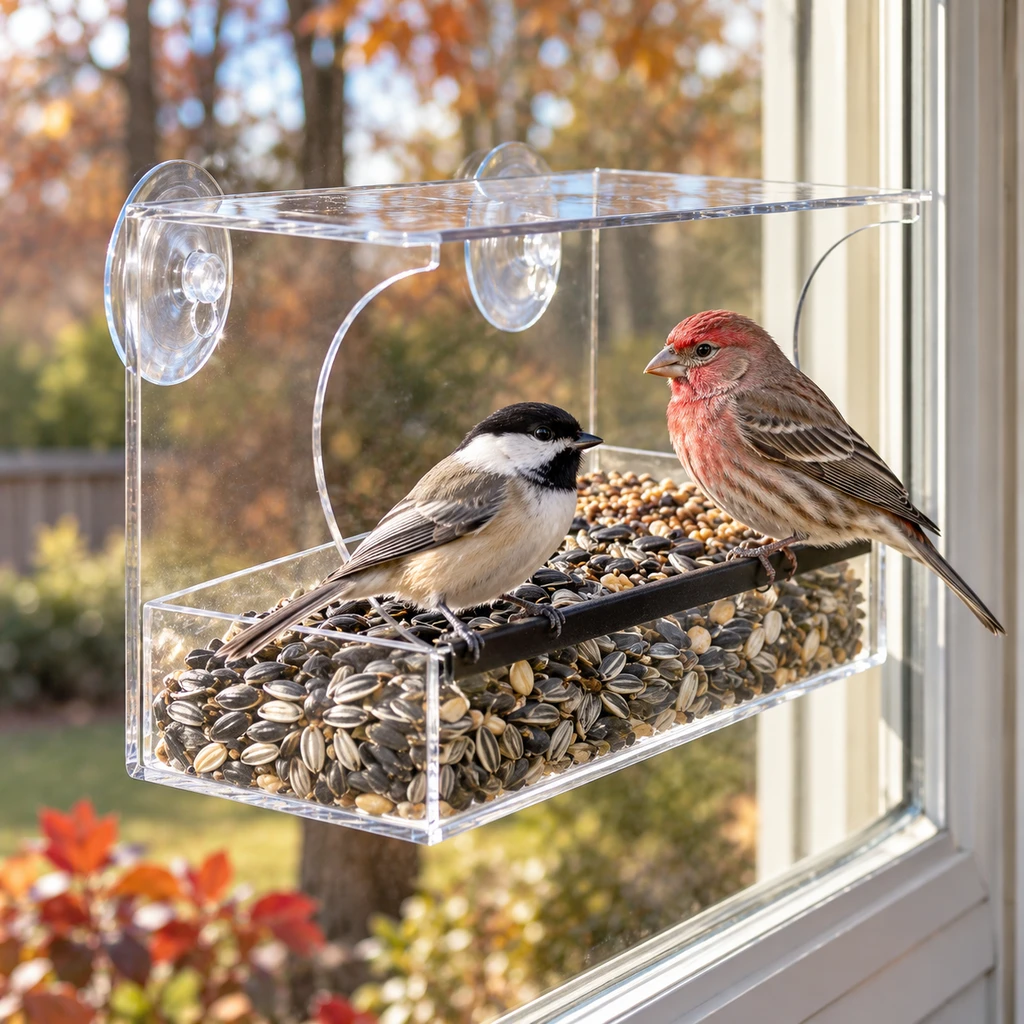
D.F. Omer 3 Section Window Feeder: Best for Seed Variety
The D.F. Omer feeder splits its tray into three compartments, which is more useful than it sounds. Put black oil sunflower in one, safflower in another and a nut mix in the third, and you will attract a wider range of birds while seeing exactly which food each species prefers.
A roof cover keeps snow off the seed, drainage holes clear any water that blows in, and four suction cups hold it to the glass. The tray removes for washing, and the brand backs it with a two year warranty.
Specs That Matter
- Tray: 3 separate sections
- Mount: 4 suction cups
- Weather: roof plus drainage holes
- Warranty: 2 years
Who It Is For
Curious birders who want to test different foods, or anyone trying to tempt cardinals with safflower while keeping finches happy.
Nature Gear Sliding Tray Feeder: Best for Easy Refills
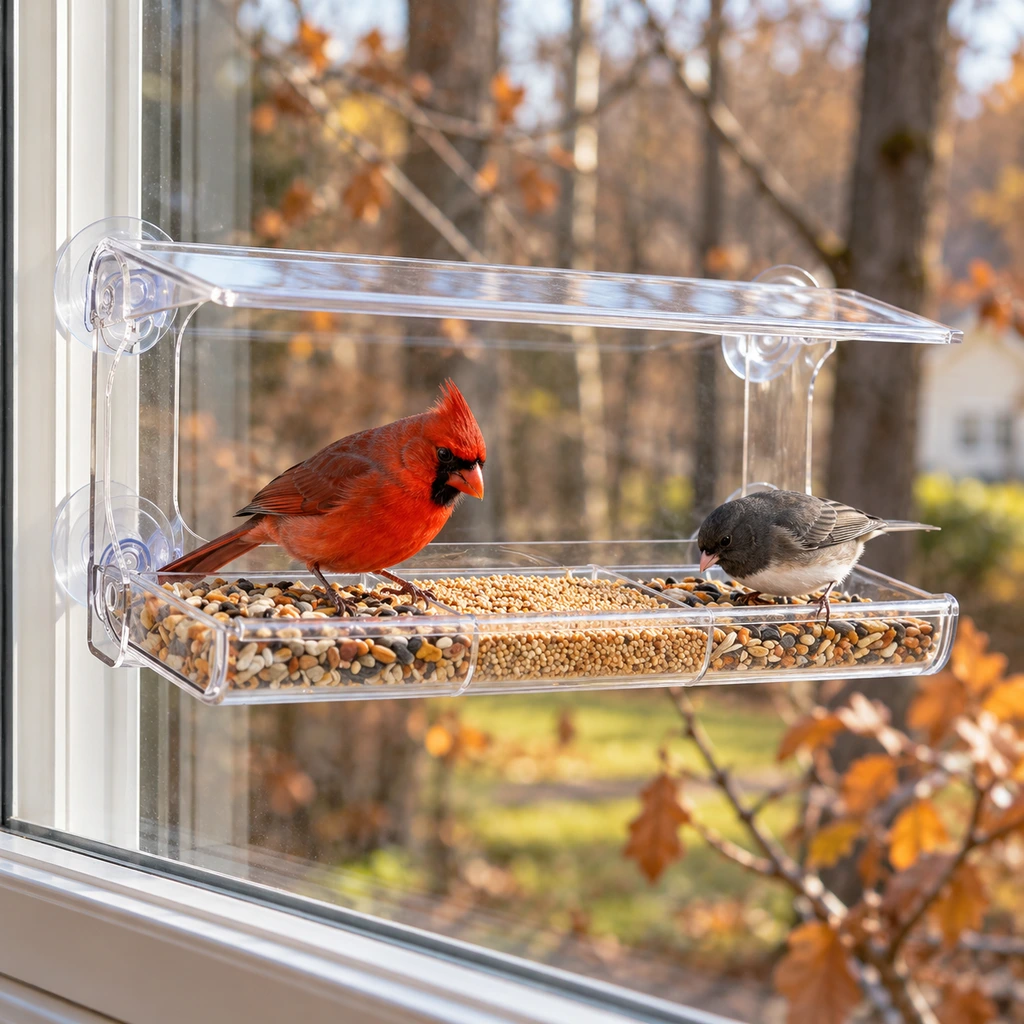
Nature Gear’s extended model is built around a removable sliding seed tray that pulls out from the side, so you can refill it through an open window without unsticking anything. The metal perch rail gives small birds a comfortable spot to sit, which chickadees and titmice appreciate.
It is a little smaller than the Nature’s Hangout, which suits narrow windows and small songbirds. It has 2,700 plus ratings at 4.6 stars, and reviewers praise how quickly birds find it.
Specs That Matter
- Tray: removable, slides out
- Perch: metal rail
- Material: clear acrylic
- Best window: standard to narrow panes
Who It Is For
Renters and apartment dwellers who want the quickest possible refill routine, and people feeding mostly small songbirds.
DY-SKTY Clear Window Feeder: Best for Windy Windows
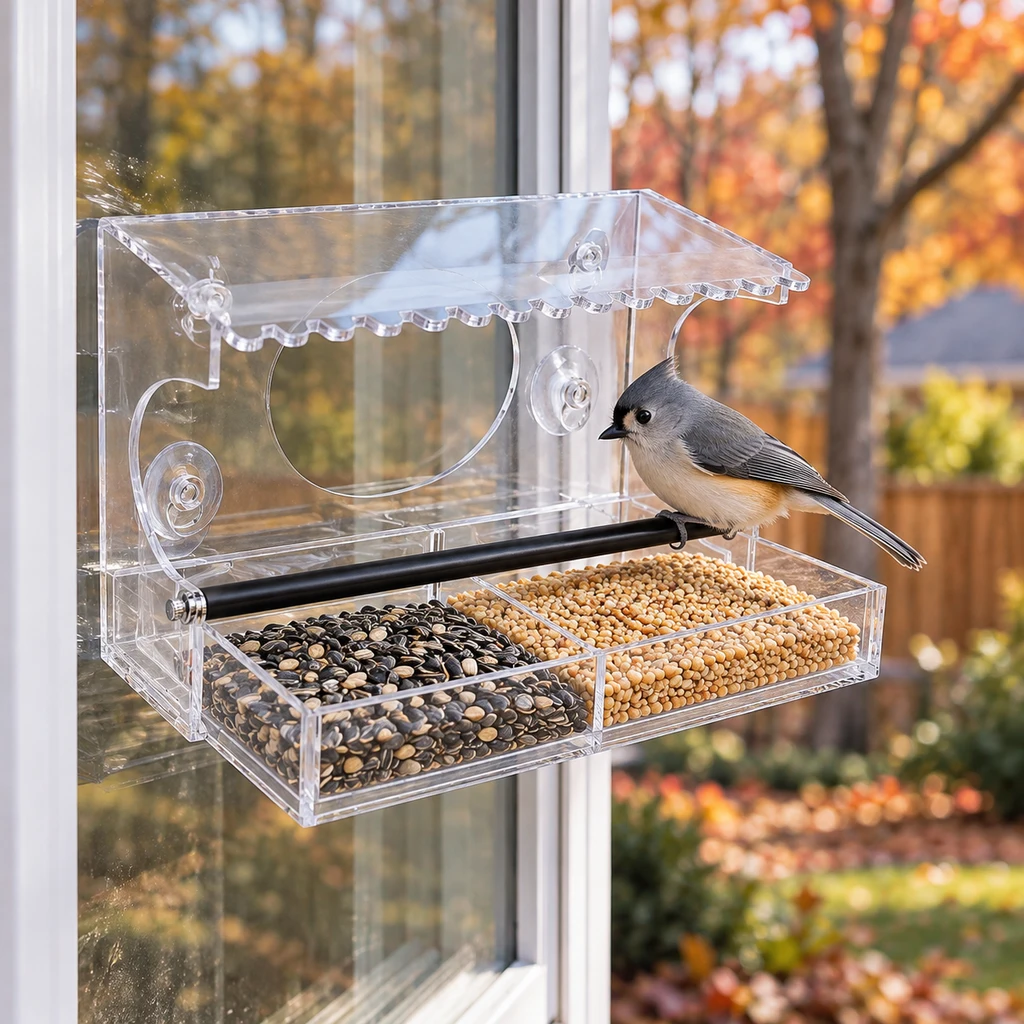
Most window feeders use three or four suction cups. This one uses five, which spreads the load and keeps it steady on exposed, gusty windows and when several birds land at once. If a previous feeder of yours has slid down the glass, start here.
A sloping roof sheds rain and snow, the lift out tray has drainage holes, and the corners are rounded so birds cannot catch a wing. It carries a 4.6 star average across more than 4,500 ratings.
Specs That Matter
- Mount: 5 suction cups
- Weather: sloped roof plus drainage
- Tray: lift out
- Design: rounded corners
Who It Is For
Anyone mounting on a windy side of the house, a high rise balcony door or glass that faces the prevailing weather.
Wildlife Sciences Window Suet Cage: Best for Woodpeckers
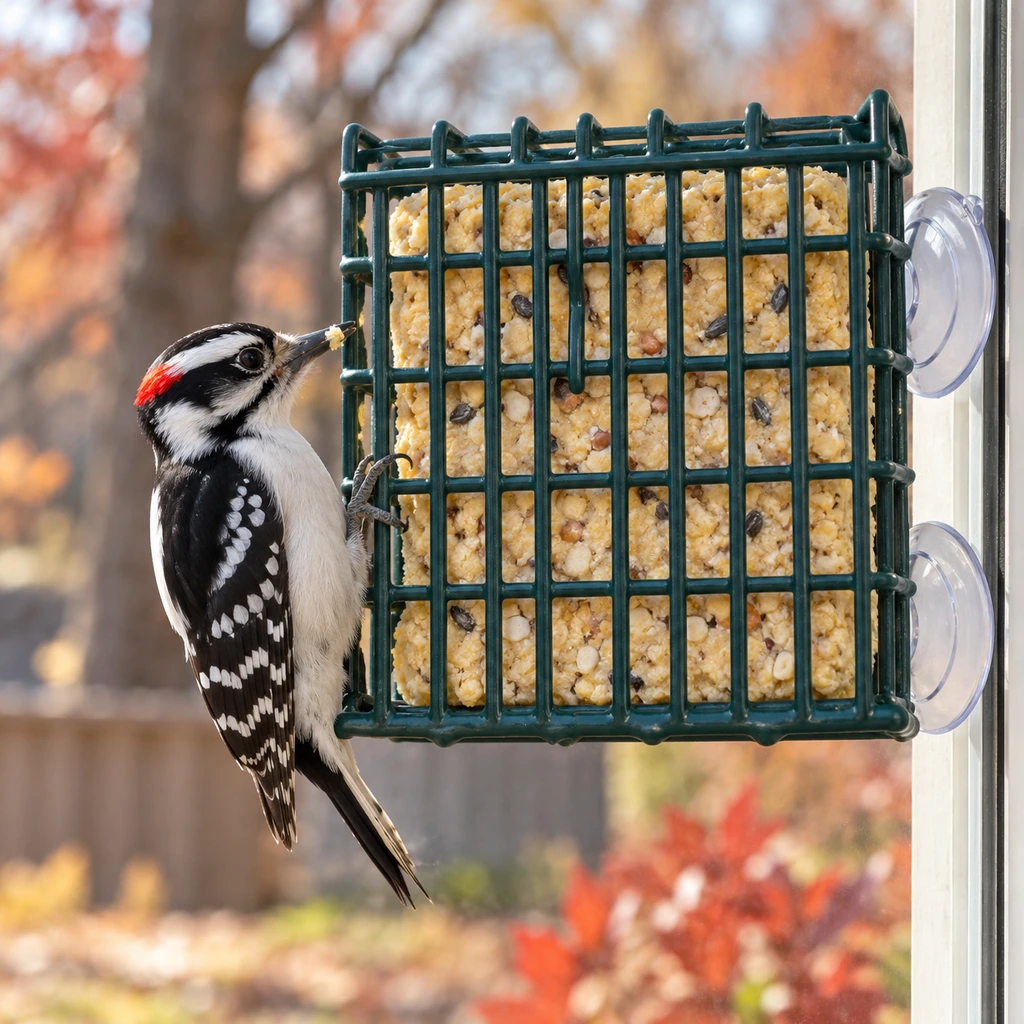
Seed brings songbirds, but suet is what brings woodpeckers, nuthatches and wrens. This PVC coated cage snaps shut around a standard suet cake and sticks to the glass with two suction cups, or hangs from a hook if you prefer. It even ships with an 11 ounce peanut suet cake so you can start the same day.
Downy and hairy woodpeckers will happily cling to a window cage, which gives you a perfect view of the bill length and tail spots that separate them. For a wider choice of cages, see our list of the best suet feeders.
Specs That Matter
- Food: standard suet cakes
- Mount: 2 suction cups or hanger
- Coating: PVC over wire
- Included: 11 oz peanut suet cake
Who It Is For
Anyone who wants woodpeckers at the window this winter, ideally paired with a seed feeder on the same pane.
Perky-Pet Window Hummingbird Feeder: Best for Hummingbirds
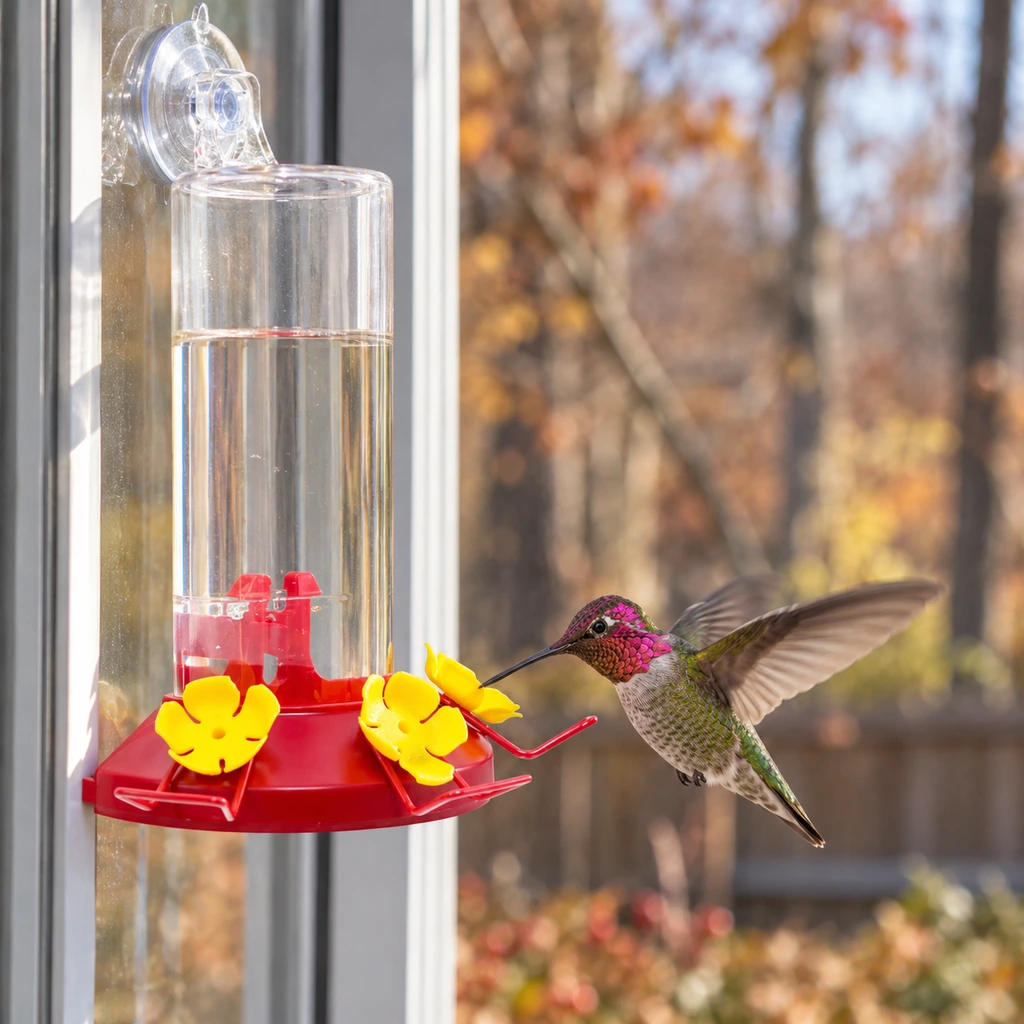
Perky-Pet’s window model holds 8 ounces of nectar, enough for a few hummingbirds without spoiling before you change it. Three flower shaped ports are soft and tapered to keep bees out, and it mounts with a suction cup or hangs from a nail.
Timing matters with this one. In most of the US, hummingbirds leave by October, so this feeder is one to buy now and put up in spring. Along the Pacific coast and in parts of the Gulf states, Anna’s and wintering hummingbirds visit all year, and a window feeder is a wonderful way to see them.
Specs That Matter
- Capacity: 8 oz nectar
- Ports: 3, bee resistant
- Mount: suction cup or nail
- Material: shatter resistant plastic
Who It Is For
West Coast and Gulf Coast birders now, and everyone else as a spring project or a gift for a hummingbird fan.
How to Choose the Right Window Bird Feeder
You Want the Most Birds
Go big. A large tray like the Nature’s Hangout lets several birds feed at once and has room for larger species. Fill it with black oil sunflower, the seed that appeals to the widest range of backyard birds.
You Live in an Apartment
Pick a compact feeder with a sliding tray so you can refill it through the window, and check your lease or building rules first. Seed hulls can drift onto balconies below, so hulled sunflower hearts are a tidier choice.
Your Window Gets Wind and Weather
Choose more suction cups and a roof. The DY-SKTY and D.F. Omer both shed rain well, and a roof keeps snow from burying the seed overnight.
You Want Woodpeckers
Add suet. A window suet cage beside a seed feeder covers nearly every common winter bird. Our guide on winter bird feeding explains which foods to offer as temperatures drop.
How to Install a Window Feeder So It Stays Up
Prepare the Glass
Clean the outside of the window with rubbing alcohol or a vinegar solution and let it dry completely. Any film of dust or grease will break the seal. Smooth, untextured glass works best, and suction cups will not hold on screens or frosted panes.
Warm the Suction Cups
Cold suction cups are stiff and seal poorly. Dip them in warm water for a minute, dry them, and press firmly from the center out. If you can, install on a mild afternoon rather than a freezing morning.
Pick the Right Window
Choose a window you look out of often, at least five or six feet off the ground and away from railings or branches that squirrels can jump from. A quiet window works better than a busy patio door at first. Once birds are used to the feeder, they will tolerate a lot more movement inside.
Give Birds a Week
Birds usually find a new window feeder within a few days to two weeks. Scattering a little seed on the tray and having other feeders nearby speeds things up. Our guide on how to attract birds to your yard has more ways to bring them in, and a bird bath close by helps a lot in winter.
Cleaning and Bird Safety
Empty and rinse the tray every week or two, and scrub it with a dilute bleach or vinegar solution once a month, especially in wet weather. Moldy seed can make birds sick, and clean acrylic also gives you a clearer view. If you join Project FeederWatch this winter, a window feeder makes counting easy, and our birdwatching for beginners guide explains how to start keeping notes.
Keep a field guide or app by the window too. You will hear as many birds as you see, and our guide on identifying birds by song helps you put names to them. A compact pair of binoculars is worth having for the birds that stay in the trees, and migrants in spring and fall, covered in our fall bird migration guide, will sometimes stop at a window feeder too.
Frequently Asked Questions
Do window bird feeders cause birds to hit windows?
A feeder mounted directly on the glass actually lowers the risk of a serious strike, because birds arriving or leaving cannot reach high speed. The bigger danger is a feeder placed 5 to 30 feet from a window, where birds can fly off at full speed into the reflection.
How long does it take birds to find a window feeder?
Usually a few days to two weeks. Chickadees and titmice are often first. Putting the feeder on a window near trees or shrubs, where birds already feel safe, shortens the wait.
Will suction cups hold in winter?
Good ones will, if the glass is clean and the cups were pressed on when warm. Cheaper, thinner cups can stiffen and release in hard frost. Models with spare cups or more cups, like the Nature’s Hangout and DY-SKTY, are the safer bet.
What seed is best for the best window bird feeders?
Black oil sunflower attracts the most species. Hulled sunflower hearts are less messy, safflower favors cardinals while discouraging some starlings and squirrels, and nyjer suits finches.
Can squirrels reach a window feeder?
Not if you place it well. Squirrels cannot climb glass, so mount the feeder at least five or six feet up and well away from sills, railings and branches they could jump from.
Discover more from Maive Verse
Subscribe to get the latest posts sent to your email.