
This post may contain affiliate links. If you buy through them, we may earn a small commission at no extra cost to you.
The Geminid meteor shower is the best meteor shower of the year for most people in North America, and 2026 lines up beautifully for it. The shower peaks on the night of December 13 into the morning of December 14, just a few days after new moon, so the sky will be dark when the meteors are at their best. Under a rural sky you could see a meteor every minute or two. If you have never watched a meteor shower before, our stargazing for beginners guide is a good companion to this one.
This guide covers exactly when to look, where in the sky to face, how many meteors to expect from a city, suburb or dark site, what makes the Geminids different from every other shower, and how to stay warm on a December night long enough to enjoy them.
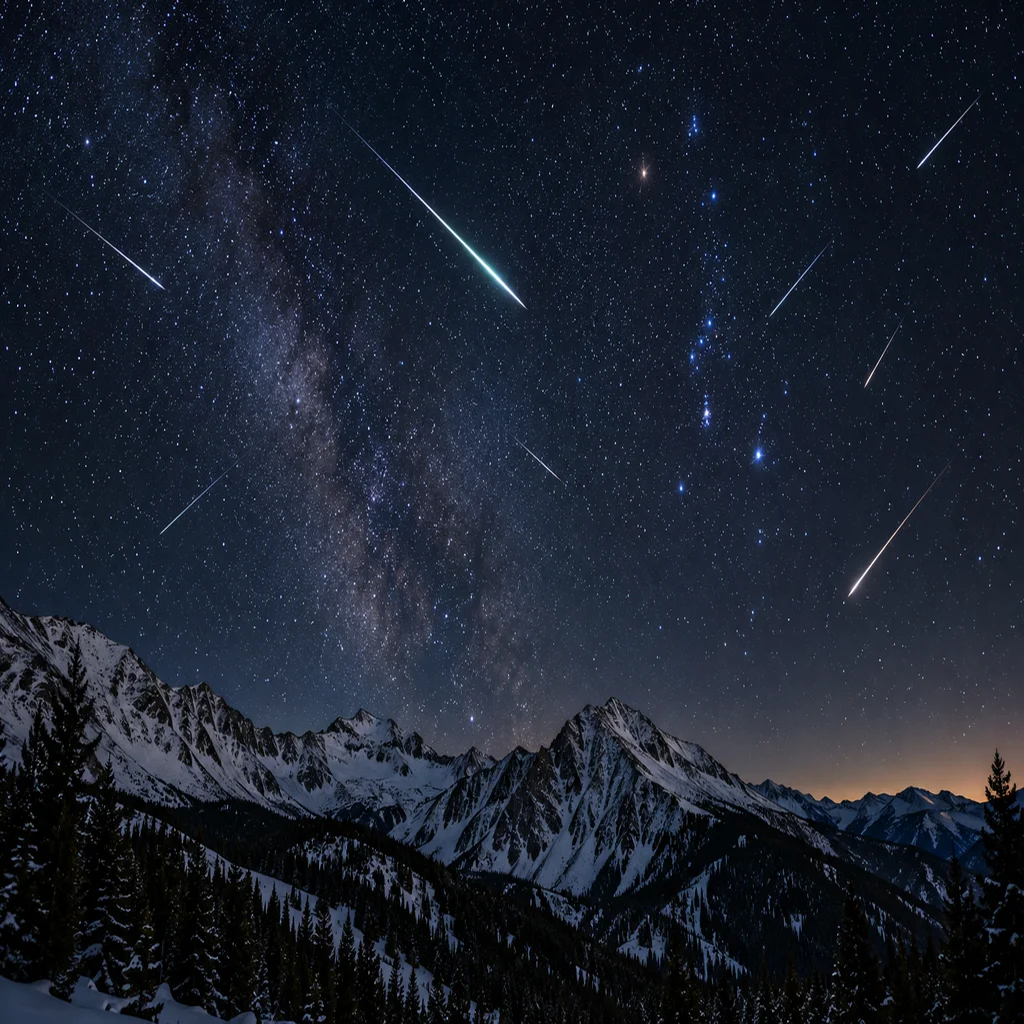
Table of Contents
Geminid Meteor Shower 2026 at a Glance
| Detail | What to Know |
|---|---|
| Active period | About December 4 to December 20 |
| Peak night | December 13 into December 14, 2026 |
| Best hours | About 10 p.m. to dawn, best around 2 a.m. local time |
| Peak rate, dark sky | Up to about 120 meteors per hour in ideal conditions |
| Moon | Thin crescent that sets in the evening, so dark skies |
| Radiant | Near the bright star Castor in the constellation Gemini |
| Parent body | Asteroid 3200 Phaethon |
The headline number, about 120 meteors an hour, assumes a perfectly dark sky with the radiant straight overhead. From a dark rural site you can realistically expect 50 to 80 an hour around the peak. From the suburbs, 20 to 40. From a bright city, a handful of the brightest ones. Every step you take away from lights makes a real difference.
When to Watch the Geminids
The Peak Night
Plan for the night of Sunday, December 13. Rates are high for a night or so either side, so if the 13th is cloudy, the 12th and 14th are both worth trying. Check the forecast a few days out and pick the clearest night.
The Best Hours
Unlike most showers, the Geminids get going in the evening. Gemini rises in the northeast after sunset, and you can start seeing meteors by about 10 p.m. Rates climb as Gemini rises higher and peak around 2 a.m., when the radiant is nearly overhead. If you can only manage one session, go out from about midnight to 3 a.m.
Why 2026 Is a Good Year
The Moon is the enemy of meteor watching because its glare hides fainter meteors. In 2026 it is a slim crescent on peak night, setting early in the evening, which leaves the rest of the night dark. That is a better setup than the Leonid meteor shower or the Orionids often get, and it makes this one worth staying up for.
Where to Look in the Sky
Find the Radiant
Every Geminid appears to fly away from one point near Castor, the fainter of the two bright twin stars in Gemini. Look east early in the evening and almost straight up at 2 a.m. Orion, with its three belt stars, is just below and to the right of Gemini, which makes it easy to find.
Do Not Stare at the Radiant
Meteors near the radiant leave short trails. The long, spectacular ones appear 30 to 60 degrees away from it. Lie back and take in as much sky as you can, ideally the darkest part, with the radiant somewhere in your field of view.
Give Your Eyes Time
Your eyes need 20 to 30 minutes to fully adapt to the dark. Every glance at a phone screen resets the clock. Use a red light if you need to see, and keep the phone in your pocket. A headlamp with a red mode, like the ones in our list of the best headlamps for camping, is ideal.
What Makes the Geminids Special
They Come From an Asteroid
Most meteor showers come from comets. The Geminids come from 3200 Phaethon, a rocky object that NASA describes as an asteroid, or possibly an extinct comet. Its debris is denser than typical comet dust, which is why Geminids tend to be bright and long lasting.
Slow, Bright and Colorful
Geminids hit the atmosphere at about 35 kilometers per second, much slower than the Leonids. That gives them graceful, unhurried trails, and many show a yellowish or white color. Bright fireballs are common near the peak.
Reliable Year After Year
The Geminids are among the most dependable showers on the calendar, and the International Meteor Organization has recorded them growing stronger over recent decades. If you only watch one meteor shower a year, this is the one.
How to Watch the Geminids Like a Pro
Get Away From Lights
Even a short drive out of town can double the number of meteors you see. State parks, rural pullouts and dark campgrounds work well. DarkSky International lists certified dark sky places, and our guide to dispersed camping explains how to find free, quiet spots on public land.
Lie Back and Get Comfortable
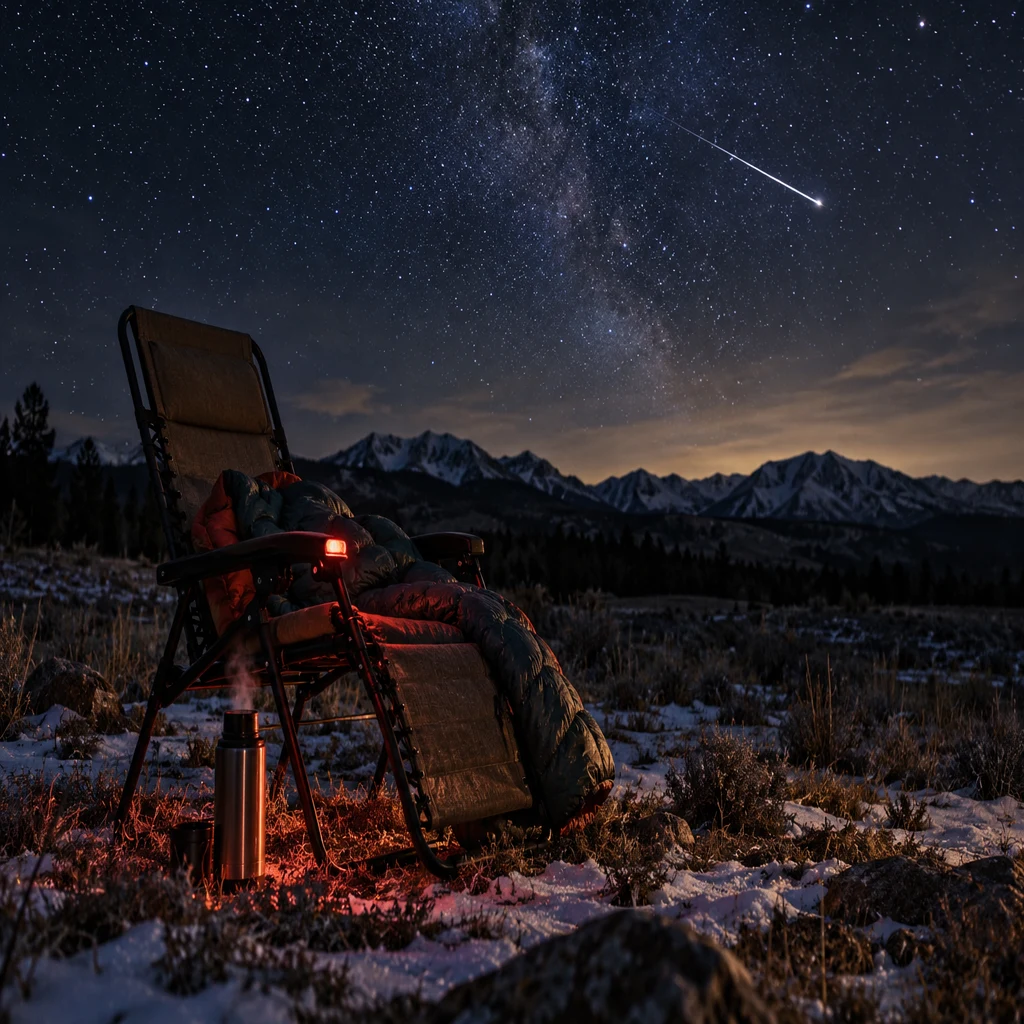
Watching meteors is a game of patience, so comfort matters. A reclining chair or a sleeping pad on the ground lets you look up without straining your neck. Our list of the best reclining camping chairs has several that lean far enough back for the sky overhead.
Give It an Hour
Meteors come in clumps. You might see nothing for five minutes and then three in a row. Plan to stay out at least an hour to see the shower properly, and bring a friend so you can call them out to each other.
Do You Need Binoculars or a Telescope?
No. Meteors move too fast and cover too much sky for optics, so your eyes are the best tool. That said, a pair of stargazing binoculars is great for scanning Orion and the Pleiades between meteors, and once you are hooked, our guides on the best telescopes for beginners and how to use a telescope are the next step.
Bring the Kids Along
The Geminids are one of the best showers for children because the action starts before midnight. Set up chairs and sleeping bags in the backyard or at a nearby dark park around 9:30 p.m., give everyone a blanket and a thermos of hot chocolate, and make a game of it: the first person to call out a meteor gets a point, and a fireball is worth five. Even 45 minutes is usually enough for a young child to see several bright ones. Point out Orion and the twin stars of Gemini while you wait, and let them hold the red flashlight. A night like this is often what turns a curious kid into a lifelong stargazer.
Count What You See
Keeping a simple tally makes the night more fun and shows you how the rate builds toward the peak. Note the time, how many meteors you see in each 15 minute block, and any bright fireballs. Compare your count from a dark site with a count from home the next night, and you will see exactly how much light pollution steals from the sky.
Staying Warm on a December Night
The Geminids are a cold weather shower for most of the US, and lying still in the cold drains heat fast. Dress for 15 to 20 degrees colder than the forecast, since you will not be moving. Our guide on how to layer for hiking explains the base, mid and outer layer system, and a puffy from our list of the best insulated jackets is perfect here.
- Insulate from the ground with a closed cell foam pad like the Therm-a-Rest Z Lite Sol or a thick blanket under you.
- Bring a warm hat, gloves and a thermos of something hot.
- Wrap up in a sleeping bag, which is the single best way to stay warm while lying still.
- Hand and toe warmers make a long session much more pleasant. Our cold weather camping tips have more ideas.
Photographing the Geminids
Catching a Geminid on camera is very doable with a camera that has manual settings and a tripod. Use a wide angle lens, open the aperture as wide as it goes, set ISO around 1600 to 3200, and take continuous 15 to 25 second exposures for an hour or more. Aim about 45 degrees away from the radiant. Our full guide on how to photograph the night sky covers focusing and settings, and our picks for the best tripods for astrophotography keep long exposures sharp. While you are out, try to spot the Andromeda Galaxy high in the northwest early in the evening.
Frequently Asked Questions
What night is the Geminid meteor shower in 2026?
The peak is the night of December 13 into the morning of December 14, 2026. The nights of December 12 and 14 are also good.
What time is best to see the Geminids?
About 2 a.m. local time, when the radiant is highest. You can start seeing them from about 10 p.m., which makes the Geminids one of the few showers worth watching before midnight.
Which direction should I look?
Anywhere with dark sky. Meteors can appear in any part of the sky. Face east in the evening or straight up after midnight, and keep the radiant in Gemini somewhere in your view.
Can I see the Geminids from the city?
You will see a few bright ones from a city, but far fewer. Even a 30 minute drive to darker sky can multiply the count several times over.
Are the Geminids visible in the Southern Hemisphere?
Yes, but rates are lower because Gemini sits lower in the sky. The Northern Hemisphere has the best view.
Discover more from Maive Verse
Subscribe to get the latest posts sent to your email.