
This post may contain affiliate links. If you buy through them, we may earn a small commission at no extra cost to you.
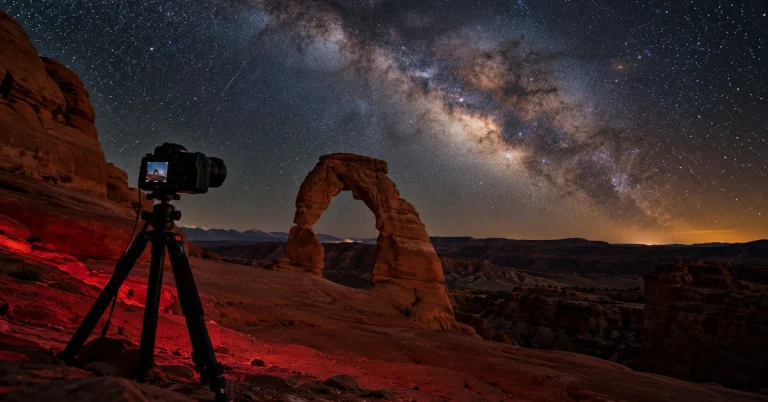
The best tripods for astrophotography are the ones that stay perfectly still for thirty seconds in the dark, in a breeze, on uneven ground, with cold hands working the locks. Astrophotography is the most demanding job a tripod can do, because every exposure is long and every tiny vibration shows up as blurred or doubled stars.
Six tripods below, from a premium carbon travel tripod to a budget aluminum model with thousands of reviews and a dedicated tracker tripod, every one checked for stock, rating and the specifications on the listing. If you are just starting out, read our guide on how to photograph the night sky first, then come back to choose your support.
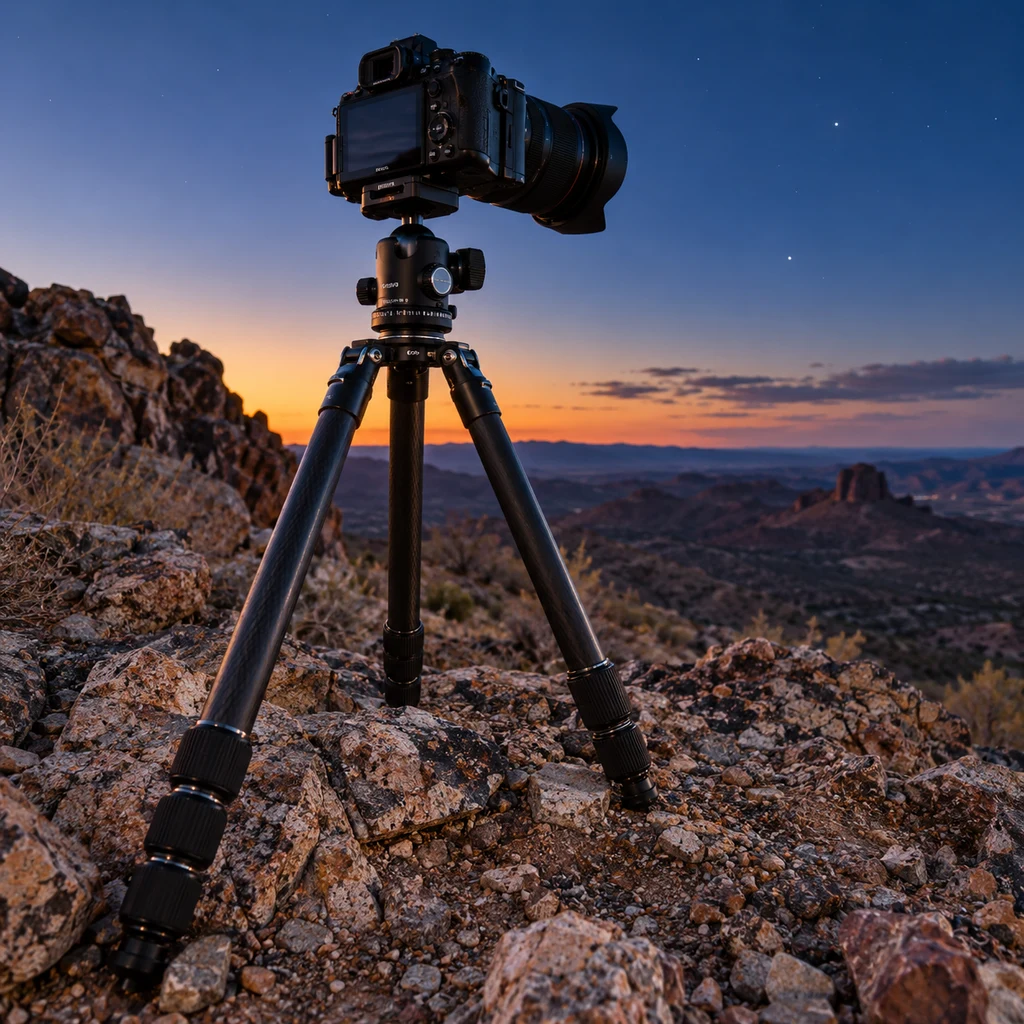
Table of Contents
What Separates the Best Tripods for Astrophotography
Stability is the first test, and it is not the same as weight. A tripod is stable when its legs are stiff, its joints do not flex and its head locks without creeping. A heavy tripod with wobbly leg sections is worse at night than a lighter one that is built tightly.
Then the head. Most photographers use a ball head, which lets you aim at any part of the sky quickly. For night work, the head needs to lock firmly with the camera pointed high, which is where cheap heads droop during the exposure.
Then usability in the dark. Leg locks you can operate by feel, a quick release plate you can mount without looking, and a height that lets you frame a steep overhead shot without kneeling in wet grass. These details matter far more at midnight than they do in a store.
Last, packed size and weight. Dark skies are usually far from the car. If a tripod is too heavy to carry to a ridge or a lakeshore, it stays at home, and the best tripod is always the one you actually bring.
The Best Tripods for Astrophotography at a Glance
| Tripod | Legs | Head | Reviews | Best For |
|---|---|---|---|---|
| Peak Design Travel Tripod Carbon | Carbon | Ball head | 4.6 stars, 659 | Best overall |
| NEEWER Basics TP17B | Carbon | Ball head | 4.6 stars, 3,139 | Best value carbon |
| K&F Concept 64 inch | Aluminum | 36mm ball head | 4.6 stars, 4,401 | Budget |
| K&F Concept 60 inch Carbon | Carbon | 25mm ball head | 4.4 stars, 913 | Monopod option |
| Sky-Watcher Star Adventurer Tripod | Steel | Mount plate | 4.7 stars, 251 | Star trackers |
| Peak Design Travel Tripod Aluminum | Aluminum | Ball head | 4.5 stars, 1,029 | Travel on a budget |
The Six Best Tripods for Astrophotography in Detail
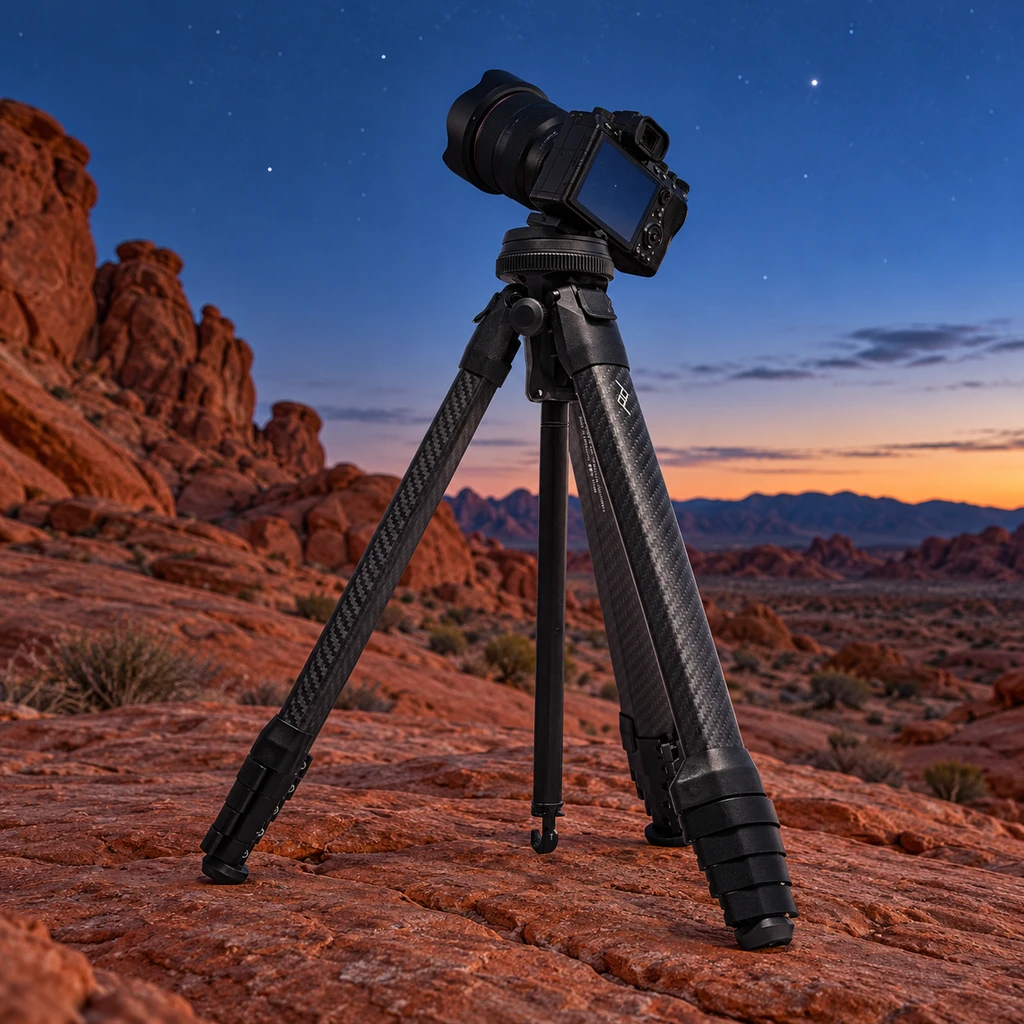
Peak Design Travel Tripod Carbon: Best Overall
Peak Design rethought the travel tripod from scratch, and the result packs down to roughly the diameter of a water bottle. The legs nest tightly around the center column with no gaps, which is why it disappears into a daypack side pocket in a way most tripods never will.
For night work, the speed matters. The legs deploy and lock in seconds without flipping or twisting, and the ball head uses a single adjustment ring, so you can re-aim at a new part of the sky by feel in the dark. Peak Design rates it for up to 20 pounds, enough for a full frame body and a heavy fast lens.
Four point six stars across 659 reviews. It is expensive, and the compact design is not quite as rigid as a big studio tripod in strong wind, so hang your pack from the column on gusty nights.
Specs That Matter
- Legs: carbon fiber
- Capacity: 20 lb, as listed
- Head: ball head with single adjustment ring
- Packed: about the diameter of a water bottle
- Extras: built-in phone mount, can shoot low or inverted
Who It Is For
Photographers who hike to dark skies and want the lightest, most packable serious tripod.
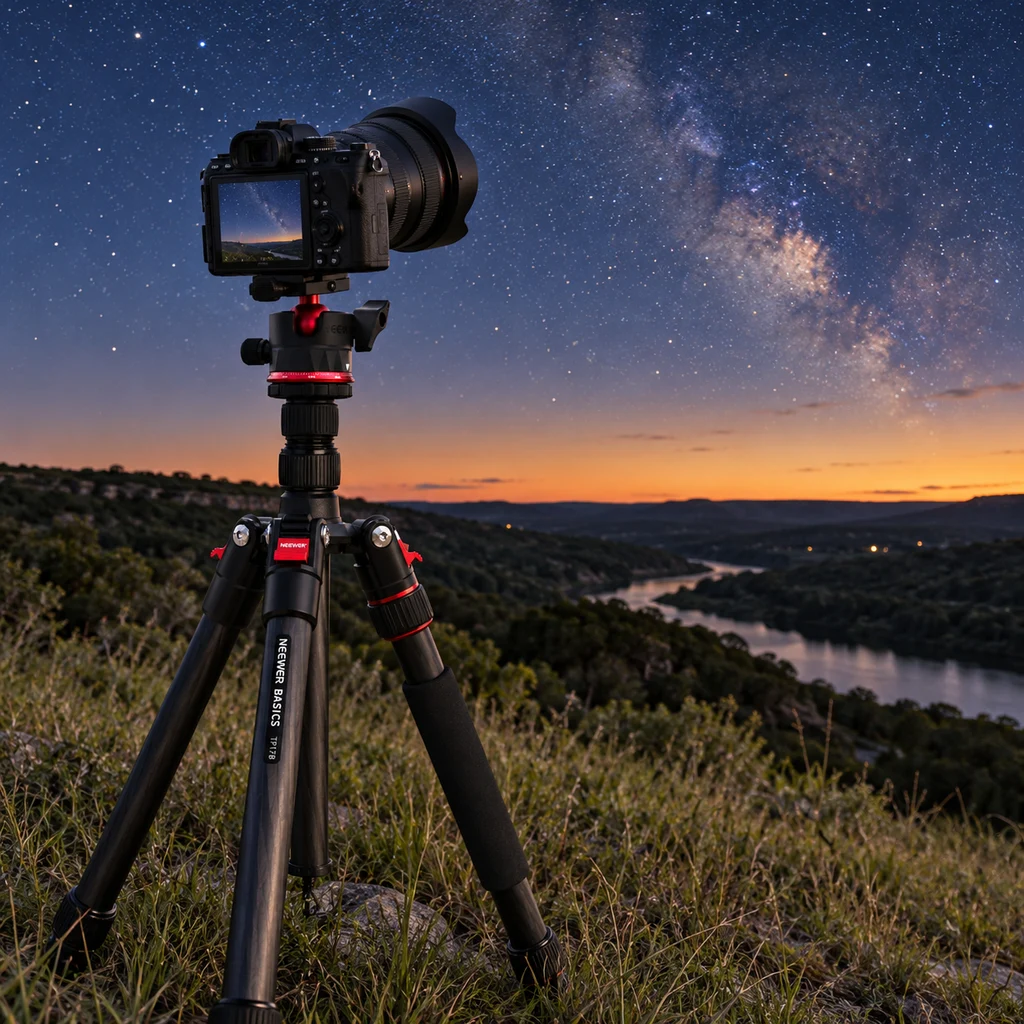
NEEWER Basics TP17B: Best Value Carbon
NEEWER Basics is the brand line built around doing the essentials well, and the TP17B is a carbon fiber travel tripod with 3,139 reviews at 4.6 stars. That review base makes it one of the most proven affordable carbon options available.
It supports up to 13.2 pounds and has a weight hook under the column, which is the single most useful feature for night work: hang a bag from it and the whole tripod settles. The reversible legs fold to 16.3 inches, the legs extend to 47.2 inches and the two section column takes it to 63.8 inches.
A 360 degree ball head and an Arca type quick release plate come in the box, plus a phone holder. Use the column extended only when you must, because every tripod is steadiest with the column down.
Specs That Matter
- Legs: carbon fiber
- Capacity: 13.2 lb, as listed
- Height: 21.3 to 63.8 inches with column
- Folded: 16.3 inches
- Head: 360 degree ball head, Arca type plate
Who It Is For
Anyone who wants carbon stiffness and weight savings without the premium price.
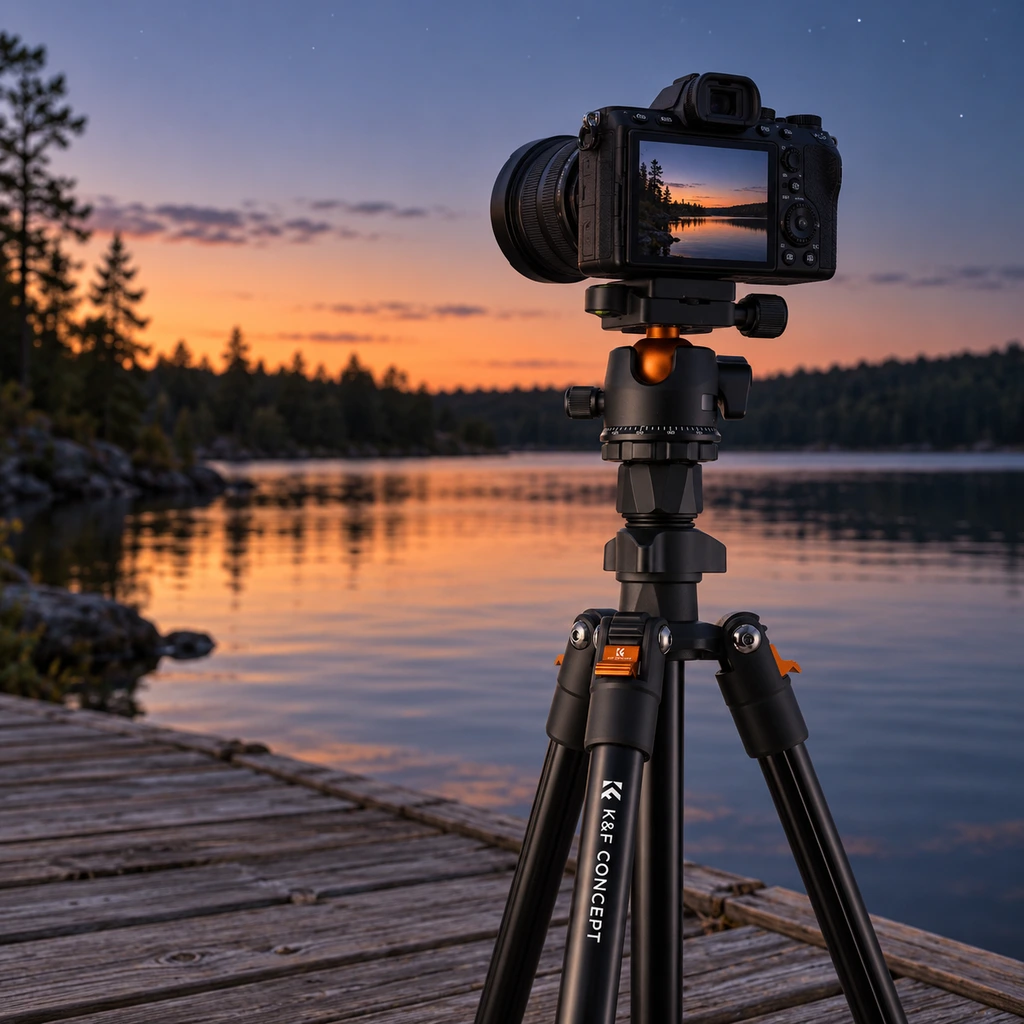
K&F Concept 64 Inch Aluminum: Best Budget
With 4,401 reviews at 4.6 stars, this is the most reviewed tripod on the list and the easiest recommendation for a first night sky setup. Four section aluminum legs adjust from 20.4 to 64.1 inches and fold to 15.5 inches for the carry bag.
The 36mm ball head is rated to 17.6 pounds, which is generous at this price, and the flip leg locks can be opened with one hand. The center column can be mounted inverted for very low angles, handy for putting a foreground rock or tent close to the lens.
Aluminum is heavier than carbon and feels colder to the touch on a frosty night, so pair it with gloves. As a starting tripod it does everything a beginner needs.
Specs That Matter
- Legs: aluminum, four section
- Height: 20.4 to 64.1 inches
- Folded: 15.5 inches
- Head: 36mm ball head, 17.6 lb rated
- Locks: quick flip locks
Who It Is For
Beginners who want a stable, tall tripod for their first Milky Way photos without spending much.
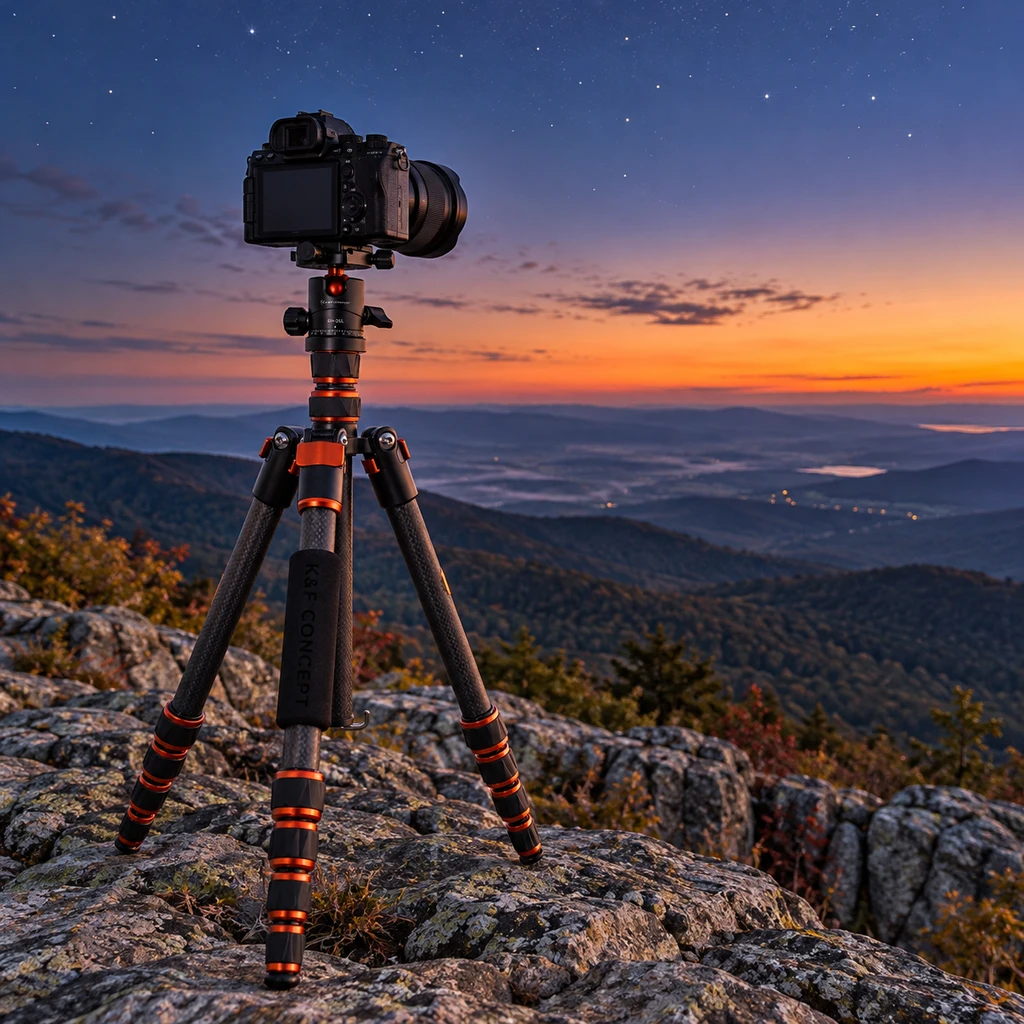
K&F Concept 60 Inch Carbon: Best With a Monopod
K&F Concept also makes this carbon model, and its standout feature is a leg that detaches and joins the column to form a monopod. That is less useful at night, but it makes the tripod a two in one for daytime hiking photography.
Five section legs with metal knob locks run from 18 to 60 inches. More sections mean a shorter packed length, but also more joints, so extend the thickest sections first and leave the thinnest folded when you can for maximum stiffness.
The 25mm ball head is small, rated for 8 kg, and fine for a mirrorless body with a wide lens. Four point four stars across 913 reviews. Heavier lens users should consider a bigger head later.
Specs That Matter
- Legs: carbon fiber, five section
- Height: 18 to 60 inches
- Locks: metal twist knobs
- Head: 25mm ball head, 8 kg rated
- Extras: detachable monopod, inverted column
Who It Is For
Hikers who want a light carbon tripod that doubles as a monopod for daytime shots.
Sky-Watcher Star Adventurer Tripod: Best for Star Trackers
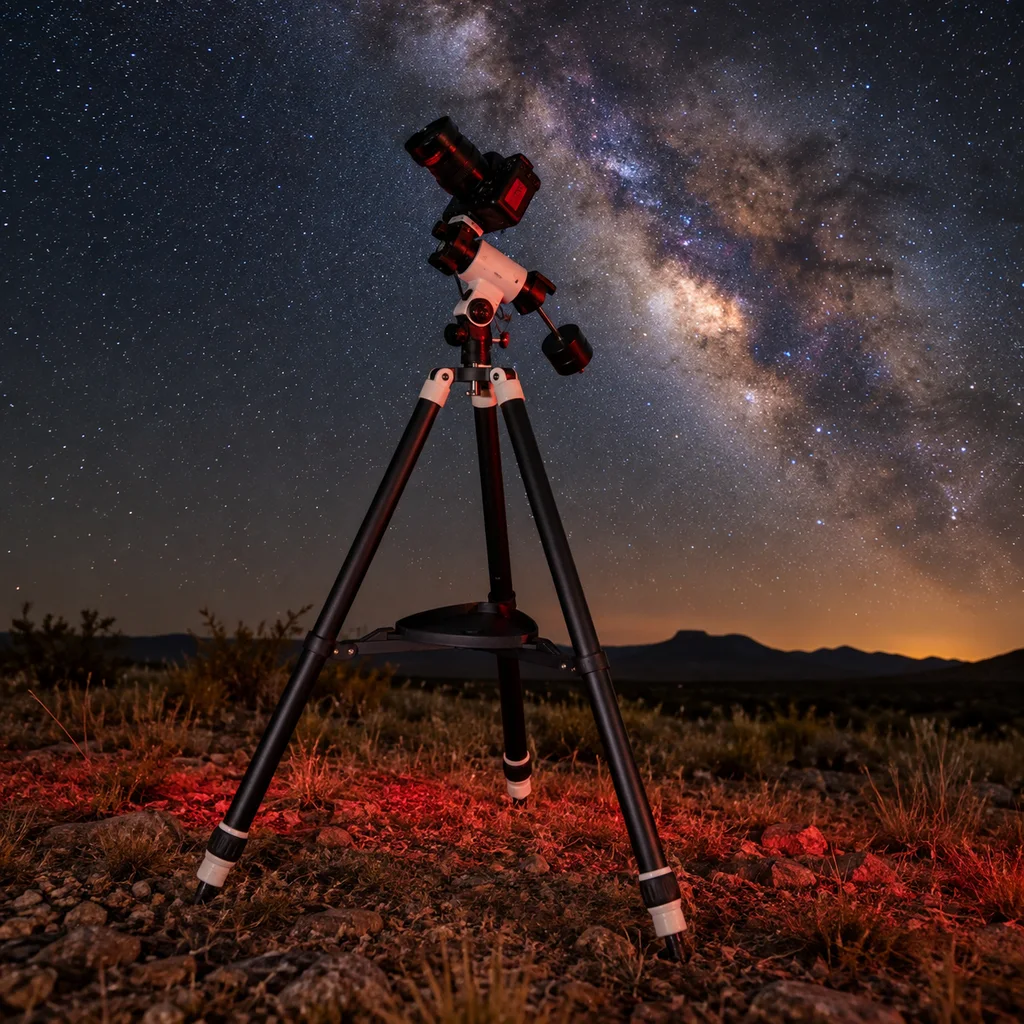
This is a different kind of tripod. It is the accessory tripod Sky-Watcher makes for its Star Adventurer tracking mounts, and it is listed as compatible with the Star Adventurer GTi, the AZ-GT series and the AZ5. A tracker rotates the camera with the sky, much like a small equatorial mount, and it needs a solid, level base.
The design is built for that job: wide spread steel legs and a flat top plate rather than a photo ball head. An accessory tray between the legs adds stiffness and gives you somewhere to put eyepieces, batteries and a red light.
Four point seven stars across 251 reviews. It is not a travel tripod and it has no head of its own, so buy it only if you have or plan to buy a compatible tracker.
Specs That Matter
- Type: accessory tripod for tracking mounts
- Compatible: Star Adventurer GTi, AZ-GT series, AZ5, as listed
- Legs: steel
- Top: flat mount plate, no ball head
- Extras: accessory tray
Who It Is For
Photographers stepping up to a Star Adventurer tracker for long exposures.
Peak Design Travel Tripod Aluminum: Best for Travel on a Budget
The same design as the carbon Peak Design, in aluminum. You get the same compact packed shape, the same fast leg deployment and the same single ring ball head, for noticeably less money.
The tradeoff is weight: aluminum is heavier than carbon, and it transmits a little more vibration. For most wide angle night photography, the difference in stability is small, and the difference in price is not.
Four point five stars across 1,029 reviews, and the same 20 pound capacity as the carbon version. If the carbon Peak Design is over budget, this is the one to buy.
Specs That Matter
- Legs: aluminum
- Capacity: 20 lb, as listed
- Head: ball head with single adjustment ring
- Packed: compact, same design as the carbon model
- Extras: built-in phone mount
Who It Is For
Travelers who want the Peak Design form factor without paying for carbon.
How to Choose the Right Tripod for Night Photography
If You Hike to Your Dark Sky Spot
Go carbon and compact: the Peak Design carbon or the NEEWER TP17B. Weight adds up over a few miles, and a tripod that fits in the side pocket of one of the best hiking daypacks is one you will actually carry. Our night hiking guide covers getting there and back safely.
If You Shoot Near the Car
Weight matters less, so the K&F Concept aluminum is excellent value. Taller, heavier tripods are often more stable, which is an advantage when you are shooting from a pullout or a dispersed campsite.
If You Plan to Use a Tracker
Buy the Sky-Watcher tripod with your tracker, or a heavy photo tripod with a strong head. Trackers add weight high up and need precise polar alignment, so a flimsy tripod undoes the whole point of tracking.
What the Specifications Mean
Carbon Against Aluminum
Carbon fiber is lighter, damps vibration better and feels less cold in your hands at night. Aluminum is cheaper and tough, but heavier. For long exposures, both work if the tripod is well built.
Load Capacity
A listed capacity is the maximum the tripod will hold, not what it holds perfectly still. Aim for a capacity at least two to three times the weight of your camera and lens, especially if you shoot in wind.
Quick Release Plates
Most modern tripods use Arca-Swiss style plates, which fit many heads and accessories. Leave the plate screwed to your camera so mounting in the dark is one motion.
Leg Sections and Column
More sections pack shorter but add joints that can flex. Extend the thicker sections first, and keep the center column down whenever you can, because a raised column is the least stable part of any tripod.
Getting the Sharpest Stars From Your Tripod
Set up on firm ground, spread the legs fully and hang a bag from the hook if your tripod has one. Turn off image stabilization on the lens and camera, because it can actually introduce blur when the camera is locked down.
Use a two second timer or a remote release so pressing the shutter does not shake the camera, and shield the tripod from wind with your body or a vehicle. For star trails and other long exposure photography, check that nothing has shifted between frames.
After a damp night, extend the legs and let them dry indoors before packing them away, and wipe grit from the leg locks. A little care keeps them smooth for years. Pair your setup with a red light from our list of the best headlamps for camping so you can work the controls without ruining your night vision.
If you want to look as well as shoot, a tripod also steadies binoculars for long viewing sessions; see our picks for the best binoculars for stargazing. For planning your first nights out, our stargazing for beginners guide and our preview of the Orionid meteor shower are good places to start.
Frequently Asked Questions
Do I need an expensive tripod for astrophotography?
No. Any tripod that stays completely still for 30 seconds works for wide angle Milky Way shots. Spending more buys lighter weight, smaller packed size and better heads, not sharper stars on its own.
Is carbon fiber worth it for night photography?
If you carry the tripod any distance, yes. Carbon is lighter, damps vibration and is more comfortable to handle in the cold. If you shoot next to the car, aluminum is fine.
What tripod height do I need?
Enough to reach eye level without raising the center column is ideal. Many night shots are framed low anyway, so a compact tripod that is slightly short is rarely a real problem.
Can I use a travel tripod with a star tracker?
Light trackers can work on a sturdy travel tripod, but a heavier tripod or a dedicated one like the Sky-Watcher is more stable and easier to polar align.
How do I stop my tripod from shaking in the wind?
Keep the column down, spread the legs wide, hang weight from the hook, shield it with your body or car, and shoot shorter exposures on gusty nights.
For most photographers, the Peak Design Travel Tripod Carbon tops our list of the best tripods for astrophotography: light, fast to set up in the dark and small enough to carry to any dark sky. The NEEWER TP17B is the value carbon choice, and the K&F Concept aluminum is the easy way to start. Planning a night out? Our fall camping essentials will keep you warm while the sky gets dark, and our best telescopes for beginners guide is there when you are ready to look deeper.
Discover more from Maive Verse
Subscribe to get the latest posts sent to your email.