

This post may contain affiliate links. If you buy through them, we may earn a small commission at no extra cost to you.
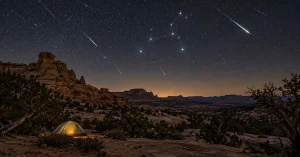
The Leonid meteor shower returns every November, and it is one of the best reasons to brave a cold night outside. Leonid meteors are the fastest of the year, often bright, and occasionally leave glowing trails that hang in the sky for a second or two after the streak fades. In a typical year you can expect 10 to 15 meteors an hour under a dark sky, and the shower has a famous history of producing true meteor storms.
This guide covers when the Leonids peak in 2026, why the shower happens, where to look, how to pick a viewing spot, what to wear and bring, and how to photograph it. If you are new to the night sky, start with our stargazing for beginners guide, and if you caught last month’s display, our Orionid meteor shower guide explains how the two showers differ.
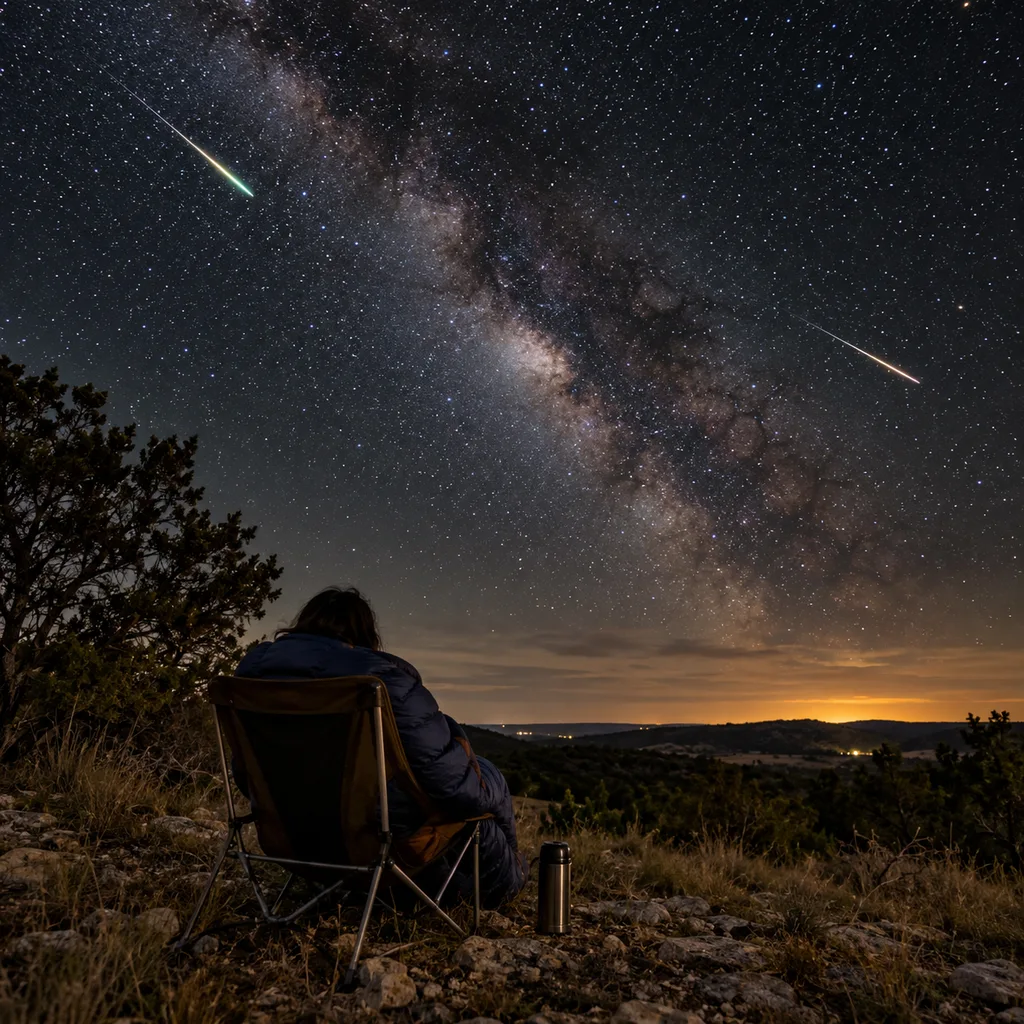
Table of Contents
When to Watch the Leonid Meteor Shower in 2026
Peak Dates
The Leonids are active from early November until early December, but the strongest activity comes on the mornings of November 17 and 18. Rates build for several nights before the peak and taper slowly after it, so the nights on either side are still worth a look if the weather spoils the peak.
The Best Hours of the Night
The meteors appear to come from a point in the constellation Leo, which rises in the east around midnight. Before Leo is up you will see very few Leonids. The best window is from about 2 a.m. until the first light of dawn, when Leo is high in the southeast and your side of Earth faces directly into the stream of debris.
The Moon in 2026
In 2026 the peak falls about a week after new moon, so the Moon is close to first quarter and sets around midnight. That leaves the best pre-dawn hours dark, which is good news: moonlight is the biggest enemy of faint meteors. Check a moonrise and moonset table for your town the week before.
| Date | Activity | What to Expect |
|---|---|---|
| Nov 6 to 14 | Building | A few Leonids an hour, mixed with random meteors |
| Nov 15 to 16 | Strong | Rates climbing, worth an early morning session |
| Nov 17 to 18 | Peak | Around 10 to 15 an hour under dark skies |
| Nov 19 to 30 | Fading | Occasional bright meteors, low rates |
Why the Leonids Happen
Comet Tempel-Tuttle
Every November, Earth passes through a trail of dust and grit shed by comet 55P/Tempel-Tuttle, which loops around the Sun every 33 years. Each particle is tiny, most no bigger than a grain of sand, but it hits the upper atmosphere so fast that it heats the air around it until it glows. The Leonids entry on Wikipedia has a good summary of the comet’s orbit.
The Fastest Meteors of the Year
Leonids strike the atmosphere at about 44 miles per second, because Earth meets the debris almost head on. That speed is why they look so quick and bright, and why many leave a persistent train, a faint glowing smoke trail that can drift and twist for a few seconds.
A History of Meteor Storms
When Earth passes through a fresh, dense strand of comet debris, the Leonids can produce a storm. The 1833 storm, with thousands of meteors an hour over North America, effectively launched modern meteor science, and the 1966 storm was even stronger for observers in the western United States. Strong outbursts also came from 1999 to 2002. No storm is forecast for 2026, but the shower still produces some of the brightest fireballs of the year.
Where to Look in the Sky
Find the Radiant in Leo
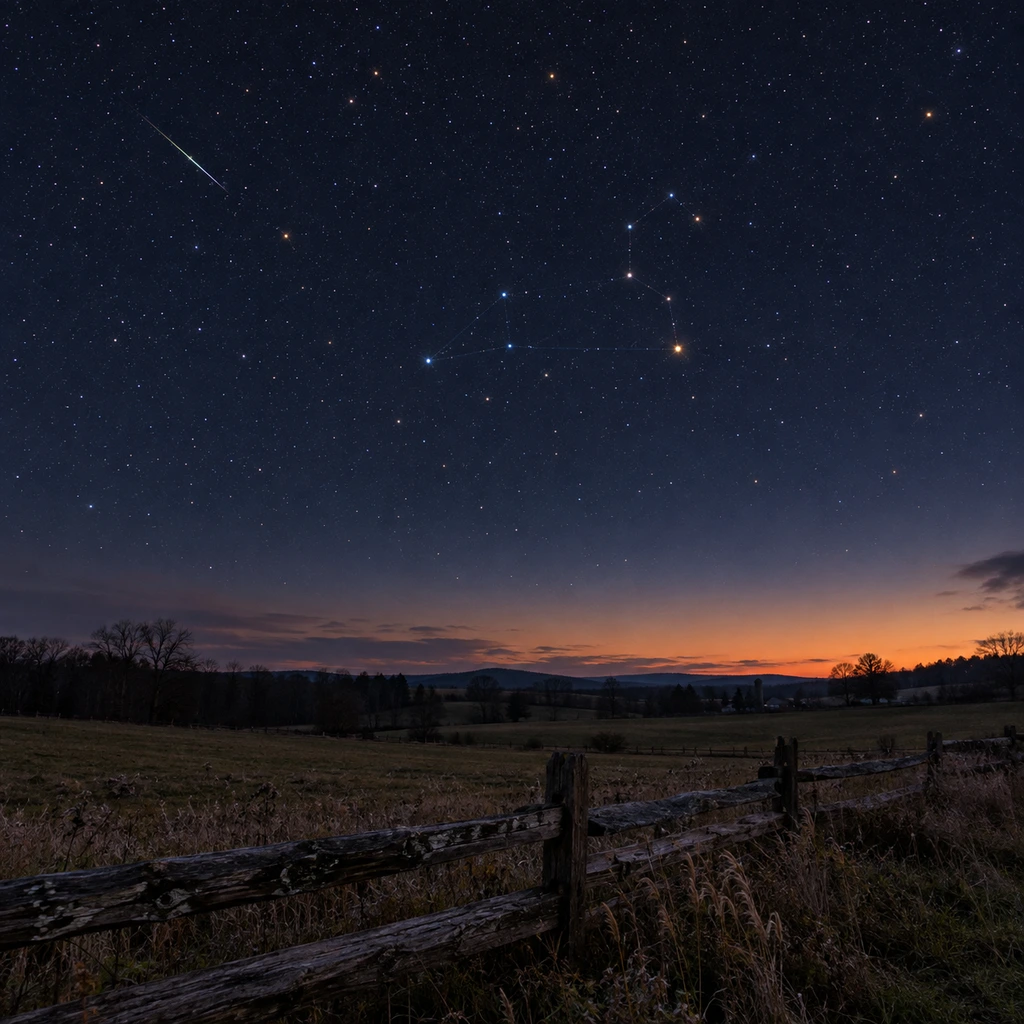
The radiant is the point the meteors seem to stream away from, and for the Leonids it sits in the Sickle of Leo, a backward question mark of stars that forms the lion’s head. You do not need to find it to see meteors, but it helps you tell a Leonid from a random meteor: trace a Leonid’s path backward and it should point toward Leo.
Do Not Stare at the Radiant
Meteors near the radiant look short because they are coming almost straight at you. The longest and most impressive streaks appear 40 to 60 degrees away from it. Face east or southeast, then lean back and take in as much of the sky as you can, roughly halfway between the horizon and straight overhead.
How to Choose a Viewing Spot
Get Away From City Lights
Light pollution washes out all but the brightest meteors. Use a light pollution map or the Bortle scale to find a darker site, ideally a rural area at least an hour from a city. Public lands are a good option, and our guide to dispersed camping explains how to camp legally on them, while our free camping spots guide helps you find a site.
Look for a Wide Open Horizon
A field, a beach, a desert or a mountain meadow gives you the most sky. Trees and buildings cut off the low parts of the sky where many long meteors appear. A spot with a clear view to the east and south is ideal for the Leonids.
Check the Weather and Cloud Cover
Clear skies matter more than anything else. Check a cloud cover forecast the day before and again that evening, and have a backup site in mind. Cold, dry air after a front passes often gives the crispest skies of the month.
What to Bring for a Night of Meteor Watching
A Reclining Chair or Sleeping Pad
Comfort keeps you outside long enough to see the show. A zero gravity recliner like the Best Choice Products Zero Gravity Chair lets you lie back without a stiff neck, and our best reclining camping chairs list covers lighter options you can carry to a remote spot. A foam sleeping pad on the ground works too.
Dress for a Cold November Night
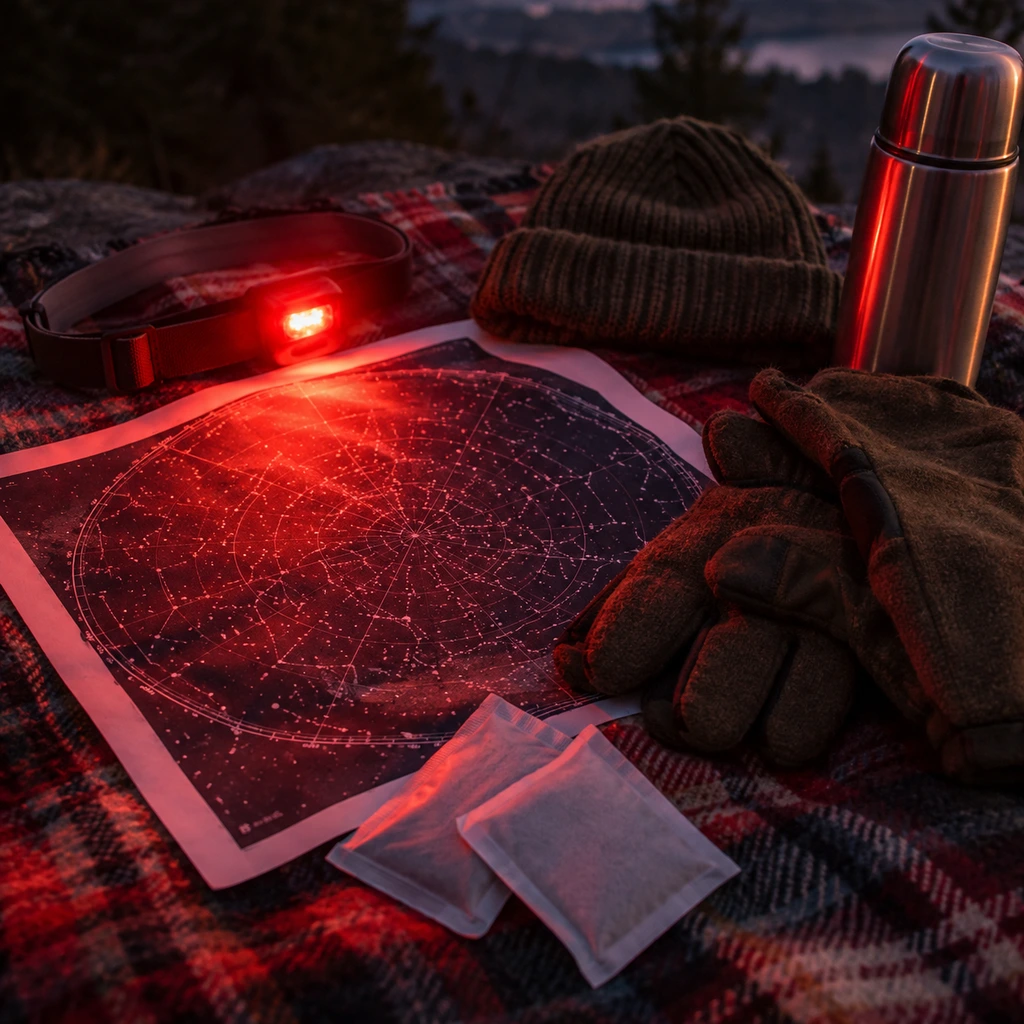
Mid November nights can drop below freezing even in the South, and sitting still makes it feel colder. Wear a base layer, an insulated jacket, a warm hat, gloves and thick socks, and bring a sleeping bag to wrap around you. Our guide on how to layer for hiking and these cold weather camping tips apply just as well to a night of sky watching.
A Red Light Headlamp
Your eyes need 20 to 30 minutes to adapt to the dark, and a single glance at a white light resets them. Use a headlamp with a red mode, like the Black Diamond Spot 400-R, for setting up and reading a chart. Our article on how many lumens you need in a camping headlamp explains why more is not always better at night.
Binoculars Are Optional
You do not need optics to see meteors, since they move too fast and cover too much sky. Binoculars are still a great companion for the long gaps between meteors. A pair like the Celestron SkyMaster 15×70 shows star clusters and the Andromeda Galaxy, and our best binoculars for stargazing list has lighter choices. Our guide on how to find the Andromeda Galaxy gives you something to aim at.
How to Photograph the Leonid Meteor Shower
Camera Settings
Put your camera on a sturdy tripod, set manual focus to the stars, and use your widest lens at its widest aperture. Start around ISO 1600 to 3200 with exposures of 15 to 25 seconds, then shoot continuously with an intervalometer. Meteors are luck, so the more frames you take, the more you catch. Our guide on how to photograph the night sky walks through focusing and settings step by step.
Tripod and Composition Tips
Frame some landscape at the bottom for scale, aim the camera 45 degrees or so away from Leo, and keep the lens free of dew with a hand warmer strapped around the barrel. A stable tripod from our best tripods for astrophotography list will keep long exposures sharp in the wind.
Counting Meteors and Reporting What You See
Counting turns a pleasant night into a small piece of citizen science. Note the time, how many Leonids you see, and how many random meteors cross the sky. The American Meteor Society collects reports from observers and logs bright fireballs, and your counts help scientists measure the strength of each year’s shower.
If clouds roll in, do not give up on the season. The Geminids in mid December are richer still. In between, try a beginner telescope and our tips on how to use a telescope to keep exploring.
Frequently Asked Questions
When is the Leonid meteor shower in 2026?
It is active from early November to early December, with the peak on the mornings of November 17 and 18. The best hours are from about 2 a.m. until dawn.
How many meteors will I see?
Under dark skies, expect about 10 to 15 an hour at the peak. From a suburb you might see a handful, which is why getting away from city lights matters so much.
Which direction should I look?
Face east or southeast and look about halfway up the sky. Meteors can appear anywhere, so take in as wide a view as you can.
Do I need a telescope or binoculars?
No. Your eyes are the best tool because they cover the most sky. Binoculars are only useful for exploring stars and clusters between meteors.
Will there be a Leonid meteor storm this year?
No storm is expected in 2026. The next favorable return of the parent comet is in the early 2030s, when forecasters will watch closely for another outburst.
The Leonid meteor shower rewards anyone willing to set an alarm, drive somewhere dark and sit back under the stars. Watch in the hours before dawn on November 17 and 18, dress warmer than you think you need, keep your eyes adapted to the dark, and give it at least an hour. Then share what you saw with a friend and start planning for the Geminids.
Discover more from Maive Verse
Subscribe to get the latest posts sent to your email.