

This post may contain affiliate links. If you buy through them, we may earn a small commission at no extra cost to you.
The best telescopes for kids are simple enough to set up in five minutes, sturdy enough to survive a curious eight year old, and good enough to show the craters of the Moon and the rings of Saturn on the first night. That last part matters most. A wobbly toy scope that shows a blurry smudge can put a child off astronomy for years, while the right one can start a lifelong hobby. With the Geminid meteor shower arriving in mid December, a telescope under the tree is perfect timing.
We checked six popular telescopes on Amazon for rating, stock and real specifications, and matched each to an age and type of kid. You will find picks for young children, tech loving tweens and serious teenagers. If you are shopping for an adult, see our list of the best telescopes for beginners instead, since the priorities are a little different.
Table of Contents
What to Look for in the Best Telescopes for Kids
Three things matter more than anything printed in large type on the box. First is aperture, the diameter of the main lens or mirror. More aperture gathers more light and shows more detail, and 70mm is about the minimum for satisfying views of the Moon and planets. Second is the mount. A steady mount that moves smoothly is worth more than any amount of magnification, because a shaky view is frustrating for small hands. Third is simplicity. A telescope a child can set up and aim on their own will get used far more often than one that needs a parent every time.
Ignore huge magnification claims. Every telescope has a useful limit, roughly twice its aperture in millimeters, and pushing past it just makes the image dimmer and blurrier. The six scopes below are honest about what they can do.
The Best Telescopes for Kids at a Glance
| Telescope | Best For | Aperture | Type | Rating |
|---|---|---|---|---|
| Celestron AstroMaster 70AZ | Best overall, ages 8+ | 70mm | Refractor on tripod | 4.4 (3,700+) |
| Celestron FirstScope Signature Moon | Best for young kids | 76mm | Tabletop reflector | 4.3 (480+) |
| Celestron StarSense Explorer 130 Tabletop | Best app guided | 130mm | Tabletop reflector | 4.5 (110+) |
| Sky-Watcher Heritage 150 | Best for serious teens | 150mm | Tabletop Dobsonian | 4.2 (100+) |
| NASA Lunar Telescope | Best budget Moon scope | Small refractor | Tabletop tripod | 4.1 (7,000+) |
| Gskyer 70mm | Best for phone photos | 70mm | Refractor on tripod | 4.3 (21,000+) |
Our Six Kids Telescope Picks in Detail
Each pick links to its current Amazon listing. Prices change often through the holiday season, so check the listing for today’s price.
Celestron AstroMaster 70AZ: Best Overall
The AstroMaster 70AZ is the telescope we would hand most kids aged eight and up. Its fully coated 70mm refractor gives crisp views of lunar craters, the moons of Jupiter and the rings of Saturn, and it goes together in minutes with no tools. The adjustable tripod lowers far enough for a child to look through comfortably and raises for adults.
A simple panhandle moves the scope up, down and sideways, and the erect image diagonal shows the view the right way up, which means it doubles as a spotting scope for birds and wildlife by day. It ships with 20mm and 10mm eyepieces, a red dot finder and a two year US warranty from Celestron.
Specs That Matter
- Aperture: 70mm refractor
- Mount: manual alt-azimuth with panhandle
- Eyepieces: 20mm and 10mm
- Warranty: 2 years
Who It Is For
Kids aged 8 to 14 who want to see the Moon and planets, and families who want one scope to share.
Celestron FirstScope Signature Moon: Best for Young Kids
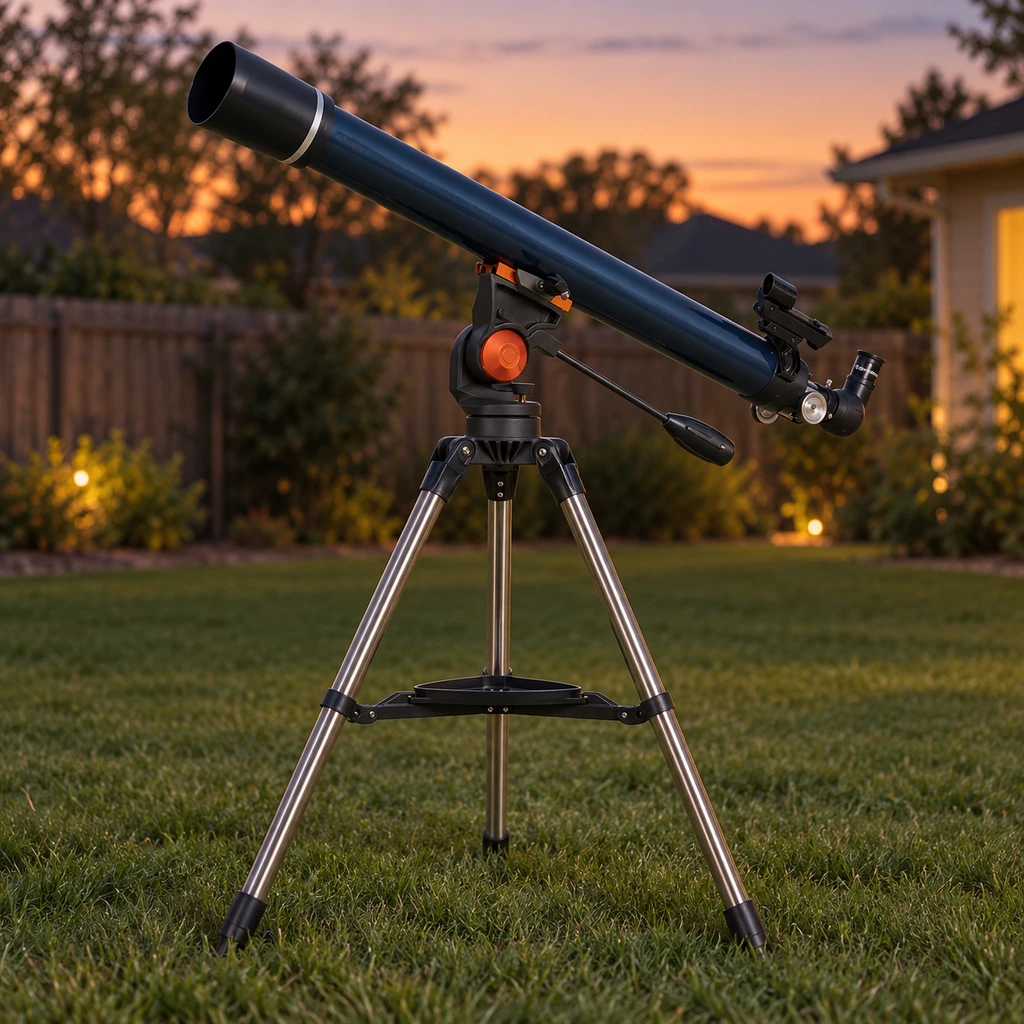
The FirstScope is a small tabletop reflector that sits on a picnic table or sturdy stool, so there is no tripod to knock over. A child just grabs the tube and points it, which is exactly the right level of complexity for ages six to ten. The Signature Series version is decorated with Moon artwork, which makes it feel like a special gift rather than a piece of equipment.
Its 76mm mirror gives bright, sharp views of the Moon and shows Jupiter’s moons as bright points beside the planet. It is also light enough for a child to carry outside on their own. Celestron backs it with the same two year US warranty as its bigger scopes.
Specs That Matter
- Aperture: 76mm reflector
- Mount: tabletop Dobsonian style base
- Setup: point and look, no tripod
- Warranty: 2 years
Who It Is For
Children aged 6 to 10, first time stargazers, and families who want something quick to grab on a clear night.
Celestron StarSense Explorer 130 Tabletop: Best App Guided
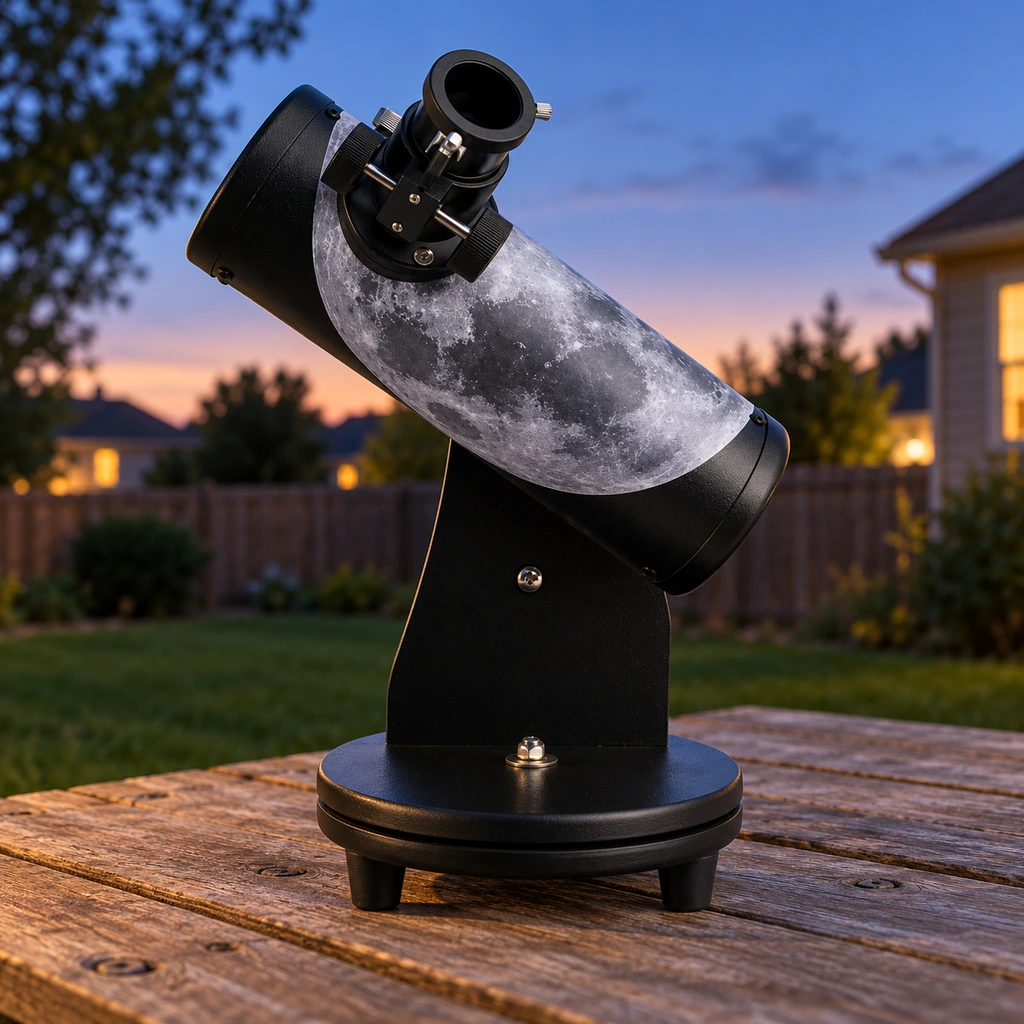
Finding things is the hardest part of astronomy, and this telescope solves it. Dock a smartphone on the tube, open the StarSense Explorer app, and it recognizes the star pattern overhead and shows arrows guiding you to your target. When the bullseye turns green, the object is in the eyepiece. It even builds a list of the best things to see tonight from your location.
Behind the app is a genuinely capable 130mm reflector on a tabletop base, with enough light gathering power for the Orion Nebula, star clusters and the Andromeda Galaxy as well as the Moon and planets. It is the perfect match for a tween or teen who already lives on their phone.
Specs That Matter
- Aperture: 130mm reflector
- Guidance: StarSense Explorer phone app
- Mount: manual tabletop base
- Warranty: 2 years
Who It Is For
Tech loving kids aged 10 and up, and parents who do not know the night sky themselves.
Sky-Watcher Heritage 150: Best for Serious Teens
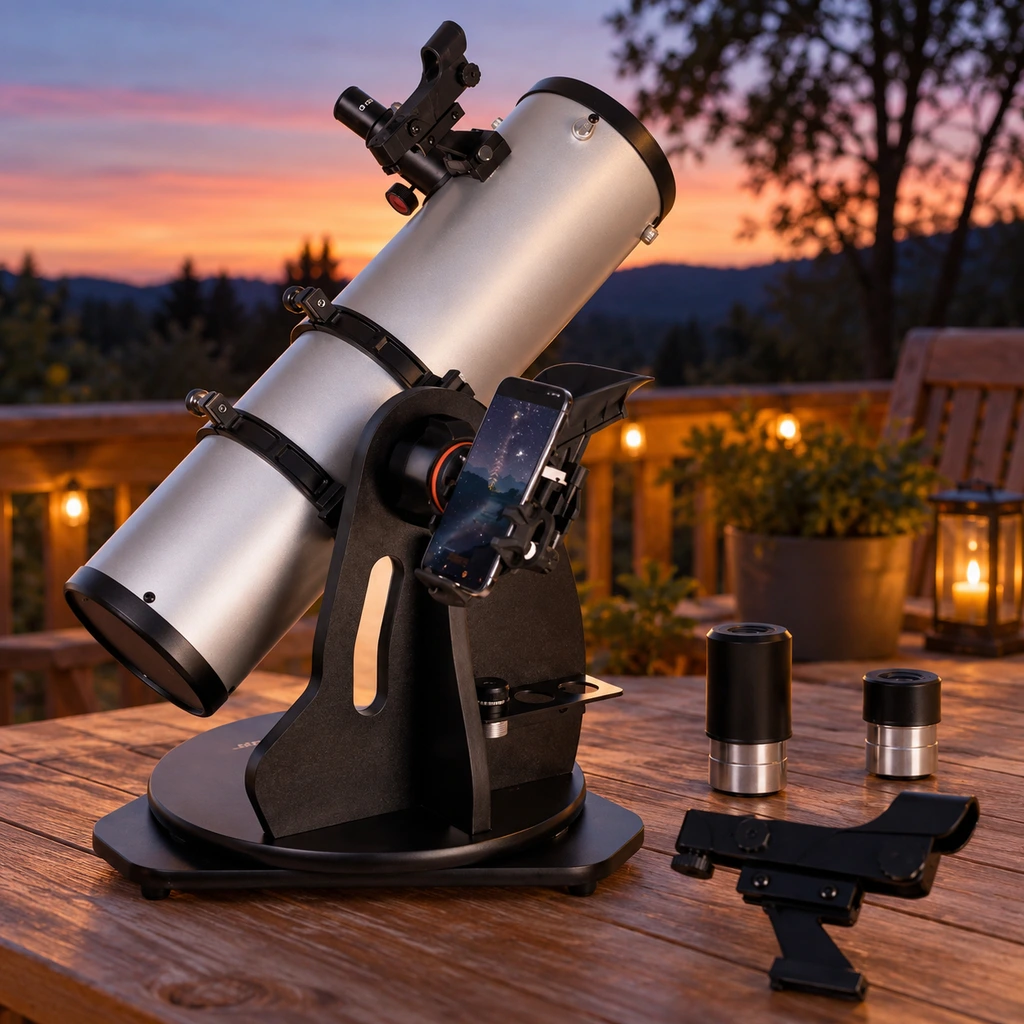
For a teenager who is already hooked, the Heritage 150 delivers far more than its compact size suggests. Its 150mm parabolic mirror gathers about four and a half times as much light as a 70mm scope, so galaxies, nebulae and star clusters become real objects rather than faint smudges. The f/5 design gives wide, bright views.
The tube collapses for storage and carrying while holding its alignment, and the tabletop base has rubber feet to cut vibration. A 1.25 inch helical focuser makes fine focusing smooth. It needs a sturdy table or stool outdoors, but it is the most telescope for the money on this list.
Specs That Matter
- Aperture: 150mm parabolic mirror
- Focal length: 750mm, f/5
- Tube: collapsible
- Focuser: 1.25 inch helical
Who It Is For
Teens aged 13 and up who want to go beyond the Moon, and young astronomers ready for a real step up.
NASA Lunar Telescope: Best Budget Moon Scope
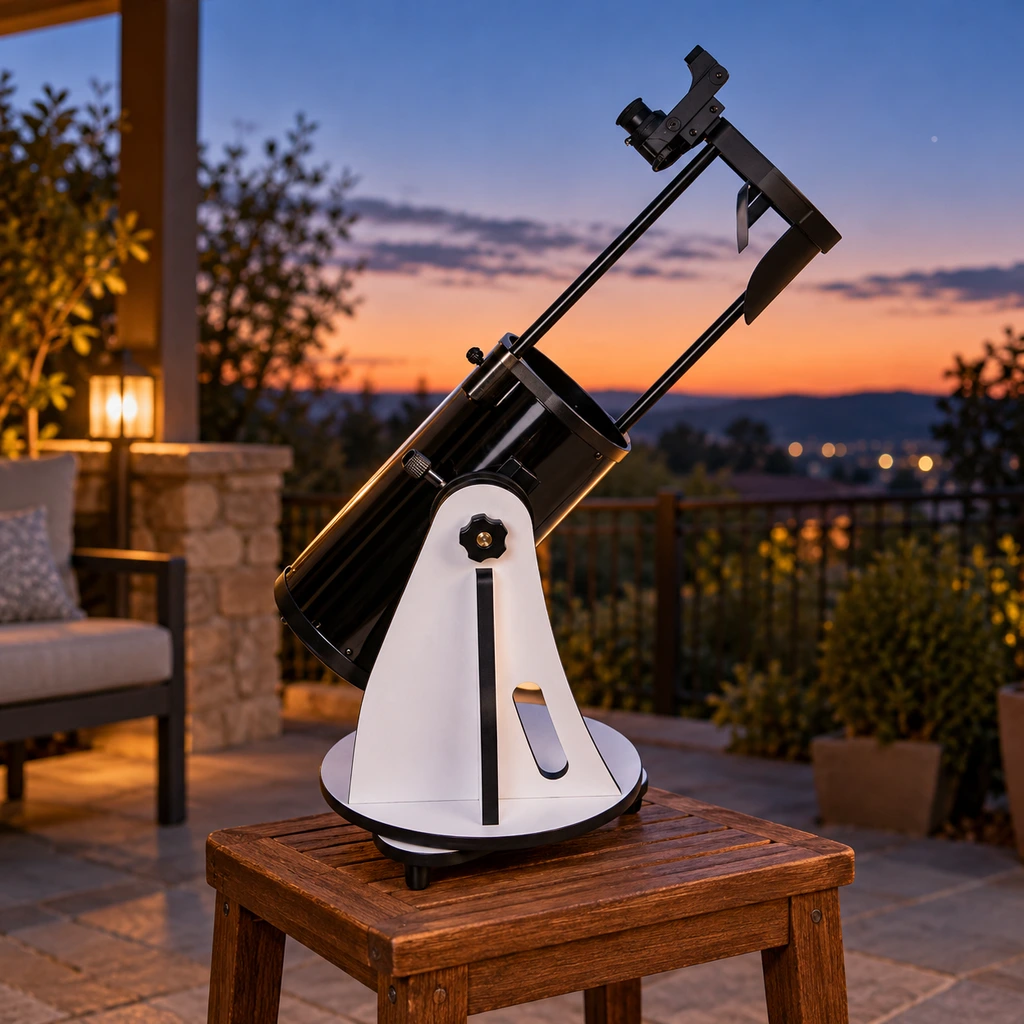
The NASA Lunar Telescope from Blue Marble, a Toy of the Year award winner, is designed for one job: showing kids the Moon in detail. It comes with a finder scope, low and high power eyepieces and a tabletop tripod, and its NASA branding makes it an instant hit with space fans aged eight to twelve.
Set expectations honestly. This is a Moon telescope, not a planet hunter, and it works best at lower magnification. As a first gift that teaches a child how to find and focus on an object, it does its job well, and with more than 7,000 ratings it is one of the most popular kids scopes on Amazon.