
This post may contain affiliate links. If you buy through them, we may earn a small commission at no extra cost to you.
Autumn is the best fishing of the year and the most overlooked. These fall fishing tips cover what actually changes when the water cools: where the fish move, when they feed, and how to adjust the way you fish so the shorter days work in your favour rather than against you.
The short version is that fish spend autumn eating. Cooling water pushes their metabolism into a comfortable range and winter is coming, so they feed hard and they feed on bigger prey. The angler who shows up in September with a summer approach catches a fraction of what is available. It is the same seasonal shift that moves birds through in waves and makes autumn footwear worth sorting out before the ground turns.
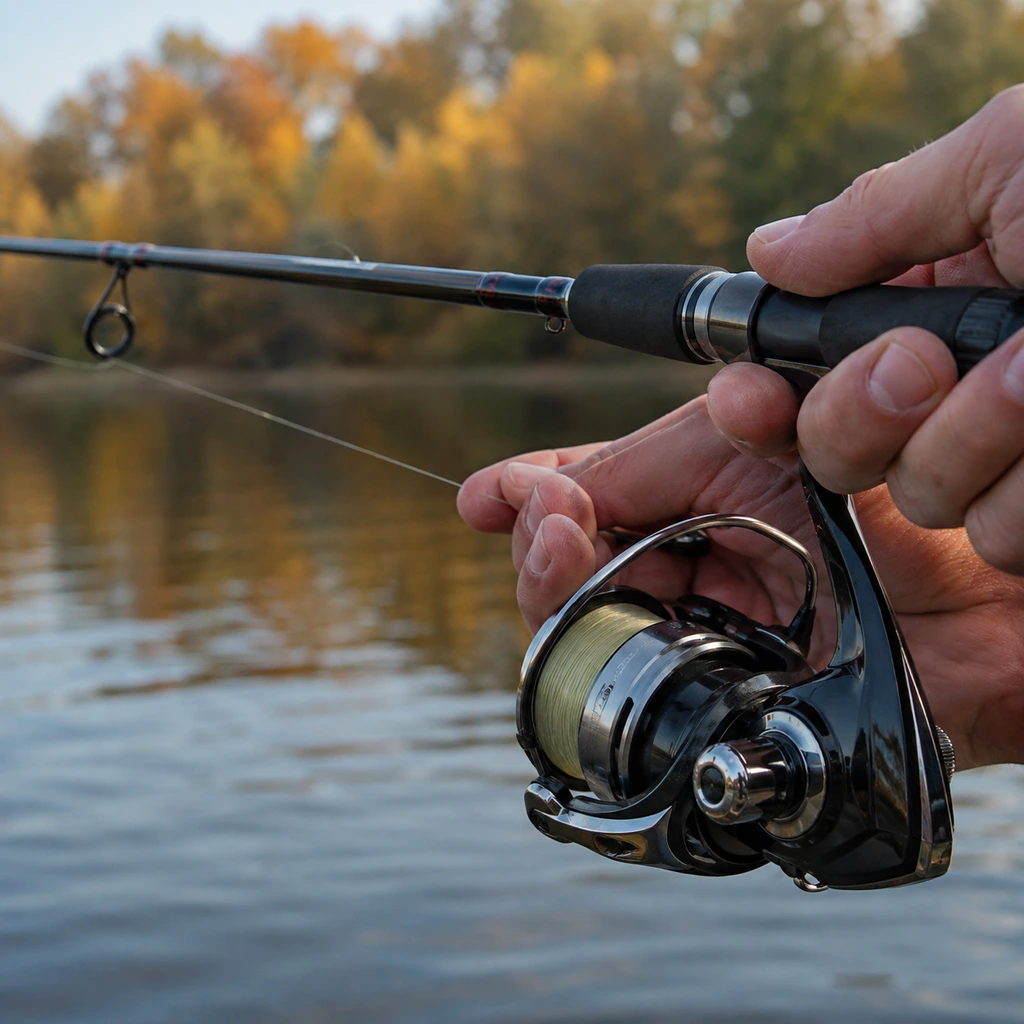
Table of Contents
What Changes When the Water Cools
Cooling Water Wakes Fish Up
Through the peak of summer, surface water in most lakes sits above the comfortable range for bass, walleye and trout, so they hold deep or in shade and feed in short windows at dawn and dusk. Once the surface drops back through the 70s and into the 60s, that whole layer becomes usable again. Fish spread out, move shallower, and stay active for far more of the day.
The Fall Feed
Baitfish spawned in spring reach a decent size by autumn, so the buffet is bigger than it has been all year. Predators respond by targeting larger prey and eating more of it. That single fact drives half the advice below: bigger baits, faster retrieves, and a willingness to move until you find the school. It is the water version of the pre winter feeding you notice when birds hit a garden feeder in October.
Shorter Days, Tighter Windows
Sunset arrives earlier every week from here, which compresses an after work session into something you have to plan. It also flips the best hours: in summer you fish the edges of the day, in autumn the warmest part of the afternoon is often the most productive. If you do fish into dusk, treat it the way you would walking a trail after dark and carry a headlamp rather than relying on your phone.
Fall Fishing Tips: The 9 That Matter
In rough order of how much difference each one makes.
1. Follow the Water Temperature, Not the Calendar
Autumn arrives at different times on different water. A shallow pond turns over weeks before a deep reservoir at the same latitude. Carry a cheap thermometer or read the surface temperature off your fish finder, and treat the low 60s as the signal that the fall pattern has started rather than any particular date.
2. Fish the Warmest Part of the Day
This is the hardest habit to break for anyone who learned to fish in summer. As water cools, the afternoon sun lifts the shallows a degree or two and that is enough to concentrate bait and predators. From late September onward, 11am to 4pm often beats first light.
3. Go Bigger on Your Baits
Match the size of the forage, which by autumn means a longer profile than you used in June. Move up a size on your swimbaits, crankbaits and spinnerbaits. A fish that is trying to put on weight before winter will take a big meal over a small one nearly every time.
4. Work the Wind Blown Bank
Wind stacks plankton against the downwind shore, baitfish follow the plankton, and predators follow the baitfish. It makes casting less pleasant and it is usually where the fish are. Start on the bank the wind is blowing into and give it twenty minutes before you decide it is not working.
5. Follow the Bait, Not the Map
In spring you fish structure. In autumn you fish bait. Look for surface flickers, diving birds, or the tight cloud on your sonar, and be prepared to leave a spot that produced last week. Autumn schools roam, and a promising point with no bait on it is an empty point.
6. Fish Shallower Than You Think
As the surface cools the deep summer haunts empty out. Fish push into 2 to 8 feet of water, into creek arms, and onto flats adjacent to deeper water. Plenty of good autumn fish are caught within a rod length of the bank.
7. Slow Down After a Cold Front
The day after the first hard front of autumn is usually poor, and the fish sit tight rather than chasing. That is the day for a slow presentation on or near the bottom: a jig, a soft plastic worked in place, a live bait under a float. Then go back to fast moving baits once the weather settles.
8. Cover Water Fast, Then Commit
Use a moving bait to search: a spinnerbait, a lipless crankbait, a swimbait, retrieved at a pace that lets you fish a hundred yards of bank in ten minutes. When you get a bite, stop and work that stretch thoroughly. Autumn fish group up, so one bite is usually not one fish.
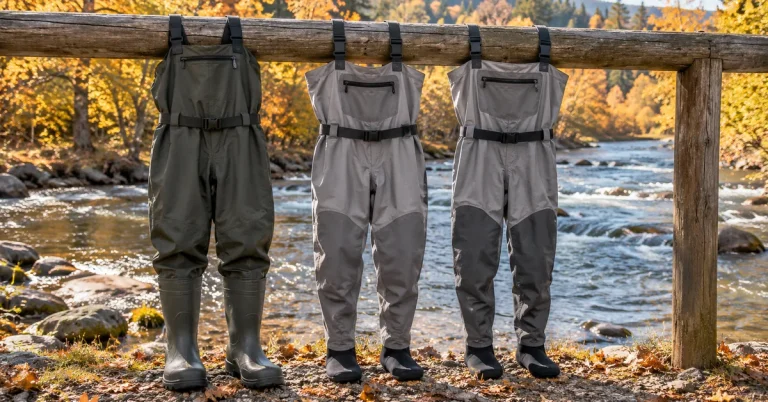
9. Dress for the Water, Not the Car Park
It is 10 degrees colder on the water than in the parking lot, more if there is any wind, and standing still on a bank all afternoon is nothing like walking. The same layering logic as layering for hiking applies: a wool or synthetic base, an insulating mid layer, and a shell you can actually cast in.
Where the Fish Are in Autumn
Lakes and Reservoirs
Start in the creek arms and the backs of coves, which cool first and hold bait longest, then work the main lake points as autumn deepens. Wind blown banks and any hard bottom next to a drop off are worth a pass every time you go past.
Rivers
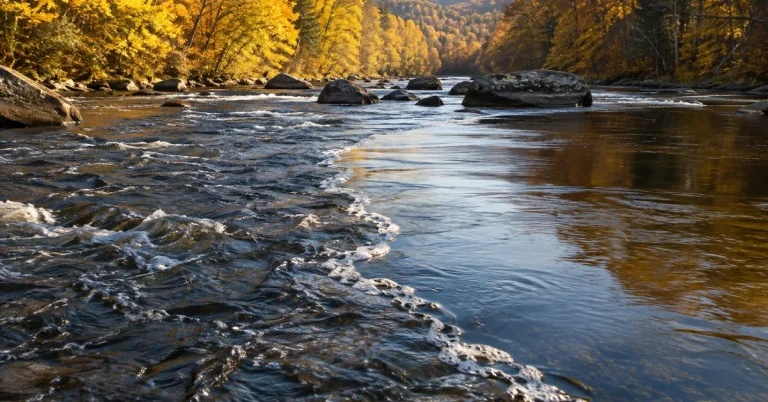
Cooling water and lower autumn flows push fish into predictable places: the slack water behind boulders, the seam where fast water meets slow, and the deeper holes below riffles. Rivers fish well later in the season than lakes because moving water cools more evenly. If you are floating rather than walking the bank, an inflatable kayak opens up water you cannot reach on foot, and the safety limits are worth reading first.
Ponds and Small Water
Small water is the best place to learn the fall pattern because you can read all of it in an afternoon. It also turns over earliest, so a neighbourhood pond may be fishing an autumn pattern while the big reservoir nearby is still on summer time. A pond loop also doubles as a decent rucking route if you want the walk to count for something.
The Kit That Earns Its Place
You need less than the tackle shop suggests. Buy in this order.
One Rod and Reel That Does Most of It
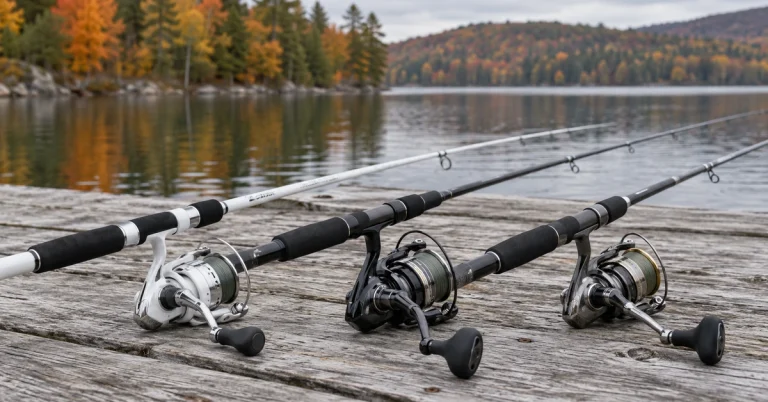
A 6 foot 6 inch to 7 foot medium power spinning combo covers nearly all freshwater fishing a beginner will do, from panfish to a decent bass. Budget: the Zebco 202 and 404 two pack gives you two push button spincast rods for the price of one spinning combo, and push button is the easiest casting action to learn. Mid range: the KastKing Centron Lite combo is lighter in the hand for a full afternoon of casting. Premium: the Penn Battle IV combo is the one to buy if you already know you will keep fishing. Our round up of the best rod and reel combos compares six in detail.
Line and a Small Box of Lures
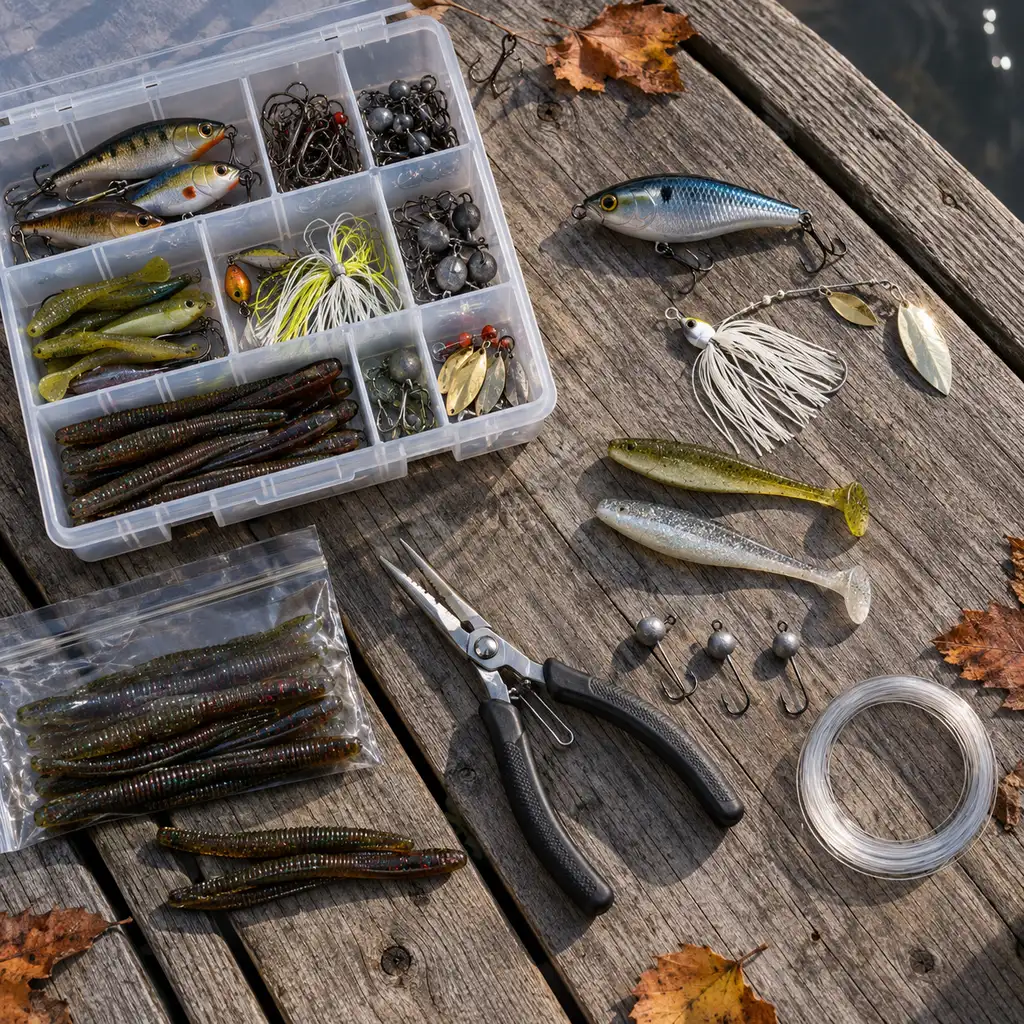
Fresh line matters more than expensive line, so respool before the season rather than fighting last year’s memory coils. For lures, a short list beats a full box: a lipless crankbait, a white spinnerbait, a soft plastic swimbait, a couple of jigs, and a pack of worms with the hooks to rig them. That covers searching, slowing down and finishing. Store it all somewhere dry between trips, the same way you would when putting camping gear away.
The Unglamorous Things
Pliers, nail clippers for line, a headlamp, a small first aid kit and a rag. A cooler if you are keeping fish, and the same advice about ice as keeping food safe in a camp cooler applies to keeping a catch. Polarised sunglasses are the one luxury worth buying early: they let you see structure and they stop a stray hook. Water still matters even when you are standing next to it, so the numbers in our hydration guide hold on the bank too.
Common Beginner Mistakes
- Fishing without the state licence. Every state sells them online in about five minutes, and the fine costs many times more.
- Sticking with summer’s dawn start when the afternoon is fishing better.
- Using last season’s line. Old monofilament coils, weakens and loses fish at the worst moment.
- Standing in one spot for three hours. Autumn rewards covering water until you find bait.
- Downsizing baits when the fish have moved up a size.
- Dressing for the walk to the water instead of for standing still in wind. See how to dress for cool weather outdoors.
- Leaving line, hooks and packaging on the bank. Discarded line is one of the worst things for wildlife, and the leave no trace rules apply on a riverbank too.
A Simple First Afternoon
If you have a licence, one combo and four lures, this is a plan that catches fish on most public water in autumn.
| Time | Where | What to Use | Why |
|---|---|---|---|
| 11am | Back of a cove or creek arm | Lipless crankbait, steady retrieve | Warmest shallow water, bait holds here |
| 12pm | Wind blown bank | White spinnerbait | Wind stacks bait against this shore |
| 2pm | Point next to deeper water | Soft plastic swimbait | Roaming schools use points as highways |
| 3pm | Anywhere you got a bite | Jig, worked slowly | Autumn fish group up, work the spot out |
Fish each stop for twenty minutes, then move. If you find bait and get a bite, throw the plan away and stay. Autumn is the one season where staying put is the right call once you have actually found them. Rain does not cancel it either, and the wet weather habits that keep a campsite liveable work just as well on a riverbank.
Frequently Asked Questions
Is autumn a good time to fish?
It is arguably the best. Cooling water raises activity across the day and fish feed heavily before winter, so the catch rate per hour is often the highest of the year. The trade off is a shorter day and weather that changes fast.
What water temperature is best for fall fishing?
Most freshwater species feed hardest as the surface passes through the 60s and into the 50s. Below the low 40s things slow down and presentations have to slow with them, which is the beginning of winter fishing rather than autumn.
What time of day should I fish in autumn?
Late morning through mid afternoon, which is the opposite of summer. The warmest hours lift the shallows and concentrate bait. Dawn still works early in the season, but its edge disappears as the water cools.
Do I need a fishing licence?
Yes, in every US state, for almost every adult angler on public water. Buy it from the state wildlife agency website before you go, check the daily limits and any seasonal closures for the species you are targeting, and keep the licence on your phone.
What is the one lure to start with?
A lipless crankbait in a shad pattern. It casts a long way, it fishes at any depth depending on how long you let it sink, and it covers water quickly, which is exactly the autumn approach. Add a jig for the day after a cold front and two lures cover most of the season, which is the tackle equivalent of cutting a pack down to what you actually use.
The whole of these fall fishing tips comes down to three habits: fish the warm part of the day, fish bigger baits, and keep moving until you find bait. Get a licence, put one combo and four lures in the car, and go and read a small pond this week. If you want more autumn outdoors to go with it, our fall hiking guide, a free dispersed campsite near the water and the autumn bird migration guide cover the same season from the bank upward.
Discover more from Maive Verse
Subscribe to get the latest posts sent to your email.