
This post may contain affiliate links. If you buy through them, we may earn a small commission at no extra cost to you.
Knowing how to keep water from freezing while hiking matters far more than most people realize until they reach for a drink on a cold ridge and find a solid block of ice. Frozen water is not just annoying. When you cannot drink, you dehydrate faster than you think in dry winter air, and dehydration makes you colder, weaker and more prone to frostbite. The good news is that a few simple habits keep your water liquid on all but the most extreme days. Our guide to hiking in snow and ice covers the rest of your winter kit.
This guide explains why water freezes where it does, then walks through the bottles, sleeves and packing tricks that work, how to deal with hydration bladders and frozen hoses, what to do overnight, and how to protect your water filter. You will also find a few myths worth ignoring and tips for staying hydrated when you do not feel thirsty.
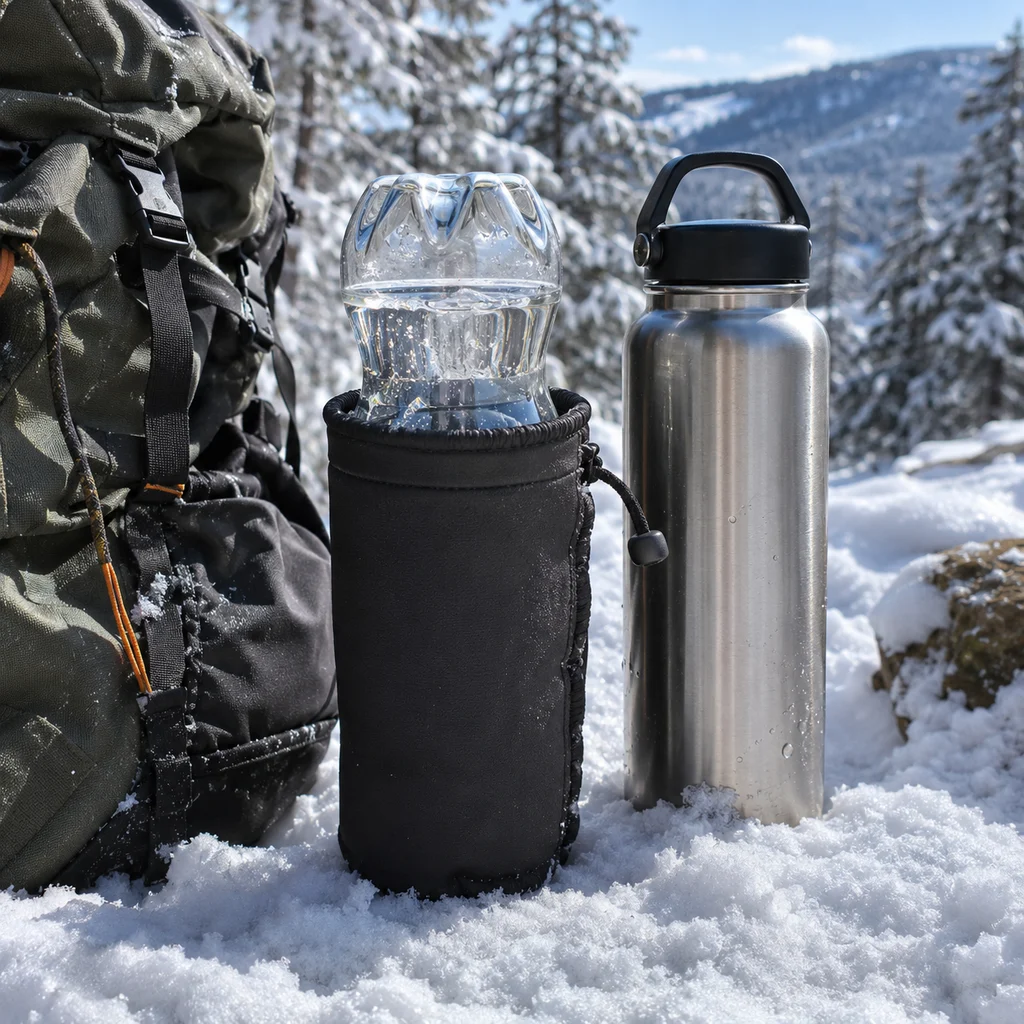
Table of Contents
Why Water Freezes on the Trail
Water freezes when it loses heat to colder air around it, and it loses heat fastest where it touches cold surfaces or moving air. Understanding where that happens tells you exactly where to fight it.
Ice Forms From the Top Down
In a bottle, ice usually forms first at the surface and around the threads of the cap, because that is where the water meets the coldest air. That is why a bottle can be mostly liquid but impossible to open or drink from. A frozen lid is often the real problem, not a frozen bottle.
Wind and Exposure Speed It Up
A bottle in a side pocket of your pack is exposed to wind on every step, which strips heat away quickly. The same bottle buried in the middle of your pack, surrounded by clothing, can stay liquid for hours longer.
Small Volumes Freeze First
Thin tubes and small amounts of water freeze much faster than a full bottle. A hydration hose holds only a few sips of water, and it is exposed to air on every side, so it is usually the first thing to freeze.
Choose the Right Bottle to Keep Water From Freezing
Your container is the single biggest factor. The right bottle can mean the difference between liquid water all day and a block of ice by lunch.
Use a Vacuum Insulated Bottle
A double wall vacuum insulated bottle is the most reliable way to keep water from freezing on a day hike. The vacuum between the walls stops heat from escaping, so warm water stays warm for hours. Bottles like the Hydro Flask Wide Mouth or the Stanley Classic Vacuum Bottle are heavier than plastic, but on cold days they are worth the weight. Our cold weather backpacking guide explains how to carry the extra weight.
Pick a Wide Mouth
Narrow openings freeze shut quickly, while a wide mouth takes much longer to ice over and is easier to break open if a thin layer forms. A classic Nalgene 32 oz wide mouth bottle is a favorite of winter hikers because it is nearly indestructible, handles hot water and works with many insulated sleeves.
Add an Insulated Sleeve
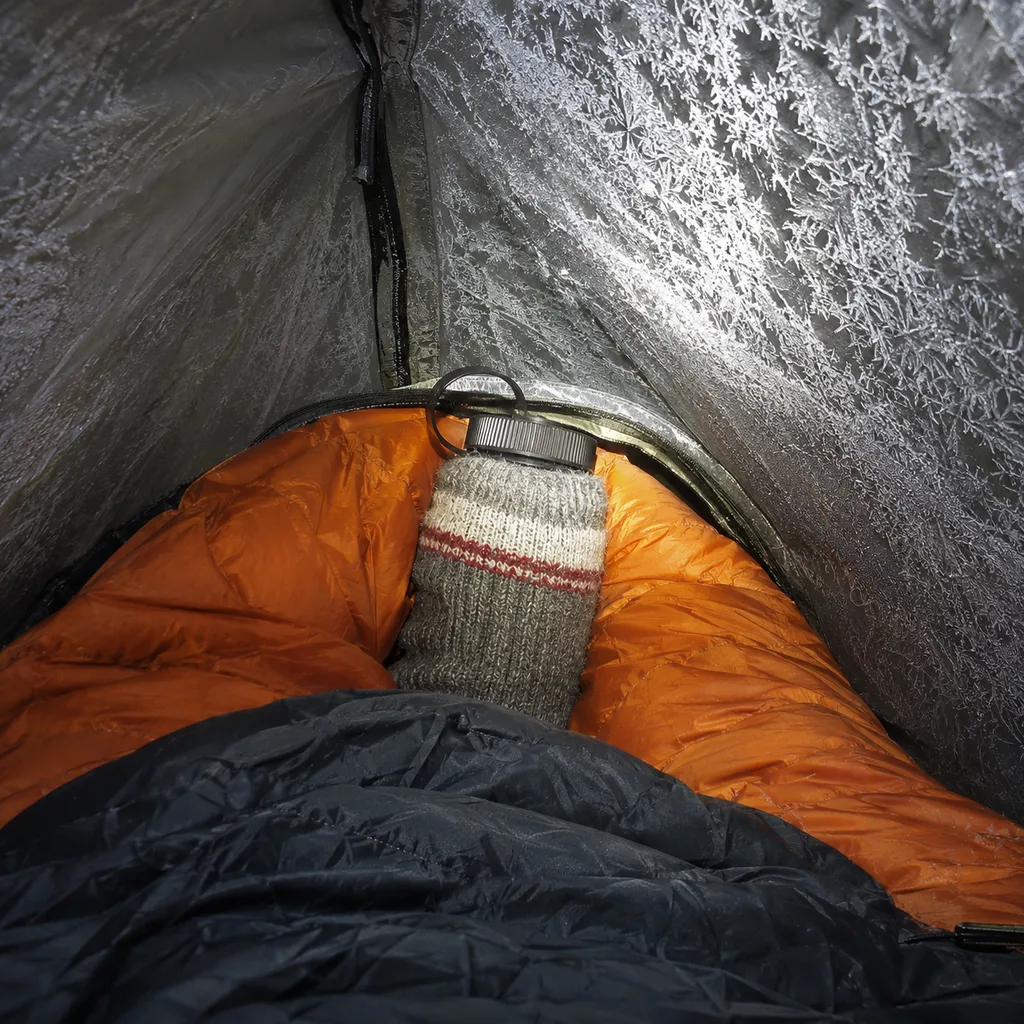
An insulated bottle cover or a homemade wrap of closed cell foam turns a plastic bottle into a winter bottle. Even an old wool sock pulled over the bottle helps noticeably. Sleeves are light, cheap and let you keep using the bottles you already own.
Simple Tricks That Work
Once you have the right container, these habits make a huge difference. None of them cost much, and most cost nothing at all.
Start With Warm Water
Fill your bottles with warm or hot water before you leave home or camp. Warm water takes far longer to cool to freezing than cold water. Do not use boiling water in plastic bottles that are not rated for it, and make sure lids are screwed on tightly.
Store Bottles Upside Down
Since ice forms at the top first, carry your bottle upside down. Any ice that forms will be at the bottom of the bottle, away from the lid, so you can still open it and drink. Just make sure the lid is fully leakproof before you try this.
Carry Water Inside Your Pack
Move bottles out of side pockets and into the middle of your pack, wrapped in your spare jacket or puffy. Your body heat and the insulation of your gear keep it warmer. A pack with good internal space from our list of the best hiking daypacks makes this easy.
Keep a Small Bottle in Your Jacket
A small flask or soft bottle in an inside jacket pocket stays liquid all day from body heat, so you always have something to drink. Refill it from the bigger bottle in your pack at breaks. Our guides to how to layer for hiking and the best insulated jackets cover jackets with good inner pockets.
Drink Often
The less water sits still in your bottle, the less chance it has to freeze. Small, frequent sips keep water moving and keep you hydrated at the same time. Set a reminder to drink every 20 to 30 minutes if you tend to forget.
Pack a Hot Drink for Breaks
A large vacuum bottle such as the THERMOS Stainless King filled with hot tea, cocoa or broth gives you a warm drink at every stop, and it doubles as a backup water supply if your other bottles freeze. A hot drink also warms your core, which helps your hands and feet stay warm for the next stretch of trail. Pour a little into the built in cup rather than drinking from the bottle, so the rest stays hot longer.
Hydration Bladders in Winter
Hydration bladders are convenient in summer but tricky in winter. The reservoir in your pack usually stays liquid, but the hose freezes quickly. If you love your bladder, a few tricks help.
Blow Water Back Into the Bladder
After every sip, blow into the hose until you hear bubbles in the reservoir. This pushes the water out of the tube and back into the bladder, so there is nothing left in the hose to freeze.
Use an Insulated Hose
Insulated hose covers and bite valve covers slow freezing a lot. Route the hose under your jacket or shoulder strap so body heat keeps it warmer. Even then, carry a backup bottle on very cold days. Our hydration guide covers how much water to bring.
Cover and Tuck the Bite Valve
The bite valve is the most exposed part of the system, and a few drops of water left in it freeze into a plug. Use a neoprene valve cover, tuck the valve inside your jacket collar between sips, and give it a quick squeeze to clear it before you put it away. If it does freeze, hold it in your mouth or a warm hand for a minute to thaw it.
Keeping Water Liquid Overnight
On winter backpacking trips, overnight is when water is most likely to freeze solid. Fill bottles with hot water before bed, close them tightly, and bring them into your sleeping bag. They double as a heater and give you drinkable water in the morning. Our guides to how to stay warm in a sleeping bag and cold weather backpacking explain more overnight tricks.
If you cannot fit every bottle in your bag, bury the rest upside down in the snow. Snow is a good insulator, and buried bottles often stay liquid when bottles left on the surface freeze solid. Mark the spot so you can find them in the morning.
Protect Your Water Filter
Hollow fiber water filters can crack if the water inside them freezes, and you will not be able to see the damage. A cracked filter lets bacteria through. Keep your filter in a zip bag inside your jacket during the day and in your sleeping bag at night. If you think it froze, replace it or switch to chemical treatment. Our guides to the best backpacking water filters and how to purify water backpacking cover winter friendly options.
Myths and Mistakes to Avoid
- Adding salt to stop freezing. You would need so much salt that the water would be undrinkable and dehydrating.
- Adding sugar or drink mix. It lowers the freezing point only slightly and makes cleanup harder, though a warm sweet drink is great for morale.
- Relying on a side pocket. Exposed bottles freeze first, even if they are insulated.
- Skipping water because you are not thirsty. Cold weather blunts thirst, but you still lose water through breathing and sweat.
- Leaving a filter in an outside pocket. One freeze can ruin it without any sign.
Cold weather also changes how you dress and move. Warm hiking socks, good traction from our list of the best microspikes for hiking and the tips in our guide to rucking in cold weather all help you stay comfortable on winter trails.
Frequently Asked Questions
What is the best way to keep water from freezing while hiking?
Use a vacuum insulated bottle filled with warm water, carry it upside down inside your pack, and keep a small bottle in your jacket. Those three steps work on almost any winter day hike.
At what temperature does water freeze in a bottle?
Water freezes at 32F, but it takes time. Moving and well insulated water can stay liquid for hours below freezing, while a hose or exposed bottle can freeze within an hour on a windy day in the teens.
Can you use a hydration bladder in winter?
Yes, but blow the water back into the reservoir after every sip, use an insulated hose, and carry a backup bottle. In very cold weather, bottles are more reliable.
Is it safe to put hot water in a Nalgene?
Yes, Nalgene bottles made from Tritan plastic handle hot water. Make sure the lid is tight, and wrap the bottle in a sock if you put it in your sleeping bag.
Discover more from Maive Verse
Subscribe to get the latest posts sent to your email.