
This post may contain affiliate links. If you buy through them, we may earn a small commission at no extra cost to you.
Learning how to stay warm in a sleeping bag is the difference between a cold, sleepless night counting the hours until dawn and waking up rested and ready to hike. A sleeping bag does not make heat. It only traps the heat your body produces, so staying warm is about giving it more heat to trap and losing less of it to the ground, the air and moisture. If you are planning your first winter trip, our cold weather backpacking guide covers the bigger picture.
This guide covers the whole sleep system: why your pad matters as much as your bag, how to read temperature ratings honestly, what to wear to bed, and a dozen simple tricks experienced campers use on cold nights, from a hot water bottle to a fatty snack before bed. Most of them cost nothing.
Table of Contents
Why You Get Cold in a Sleeping Bag
Heat Escapes Into the Ground
When you lie on your sleeping bag, you crush the insulation underneath you flat, so it does almost nothing. The cold ground then pulls heat straight out of your back. This is the most common reason people sleep cold, even in a warm bag.
Moisture Robs Insulation
Sweat, damp clothes and the moisture in your breath all collect in your bag overnight. Wet insulation loses loft, and lost loft means lost warmth. Down is especially sensitive to this.
Dead Air Space and Drafts
A bag that is too roomy leaves pockets of air your body has to keep heating, and every time you roll over, warm air pumps out through the opening. A good fit and a cinched hood keep that heat in.
Your Body Is Low on Fuel
Your body is the heater. If you go to bed tired, hungry, dehydrated or already chilled, there is simply less heat to trap. Fixing this is often the fastest way to sleep warmer.
Start With the Right Sleep System
Use a Pad With Enough R-Value
A sleeping pad’s R-value measures how well it resists heat loss into the ground. For summer, an R-value of 2 to 3 is fine. For fall nights near freezing, aim for 4 or more. For winter camping on snow, aim for 5 or higher. R-values add together, so a closed cell foam pad like the Therm-a-Rest Z Lite Sol under an inflatable pad is a cheap and very effective winter upgrade. Our list of the best sleeping pads for camping compares R-values.
Read Temperature Ratings Honestly
Most sleeping bags list a comfort rating and a lower limit rating. The lower limit is the temperature at which a warm sleeper can sleep curled up without shivering, not comfortably. If you sleep cold, use the comfort rating, and pick a bag rated at least 10 degrees colder than the coldest night you expect. Our roundups of the best backpacking sleeping bags and best car camping sleeping bags list both ratings.
Add a Liner
A sleeping bag liner adds warmth, keeps the inside of your bag clean, and is far cheaper than a new bag. Thermal and fleece liners add the most warmth, while silk liners add a little warmth for very little weight. Sea to Summit’s Reactor insulated liner is a popular choice for stretching a three season bag into colder weather.
Pitch in the Right Spot
Cold air sinks, so valley bottoms and low hollows are colder at night than spots a little way up a slope. Trees break the wind and radiate a little warmth. A well pitched, well ventilated tent from our list of the best backpacking tents also makes a big difference.
How to Stay Warm in a Sleeping Bag All Night
Eat a Fatty Snack Before Bed
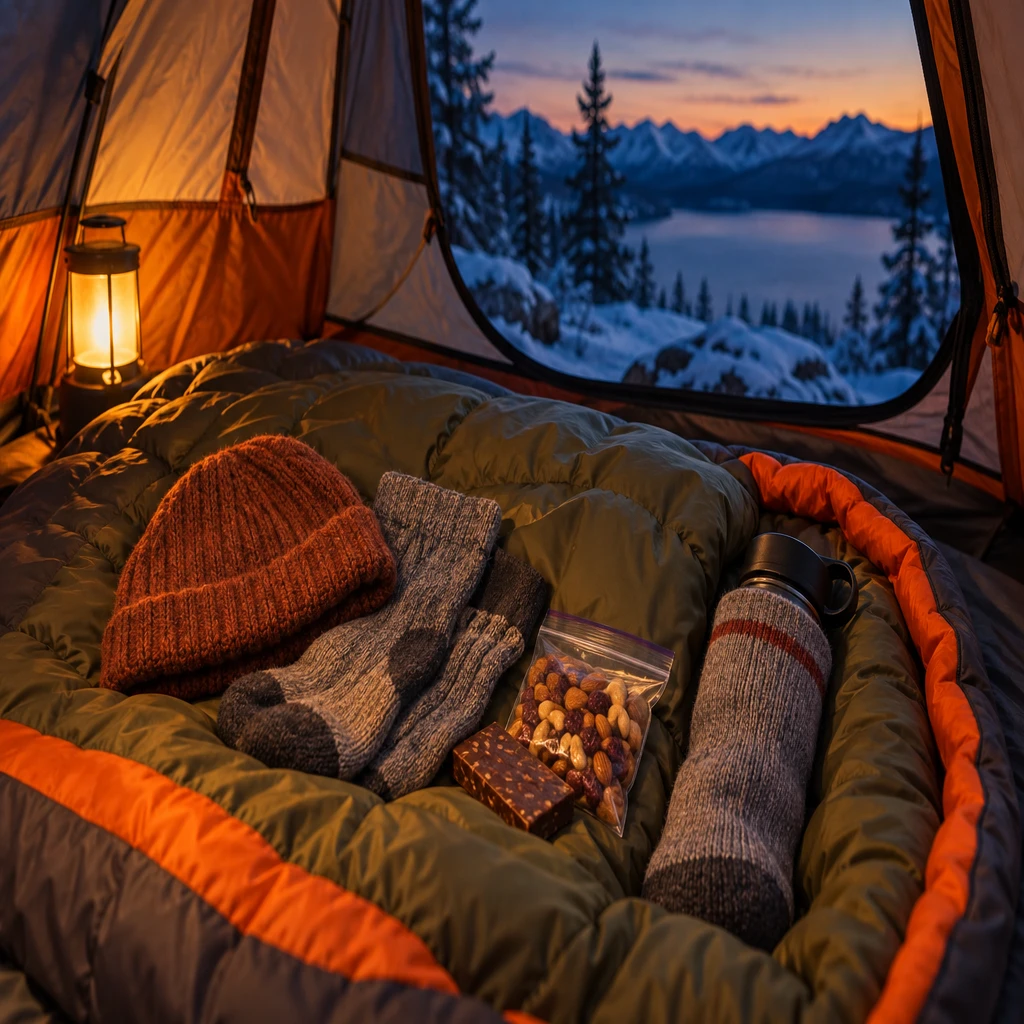
Digestion produces heat, and fat burns slowly through the night. A handful of nuts, a chunk of cheese, chocolate or a spoonful of peanut butter before bed acts like fuel on a slow fire. Keep a snack in the tent for the middle of the night too, but store all food safely if you are in bear country.
Drink Something Warm and Stay Hydrated
Dehydration thickens your blood and slows circulation to your hands and feet. A hot drink at camp warms you up and rehydrates you at the same time. Just go easy right before bed.
Pee Before You Sleep
It sounds silly, but your body spends energy keeping a full bladder warm. Getting up once before you settle in means more heat for you and fewer cold trips outside at 2 a.m.
Warm Up, But Do Not Sweat
Get into your bag warm. A few minutes of brisk walking, squats or jumping jacks before bed raises your body temperature. Stop before you start sweating, since damp skin cools you down later.
Use a Hot Water Bottle
Fill a sturdy, leakproof bottle like a Nalgene wide mouth bottle with hot water, close it tightly, slip it into a sock and put it at your feet or between your thighs, where large blood vessels pass close to the skin. It stays warm for hours, and you have unfrozen water in the morning.
Cinch the Hood and Draft Collar
Most mummy bags have a hood and a draft collar, a tube of insulation around the neck, for a reason. On cold nights, pull the hood up around your head and tighten the drawcord until only your face is exposed, and snug the collar around your shoulders. This stops warm air from pumping out every time you move, and it keeps your head, which loses a lot of heat, inside the insulation.
Fill the Dead Space
If your bag is roomy, stuff tomorrow’s clothes or a fleece into the empty spaces around your feet and sides. Your body no longer has to heat that extra air, and the clothes will be warm when you put them on in the morning. Keep batteries, your phone and water filter in the bag too, since cold drains batteries and can crack a frozen filter.
What to Wear in a Sleeping Bag
Dry Base Layers
Change into a clean, dry base layer at night, even if what you hiked in feels only slightly damp. Merino wool or synthetic long underwear works best. Our layering guide explains which fabrics to choose.
Warm Socks and a Hat
Dry wool socks kept only for sleeping make a huge difference, and our list of the best hiking socks includes warm, full cushion pairs. A warm hat or balaclava stops heat escaping from your head and neck when you cannot cinch the hood tightly.
Use Your Puffy Wisely
On very cold nights, you can wear a puffy jacket inside your bag or drape it over the top of the bag like a quilt. Do not overstuff the bag, though. Compressed insulation is not warm insulation. Our list of the best insulated jackets includes light jackets that pack well.
Common Mistakes to Avoid
- Breathing inside the bag. Your breath adds moisture that soaks the insulation. Keep your mouth and nose at the opening.
- Wearing every layer you own. Too many layers can compress the bag and make you sweat.
- Sleeping on a thin or uninsulated pad. In cold weather, the pad matters as much as the bag.
- Storing your bag compressed at home. Hang it or keep it in a large storage sack so the insulation keeps its loft.
- Going to bed cold. It is much harder to warm up inside the bag than to start warm.
Hammock campers face extra heat loss from below, and our guides to cold weather hammock camping and the best hammock underquilts explain how to fix it. Car campers will find more ideas in our cold weather camping tips.
Caring for Your Bag on the Trail
Shake your bag out each evening to restore its loft before you get in. On multi day trips, drape it over the tent or a rock in the morning sun for half an hour to dry out moisture from the night. Pack it in a waterproof stuff sack or line your pack with a trash bag so it never gets wet. Our guide on how to pack a backpacking pack shows where the bag should go, and our trip planning guide helps you check overnight lows before you leave.
Frequently Asked Questions
Is it warmer to sleep naked in a sleeping bag?
No. That is a myth. A dry base layer adds insulation and keeps sweat and body oils off your bag. Just avoid wearing the damp clothes you hiked in.
How do I keep my feet warm in a sleeping bag?
Wear dry wool socks reserved for sleeping, put a hot water bottle in the footbox, and make sure your feet are warm before you get in. A down bootie or a puffy jacket wrapped around the foot of the bag also helps.
Does a sleeping bag liner make you warmer?
Yes. Depending on the material, a liner adds a few degrees with silk up to a noticeable boost with thermal or fleece. Manufacturer claims are often generous, so treat them as a best case.
What is the fastest way to warm up on a cold night?
Insulate yourself from the ground with a better pad, eat a fatty snack, and get into the bag already warm with a hot water bottle. Those three steps fix most cold nights.
Discover more from Maive Verse
Subscribe to get the latest posts sent to your email.