
This post may contain affiliate links. If you buy through them, we may earn a small commission at no extra cost to you.
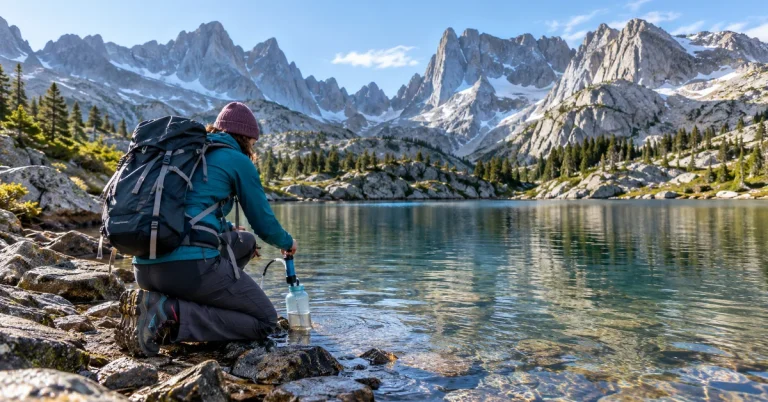
The best backpacking water filters weigh a few ounces, work in seconds and survive hundreds of liters of creek water without complaint. That is the whole job: turn a stream full of Giardia and bacteria into something you can drink without thinking about it, at every source, for the whole trip. The differences come down to speed, weight, how you collect water and how many people you are filtering for.
Six filters below, from a two ounce squeeze filter to a hanging gravity bag and two pump filters, every one checked for stock, rating and the specifications on the listing. For the full picture on boiling, tablets and UV, read our guide on how to purify water backpacking.
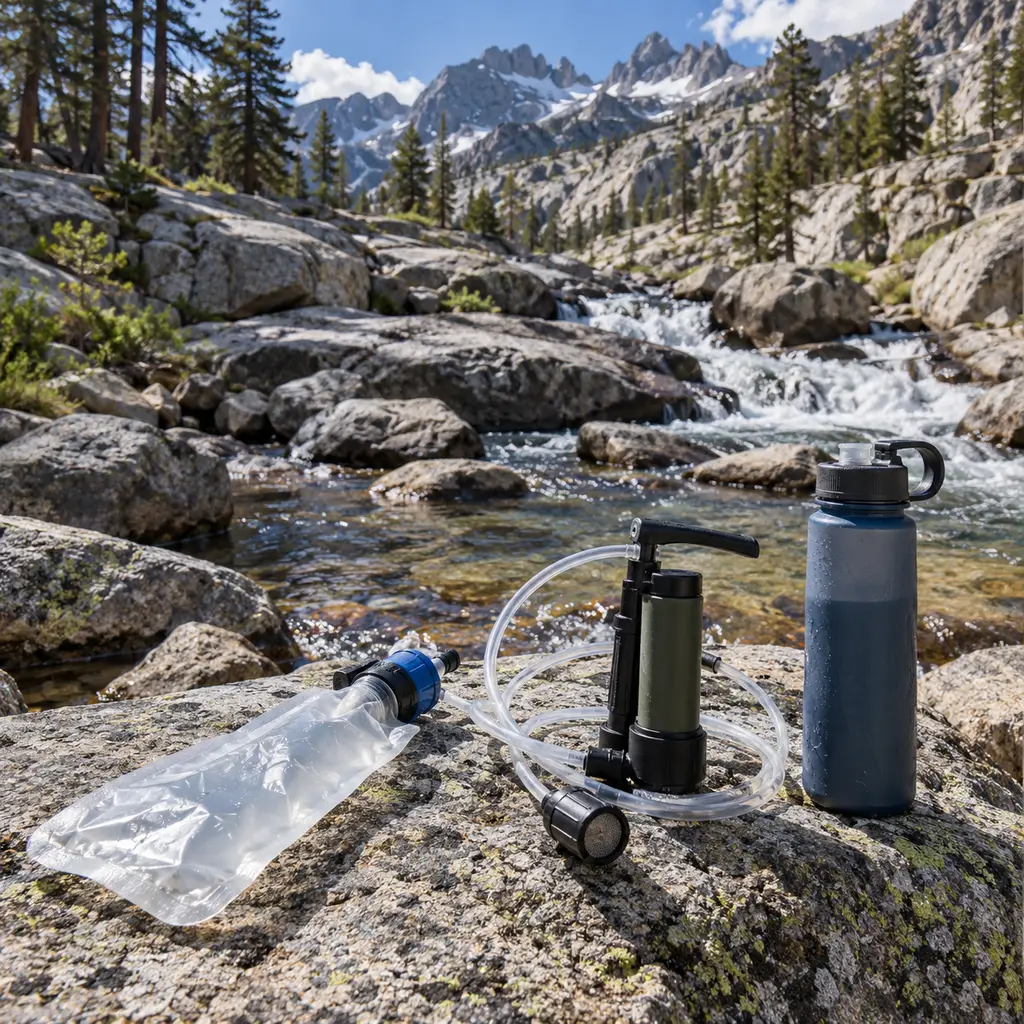
Table of Contents
What Separates the Best Backpacking Water Filters
Pore size comes first. Most backcountry filters use a hollow fiber membrane rated around 0.1 micron, which stops protozoa and bacteria. That is enough for most US wilderness water. Viruses are far smaller, so if they are a concern you need a purifier, chemicals or UV on top.
Then speed and effort. A squeeze filter is fast for one person but tiring for four. A gravity filter does the work while you set up camp. A pump lets you draw from shallow seeps and puddles that a pouch cannot fill from.
Then weight and packed size. The lightest filters here weigh about two ounces; pumps weigh several times that. On a solo trip that difference is real, while for a group sharing one system it barely matters.
Last, maintenance. Hollow fiber filters need backflushing to keep flow up, and every one of them can be ruined by freezing. How easy a filter is to clean in the field decides how fast it stays over a long trip.
The Best Backpacking Water Filters at a Glance
| Filter | Type | Weight | Reviews | Best For |
|---|---|---|---|---|
| Sawyer Squeeze | Squeeze and inline | About 2 oz filter | 4.7 stars, 10,471 | Best overall |
| Katadyn BeFree 1L | Filter bottle | Light, collapsible | 4.6 stars, 4,520 | Fast and simple |
| Katadyn BeFree Gravity 3L | Gravity | Packs flat | 4.5 stars, 709 | Groups and camp |
| Katadyn Hiker Pro | Pump | Heavier | 4.6 stars, 1,752 | Shallow sources |
| Sawyer Mini | Squeeze and inline | About 2 oz | 4.7 stars, 41,325 | Budget |
| Survivor Filter PRO | Three stage pump | 12.8 oz | 4.6 stars, 4,891 | Extra filtration |
The Six Best Backpacking Water Filters in Detail
Sawyer Squeeze: Best Overall
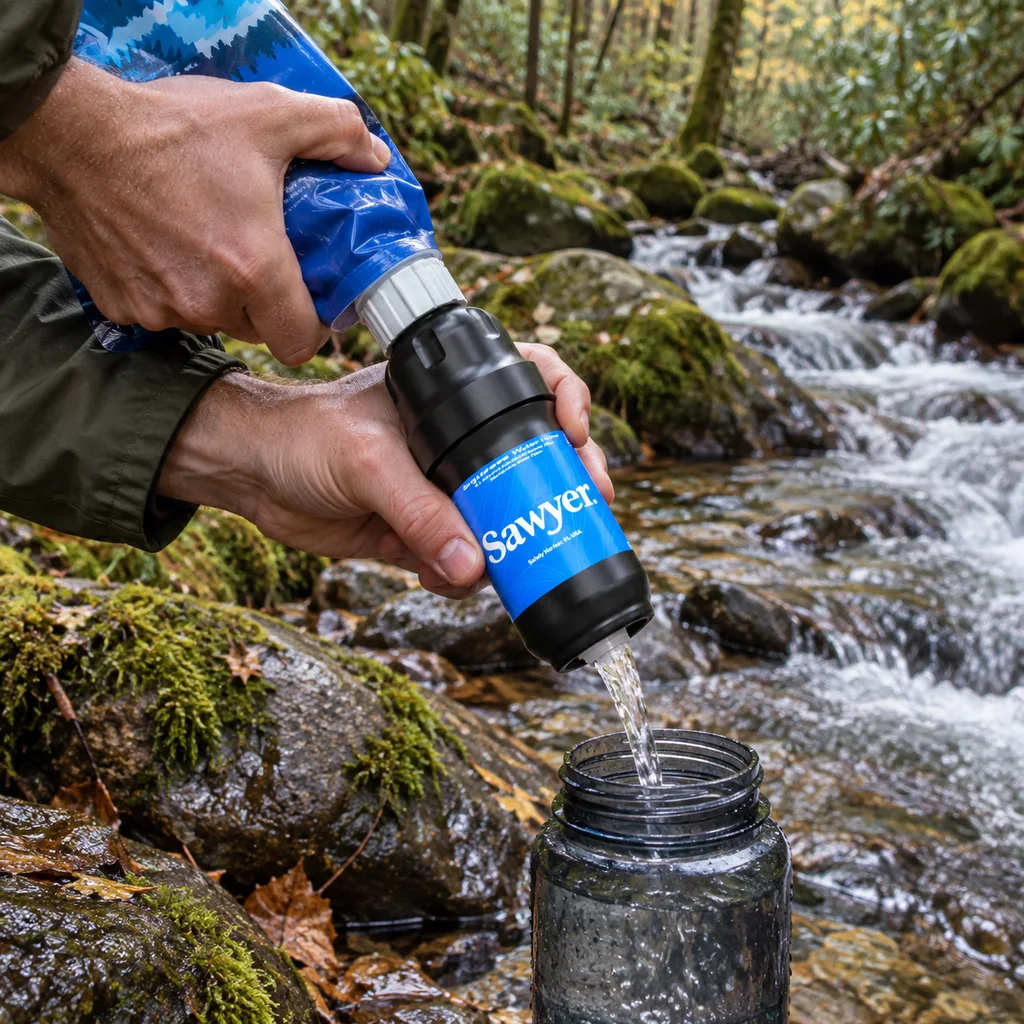
The Sawyer Squeeze is the filter most thru-hikers carry, and 10,471 reviews at 4.7 stars explain why. The 0.1 micron absolute hollow fiber filter fits in your palm, weighs about two ounces and removes bacteria, protozoa, cysts, sediment and microplastics.
It is also the most versatile filter here. Squeeze from the included 32 ounce pouches into a bottle, screw it onto a standard 28 mm water bottle, drink through it with the straw, or run it inline on a hydration pack with the included adapters. It even works as the filter in a gravity setup.
Sawyer says every unit is individually tested three times. The pouches are the weak point over time, so many hikers swap them for sturdier bottles or bags.
Specs That Matter
- Filter: 0.1 micron absolute hollow fiber
- Weight: about 2 oz
- Removes: bacteria, protozoa, cysts, microplastics
- Fits: 28 mm bottle threads
- Includes: two 32 oz pouches, straw, inline adapters
Who It Is For
Almost everyone, from weekend backpackers to thru-hikers.
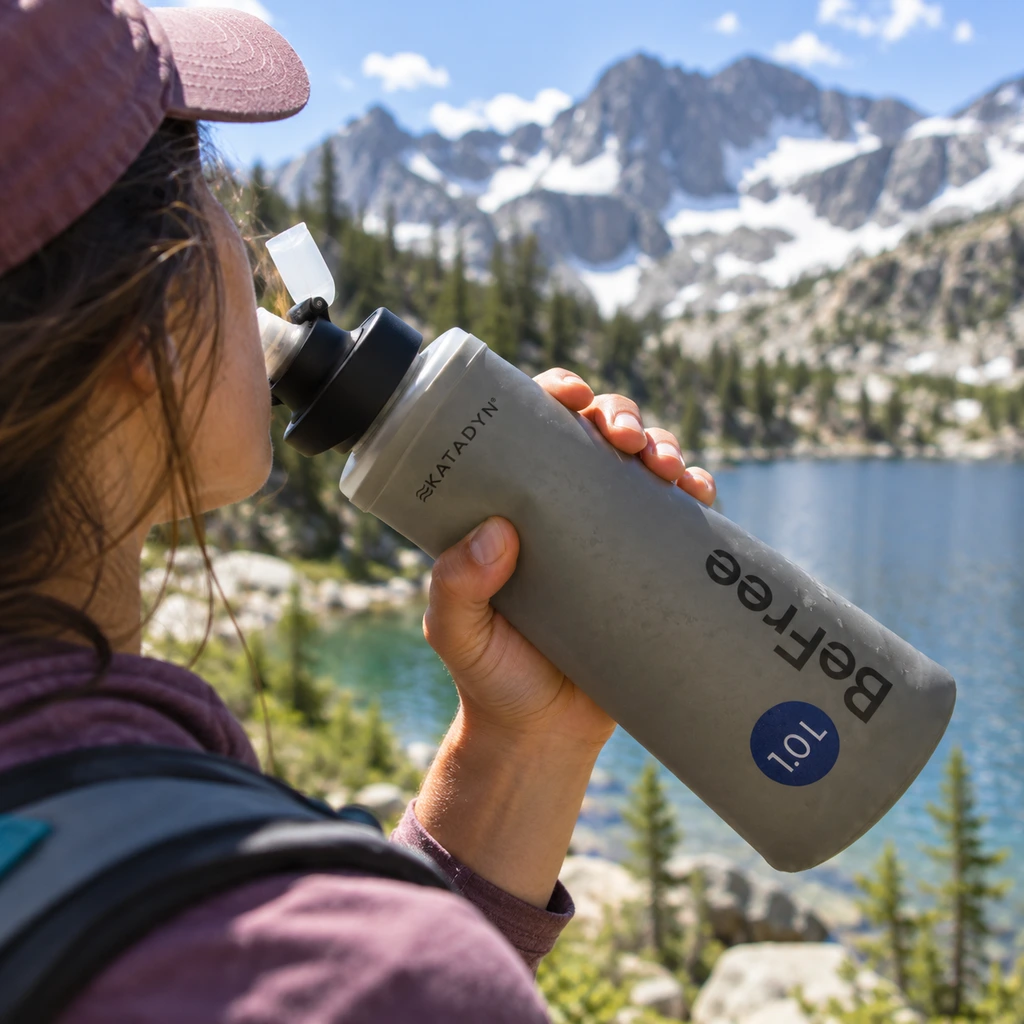
Katadyn BeFree 1L: Best for Fast, Simple Refills
The BeFree is the easiest filter here to use. Fill the soft one liter bottle at a stream, screw on the cap and drink or squeeze. There is nothing to assemble, and the flow is fast enough that you can fill and drink at a crossing without stopping for long.
This version adds a removable activated carbon stage. Leave it in to improve the taste of tap or treated water, or take it out for faster flow from clear mountain sources. Cleaning is just shaking or swishing the filter in water, with no backflushing tools.
The double layer collapsible bottle rolls down small with an integrated carabiner handle. Four point six stars across 4,520 reviews. Soft bottles do wear, so handle it gently around sharp rocks.
Specs That Matter
- Type: collapsible filter bottle
- Capacity: 1 liter
- Stages: hollow fiber plus removable carbon
- Cleaning: shake or swish, no tools
- Extras: flip cap, carabiner handle
Who It Is For
Hikers and trail runners who want water in seconds with no fuss.
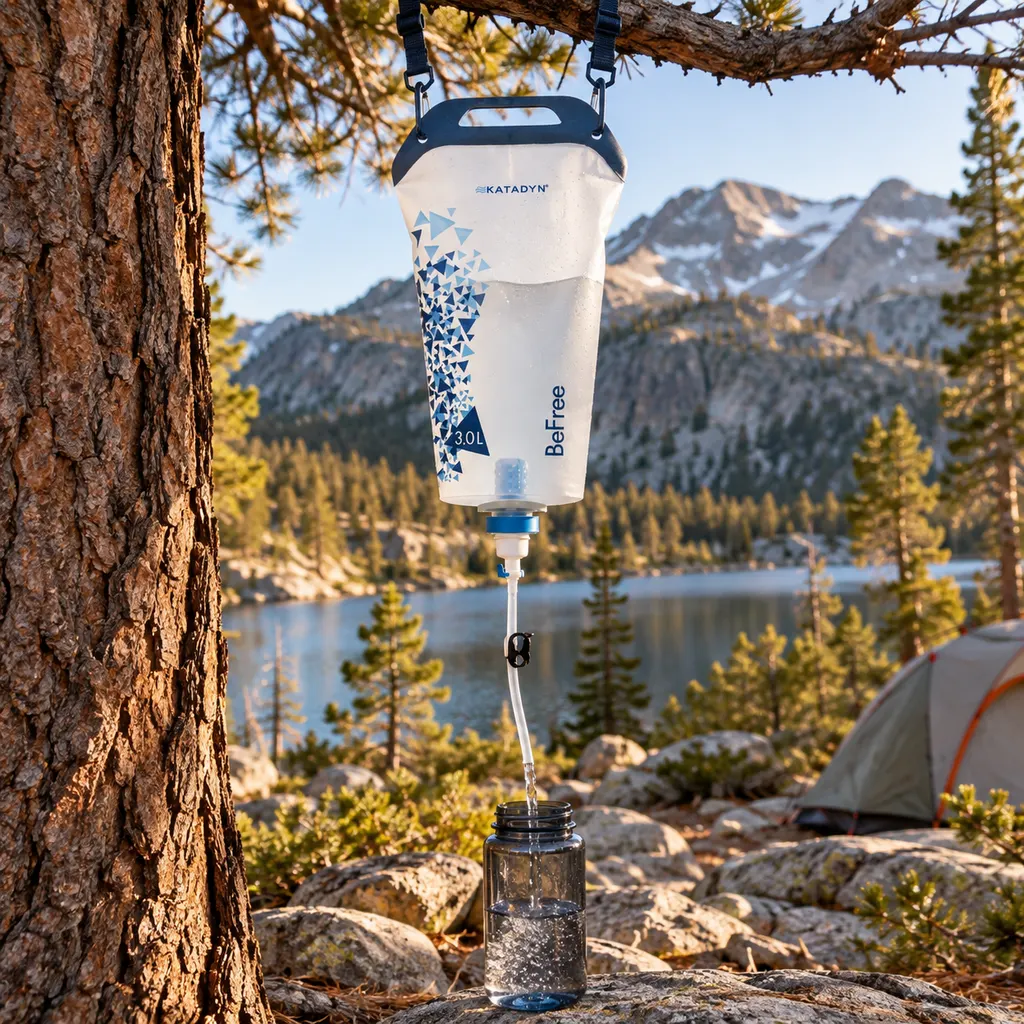
Katadyn BeFree Gravity 3L: Best for Groups
Fill the three liter bag, hang it from a branch and let gravity push water through the filter at up to two liters per minute. That hands free flow is why gravity systems win for couples, families and base camps: nobody spends twenty minutes squeezing at the end of the day.
The filter is a 0.1 micron EZ Clean hollow fiber rated for up to 1,000 liters, and it cleans the same way as the BeFree bottle, by shaking it in water. The bag packs flat when empty.
Four point five stars on 709 reviews. You need something to hang it from, which is easy in forest and harder above treeline.
Specs That Matter
- Type: gravity bag and filter
- Capacity: 3 liters
- Flow: up to 2 liters per minute
- Filter: 0.1 micron hollow fiber
- Lifespan: up to 1,000 liters
Who It Is For
Groups, couples and anyone who camps near water and wants it filtered while they cook.
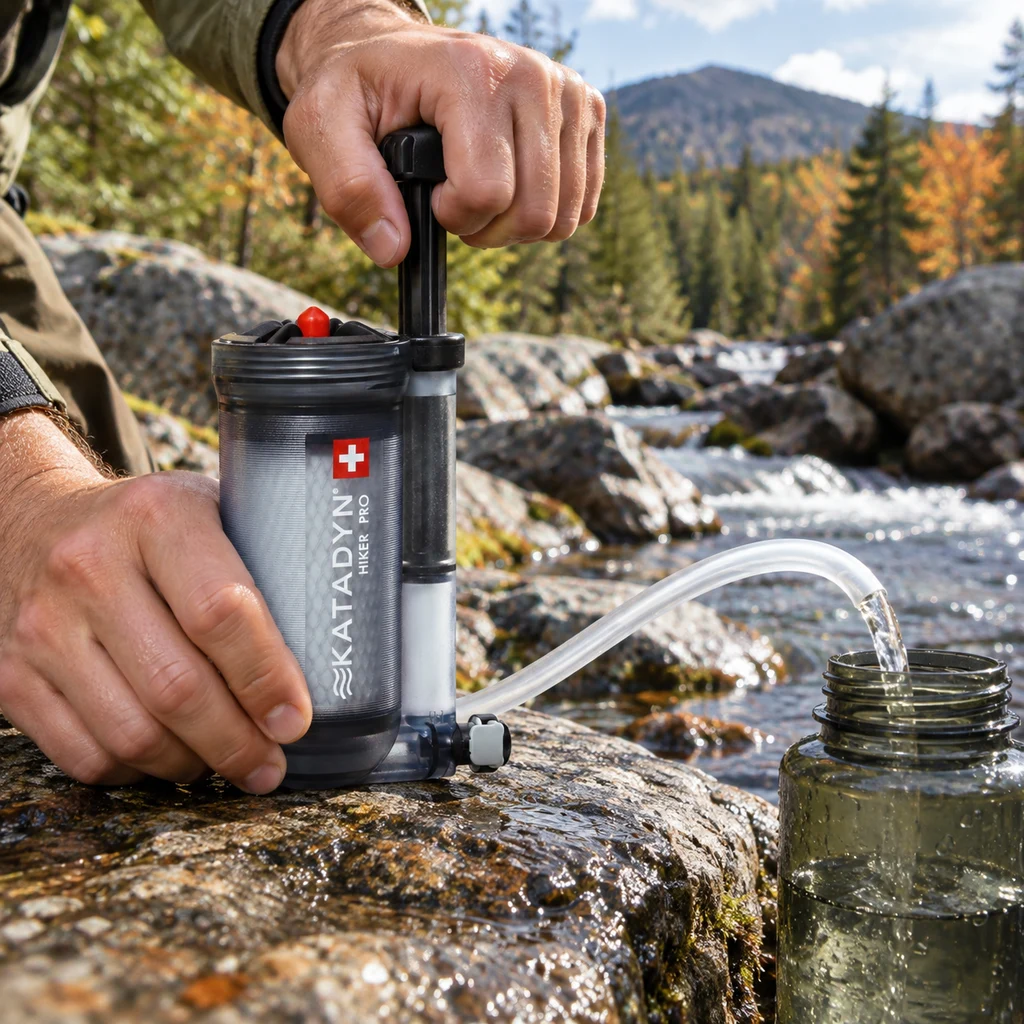
Katadyn Hiker Pro: Best Pump Filter
Pump filters are older technology, but they still solve one problem better than anything else: getting water out of a shallow puddle, a slow seep or a rocky pool you cannot dip a pouch into. Drop the intake hose in, pump the handle and clean water flows into your bottle.
The Hiker Pro is one of the best known pumps, and its transparent housing lets you see the filter inside. Pumps are also easy for filling several bottles quickly in camp, which is why they remain popular with scout groups and desert hikers.
Four point six stars across 1,752 reviews. The tradeoffs are weight, bulk and more moving parts than a squeeze filter, so carry it where the water sources actually call for it.
Specs That Matter
- Type: hand pump microfilter
- Housing: transparent
- Strength: shallow and low flow sources
- Tradeoff: heavier, more moving parts
- Good for: groups filling many bottles
Who It Is For
Desert hikers, groups and anyone whose water comes from seeps and puddles.
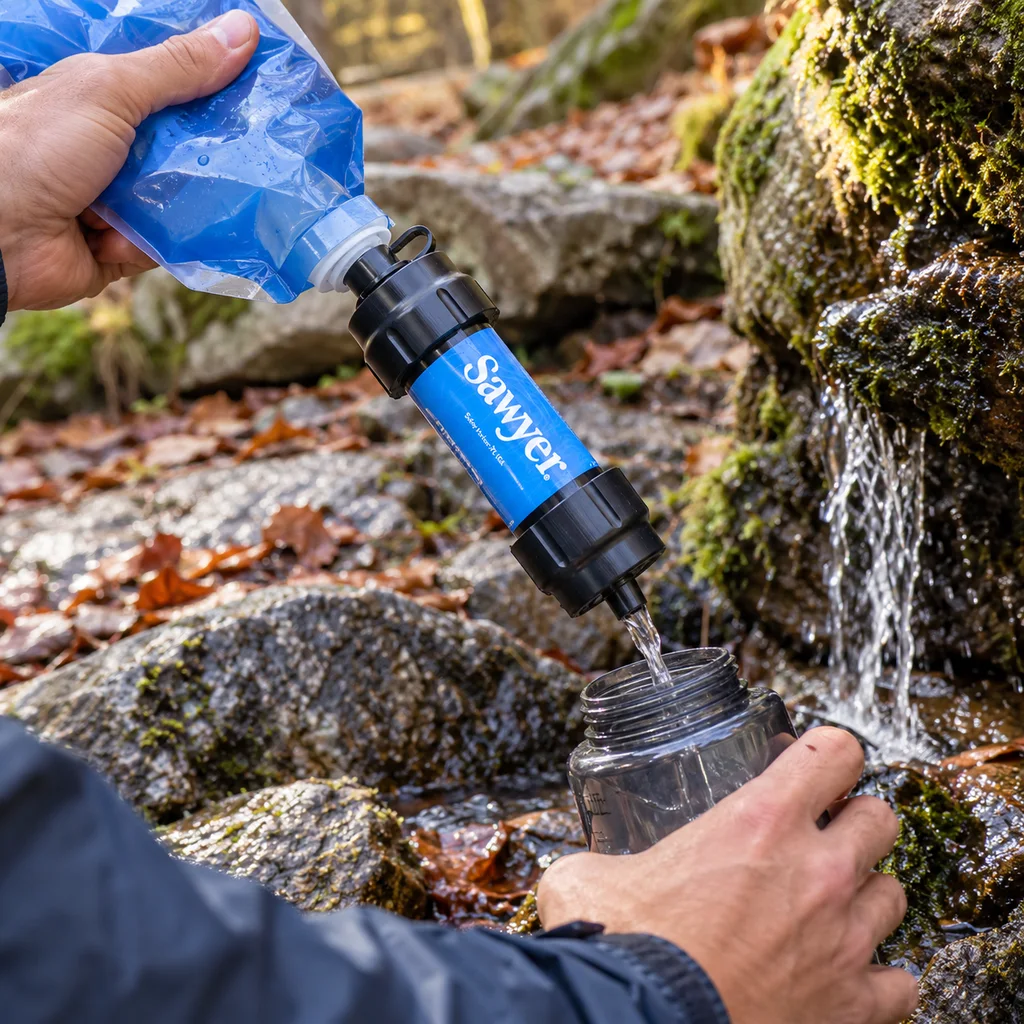
Sawyer Mini: Best Budget
The Sawyer Mini has more reviews than any other filter here, 41,325 at 4.7 stars, and it costs very little. It uses the same 0.1 micron absolute rating as its bigger sibling in an even smaller body that weighs about two ounces.
Sawyer rates it to remove 99.99999 percent of bacteria and 99.9999 percent of protozoa, and says it is rated for up to 100,000 gallons. It attaches to the included 16 ounce pouch, standard disposable bottles, hydration packs, or you can drink through the seven inch straw directly from a source.
The smaller body means slower flow than the Squeeze, which you notice when filtering several liters. As a backup filter, a day hike filter or a first filter on a budget, it is hard to beat.
Specs That Matter
- Filter: 0.1 micron absolute hollow fiber
- Weight: about 2 oz
- Rated: up to 100,000 gallons
- Includes: 16 oz pouch, straw, cleaning plunger
- Fits: bottles and hydration packs
Who It Is For
Budget buyers, day hikers and anyone who wants a light backup filter.
Survivor Filter PRO: Best for Extra Filtration
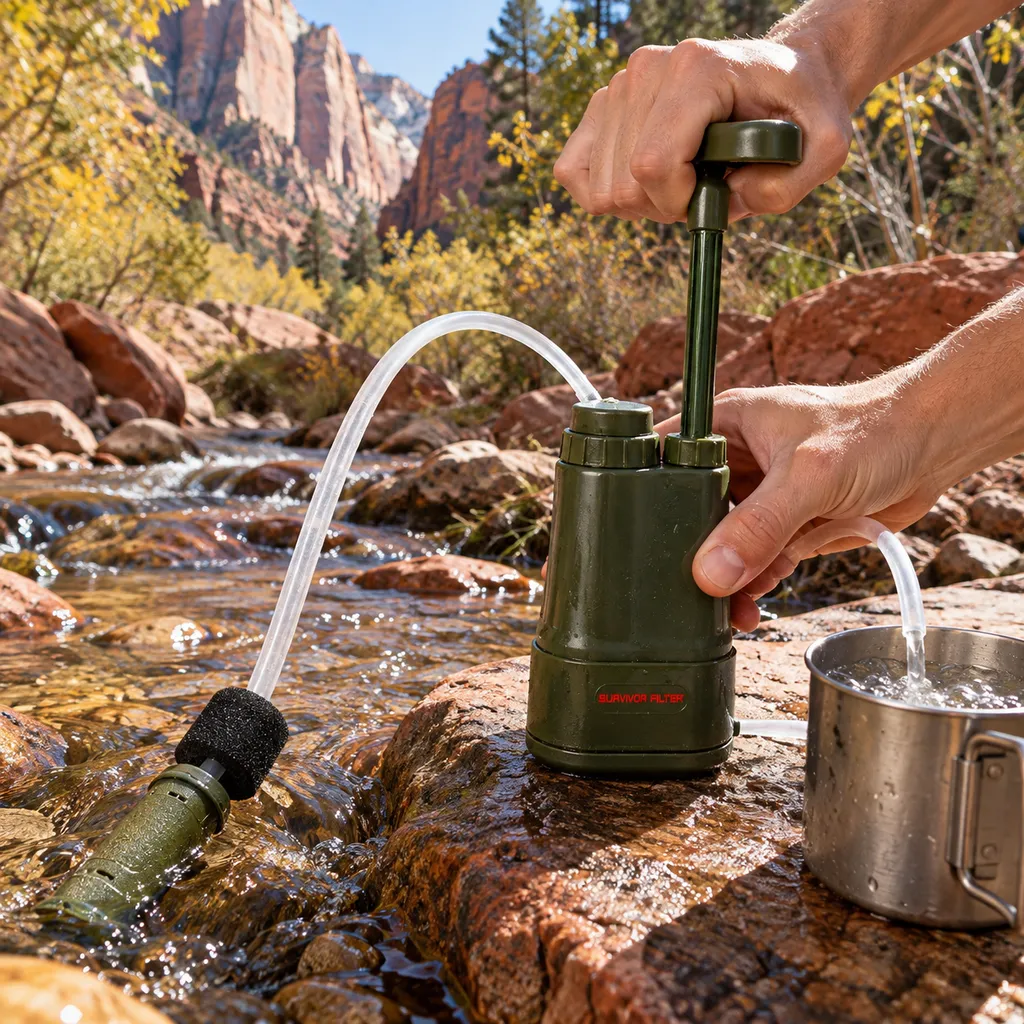
The Survivor Filter PRO is a three stage pump: a 0.1 micron pre filter, a carbon filter and a 0.01 micron ultra filter. That finer final stage is the reason for choosing it. The listing says it removes 99.999 percent of tested viruses, bacteria and protozoa and reduces heavy metals according to NSF/ANSI standards.
It pumps about 500 milliliters per minute and weighs 12.8 ounces, heavier than the squeeze filters but reasonable for a pump. Every filter stage is replaceable, and the kit includes a cup, a bag and the tubing.
Four point six stars on 4,891 reviews. It is a good choice for travel, water near heavy use areas and anyone who wants more than a basic hollow fiber filter.
Specs That Matter
- Type: three stage hand pump
- Stages: 0.1 micron, carbon, 0.01 micron
- Flow: about 500 ml per minute
- Weight: 12.8 oz
- Filters: all replaceable
Who It Is For
Travelers, preppers and hikers using water near busy trails and campsites.
How to Choose the Right Filter
For Solo Trips
The Sawyer Squeeze or the Katadyn BeFree. Both weigh almost nothing and fit in a hip belt pocket. Pair either with a few chemical tablets as a backup and you are covered for any US trail. Our backpacking for beginners guide covers the rest of a first kit.
For Groups and Families
The Katadyn BeFree Gravity. Hang it when you arrive and it fills everyone’s bottles while you pitch tents. If you are carrying the group kit, one of the best backpacking backpacks with a big stretch pocket makes the bag easy to stash.
For Desert and Low Water
The Katadyn Hiker Pro or the Survivor Filter PRO. Pumps draw from shallow sources and do not need you to submerge a pouch, which matters in dry country where water sits in potholes and seeps.
For Travel and Busy Areas
The Survivor Filter PRO, for its finer final stage, or a hollow fiber filter plus chemical treatment. Viruses are more of a concern near heavily used water and outside the US.
What the Specifications Mean
Micron Ratings
A micron is a thousandth of a millimeter. Protozoa are several microns across and bacteria are around one micron, so a 0.1 micron filter stops both. Viruses are much smaller, around 0.02 to 0.3 microns, which is why finer ultrafiltration stages or chemical treatment are needed to remove them.
Filter Against Purifier
A filter removes protozoa and bacteria; a purifier also deals with viruses. In most US backcountry a filter is enough. For the full comparison, including boiling and UV, see the portable water purification overview and our own guide linked above.
Flow Rate
Flow is usually listed in liters per minute when new. Real flow drops as the filter loads with sediment, which is why backflushing matters. Gravity and bottle filters often feel fastest because you are not doing the work.
Carbon Stages
Activated carbon improves taste and reduces some chemicals, but it does not make water safer from pathogens on its own. It is most useful for treated tap water or water with an off taste.
Using and Caring for Your Filter
Backflush hollow fiber filters regularly with the syringe, plunger or a clean bottle, pushing clean water backward through the filter. Do it before flow slows to a trickle, not after. Letting silty water settle before filtering keeps flow up far longer.
Never let a hollow fiber filter freeze. Ice can crack the fibers without any visible sign, and a damaged filter will pass pathogens while still flowing normally. On cold nights, keep it in a zip bag in your sleeping bag, as our guide to cold weather backpacking recommends. If you think it froze, replace it.
Keep dirty and clean containers separate and label them. After the trip, let the filter dry fully before storing it. For more on carrying and drinking enough, read our hiking hydration guide, and for bike trips see our bikepacking water filtration guide.
A good filter is only one piece of a lightweight kit. Our list of the best backpacking sleeping bags covers the other gear that matters most on cold fall nights, and our fall camping essentials round up the rest.
Frequently Asked Questions
Do backpacking water filters remove viruses?
Standard 0.1 micron hollow fiber filters do not. Viruses are rare in remote US wilderness water, but for travel or busy areas add chemical treatment, UV or a purifier with a finer stage.
How long does a backpacking water filter last?
It depends on the filter and the water. Manufacturers rate hollow fiber filters from about 1,000 liters to 100,000 gallons, but freezing or physical damage ends a filter immediately regardless of its rating.
Is a squeeze or gravity filter better?
Squeeze filters are lighter and better for solo hikers. Gravity filters are better for groups and camps, because they filter while you do other things.
What happens if my water filter freezes?
Water inside the fibers can expand and crack them without visible damage. Manufacturers generally say to replace a filter that may have frozen. Switch to boiling or tablets until you can.
Do I still need to boil water if I have a filter?
Not usually in the US backcountry. A filter handles protozoa and bacteria. Boiling is a good backup and the best option if you suspect viruses or your filter may be damaged.
For most hikers, the Sawyer Squeeze tops our list of the best backpacking water filters: light, versatile and proven over thousands of miles. The Katadyn BeFree is the fastest and simplest, the BeFree Gravity is the pick for groups, and the Sawyer Mini is the budget choice. Whatever you choose, keep it from freezing and carry a few tablets as backup, and read our guide on how to purify water backpacking before your next trip.
Discover more from Maive Verse
Subscribe to get the latest posts sent to your email.