


This post may contain affiliate links. If you buy through them, we may earn a small commission at no extra cost to you.
Rucking for weight loss works because it turns an ordinary walk into a much harder workout without the pounding of running. Strap a weighted pack on, walk at a brisk pace, and your body has to work noticeably harder to move the extra load. For a lot of people it is the first form of cardio that feels sustainable, because it is low impact, easy to fit into a day and surprisingly social.
This guide explains why carrying weight burns more energy, how to build a plan that actually moves the scale, how much weight to start with, and how to pair rucking with the eating habits that matter most. If you are brand new, read our rucking for beginners guide first, and if you are coming from running, our rucking vs running comparison shows how the two stack up.

Table of Contents
Why Rucking Helps With Weight Loss
Load Raises the Energy Cost of Walking
Walking already burns energy. Adding a load raises the cost of every step, because your legs, hips and core have to carry and stabilize more mass. Exercise scientists describe effort with the metabolic equivalent of task, and loaded walking sits well above unloaded walking at the same speed. Hills and rough terrain push it higher still.
It Is Low Impact
Rucking keeps one foot on the ground at all times, so it avoids the repeated landing forces of running. That makes it friendlier to knees and hips, especially for heavier beginners, and it means you can recover quickly and train most days.
It Builds Strength Too
Carrying weight works your back, shoulders, core and legs. Keeping and building muscle while you lose fat helps you look and feel stronger, and it supports your metabolism as you get lighter.
It Is Easy to Stick With
The best exercise for weight loss is the one you keep doing. Rucking needs no gym and almost no skill, it works in a neighborhood, a park or on a trail, and you can do it with friends or a dog. Consistency over months is what actually changes your weight.
How to Start Rucking for Weight Loss
Start Lighter Than You Think
Begin with about 10 percent of your body weight, or a flat 10 to 20 pounds, whichever is less. Our guide to how much weight to ruck explains how to progress from there. Heavy loads too soon are the fastest route to sore feet, shins and lower back.
Use a Pack That Holds Weight High and Tight
Weight should sit high on your back and close to your spine so it does not pull you backward. A dedicated rucking pack like the GORUCK Rucker 4.0 has a plate pocket for exactly that, and our best rucking backpacks list includes cheaper options. Plates from our best ruck plates roundup sit flatter than loose weights or books.
Or Try a Weighted Vest
A vest spreads weight over your chest and back, which some people find more comfortable on longer walks. Adjustable models like the ERIC FLAG 40 lb vest let you add weight in small steps. See our weighted vest picks for more.
Wear Proper Shoes
Supportive shoes make or break a rucking habit. A stable trail shoe or hiking shoe works best, and a roomy option like the Altra Lone Peak 9 gives toes space to spread under load, and our best rucking shoes list explains what to look for under load.

A Simple Weekly Rucking Plan
For weight loss, frequency beats intensity. Three to four rucks a week, mixed with your normal daily walking, is a solid target. Our rucking workout plan goes deeper if you want structured progressions.
| Week | Sessions | Duration | Load |
|---|---|---|---|
| 1 to 2 | 3 rucks | 20 to 30 minutes | 10 percent of body weight or less |
| 3 to 4 | 3 to 4 rucks | 30 to 45 minutes | Same load, add hills |
| 5 to 6 | 4 rucks | 45 minutes, one longer 60 minute ruck | Add 5 lb if it feels easy |
| 7 to 8 | 4 rucks | 45 to 60 minutes | Up to 15 to 20 percent of body weight |
Add Hills Before Weight
Hills raise the effort far more than a few extra pounds and are kinder to your joints. Find a route with a steady climb and walk it at a pace where you can still talk in short sentences.
Keep a Brisk Pace
Aim for a pace that feels like purposeful walking, roughly 15 to 17 minutes per mile for most beginners. Do not jog with weight on your back; it adds impact without adding much benefit.
Track Something
Log time, distance and load in a notebook or app. Seeing your weekly minutes climb is more motivating than watching the scale, which bounces around day to day.
Food Matters More Than the Ruck
You Cannot Outwalk a Big Calorie Surplus
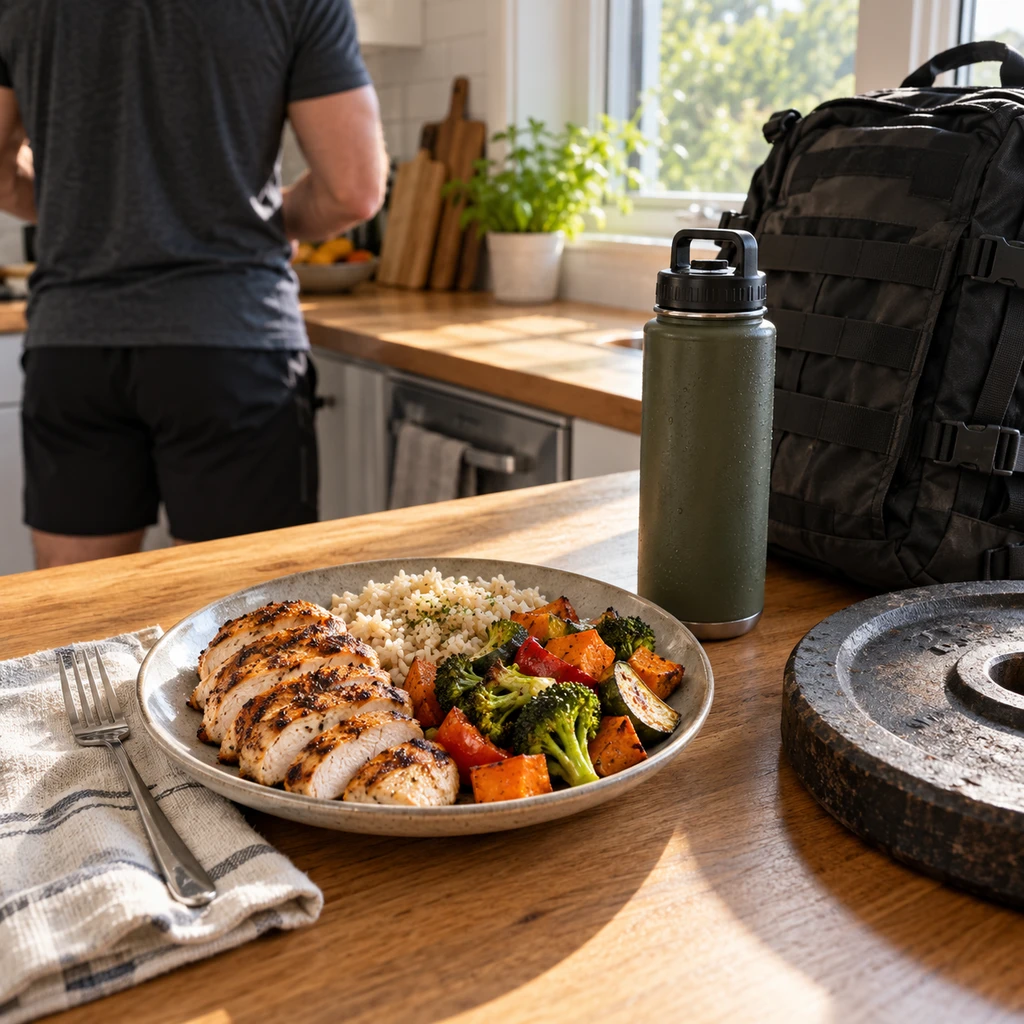
Exercise helps, but weight loss comes mostly from eating a little less than you burn over time. Rucking makes that easier by raising how much you burn, improving appetite control for many people and building the habit of looking after yourself. The Dietary Guidelines for Americans are a good free starting point.
Prioritize Protein
Protein helps you keep muscle while losing fat and keeps you full. Build meals around lean meat, fish, eggs, dairy, beans or tofu, then add vegetables and whole grains. Our high protein snack ideas work as well after a ruck as on a hike.
Do Not Overcompensate After a Ruck
A long ruck makes you hungry, and it is easy to eat back more than you burned. Plan a normal, balanced meal for afterward rather than a reward.
Drink Water
Carry water on any ruck over 30 minutes, more in warm weather. Our hiking hydration guide explains how much to drink and when.
Common Mistakes
Going Too Heavy Too Soon
More weight is not more weight loss if it injures you. Most people do better with a moderate load they can carry four times a week than a heavy one they carry once.
Ignoring Posture
Stand tall, keep your chest up and tighten the straps so the pack does not sway. Leaning forward at the waist puts strain on your lower back.
Skipping Rest Days
Feet, shins and back need time to adapt to load. Take at least one or two easy days a week, and treat persistent pain as a signal to back off.
Making Rucking a Habit
Anchor It to Your Day
Attach rucking to something you already do. Walk the dog with a pack on, ruck to the coffee shop, or take a loaded walk during a phone call. A habit tied to an existing routine survives busy weeks far better than one that needs its own time slot.
Find a Group
Rucking clubs meet in many cities, and a regular weekend group ruck keeps you accountable. Even one friend who expects you at 7 a.m. on Saturday makes a big difference to how often you show up.
Set a Goal Event
A goal on the calendar gives the training a purpose. Sign up for an organized ruck event, plan a day hike with a loaded pack, or set a personal target such as 100 rucked miles before the end of winter. Measure progress by consistency first and the scale second, and celebrate the weeks you hit every planned session.
Safety and When to Check With a Doctor
Rucking is gentle, but loaded walking is still exercise. If you have heart, joint or back conditions, are pregnant, or have been inactive for a long time, talk to your doctor before you start. The Physical Activity Guidelines for Americans recommend at least 150 minutes of moderate activity a week, and rucking is an easy way to get there.
In the dark months, wear reflective gear and carry a light; our running headlamps work just as well for early morning rucks. On trails, our fall hiking tips cover layering for cool mornings.
Frequently Asked Questions
Is rucking good for weight loss?
Yes. It burns more energy than walking without load, is low impact and easy to do often, which makes it a strong tool when combined with sensible eating.
How often should I ruck to lose weight?
Three to four times a week for 30 to 60 minutes is a good target, alongside normal daily walking and a modest calorie deficit.
How much weight should a beginner ruck with?
Start with about 10 percent of your body weight or 10 to 20 pounds, and increase slowly over several weeks.
Is rucking better than running for fat loss?
Not necessarily better, but often easier to sustain. Running burns energy faster, while rucking is lower impact and easier to do often. The one you will keep doing is the better choice.
Can I ruck every day?
Light rucks most days are fine once you have adapted, but keep heavy or long sessions to a few times a week and listen to your feet and back.
Rucking for weight loss is simple: a modest load, a brisk pace, three or four sessions a week, and meals built around protein and vegetables. Start light, add hills before weight, and give it a couple of months. When you are ready for an adventure, take your new fitness onto the trail with our trail shoe picks, or invite friends along for a group ruck and turn the habit into a weekly ritual.
Discover more from Maive Verse
Subscribe to get the latest posts sent to your email.