

This post may contain affiliate links. If you buy through them, we may earn a small commission at no extra cost to you.
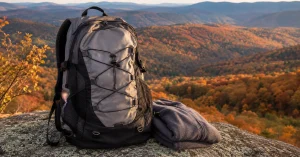
A summer day hike needs water, snacks and a phone. An autumn day hike needs all of that plus a fleece you are not wearing, a shell you hope not to need, a headlamp, gloves and a hat, and something warm to drink. That is the whole reason people who were perfectly happy with a school backpack in July start shopping in September. The best hiking daypacks are not the biggest or the most technical, they are the ones that carry a shifting load close to your back and let you get the layer out without unpacking everything above it.
Below are six of the best hiking daypacks for the season, and each wins a clear job rather than a vague overall crown: a do everything 20 litre, a proper hipbelt pack for long days, a lightweight climber style bag, a hydration pack with the bladder included, a twenty dollar packable, and a stash pack that weighs about as much as a sandwich. Prices and review counts were checked on Amazon while writing, so treat them as a snapshot rather than a promise.
Before the picks, the four things that decide whether a daypack works: how much it holds, how it sits on your hips, how it carries water, and how fast you can reach the layer at the bottom.
Why an Autumn Day Hike Needs a Different Pack
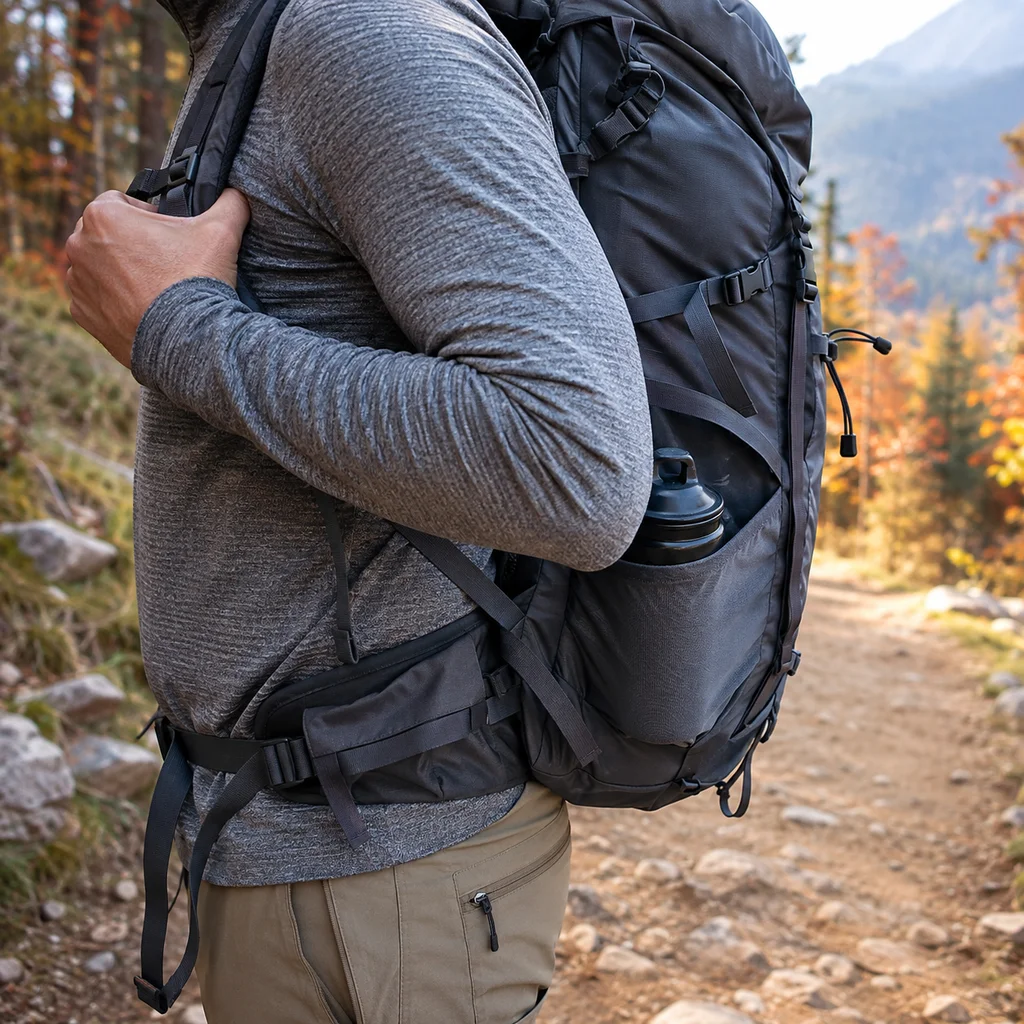
Nothing about the trail changes, but the contents of your bag do, which is why the best hiking daypacks for autumn look different from the summer ones. Three shifts happen at once in September, and together they explain why the summer pack suddenly feels wrong.
You Carry Layers You Are Not Wearing
This is the big one. In July a shell lives in the car. In October a fleece, a wind shell, gloves and a hat all travel with you, and most of the day they travel inside the pack rather than on your body. That is roughly four to six litres of compressible bulk that did not exist in summer, and it is why 15 litre packs that felt generous in June feel tight in autumn. Our guide to what to wear hiking explains which layers earn the space.
Water Goes Down, Food and Warm Drinks Go Up
Cool air cuts water consumption by roughly a litre on the same route, which sounds like a saving until you add an insulated flask of tea and food that has to survive being cold. Autumn snacks are bulkier because bars go hard and chocolate stops being a mess, so the volume balances out. If you have never worked out your real numbers, our hydration guide is the place to start, and high protein trail snacks covers what still tastes good at 40 degrees.
Weather Protection Stops Being Optional
Summer rain is an inconvenience. Autumn rain at 45 degrees with wind is the thing that ends hikes, so a pack now needs either a rain cover or a liner, and it needs the shell to be reachable in seconds rather than at the bottom under lunch. Anyone who has stood on a ridge fighting a stuck zip while sleet arrives understands why access matters as much as capacity. The same lesson applies in camp, which our notes on camping in the rain cover from the other direction.
What Changed in Hiking Daypacks for 2026
Daypacks are a mature category, so the changes among the best hiking daypacks are quiet. Three of them genuinely affect what you should buy this season.
Ventilated Back Panels Reached the Middle of the Market
Mesh covered foam ridges that hold the pack a few millimetres off your spine used to be a premium feature. They now appear at around seventy dollars, and they are the single biggest comfort upgrade over a flat panel bag. On a cool day the benefit is less obvious than in August, right up until you take the pack off at a windy overlook with a soaked shirt underneath.
Recycled Fabrics Became the Default, Not the Premium
Most mainstream packs now use recycled nylon or polyester bodies, often to the bluesign standard, and the durability question has largely been answered: a 40D to 210D recycled body holds up as well as the virgin fabric it replaced. It is a rare case where the greener option costs nothing extra, which is worth knowing if you follow the thinking in our eco friendly hiking rules.
Bottles Won Back the Day Hike
Bladders still rule for running and cycling, but for hiking the market has swung back to side bottle pockets that you can reach without stopping. The reason is simple: a bladder hides how much you have drunk, freezes at the hose first, and needs drying out after every trip. Plenty of packs keep a sleeve for one anyway, which is the sensible compromise, and the drinking habits built in July, covered in our summer hiking heat tips, are the ones worth keeping in October.
How To Choose the Best Hiking Daypacks
Four numbers and two fit checks do almost all the work. Get these right and the brand matters much less than the marketing suggests.
Capacity: How Many Litres You Actually Need
Capacity is quoted in litres and the useful range for day hiking is narrow. Buying too big is the more common mistake, because a half empty pack sags and swings.
Short Hikes and Summer Habits: 15 to 20 Litres
Enough for two litres of water, a jacket, lunch and the small stuff. It is the right size for two to four hour loops and for anyone who hikes in mild conditions, and it stays comfortable because there is no room for the load to shift. In autumn it works right up until you need to carry a fleece and a shell at the same time.
The Autumn Sweet Spot: 20 to 25 Litres
This is where most fall day hiking sits. Twenty to twenty five litres swallows two spare layers, a flask, a first aid kit and food for a long day, and it is still small enough that a stuffed pack is stable. If you buy one pack for the whole season, buy this size.
Long Days, Kids and Winter Overflow: 28 to 35 Litres
Above about 28 litres you are carrying other people gear, winter insulation, or camera kit. Family hikes end up here fast, because adults carry the children spare clothing and half their snacks. Our notes on hiking with kids should tell you whether that is your reality.
Fit and Torso Length Beat Every Other Feature
A pack rides on the top of your hips and stabilises against your upper back, which means torso length, not height, decides whether it feels good. Measure from the bony bump at the base of your neck to the level of the top of your hip bones. Most daypacks come in one size that suits roughly 16 to 20 inches, and the ones offered in S/M and L/XL are worth the extra decision if you are outside that band. Women specific versions differ in shoulder strap curve and hipbelt angle rather than volume, and for many people that is the difference between a pack that rubs and one that disappears.
Hipbelt or Sternum Strap Only
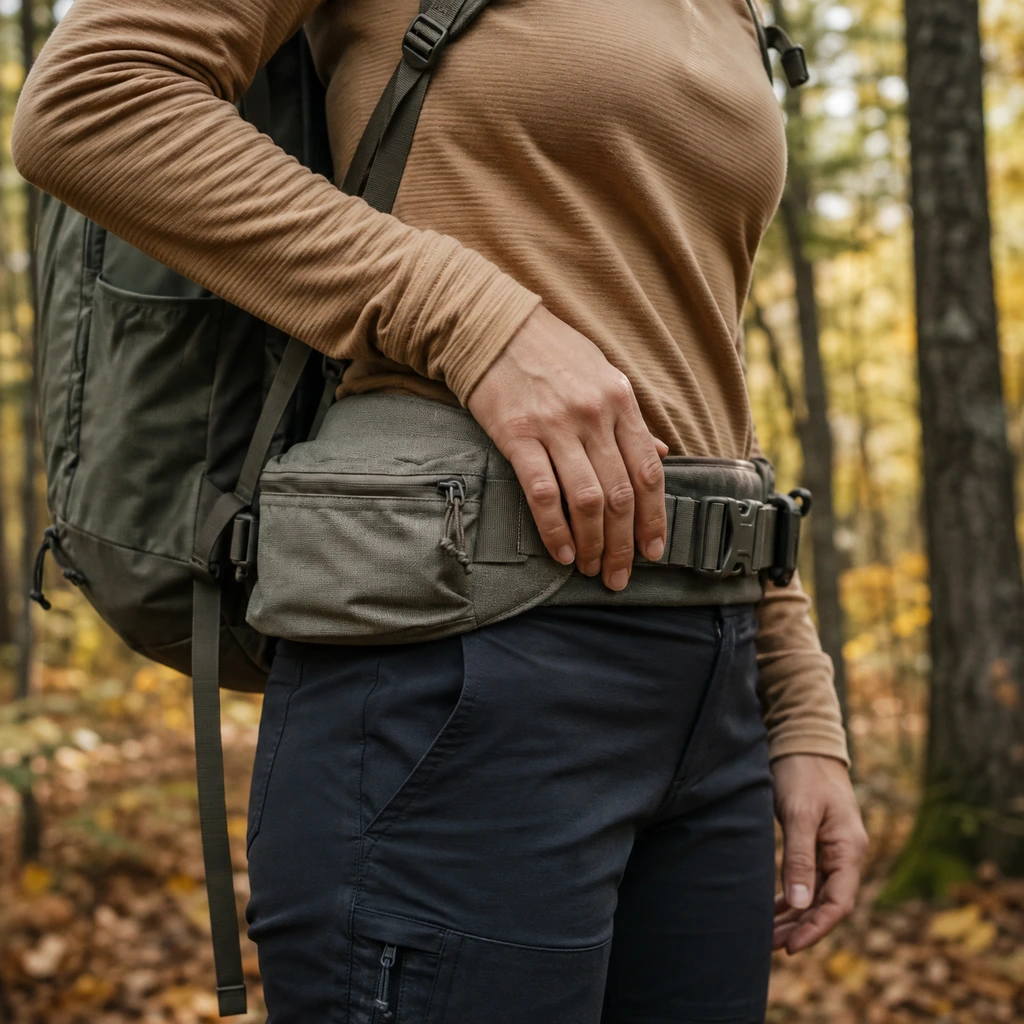
Under about eight pounds of load, a sternum strap and good shoulder straps are enough. Above that, a real padded hipbelt moves weight off your shoulders and onto your legs, and the difference over a five hour day is dramatic. A webbing strap with no padding is not a hipbelt, it is a stabiliser, which is fine on a light pack and useless on a heavy one. If your autumn day includes serious climbing, our guide to training for elevation pairs with this: the pack that carries badly is the one that ruins the ascent.
How the Pack Carries Water
Look for two things: stretch side pockets angled forward enough that you can grab a bottle while walking, and a hydration sleeve with a hose port if you ever want a bladder. The best hiking daypacks give you both and let you choose per trip. Bladder only packs are excellent for fast hiking and poor for anything where you want to see your remaining water, and if you are filtering on the trail our water filtration notes transfer directly.
Rain Protection: Cover, Liner or Neither
Very few daypacks are genuinely waterproof, whatever the product page says. Three approaches work. An integrated rain cover in its own pocket is fastest and most secure in wind. A dry bag or bin liner inside the pack protects the contents but not the pack. A water resistant body handles drizzle and nothing more. Pick one deliberately, because discovering which you own in a downpour is expensive.
Weight, and Where It Stops Mattering
Empty weight for a 20 litre pack runs from about five ounces for a stash pack to a little over two pounds for a fully featured one with a hipbelt and a frame sheet. Below one pound you are giving up padding and structure. Around one to one and a half pounds is the sweet spot for day hiking. Above two pounds you should be getting a real suspension system in return. Chasing grams past that point is a backpacking argument, not a day hiking one, as our piece on thru hiking body adaptation explains.
Access, Pockets and the Things You Grab Twice an Hour
The pockets you use most are the hipbelt pockets, the lid pocket and the front stretch shove it panel. A shove it is the single most useful autumn feature on a pack, because the fleece you keep taking off and putting on lives there instead of being buried. Zipped hipbelt pockets hold a phone and snacks without stopping. Everything else is nice to have. For the underlying method, our ultralight day pack packing hacks and guide to packing a bag properly both apply.
The 6 Best Hiking Daypacks for Fall Day Hikes
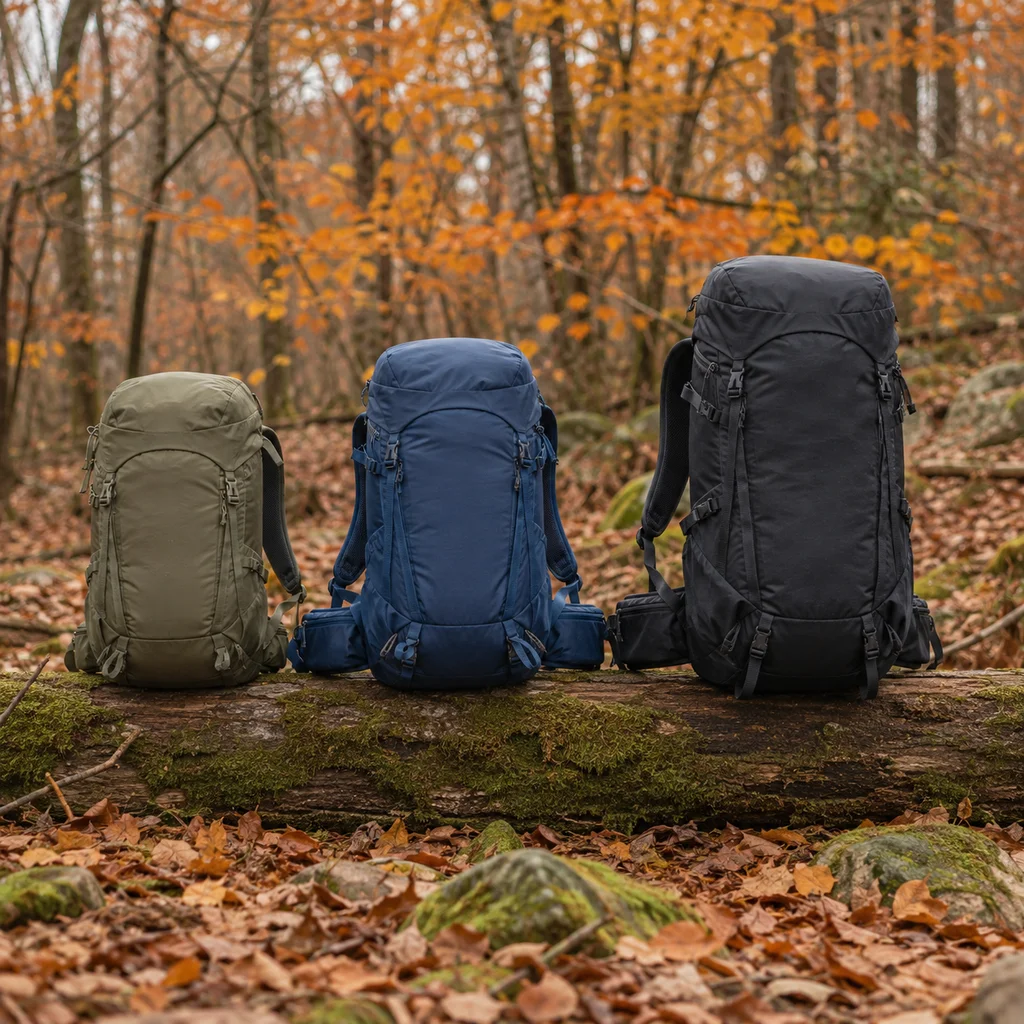
Each of these owns a category. Where two look similar, the difference is usually the hipbelt or the water carry rather than the litres. Buttons go to Amazon, and prices move constantly.
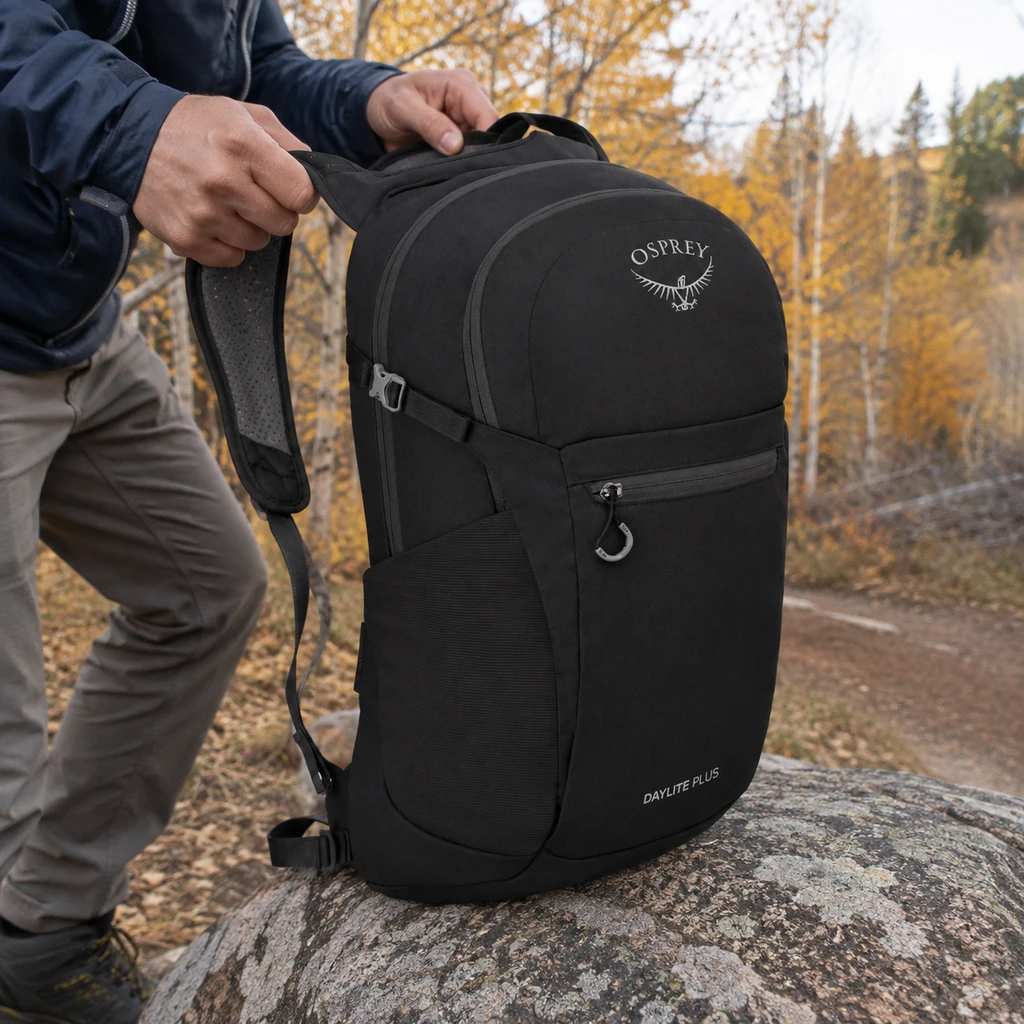
Osprey Daylite Plus 20L: Best Overall
Twenty litres, a ventilated AirScape back panel, dual stretch side pockets and a front shove it panel is exactly the specification most autumn day hikes want, and it lands around seventy dollars. The padded sleeve inside takes a 14 inch laptop, which sounds irrelevant on a trail until you realise it doubles as the pack you take to work and on planes.
It weighs about 1.29 pounds, the body is recycled bluesign approved polyester, and the harness is a simple sternum strap plus a light webbing waist strap rather than a load bearing hipbelt. That is the honest limit: it carries eight or nine pounds beautifully and starts to sit on your shoulders beyond that. Reviews sit at 4.7 stars across more than 3,700 ratings, which for this category is unusually deep.
Who It Is For
Anyone who wants one pack for autumn day hikes, travel and commuting, and who hikes with a moderate load rather than a full winter kit.
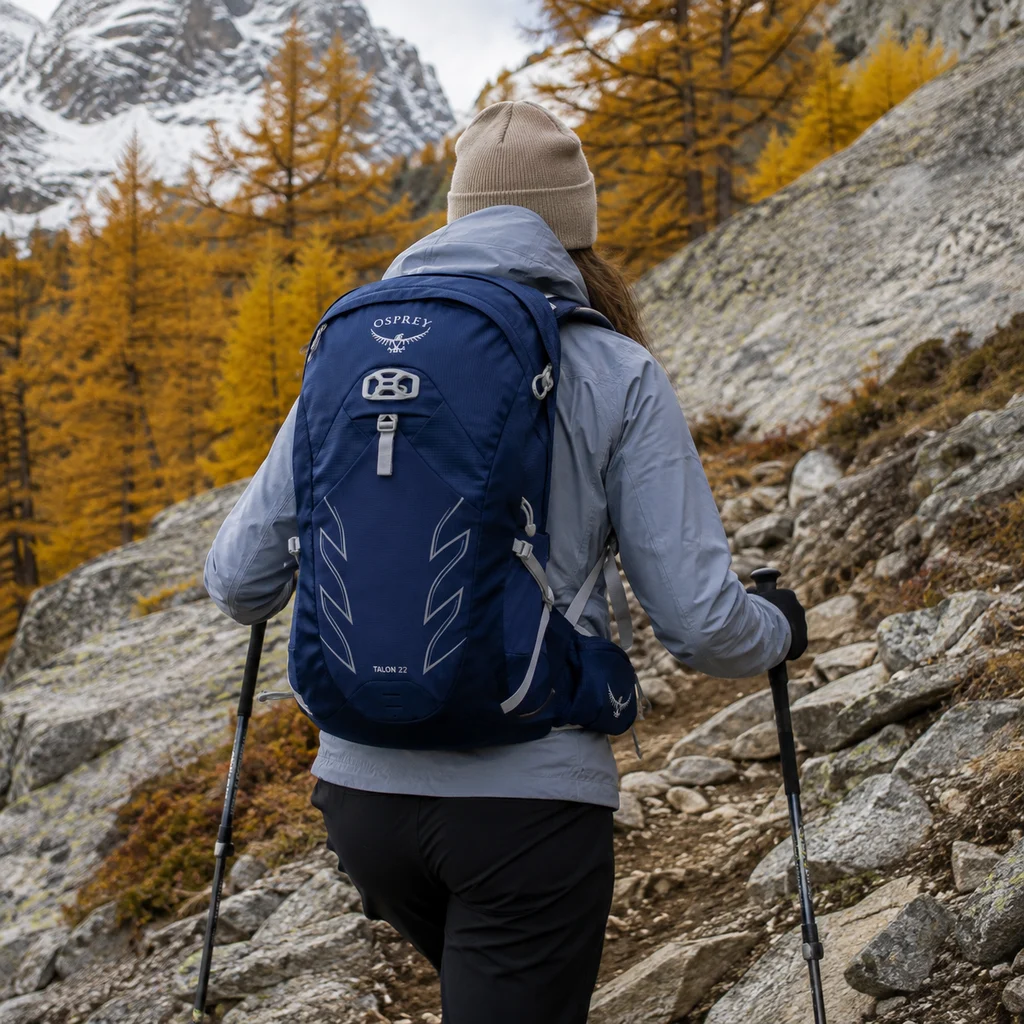
Osprey Talon 22: Best for Long Fall Day Hikes
The Talon is what you buy when the day is eight hours rather than three. It has a genuine padded hipbelt with two zippered pockets, a frame that transfers weight, trekking pole attachment and the same ventilated panel, all in 22 litres. Loaded with layers, food, a litre and a half of water and a first aid kit, it still feels like it belongs to you rather than the other way round.
The trade offs are price and weight: it is the most expensive pack here by a wide margin, and it is heavier than the minimalist options. It comes in S/M and L/XL, which matters more than most buyers expect, and it holds 4.7 stars across roughly 1,700 ratings. There is a women specific equivalent with a different harness geometry if the shoulder straps do not sit right.
Who It Is For
Long autumn days, hikers who carry weight for other people, and anyone who has ever finished a hike with sore shoulders and blamed the hike.
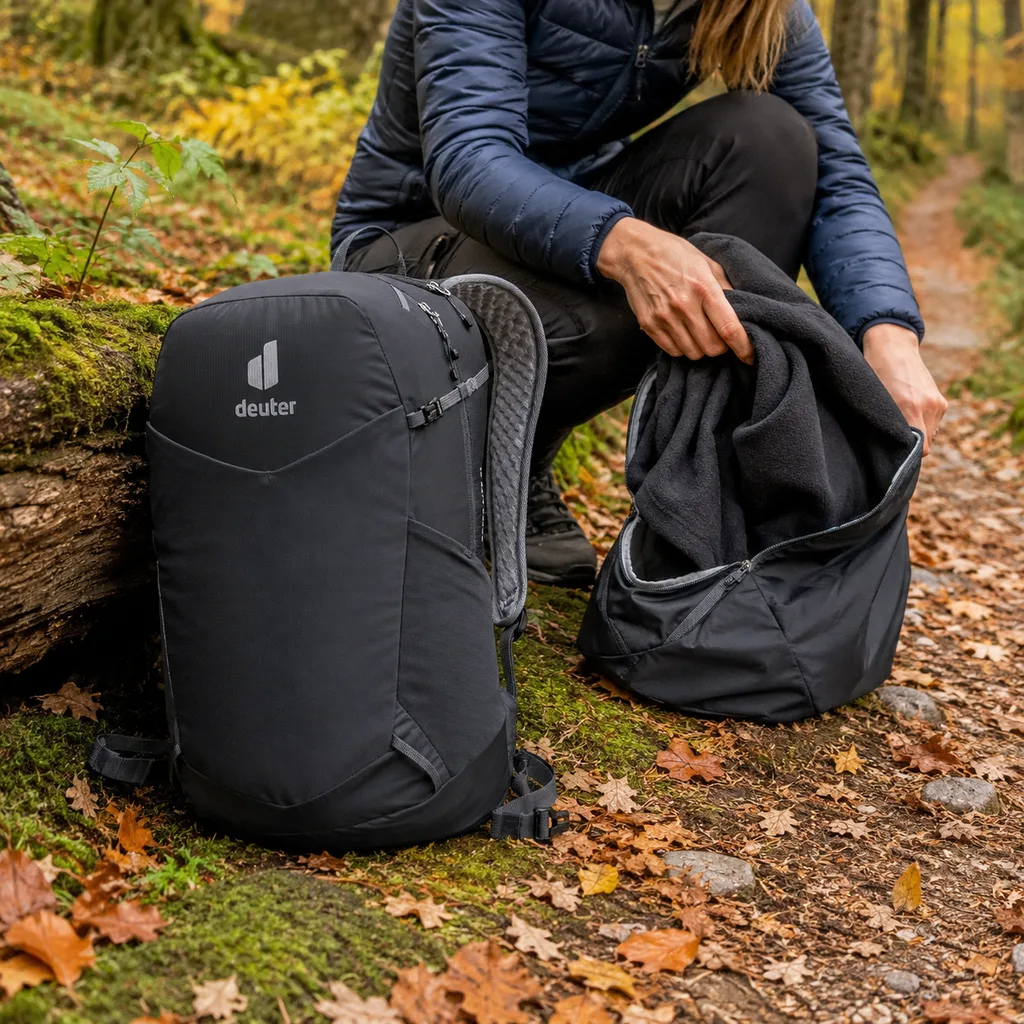
Deuter Speed Lite 21: Best Lightweight Pack
This is the climber influenced option: a narrow V shaped body that stays out of the way of your arms, a detachable waist belt, and enough structure to carry a real load without the bulk of a full suspension pack. The stretch front pocket takes gloves and a hat, and the internal stretch compartment keeps a shell separate from lunch.
It is hydration compatible for a two litre bladder, the zip pulls are big enough to work with gloves on, and the body fabric is 100 percent recycled to the bluesign standard. Ratings sit at 4.6 stars from just under 500 reviews, a smaller sample than the Osprey packs but consistent. The detachable belt is the detail that sells it: carry it as a hipbelt pack on heavy days and strip it on light ones.
Who It Is For
Fast hikers, scramblers and anyone who wants the load carried close to the spine with nothing flapping.
Teton Oasis 18L: Best Hydration Pack
A two litre bladder is included, which is the reason to buy it. The bladder sits in an insulated sleeve that keeps water cool in late summer and stops the hose freezing first on a cold morning, and the bite valve locks so it does not weep into the pack. Eighteen litres leaves room for a fleece, a shell and food once the water is inside.
It also has the feature most packs at this price skip: a sewn in rain cover. Add weather guarded zips and a bungee system for a helmet or a jacket, and y