
This post may contain affiliate links. If you buy through them, we may earn a small commission at no extra cost to you.
The Orion constellation is the easiest star pattern in the winter sky to find, and once you know it, it becomes your map to half the night sky. Its three bright belt stars in a short, straight row are hard to miss, even from a suburban backyard with some light pollution. From mid November through March, Orion climbs over the eastern horizon in the evening and rules the southern sky by midnight. If you are brand new to looking up, our stargazing for beginners guide covers the basics first.
This guide shows you when and where to look, how to recognize Orion’s brightest stars, what you can see with just your eyes or a pair of binoculars, and how to use Orion as a signpost to hop to Sirius, Aldebaran and the Pleiades. You will also find tips for photographing it and staying warm while you watch on cold winter nights.
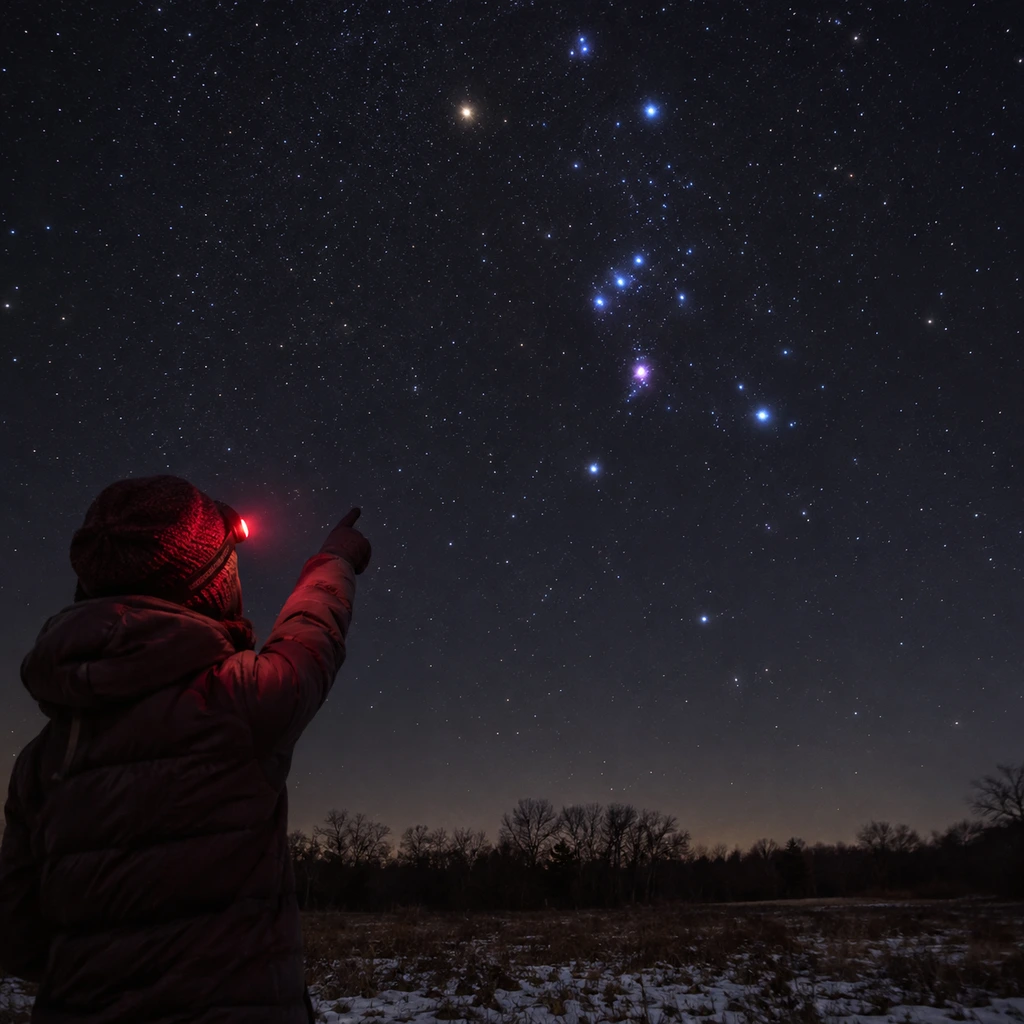
Table of Contents
When and Where to See the Orion Constellation
Orion sits on the celestial equator, which means it can be seen from almost everywhere on Earth. For skywatchers in the United States, it is a classic winter constellation, and the timing shifts a little earlier each night as the season goes on.
Best Months to Look
In mid November, Orion rises in the east around 9 or 10 p.m. and is well placed by midnight. By late December and January it is already up in the southeast after dinner, and by February and March it is high in the south as soon as the sky gets dark. By April it sinks into the western twilight in the evening and disappears behind the Sun until late summer.
Which Direction to Face
In the evening during late fall, face east. In midwinter, face south. Orion climbs from the eastern horizon toward the south over the course of the night, the same way the Sun moves during the day. A free stargazing app can confirm the direction, but you will soon find it without one.
Finding a Dark Enough Sky
Orion’s main stars are bright enough to see from a city. To see the fainter stars around it and the glow of the Orion Nebula, get away from streetlights to a park, a rural road or a campsite. Let your eyes adjust to the dark for 15 to 20 minutes and use a red light instead of a white flashlight, so you do not reset your night vision.
How to Find Orion’s Belt
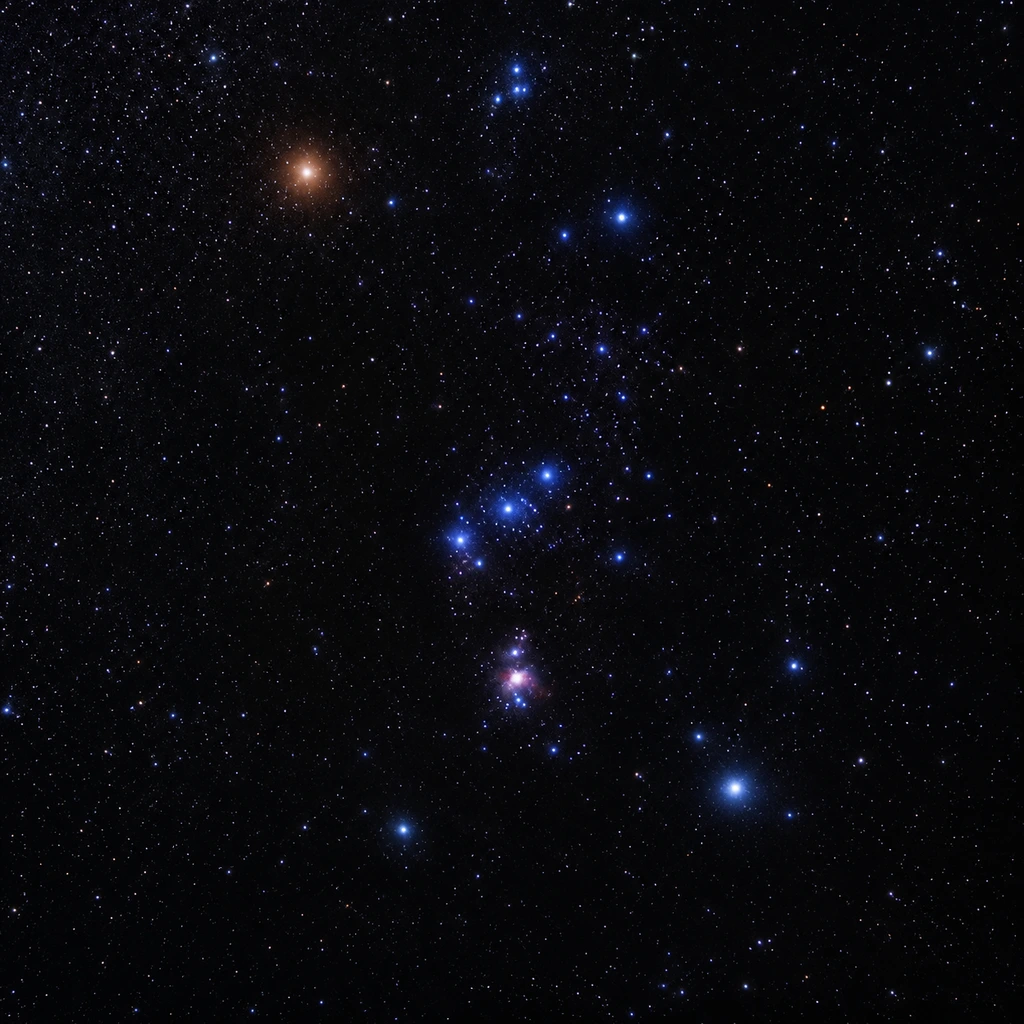
Start with the belt. Look for three bright stars of similar brightness lined up in a short, straight, slightly tilted row. Nothing else in the sky looks quite like it. When Orion is rising in the east, the belt stands nearly upright. As it climbs toward the south, it tilts over until it is close to horizontal.
The Three Belt Stars
From left to right as you face south, the belt stars are Alnitak, Alnilam and Mintaka. All three are hot, blue white stars hundreds of times brighter than our Sun, and they are hundreds of light years away. Mintaka, the westernmost star, sits almost exactly on the celestial equator, so it rises due east and sets due west wherever you are.
The Box Around the Belt
Once you have the belt, look for four bright stars forming a large box or hourglass shape around it. The two upper stars are Orion’s shoulders, and the two lower stars are his knees or feet. Together with the belt, they make up the hunter’s body.
The Brightest Stars in the Orion Constellation
Orion has more bright stars than any other constellation in the sky, and each of its main stars has its own character.
Betelgeuse
Betelgeuse marks Orion’s upper left shoulder as you face south, and its orange red color stands out clearly, even to the naked eye. It is a red supergiant, a huge, aging star so large that, placed where our Sun is, it would swallow the orbits of several planets. Its brightness changes slowly over months and years.
Rigel
Rigel sits at the lower right, at Orion’s foot, and shines a brilliant blue white. It is usually the brightest star in the constellation. Comparing the warm color of Betelgeuse with the cool color of Rigel is one of the simplest and most striking things you can do on a winter night.
Bellatrix and Saiph
Bellatrix marks the upper right shoulder and Saiph the lower left knee. Both are blue white stars, a little fainter than Betelgeuse and Rigel, and they complete the box around the belt.
Orion’s Head, Club and Shield
Above the shoulders, a small, faint triangle of stars marks Orion’s head. From a dark site you can trace a curve of stars rising from his raised arm as a club, and a gentle arc of faint stars to the right as the shield or the lion’s pelt he holds up toward Taurus.
How to See the Orion Nebula
Hanging below the belt is a short line of fainter stars called Orion’s sword. The middle “star” in the sword looks a little fuzzy to the naked eye from a dark site. That fuzz is the Orion Nebula, also known as M42, a huge cloud of gas and dust about 1,300 light years away where new stars are being born.
With Binoculars
Binoculars turn the fuzzy spot into an obvious glowing cloud with a few stars in the middle. Brace your elbows on a car roof or a chair, or put the binoculars on a tripod, to steady the view. Our list of the best binoculars for stargazing includes models that are easy to hold steady.
With a Small Telescope
Even a small telescope at low power shows the nebula’s wings of gas spreading out like a bird and four tight stars at its heart called the Trapezium. It is one of the finest sights in the sky for any first telescope. See our picks for the best telescopes for beginners and best telescopes for kids, and our guide on how to use a telescope to get it pointed in minutes.
Using Orion to Find Other Stars
Orion works like a giant arrow in the sky. Once you can find it, you can hop to several of the brightest stars and star clusters of winter.
Follow the Belt Down to Sirius
Follow the line of the belt down and to the left, about eight belt lengths, and you reach Sirius, the brightest star in the night sky. Sirius is in the constellation Canis Major, Orion’s big hunting dog. When it is low on the horizon, it often twinkles in flashes of color.
Follow the Belt Up to Aldebaran and the Pleiades
Follow the belt the other way, up and to the right, and you come to Aldebaran, the orange eye of Taurus the bull. Keep going about as far again and you reach the Pleiades, a tight, shimmering cluster of stars that looks like a tiny dipper. It is beautiful in binoculars.
Trace the Winter Hexagon
Using Rigel as a starting point, you can draw a huge loop through Aldebaran, Capella, Pollux, Procyon and Sirius, with Betelgeuse near the middle. This loop of bright stars is often called the Winter Hexagon, and Orion is its anchor.
Orion and Meteor Showers
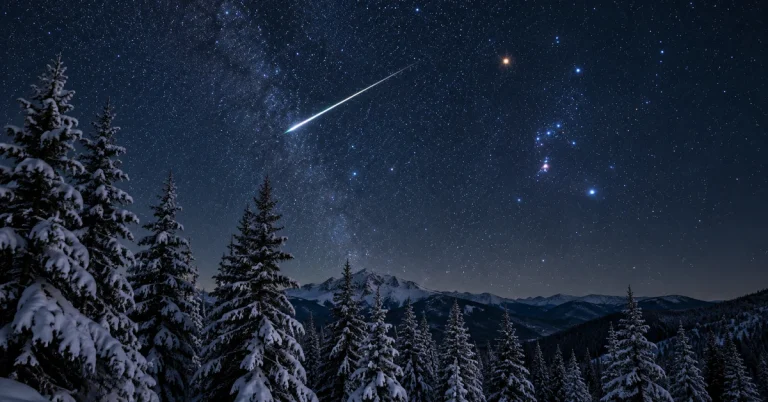
Each October, the Orionid meteor shower appears to radiate from near Orion’s raised club. Our Orionid meteor shower guide explains when to watch next year. Two other showers, covered in our guides to the Leonid meteor shower in November and the Geminid meteor shower in December, peak on nights when Orion is up, so you can enjoy both at once.
Tips for Photographing the Orion Constellation
Orion is a perfect first target for night sky photography. A camera or phone on a tripod, a wide lens, a few seconds of exposure and a high ISO capture the full figure and the red glow of the nebula. A sturdy tripod from our list of the best tripods for astrophotography helps, and our guide on how to photograph the night sky walks you through the settings.
Staying Warm on Winter Stargazing Nights
Orion is a winter constellation, so the best nights to see it are often the coldest. Dress in layers as you would for any winter activity, with a hat and warm gloves. Our guide on what to wear skiing covers a layering system that works just as well for standing still under the stars, and our list of the best ski gloves includes warm mittens.
Bring something comfortable to sit on, like one of the best reclining camping chairs, so you can lean back without a sore neck, and wrap up in a warm blanket such as the Arcturus military wool blanket. If the grass is damp with frost, a waterproof option like the REDCAMP waterproof stadium blanket keeps the cold ground from soaking through, and a packable Rumpl puffy blanket wraps around your shoulders like a sleeping bag. A thermos of hot cocoa does not hurt either. Once you have found Orion, try finding a much fainter target in our guide on how to find the Andromeda Galaxy.
Frequently Asked Questions
Can I see the Orion constellation tonight?
In mid November, look east after about 10 p.m. Orion rises a little earlier each night, so by late December it is visible in the evening, and from January through March it is easy to see right after dark.
Why is Orion’s belt so easy to see?
Its three stars are bright, similar in brightness and very evenly spaced in a short straight line. No other pattern in the sky looks like it, which makes it a favorite starting point for beginners.
Can you see Orion from the Southern Hemisphere?
Yes. Orion sits on the celestial equator, so it is visible from both hemispheres. From Australia or South America it appears upside down, with Rigel above the belt and Betelgeuse below.
Is Betelgeuse going to explode?
One day, yes. Betelgeuse is a dying red supergiant expected to end as a supernova, but that could happen any time in the next hundred thousand years. When it does, it will be bright enough to see in daylight for weeks.
Discover more from Maive Verse
Subscribe to get the latest posts sent to your email.