
This post may contain affiliate links. If you buy through them, we may earn a small commission at no extra cost to you.
Figuring out what to wear skiing is the first real puzzle of any ski trip. Dress too light and you spend the day shivering on the chairlift. Dress too heavy and you sweat on the first run, then freeze on the next lift ride as that sweat cools. The answer is not one big, expensive coat. It is a simple system of layers that you can adjust as the day, the weather and your effort change. If you are still building your kit, our complete winter skiing equipment guide covers the hardware side.
This guide walks through the three layer system, then goes head to toe through every piece of clothing you need, from base layers and ski socks to helmets, goggles and gloves. You will also find how to adjust for bitter cold, spring slush and snowy days, what to wear on your very first day, the mistakes that ruin a day on the hill, and a quick packing checklist you can screenshot.
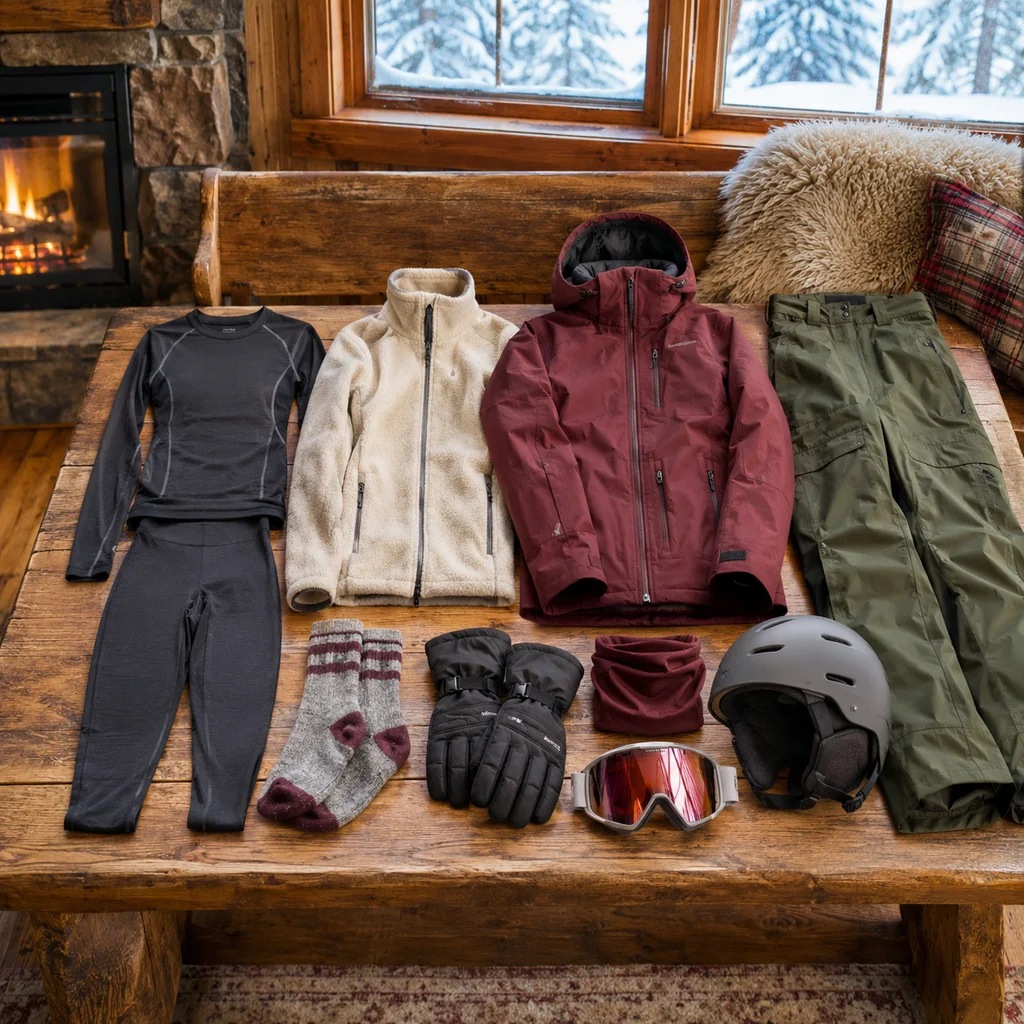
Table of Contents
The Three Layer System Explained
Every experienced skier dresses in layers, and for good reason. Your body produces a lot of heat while you ski and very little while you sit on a lift or wait in a lift line. Layers let you trap warmth when you need it and dump it when you do not. Each layer has a specific job, and getting each one right matters more than spending a lot on any single piece.
Base Layer: Move Sweat Away From Your Skin
The base layer sits against your skin, and its only job is to pull moisture away from your body so you stay dry. Wet skin gets cold fast. Merino wool and synthetic fabrics like polyester both work well. Merino stays warm when damp and resists odor over several days, while synthetics dry faster and cost less. A full set such as the Merino.tech merino wool base layer covers both your top and legs.
Never wear cotton as a base layer. Cotton soaks up sweat, holds it against your skin and loses all its insulation when wet. That one choice causes more cold, miserable ski days than anything else.
Midlayer: Trap Your Body Heat
The midlayer is your insulation. It traps the warm air your body creates. A fleece jacket is the classic choice because it is warm, breathable and inexpensive. A light down or synthetic puffy is warmer for its weight and packs small, which helps on very cold days. Our list of the best insulated jackets includes light puffies that work well under a ski shell.
On mild days you might skip the midlayer completely. On frigid days you might wear two. This is the layer you add or remove most often, so a full zip version is easier to vent.
Outer Layer: Block Wind, Snow and Water
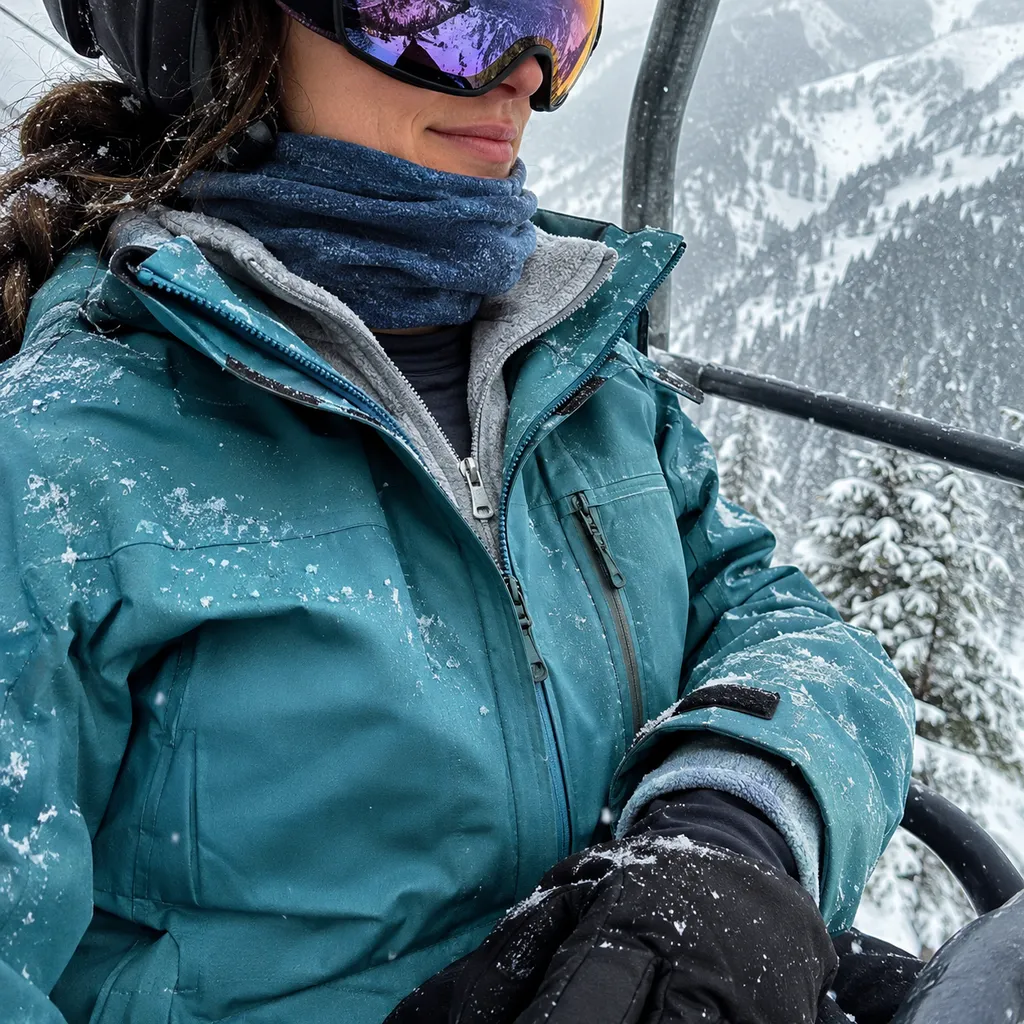
The outer layer is your ski jacket and ski pants. They keep snow, wind and wet weather out while letting sweat vapor escape. Look for a waterproof rating of at least 10,000mm and features like pit zips for venting, a powder skirt to stop snow going up your back, and a helmet compatible hood. Our guide to the best ski jackets compares insulated and shell options.
An insulated jacket is simpler for beginners and resort skiers who run cold. A shell with no insulation is more versatile, since you control the warmth with your midlayer. The same idea applies to the layering approach in our hiking layering guide, which works on the slopes too.
What to Wear Skiing From Head to Toe
With the layer system in place, here is every piece of clothing and gear you will wear on the hill, starting at the top.
Helmet
A ski helmet is non negotiable today, and it is also one of the warmest things you can wear, since it insulates your head and blocks wind. Most helmets have adjustable vents for warm days and removable ear pads. Wear a thin skull cap or nothing underneath, not a thick beanie, which ruins the fit. Our picks for the best ski helmets all meet current safety standards.
Goggles
Goggles protect your eyes from wind, snow, glare and UV, which is much stronger at altitude and reflects off the snow. Choose a lens for the light you ski most often, or a pair with interchangeable lenses for sunny and flat light days. Make sure they fit snugly with your helmet so there is no gap on your forehead. Our guide to the best ski goggles explains lens tints in detail.
Neck Gaiter or Balaclava
A neck gaiter or balaclava covers the gap between your jacket collar and your helmet, the spot where cold wind bites hardest on the lift. On very cold days, a fleece balaclava such as the Tough Headwear balaclava covers your face, ears and neck under the helmet. Pull it down over your chin when you warm up.
Ski Jacket
Your jacket should fit with room for a midlayer underneath and long enough sleeves to cover your wrists when you reach forward with poles. Pockets matter more than you think: a chest pocket for your phone keeps the battery warmer, and a sleeve pocket for your lift pass saves fumbling at every gate.
Ski Pants or Bibs
Ski pants should be waterproof, roomy enough to bend your knees deeply, and long enough to cover your boot tops. Built in gaiters slide over your boots to keep snow out. Bibs, which have a high chest panel and straps, stop snow from getting in at your waist when you fall and are warmer for skiers who run cold.
Gloves or Mittens
Cold hands end more ski days than cold anything else. Waterproof, insulated ski gloves give you more dexterity, while mittens are warmer because your fingers share heat. If your hands always freeze, choose mittens or add a thin liner glove. Budget picks like the MCTi waterproof ski gloves have a zip pocket that holds a hand warmer.
Ski Socks
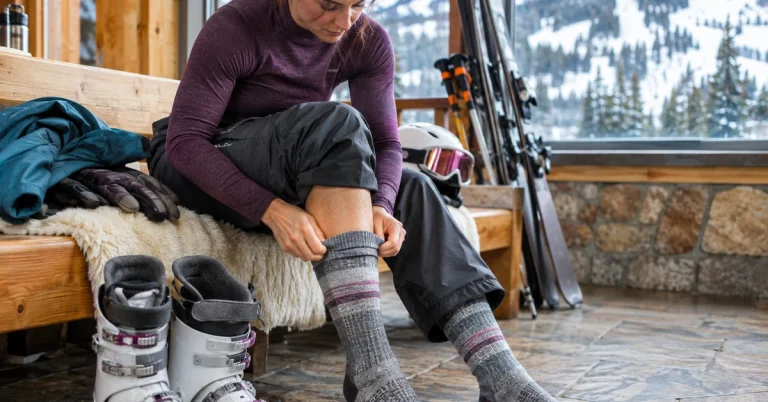
Wear one pair of thin to midweight ski socks that rise above your boot cuff. Thick socks or two pairs feel warmer but cut off circulation and make your feet colder, and they let your foot slide in the boot. Merino ski socks like the OutdoorMaster merino ski socks stay warm and fight odor. Our list of the best hiking socks explains cushion levels.
Ski Boots
Ski boots should feel snug, almost tight, with your toes lightly touching the front when you stand straight and pulling back when you flex your knees. Never tuck your base layer or pants into the boot, since fabric folds create painful pressure points. If your current boots hurt or feel loose, our guide to signs you need new ski boots helps you decide.
How to Dress for the Conditions
Check the forecast for the summit, not the town, before you get dressed. Temperatures at the top can be 10 to 20 degrees colder than the base, and wind on the lift makes it feel colder still.
Bitter Cold Days Below 15F
Add a second midlayer or swap fleece for a puffy, wear a balaclava instead of a gaiter, and switch to mittens. Put a hand warmer in each glove and a toe warmer on top of each foot before you boot up. Take short breaks in the lodge to warm your hands and feet before they go numb.
Mild and Spring Ski Days
On sunny spring days above freezing, skip the midlayer and wear only a base layer under a shell, with pit zips open. Use lighter gloves, a goggle lens for bright light, and plenty of sunscreen, since sunburn on the slopes is common in March and April.
Snowy or Wet Days
Waterproofing matters most on stormy days. A fully waterproof jacket and pants keep you dry, and a goggle lens for flat light helps you see the terrain. Pack a spare pair of gloves in your car or locker, because wet gloves never warm back up. Powder days have their own tricks, covered in our guide to skiing in powder vs groomed runs.
What to Wear Skiing for the First Time
First timers do not need to buy everything. Most resorts rent skis, boots, poles and helmets, and many rent jackets and pants too. Focus your money on the pieces that touch your skin and that rental shops do not offer: a good base layer, ski socks, warm gloves and a neck gaiter. Those four things make the biggest difference to how warm and comfortable you feel.
Borrow or Rent the Big Pieces
Waterproof pants and jackets are easy to borrow from friends for a first trip. If you buy, an insulated jacket and basic waterproof pants are a safe start. Before your first lesson, spend a few minutes learning ski slope difficulty ratings and how to read a ski resort trail map so you stay on runs that match your level.
Dressing Kids for the Slopes
Kids lose heat faster than adults and rarely tell you they are cold until they are miserable. Dress them in the same three layers, choose mittens over gloves, and pack a spare base layer top and dry gloves. Bibs keep snow out when they fall, which they will, often.
What Not to Wear Skiing
- Cotton anything, including jeans, hoodies and cotton socks. Cotton holds moisture and leaves you cold.
- Two pairs of socks. They cut off circulation and cause blisters.
- A scarf. Loose ends can catch on lifts. Use a neck gaiter instead.
- A thick beanie under your helmet. It ruins the fit and protection.
- Sunglasses instead of goggles. They fog, slip and leave gaps for wind and snow.
- Too many layers on the first run. Start slightly cool, since you warm up quickly once you ski.
Ski Day Packing Checklist
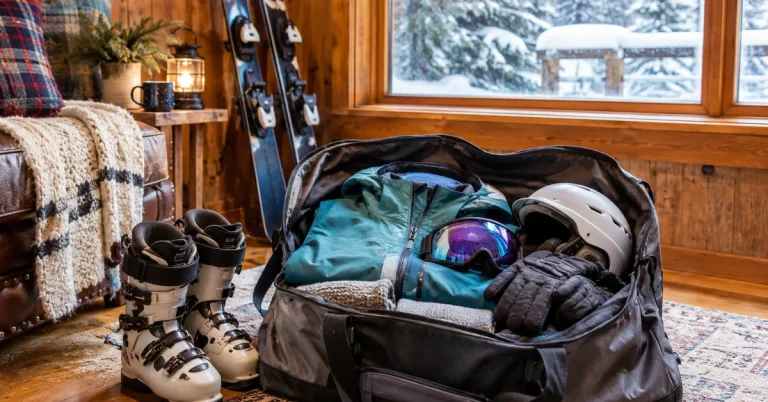
Lay everything out the night before so you do not forget a glove in a dark parking lot. A dedicated bag from our list of the best ski bags keeps it all together.
- Base layer top and bottoms
- Fleece or light puffy midlayer
- Waterproof ski jacket and pants or bibs
- Ski socks, plus a spare pair
- Ski gloves or mittens, plus liners or a spare pair
- Neck gaiter or balaclava
- Helmet and goggles
- Hand and toe warmers
- Sunscreen and lip balm with SPF
- Lift pass, phone, water and a snack
Getting fit before the season makes every run more fun, too. Our ski fitness plan builds the leg strength that keeps you skiing all day, and the right ski poles round out your kit.
Frequently Asked Questions
What do you wear under a ski jacket?
A moisture wicking base layer of merino wool or synthetic fabric, plus a fleece or light puffy midlayer on cold days. On warm spring days, the base layer alone under a shell is usually enough.
Can I wear leggings skiing?
Yes, as a base layer under waterproof ski pants. Synthetic or merino leggings work well. Do not wear leggings alone as your outer layer, since they are not waterproof or windproof.
Can you ski in jeans?
You can, but you should not. Denim is cotton, so it soaks up snow and sweat, freezes stiff and leaves you cold and wet within an hour.
How many layers should you wear skiing?
Usually three: a base layer, a midlayer and a waterproof outer layer. On very cold days add a second midlayer, and on warm days drop the midlayer. Knowing what to wear skiing is really about adjusting those layers, not owning the warmest coat.
Discover more from Maive Verse
Subscribe to get the latest posts sent to your email.