

This post may contain affiliate links. If you buy through them, we may earn a small commission at no extra cost to you.
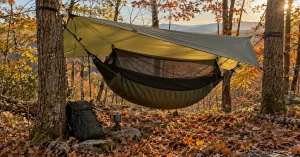
A good hammock camping gear list looks a little different from a tent list. You trade the tent, poles and sleeping pad for a hammock, a suspension system, a tarp and insulation that hangs underneath you, and the rest of your kit shifts around those pieces. Get them right and a hammock is the most comfortable bed in the woods. Miss one and you spend the night cold, wet or swinging into a tree.
This list covers everything you need for a comfortable night, from the hammock itself to the small extras that make camp easier, plus how the kit changes between summer and cold weather. If you have never hung a hammock before, start with our hammock camping for beginners guide and come back here to build your kit.
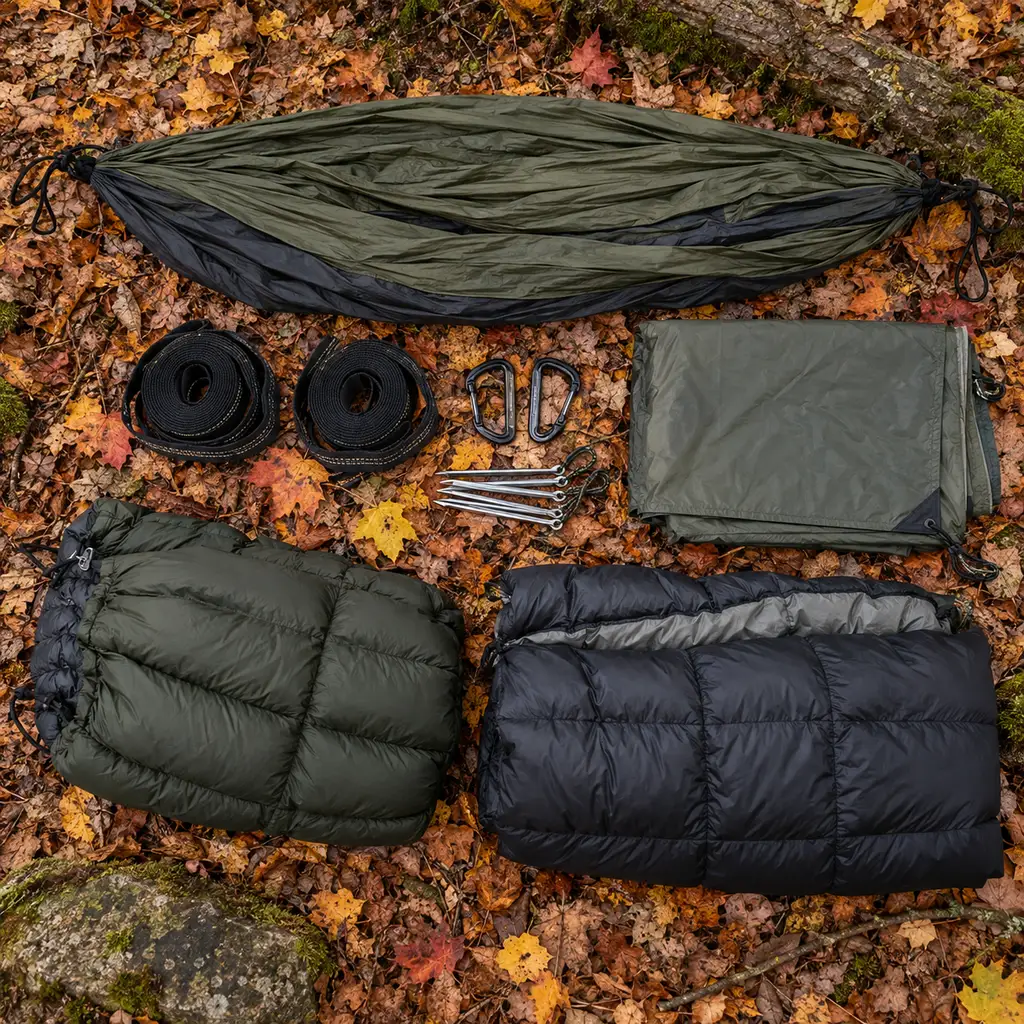
Table of Contents
The Sleep System: Hammock, Suspension and Bug Net
The Hammock Itself
Most campers use a gathered end hammock: a rectangle of fabric cinched at each end. It is simple, light and comfortable once you learn to lie at a slight diagonal, which flattens your body out. Look for one at least 10 to 11 feet long if you are over about 5 foot 8, because a longer hammock gives a flatter lay. Width matters less, but wider fabric gives you more room to get that diagonal.
Bridge hammocks use spreader bars at each end to hold the fabric open, which gives a flatter, more bed-like lay at the cost of extra weight and setup time. They suit side sleepers who never get comfortable in a gathered end. Most hammocks are made from ripstop nylon or polyester; check the weight rating against your body weight plus a margin. Our picks for the best camping hammocks cover both styles.
Suspension: Straps, Slings and Carabiners
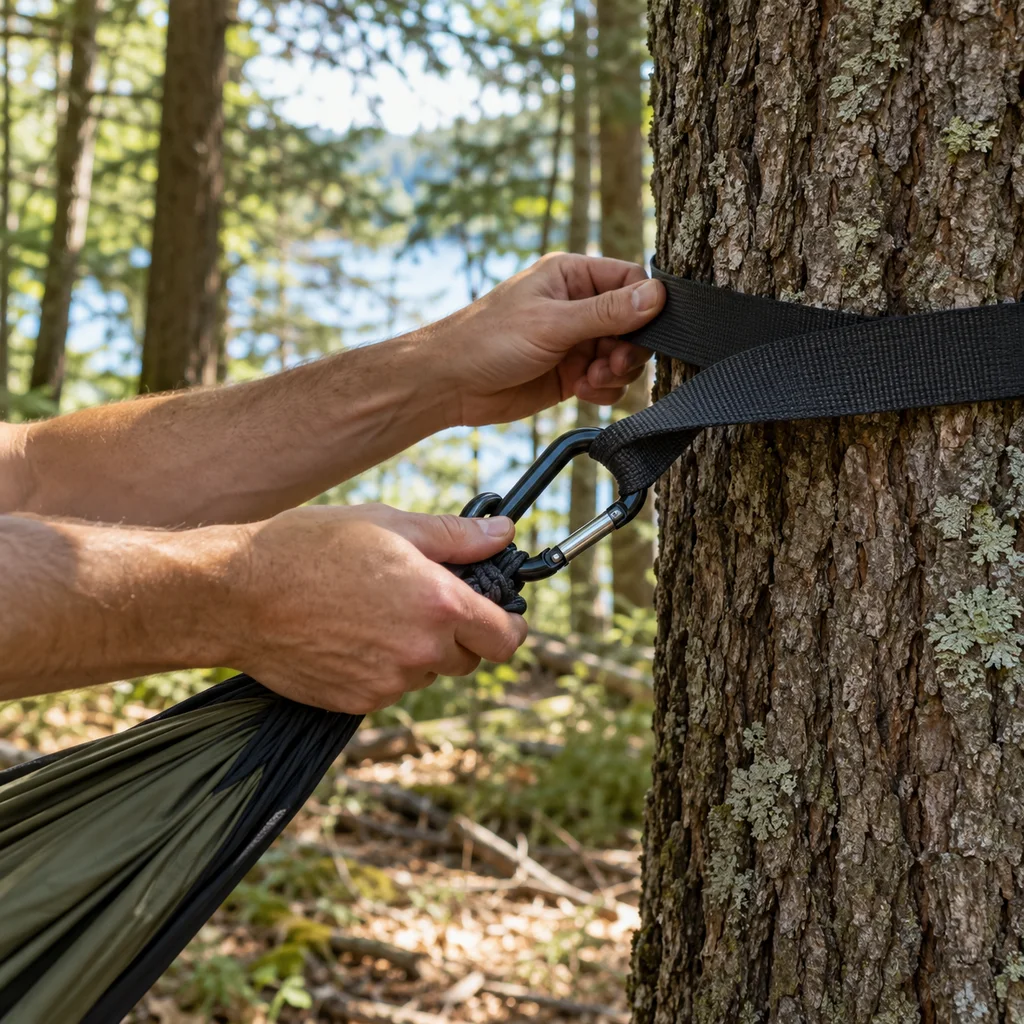
Suspension is what connects the hammock to the trees, and it is the part people most often get wrong. Use wide tree straps, roughly an inch or wider, rather than rope. Thin cord cuts into bark, and wide straps are part of the Leave No Trace principles that many parks now require. Many straps come with daisy-chain loops that let you adjust height in seconds.
Whoopie slings, adjustable loops of Dyneema or similar cord, are the lighter alternative that ultralight hikers prefer. Either way you will need a pair of rated carabiners or toggles to connect everything. Our guide on how to hang a hammock explains the 30 degree hang angle that makes the whole system comfortable.
Bug Net
From late spring through early fall, a bug net is not optional in most of the US. Many hammocks now include an integrated net; otherwise buy a separate mosquito net that zips around the hammock. In cold weather you can leave it at home and save the weight.
Weather Protection: Your Tarp
Hex, Square or Doors
A tarp hangs over your hammock on its own ridgeline and is your only roof. Hex or asymmetrical tarps are the lightest and cover the hammock well in fair weather. Rectangular or square tarps give more coverage and more pitching options. Winter tarps add doors at each end that close off wind and blowing snow, like the onewind hammock tarp with doors. A simple, well-reviewed choice for three-season use is the Wise Owl rain fly.
Guylines and Stakes
Bring enough guylines and stakes to pin every tie-out, usually four to six, plus a couple of spares. Line tensioners or simple knots like a trucker hitch keep the tarp taut so rain runs off rather than pooling.
See our list of the best hammock tarps for specific models, and our guide to camping in the rain for wet-weather technique.
Insulation: Staying Warm in a Hammock
Underquilt
This is the item most new hammock campers forget. When you lie in a hammock, your weight compresses whatever insulation is underneath you, so a sleeping bag does almost nothing on your back. Moving air under the hammock then pulls heat away fast. An underquilt hangs outside the hammock and stays lofted, which fixes the problem. Our picks for the best hammock underquilts include options for three seasons and winter.
Top Quilt
A top quilt replaces a sleeping bag on top of you. It has no zipper and no insulation on the back, which you do not need, so it saves weight and is easier to get into in a hammock. A down quilt like the Featherstone Moondance 25 packs small; synthetic options handle damp conditions better. See our guide to the best hammock top quilts for more.
The Sleeping Pad Option
If you do not own an underquilt yet, a closed cell or inflatable pad inside the hammock works as a budget alternative in mild weather. It shifts around and feels less comfortable, but it is far better than nothing. Our sleeping bag guide explains temperature ratings, which apply the same way to quilts.
The Complete Hammock Camping Gear List
Here is the full hammock camping gear list by category. Weights are rough ranges for typical gear, not exact figures, and will vary widely by model.
| Category | Items | Typical Weight |
|---|---|---|
| Sleep | Hammock, tree straps, carabiners, bug net | Light to moderate |
| Shelter | Tarp, ridgeline, guylines, stakes | Light |
| Insulation | Underquilt, top quilt or pad, pillow | Moderate, heavier in winter |
| Clothing | Base layers, insulated jacket, hat, socks | Moderate |
| Kitchen | Stove, fuel, pot, spoon, lighter | Light to moderate |
| Water | Bottles or bladder, filter | Light, plus water |
| Essentials | Headlamp, first aid, navigation, knife | Light |
| Extras | Ridgeline organizer, sit pad, trash bag | Very light |
Camp Essentials Beyond the Hammock
Structural Ridgeline and Organizer
A structural ridgeline is a fixed length of cord running between the ends of the hammock that sets the same sag every time, whatever the distance between trees. Hang a small mesh organizer from it to keep your phone, glasses and headlamp within reach at night. It costs very little and makes a big difference.
Pillow and Clothing
An inflatable pillow or a stuff sack of clothes keeps your neck comfortable. Pack a dry set of sleep clothes, a warm hat and dry socks that never get worn on the trail. Our guide on how to layer for hiking covers the clothing system in more detail.
Kitchen and Water
Your kitchen is the same as for any backpacking trip: a small stove, fuel, a pot and a spoon. Bring a way to treat water too; our guide on how to purify water backpacking compares filters, boiling and tablets.
Light, First Aid and Navigation
A headlamp is essential for finding trees and pitching in the dark. Our picks for the best headlamps for camping and the new best running headlamps list both have light options. Add a small first aid kit, a map or GPS, and a knife.
Small Extras
A sit pad for sitting on the ground, a trash bag for packing out waste, and a spare length of cord all earn their place. If you are camping alone, our solo camping tips cover the safety extras worth adding.
Adjusting Your Kit for the Season
Summer
In warm weather the bug net matters most. Swap the underquilt for a light summer quilt or a thin pad, bring a light top quilt or even just a blanket, and pack insect repellent for camp. A smaller tarp saves weight when storms are unlikely.
Fall and Winter
As temperatures drop, the underquilt becomes the most important item on the list. Choose one rated below the coldest night you expect, add a warmer top quilt, and switch to a tarp with doors to block wind. Cold nights carry a real risk of hypothermia. Our guide to cold weather hammock camping goes deeper on staying warm.
How to Pack Your Hammock Camping Gear List
Keep the Shelter Together
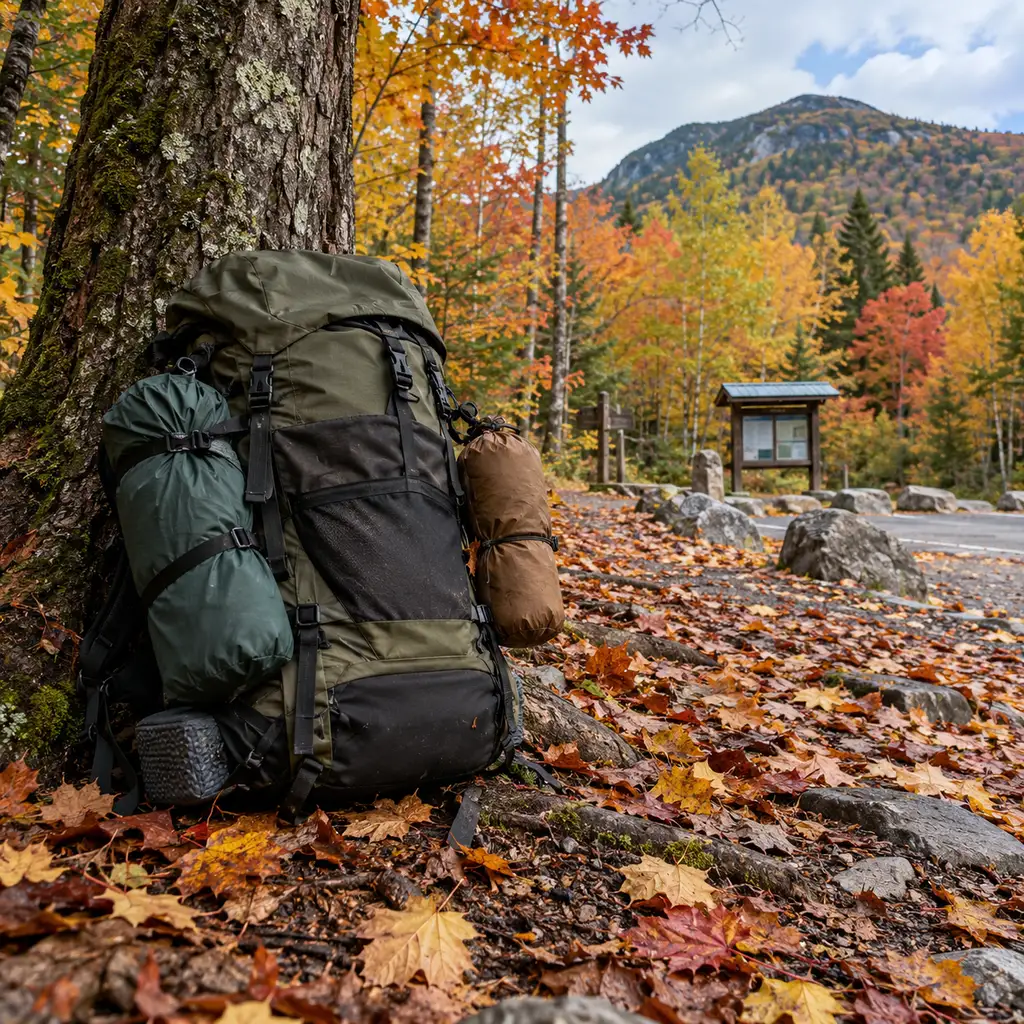
Pack the hammock, straps and tarp in a single sack or in two sacks near the top of your pack, so you can pitch the tarp first if it is raining. Some hammock campers clip the tarp sack to the outside of the pack for fast access.
Insulation Goes Low and Dry
Put quilts in a waterproof stuff sack at the bottom of the pack. Our guide on how to pack a backpacking pack explains how to load the rest around them, and our picks for the best backpacking backpacks list packs with enough room for bulkier winter quilts.
Common Packing and Setup Mistakes
- Skipping the underquilt and relying on a sleeping bag, then sleeping cold.
- Using thin rope instead of wide tree straps, which damages bark.
- Hanging the hammock too tight, which makes it squeeze your shoulders.
- Pitching the tarp too high, so wind and rain blow straight under it.
- Forgetting a ridgeline organizer and losing the headlamp at 2 a.m.
- Leaving the bug net at home in summer.
Most of these are fixed by a single practice night in the backyard before your first trip. You learn how your hammock hangs and which gear you actually reach for. It also helps to tie a few reliable knots; the bowline and trucker hitch cover most tarp jobs, and our guide on how to tie fishing knots is a good primer on knot technique generally.
Frequently Asked Questions
What do I need for hammock camping?
At minimum: a hammock, tree straps and carabiners, a tarp with guylines and stakes, and insulation underneath you, either an underquilt or a pad. Add a bug net in summer and a top quilt or sleeping bag on top.
Do I need an underquilt for hammock camping?
For anything below about 70 degrees Fahrenheit, yes, or at least a pad. A sleeping bag gets compressed under you and loses most of its warmth, so the cold air beneath the hammock pulls heat away quickly.
Is hammock camping lighter than tent camping?
It can be, but it is often similar. You save the tent and pad but add straps, a tarp and an underquilt. The real advantages are comfort and the ability to camp on uneven or rocky ground.
Can I hammock camp in the rain?
Yes, with a good tarp pitched low and taut, drip lines on the suspension so water does not run into the hammock, and your gear kept off the wet ground.
What size tarp do I need for a hammock?
The tarp ridgeline should be at least a foot longer than the hammock at each end. For most 10 to 11 foot hammocks, an 11 or 12 foot tarp works well.
Use this hammock camping gear list as a starting point, then adjust it to your season and trip length. Start with the hammock, suspension, tarp and an underquilt, practice a night close to home, and add the extras as you find what you miss. For a full overview of camping gear beyond the hammock, see our essential camping checklist.
Discover more from Maive Verse
Subscribe to get the latest posts sent to your email.