
This post may contain affiliate links. If you buy through them, we may earn a small commission at no extra cost to you.
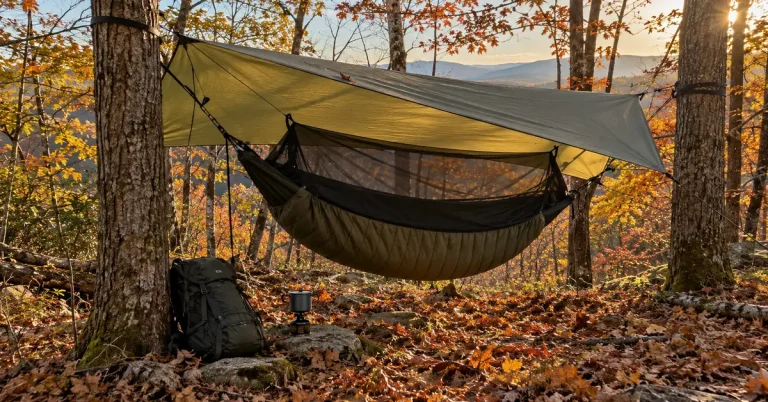
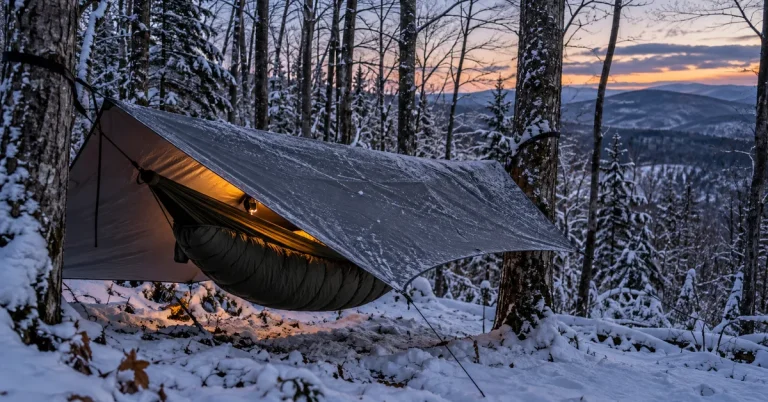
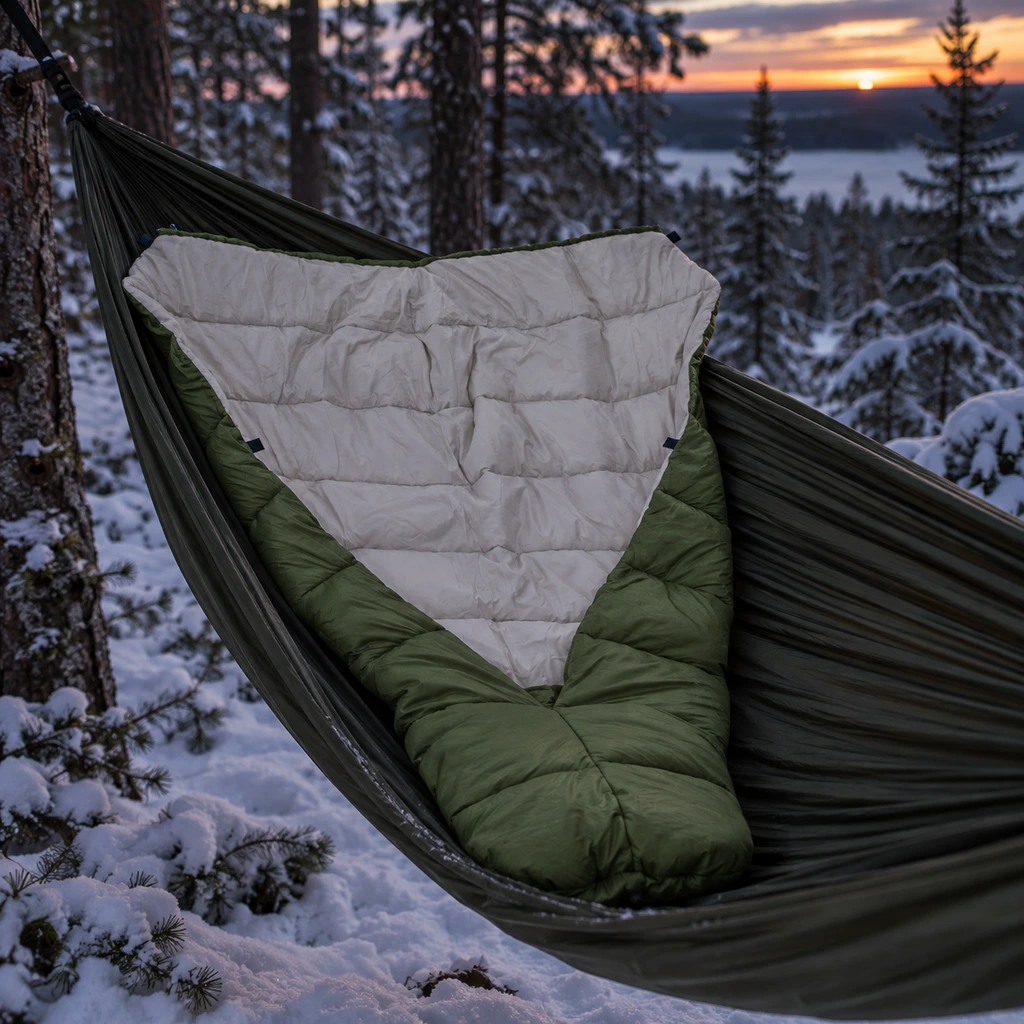
The best hammock top quilts solve a problem most people only discover on their first cold night in a hammock: a sleeping bag does not work the way you expect. Your body weight crushes the insulation underneath you flat, so the half of the bag you are lying on does almost nothing, and the zipper, hood and extra fabric just get tangled. A top quilt drops all of that. It covers you from above, tucks around your shoulders, and leaves the job of keeping your back warm to an underquilt hung outside the hammock, where nothing can compress it.
Six quilts below, from 850 fill down to budget synthetic, every one checked for stock, rating and what the listing actually claims. If you are still building your system, our guide to cold weather hammock camping explains how the quilt, underquilt and tarp work together.
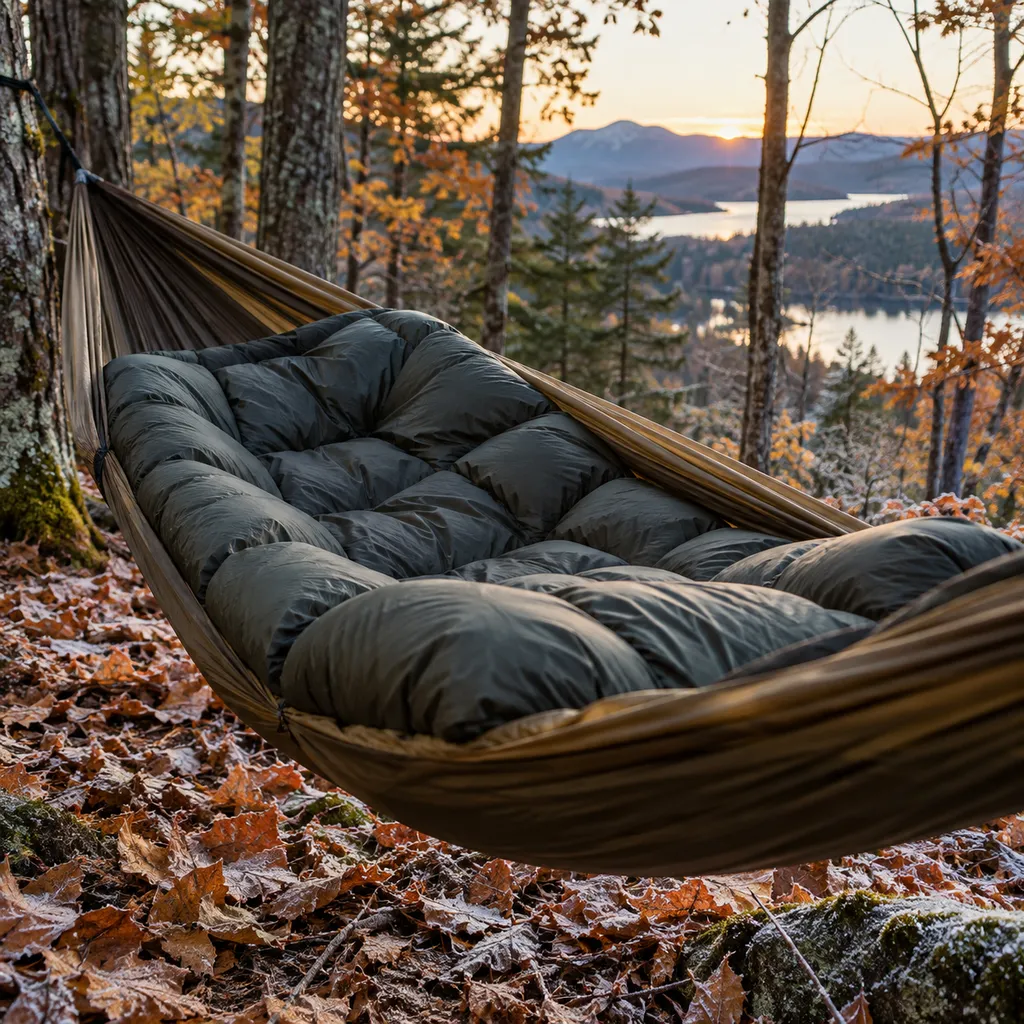
Table of Contents
What Separates the Best Hammock Top Quilts
Warmth for the weight comes first. A quilt only has to insulate the top and sides of your body, so the same amount of insulation goes further than it would in a full sleeping bag. Down does this best per ounce; synthetic fill is heavier and bulkier but keeps more of its warmth when damp.
Then the footbox. In a hammock your feet are the hardest part to keep warm, because the quilt wants to slide off them when you shift onto your side. A closed or cinchable footbox keeps your feet sealed in, and a convertible one lets you open it into a flat blanket on warm nights.
Then width and length. A hammock lets you sleep on a diagonal, and a quilt that is too narrow leaves a gap down one side that lets cold air in. Look for at least 54 inches of width if you sleep on your side, and length that reaches over your shoulders with some to spare.
Last, the temperature rating and how honestly it is stated. Some brands give an ISO tested limit, some give a comfort and survival pair, and some give a range. Treat them as a starting point and plan to sleep warmer with a good underquilt and a hat.
The Best Hammock Top Quilts at a Glance
| Quilt | Insulation | Listed Rating | Reviews | Best For |
|---|---|---|---|---|
| Featherstone Moondance 25 | 850 fill down | 26 degree limit (ISO) | 4.6 stars, 348 | Best overall |
| OneTigris Featherlite | Synthetic | 40 degrees | 4.6 stars, 492 | Best synthetic |
| Onewind Top Quilt | Synthetic (Sorona) | 45 to 60 degrees | 4.4 stars, 105 | Warm weather |
| Kammok Firebelly 30 | Water repellent down | 30 degrees | 4.7 stars, 17 | Most versatile |
| SENSORY4U 850 Down Quilt | 850 fill down | 30 degree comfort | 4.3 stars, 90 | Budget down |
| Travel Bird Hammock Quilt | Spun cotton fill | Not stated | 4.5 stars, 36 | Lowest cost |
Our Six Top Quilt Picks in Detail
Featherstone Moondance 25: Best Overall
The Moondance 25 is the quilt to beat. It is filled with 850 fill power DOWNTEK duck down, RDS certified and treated to be water repellent, inside a calendered 10D nylon shell that keeps the down in while still breathing, so you do not wake up clammy.
Featherstone gives it an ISO tested rating with a limit of 26 degrees, which is more transparent than most quilts at any price. The listing also notes that it can double as a blanket or as an underquilt for a hammock, which makes it a flexible piece of kit if you camp on the ground too.
Four point six stars across 348 reviews. For most hammock campers heading into fall and early winter, this is the one to buy.
Specs That Matter
- Insulation: 850 fill power DOWNTEK duck down
- Shell: calendered 10D nylon
- Rating: ISO tested, 26 degree limit
- Certification: RDS certified down
- Extras: doubles as blanket or underquilt
Who It Is For
Hammock campers who want the best warmth for the weight and a tested rating.
OneTigris Featherlite: Best Synthetic
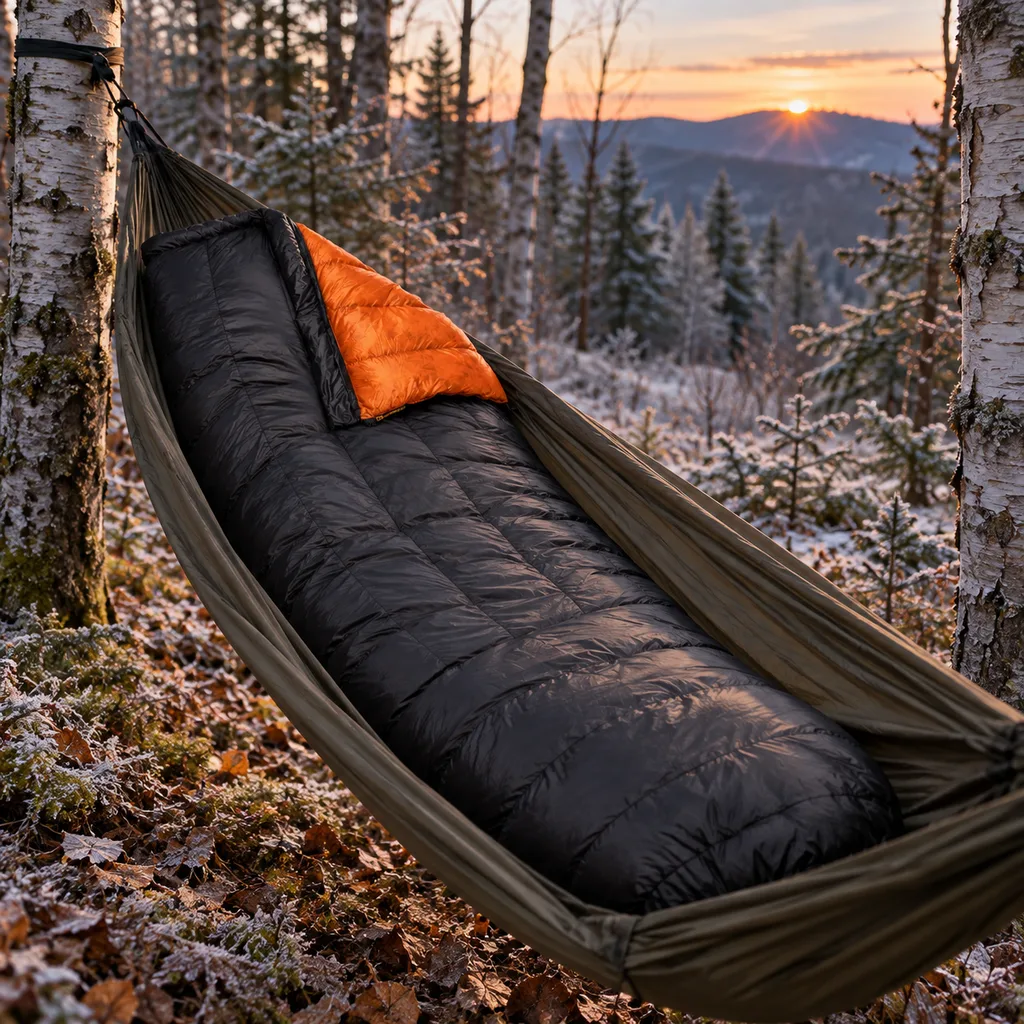
If you camp somewhere wet, synthetic insulation is the safer bet, and the Featherlite is the most reviewed synthetic quilt here at 4.6 stars across 492 reviews. It uses polyester filling inside a 20D ripstop nylon shell with a soft polyester pongee lining.
It weighs 35 ounces and folds to about the size of a gallon jug, according to the listing. Opened out it measures 6.5 by 2.8 feet, and the convertible footbox closes to trap heat or opens for ventilation.
OneTigris rates it at 40 degrees in the product name. That makes it a three season quilt rather than a cold weather one, but for spring to fall hammock trips it is excellent value.
Specs That Matter
- Insulation: polyester (synthetic)
- Shell: 20D ripstop nylon
- Weight: listed at 35 oz
- Size: 6.5 x 2.8 ft open
- Footbox: convertible
Who It Is For
Campers in damp climates who want a quilt that copes with moisture.
Onewind Top Quilt: Best for Warm Weather
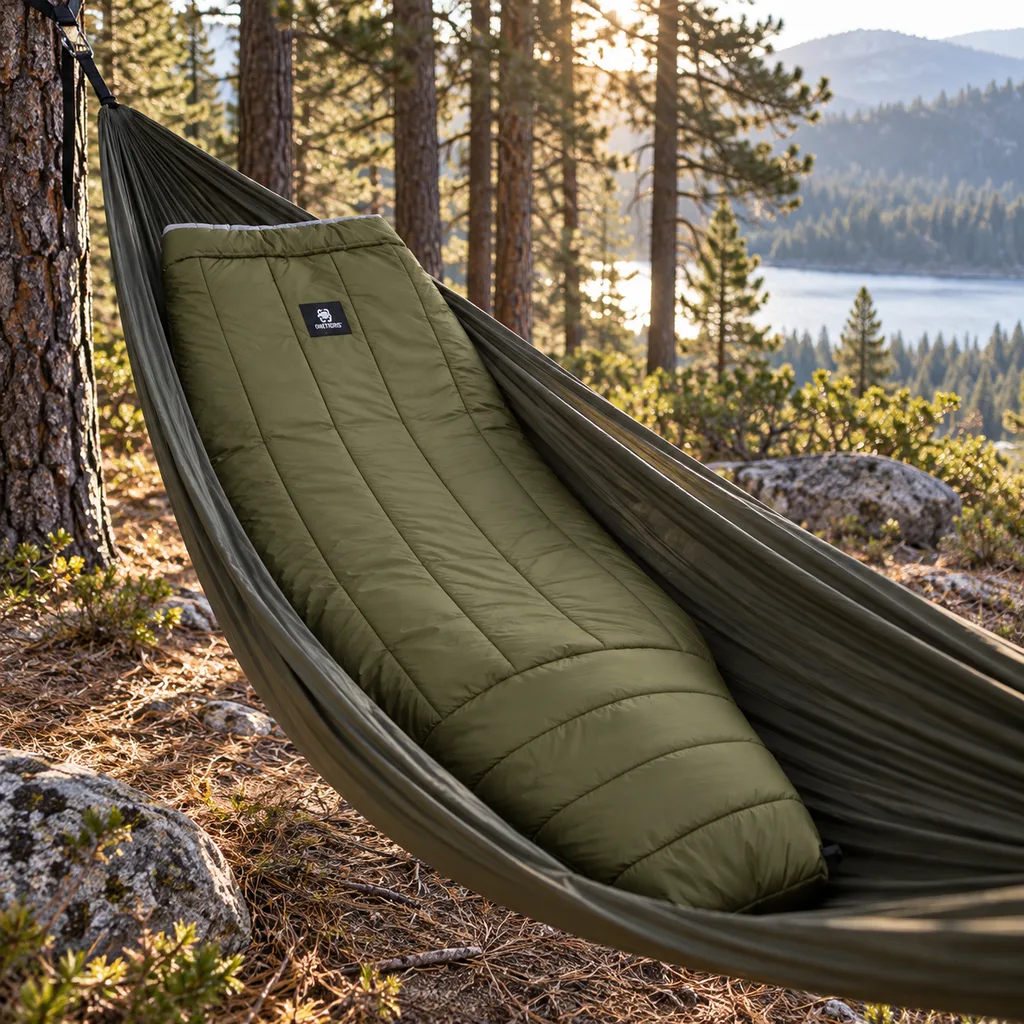
Onewind makes a lot of hammock gear, and this quilt is built for mild nights. It is insulated with DuPont Sorona inside a recycled nylon shell with a water repellent finish, and Onewind lists its warmth range as 45 to 60 degrees.
At a listed 1.9 pounds it measures 78 by 54 inches open and packs into a small stuff sack. The footbox converts, so on the warmest nights you can open it fully and use it as a blanket.
Four point four stars across 105 reviews. Do not take it into frost; take it on summer and early fall trips where a down quilt would be too much.
Specs That Matter
- Insulation: DuPont Sorona synthetic
- Shell: recycled nylon with DWR
- Rating: listed for 45 to 60 degrees
- Weight: listed at 1.9 lb
- Size: 78 x 54 in open
Who It Is For
Summer and shoulder season hammock campers.
Kammok Firebelly 30: Most Versatile
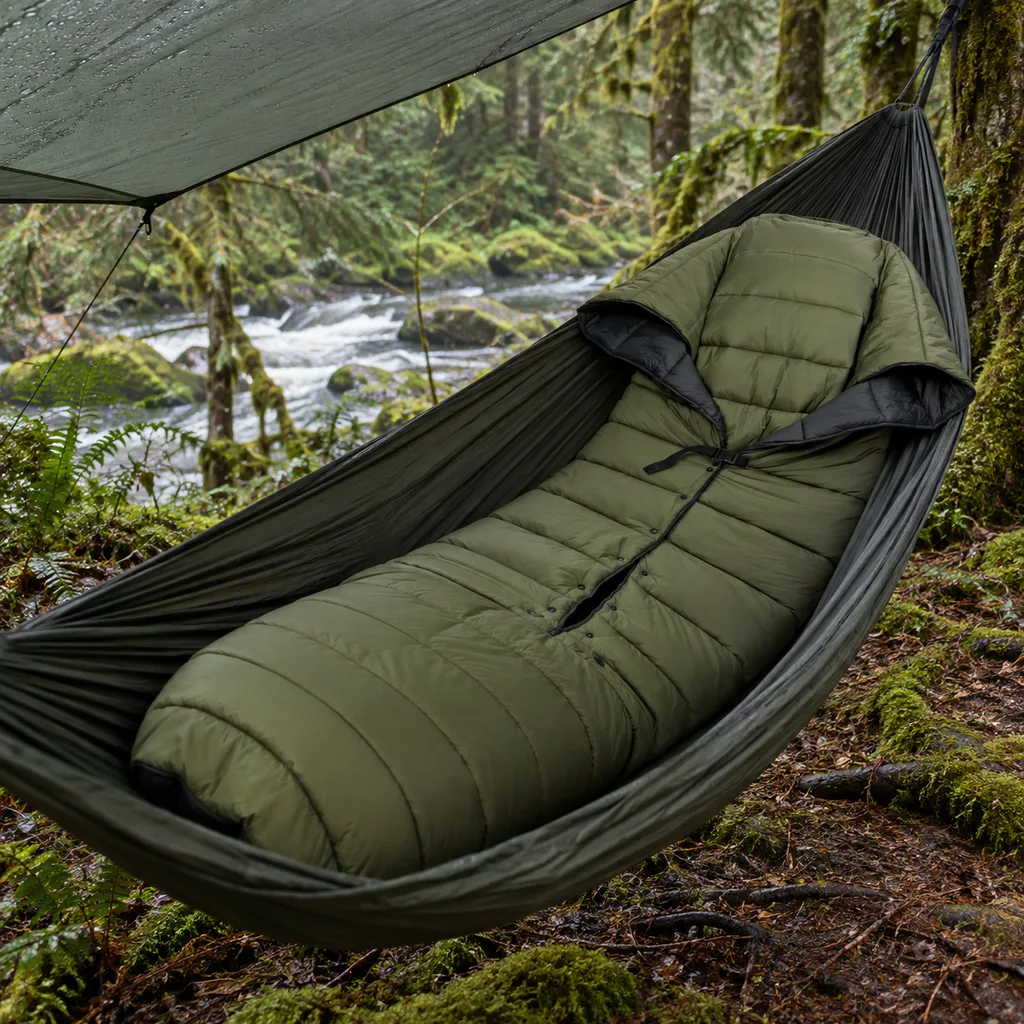
Kammok designed the Firebelly 30 to work several ways: as a top quilt, as a camp blanket, or as a hammock underquilt. It uses DOWNTEK water repellent down, which Kammok says absorbs 30 percent less water and dries 60 percent faster than untreated down.
The shell is Atmos X 15D nylon ripstop with a DWR finish, and at 88 by 54 inches it is one of the larger quilts here, which helps if you sleep diagonally or are tall. It packs into a water resistant roll top stuff sack.
The honest caveat is the review base: 4.7 stars, but on only 17 reviews. Kammok is a well known hammock brand, so the risk is low, but there is less buyer feedback than for the Featherstone.
Specs That Matter
- Insulation: DOWNTEK water repellent down
- Shell: Atmos X 15D nylon ripstop, DWR
- Rating: 30 degrees
- Size: 88 x 54 in
- Modes: top quilt, blanket or underquilt
Who It Is For
Campers who want one quilt for the hammock, the ground and the campfire.
SENSORY4U 850 Down Top Quilt: Best Budget Down
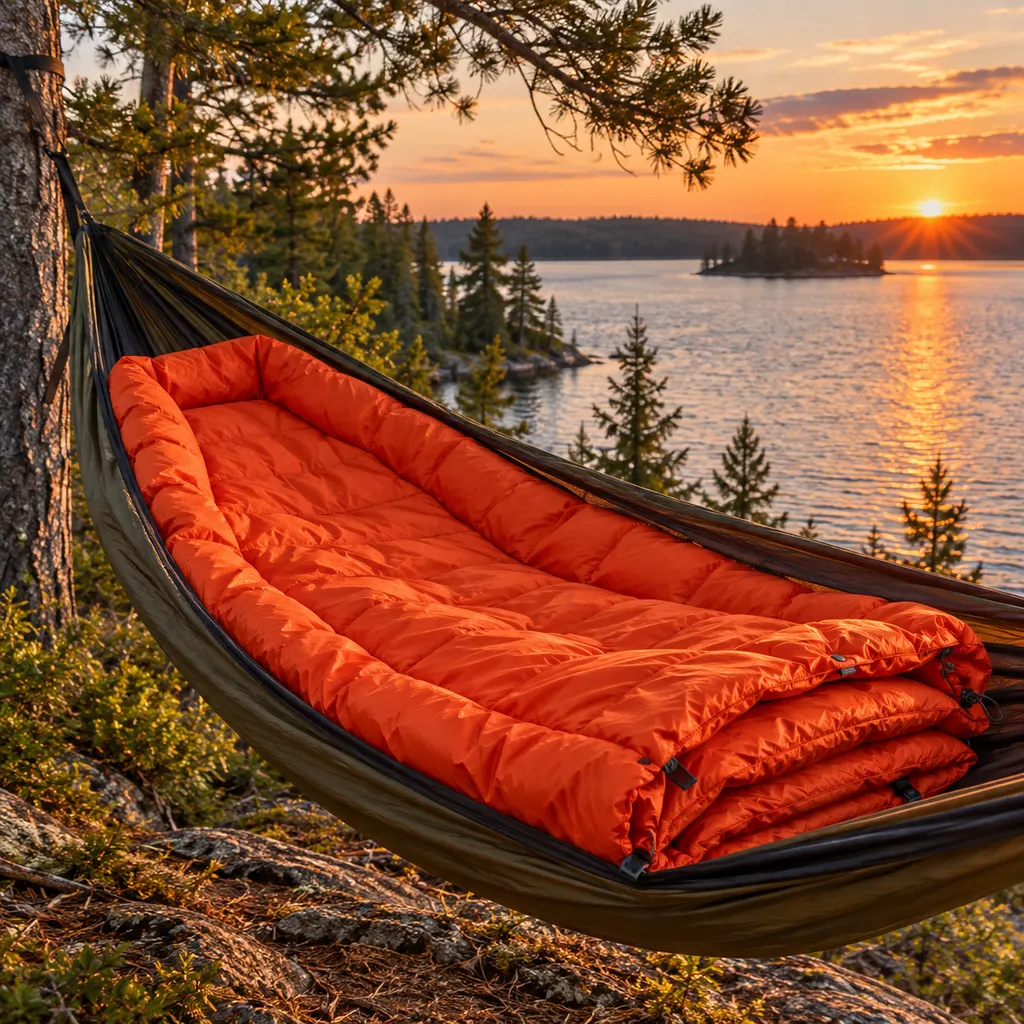
If you want down without the premium price, this quilt from SENSORY4U lists 850 fill power down at a weight of 1.9 pounds. The brand gives it a comfort rating of 30 degrees and a survival rating of 20.
It has a footbox and comes with straps for attaching it to a sleeping pad, which helps if you also camp on the ground. The listing leans on the usual quilt advantages: easier entry and exit, more ventilation and far less claustrophobia than a mummy bag.
Four point three stars across 90 reviews. It is a less established brand than Featherstone or Kammok, so treat the rating with some caution, but the specification is strong for the money.
Specs That Matter
- Insulation: 850 fill power down
- Weight: listed at 1.9 lb
- Rating: 30 degree comfort, 20 degree survival
- Footbox: yes
- Extras: pad attachment straps
Who It Is For
Budget minded campers who still want the warmth to weight of down.
Travel Bird Hammock Top Quilt: Lowest Cost
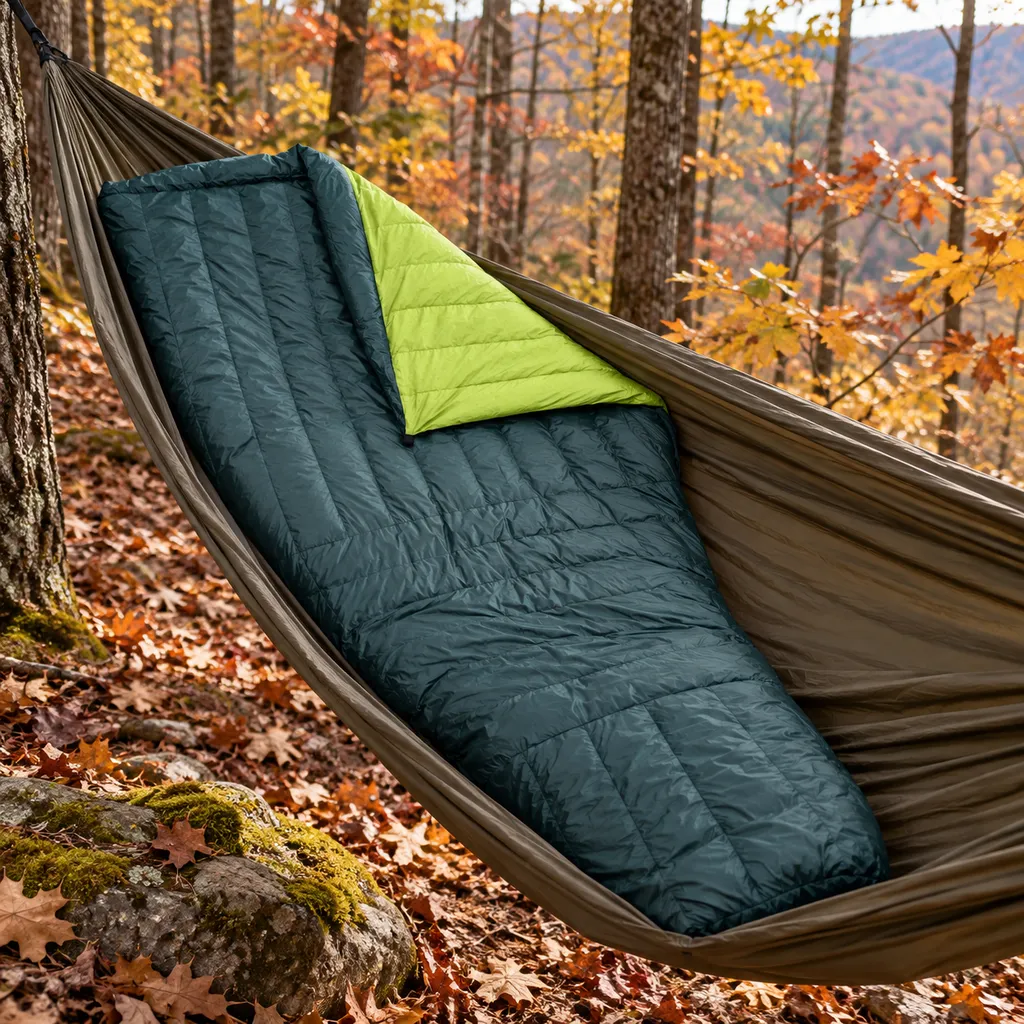
This quilt from Travel Bird is built specifically for hammocks. It is zipper free, so there is nothing to snag or damage the hammock fabric, and an elastic drawstring at the opening lets you cinch it around your shoulders.
It uses a 40D nylon jacquard shell filled with 250 grams of spun cotton, weighs a listed 2.4 pounds and measures 74.8 by 57 inches open. The convertible footbox and woven connection holes let you attach it to the hammock.
The listing does not give a temperature rating, and spun cotton fill will not match down for warmth to weight. Treat it as a mild weather quilt and a low cost way to try the top quilt system. Four point five stars, on 36 reviews.
Specs That Matter
- Insulation: 250 g spun cotton
- Shell: 40D nylon jacquard
- Weight: listed at 2.4 lb
- Size: 74.8 x 57 in open
- Design: zipper free with drawstring
Who It Is For
New hammock campers trying a top quilt for the first time on mild nights.
How to Choose the Right Top Quilt
Choosing between the best hammock top quilts mostly comes down to three questions: how cold it gets, how wet it gets, and how you sleep.
Match the Rating to Your Coldest Night
Pick a quilt rated around ten degrees below the coldest temperature you expect. Hammock camping loses heat faster than ground camping, especially in wind, and a quilt rated right at the forecast low will leave you cold. Check overnight lows rather than daytime highs, and pair the quilt with an underquilt of a similar rating. Our underquilt picks cover the bottom half of the system.
Down or Synthetic
Down, like the Featherstone, Kammok and SENSORY4U, is lighter and packs smaller for the same warmth. Synthetic, like the OneTigris and Onewind, is cheaper and keeps more insulation when damp. In wet regions like the Pacific Northwest or the Smokies in fall, synthetic or water repellent down is the safer choice. The same tradeoff applies to sleeping bags, as our guide to the best backpacking sleeping bags explains.
Width, Length and Sleeping Style
Side sleepers need width, at least 54 inches, so the quilt still wraps around them when they roll. Tall campers need length, so check the open dimensions. The Kammok at 88 by 54 inches is the most generous here. Getting the hammock hang right matters too; see our guide on how to hang a hammock for the sag that lets you lie flat.
What the Specifications Mean
Fill Power
Fill power measures how much space an ounce of down fills. Higher numbers mean more loft and more warmth for the same weight. 850 fill, as in the Featherstone and SENSORY4U, is high quality down; 600 to 700 is mid range.
Temperature Ratings
Only some quilts are tested to a standard. The Featherstone uses an ISO tested limit rating, which is the most comparable figure. Comfort ratings describe where an average sleeper is comfortable; survival or limit ratings describe where you will get through the night but not enjoy it. Ranges like 45 to 60 degrees describe intended use.
Shell Fabric and Water Repellency
Shell fabrics, almost always nylon, are measured in denier: 10D and 15D are very light, 20D and 40D are more durable. A durable water repellent finish sheds condensation and light drips, which matters under a tarp on humid nights. Treated down, like DOWNTEK, resists moisture further.
Synthetic Insulation Types
Synthetic quilts use polyester fibers of different kinds, from branded fills like DuPont Sorona to simpler spun fills. They are heavier than down for the warmth, but they stay warm when damp and are easy to wash at home.
Using and Caring for a Top Quilt
Even the best hammock top quilts only work if you use them well. Insulation works by trapping air, as thermal insulation always does, so give the quilt a shake to restore its loft before bed.
Get into the hammock first, then pull the quilt over you, feet into the footbox. Tuck the edges under your shoulders and hips so the hammock fabric holds them in place. If the quilt has attachment points or straps, use them on cold nights to stop drafts when you roll over.
Wear a warm hat and dry socks to bed, and keep a dry base layer just for sleeping. A quilt only covers your body; your head is exposed, so a beanie or hooded layer is part of the system. Our guide to layering applies to sleep clothes too.
At home, never store a quilt compressed. Keep it loose in a large cotton or mesh bag so the insulation keeps its loft. Wash down quilts rarely and with a down specific soap, and dry them thoroughly on low heat. A tarp overhead, like those in our best hammock tarps round-up, keeps the quilt dry in the first place.
If you are new to hammocks entirely, start with our hammock camping for beginners guide and our picks for the best camping hammocks.
Frequently Asked Questions
Do I need a top quilt for hammock camping?
You can use a sleeping bag, but much of its insulation is wasted underneath you, and the zipper and hood are awkward in a hammock. A top quilt is lighter and easier to use, and it pairs naturally with an underquilt.
Can I use a top quilt without an underquilt?
Only on warm nights. Without insulation underneath, the air moving under the hammock pulls heat from your back quickly. Below about 60 degrees, most people need an underquilt or a sleeping pad.
What temperature rating should my top quilt have?
About ten degrees below the coldest night you expect. A 30 or 25 degree quilt covers most three season hammock camping in the US.
Is a down or synthetic top quilt better?
Down is lighter and packs smaller; synthetic is cheaper and handles damp better. Water repellent down narrows the gap, which is why the Featherstone and Kammok use it.
How do I keep a top quilt from sliding off in a hammock?
Use a footbox, tuck the edges under you, and use any straps or attachment points. Sleeping on a diagonal in a well hung hammock also keeps you flatter and the quilt more stable.
For most hammock campers, the Featherstone Moondance 25 tops our list of the best hammock top quilts: 850 fill down, an ISO tested rating and the flexibility to double as an underquilt. Choose the OneTigris Featherlite if you camp in wet weather, and the Kammok Firebelly if you want one quilt for everything. Planning a colder trip? Read our guide to cold weather backpacking and our cold weather camping tips.
Discover more from Maive Verse
Subscribe to get the latest posts sent to your email.