
This post may contain affiliate links. If you buy through them, we may earn a small commission at no extra cost to you.
Cold weather hammock camping has one problem that ground sleepers never face: there is air under you. On a mild summer night that breeze is the whole appeal. Once overnight lows drop into the forties, the same moving air strips heat from your back faster than you can make it, and a sleeping bag that kept you warm in a tent suddenly feels useless. Hammock camping in the cold is absolutely doable, and many hangers prefer it to cold ground, but it needs a different system.
This guide covers why hammocks get cold, the insulation that fixes it, how to pitch a tarp for wind and snow, and the small habits that make a freezing night comfortable. If you have never hung before, start with our hammock camping for beginners guide and our walkthrough on how to hang a hammock.
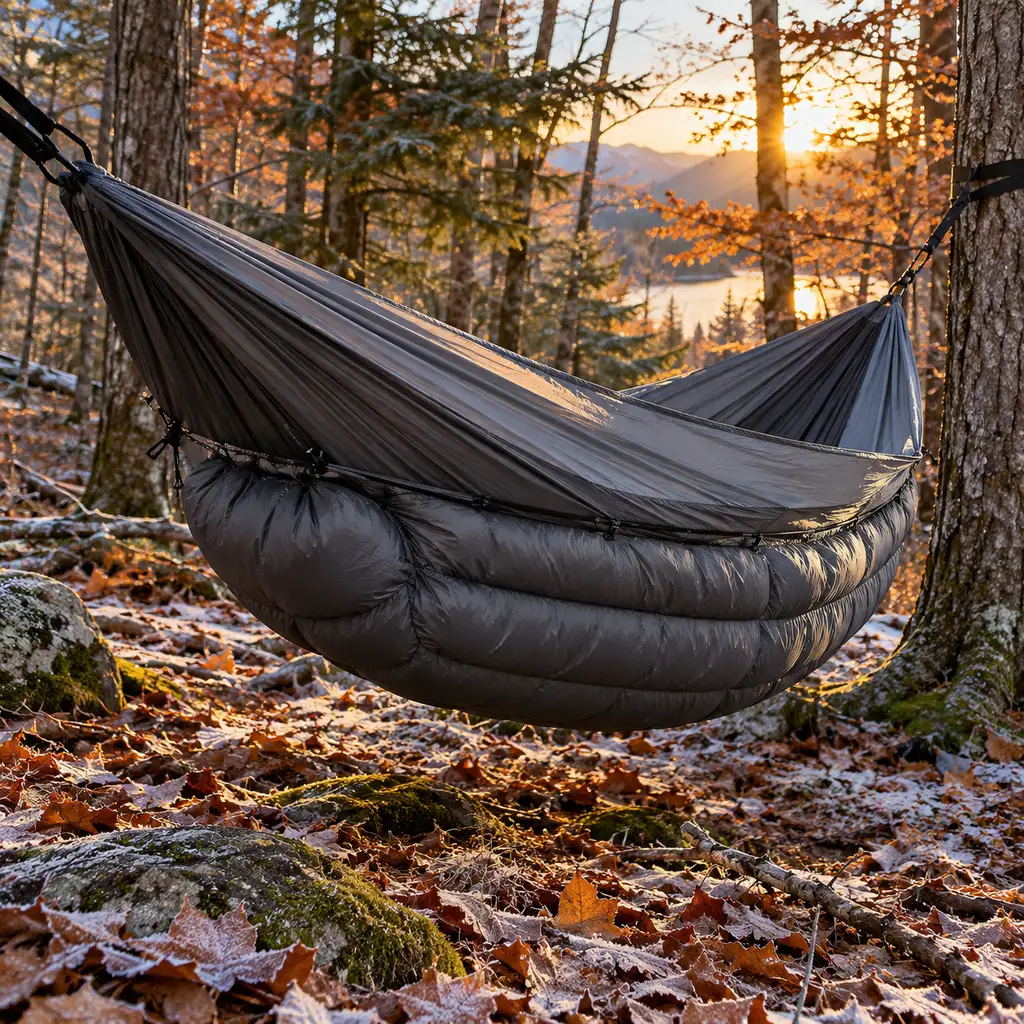
Table of Contents
Why Hammocks Get Cold So Fast
Cold Butt Syndrome Is Real
Hangers have a name for the chill that creeps into your back, hips and shoulders around two in the morning: cold butt syndrome. It happens because your body weight crushes the sleeping bag insulation underneath you flat. Compressed insulation traps almost no air, so it does almost nothing, and the bottom of your body is effectively wrapped in thin fabric with open air below.
Moving Air Steals Heat
On the ground, cold soil pulls heat out of you by conduction. In a hammock, the loss is mostly convection: air flows under the hammock, warms up against you, and carries that heat away, replaced by fresh cold air. Even a light breeze makes it much worse, the same effect behind wind chill, which is why the same temperature can feel fine on a still night and brutal on a windy one.
The Cold Arrives Earlier Than You Expect
Most hangers start needing bottom insulation somewhere between 60 and 70 degrees Fahrenheit, far warmer than people expect. By the time it is truly cold, a hammock without a real bottom insulation plan is not an uncomfortable night, it is a sleepless one.
Cold Weather Hammock Camping: 9 Ways to Stay Warm
These nine steps build a complete cold weather system, starting with the parts that make the biggest difference.
1. Use an Underquilt
An underquilt hangs beneath the hammock, outside it, so your weight never compresses it. The insulation stays lofted and traps warm air all night. This is the single biggest upgrade for cold weather hammock camping, and our round-up of the best hammock underquilts covers options from three-season synthetic to deep winter down.
2. Or Use a Pad, and Know Its Limits
A foam or inflatable sleeping pad inside the hammock is the budget alternative. It works, but pads slide around, bunch up in the curve of the hammock, and leave your shoulders exposed. Wider pads or pads with wings help. Many hangers combine a pad with a lighter underquilt when temperatures drop well below freezing. See our sleeping pad picks if you go this route.
3. Add a Top Quilt
On top, a quilt works better than a sleeping bag in a hammock because there is no crushed insulation underneath you doing nothing. Quilts are also easier to get in and out of. A sleeping bag unzipped and used as a quilt is a fine start. Our guide to the best backpacking sleeping bags explains how temperature ratings work.
4. Rate Your Insulation for the Real Low
Pick underquilt and top quilt ratings for the overnight low, not the daytime forecast, and give yourself a margin of about ten degrees. A quilt rated to 20 degrees is comfortable for many people around 30, not at 20. Cold sleepers should add more margin. Down gives the most warmth for the weight but loses loft when wet; synthetic fill is heavier and keeps working when damp.
5. Pitch the Tarp Low in Storm Mode
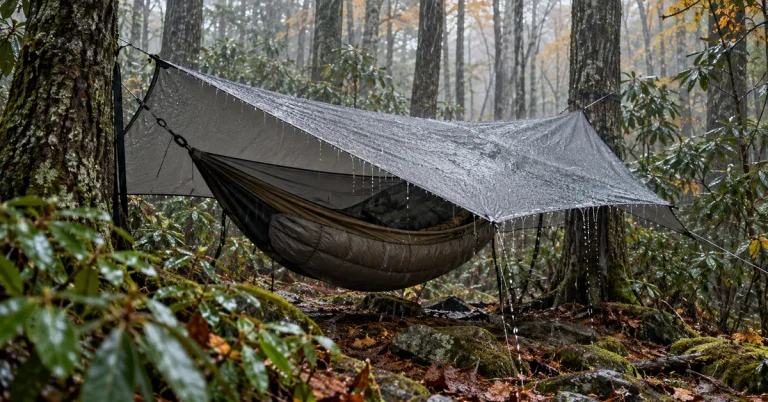
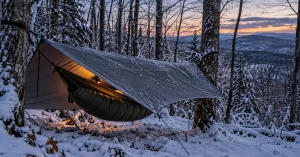
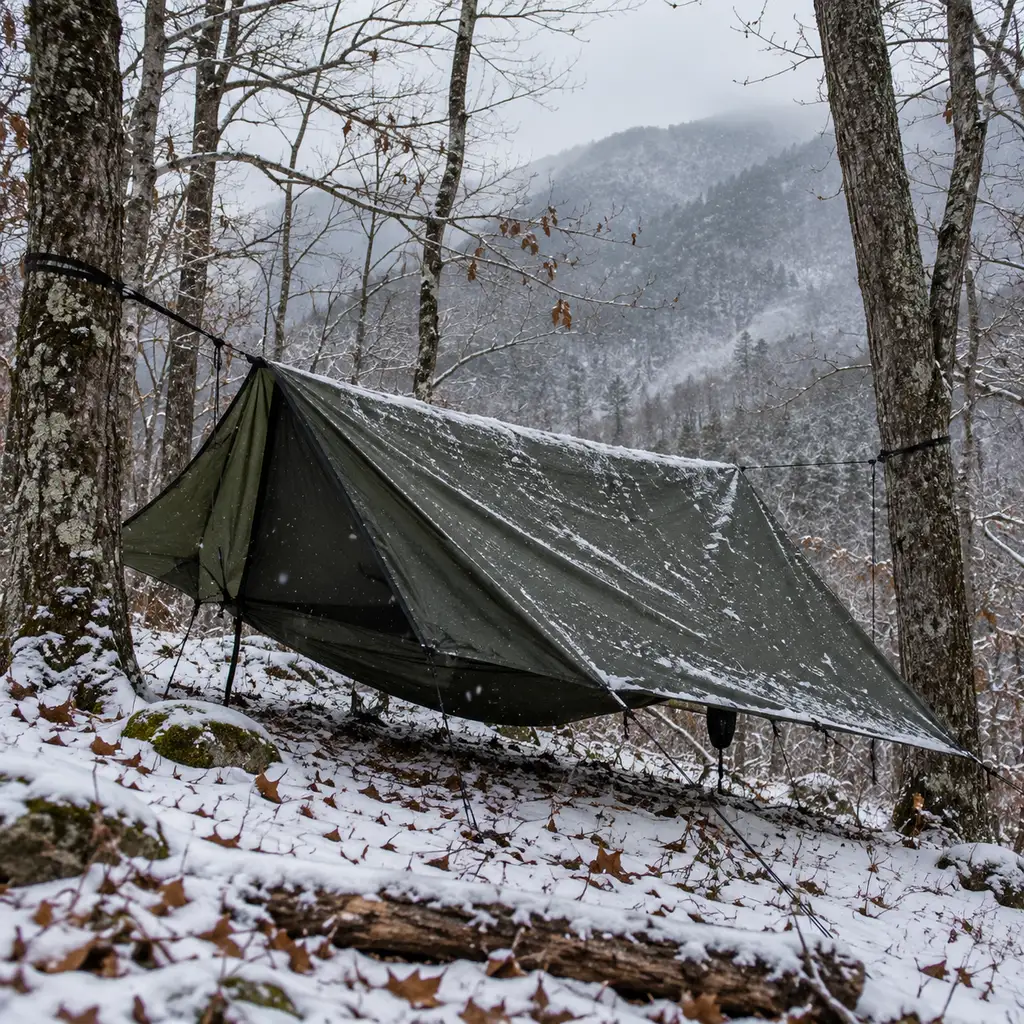
In summer the tarp is a rain roof. In winter it is a wind shield. Pitch it low and close to the hammock, with the edges pulled down near the ground, a setup hangers call storm mode. A tarp with doors, like the onewind tarp with doors, closes off the ends completely, which blocks wind and traps a pocket of warmer air around you.
6. Pick a Sheltered Site
Look for dense trees that break the wind, and avoid open ridges and the lowest point of a valley, where cold air pools overnight. Mid-slope in a stand of evergreens is often the warmest spot around. Check for dead branches above you, which snow and wind bring down.
7. Manage Condensation
Your breath carries moisture, and in the cold it condenses on the underside of the tarp and on your quilt. Wet insulation is cold insulation. Keep your face out of the quilt, leave a little ventilation at one tarp door, and understand the dew point: on nights where the air temperature falls to it, expect everything to get damp and pack a small towel.
8. Dress for Sleep, Not for Hiking
Change into dry base layers before bed, because the layers you hiked in hold sweat. Add a warm hat, dry socks and a light puffy if needed. Our guide on how to layer for hiking covers the materials that work best, and the same logic applies at camp.
9. Fuel the Furnace
Eat a fatty, high calorie snack right before bed so your body has fuel to burn overnight, and keep another within reach. A hot water bottle, or a hard-sided water bottle filled with boiling water and sealed tight, tucked by your core or feet, makes a surprising difference to the first hours of the night.
Cold Weather Hammock Gear by Temperature
Every sleeper is different, but this is a reasonable starting point for cold weather hammock camping. Adjust warmer if you sleep cold.
| Overnight Low | Under You | Over You | Tarp |
|---|---|---|---|
| 50 to 60 F | Three-season underquilt or pad | 40 F quilt or bag | Standard pitch |
| 35 to 50 F | 30 F underquilt | 30 F quilt | Lower pitch, one end closed |
| 20 to 35 F | 20 F underquilt | 20 F quilt, hat, socks | Storm mode, doors closed |
| Below 20 F | 0 to 10 F underquilt plus pad | 0 to 10 F quilt, full layers | Winter tarp, fully closed |
The same margin rules apply to a tent camp, as our guide to cold weather backpacking explains. Our cold weather camping tips cover more general tricks for staying warm at camp.
Winter Tarps and Wind Protection
Why Doors Matter
An open-ended hex tarp lets wind blow straight down the length of your hammock. Doors, or end panels that fold closed, seal those gaps. For regular cold weather use, a tarp with doors is worth the extra weight. Our guide to the best hammock tarps compares door models with lighter options.
Coverage and Size
For winter, choose a tarp at least a foot longer than your hammock ridgeline on each end, and wide enough to pitch nearly to the ground. Square and rectangular tarps like the DD Hammocks Superlight can be pitched in many configurations, including a closed wedge against wind.
Snow Loading
A steep tarp angle sheds snow. A flat, shallow pitch collects it until it sags onto your hammock. Tension the guylines tight, check them before bed, and knock snow off the tarp from underneath during a storm. Dark fabric warms in the morning sun, which helps shed frost.
Setting Up Camp in the Cold
The routine for cold weather hammock camping is the same every night, and doing it in the same order matters more than any single piece of gear. Staying ahead of the cold is also how you avoid hypothermia, which starts with shivering and clumsy hands long before it becomes an emergency.
Hang Before Dark
Everything takes longer with cold hands and bulky gloves. Arrive with at least an hour of light, hang the tarp first so the hammock and quilts stay dry, and practice your setup at home so it is automatic.
Get the Underquilt Snug
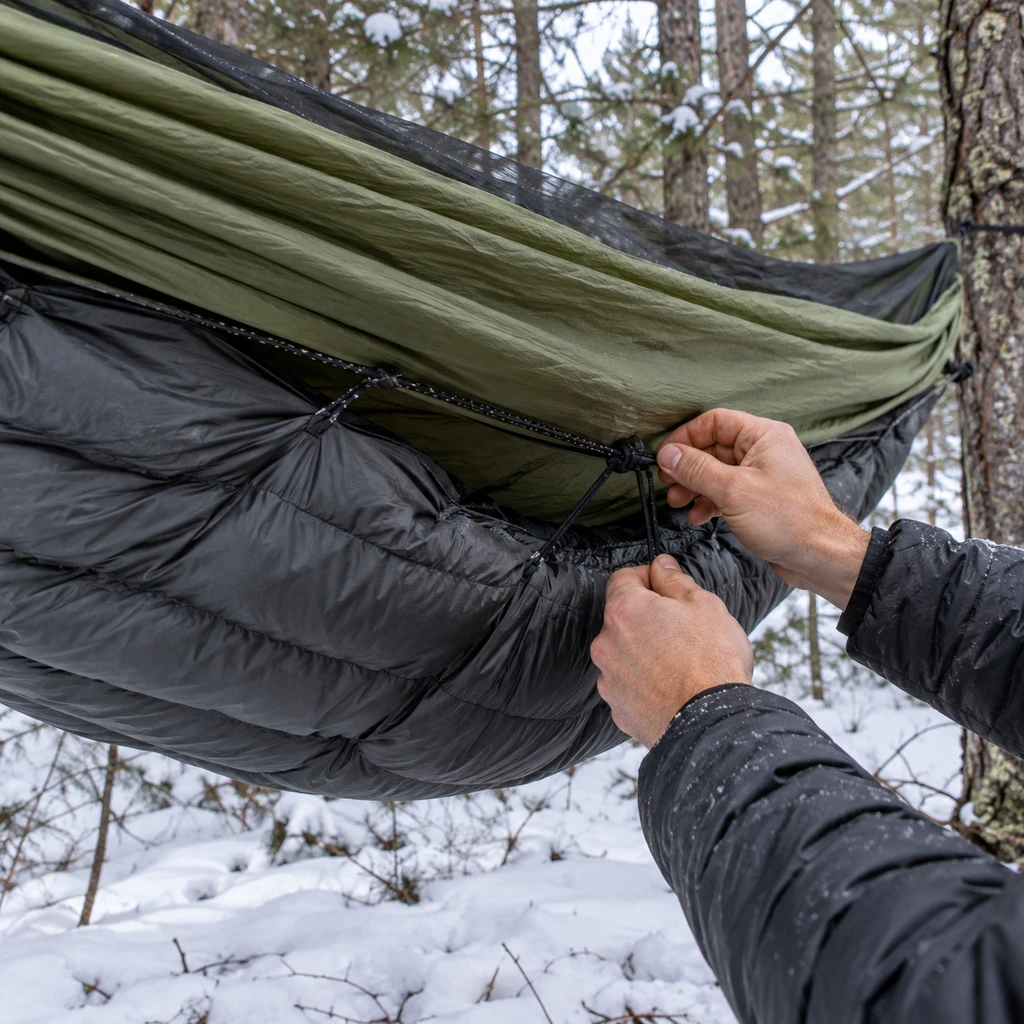
An underquilt only works if it touches the hammock with no gaps. Adjust the suspension so it hugs the underside from shoulders to feet. A gap of even an inch lets cold air in and brings back the cold spots you were trying to fix.
Keep Gear Off the Ground
Stash boots and pack under the tarp, and put tomorrow’s layers and your water bottles inside the hammock or quilt so they do not freeze. Batteries lose capacity in the cold, so keep your headlamp and phone close to your body. Our guide to fall camping essentials covers more cold season gear.
Common Cold Weather Hammock Mistakes
- Relying on a sleeping bag with no bottom insulation, which leaves your back exposed.
- Choosing insulation for the forecast high instead of the overnight low.
- Pitching the tarp high and open, so wind pours through all night.
- Leaving gaps between the underquilt and the hammock.
- Sleeping in sweaty hiking layers.
- Breathing into the quilt and soaking it with condensation.
- Hanging in the lowest part of a valley, where cold air settles.
Most of these are easy to fix once you know them. Many of the same habits come from camping in the rain, where keeping insulation dry is also the whole game, and our guide on how to store your camping gear will keep your quilts lofty between trips.
Frequently Asked Questions
How cold is too cold for hammock camping?
With the right underquilt, top quilt and tarp, hangers camp comfortably below zero. The limit is your insulation, not the hammock. Without bottom insulation, even the fifties can feel cold.
Do I need an underquilt or will a pad work?
A pad works and is the cheaper route, but it shifts around and leaves the shoulders cold. An underquilt is warmer and more comfortable. Many winter hangers use both below freezing.
Is a hammock warmer than a tent in winter?
Not automatically. A tent traps a little warmer air, and snow and ground insulate you if you have a good pad. A hammock with a full underquilt and a closed tarp can be just as warm and keeps you off frozen, uneven ground.
How do I keep my feet warm in a hammock?
Dry socks, a hot water bottle at your feet, and a quilt with a closed footbox. Make sure the underquilt reaches all the way to your feet, since short underquilts leave the lower legs exposed.
What temperature underquilt do I need?
Choose a rating about ten degrees below the coldest low you expect. For most fall and early winter trips in the US, a 20 degree underquilt is a versatile choice.
Cold weather hammock camping comes down to three things: insulation under you that cannot be crushed, a tarp pitched low against the wind, and dry layers and fuel for the night. Get those right and a frosty night in the trees becomes one of the best nights of the year. For your setup, start with our picks for the best camping hammocks and pair one with a tarp like the ENO ProFly or a door model for deeper winter.
Discover more from Maive Verse
Subscribe to get the latest posts sent to your email.