
This post may contain affiliate links. If you buy through them, we may earn a small commission at no extra cost to you.
Camp cooking for beginners goes wrong in the planning, not the cooking. People pack ingredients for a meal they would make at home, discover the campsite has one burner, no running water and a stiff breeze, and end up eating crisps in the dark. The fix is choosing meals that suit the constraints rather than fighting them.
The nine steps below cover the stove, the menu, the water and the washing up, in the order they actually matter. None of it requires skill you do not already have in a kitchen.
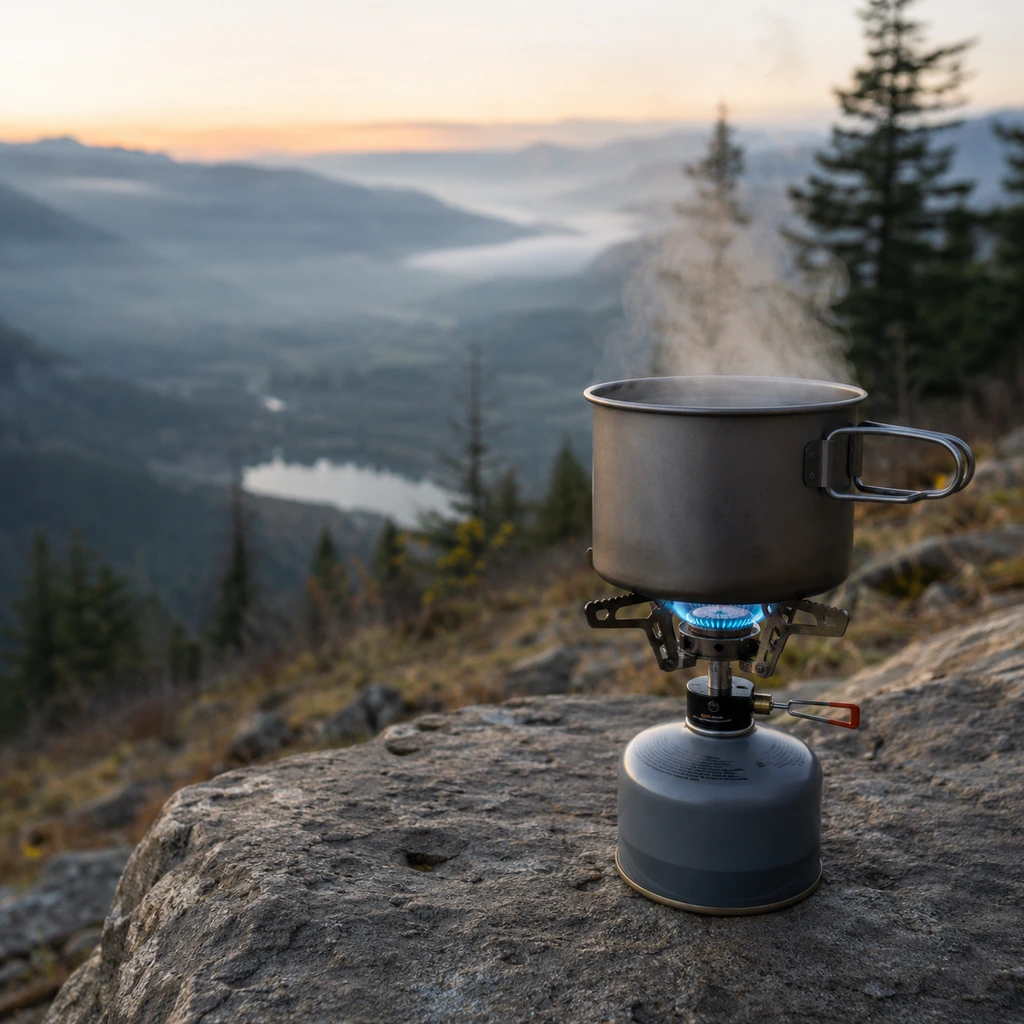
Table of Contents
What Makes Cooking Outdoors Different
Three constraints, and every good camp meal is designed around them. Heat is limited, usually to one or two burners with no oven. Water is finite and has to be carried or filtered. And everything you dirty, you have to clean and carry out.
Wind is the fourth, and the most underestimated. An unshielded burner in a light breeze can take three times as long to boil a litre and burn through fuel at a rate that leaves you short on the last morning. A windscreen or a stove with built-in wind guards is not a luxury.
None of this means eating badly. It means front-loading the work at home: chopping, portioning and pre-mixing so that the campsite job is heating rather than preparing. If you are new to the wider trip as well, our guide to camping in the rain covers the conditions that make cooking hardest, and our guide for beginner hikers covers getting there in the first place.
Camp Cooking for Beginners: The 9 Steps
1. Match the Stove to the Trip
This is the decision everything else follows from. Driving to a site with a picnic table means a two-burner propane stove and real pans. Carrying everything on your back means a canister stove that weighs a few ounces and boils water for one pot.
Do not carry a car camping stove into the backcountry, and do not try to cook for four on a backpacking burner. Our round up of the best camping stoves splits six options by exactly this question.
2. Plan Every Meal Before You Leave
Write the menu out, meal by meal, then list what each one needs. This sounds excessive for two nights and it is the difference between eating well and improvising badly. It also stops the classic error of packing food for six meals and fuel for two. The same weigh-it-at-home discipline from our guide to backpacking for beginners applies to the food bag.
Count on more calories than you would eat at home. A day of walking with a pack burns through a surprising amount, and our guide to trail nutrition covers what actually keeps working late in the day.
3. Do the Prep at Home
Chop onions, portion rice, pre-mix spices into a single container, crack eggs into a bottle. Every minute of preparation you do in a kitchen is a minute you are not doing in the dark with cold hands and one chopping board balanced on your knee.
It also cuts waste and packaging, which matters because all of it comes home with you. Decant into reusable containers rather than carrying boxes you will only bin. The packing logic in our guide to ultralight packing works on food as well as gear.
4. Favour One Pot Meals
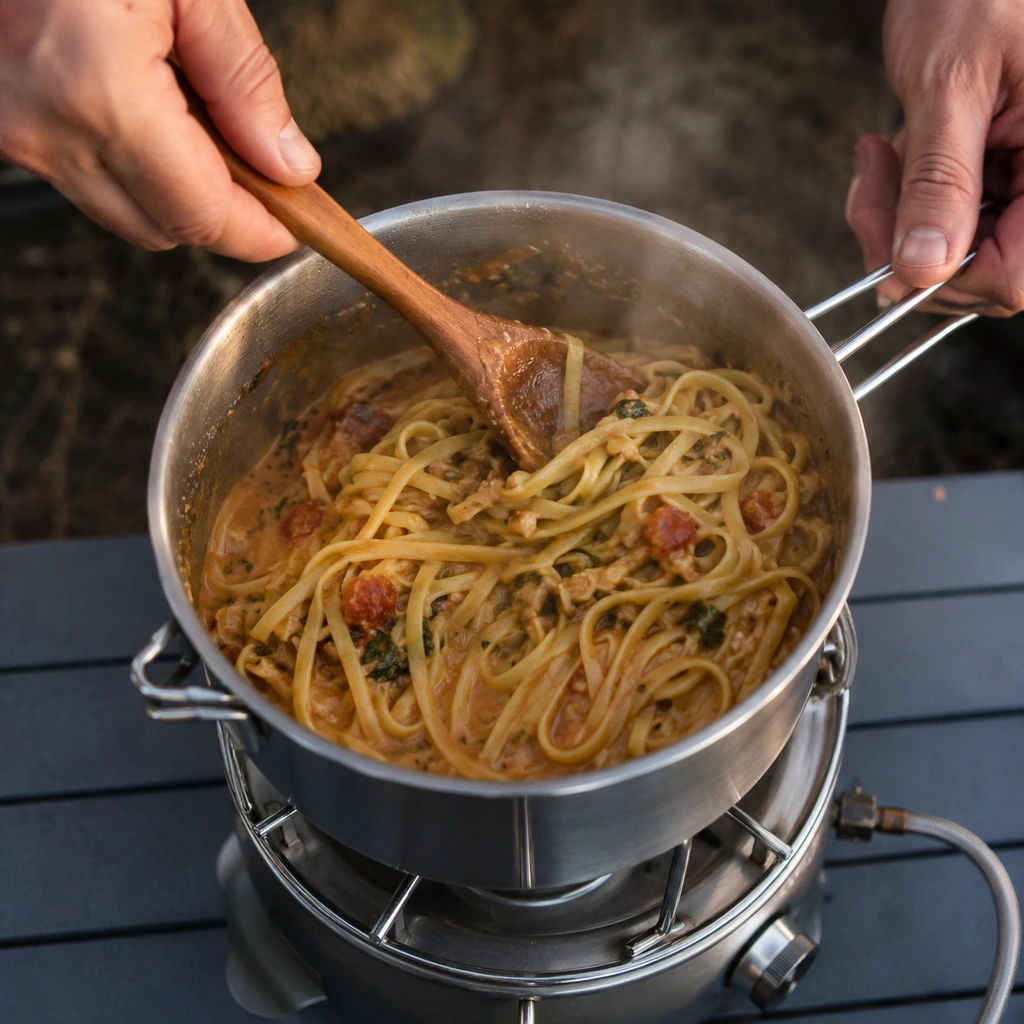
One pot means one thing to heat, one thing to wash and one burner occupied. Pasta with a sauce stirred through, rice and beans, couscous with vegetables and tinned fish, noodle soup with whatever is left. All of them are forgiving, quick and hard to ruin.
Save the ambitious cooking for a car camping trip with two burners and a table. On a first outing, the meal you can make tired and in the dark is the right meal.
5. Shield the Burner From Wind
Wind steals heat faster than anything else outdoors. Set the stove in the lee of a rock, a log or your pack, and use a windscreen if your stove takes one. Two burner stoves usually have fold-up wind guards; use them rather than folding them flat because they are in the way.
Never fully enclose a canister stove with a windscreen. Trapped heat around the canister is genuinely dangerous, and the correct approach is to block the wind on the upwind side only.
6. Carry More Fuel Than the Maths Says
Fuel estimates assume ideal conditions. Cold canisters, wind and boiling from a cold start all push consumption up. A rough planning figure is around 100 grams of canister gas per person per day if you are boiling for two meals and hot drinks, and more in cold weather.
Canister gas performs poorly in the cold because the pressure drops. Sleeping with the canister in your bag on a cold night, then using it first thing, makes a noticeable difference to boil times.
7. Treat Water Before You Cook With It
Boiling for a full minute kills the pathogens that matter, so water for pasta or coffee is dealt with by cooking. Water for rinsing vegetables, mixing cold drinks or washing hands is not, and that is where people get caught out.
Filter first and treat everything as untreated until it has boiled. A Sawyer Squeeze weighs two ounces and filters to 0.1 micron, which covers the whole camp rather than just the pot. Our hydration guide covers how much to plan for.
8. Wash Up Away From Water Sources
Strain out the food scraps and pack them out, then wash at least sixty metres from any stream or lake and scatter the grey water widely rather than pouring it in one spot. Soap, even biodegradable soap, does not belong in a water source.
The easiest version of this is to make less mess: one pot, a spatula that doubles as a spoon, and wiping the pot out with bread before washing. The Leave No Trace principles cover the reasoning, and our notes on trail etiquette apply at camp too.
9. Store Food Away From Camp
Anywhere with bears has rules, usually a canister or a hang, and those rules are not optional. Everywhere else still has rodents, and a mouse through a tent wall is a worse night than a hungry one. Food, rubbish and anything scented goes into a sealed bag well away from where you sleep. Away from formal campgrounds the rules change again, which our guide to dispersed camping covers.
Cook and eat away from your tent too, ideally a good distance downwind. If you are hammock camping the same logic applies, with the advantage that a hang is easy to rig while you are already hanging things.
The Kit That Earns Its Place
Short list. Everything here does more than one job or replaces something heavier.
Stove and Fuel
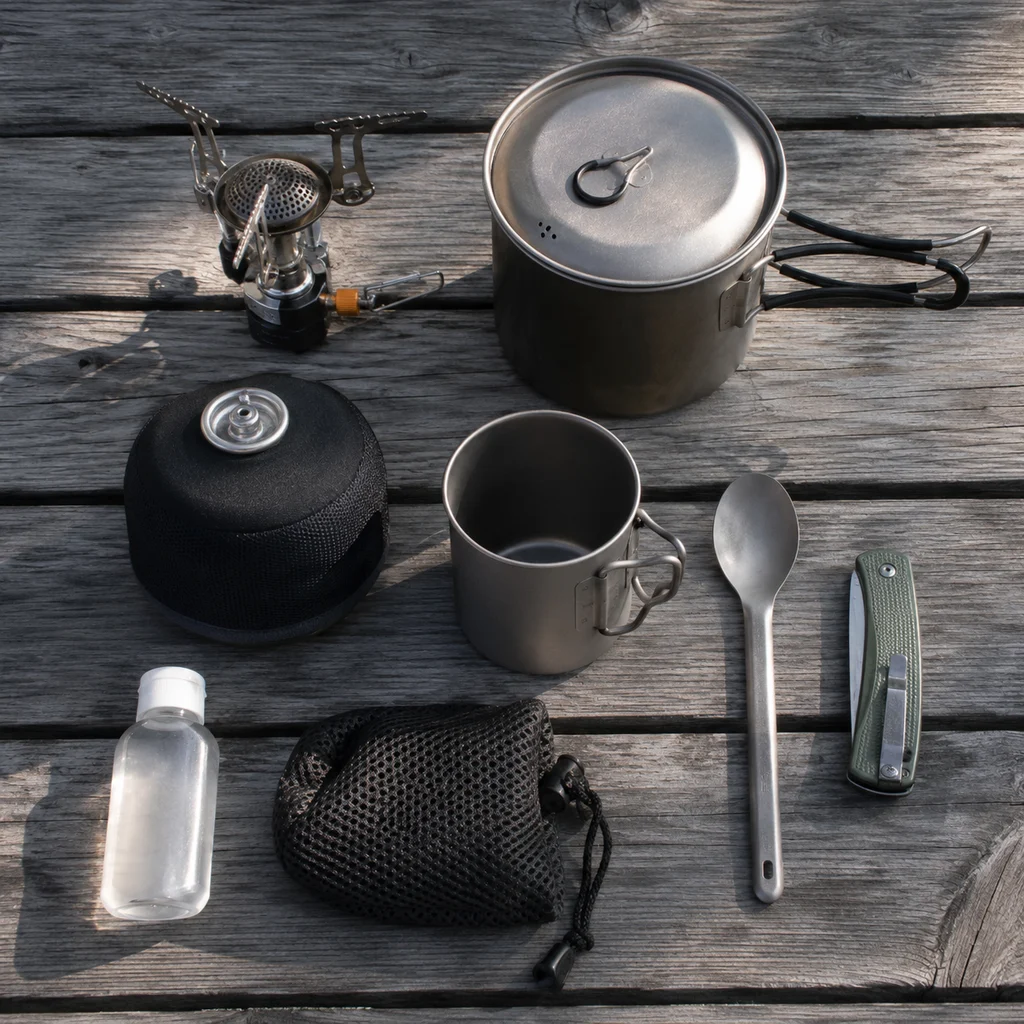
A canister stove for backpacking, a two burner propane stove for car camping. The MSR PocketRocket 2 is the usual backpacking reference at 2.6 ounces, boiling a litre in about three and a half minutes. Carry a spare lighter separately from the first one. For car camping the Coleman Triton two burner gives you 22,000 BTU and fold-up wind guards, which is a different job entirely.
Pot, Pan and Utensils
- One pot with a lid, sized to the group, because the lid halves boil time
- A pan only if you are car camping, where weight does not matter
- A long handled spoon that reaches the bottom of a freeze dried bag
- An insulated mug that works for coffee and for eating out of
- A small folding knife and a flexible chopping mat
Skip the dedicated camp cutlery sets. A spoon and a knife cover almost everything, and the fewer items you carry the fewer you leave behind.
Cleaning and Storage
A scrap of sponge, a small bottle of biodegradable soap, a stuff sack for rubbish and a sealed bag for food. Dry everything before packing it away, because a damp pot in a stuff sack for three days is how gear starts to smell permanently, as our guide to storing outdoor gear explains.
Common Beginner Mistakes
- Planning a meal that needs two burners on a stove that has one
- Running out of fuel because the estimate assumed no wind and warm canisters
- Cooking without a windscreen and wondering why nothing boils
- Bringing raw ingredients that need thirty minutes of preparation in the dark
- Washing up in the stream, which contaminates it for everyone downstream
- Storing food in the tent, which is how you meet the local wildlife
- Packing so much cookware that half of it comes home unused
The one that spoils the most trips is arriving too late to cook in daylight. Everything above is harder by head torch, so plan to be at camp with an hour of light in hand. If you do end up cooking after dark, our round up of the best headlamps and our camping lanterns guide both help.
A Simple First Menu
Two nights, one pot, nothing that needs refrigeration after the first evening. Night one, when the food is still cold from the car: sausages or halloumi with couscous and a pouch of sauce. Breakfast: instant oats with dried fruit, made in the mug rather than the pot so there is less to wash.
Night two: pasta with pesto, tinned fish and hard cheese, all of it shelf stable. Lunches are cold and need no stove at all, which halves your fuel use: wraps, hard cheese, cured meat, nut butter, dried fruit.
That menu needs one pot, one mug, one spoon and about a hundred grams of gas. Autumn is a good season to try it, as our guide to fall hiking explains, because the cooler air makes a hot meal genuinely welcome rather than a chore.
Frequently Asked Questions
What is the easiest thing to cook camping?
Anything that is one pot and mostly boiling. Pasta with a sauce stirred through, instant noodles with added protein, or couscous, which needs no cooking at all beyond pouring boiling water over it and waiting five minutes. Start there and expand once the routine is familiar.
How much fuel do I need for a weekend?
Roughly 100 grams of canister gas per person per day if you are boiling for two meals and hot drinks. A single 230 gram canister covers one person for a long weekend in mild weather. Take more than the calculation suggests, because wind and cold both increase consumption significantly.
Can I cook over a campfire instead of a stove?
Sometimes, and it is slower, messier and often prohibited. Fire bans are common in late summer and many sites do not allow ground fires at all. A stove works in any conditions and boils water in minutes. Our guide to building a campfire covers doing it properly where it is permitted.
Do I need a special camping cookware set?
No. One pot with a lid and a long spoon covers a first season. Sets look appealing and usually include two or three items you never take out of the bag. Buy the pot that suits your group size and add pieces only when you find yourself wanting them.
How do I keep food cold without a cooler?
For backpacking, you do not; you plan around shelf stable food and eat anything perishable on the first night. For car camping a cooler is straightforward. Camp cooking for beginners is much simpler if the menu assumes nothing needs refrigeration after day one.
Pick two one pot meals, do the chopping at home, take more fuel than you think and get to camp before dark. That is most of it, and the cooking is the easy part.
Discover more from Maive Verse
Subscribe to get the latest posts sent to your email.