
This post may contain affiliate links. If you buy through them, we may earn a small commission at no extra cost to you.
Most failed campfires fail for the same reason: someone put a match to wood that was too big. Learning how to build a campfire is really about sequencing, moving heat from something that catches instantly to something that burns for an hour. Get the order right and a single match is enough. Get it wrong and half a box will not save you.
Knowing how to build a campfire properly takes about fifteen minutes start to finish, and most of that is gathering wood before you light anything. Check current fire restrictions with the managing agency first, since a legal fire ring in June can be closed by August.
What You Need Before You Strike a Match
Every fire needs three grades of fuel, gathered before you light anything. Running back for kindling while your tinder burns out is how most attempts die.
- Tinder: anything that catches from a spark. Dry grass, birch bark, pine needles, dryer lint. A double handful.
- Kindling: pencil thick up to thumb thick, snapped into forearm lengths. Two armfuls, which is more than you think.
- Fuel wood: wrist thick and up. This is what actually burns for an hour once the fire is established.
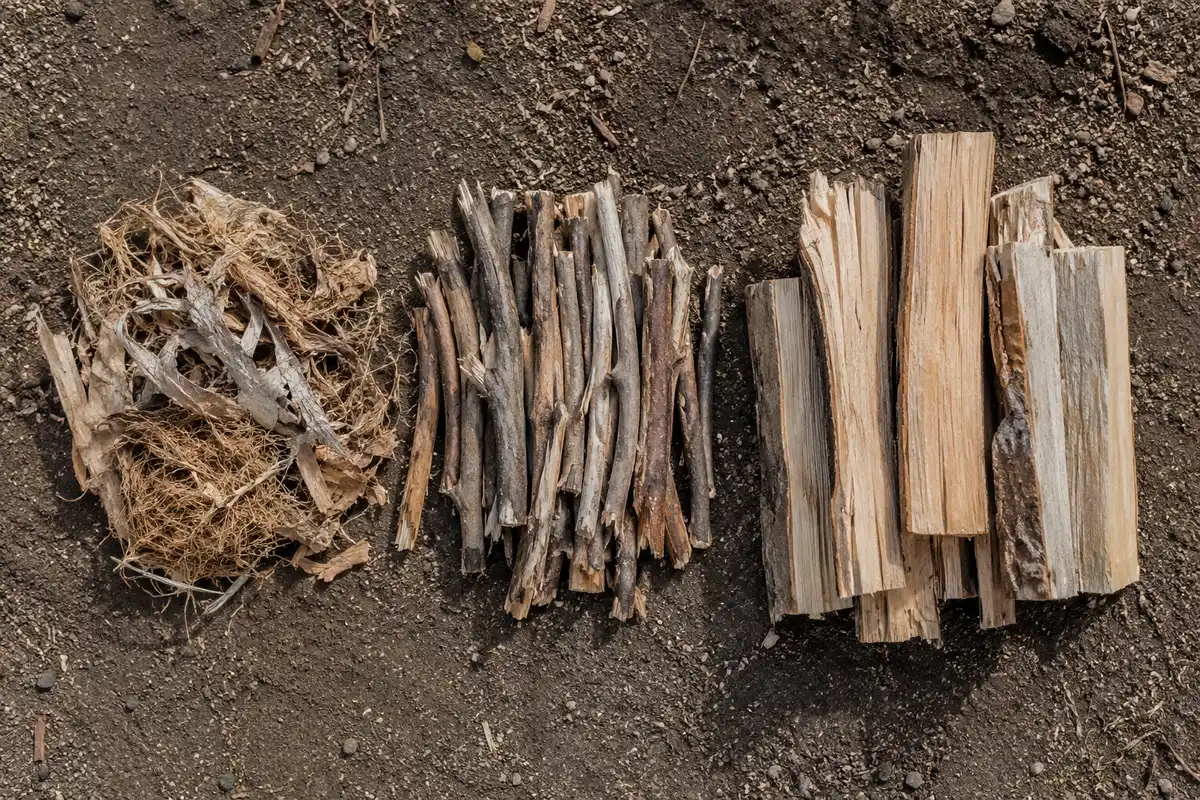
Everything should snap, not bend. Wood that bends is green or damp and will smoke rather than burn. Buy firewood locally or gather dead and down on site where permitted, because hauling wood between regions moves invasive insects.
Choose and Clear the Spot
Half of how to build a campfire safely is deciding where it goes. Use the existing fire ring if there is one. Building a new ring scars ground that takes years to recover, and the Leave No Trace principles are clear about concentrating impact where it already exists. If there is no ring, pick bare mineral soil, gravel or sand well away from tents, and clear a three foot circle down to dirt.
Look up before you look down. Low branches, dry brush and tent guylines overhead are the usual hazards. Have water within arm’s reach before the first flame, not after.
How to Build a Campfire: Three Layouts That Work
All three start the same way: a loose nest of tinder in the middle. Loose matters, because fire needs air. Packed tinder smothers itself.
The Teepee
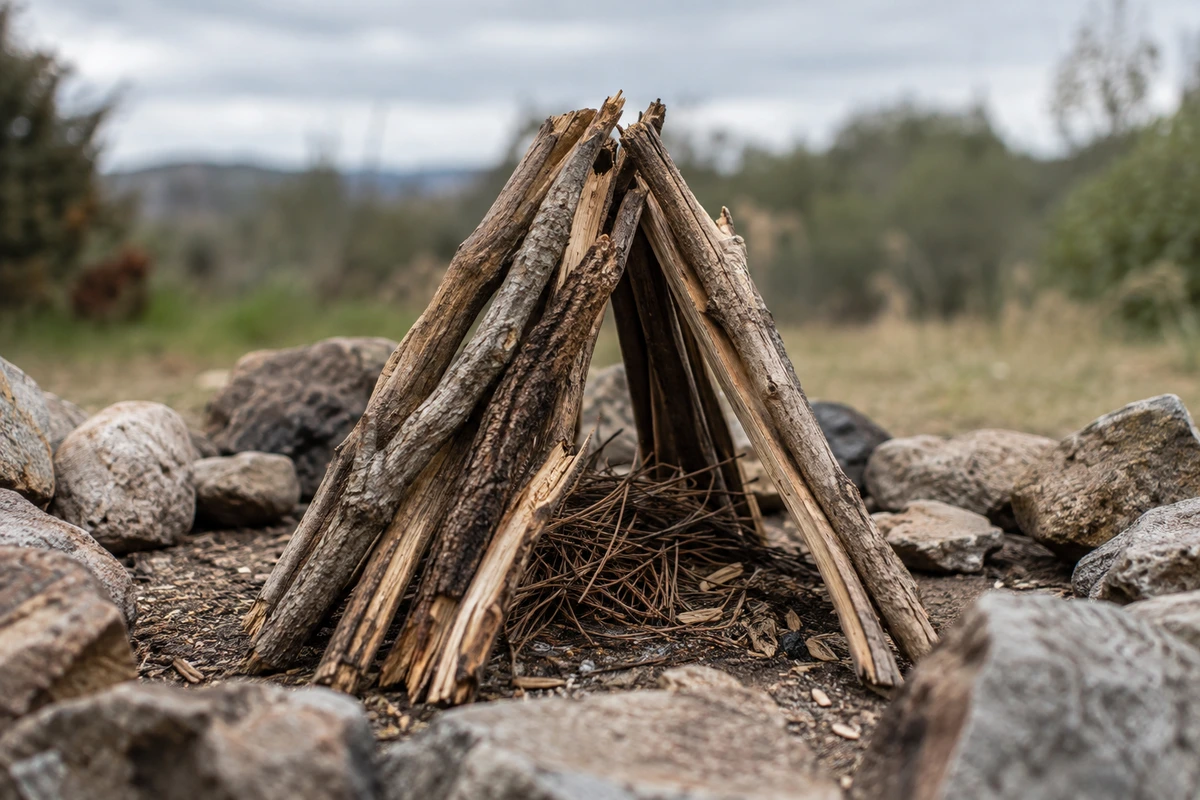
Stand kindling around the tinder nest in a cone, leaning the tips together and leaving a gap on the upwind side to feed the match through. The shape funnels heat straight up into the wood above it, so a teepee catches faster than anything else. It also collapses as it burns, which is why it suits getting started rather than settling in for the evening.
The Log Cabin
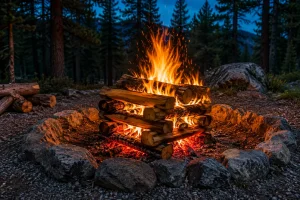
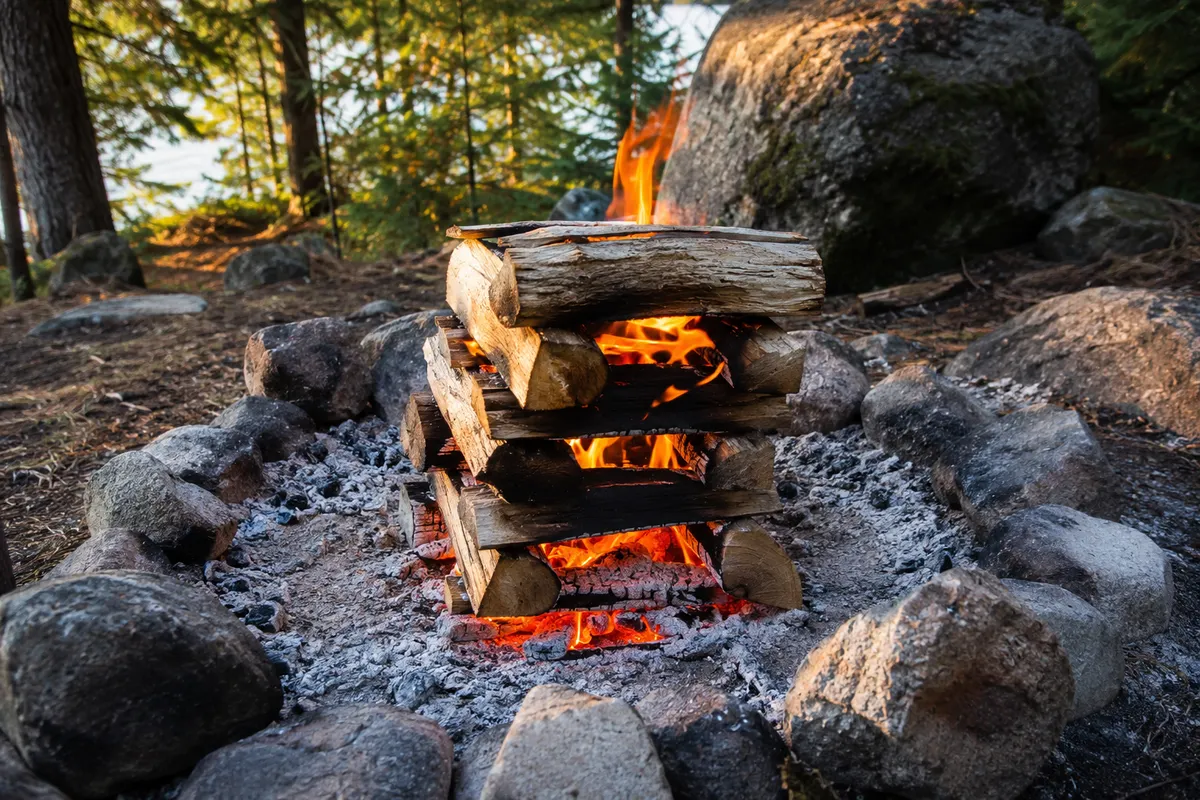
Lay two fuel logs parallel, a hand’s width apart, with the tinder between them. Lay two more across at right angles, then keep stacking in shrinking squares. The structure holds its shape as it burns and produces an even bed of coals, which makes it the one to use if you are cooking. It is slower to catch, so many people build a small teepee inside the cabin and get the best of both.
The Lean-To
Push one thick log into the ground as a windbreak, pile tinder against its sheltered side, then lean kindling against the log at an angle. This is the layout for a breezy evening or damp conditions, since the log blocks wind and reflects heat back into the fuel. Our guide to camping in the rain covers the wet weather version in more depth.
Lighting It and Keeping It Alive
Light the tinder low and on the upwind side so the flame travels up and through the stack. Then leave it alone. The urge to poke a new fire is what kills most of them, because rearranging the wood breaks the airflow you just built.
Feed it gradually. Add kindling until you have steady flame, then a single piece of fuel wood, then wait for that to catch before adding the next. If it stalls, the problem is almost always air rather than fuel, so lift the stack slightly with a stick instead of piling more wood on. Matches struggle in wind and damp, so a ferrocerium rod is worth carrying as a backup since it throws sparks even when wet.
Putting It Out Cold
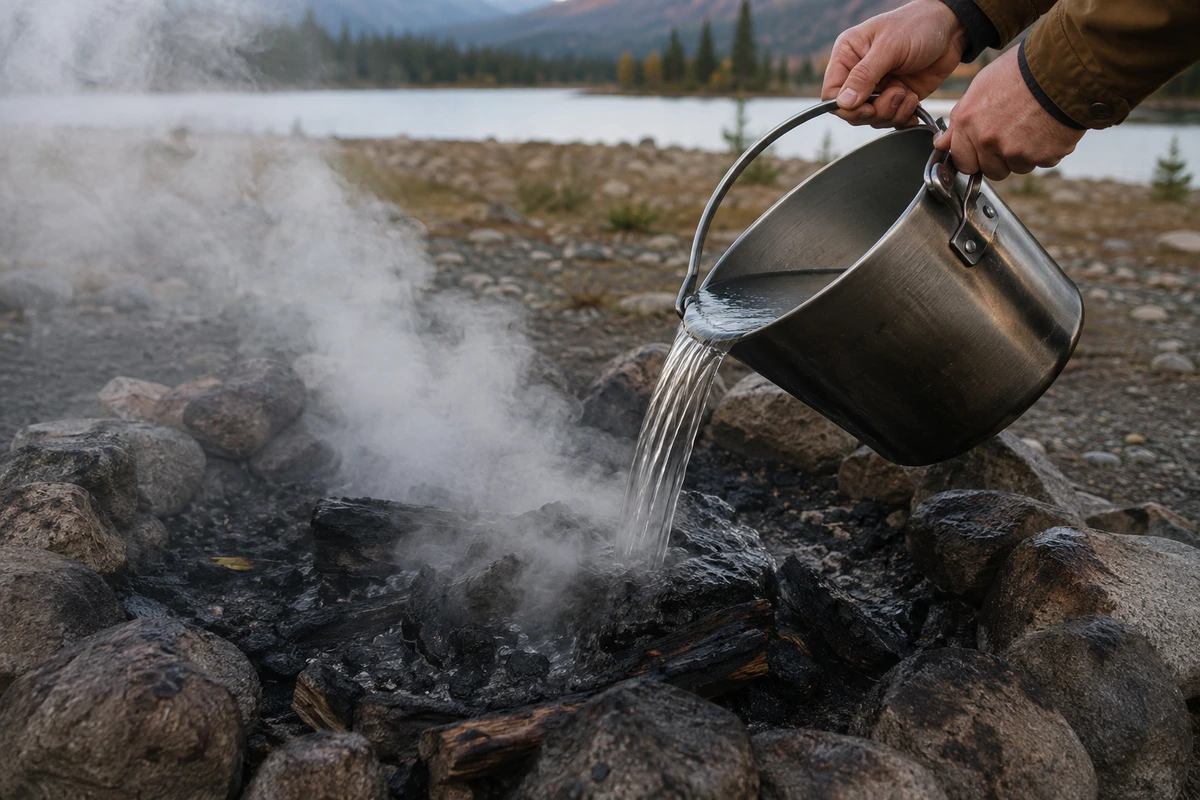
Start twenty minutes before you want to leave or sleep. Let the wood burn down to ash, then pour water slowly across the whole bed and listen. Hissing means heat remains. Stir the ashes with a stick, pour again, and keep going until it stops hissing entirely.
The final check is your hand held just above the ashes. If you feel warmth, it is not out. Buried coals can smoulder for many hours and reignite in wind, which is a common cause of escaped fires. Never bury a fire to extinguish it, because soil insulates the coals and keeps them alive.
Frequently Asked Questions
What kind of wood is best for campfires?
Seasoned hardwoods such as oak, maple, ash and hickory burn longest and give the best coals, which is what you want for cooking or a long evening. Softwoods like pine and fir catch quickly and are excellent as kindling, but they burn fast and pop more because of the resin. Whatever you use, it needs to be dry and dead. Green wood and anything painted, treated or pressure treated should never go on a campfire.
What is the best structure for a campfire?
It depends on the job. The teepee lights fastest and is the best default for getting a fire going. The log cabin burns evenly and leaves a flat bed of coals, so choose it for cooking. The lean-to shelters the flame, making it the right pick in wind or damp. Many people start with a teepee and add fuel in a log cabin pattern once it is established.
Discover more from Maive Verse
Subscribe to get the latest posts sent to your email.