
This post may contain affiliate links. If you buy through them, we may earn a small commission at no extra cost to you.
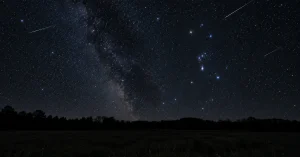
The Orionid meteor shower runs from early October into early November and peaks around the night of 21 to 22 October. It is one of the two showers each year made of debris from Halley’s Comet, the meteors are fast, and the peak falls at a time of year when the nights are finally long enough to be worth staying up for.
It is also a shower that rewards preparation more than equipment. You need no telescope, no binoculars and no app. You need a dark patch of ground, something to lie on, and the willingness to be outside between midnight and dawn in late October. Get those three right and you will see meteors. It is the same low equipment, high patience shape as watching autumn migration.
Table of Contents
What the Orionids Actually Are
Debris From Halley’s Comet
Every time Halley’s Comet passes through the inner solar system it sheds dust along its orbit. Earth crosses that trail twice a year: in May, producing the Eta Aquariids, and in October, producing the Orionids. The particles hitting the atmosphere are mostly sand grain sized, and what you see is the air itself glowing as they burn up.
Fast, and That Matters
Orionid meteors enter the atmosphere at roughly 41 miles per second, which is near the top end for annual showers. Fast meteors produce short, bright streaks and a decent proportion leave persistent trains, a glowing line that hangs in the sky for a second or two after the meteor is gone. That is the thing people remember.
The Rate Is Modest, the Quality Is High
At peak, expect somewhere between 10 and 20 meteors an hour from a genuinely dark site. That is well short of the Perseids or the Geminids, and the Orionids compensate with speed and brightness rather than volume. Anyone expecting a meteor every thirty seconds will be disappointed; anyone who settles in for two hours will not. Treat it as an evening out, the way you would a night at a dispersed campsite.
When to Watch in 2026
The Peak Night
The maximum falls on the night of 21 to 22 October. The shower is broad rather than sharp, so the nights either side are nearly as good, and there is usable activity from around 2 October to 7 November. If the peak night is clouded out, the following night is a genuine substitute rather than a consolation.
The Best Hours
After midnight, and best between about 2am and an hour before dawn. The radiant, the point the meteors appear to come from, sits in Orion near the star Betelgeuse, and Orion does not clear the eastern horizon properly until late evening. The higher the radiant, the more meteors are geometrically able to reach you. Orion is also the easiest constellation to learn, which is why beginner guides start there.
Check the Moon Before the Forecast
Moonlight is the difference between a good night and a wasted one, more than thin cloud is. Look up the moon phase and, more importantly, the moonrise and moonset times for your location on the nights around the peak, then pick the window when the moon is below the horizon. A bright moon will erase most of a modest shower.
Where to Watch From
Dark Beats High
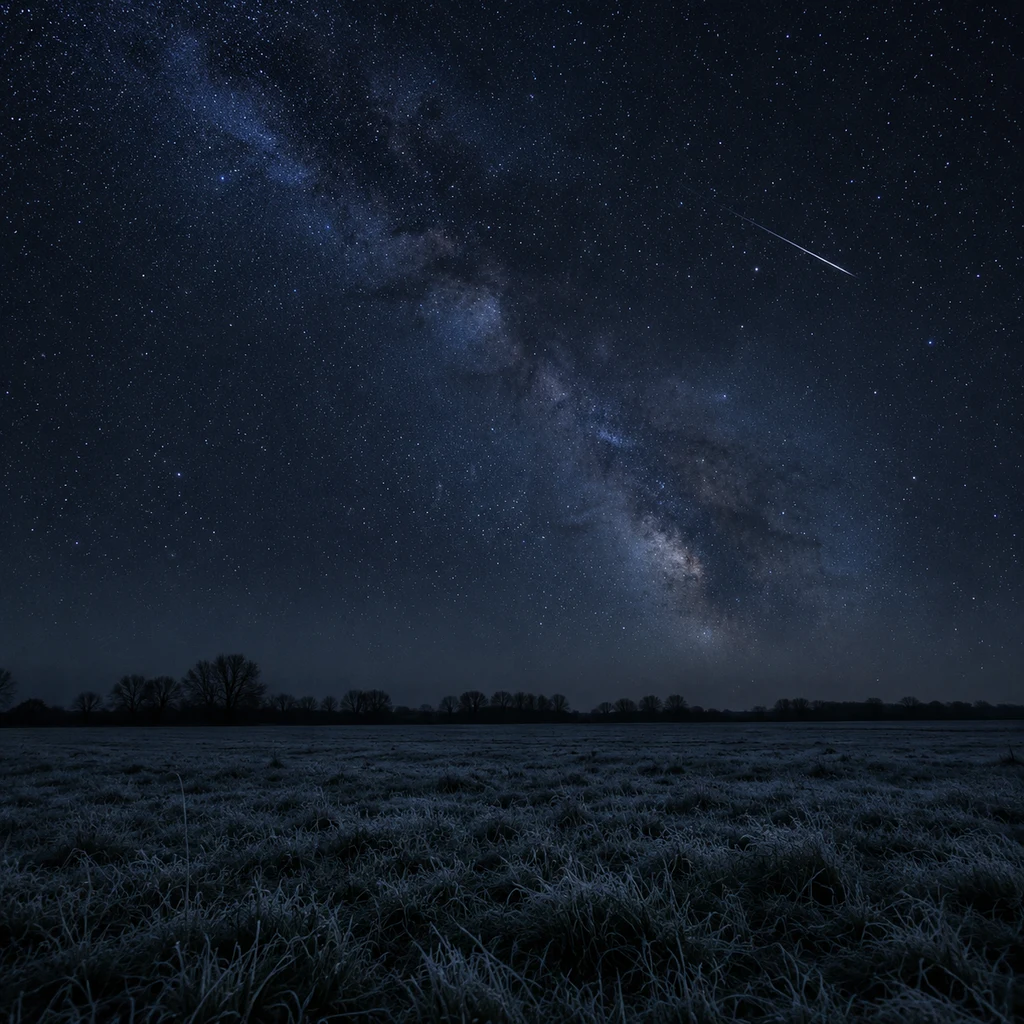
A dark rural field at sea level will show you far more than a mountain viewpoint on the edge of a city. Light pollution is the single biggest factor in how many meteors you count, so drive away from town rather than up. Use a light pollution map and aim for anything in the darker classifications. If the drive is long, it is worth combining with an autumn day walk and staying out.
You Want Open Sky, Not a View
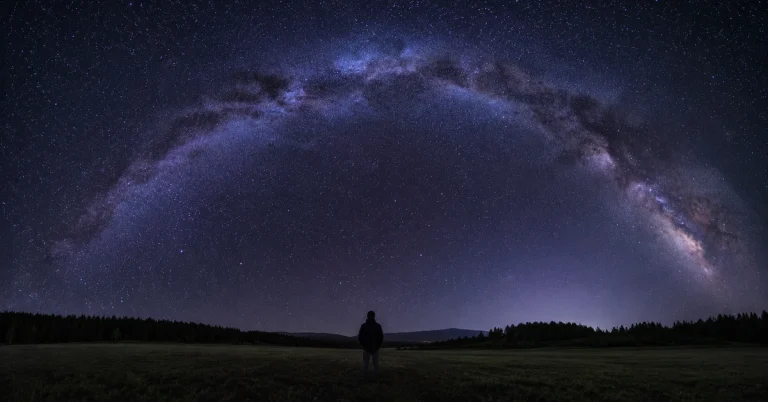
Meteors appear all over the sky, not only near the radiant, so what you want is the largest unobstructed dome you can find. A flat field with low horizons beats a dramatic overlook hemmed in by trees. Avoid anywhere with a single bright light in view, including your own car’s interior lamp. A site you can walk into in a few minutes beats one you can drive to, and walking in after dark is manageable with a red light.
Somewhere You Can Lie Down
This matters more than it sounds. Two hours of craning your neck upward standing is genuinely painful, and people give up because of their neck rather than the cold or the boredom. A reclining chair, a foam pad or the bonnet of a car changes the experience completely. A reclining camp chair is the single best purchase for meteor watching.
How to Actually Watch
Give Your Eyes Half an Hour
Full dark adaptation takes 20 to 40 minutes and one glance at a phone screen resets a good deal of it. Put the phone away properly, or switch it to a red filter at minimum brightness. This is the rule people break most and the one that costs them the most meteors.
Look Away From the Radiant
Counterintuitive but correct: meteors near the radiant are foreshortened into short stubs, while those 40 to 60 degrees away show their full length. Face roughly toward Orion but let your gaze rest well off to the side, and keep your view as wide as possible rather than staring at one point. Cold hands make this harder than it sounds, so bring gloves you can still use, as in any sensible cold weather kit.
Use Red Light Only
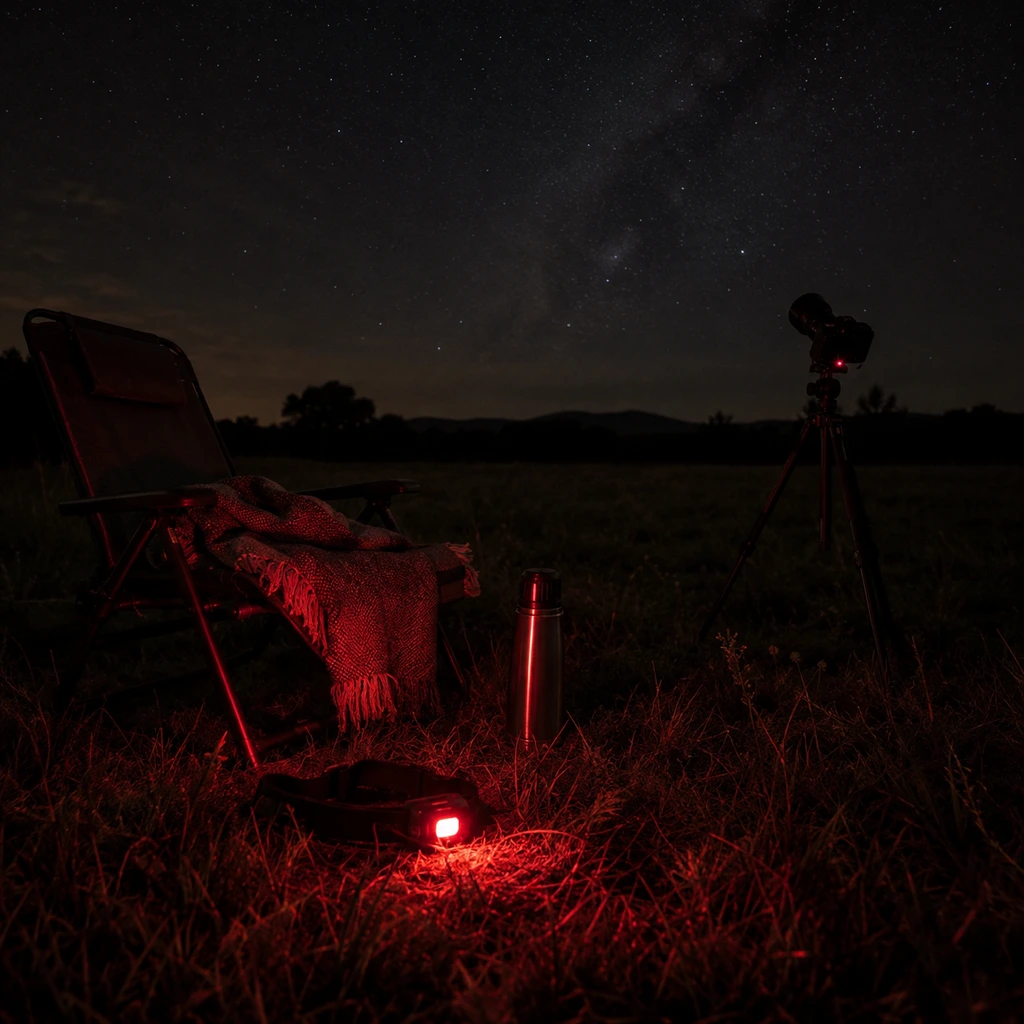
A red head torch preserves night vision where white light destroys it. Most decent headlamps have a red mode, and it is worth checking yours does before you drive out. Our headlamp picks cover which ones include it, and the after dark rules apply to the walk in.
Stay Longer Than You Planned
Meteor rates are clumpy. Twenty quiet minutes followed by four in ninety seconds is normal, so an hour is the minimum honest attempt and two hours is where most people see the one that makes the night. Bring a flask and treat it as an evening out rather than an errand. Something hot in a flask matters more at 3am than any piece of gear, and the same insulation logic works in reverse for keeping drinks warm.
What to Take
Warmth, More Than You Think
You are lying still, outdoors, in the coldest hours of a late October night, which is a completely different thermal problem from walking. Dress as though it were 15 degrees colder than the forecast, add a sleeping bag or a blanket over the top, and put something insulating underneath you. The layering logic in our layering guide still applies, with far more insulation.
No Telescope Required
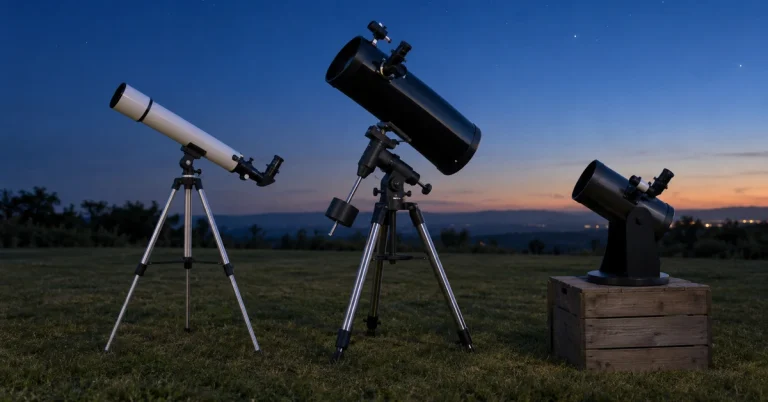
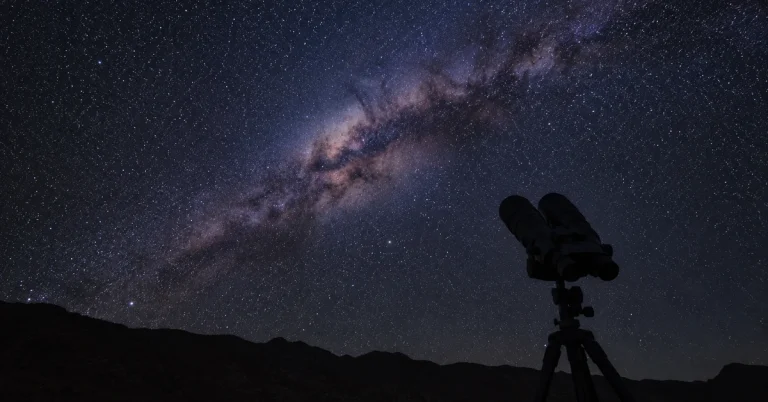
A telescope is actively unhelpful for meteors: the field of view is far too narrow and meteors are too fast. Binoculars are no better for the same reason. If you want to point optics at something while you wait, aim them at the Moon, Jupiter or the Orion Nebula, which is conveniently right there. Our stargazing binocular picks cover that side, and the beginner telescope round up covers what to buy if the shower turns into a hobby.
The Small Things
A flask, a foam pad, a red torch, a watch so you can note times, and a phone left in the car. If you want to photograph it, a camera on a tripod doing 20 second exposures at a wide angle will catch meteors that your eye missed. Budget kit that helps: a small refractor for the planets while you wait and, more usefully, a beginner scope with a decent tripod.
Photographing the Orionids
What Actually Works
A camera that allows manual settings, the widest lens you own, and a tripod. Set the aperture as wide as it goes, the ISO between 1600 and 3200, and the exposure to 15 to 20 seconds, then shoot continuously for hours using an intervalometer or the camera’s own timer. Meteors are a matter of luck across hundreds of frames rather than reaction time.
Frame wide and include some foreground: a tree line, a ridge, a lone building. A frame of nothing but sky with a streak in it reads as a scratch on the image, while the same meteor above a horizon reads as a photograph. Focus manually on a bright star using live view zoomed in, then tape the focus ring so it cannot drift.
What Does Not Work
A phone on automatic, a flash, and any attempt to point a telescope at a meteor. Newer phones with a long exposure night mode will occasionally catch a bright one if propped completely still, but the sensor size works against you. Do not spend the peak night fighting a phone when you could be watching.
Keep the camera pointed away from where you are looking and let it work unattended. Checking the screen between frames destroys your dark adaptation, which costs you more meteors than the photographs are worth. Set it running, then lie down and watch. Cold drains batteries fast, so keep spares somewhere warm, the same problem as any battery powered kit in autumn.
Common Mistakes
- Going out at 9pm, seeing nothing, and going home. Orion is barely up before midnight.
- Checking a phone every few minutes, which resets dark adaptation each time.
- Watching from a city park and blaming the shower for the light pollution.
- Standing up for two hours, then leaving because of a sore neck.
- Bringing a telescope and spending the night looking through a straw at an empty patch of sky.
- Dressing for a walk rather than for lying still in the cold, which is the real reason most people go home early.
- Ignoring the moon. A bright moon above the horizon costs you more meteors than thin high cloud does.
A Simple Plan for the Peak Night
Assuming clear skies on 21 to 22 October and a dark site within an hour’s drive.
| Time | What to Do | Why |
|---|---|---|
| Afternoon | Check forecast, moon times and pick the site | Cloud and moonlight decide the night, not the shower |
| 10pm | Pack: warm layers, pad, chair, flask, red torch | Everything harder to find in the dark |
| 11:30pm | Drive out, park facing away from the open sky | Headlights and interior lamps ruin dark adaptation |
| Midnight | Settle in, phone away, start dark adapting | Takes 20 to 40 minutes to complete |
| 1am to 4am | Watch, lying down, gaze 40 to 60 degrees off Orion | Radiant is high and rates are best before dawn |
If the peak is clouded out, go the next night, or the night after. The shower is broad and the nights around maximum are close to as productive, which is not true of sharper showers like the Quadrantids.
Frequently Asked Questions
When does the Orionid meteor shower peak in 2026?
On the night of 21 to 22 October, with usable activity from around 2 October to 7 November. Because the peak is broad, the nights either side are almost as good, so weather matters more than hitting the exact date.
How many meteors will I see?
From a dark site at peak, 10 to 20 an hour is realistic. From a suburban garden, expect a small fraction of that. Rates are clumpy rather than steady, so judge it over an hour rather than over ten minutes.
Which direction should I look?
Face generally east toward Orion after midnight, but let your gaze sit 40 to 60 degrees away from the radiant, where meteors show their full length. Keep your field of view as wide as possible.
Do I need a telescope for a meteor shower?
No, and a telescope makes it worse. Meteors cross large parts of the sky in under a second, so the naked eye with its very wide field is the correct instrument. Save the optics for the Moon and planets while you wait.
What causes the Orionids?
Dust shed by Halley’s Comet along its orbit. Earth passes through that trail every October, and again in May as the Eta Aquariids. The comet itself will not return until 2061.
The Orionid meteor shower asks very little of you: a dark field, something to lie on, warm clothes, and the two hours before dawn on a night around 21 October. Leave the telescope at home, leave the phone in the car, and give your eyes half an hour to adjust. If it does turn into a hobby, our stargazing guide for beginners is the next step, and the telescope round up covers the first purchase.
Discover more from Maive Verse
Subscribe to get the latest posts sent to your email.