

This post may contain affiliate links. If you buy through them, we may earn a small commission at no extra cost to you.
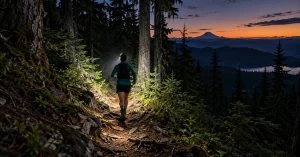
Trail running at night turns a familiar route into a completely different run. The world shrinks to the circle of your headlamp, sounds get sharper, and even an easy loop feels like an adventure. It is also a practical skill: once the clocks fall back on November 1, most of us lose the daylight for after work runs until spring.
This guide covers the lights you need, why one headlamp is not enough, what to wear, how to change your stride and pace in the dark, how to pick a route, and how to stay safe. If you are new to the sport, start with our trail running for beginners guide, and if you are still choosing a light, our best running headlamps roundup compares the top picks.
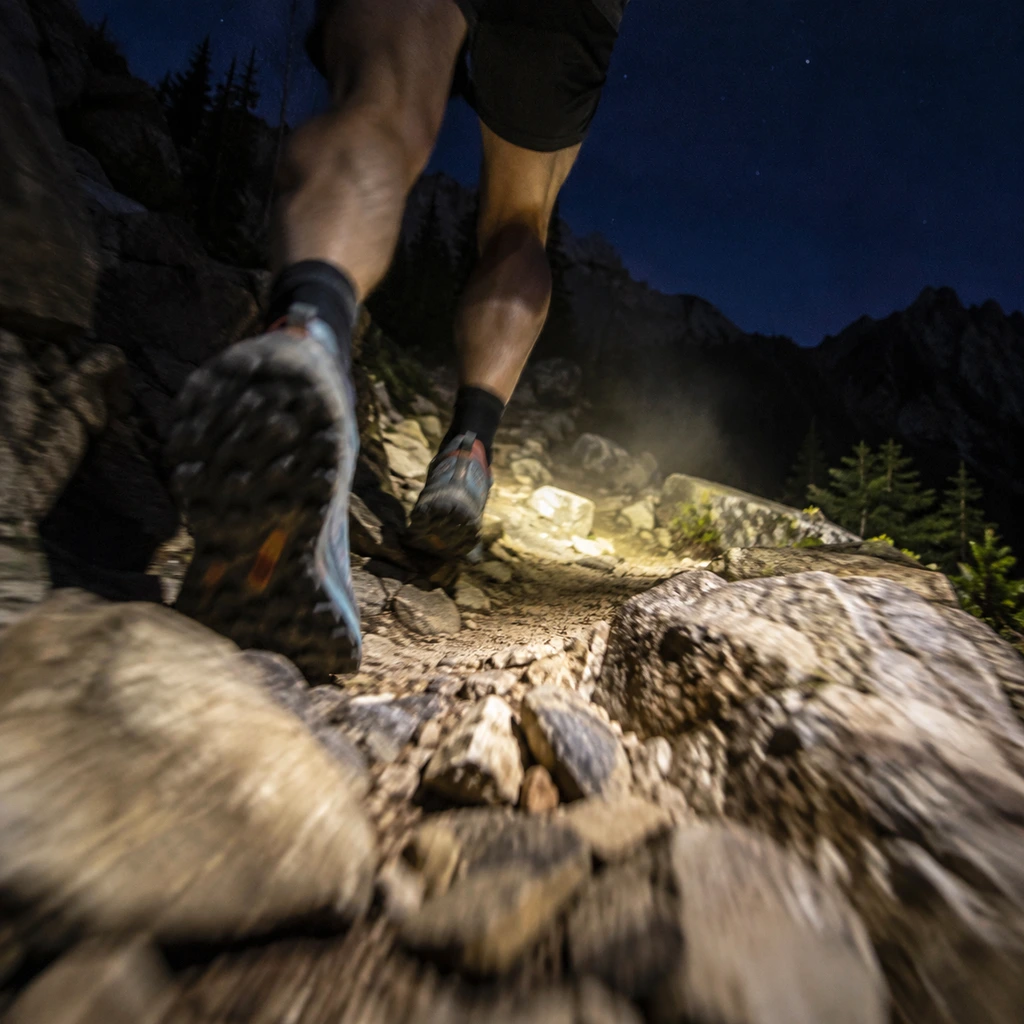
Table of Contents
Why Try Trail Running at Night
More Time on the Trails
After daylight saving time ends, sunset lands before many people finish work. Learning to run in the dark keeps your weekday trail miles going through the winter instead of moving everything to the treadmill or the road.
It Sharpens Your Skills
Running by headlamp forces you to look ahead, read the ground quickly and land lightly. Those habits carry over to daytime runs and make technical trails feel easier.
Preparation for Longer Races
Any ultra or overnight relay will put you on the trail in the dark. Practicing in training means race night is familiar instead of stressful.
Lighting: The Most Important Gear
How Bright Should Your Headlamp Be?
For smooth trails, 200 to 300 lumens is usually enough. For rocky or root covered terrain, or faster running, 400 lumens or more makes a real difference. Reactive lighting, which adjusts brightness to what you are looking at, saves battery and your eyes. The Petzl Swift RL is a strong example. Our guide to how many lumens you need explains the numbers in more detail.
Add a Second, Lower Light
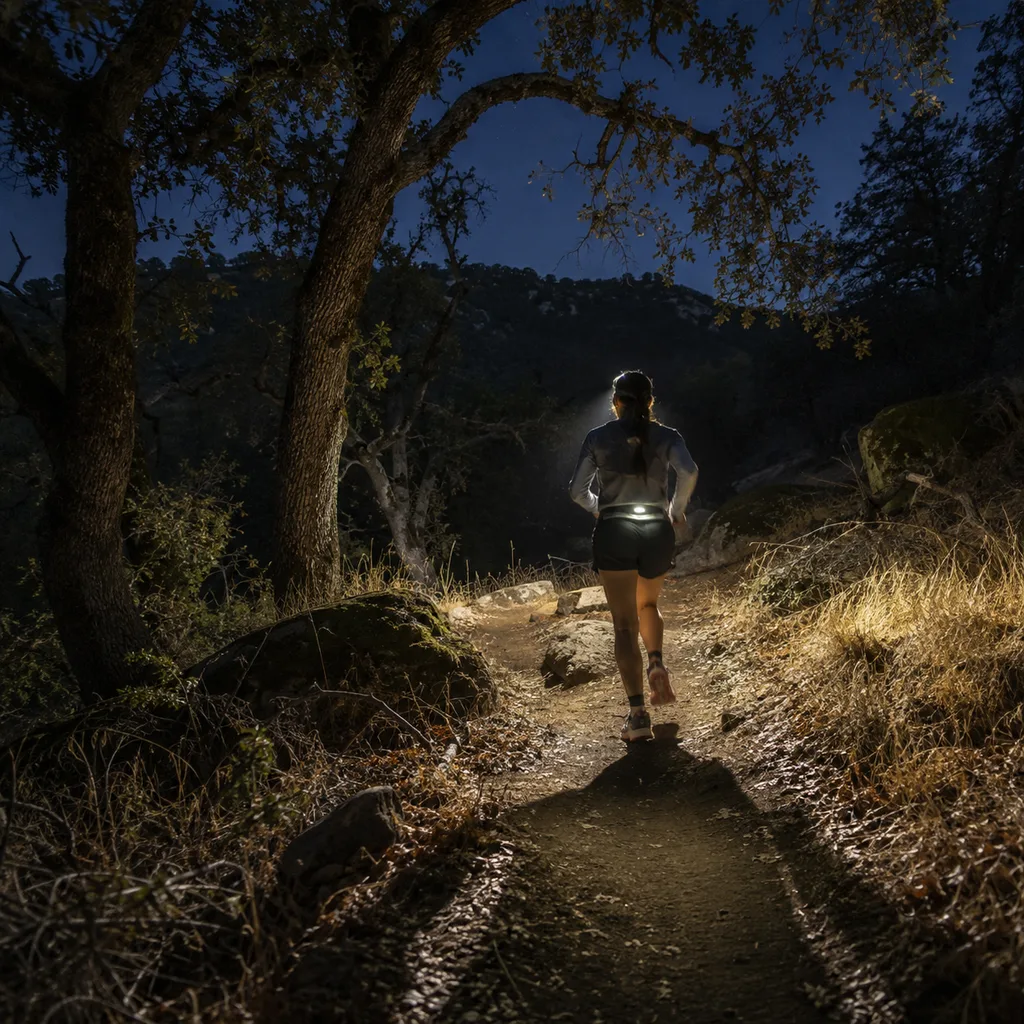
A headlamp sits close to your eyes, which flattens shadows and makes roots and rocks hard to judge. A second light held low, at the waist or in your hand, throws shadows forward so the trail surface pops into 3D. Many experienced night runners say this one change matters more than raw brightness.
Batteries and Run Time
Check run time at the brightness you will actually use, not the lowest setting. Cold weather drains batteries faster, so start fully charged and carry a spare light or battery on longer runs. A small backup like the Nitecore NU25 UL weighs almost nothing.
Fit and Bounce
A light that bounces is distracting and tiring. Look for a wide, snug strap and a balanced design, and tighten it before the run starts. Some runners prefer a light with the battery at the back of the head for better balance.
What to Wear for Night Trail Runs
Dress in Layers
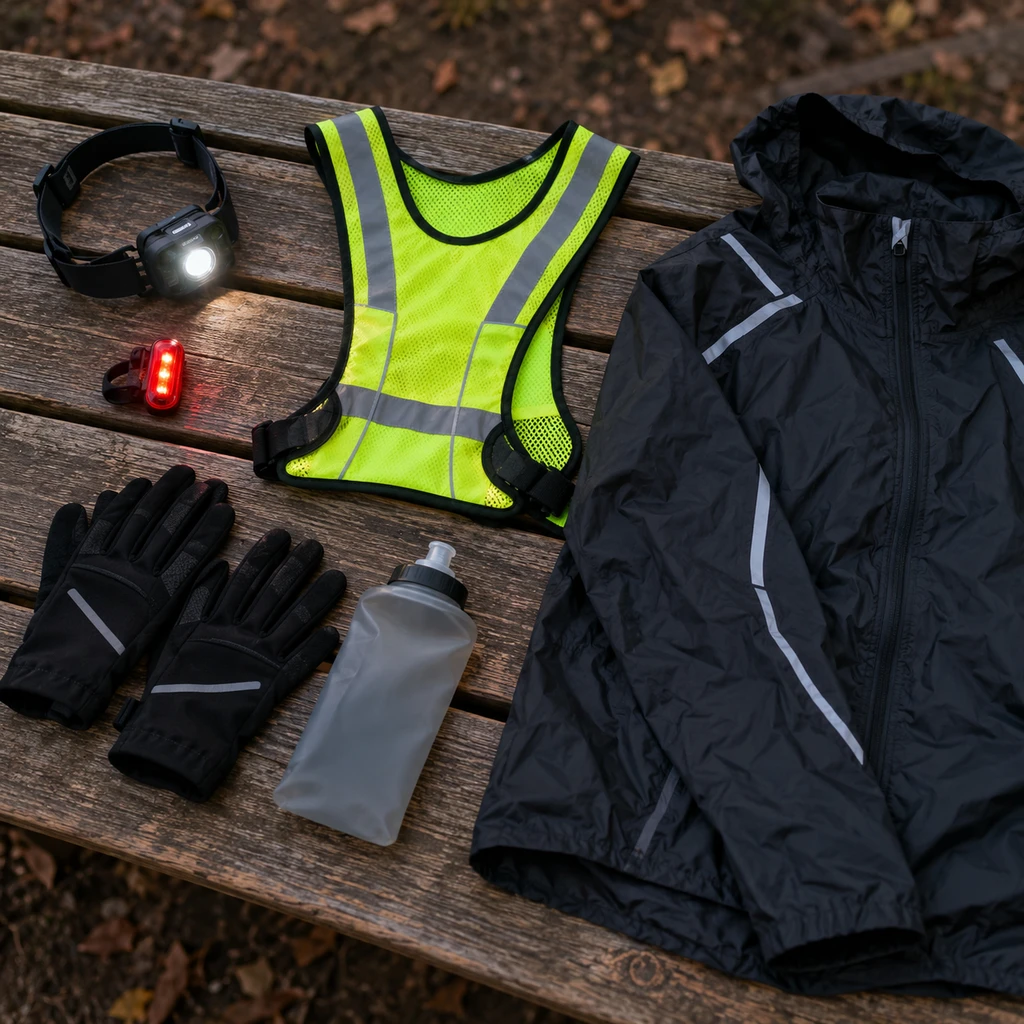
Temperatures drop quickly after sunset. Start with a moisture wicking base layer, add a light insulating layer when it is cold and carry a wind or rain shell. Our how to layer for hiking guide uses the same principles, and our fall trail running guide covers cool weather kit.
Be Visible
Reflective details and a red blinking light on the back of your pack make you easy to spot, especially where trails cross roads or bike paths. Visibility matters on multi use trails too, as our trail etiquette rules explain.
Shoes With Good Grip
Wet leaves and dew make night trails slippery. A shoe with deep lugs and a secure fit is worth the investment. See our best trail running shoes for grippy options, and our trail running in the rain guide for wet weather advice.
Technique Tips for Running in the Dark
Look Farther Ahead
Keep your eyes three to five steps ahead rather than right at your feet. Your brain remembers the obstacles you have already seen, so your feet can deal with them while your eyes scan the next stretch.
Shorten Your Stride
Short, quick steps keep your feet under your body and let you adjust if you misjudge a rock. It is the same technique that works on steep terrain, covered in our guides on running downhill and running uphill.
Slow Down and Run by Effort
Expect to run 10 to 30 percent slower at night, more on technical ground. Forget pace and run by effort. The slower speed is normal, and it still counts as quality training.
| Trail Type | Headlamp Output | Extra Light | Pace Change |
|---|---|---|---|
| Smooth fire road | 200 lumens | Optional | About 10 percent slower |
| Rolling singletrack | 300 to 400 lumens | Recommended | 15 to 20 percent slower |
| Rocky or rooty trail | 400 lumens or more | Strongly recommended | 20 to 30 percent slower |
| Unfamiliar trail | 400 lumens or more | Strongly recommended | Hike the tricky parts |
Use Your Arms for Balance
Keep your arms a little wider and looser than usual, especially on descents. That small change gives you more balance when your foot lands on something you did not see, and it helps you recover quickly from a stumble instead of going down. Relax your shoulders and hands so tension does not creep up into your neck after a long stretch of staring into the beam.
Deal With Fog, Rain and Dust
A bright headlamp beam bounces off fog, rain and dust and creates a wall of glare in front of you. Lower the beam angle, drop the brightness a setting, and rely more on your waist or handheld light, which sits below the glare. If the fog is thick, walk the technical sections and save the faster running for open ground.
Choosing a Route
Start on Trails You Know
Your first night runs should be on trails you know well in daylight. Familiar turns and landmarks keep you oriented when everything looks different in the beam of a headlamp.
Check Trail Hours and Rules
Many parks close at dusk. Check opening hours before you go, respect closures, and avoid sensitive areas where wildlife is active at night. The National Park Service night skies program explains why darkness matters for wildlife too.
Build Up Gradually
Your first few night runs should be shorter than your usual daytime runs. Start with 30 to 45 minutes on an easy loop, then add distance and more technical terrain once you feel comfortable. Many runners like to start just before sunset so the light fades gradually, which gives the eyes and brain time to adjust. Within a few weeks most people find they can run their regular trails in the dark with confidence.
Save New Trails for Daylight
An unfamiliar trail at night is where most wrong turns happen, because junctions and faint side paths are hard to spot outside the beam. Scout new routes during the day first, note the tricky junctions, and download an offline map to your phone before you head out.
Staying Safe on Night Runs
Tell Someone Your Plan
Share your route and expected return time with a friend. Carry a charged phone, and on remote routes consider a satellite messenger. Our guide on how to use satellite messengers explains the options.
Run With Others
A group or partner makes night running safer and more fun. Many local running clubs host weekly headlamp runs through the winter.
Wildlife at Night
You will see more eye shine at night, mostly deer, raccoons and the odd fox. Make some noise around blind corners, give animals space, and know the local guidance for larger predators in your area. Our night hiking safety guide covers more of the basics.
Carry Water and a Few Essentials
Even on a short run, a light vest lets you carry water, a spare light, a phone and a warm layer. The Nathan TrailMix 7L tops our best trail running vests list. Our hiking hydration guide explains how much to drink.
Frequently Asked Questions
Is it safe to run trails in the dark?
It is safe for most runners with good lighting, a familiar route, a slower pace and a plan shared with someone. Start with short runs and build up.
How many lumens do I need for night trail running?
Around 200 to 300 lumens for smooth trails and 400 or more for technical terrain or faster running.
Do I really need two lights?
It is not mandatory, but a second, lower light makes obstacles much easier to see and gives you a backup if one fails.
Should I run alone at night?
If you do, choose a well known trail, tell someone your plan, and carry a phone. A partner or group is the safer choice for unfamiliar routes.
Trail running at night is easier than it looks once you have the right light setup and adjust your expectations on pace. Start on a familiar loop, add a second light, dress in layers and let someone know where you are going. A few runs in, you may find the dark miles become your favorite of the week.
Discover more from Maive Verse
Subscribe to get the latest posts sent to your email.