


This post may contain affiliate links. If you buy through them, we may earn a small commission at no extra cost to you.
Figuring out how much weight to ruck with is the question that decides whether rucking becomes a habit or an injury. Too little and it is just a walk with a backpack. Too much, too soon, and your shoulders, feet and lower back pay for it for a week. The military version, the forced march, has soldiers carrying loads most beginners should not come near, and that is the image a lot of people start with.
The good news is that the answer for most people is simple, and much lighter than you might expect. This guide covers where to start, how to progress, how the right load changes with your goal and the warning signs that you are carrying too much. If you are brand new, read our rucking for beginners guide first, then come back here to set your load.
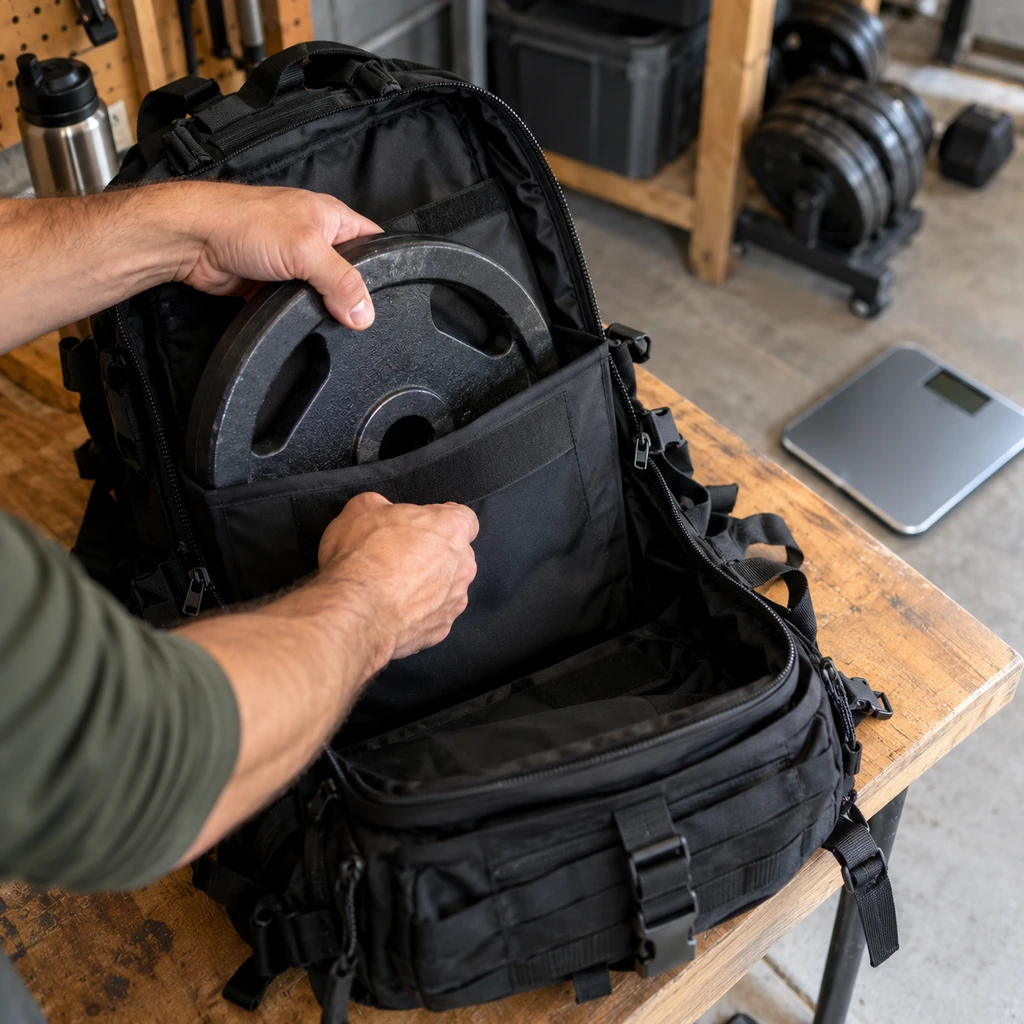
Table of Contents
How Much Weight to Ruck When You Are Starting
The 10 Percent Rule
The most common starting point is about 10 percent of your body weight. For a 150 pound person that is roughly 15 pounds, and for a 200 pound person about 20. It is enough to feel, enough to raise your heart rate on a hill, and light enough that your feet, shoulders and hips can adapt without breaking down.
Start Lighter Than You Think
If you have not walked much lately, have any history of back or knee trouble, or are heavier than you would like to be, start below 10 percent. Ten pounds is a perfectly good first load for almost anyone. Your cardiovascular fitness will adapt in a couple of weeks; tendons, ligaments and the skin on your feet take a lot longer.
Why Weight Is the Last Thing to Increase
Weight is the variable that hurts you. Distance and time build the base that lets you carry more safely, so the smart order is to extend your rucks first and add weight only once a given distance feels easy. People who add weight first are the ones who end up with sore shoulders and a pack sitting in the closet.
Starting Weight Guide by Body Weight
Use this as a rough starting point, not a prescription. If a load feels hard after thirty minutes on flat ground, drop five pounds.
| Body Weight | First Rucks | After 4 to 6 Weeks | Experienced Ceiling |
|---|---|---|---|
| 120 lb | 10 lb | 15 to 20 lb | About 30 to 35 lb |
| 150 lb | 10 to 15 lb | 20 to 25 lb | About 35 to 45 lb |
| 180 lb | 15 to 20 lb | 25 to 30 lb | About 45 to 55 lb |
| 210 lb | 20 lb | 30 lb | About 50 to 60 lb |
| 240 lb and up | 20 lb | 30 lb | Build slowly, joints first |
The ceiling column is where many experienced ruckers settle, roughly a quarter to a third of body weight, and most people never need to go that high. If your goal is general fitness, the middle column is where you will spend most of your time. Our comparison of rucking vs running explains why a moderate load walked often beats a heavy one walked rarely.
How to Progress Your Ruck Weight
Add Time Before Weight
Start with 20 to 30 minute rucks two or three times a week. Add ten minutes per week until you can ruck for an hour at a steady pace and feel fine the next day. Only then think about more weight. This is the same progressive overload principle that runs through all strength and endurance training: small, steady increases the body can absorb.
The Five Pound Step
When it is time to add weight, add five pounds, not ten. That is why ruck plates come in five pound increments. A set like the Yes4All cast iron ruck plates, offered in 10 through 45 pound options, or an adjustable ModGear Water Weight bladder with 5 pound markings, makes small steps easy. Our round-up of the best ruck plates compares the options.
Hold Each Load for Two Weeks
After each increase, stay at the new weight for at least two weeks before adding more. Use that time to bring your distance back up to where it was. If the new load still feels like a struggle after two weeks, you added too much too soon, so drop back.
Know When to Stop Adding Weight
There is a point where more weight stops making you fitter and starts wearing you out. For most people that is somewhere between 20 and 35 percent of body weight. Past that, you are better served by walking farther, walking faster, or adding hills. The heaviest loads are for specific goals such as military selection, not general fitness.
A Sample Eight Week Plan
Here is how that looks in practice for a 170 pound beginner. Weeks one and two: 15 pounds, three rucks of 30 minutes on flat ground. Weeks three and four: same weight, rucks of 40 to 45 minutes, one of them with a few gentle hills. Weeks five and six: 20 pounds, back to 30 minute rucks, building to 45. Weeks seven and eight: 20 pounds, one longer ruck of 60 to 75 minutes each week plus two shorter ones. By the end, an hour at 20 pounds should feel comfortable, and you have a clear base to decide what comes next.
Notice that the weight changes only once in eight weeks, and when it does the duration resets. That rhythm of build, hold, then add is the whole method. Long distance hikers go through a similar adaptation over their first weeks on trail, which we cover in the science of thru-hiking.
How Much Weight to Ruck for Your Goal
General Fitness
For heart health, leg strength and posture, 15 to 30 pounds walked three or four times a week does nearly everything you want. Rucking at a brisk pace counts as solid aerobic exercise, and a moderate load keeps it sustainable for years rather than weeks.
Hiking and Backpacking Prep
Train with roughly the weight you will actually carry on the trail. A day hiker might ruck with 15 pounds; someone preparing for an overnight should work up toward a realistic pack weight of 25 to 35 pounds. Our backpacking for beginners guide and our tips on training for elevation cover the rest of the preparation.
Event and Selection Training
Organized rucking events and military selection standards often specify a load, commonly 20 to 45 pounds of dry weight. Train to that number gradually over several months, not weeks. A dedicated plate such as the GORUCK Ruck Plate sits flat and stays put at those weights, which loose weight in a daypack will not.
Weight Loss
Carrying load raises the energy cost of walking, which you can see in the metabolic equivalent values for loaded versus unloaded walking. But more is not better here: a moderate load you carry four times a week will burn more over a month than a heavy one that leaves you too sore to go out again. Pair it with sensible fueling, and our guide to high protein trail snacks has ideas.
Where the Weight Goes in Your Pack
High and Tight Against Your Back
Put the weight high in the pack and close to your spine, roughly between your shoulder blades. Low, loose weight pulls you backward, forces you to lean forward to compensate and throws your spine out of neutral. This single change makes a heavy ruck feel lighter.
Plates Versus Loose Weight
Bricks, sandbags and water bottles work, but they shift and bounce, and a brick corner in your back gets old fast. A flat plate in a dedicated sleeve stays where you put it. If you are going to ruck regularly, a plate is the most comfortable upgrade you can make for the money.
Fit Matters as Much as Load
A pack with a proper sternum strap, padded shoulder straps and a structured plate pocket spreads load far better than a school backpack. See our picks for the best rucking backpacks, or if you prefer weight on your torso, the best weighted vests for rucking. And do not forget your feet: our guide on how to choose hiking boots applies to rucking footwear too.
Count Everything You Carry
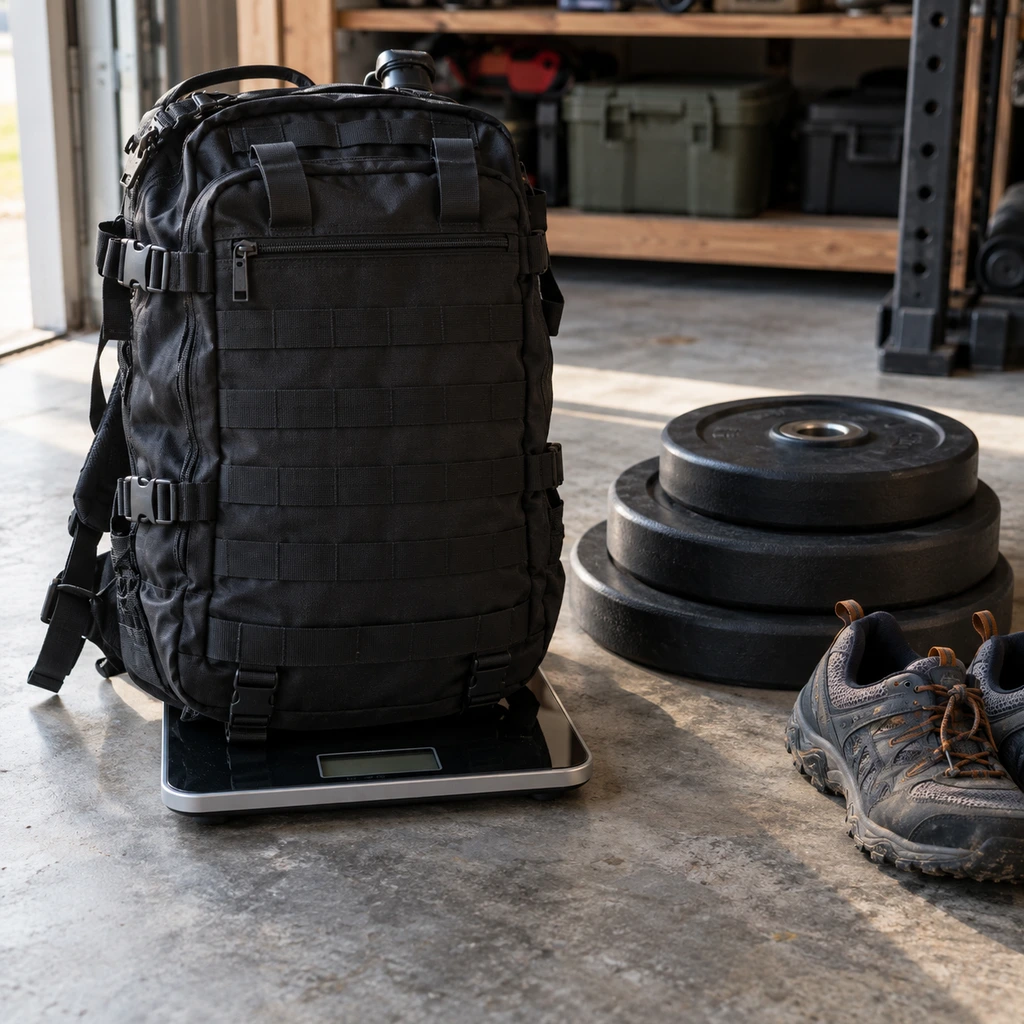
Water, snacks, a jacket and your phone all count toward the load. A full two liter bladder alone is about four and a half pounds, so a 20 pound plate plus water and extras is closer to 26 pounds on your back. Weigh the whole pack on a bathroom scale before you head out, and adjust the plate rather than leaving the water behind. On longer rucks, sturdy footwear matters more with every pound, and our picks for the best hiking boots are a good place to start.

Signs You Are Carrying Too Much
Your Posture Breaks Down
If you are hunched forward, your head is jutting out or your shoulders are rolling in within the first mile, the load is too heavy for your current strength. Good rucking posture looks almost like normal walking: tall, chest up, eyes forward.
Pain That Lingers Into the Next Day
Tired legs are normal. Sharp pain in the knees, feet or lower back that is still there the next morning is not. Drop the weight, shorten the ruck, and let it settle before building back up.
Your Pace Collapses
A steady ruck pace for most people is somewhere around 15 to 17 minutes per mile on flat ground. If you cannot hold a pace near that, or your effort on a perceived exertion scale is close to maximal on flat ground, the load is too high for now.
Hot Spots and Blisters
Added weight means more pressure and friction on your feet. Hot spots that turn into blisters are a sign that your feet have not caught up with the load. Take care of them early, check your socks and footwear, and keep water handy; our hydration guide has the numbers.
Frequently Asked Questions
How much weight should a beginner ruck with?
About 10 percent of body weight, or simply 10 to 20 pounds for most adults. If you are unsure, start at 10 pounds and add five at a time after holding each load for two weeks.
Is 20 pounds a good ruck weight?
For most adults, yes. Twenty pounds is enough to build real fitness and light enough to ruck several times a week. Many people ruck at 20 to 30 pounds for years and never need more.
How often should I ruck?
Two or three times a week is a good start, with rest or easy days in between. As your body adapts, you can ruck more often at moderate loads. Heavy rucks should stay at once or twice a week.
Is rucking bad for your back?
Not when the load is sensible and sits high and close. Many people find a moderate ruck improves posture and back strength, and loaded walking may also support bone density. Problems come from loads that are too heavy, badly packed, or increased too quickly.
Should I ruck with a plate or a weighted vest?
Either works. A plate in a backpack is the classic setup and easy to adjust. A vest spreads weight across your torso and suits workouts with lots of movement. Our guides to rucking backpacks and weighted vests compare both.
The short answer to how much weight to ruck with: start around 10 percent of body weight, build time before load, add five pounds at a time and hold each step for two weeks. Keep the weight high and tight, listen to your feet and back, and you will be rucking for years rather than weeks. When you are ready for trails, our guide to using trekking poles helps on the climbs, and the trail etiquette guide keeps shared paths friendly.
Discover more from Maive Verse
Subscribe to get the latest posts sent to your email.