

This post may contain affiliate links. If you buy through them, we may earn a small commission at no extra cost to you.
A good ski trip packing list is the difference between a smooth first morning on the mountain and a frantic hunt for goggles in a parking lot at 8 a.m. Ski trips need more gear than almost any other vacation, and forgetting one small item, like a neck gaiter or a pair of ski socks, can mean paying resort prices or spending the day cold. If you are still deciding what to wear on the hill, our guide on what to wear skiing explains the layering system in detail.
This guide breaks everything into simple checklists: clothing, hard gear, small essentials, lodge and apres clothes, toiletries and health items, and a winter car kit. You will also find practical packing tips for flying and driving, plus the items people most often forget. Screenshot the lists or print them, and tick items off the night before you leave.
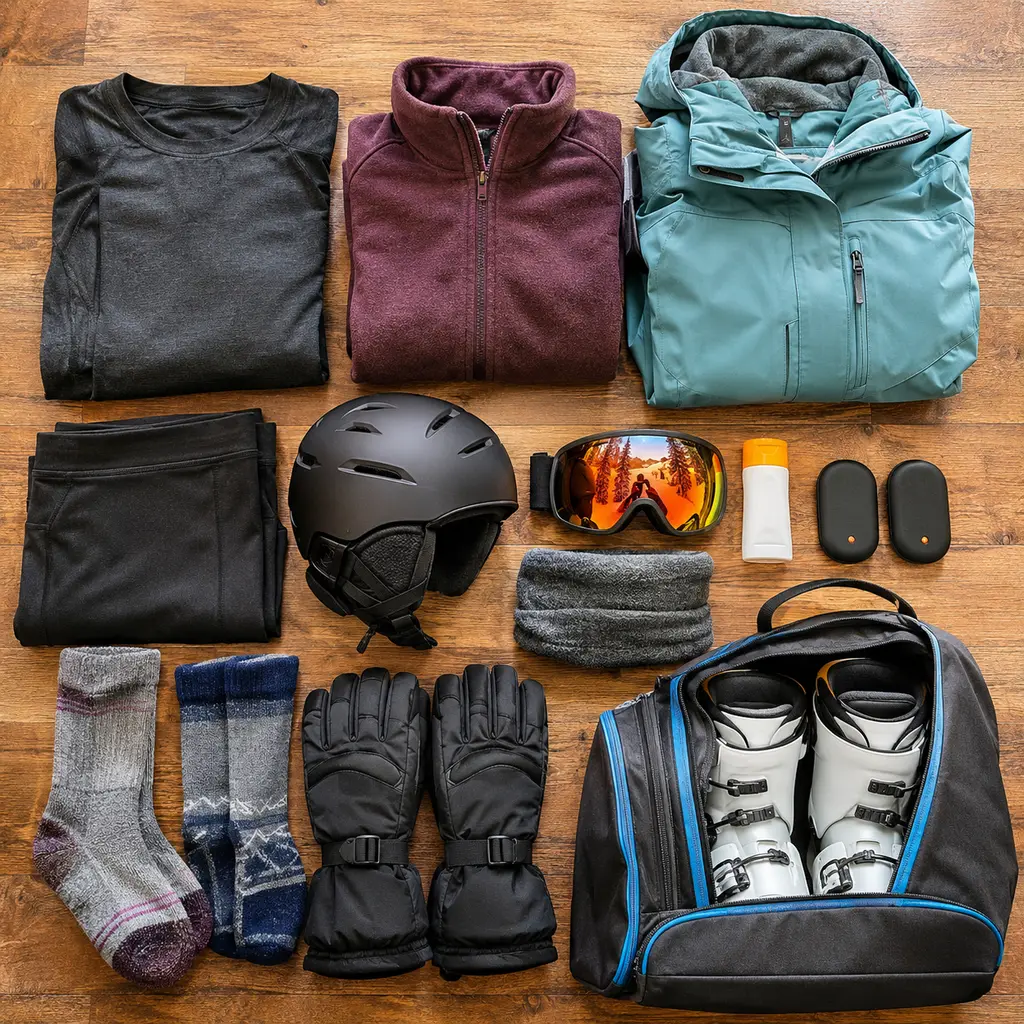
Table of Contents
How to Use This Ski Trip Packing List
Start packing at least two days before you leave, not the night before. That gives you time to find missing items, wash base layers and buy anything you need without rushing. Lay everything out on the floor by category, check it against each list below, then pack it into bags in the same order. Doing it this way means you can see gaps at a glance.
Plan for one more day of base layers and socks than you think you need. Ski days are sweaty, and fresh, dry layers each morning keep you warmer than any expensive jacket.
Packing for Kids
Children need the same layers as adults, plus a few extras. Pack mittens instead of gloves, since they are warmer and easier for small hands, and bring two spare pairs because kids soak them quickly in the snow. Add a spare base layer top, a neck gaiter they will actually wear, and snacks they like. Label every glove, helmet and goggle with a name, because lost and found bins at ski schools fill up fast. If your child is in lessons, pack their gear in a separate bag so drop off is quick in the morning.
Ski Clothing Checklist
Clothing is the biggest part of any ski trip packing list, and it works best as a layer system: a base layer to move sweat, a midlayer to hold warmth, and a waterproof outer layer.
Base Layers
- Two or three base layer tops in merino wool or synthetic fabric
- Two or three base layer bottoms or leggings
- A spare base layer set for very cold days
A merino set like the Merino.tech merino wool base layer resists odor over several days, so you can pack fewer pieces. Never pack cotton for the slopes, since it holds sweat and leaves you cold.
Midlayers
- One fleece jacket or quarter zip
- One light down or synthetic puffy for cold days
- A vest if you run warm and only need core warmth
Our list of the best insulated jackets includes light puffies that fit under a ski shell.
Outerwear
- Waterproof ski jacket
- Waterproof ski pants or bibs
- A packable shell for spring skiing, if you have one
Look for pit zips, a powder skirt and a helmet compatible hood. Our guide to the best ski jackets compares insulated jackets and shells.
Socks, Gloves and Neckwear
- One pair of ski socks per ski day, plus one spare pair
- Insulated ski gloves or mittens, plus a spare pair or liners
- A neck gaiter or balaclava
- A thin skull cap or helmet liner
Thin to midweight over the calf socks such as the Darn Tough Vermont Solstice ski socks or the OutdoorMaster merino ski socks fit better in rigid boots than thick hiking socks. For hands, see our picks for the best ski gloves, including budget pairs like the MCTi waterproof ski gloves. On frigid lift rides, a fleece balaclava like the Tough Headwear balaclava covers your face, ears and neck.
Ski Gear Checklist
If you rent, you can skip most of this section, but double check what the rental shop includes. Many shops rent skis, boots and poles, and some rent helmets, while goggles and gloves are almost always on you.
Skis or Snowboard
- Skis with bindings set to your boots, or a snowboard
- Ski poles sized to your height
- A ski strap or two to keep skis together
- A quick tune or fresh wax before the trip
A fresh coat of wax makes the first day far more fun. Our guide on how to wax skis walks you through it at home, and our list of the best ski poles helps if yours are bent or missing baskets.
Ski Boots
- Ski boots, dry and buckled loosely for travel
- Boot bag
- Footbeds or custom insoles, if you use them
Boots are the one item you cannot replace with a rental and still ski comfortably, so pack them first. If they hurt last season, read our guide to the signs you need new ski boots before you go.
Helmet and Goggles
- Ski helmet
- Goggles with a lens for sunny days
- A second lens or pair for flat light and snow
- Goggle case or microfiber bag
Our guides to the best ski helmets and the best ski goggles explain fit and lens tints.
Small Essentials People Forget
These small items fit in a jacket pocket or a small bag, and they are the things most often left at home.
- Lift tickets or a pass, plus the confirmation email
- ID, credit card and a little cash for lockers and tips
- Phone, charging cable and a small power bank
- Hand and toe warmers
- Sunscreen with SPF 30 or higher
- Lip balm with SPF
- Tissues or a small packet of wipes
- A water bottle and a few snacks
- A small backpack or hip pack for the lodge
Your On Mountain Pocket Kit
Keep a small, consistent kit in your jacket so you never ski without the basics. Put your pass in a sleeve or wrist pocket, your phone in an inside chest pocket where body heat protects the battery, and lip balm, a tissue and a hand warmer in an outer pocket. A small snack such as an energy bar saves you from expensive lodge food mid morning. Zip every pocket before you get on the lift, because dropped phones and passes are hard to find in deep snow.
Rechargeable warmers from our list of the best rechargeable hand warmers save money over a week of disposable packs, and a bottle from our guide to the best insulated water bottles keeps water from freezing on the chairlift.
Lodge and Apres Ski Clothes
Apres Ski Outfits
- Comfortable jeans or warm pants
- A cozy sweater or flannel
- Warm, waterproof winter boots with good tread
- A warm hat and casual gloves
- A swimsuit for the hot tub
Sleepwear and Downtime
- Pajamas and slippers or house socks
- A book, cards or a small game for evenings
- A reusable bag for wet gear
Toiletries and Health Items
Toiletry Basics
- Toothbrush, toothpaste and floss
- Rich moisturizer for dry mountain air
- Shampoo and conditioner if your lodging does not supply them
- A small travel towel
Health and First Aid
- Any prescription medicine
- Pain reliever for sore muscles
- Blister care, such as moleskin or bandages
- Altitude and sleep aids if your doctor recommends them
- Electrolyte packets
Blisters from boots can ruin a trip, so pack the same supplies we suggest in our guide on how to prevent blisters when hiking. Mountain air is dry and the sun is strong at altitude, so drink plenty of water and reapply sunscreen at lunch.
Winter Car Kit for Ski Trips
Mountain roads can change from dry to icy in a few miles. Keep a small winter kit in the car for every drive to the slopes.
- Ice scraper and snow brush
- Tire chains or cables where they are required, and practice fitting them at home
- A warm blanket
- A small shovel
- Jumper cables
- Extra windshield washer fluid rated for freezing temperatures
- Water, snacks and a phone charger
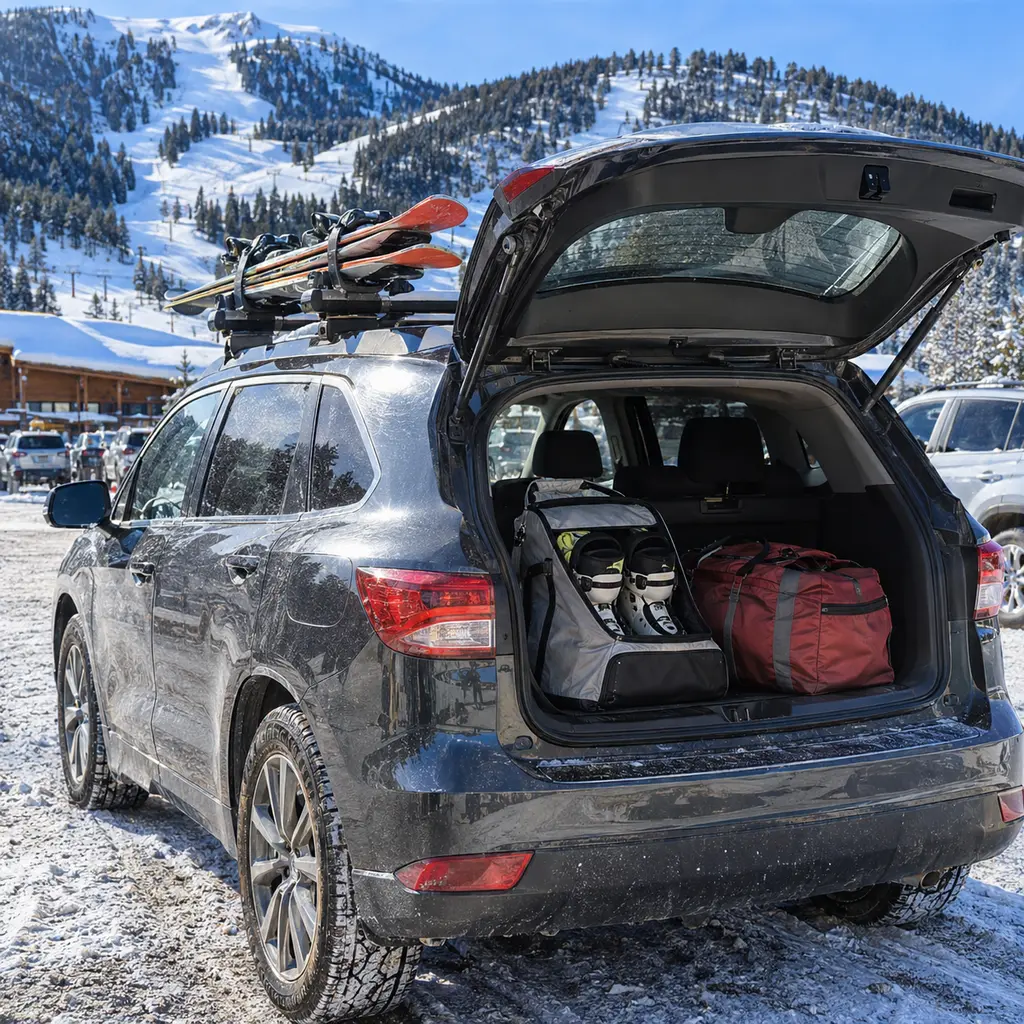
Check road conditions and chain rules before you leave, and fill up with fuel before you start climbing toward the resort.
Packing Tips for Flying and Driving
Flying With Ski Gear
Wear your ski boots or carry them on in a boot bag when you fly. Boots are the hardest item to replace, and if your ski bag is delayed you can still rent skis and ski the first day. Pack your helmet with goggles and gloves stuffed inside to save space, and use soft clothing to pad your skis in a padded bag from our list of the best ski bags.
Driving to the Mountain
When you drive, pack a separate bag with everything you need for day one, so you can ski straight from the car if your lodging is not ready. Store wet gear in a bin or a large reusable bag on the drive home so the car stays dry.
Getting Ready for the First Morning
The night before your first ski day, lay out your layers, put hand warmers and sunscreen in your jacket pockets, and set boots somewhere warm so they are easier to put on. Study a ski resort trail map so you know where to start, and if you want to feel strong by the last day, try our ski fitness plan in the weeks before your trip.
Frequently Asked Questions
How many pairs of ski socks should I pack?
Pack one pair for each ski day plus one spare. Merino socks can be worn twice in a pinch if you let them dry overnight, but fresh socks are warmer.
What do people forget most on a ski trip?
Goggles, gloves, sunscreen, lip balm and chargers top the list. Check them against your ski trip packing list the night before, since all of them are easy to overlook and expensive to buy at a resort.
Should I carry on my ski boots when flying?
Yes, if you can. Boots are hard to replace and fitting rental boots wastes time, so keeping them with you protects your first ski day.
Discover more from Maive Verse
Subscribe to get the latest posts sent to your email.