
This post may contain affiliate links. If you buy through them, we may earn a small commission at no extra cost to you.
Learning to use ice fishing tip ups is one of the easiest ways to catch more fish through the ice. A tip-up is a simple frame that sits over a hole, holds a baited line below the surface, and pops up a bright flag when a fish takes the bait. Instead of jigging one hole and hoping, you can watch several holes at once and cover far more water. If you are brand new to fishing on hard water, start with our guide to ice fishing for beginners for the basics of gear and safety.
This guide covers how a tip-up works, how to rig one from backing to hook, how deep to set your bait, how to space a spread of holes, what to do when a flag goes up, and how to keep your holes from freezing over. You will also find the mistakes that cost anglers fish and a few safety habits that matter every single trip.
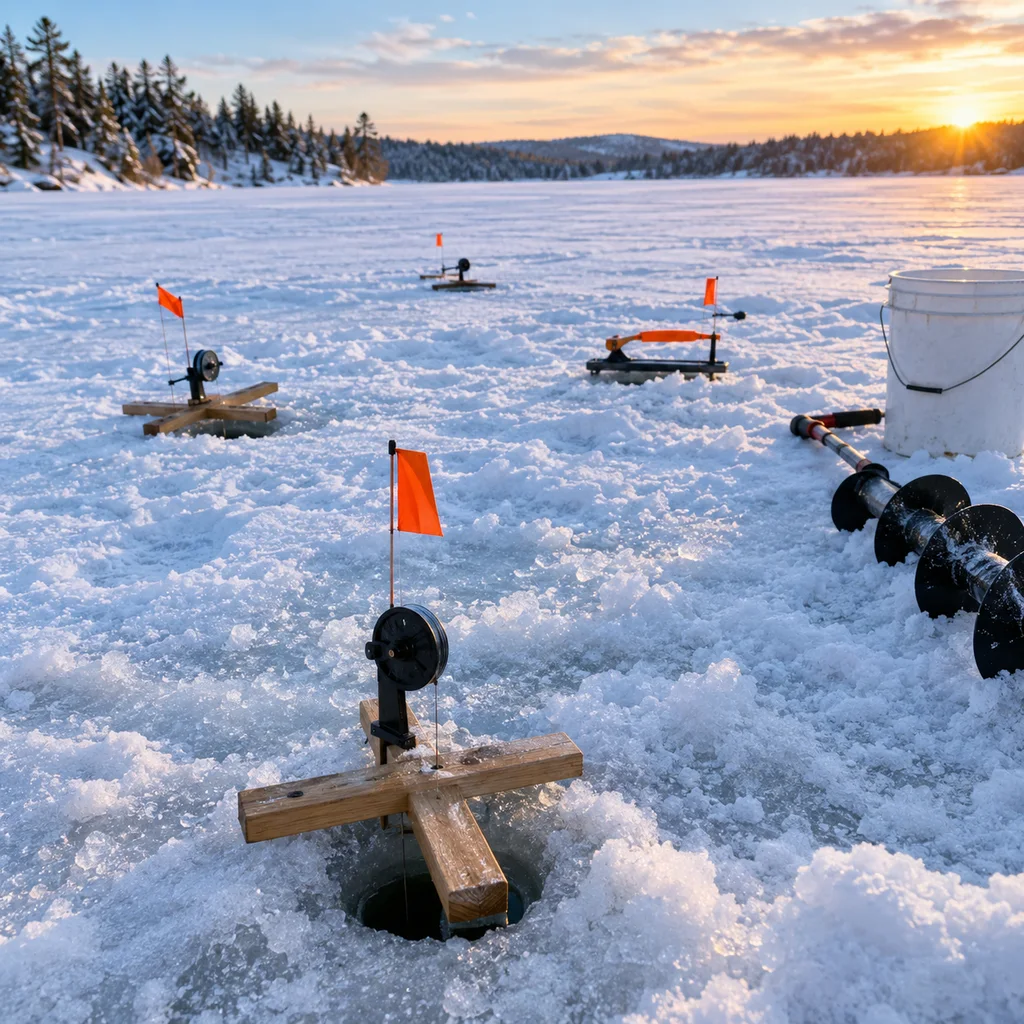
Table of Contents
What Are Ice Fishing Tip Ups?
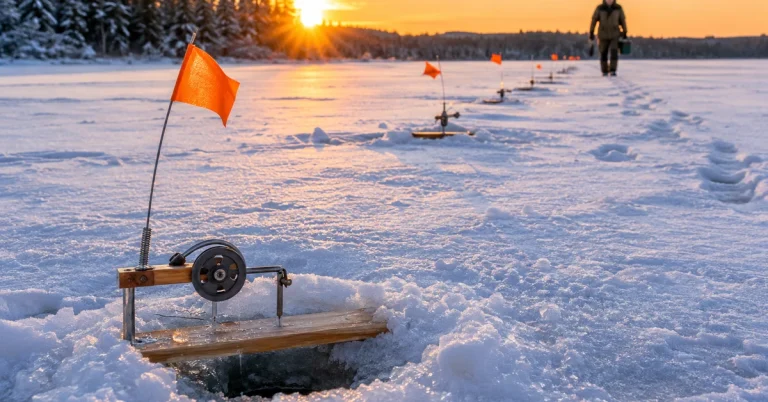
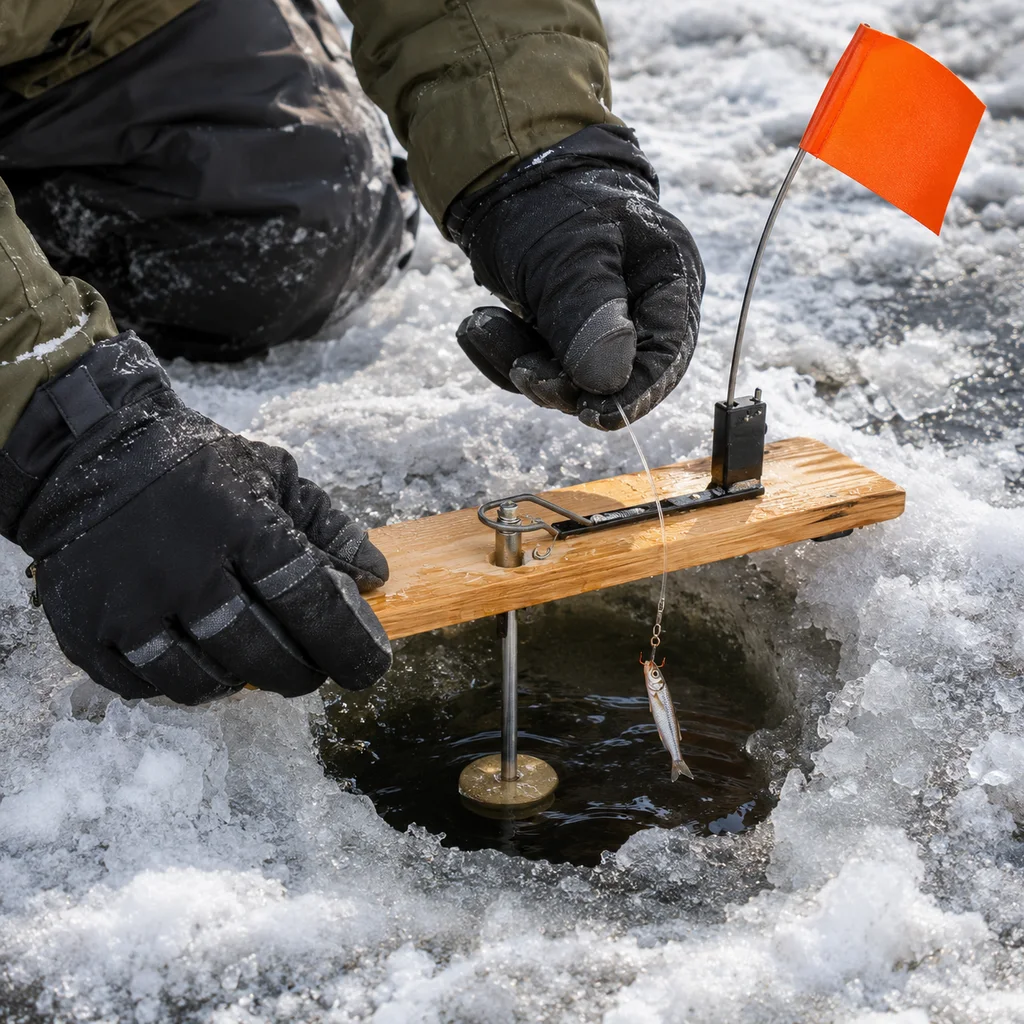
A tip-up is a passive fishing rig. It holds a spool of line under the water, sits across the hole on a cross frame or round base, and uses a spring loaded flag that stays down until a fish pulls line off the spool. When the spool turns, a small trip wire releases the flag, which springs up so you can see a bite from a long way off.
How a Tip-Up Works
Most tip-ups have a spool mounted on a shaft that runs down into the water. The shaft has a trip mechanism at the top. When a fish swims off with your bait, the spool turns and the trip releases the flag. Many models offer two trip settings: a light setting that releases on the faintest pull and a heavier setting that keeps strong currents or big live bait from triggering false flags.
Cross Frame, Round and Foldable Styles
Classic cross frame tip-ups use two wooden or metal arms laid across the hole. Round insulated models, such as the Frabill insulated tip-up, cover the hole completely to block wind and slow ice from forming. Foldable models such as the SF foldable thermal tip-up collapse flat so several fit in a bucket. All of them catch fish, so choose based on how cold it gets where you fish and how you carry your gear.
Which Fish You Can Target
Tip-ups shine for predators that roam and strike live bait, including northern pike, walleye, lake trout, bass and even large panfish. With smaller hooks and minnows on a light trip setting, they also catch perch and crappie while you jig nearby.
Check the Rules Before You Set Up
Fishing regulations decide how many lines you can run, and they vary a lot from state to state and sometimes lake to lake. Some states allow two lines per angler, others allow more, and some count each tip-up as a line. Many also require you to stay within a set distance of your lines and to mark your tip-ups with your name. Always read your state’s current fishing regulations before you drill your first hole.
Line Limits and Attendance
Count your jig rod as a line too. If your state allows three lines, that might mean two ice fishing tip ups plus one rod. Most rules also say you must be able to see your flags, so do not set lines out of sight behind a point or a pressure ridge.
Licenses and Special Seasons
Your fishing license covers ice fishing in most states, but some species have their own seasons, size limits or bait rules. Live bait transport rules are common too, since moving bait between waters can spread invasive species.
How to Rig a Tip-Up
A good rig is simple and strong. You need backing on the spool, a leader at the end, a hook or treble sized for your target, and a small weight to hold the bait at the right depth. A guide to how to tie fishing knots will help you join each piece securely.
Spool Up With Braided Backing
Fill the spool with 20 to 50 yards of braided tip-up line, which is thick, easy to handle with cold fingers and does not coil like monofilament. Darker or coated tip-up line also sheds water better, so it is less likely to freeze to the spool.
Add a Leader
Tie a two to four foot leader of fluorocarbon or monofilament to the end of the backing with a small barrel swivel. For walleye and trout, a 6 to 12 pound leader is common. For pike, many anglers switch to a heavier fluorocarbon or a thin wire leader so sharp teeth cannot cut the line.
Choose Quick Strike or Circle Hooks
Quick strike rigs use two small treble hooks spaced along the bait, so you can set the hook right away instead of waiting for a fish to swallow it. Circle hooks are another good choice for catch and release, because they usually hook fish in the corner of the mouth. Keep a pair of long nose pliers and a jaw spreader in your tackle box for safe releases.
Set the Bait Depth
Attach a split shot a little above the hook, then lower the rig to the bottom and bring it back up. For walleye and perch, set the bait about one to two feet off the bottom. For pike, suspend the bait a few feet under the ice or halfway down in shallow weedy bays. A depth finder or a simple clip on weight makes this quick and repeatable.
Where to Place Your Ice Fishing Tip Ups
Placement matters more than the gear. Fish move along edges, weed lines and drop offs, so a spread of tip-ups across different depths helps you find where they are feeding that day.
Fish Edges and Structure
Set lines along weed edges, points, the mouths of bays and the transition from shallow flats to deeper water. A lake map or a phone app with contour lines shows where these spots are before you leave home.
Space Your Spread
Spread tip-ups 20 to 50 yards apart in a line or zigzag that crosses different depths. When one depth starts producing flags, move other lines toward it. Keep every flag within sight of where you are jigging or sitting.
Pick the Right Live Bait
Shiners, fatheads and suckers are the classic tip-up baits. Match the size to the fish: small minnows for perch and walleye, larger suckers for pike. Hook minnows lightly under the dorsal fin so they stay lively and swim naturally. Keep bait in an insulated bucket with an aerator, and change out a minnow that stops swimming, because a lively bait draws far more strikes than a tired one. If you also fish open water in spring, our guide on how to cast a spinning rod covers the other half of the season.
What to Do When a Flag Goes Up
A flag going up is the best moment of the day, and staying calm is the key to landing the fish.
Approach Quietly
Walk, do not run, to the hole. Ice can be slippery, and a fish that feels vibration may drop the bait. Look at the spool first: if it is turning, a fish is moving with the bait.
Set the Hook
With quick strike rigs, pull the line gently until you feel weight, then set the hook with a firm, steady sweep. With single hooks, let the fish run until it stops and starts again, then set. Hand over hand, keep steady pressure and let the line slip through your gloved fingers if a big fish runs.
Land and Release
Guide the fish’s head into the hole rather than pulling straight up against the ice edge. Measure it quickly, then release it gently or keep it within legal limits. Re bait, check your depth and reset the flag.
Keep Holes From Freezing
On cold, windy days a hole can skim over in minutes, which freezes the line in place and stops the flag from tripping. Insulated round tip-ups cover the hole and help a lot. You can also pack loose snow around the frame to block wind, skim the hole with a ladle every hour, and use tip-ups made for sub zero weather, like a Polar style tip-up with an underwater spool. Our post on ice fishing shelters covers staying warm while you wait.
- Skim slush from every hole each time you check your lines.
- Bank snow around the base to block wind.
- Keep the spool under water where possible, since it will not freeze there.
- Carry a small ice scoop and a spare tip-up in case one freezes solid.
Ice Safety and Comfort
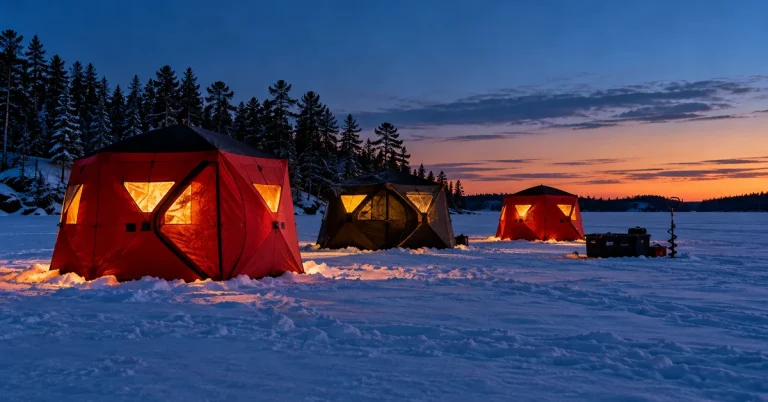
Every ice trip starts with knowing the ice is safe. Our guide to how thick ice needs to be gives the numbers, and the short version is at least four inches of clear, solid ice for walking. Check thickness as you go, avoid pressure ridges, inlets and moving water, and fish with a friend.
Comfort keeps you out longer. Our guide on what to wear skiing works just as well for a day on the ice, and an insulated jacket is worth packing even on sunny days. Dress in layers like our layering guide explains, wear warm socks from our list of the best hiking socks, and add microspikes for traction on glare ice. Waterproof ski gloves handle wet line well, a pocket of rechargeable hand warmers helps between flags, and a hot drink from one of the best insulated water bottles makes a long day much better.
Frequently Asked Questions
How many tip-ups can I use?
It depends on your state. Many allow two or three lines per angler, but limits vary widely, so check your current state regulations before you go.
How deep should I set a tip-up?
Start one to two feet off the bottom for walleye and perch, and a few feet below the ice for pike in shallow weedy water. Adjust if one depth gets more flags.
What is the best bait for tip-ups?
Live minnows. Shiners and fatheads work for most fish, and larger suckers are the classic pike bait.
Why does my flag trip with no fish?
Wind, current or a very lively minnow can trip a light setting. Switch to the heavier trip setting, or use an insulated round tip-up that blocks the wind. Once you master these simple rigs, tip-ups let you fish many holes at once, which is the fastest way to find active fish.
Discover more from Maive Verse
Subscribe to get the latest posts sent to your email.