


This post may contain affiliate links. If you buy through them, we may earn a small commission at no extra cost to you.
Learning how to cast a spinning rod takes about fifteen minutes of practice, and it opens up almost every kind of freshwater fishing. The spinning reel is the most forgiving setup there is: the spool does not turn during the cast, so it cannot overrun and bird nest the way a baitcaster can. Get the timing of one finger right and the rest falls into place.
This guide walks through the parts of the reel that matter, a step by step overhead cast, three other casts for tight spots, and fixes for the mistakes almost everyone makes on day one. If you still need gear, our best rod and reel combos list has beginner friendly spinning setups, and our fishing knots guide shows how to tie on your lure before you start.
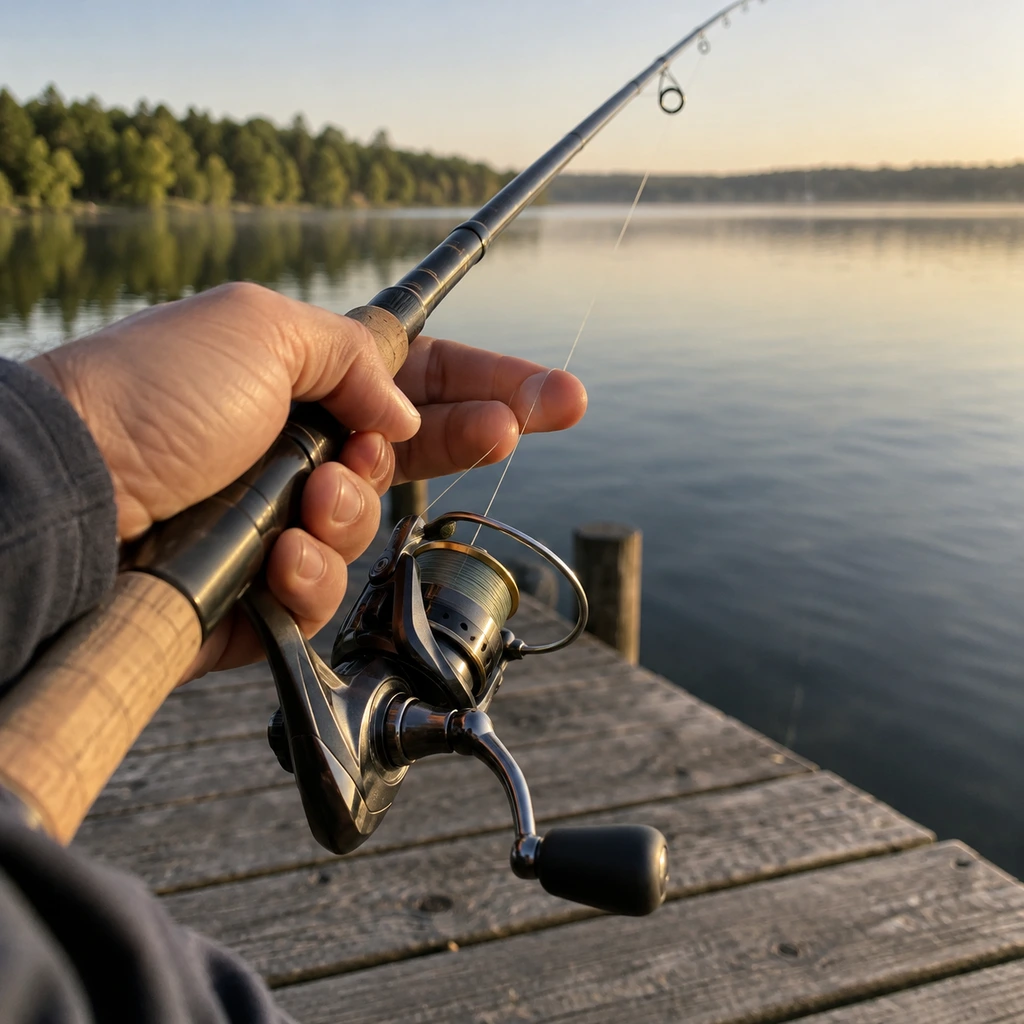
Table of Contents
Know Your Spinning Reel First
Four parts of the reel do all the work in a cast. Spend two minutes finding them on your own reel before you head to the water.
The Bail
The bail is the metal arm that wraps around the spool. Closed, it guides line back onto the spool as you reel. Flipped open, it lets line peel freely off the spool. Every cast starts with the bail open and ends with it closed.
The Line Roller
The small roller where the bail meets the reel body is where line leaves the reel. Before each cast, rotate the spool by turning the handle until the line roller sits right under your index finger. That makes the next step easy.
The Drag
The knob on the front of the spool sets how hard a fish must pull before the spool slips. It does not affect casting, but check it before you fish: set too tight and a good fish can snap your line.
The Spool and Line
Fill the spool to about an eighth of an inch below the lip. Underfilled spools cast short because line has to climb over the lip; overfilled spools throw loose coils. Most beginner setups use 6 to 10 pound monofilament line, which is easy to handle and forgiving.
How to Cast a Spinning Rod Step by Step
This is the basic overhead cast. It covers most fishing from a bank, dock or boat, and every other cast is a variation of it.
1. Let the Lure Hang
Reel in until the lure hangs 6 to 12 inches below the rod tip. Too short and the rod cannot load; too long and the lure swings wildly and is hard to control.
2. Grip the Rod
Hold the rod in your dominant hand with the reel hanging below it. The reel stem goes between your middle and ring fingers, two fingers in front and two behind, so the rod is balanced in your palm. Your other hand rests on the end of the handle.
3. Pick Up the Line
Hook the line with the pad of your index finger, just in front of the reel, and pin it lightly against the rod handle. This finger is your release trigger for the whole cast.
4. Open the Bail
With the line held on your finger, flip the bail open with your other hand. The lure should not drop. If it does, your finger is not holding the line firmly enough.
5. Bring the Rod Back
Face your target. Bring the rod smoothly up and back until it points just past vertical, around one o’clock if you picture a clock face beside you. Do not go too far back; the lure only needs a moment to load the rod.
6. Cast Forward and Release
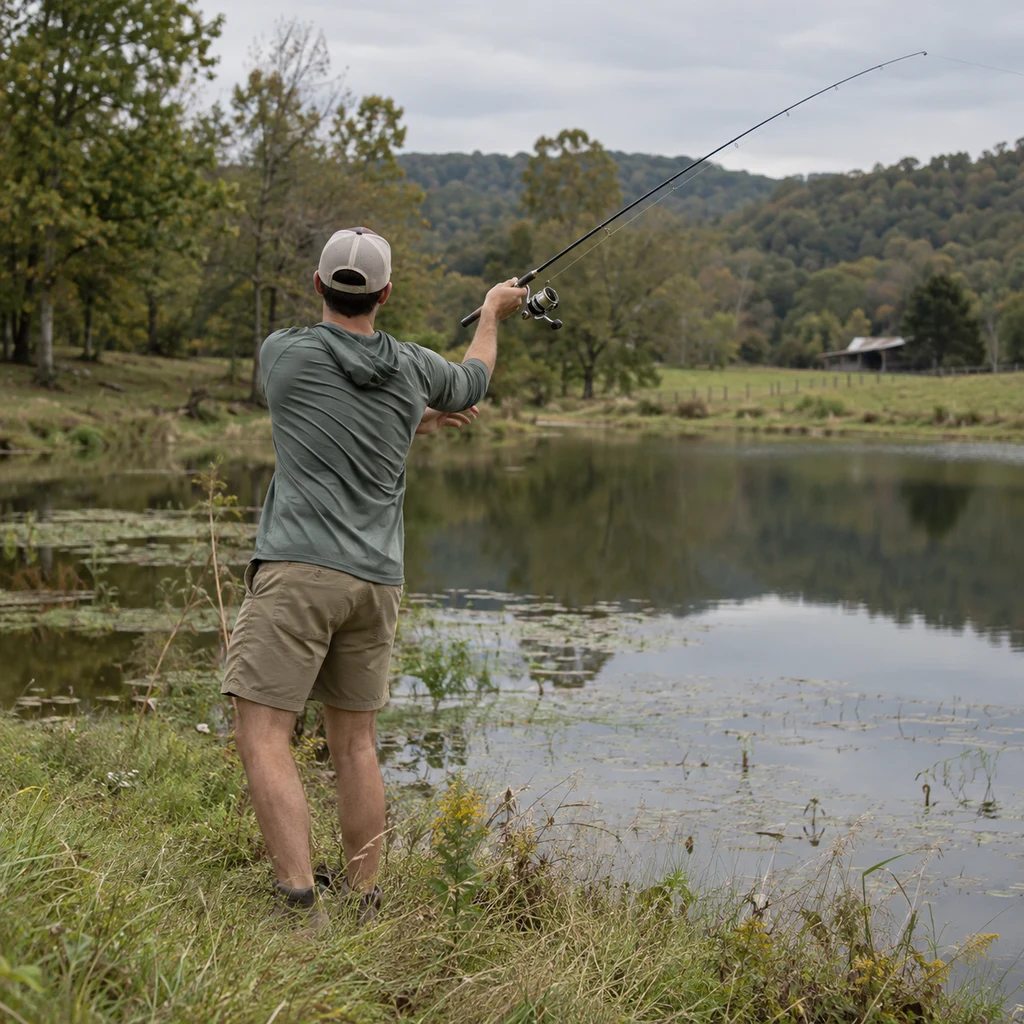
Snap the rod forward with your forearm and wrist, not your whole body, and lift your index finger off the line when the rod passes about ten o’clock. Point the rod tip at your target as the lure flies. Timing the release is the whole skill, and it only clicks with repetition.
7. Feather the Line and Close the Bail
As the lure nears the target, lightly touch the line or the spool lip with your index finger to slow it. That stops the lure from overshooting and straightens the line. When it lands, turn the handle once to close the bail, and you are fishing.
Three Other Casts Worth Learning
The Sidearm Cast
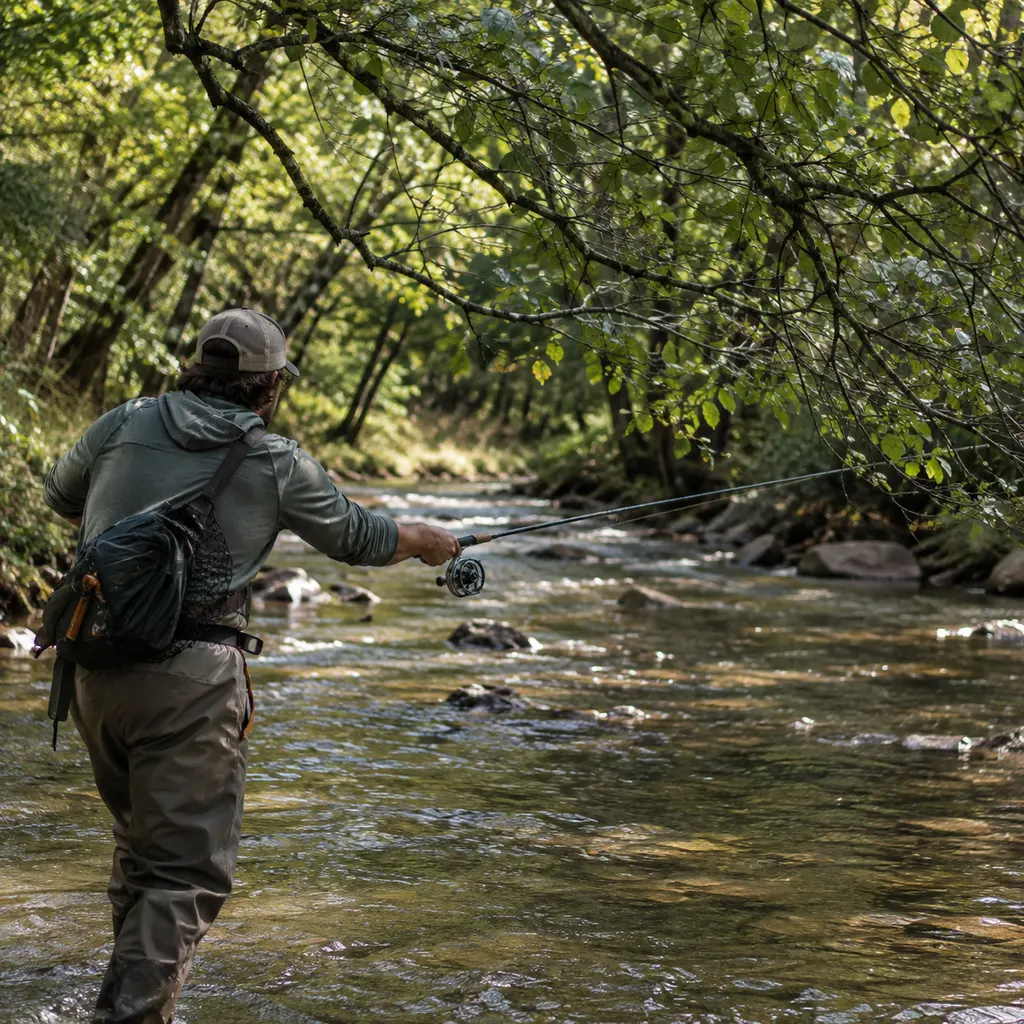
Hold the rod parallel to the water and sweep it sideways instead of overhead. The lure stays low, which keeps it under overhanging branches and out of the wind. It is the go to cast on small creeks and wooded ponds, the kind of water our guide to reading a river helps you break down.
The Underhand Pitch
Let the lure hang a little longer, swing it gently back toward you with a low rod, then flick it forward and release. It is short and quiet, ideal for dropping a lure beside a dock post or into a pocket of cover without a big splash.
The Bow and Arrow Cast
With the bail open and line pinned on your finger, hold the lure by its bend with your other hand, pull it back to bend the rod, aim the rod tip and let go of the lure, then release the line. It sends a small lure a short distance through a gap in brush where you cannot swing the rod at all. Keep your fingers away from the hook points.
Fixing Common Casting Problems
The Lure Goes Straight Up
You released too early. The lure left while the rod was still pointing at the sky. Hold the line a fraction longer, until the rod is pointing ahead of you at roughly ten o’clock.
The Lure Slams Into the Water in Front of You
You released too late, so the rod pulled the lure down. Let go slightly earlier, and finish the cast with the rod tip pointing at your target rather than at the water.
Loops, Wind Knots and Line Twist
Loose coils usually come from slack line on the spool. After each cast, close the bail by hand and hold light tension on the line with your fingers as you reel. If line comes off in springy loops, it is twisted: cut off the lure and let the line trail behind a moving boat, or drift it downstream, to untwist it.
Snags in Trees and Grass
Shorten your cast and switch to the sidearm. Accuracy matters more than distance, and most fish are closer to the bank than beginners think.
Getting More Distance and Accuracy
Match the Lure to the Rod
Every rod is printed with a lure weight range near the handle. A lure in that range bends the rod properly and flies well. One that is too light barely loads the rod, and one that is too heavy can damage it. A light spinning combo like the KastKing Centron Lite handles the small spinners and soft plastics most beginners fish.
Use Thinner Line
Thinner line has less friction coming off the spool and through the guides. Dropping from 10 pound to 6 pound line adds noticeable distance with light lures.
Follow Through to the Target
Where your rod tip points at the end of the cast is roughly where the lure goes. Pick a spot, cast, and finish with the rod aimed straight at it. Practicing at a target trains this faster than casting at open water.
A Simple Practice Plan
You can practice in a backyard or park with a rubber casting plug or a lure with the hook cut off. Twenty minutes a few times before your first trip makes a real difference.
| Session | Drill | Goal |
|---|---|---|
| 1 | Overhead cast at open grass | Release at ten o’clock, lure lands ahead of you |
| 2 | Overhead cast at a hula hoop 30 feet away | Five in a row inside the hoop |
| 3 | Sidearm cast under a low branch or rope | Lure stays below shoulder height |
| 4 | Pitch to a bucket 15 feet away | Quiet, accurate short casts |
| 5 | Mixed casts with feathering | Stop the lure right on the target |
The Zebco 202 and 404 two pack is an easy way to get two people practicing together, and a small Plano 3-Tray Tackle Box keeps your practice plugs and first lures organized.
Safety and Etiquette on the Water
Look behind you before every cast. Hooks travel fast and people, dogs and power lines are easy to miss. Wear sunglasses to protect your eyes, give other anglers plenty of room, and never cast across someone else’s line. If you fish from a kayak, our beginner fishing kayaks guide and our kayaking safety tips cover the extra precautions.
Check your state’s fishing license rules before you go, pack out broken line and old hooks, and follow the Leave No Trace principles at the water just as you would at camp.
Frequently Asked Questions
How do you cast a spinning rod for beginners?
Hang the lure about a foot below the tip, pin the line with your index finger, open the bail, bring the rod back to one o’clock, then cast forward and lift your finger at ten o’clock. Close the bail when the lure lands.
Why does my lure go straight up when I cast?
You are releasing the line too early. Hold it until the rod tip is pointing forward and slightly up, then let go.
Should I close the bail by hand?
Yes, it is a good habit. Closing the bail by hand prevents the loose loops that cause wind knots and line twist, and it lets you check that line is seated on the roller.
How far can you cast a spinning rod?
A typical beginner reaches 30 to 60 feet with a light lure. With practice, the right lure weight and thinner line, 80 to 100 feet is realistic, but accuracy catches more fish than distance.
Is a spinning rod or baitcaster easier to learn?
A spinning rod is much easier. The spool does not spin during the cast, so there is no backlash to manage. Learn here first, and try fly fishing or a baitcaster later if you want a new challenge.
Once you know how to cast a spinning rod, the rest is time on the water. Practice a few sessions, pack your tackle box, and head out this fall while the fish are feeding hard. Our fall fishing tips explain where to find them, and our best fishing waders keep you dry once you start wading after them. Make a weekend of it with our fall camping essentials and a quiet spot from our free camping guide.
Discover more from Maive Verse
Subscribe to get the latest posts sent to your email.