
This post may contain affiliate links. If you buy through them, we may earn a small commission at no extra cost to you.
Knowing how to fit a bike helmet properly is worth more than anything you can spend extra on one. A budget helmet that sits level and snug will protect you better than a premium helmet worn tipped back, because a helmet that moves in the first moment of a crash is not covering the part of your head that hits the ground.
It takes about five minutes and six checks, and once you have set a helmet up you rarely touch it again. Here is the whole process, in the order that actually works. If you are newer to riding generally, our beginner bikepacking guide covers where a helmet sits in the wider kit list.
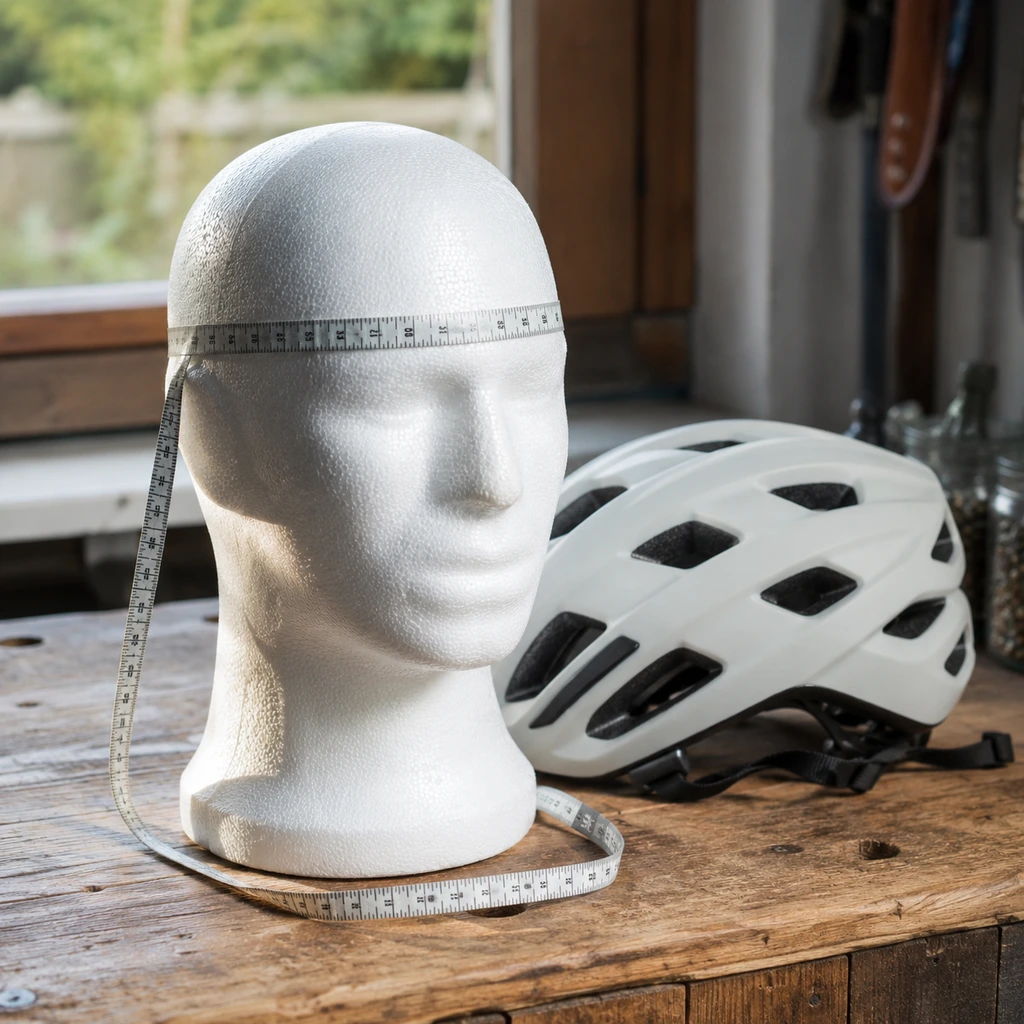
Table of Contents
Start With the Right Size Shell
Adjustment systems have a real range, but they cannot rescue a shell that is the wrong size. Measure before you buy, the same way you would size anything else on the bike in our three day gear list.
Run a soft tape measure around your head about a centimetre above your eyebrows and level all the way round, which is the widest point. Compare that number to the manufacturer size chart rather than to another brand, because sizing varies more between makers than most people expect. If you are between sizes, take the smaller one if the dial still loosens comfortably, since a shell you have to crank down hard will press.
| Head circumference | Typical adult size |
|---|---|
| 51 to 55 cm | Small |
| 55 to 59 cm | Medium |
| 59 to 63 cm | Large |
| Over 63 cm | Extra large, check the chart |
How to Fit a Bike Helmet: The 6 Checks
Work through these in order. Each one depends on the one before it, which is why fitting in a different order tends to end in frustration. Five minutes here saves the kind of nagging discomfort that ruins a long day, and long days are exactly what our endurance training plan is building toward.
1. Set It Level, Two Fingers Above the Brow
The front rim should sit roughly two finger widths above your eyebrows, and the helmet should look level from the side rather than tilted back. A tipped back helmet exposes your forehead, which is the single most common fitting error and the one most likely to matter. Look in a mirror rather than trusting how it feels.
2. Tighten the Rear Cradle Until It Holds Itself
With the straps still loose, turn the rear dial until the helmet stays put on its own when you bend forward and shake your head gently. It should feel firm and evenly spread, not pinching at one point. If you have to reach the end of the dial range, the shell is the wrong size.
3. Make a V Around Each Ear
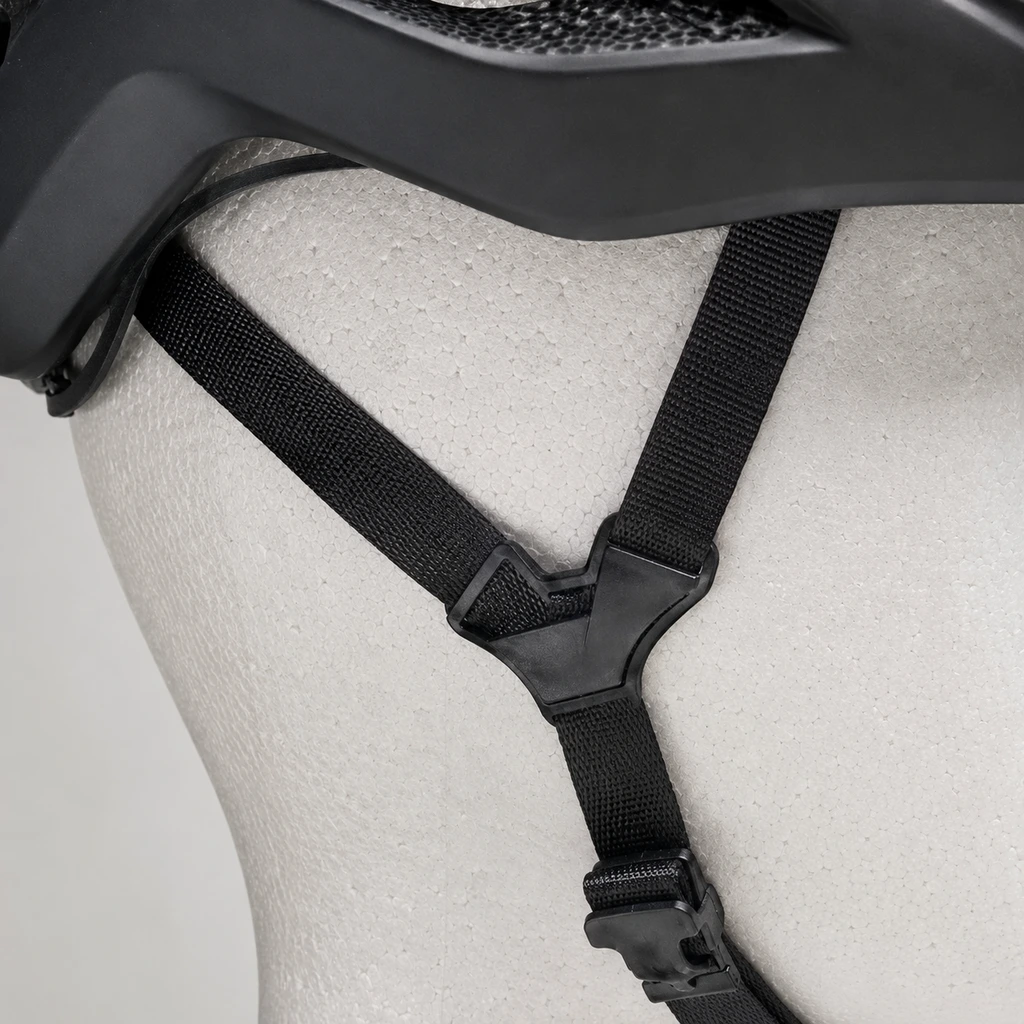
Slide the side splitters so the straps form a narrow V that meets just below and slightly forward of your earlobe. Both sides should match. Straps that meet behind the ear let the helmet rock backwards, and straps that cut across the ear will annoy you within a mile.
4. Buckle to One Finger Under the Chin
Do the chin strap up until you can slide one finger underneath and no more. Open your mouth wide: you should feel the helmet pull down against the top of your head. If nothing moves, the strap is too loose.
5. The Palm Test
Push the front of the helmet up and back with the heel of your hand. It should barely move, and your skin should move with it rather than the helmet sliding over it. Then push the back forward. Any real movement means going back to the cradle and the straps. Do this before you leave rather than at the trailhead, alongside the rest of the checks in our solo riding safety guide.
6. Check It Again After Ten Minutes of Riding
Straps settle and pads compress. Ride a short loop, then stop and repeat the palm test, because almost every helmet needs one small adjustment after its first proper outing. This is worth doing before a big day rather than during one, the same way you would shake down the rest of your kit before an overnight ride.
Common Fitting Mistakes
- Wearing it tipped back so the forehead is exposed. This is the big one, and it is usually a comfort compromise for a shell that is slightly too small.
- Leaving the chin strap loose enough to slide two or three fingers under. A loose strap can let the helmet come off entirely.
- Buying by brand size rather than measuring. Two brands labelled medium can differ by three centimetres.
- Wearing a thick hat underneath in cold weather without re-adjusting. Use a thin liner and reset the dial. Layering for cold rides is covered in our wet weather riding guide.
- Leaving a ponytail through the cradle in a way that lifts the rear of the helmet.
- Forgetting the helmet entirely when packing. It belongs on the same list as the tools in our multi tool roundup.
- Ignoring it once it fits. Pads compress over a season and the dial needs a nudge.
When to Replace a Helmet
Replacement is the part people get wrong in the opposite direction, keeping a helmet far too long. A helmet is single use in a crash. The expanded polystyrene liner works by crushing, and once it has crushed it does not spring back, even where the damage is invisible from the outside. Replace it after any impact, whether or not you can see a mark.
Without a crash, most manufacturers suggest five years, driven by ultraviolet light and sweat degrading the liner and the straps rather than by the shell wearing out. If you ride daily, or store the helmet somewhere hot like a car boot in summer, treat that as three. The CPSC guidance on helmet standards is worth a read if you want the detail on what certification actually covers.
Frequently Asked Questions
How tight should a bike helmet be?
Snug enough that it stays level and does not shift when you shake your head, loose enough that it leaves no pressure points after an hour. If you take it off and find red marks on your forehead, it is too tight or the wrong shape for your head. Comfort over hours matters more than it sounds, which is part of the argument in our piece on the mental side of long rides.
Should a bike helmet touch the top of my head?
Lightly, yes. There should be contact across the crown rather than a gap, with the load spread by the pads and the cradle rather than resting on one spot. A helmet held on only by the rear dial is sitting too high.
Does MIPS change how I fit a helmet?
No. MIPS is a low friction layer inside the shell that lets it rotate a few millimetres in an angled impact, and it works with a normal fit. You may notice the liner move slightly when you twist the helmet on your head, which is the system doing exactly what it should. Our roundup of the best bike helmets notes which models include it.
Can I wear a cap or a beanie under my helmet?
A thin cycling cap or a skull cap is fine as long as you re-adjust the cradle with it on. Anything thick changes the fit enough to matter, and a bulky hat under a helmet is a common reason a helmet shifts in a crash. Cold weather layering for riders is covered in our wet weather guide.
How do I know if my helmet is too old?
Check the date stamp moulded inside the shell. Beyond five years, or three of hard use, replace it. Also look for crumbling pads, a strap that will not hold its adjustment, or any crack in the liner, all of which are the same answer. If it is time to replace one, that is also a good moment to look at the rest of the ageing kit in your packing setup.
Get those six checks right and the helmet becomes something you stop thinking about, which is the point. When you are ready to compare models, our roundup of the best bike helmets lines up six against fit, ventilation and rotational protection, and if you are just getting into longer rides our beginner bikepacking guide covers the rest of the setup.
Discover more from Maive Verse
Subscribe to get the latest posts sent to your email.