
This post may contain affiliate links. If you buy through them, we may earn a small commission at no extra cost to you.
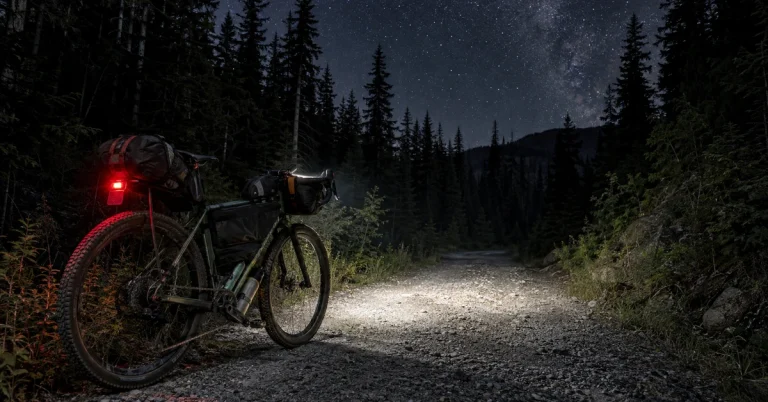
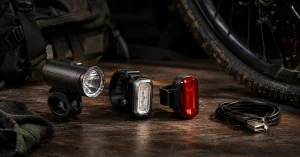
The best bike lights for bikepacking are chosen on runtime and beam shape, not on the lumen number printed largest on the box. A light that holds 600 lumens for six hours is worth more on an overnight than one that manages 1,800 for ninety minutes, and bicycle lighting marketing is built almost entirely around the second number.
Six lights below, three front and three rear, every one checked for stock, rating and the specifications its listing publishes, spanning 94 to 9,124 reviews. Buy two front lights rather than one expensive one, which is the first rule in our night riding guide.
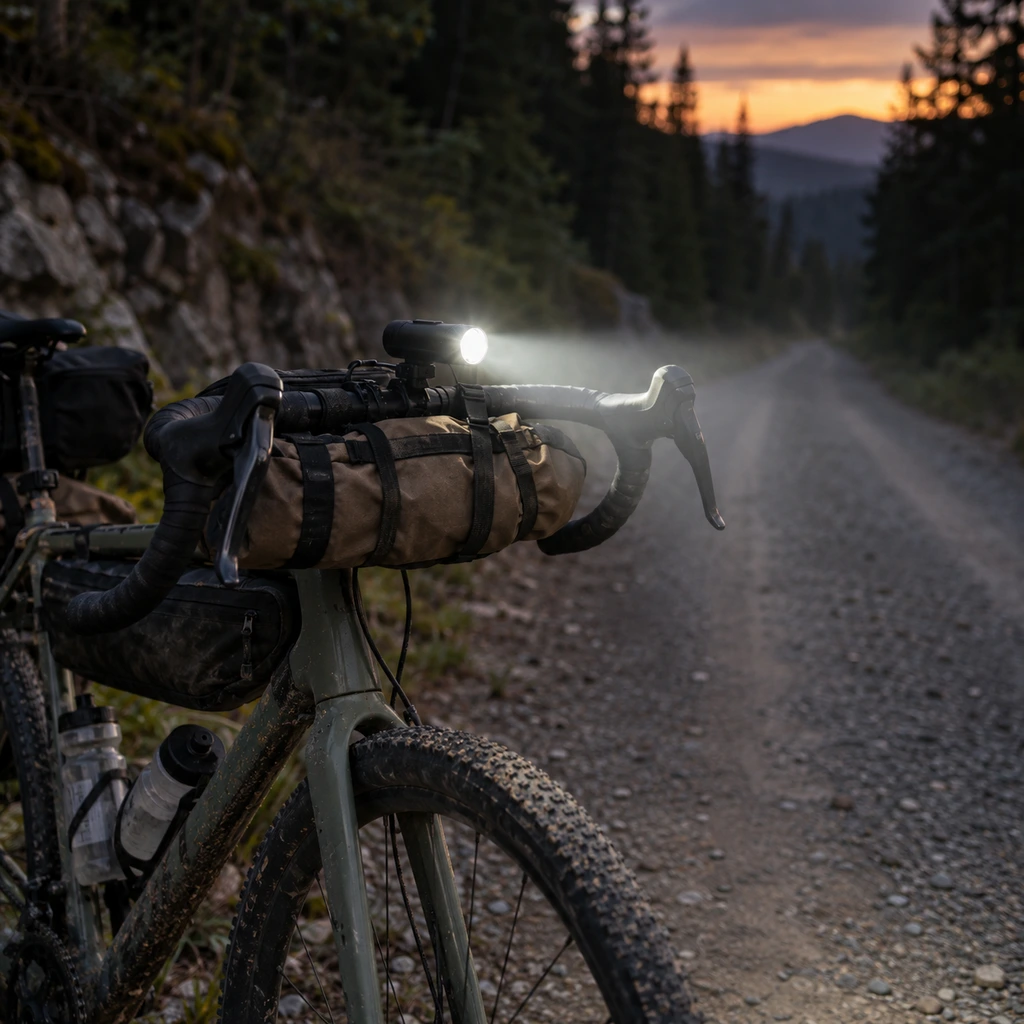
Table of Contents
What Separates the Best Bike Lights for Bikepacking
Runtime at a usable setting is the specification that matters. Manufacturers quote maximum output and then quote runtime on the lowest mode, and the two numbers rarely describe the same experience. Find the runtime for the mode you will actually ride on, and assume less again in the cold, because lithium ion capacity drops as temperature does.
Then beam shape. A bar light wants a wide beam with a defined lower cut off so it lights the ground and throws the shadows that reveal rocks and ruts. A helmet light wants a narrower, further throwing beam so it reaches where you are looking. Lumens measure total output while lux measures intensity at a point, and a well shaped 800 lumen beam beats a badly shaped 2,000.
Then charging and sealing. On a multi day trip everything should run off the same connector, which in practice means USB-C so one cable and one power bank serve the lot. For sealing, an IP rating of IPX6 or better is what you want for a trip that will be rained on rather than a commute that can be postponed.
Last, mounting. A rubber strap mount is universal and survives being moved between bikes; a hard bracket is more secure and less likely to rotate on a rough descent. On loaded bikepacking bars, check the light physically fits alongside a bag before you commit.
The Best Bike Lights for Bikepacking at a Glance
| Light | Position | Sealing | Reviews | Best For |
|---|---|---|---|---|
| Cygolite Metro Series | Front | IP67 | 1,330 | Best front light |
| NiteRider Lumina Micro Sabre | Front and rear set | IP64 | 349 | Best complete set |
| GearLight Front and Tail Set | Front and rear set | Water resistant | 5,332 | Tightest budget |
| MagicShine SEEMEE 300/400 | Rear | IPX6 | 751 | Best rear light |
| LEZYNE Strip Drive Pro | Rear | Sealed | 94 | Premium rear |
| Ascher Tail Lights 2 Pack | Rear | Water resistant | 9,124 | Spares and backups |
The Six Best Bike Lights for Bikepacking in Detail
Cygolite Metro Series: Best Front Light
IP67 sealing is the headline and it is the right headline for bikepacking. That rating means full temporary immersion, not just rain resistance, which matters when the light spends three days strapped to a bar in weather you cannot opt out of.
Day and night modes are the other useful feature. A daytime flash makes you visible on the road sections that link off road segments, and the night modes give you a beam shaped for actually seeing the ground rather than announcing yourself.
A secure hard mount rather than a rubber band, which is what stops it rotating downward on a rough descent. Four point five stars across more than thirteen hundred reviews, and it is the one to buy first if you are building a two light setup.
Specs That Matter
- Position: front
- Sealing: IP67 waterproof
- Modes: separate day and night modes
- Mount: secure hard mount
- Rating: 4.5 stars across 1,330 reviews
Who It Is For
The primary bar light on a bikepacking setup that will be rained on.
NiteRider Lumina Micro Sabre: Best Complete Set
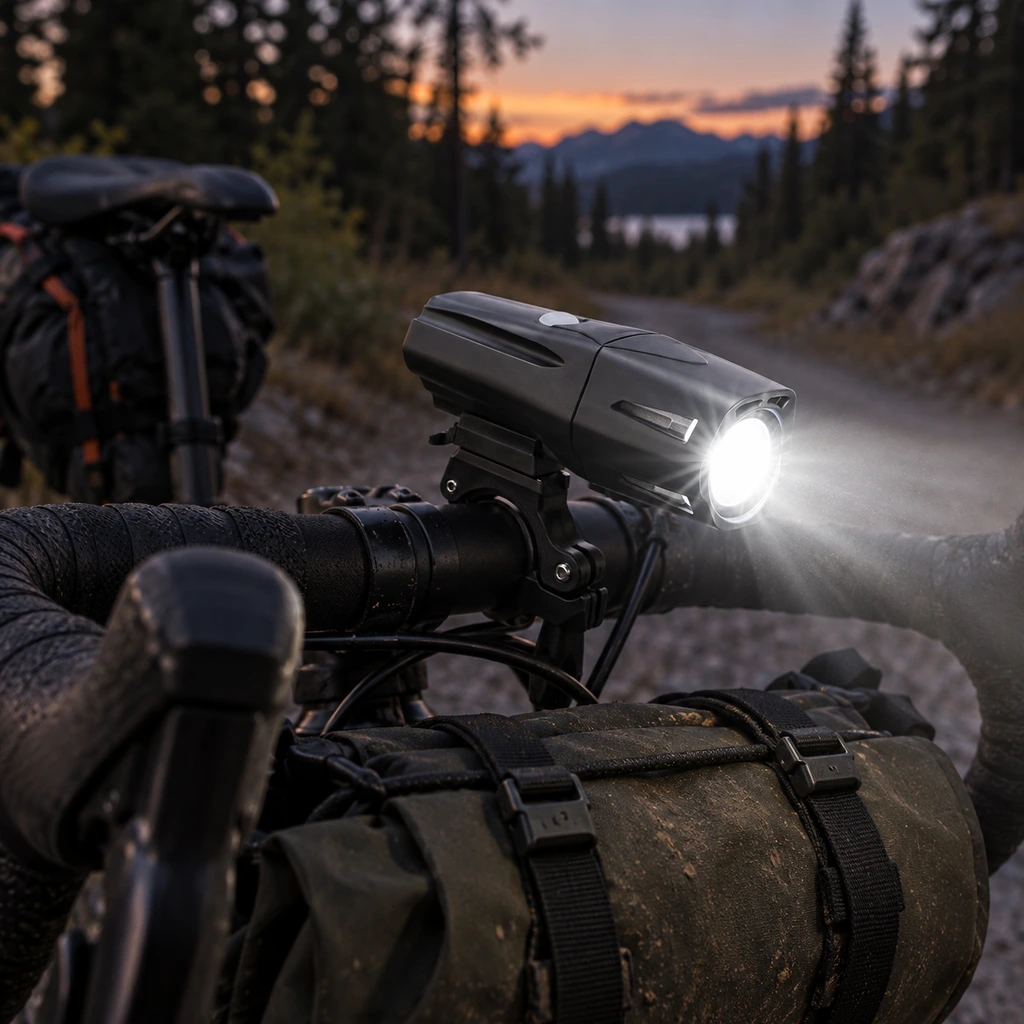
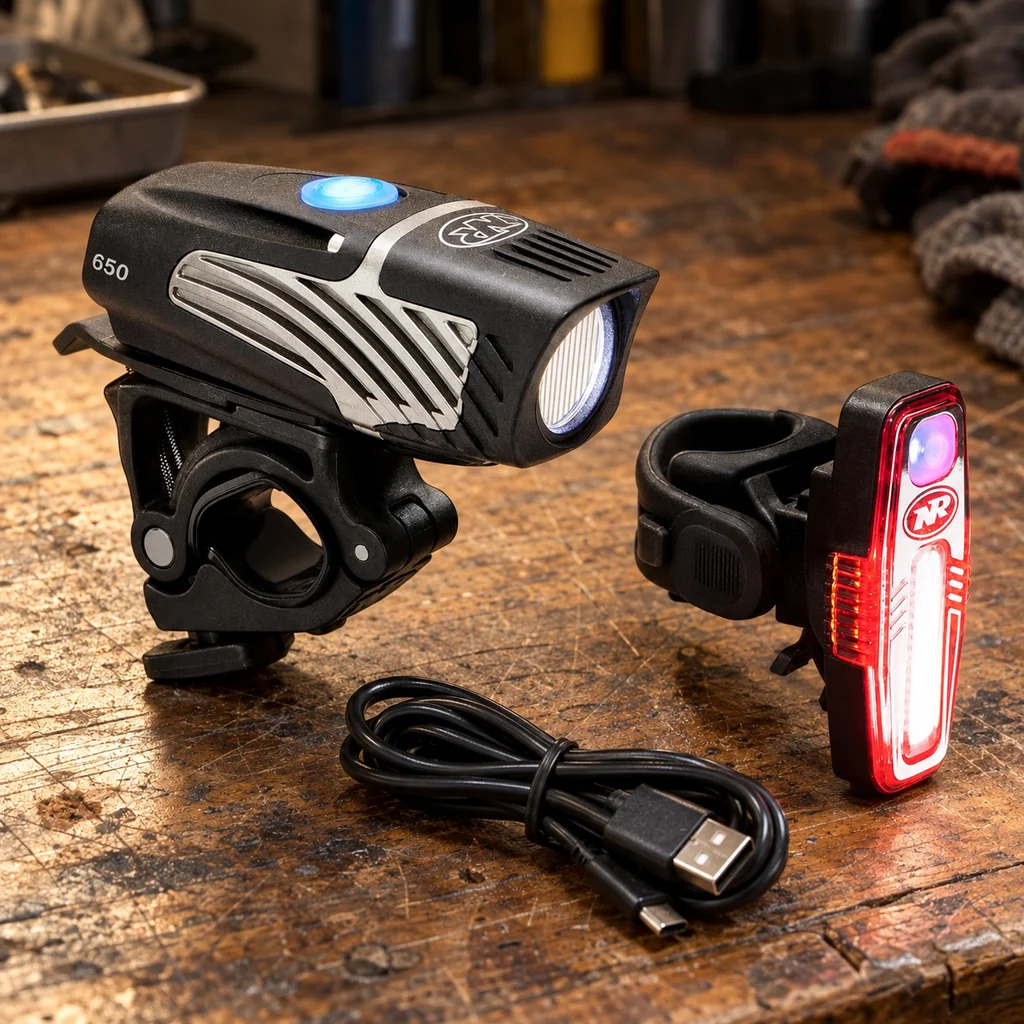
A 650 lumen headlight and a 110 lumen taillight sold together, which solves the front and rear problem in one purchase. Six hundred and fifty lumens is genuinely enough for gravel and doubletrack, and it is honest about being a trail light rather than claiming a number it cannot hold.
IP64 sealing handles rain and spray, which covers most trips, though it is a step below the Cygolite for sustained bad weather. USB rechargeable at both ends.
Buy it as a complete starting setup, or as the second front light alongside the Cygolite so you have the redundancy that night riding actually requires.
Specs That Matter
- Position: front and rear set
- Output: 650 lumen headlight, 110 lumen taillight
- Sealing: IP64 waterproof
- Charging: USB rechargeable
- Rating: 4.5 stars across 349 reviews
Who It Is For
Riders buying front and rear lighting in one go, or adding a second front light.
GearLight Front and Tail Set: Tightest Budget
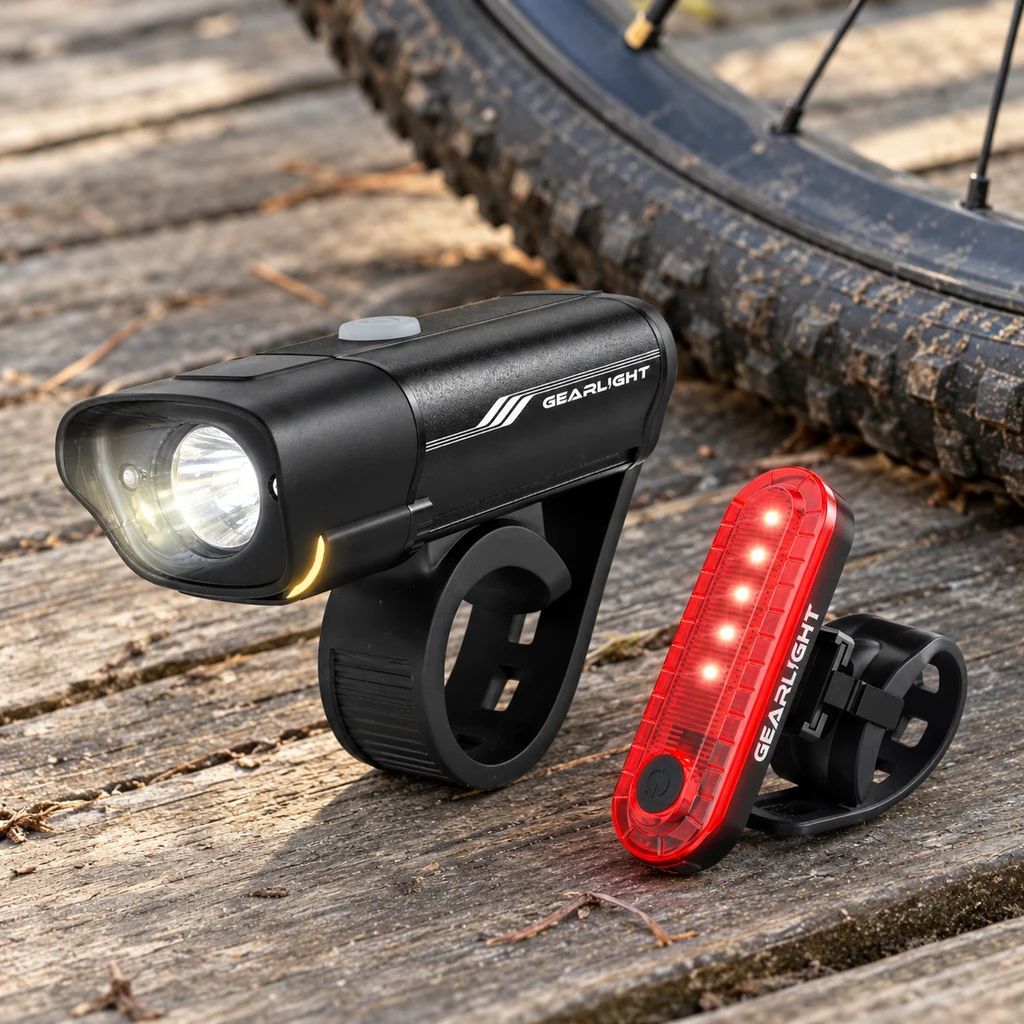
Five thousand three hundred reviews at 4.6 stars makes this the most bought light set here by a wide margin, and it is a fraction of the price of the branded options. Front and rear, USB rechargeable, water resistant.
What you give up is sealing, runtime honesty and mount quality, which are exactly the three things that matter most on a multi day trip. For a first overnight, or as the backup pair that lives permanently in a frame bag, it is genuinely useful.
Treat it as the redundancy rather than the primary. A cheap second front light that you never have to think about is worth more than a single expensive one, which is the whole argument for carrying two.
Specs That Matter
- Position: front and rear set
- Charging: USB rechargeable
- Sealing: water resistant
- Fit: mountain, road and kids bikes
- Rating: 4.6 stars across 5,332 reviews
Who It Is For
A first set, or the permanent backup pair in the frame bag.
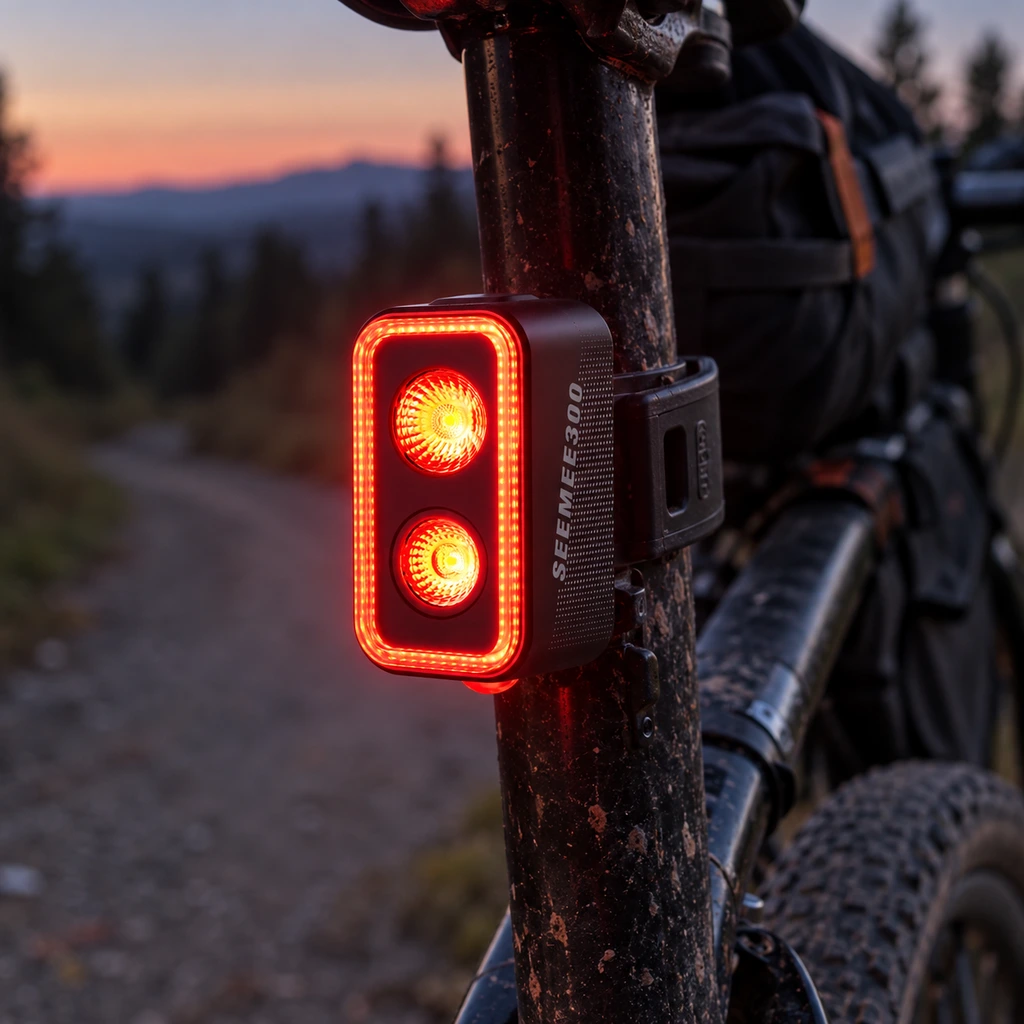
MagicShine SEEMEE 300/400: Best Rear Light
Three hundred to four hundred lumens is very bright for a rear light, and the 360 degree visibility is the detail that matters on the road sections where you are approached from angles rather than straight behind.
A smart brake sensor lights it harder when you slow, which is the kind of feature that sounds like marketing and turns out to be genuinely useful in a group. IPX6 sealing handles sustained rain.
Four point five stars across 751 reviews. This is the rear light to buy if you ride road sections at night, which almost every bikepacking route includes whether or not you planned it that way.
Specs That Matter
- Position: rear
- Output: 300 to 400 lumens
- Visibility: 360 degree
- Feature: smart brake sensor, IPX6 waterproof
- Rating: 4.5 stars across 751 reviews
Who It Is For
Riders linking off road sections with road, where being seen matters most.
LEZYNE Strip Drive Pro: Premium Rear
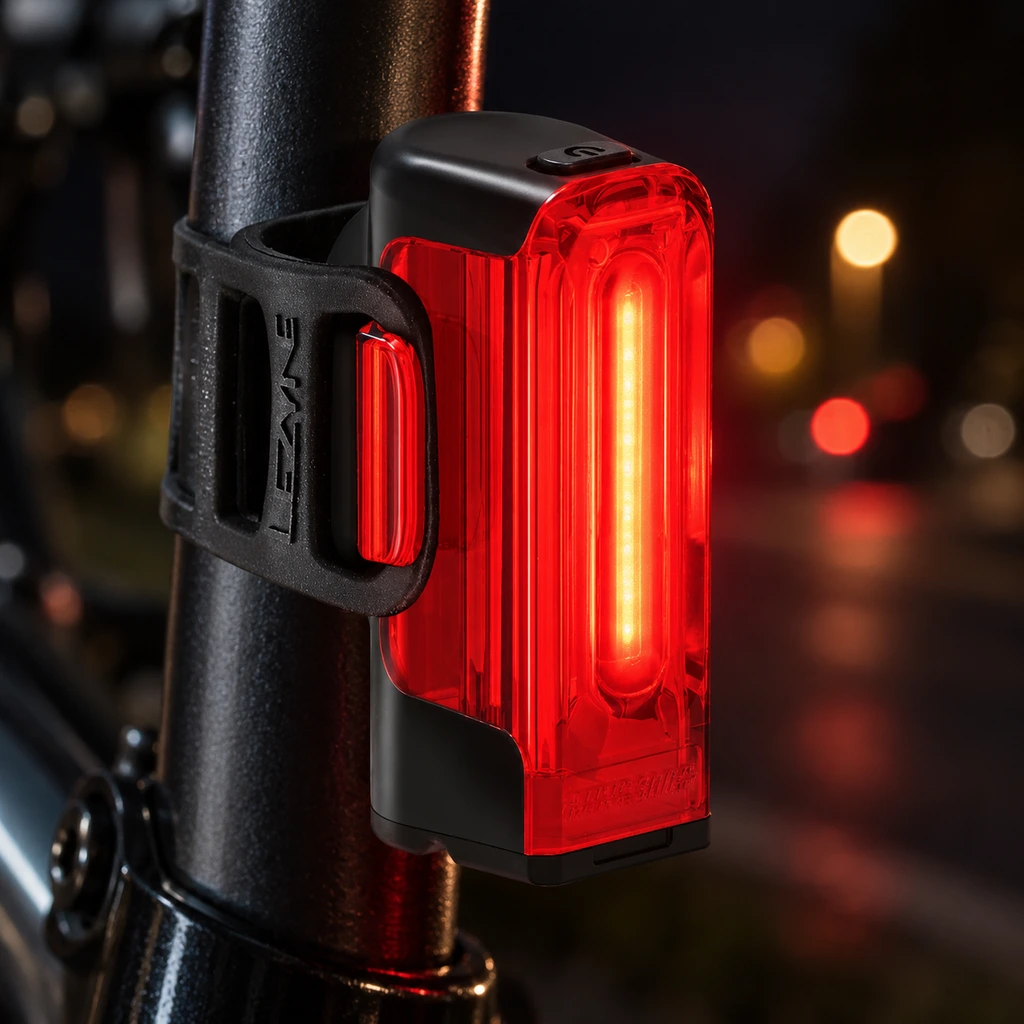
Lezyne build lights for people who ride a lot, and the Strip Drive Pro is the rear light in that idiom: wide light emitting strip for side visibility, multiple modes, solid mount, no gimmicks.
The wide strip is the point. A narrow point source disappears as soon as a driver is off axis, while a strip stays visible through a much larger angle. Combine it with retroreflective material on your ankles and you are visible from almost anywhere.
Four point six stars, but on only 94 reviews, which is the honest caveat. It is the smallest sample on this list, and the MagicShine is the safer pick on evidence alone.
Specs That Matter
- Position: rear
- Design: wide strip emitter for side visibility
- Modes: multiple output modes
- Build: sealed, USB rechargeable
- Rating: 4.6 stars across 94 reviews
Who It Is For
Riders who want a wide angle rear light and are not put off by a small review base.
Ascher Tail Lights 2 Pack: Spares and Backups
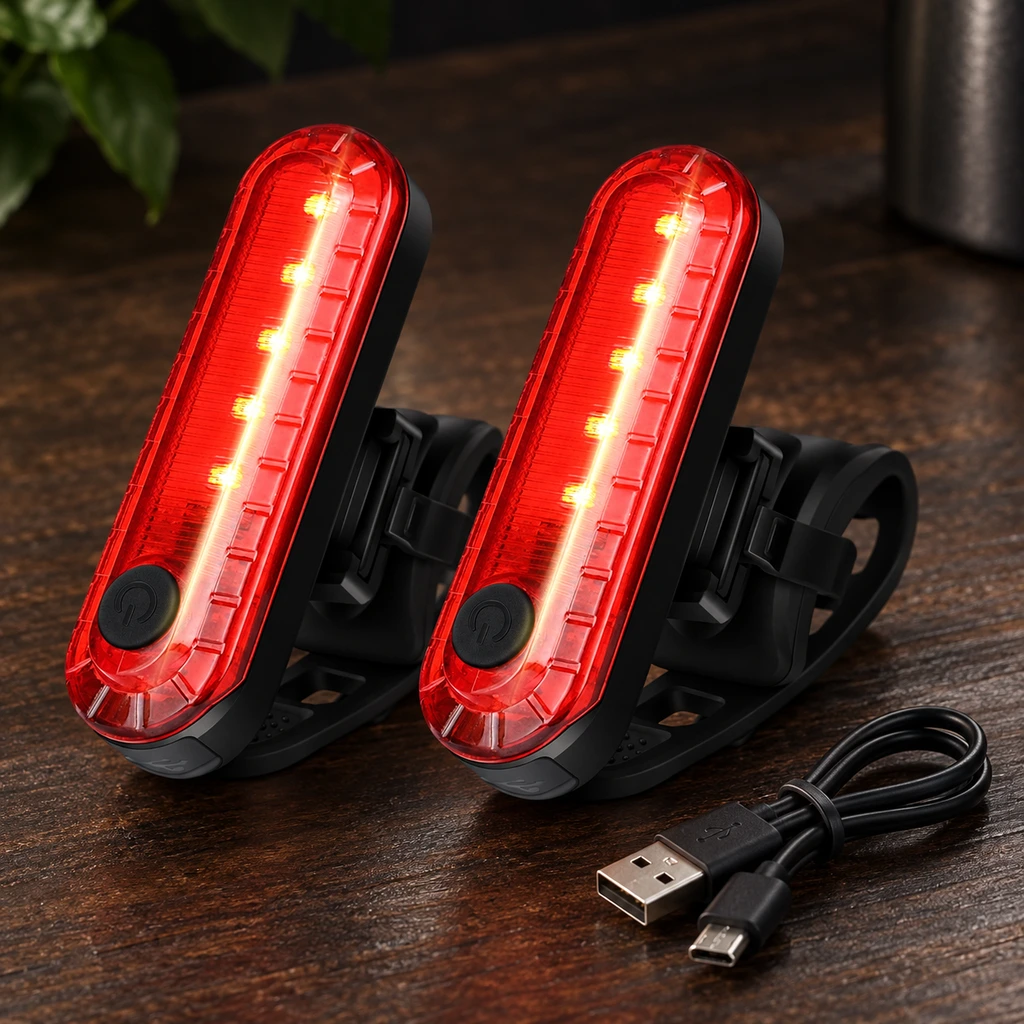
Nine thousand reviews at 4.6 stars, and two lights in the box. That is the whole argument: rear light redundancy for less than the price of one branded unit.
Run one on the seatpost and one on a seat pack or a rear rack, or keep the second as the spare that comes out when the first one dies at midnight. Rear lights are the component most likely to be knocked off or drowned, and having two removes the problem entirely.
USB rechargeable, several modes, and light enough to clip anywhere. Do not expect the sealing or the output of the MagicShine, and do not need to.
Specs That Matter
- Position: rear
- Quantity: two lights per pack
- Charging: USB rechargeable
- Use: seatpost, seat pack or spare
- Rating: 4.6 stars across 9,124 reviews
Who It Is For
Anyone who wants two rear lights, which on a multi day trip is everyone.
How to Build the Setup
The Minimum That Works
One good front light, one good rear light. The Cygolite and the MagicShine, or the NiteRider set if you want both in one purchase. That covers a single night ride with no margin.
The Setup for an Overnight
Two front lights, one on the bar and one on the helmet, plus two rear. Cygolite on the bar, the NiteRider or the budget set on the helmet, MagicShine on the seatpost, Ascher on the seat pack. Redundancy at both ends, and nothing catastrophic if one dies.
The Setup for a Multi Day Trip
The overnight setup plus a power bank and cables that fit everything. Charging is the real constraint after night two, which is what our power guide is about. A dynamo hub removes the problem permanently at a much higher cost.
What the Specifications Mean
Lumens Against Lux
Lumens are total light leaving the unit; lux is how much lands on a given patch of ground. A light that scatters 1,500 lumens across a wide arc can put less light on the trail ahead than a focused 800 lumen beam. Beam shape is the missing number, and it is the one nobody prints.
Why Runtime Claims Disappoint
Quoted runtimes are measured at room temperature on a new cell, usually in the lowest mode. In October at three degrees, on a two year old battery, in the mode you actually want, expect substantially less. Plan to charge sooner than the box suggests.
IP Ratings in Practice
The second digit is water. IPX4 is splash, IPX6 is heavy jets or sustained rain, IP67 is temporary immersion. For a trip where the bike may be laid down in a puddle or ridden through a ford, IP67 is the one that lets you stop thinking about it.
Bar Against Helmet
The bar light is low, so it casts long shadows from rocks and holes and tells you about texture. The helmet light points where you look, so it works in corners and at junctions but flattens the ground ahead. Neither replaces the other, which is why the standard answer is one of each.
Using Them Well and Making Them Last
Charge everything the night before, not the morning of, and check each light actually holds its mount when you shake the bars. A mount that rotates on the first descent is the most common failure and the most avoidable.
Keep the lowest useful setting as your default and save full output for descents. This doubles or triples real world runtime and is the single biggest change most riders can make, more than buying a bigger battery.
Dry them properly after a wet ride and do not store them fully flat over winter, because lithium cells degrade fastest at either extreme of charge. Around half charge is the right storage state.
Carry the charging cable with the multi tool rather than buried in a drybag, and make sure every device on the bike takes the same connector. See our packing guide for where it all goes.
Frequently Asked Questions
How many lumens do I need for bikepacking?
Six hundred to twelve hundred usable lumens for trail riding, less for gravel and road. Beam shape and runtime matter more than the headline figure, and a light that holds a moderate output for hours beats one that peaks briefly.
Do I need two front lights?
On any ride where being without light is a problem, yes. Lights fail, mounts break and batteries run down faster in the cold. A cheap second light is the best value redundancy on the bike.
Bar light or helmet light?
Both, if you can. The bar light reveals ground texture through shadow; the helmet light shows where you are looking. If you only have one, put it on the bars.
What IP rating do I need?
IPX6 as a minimum for multi day riding, IP67 if you want to stop thinking about it. IPX4 is fine for a commute you can cancel and not for a trip you cannot.
How do I keep lights charged on a long trip?
A power bank sized to your nights, one connector standard across every device, and a habit of running low settings. Past about four days a dynamo hub starts to make sense. See our power guide.
For most riders the Cygolite Metro on the bars and the MagicShine SEEMEE at the rear is the pick, with the budget set or the NiteRider as the second front light and the Ascher pack as rear spares. Then read night bikepacking for how to use them, the power guide for keeping them alive, and solo safety for when something still goes wrong.
Discover more from Maive Verse
Subscribe to get the latest posts sent to your email.