This post may contain affiliate links. If you buy through them, we may earn a small commission at no extra cost to you.
The best bike helmets are the ones you forget you are wearing. Past a fairly low price point every helmet on sale in the United States has passed the same impact test, so what you are actually paying for is ventilation, weight, the quality of the retention system and whether it has rotational impact protection.
Below are six that are genuinely stocked on Amazon right now, each picked for a different kind of riding rather than ranked one to six. Ratings and specifications were checked at the time of writing. Whichever you buy, fit matters more than the badge, so read our guide to fitting a bike helmet before the first ride.
Table of Contents
What Separates the Best Bike Helmets
Four things actually differentiate helmets once the safety floor is met, and price correlates with only some of them. If you are still assembling a first setup, our beginner bikepacking guide puts the helmet in context against everything else you need.
- Rotational protection. MIPS and its rivals add a low friction layer that lets the shell rotate a few millimetres in an angled impact, which is how most real crashes happen. Five of the six here have it.
- The retention system. A dial that adjusts smoothly and holds its setting is the difference between a helmet you wear correctly and one you wear loose. This is where cheap helmets give themselves away first.
- Ventilation you can feel. Vent count is a marketing number; internal channelling is what moves air across your scalp. On a loaded climb it matters more than weight.
- Weight. Under about 300 grams disappears. Above 350 you will notice it on a long day, which is why it belongs in the same conversation as the rest of your gear list.
Certification is not a differentiator. Every adult helmet sold in the United States must meet the same CPSC standard, and the CPSC guidance on which helmet suits which activity is the clearest summary of what that covers. A twenty five dollar helmet and a two hundred and fifty dollar helmet pass the same test.
The Best Bike Helmets at a Glance
Rule four of them out here, then read the two that are left. Weight and airflow matter most on the long climbs our endurance training plan builds toward, and rear coverage matters most on the rough stuff.
| Helmet | Rotational protection | Vents | Standout feature | Best for |
|---|---|---|---|---|
| Giro Agilis MIPS | MIPS | Wind Tunnel | Roc Loc 5 retention | Best overall |
| SMITH Signal MIPS | MIPS plus Koroyd | 21 fixed | AirEvac stops glasses fogging | Glasses wearers |
| OutdoorMaster Gem | MIPS | 25 | Two liner thicknesses included | Best value |
| VICTGOAL LED | None listed | 21 | USB rechargeable rear light | Low light riding |
| Bell Revolution MIPS | MIPS | Standard | Major brand at a low price | Budget with a badge |
| Giro Fixture II MIPS | MIPS | 18 Wind Tunnel | Universal 54 to 61 cm fit | Trails and rough ground |
The Six Helmets in Detail
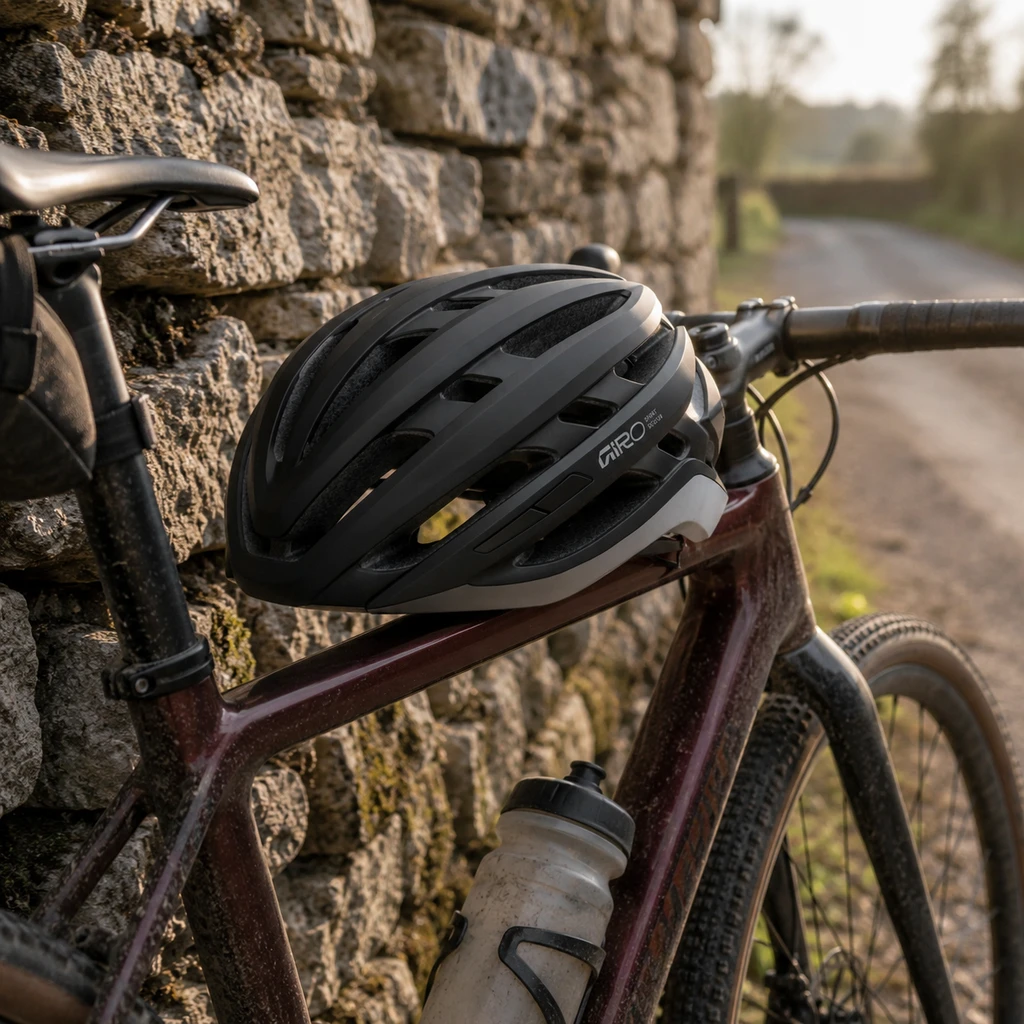
Giro Agilis MIPS: Best Overall
The Agilis is the helmet to buy if you want the road and gravel fundamentals done properly without paying for a race lid. It runs Giro’s integrated MIPS, a two piece shell that fuses a tough outer to a polycarbonate lower wrap, and the Roc Loc 5 retention system, which is genuinely the benchmark other dials get compared to.
Roc Loc 5 is the reason to pick this one. It adjusts both tension and vertical position, so you can move the cradle up or down the back of your head rather than only tightening it, and that second axis is what lets an awkwardly shaped head get a level fit. Anyone who has fought a helmet that sits too high will understand immediately.
Ventilation comes from Giro’s Wind Tunnel system, which pairs active intake vents with exhaust ports and internal channels rather than just punching holes in the shell. At 4.7 stars across more than nineteen hundred ratings it is the best reviewed mainstream road helmet on this list.
Specs That Matter
- Integrated MIPS rotational protection
- Roc Loc 5 retention, adjusts tension and height
- Two piece shell with a fused polycarbonate lower wrap
- Wind Tunnel ventilation with internal channelling
- Adult sizing, lightweight in-mould construction
Who It Is For
Road and gravel riders who want one helmet that does everything well and a retention system that actually fits their head.
SMITH Signal MIPS: Best for Glasses Wearers
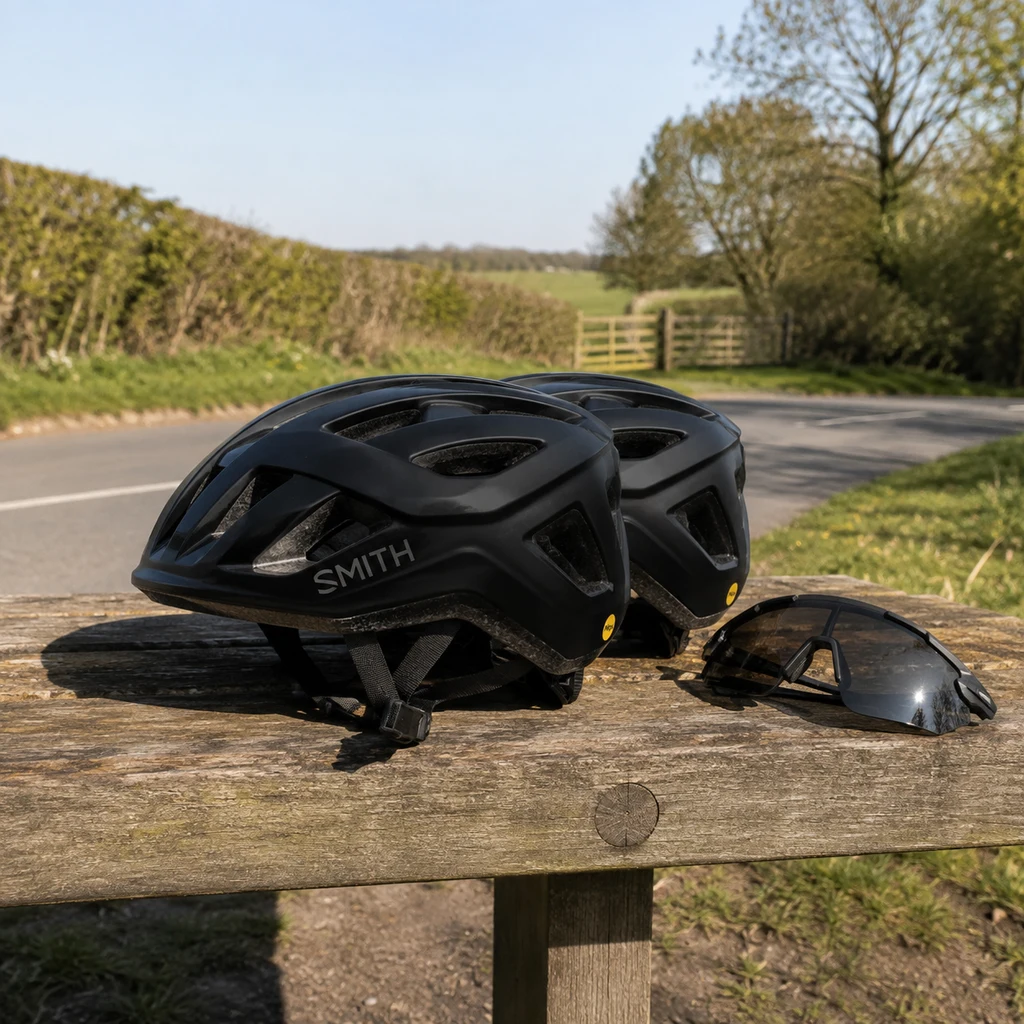
Smith comes at helmets from the eyewear side, and the Signal shows it. The headline feature is AirEvac, a ventilation path designed to work with a pair of glasses in place so warm air is pulled up and out rather than sitting behind your lenses. If you have ever stopped at the top of a climb and gone temporarily blind, that is the problem this solves.
Protection is the other reason to look at it. Alongside MIPS there is zonal Koroyd coverage, a honeycomb structure that crushes on impact while staying open enough to breathe through, so you get extra energy absorption without blocking the vents. Twenty one fixed vents keep air moving.
The VaporFit dial gives 270 degrees of adjustment, which is a wider wrap than most, and the whole thing complies with the usual CPSC standard. At 4.6 stars over seventeen hundred ratings it is a well proven helmet, and the one to choose if you ride in prescription or prescription-adjacent eyewear.
Specs That Matter
- MIPS plus zonal Koroyd energy absorbing coverage
- AirEvac ventilation designed around eyewear
- 21 fixed vents for consistent airflow
- VaporFit dial with 270 degree adjustment
- Complies with the US CPSC safety standard
Who It Is For
Anyone who rides in glasses or sunglasses, and riders who want extra impact structure without a race price.
OutdoorMaster Gem MIPS: Best Value
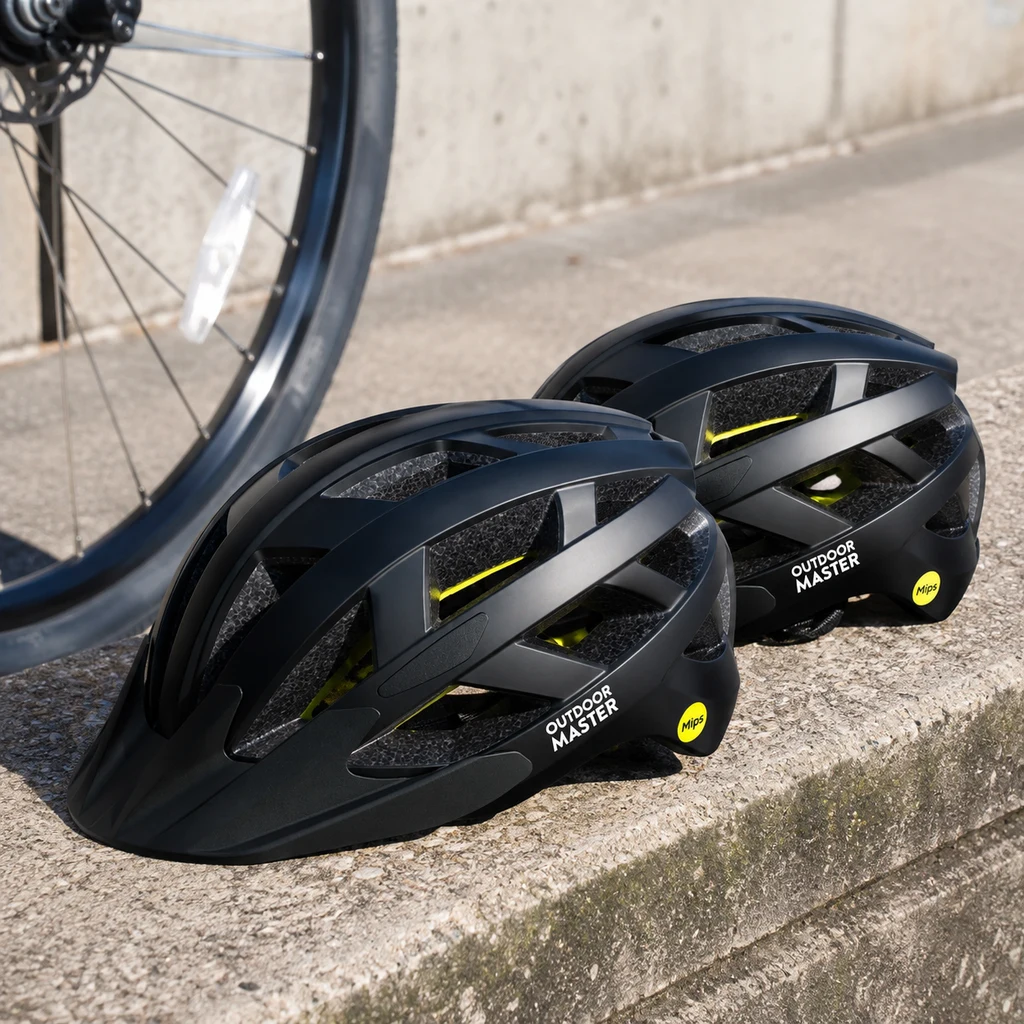
At 4.8 stars across nearly fifteen hundred ratings, the Gem is the highest rated helmet on this list, and it includes MIPS at a price where most competitors do not. That single fact is the argument: rotational protection used to be a premium feature and here it is not.
The clever inclusion is two sets of liners at different thicknesses, 0.23 and 0.31 inches. Combined with the dial that gives you a much wider genuine fit range than a single liner does, and it means you can tune the helmet around a cycling cap in winter or run it thin in summer. There are 25 vents and a removable visor.
It is marketed as a multi-sport helmet covering skating and BMX as well as cycling, which tells you it is a recreational shape rather than an aerodynamic one. For commuting, touring and general riding that is fine, and it is the helmet to buy if the budget is the binding constraint but you refuse to skip MIPS.
Specs That Matter
- MIPS rotational protection at a budget price
- Two liner thicknesses included, 0.23 and 0.31 inches
- Adjustment dial plus removable visor
- 25 individual vents
- Rated for cycling, MTB, BMX and skating
Who It Is For
Riders on a budget who still want MIPS, and anyone who needs a wide fit range across seasons.
VICTGOAL Bike Helmet with LED Rear Light: Best for Low Light
With more than seven thousand three hundred ratings at 4.7 stars, this is by far the most bought helmet here, and the reason is the integrated USB rechargeable LED on the back. Three modes, steady, fast flash and slow flash, mounted at head height where drivers actually look, which is meaningfully better than a light on your seatpost behind a loaded saddlebag.
That last point matters for touring. A rear light buried behind panniers is doing very little, and this puts one above the load. It also ships with a magnetic detachable visor and goggles, which is more useful than it sounds on dusty gravel, and runs 21 vents in a high density polycarbonate shell over EPS foam.
Be clear on the trade though: the listing makes no mention of MIPS or any rotational protection system, and it is the only helmet here without it. Sizing runs M at 54 to 58 cm, L at 57 to 61 cm and XL above that, so measure before ordering.
Specs That Matter
- USB rechargeable LED rear light with three modes
- No MIPS or rotational protection listed
- 21 vents, high density polycarbonate shell over EPS foam
- Magnetic detachable visor and goggles included
- Three sizes, M 54 to 58 cm, L 57 to 61 cm, XL above
Who It Is For
Commuters, winter riders and loaded tourers who want a light where a seatpost light would be hidden.

Bell Revolution MIPS: Best Budget Big Brand
Bell effectively invented the modern cycling helmet, and the Revolution is the cheapest way into the brand with MIPS included. The listing is sparse to the point of unhelpful, which is worth saying plainly, but what it does confirm is the important part: MIPS, adult sizing for riders fourteen and up, lightweight construction.
What you get for the money is a known quantity. Bell’s retention systems and pad quality at this level are ordinary rather than special, and the shape suits a rounder head better than an oval one. There is nothing here that will excite anybody, which is exactly the point of a spare helmet or a first helmet.
At 4.4 stars over seven hundred ratings it is the lowest rated helmet on this list, and most of the criticism is about fit rather than build, which is the usual pattern for a single shell size covering a wide range. Try the palm test carefully when it arrives.
Specs That Matter
- MIPS rotational protection
- Adult sizing, rated for riders 14 and over
- Lightweight in-mould construction
- Sparse manufacturer specification, so check fit on arrival
- 4.4 stars, the lowest rated here, mostly on fit
Who It Is For
A first helmet, a spare for a guest, or anyone who wants a major brand and MIPS for as little as possible.

Giro Fixture II MIPS: Best for Trails
The Fixture II is Giro’s answer to off road riding on a budget, and it is the one to take onto singletrack. In-mould construction and integrated MIPS come as standard, and the deeper rear coverage typical of a mountain bike shape protects more of the back of your head than a road lid does.
Ventilation is 18 Wind Tunnel vents with internal channelling, which is fewer than the road helmets here but appropriate: trail riding is slower, so vent count matters less than the channelling that moves air at low speed. It also means fewer openings for branches to catch.
The headline convenience is universal fit sizing, one shell covering 54 to 61 centimetres, which removes the guesswork if you are buying online and sits right in the middle of most adult heads. At 4.6 stars over three hundred ratings the review base is thinner than the others, but it is a well established model. Pair it with the kit in our mountain bike conversion guide.
Specs That Matter
- Integrated MIPS rotational protection
- 18 Wind Tunnel vents with internal channelling
- In-mould construction with deeper rear coverage
- Universal adult fit, 54 to 61 cm in one shell
- Mountain bike shape, suits trails and rough ground
Who It Is For
Trail and gravel riders on rough ground, and anyone buying online who wants the sizing decision taken away.

How to Choose Between Them
Six helmets, six kinds of riding. The best bike helmets for you are the ones matched to where you actually ride, and the choice usually falls out of one question about your typical week.
Road and Gravel, Most Weekends
The Giro Agilis. Roc Loc 5 is worth the step up on its own, and the ventilation holds up on a long climb. If your weekends look like our overnight rides, this is the one.
You Ride in Glasses
The SMITH Signal, without much argument. AirEvac is a real solution to a real annoyance, and the Koroyd coverage is a genuine safety addition rather than a marketing layer.
Commuting Through Dark Months
The VICTGOAL, accepting the lack of MIPS as the trade. A light at head height is worth a lot in traffic, especially with a loaded rear rack, which is exactly the situation in our bag packing guide.
Off Road and Rough Ground
The Giro Fixture II, for the deeper rear coverage and universal sizing. Trails punish gear, which is also why a decent multi tool lives in the frame bag.
Spending as Little as Possible
The OutdoorMaster Gem if you want MIPS, the Bell Revolution if you want the brand. The Gem is the better helmet on paper and the better rated of the two.
MIPS, Koroyd and What Actually Protects You
Three terms get used interchangeably in listings and they are not the same thing, and understanding them is most of what separates the best bike helmets from the ones that only look expensive.
MIPS Is About Rotation, Not Impact
A conventional helmet handles a straight-on impact by crushing its foam liner. MIPS adds a slip plane that lets the shell rotate a few millimetres relative to your head, reducing the rotational forces that come from hitting the ground at an angle, which is how the overwhelming majority of real crashes happen. It adds a little weight and usually a little cost. It is the single upgrade most worth paying for, ahead of grams or vent count.
Koroyd Adds Absorption Without Blocking Air
Koroyd is a bonded honeycomb of tubes that crushes in a controlled way on impact. Because the tubes are open, air still passes through, so it can sit in vent areas where solid foam could not. On this list only the SMITH Signal has it, as zonal coverage rather than throughout.
Certification Is a Floor, Not a Ranking
Every adult bike helmet sold in the United States meets the same CPSC standard. It is a pass or fail test, not a score, so a certified budget helmet is not “less certified” than an expensive one. What you buy above that floor is comfort, weight, airflow and rotational protection.
Fit, Care and Replacement
A helmet that does not fit is not protecting you properly however good the specification is, and a helmet past its life is not either. Build the checks into the same routine you use for the rest of your kit before a sub 24 hour overnighter.
- Measure your head before ordering and check the chart for that specific helmet. Brand sizing varies by several centimetres.
- Set it level, two fingers above the brow, then tighten the cradle, then the straps. Our helmet fitting guide walks through all six checks.
- Replace after any impact, even with no visible damage. The liner crushes once and does not recover.
- Replace every five years otherwise, or three with daily use, since sweat and ultraviolet light degrade the liner and straps.
- Do not store it in a hot car boot, and never use solvents on the shell. Warm water and mild soap only.
- Dry it properly after a wet ride rather than leaving it in a bag, the same discipline as the rest of your wet weather kit.
- Keep it out of the bottom of a loaded bag. Crushed pads and a cracked liner are the same problem as an impact, and packing order is covered in our packing guide.
Frequently Asked Questions
Is an expensive bike helmet safer?
Not in the certification sense. Every adult helmet on this list passes the same CPSC test. What money buys is lower weight, better ventilation, a better retention system and, up to a point, rotational protection, though the OutdoorMaster Gem shows MIPS no longer requires a premium price.
Do I really need MIPS?
It is the most worthwhile upgrade available for the money. Angled impacts are the common case in real crashes and rotational force is what MIPS addresses. Given it now appears on budget helmets, there is little reason to skip it unless you specifically need a feature only a non-MIPS helmet offers, as with the VICTGOAL and its rear light.
How long does a bike helmet last?
Five years for normal use, three for daily riding, and immediately after any crash. Check the date stamp moulded inside the shell rather than guessing.
Are mountain bike and road helmets interchangeable?
Mostly, though not ideally. Mountain shapes have deeper rear coverage and often a visor, road shapes prioritise airflow and weight. For mixed gravel riding either works, which is why the Agilis and the Fixture II both appear here. Our piece on bikepacking versus cycle touring covers how riding style changes the rest of the kit too.
Do I need a light if my helmet has one?
A helmet light is a supplement, not a replacement. Keep a proper rear light on the bike as well, since a helmet can be taken off and set down while the bike stays visible. On unlit roads you also want a front light bright enough to see by, not only to be seen. Keeping lights and a phone charged over several days is its own problem, which our portable power guide works through.
If you are still choosing the bike rather than the helmet, our budget gravel bike guide and our piece on the case for a gravel bike are the better starting points, and the helmet can wait until the frame is decided.
Six helmets, six kinds of riding. For most people the Giro Agilis is the answer and the reading can stop there; if you ride in glasses the SMITH Signal is worth the step up, and if the budget is tight the OutdoorMaster Gem gets you MIPS for remarkably little. Whichever arrives, spend five minutes on the six fitting checks before you ride it, because that is the part that actually decides whether it works.
Discover more from Maive Verse
Subscribe to get the latest posts sent to your email.


