
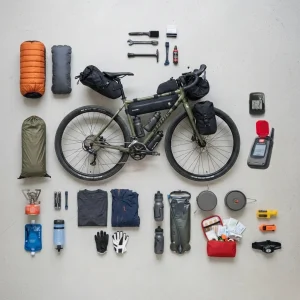

Master your mission with the ultimate bikepacking gear list. Discover 11 essentials for 3-day wilderness trips, including technical pros, cons, and packing tips.
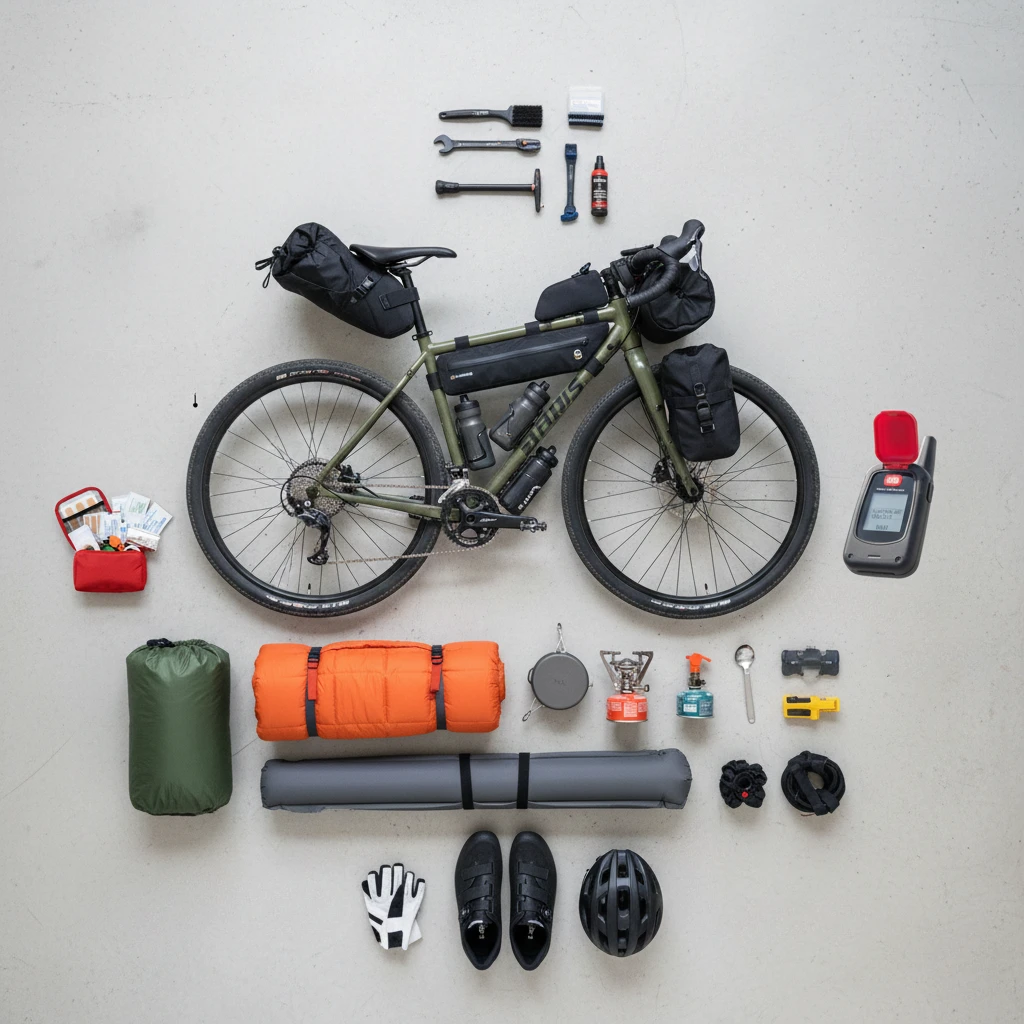
Table of Contents
Introduction: The Technical Goal of 3-Day Self-Sufficiency
Developing an ultimate bikepacking gear list is a prerequisite for any successful multi-day wilderness expedition. Unlike a standard day ride, a 3-day adventure demands a rigorous balance between weight, volume, and mechanical utility. Every item carried must contribute to the rider’s safety, thermal regulation, or mechanical survival. For those who have already reviewed the foundational Bikepacking for Beginners Guide, this gear list represents the next level of technical preparation.
The primary challenge of a 3-day itinerary is managing caloric intake and hydration while maintaining a bike that remains maneuverable on technical trails. High-quality technical equipment is designed to distribute weight across the frame to preserve the bike’s natural handling characteristics. This list focuses on high-performance solutions that have been vetted for long-distance reliability. Self-sufficiency in remote terrain requires gear that is both durable and minimalist. Transitioning to multi-day trips is a calculated process that begins with a standardized wilderness packing protocol.
1. The Core Platform: Adventure-Ready Frames and Tires
The first entry on any ultimate bikepacking gear list is the bicycle itself, specifically optimized for loaded travel. The frame must provide enough mounting points for cages and bags without compromising the rider’s posture. Mechanical stability is paramount when navigating unpaved forest service roads or rugged singletrack. Tire selection is the primary factor in traction and vibration dampening over 72 hours of continuous riding. For more on selecting a frame, see our Selecting the Ideal Bicycle section.
Technical Tire Selection for Wilderness Terrain
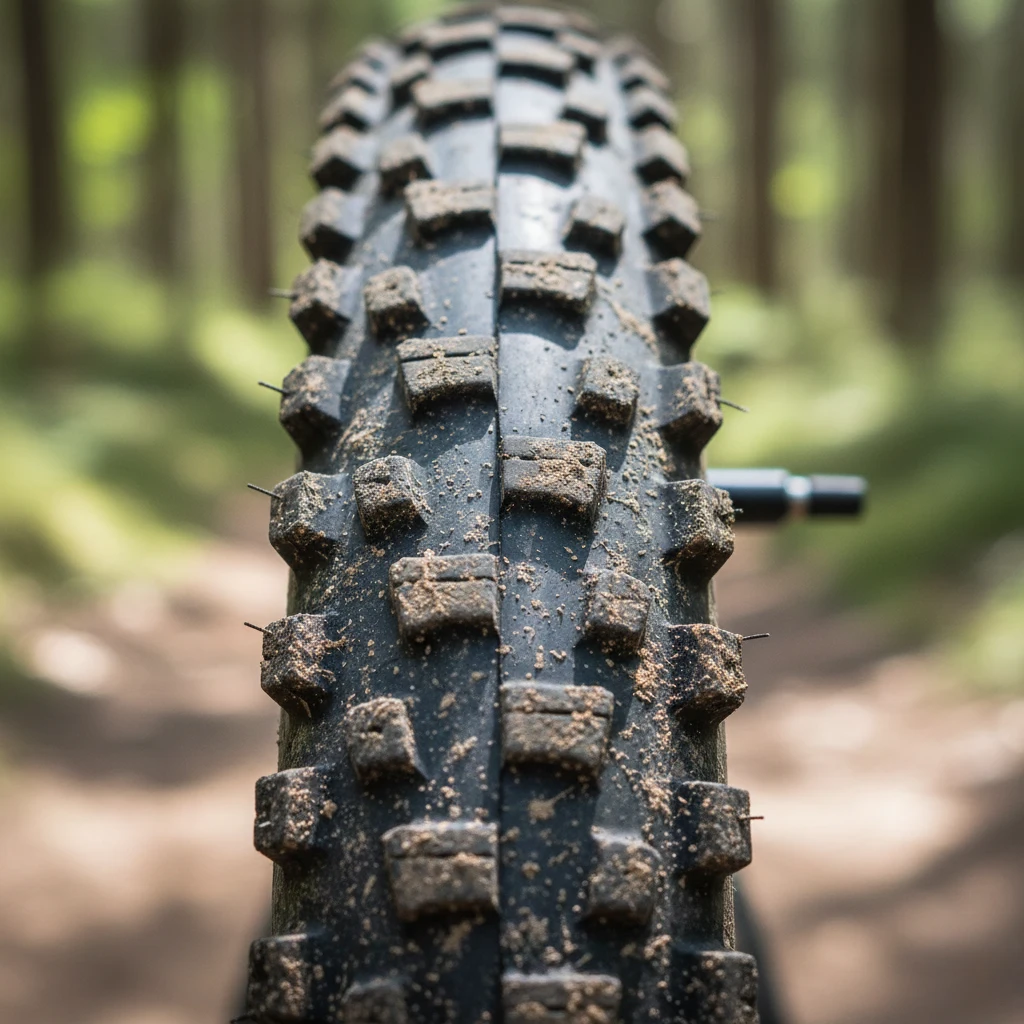
For a 3-day trip, tires with a width between 2.1 and 2.4 inches offer the best balance of speed and flotation. Low-profile center knobs reduce rolling resistance on hardpack, while aggressive side knobs provide security in corners. Utilizing a tubeless setup is a mandatory safety measure for remote travel. This system allows the tires to seal small punctures automatically, preventing the need for frequent trailside repairs. High-volume tires also protect the rims from impact damage on rocky terrain.
2. Technical Bag Systems for Optimal Weight Distribution
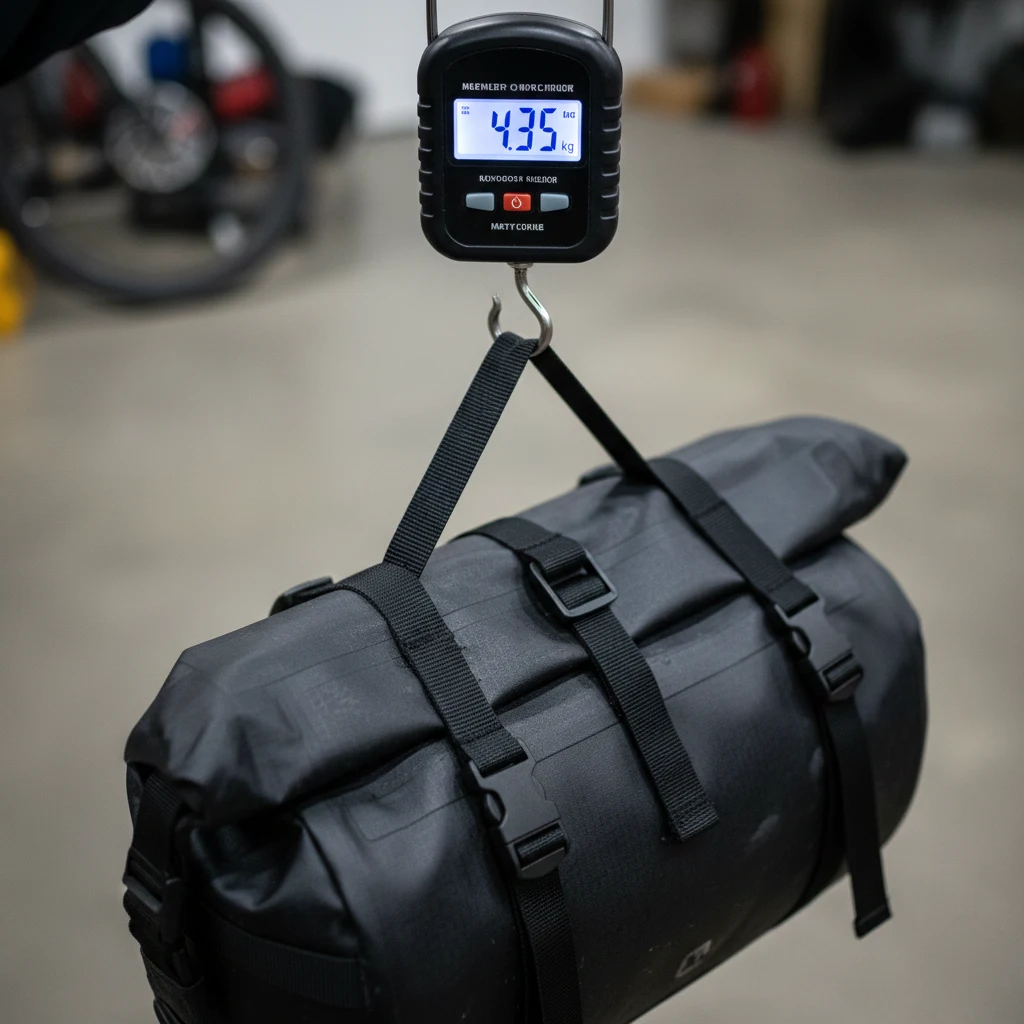
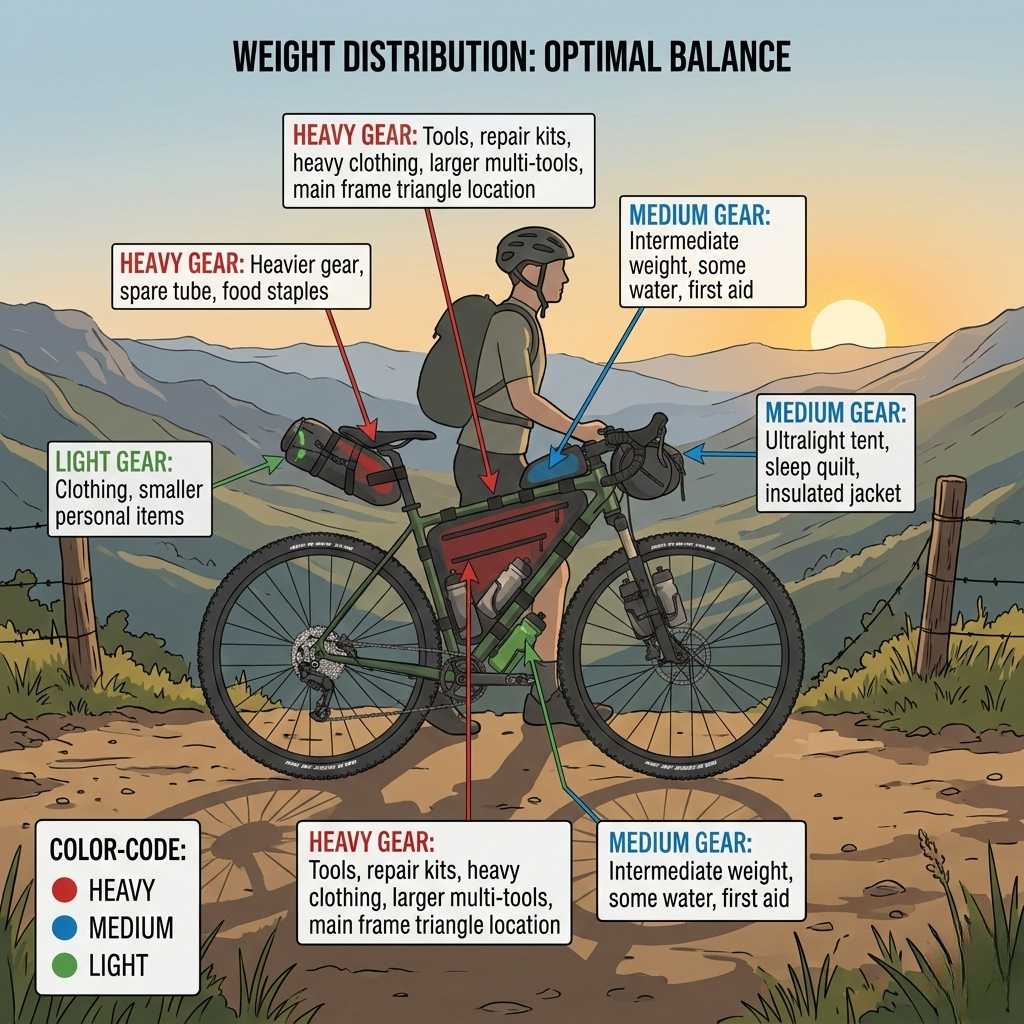
The bag system is the “organs” of the ultimate bikepacking gear list, dictating how the load is carried. Soft-sided bags that attach directly to the frame are superior to traditional racks for off-road use. This setup minimizes mechanical failure points and prevents the load from rattling loose over high-frequency vibrations. Strategic packing ensures that the bike remains balanced during steep climbs and rapid descents.
Recommendation: Revelate Designs Terrapin System 14L
- Key Features: Dual-purpose dropper-post compatible, waterproof drybag, rigid mount.
- Pros: Eliminates “tail wag” sway; 100% waterproof for river crossings; incredibly durable.
- Cons: Heavier than minimalist bags; requires 5 inches of tire clearance.
- Check Price Here: Revelate Designs Terrapin 14L
Technical Bag Mounting Protocols
Strategic mounting requires centering the mass between the two wheels. The frame bag should hold the heaviest items to keep the center of gravity low. The seat pack and handlebar roll should contain the lightest, most voluminous gear. For insights into custom bag sizing, Rockgeist provides excellent technical resources. Proper attachment ensures a silent and efficient ride over Variable Terrain.
3. The 3-Day Sleep System: Ultralight Shelters
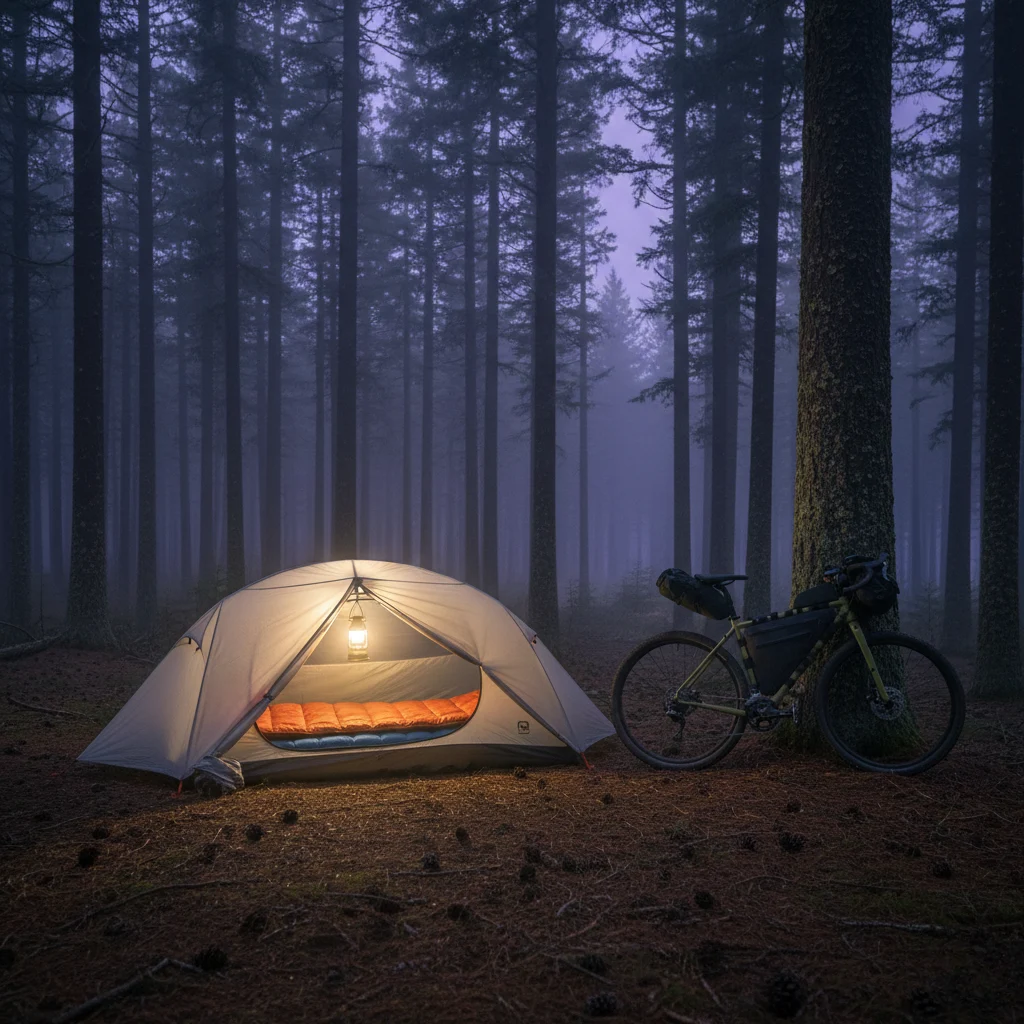
A restorative sleep system is critical for physical recovery during a 3-day mission. The ultimate bikepacking gear list prioritizes equipment that packs down to a volume of less than 5 liters. This allows the gear to fit within the narrow constraints of a handlebar roll. The choice of shelter depends on the expected bug pressure and humidity levels of the wilderness area. High-performance fabrics like Dyneema offer significant weight savings.
Recommendation: Big Agnes Fly Creek HV UL1 Bikepack
- Key Features: Shortstik poles for easy packing, integrated helmet storage, waterproof solution-dyed fabric.
- Pros: Fits perfectly between drop bars; easy one-pole setup; great internal organization.
- Cons: Fragile floor requires a groundsheet; cramped for riders over 6 feet.
- Check Price on Amazon: Big Agnes Fly Creek HV UL1
Bivys vs. Tents for Fast Packing
For minimalist riders, a bivy sack or a tarp system offers the lowest possible weight. A bivy provides a waterproof barrier and can be set up in very tight spaces. Tarps offer excellent ventilation but require more skill to pitch correctly. For technical guidance on pitching tarps, refer to the MSR Shelter Guide. This setup is ideal for fast-and-light missions where every gram counts on your ultimate bikepacking gear list.
4. Thermal Management: High-Loft Quilts and Pads
Maintaining core temperature during wilderness nights is a safety requirement. The ultimate bikepacking gear list utilizes high-loft down for its superior compressibility. Unlike traditional sleeping bags, quilts eliminate the underside insulation, which is already compressed by the rider’s weight. This reduces bulk and allows for better temperature regulation. Pair the quilt with a high R-value pad to prevent conductive heat loss.
Recommendation: Therm-a-Rest NeoAir XLite NXT
- Key Features: 4.5 R-value, 3-inch thickness, ultra-compact pack size.
- Pros: Industry-leading warmth-to-weight ratio; much quieter than previous versions; thick enough for side sleepers.
- Cons: Expensive; requires careful handling to avoid punctures.
- Check Price on Amazon: Therm-a-Rest NeoAir XLite NXT
Insulation Physics for High Elevations
A 20-degree Fahrenheit rated quilt is the most versatile option for 3-season bikepacking. The Enlightened Equipment Revelation is a benchmark in this category. It uses 850+ fill power down to provide massive warmth with minimal weight. The quilt can be opened flat like a blanket on warm nights or cinched tight during cold mountain frosts. This flexibility is essential for the Route Planning and Climate of your trip.