

This post may contain affiliate links. If you buy through them, we may earn a small commission at no extra cost to you.
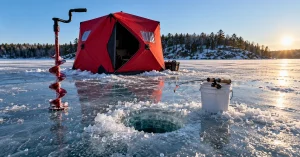
Ice fishing for beginners can look intimidating, with augers, shelters and electronics, but at its heart it is simple: drill a hole, drop a small bait and wait for a bite. It is also one of the most social ways to fish. Some of the best catches of the year come through the ice, when perch, bluegill, crappie and walleye gather in predictable spots.
This guide starts with the most important topic, ice safety, then covers the gear you need, where fish hold in winter, how to jig and use tip-ups, and how to stay warm. Ice season is still a few weeks away for most of the country, which makes now the perfect time to get ready. If you are new to fishing in general, our how to cast a spinning rod and fishing knots guides cover the basics.
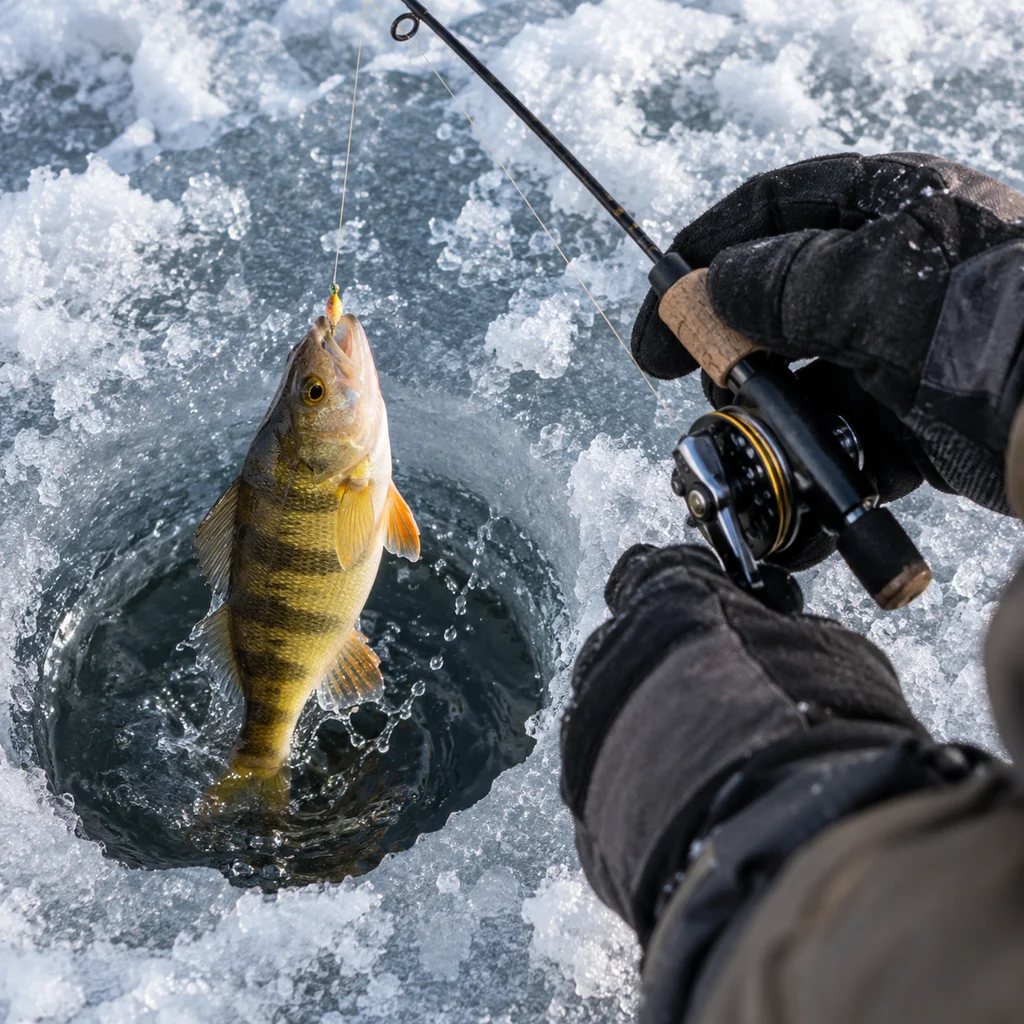
Table of Contents
Ice Safety Comes First
How Thick Does Ice Need to Be?
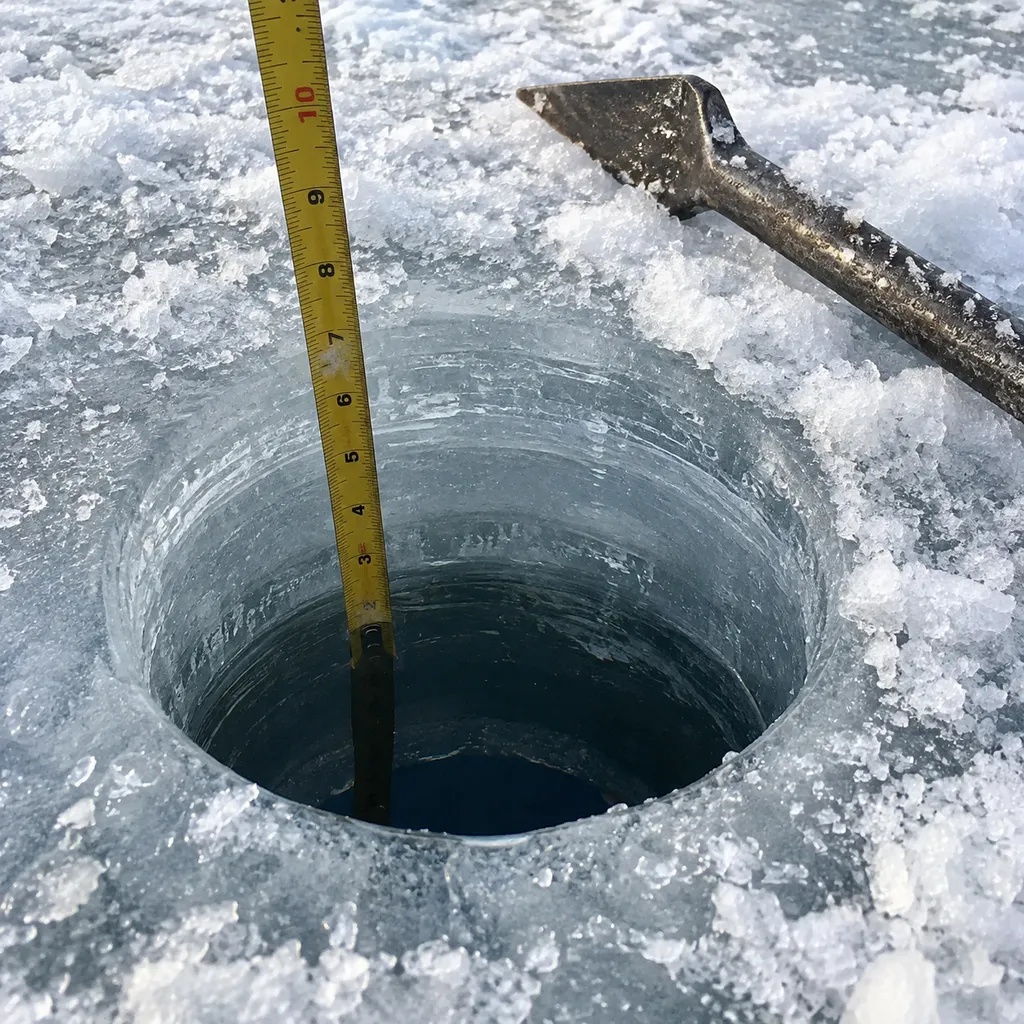
Ice thickness is the first thing to learn. Guidance from state natural resource agencies across the ice belt is consistent: never go on less than 4 inches of new, clear ice on foot. Thicker ice is needed for vehicles, and many anglers never drive on the ice at all.
| Ice Thickness | Generally Safe For |
|---|---|
| Under 4 inches | Stay off |
| 4 inches | Ice fishing on foot |
| 5 to 7 inches | Snowmobile or ATV |
| 8 to 12 inches | Small car |
| 12 to 15 inches | Medium truck |
Check the Ice as You Go
Ice is never the same thickness everywhere. Use a spud bar to strike the ice ahead of you as you walk, and drill test holes every so often. Be extra careful near inlets, outlets, springs, docks, pressure ridges and dark patches, where ice is often thinner.
Carry Safety Gear
Wear a pair of ice picks around your neck so you can pull yourself out if you go through, and carry a throw rope. A flotation suit or life jacket adds another layer of protection. Ice cleats on your boots stop slips, which cause far more injuries than falling through.
Never Go Alone
Fish with a partner, stay a short distance apart when walking, and tell someone where you are going and when you will be back. Ask at the local bait shop about current conditions, since locals check the ice every day.
Ice Fishing for Beginners: The Gear You Need
An Auger
An auger drills the holes. A hand auger is light, quiet and cheap, and works well on early season ice. Electric augers save effort as ice gets thicker. Many beginners borrow or rent one their first season.
A Short Rod and Small Reel
Ice rods are short, usually 24 to 36 inches, so you can fish right over the hole. Pair one with a small spinning reel spooled with light line. Your regular open water gear from our best rod and reel combos list is too long for most ice fishing, but the same reel can work.
Jigs, Spoons and Bait
Small jigs and spoons in bright colors catch most panfish and walleye. Tip them with live bait such as waxworms, spikes or minnows. Keep everything organized in a compact box like the Plano 3-Tray Tackle Box, and see our best tackle boxes list for soft bags that fit in a sled.
A Scoop, Bucket and Sled
A slotted scoop clears slush from the hole, a five gallon bucket works as a seat and tackle carrier, and a plastic sled lets you drag everything across the ice. A soft tackle bag like the Ghosthorn Waterproof Tackle Bag keeps small items dry.
Nice to Have: Flasher and Shelter
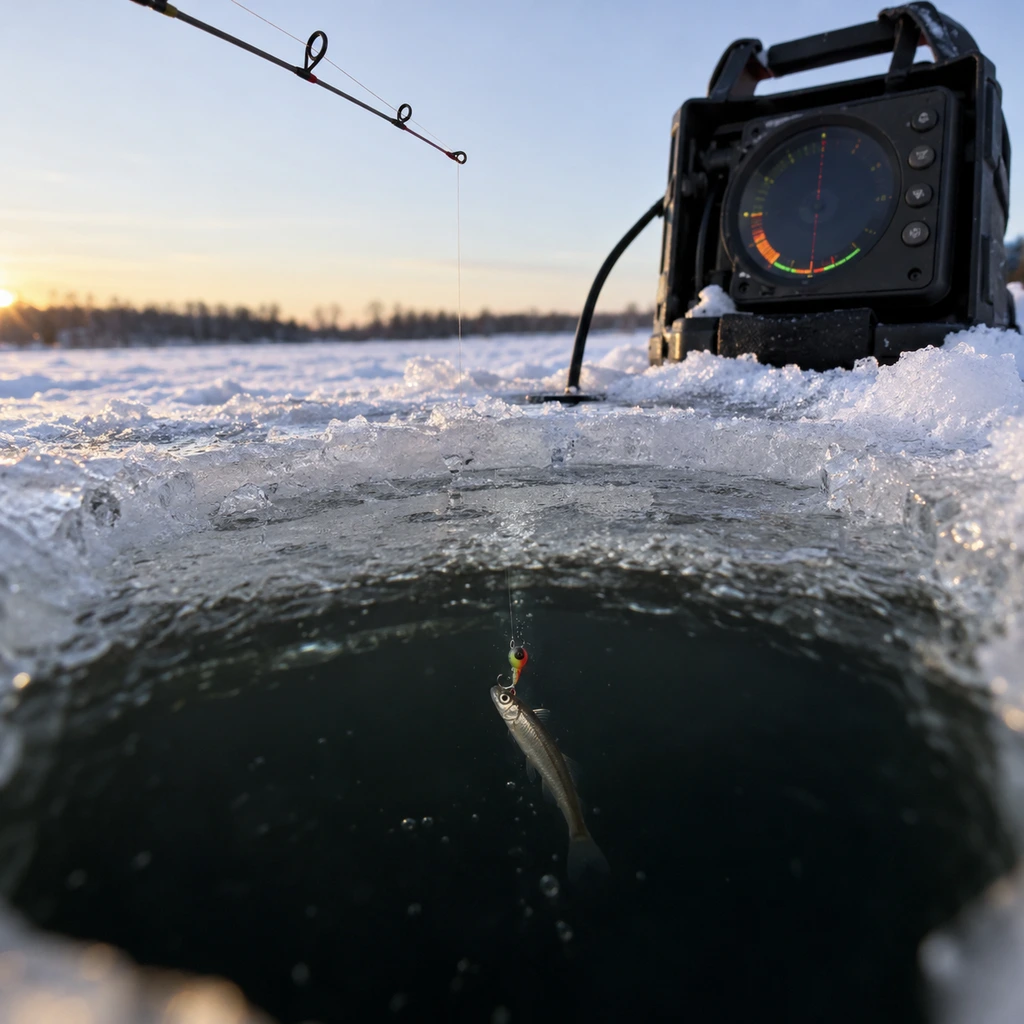
A flasher or sonar shows fish below you and how they react to your bait, which speeds up learning. A pop-up shelter blocks the wind on cold days. Neither is needed for your first trip.
Where Fish Hold in Winter
Weed Edges and Drop-Offs
Panfish often stay near the edges of weed beds, especially early in the season when the weeds are still green. Walleye and perch use drop-offs, points and humps where shallow water meets deep. A lake map or app shows these spots before you go.
Start Shallow, Then Move Deeper
Early in the season, fish are often in 6 to 15 feet of water. As winter goes on and oxygen drops in the shallows, many move deeper. Reading structure works much the same way as in open water, which our guide on how to read a river introduces.
Keep Moving
If a hole does not produce in 15 to 20 minutes, drill another. Mobile anglers catch more fish because they find active fish instead of waiting for them.
How to Catch Fish Through the Ice
Jigging
Drop your jig to the bottom, reel up a foot or two, then lift and drop it a few inches at a time. Pause often, because most bites come while the jig is still. Watch the rod tip and line closely; winter bites can be very light.
Tip-Ups
A tip-up holds a live minnow under the ice and pops a flag when a fish takes it, so you can watch several holes at once. Tip-ups are popular for pike and walleye. Check your state regulations for how many lines you can use.
Best Times to Fish
Dawn and dusk are usually the busiest feeding periods, especially for walleye. Panfish often bite through the day. First ice, the weeks just after a lake freezes safely, is famous for fast action.
Landing a Fish Through the Hole
When you hook a fish, keep steady pressure and reel smoothly. As it nears the hole, guide its head straight up into the opening rather than pulling sideways against the edge of the ice, which can cut the line. For bigger fish, set the rod down and hand line the last few feet. If you plan to release it, do it quickly, because fish lose heat and the gills can freeze in very cold air.
Consider a Guide for Your First Trip
A local guide or ice fishing club is a shortcut for beginners. They know which lakes have safe ice, where the fish are biting and how to rig each setup, and many supply shelters, augers and electronics for the day. One guided morning can teach you more than a whole season of trial and error.
Staying Warm on the Ice
Dress in Layers
Wear a moisture wicking base layer, an insulating middle layer and a windproof, waterproof outer layer. Our how to layer for hiking guide explains the system, and these cold weather camping tips apply on the ice too.
Warm Boots and Spare Gloves
Insulated, waterproof boots are essential, since you stand on ice all day. Bring at least two pairs of gloves, because one pair will get wet. Our guide to hiking in snow and ice covers traction devices that also work on the lake.
Bring Hot Food and Drinks
A thermos of coffee, soup or cocoa makes a long day much more comfortable. A small stove turns lunch into a treat, and our camp coffee setup guide and one pot camp meals are easy to adapt to the ice.
Licenses and Regulations
Every state requires a fishing license for adults, and many have specific rules for ice fishing, including how many lines you can use, shelter registration and when shelters must be removed. Check your state wildlife agency before your first trip, and read up on how a fishing license works if you have never bought one. The ice fishing article on Wikipedia has more background on the sport’s history.
If you also fish open water, our fall fishing tips help you finish the season strong, and fly fishing for beginners gives you something new to try in spring.
Frequently Asked Questions
How thick should ice be for ice fishing?
At least 4 inches of new, clear ice for walking. White or snow covered ice is weaker, so look for more. Check as you go and never assume the whole lake is the same.
How much does it cost to start ice fishing?
You can start for under 100 dollars with a short rod and reel combo, a few jigs, a scoop and ice picks, plus a borrowed or rented auger. Shelters and electronics can come later.
What is the best bait for ice fishing?
Waxworms and spikes on a small jig are the classic panfish bait. Minnows on a tip-up or a jigging spoon work for walleye, pike and perch.
What fish can you catch ice fishing?
The most common are yellow perch, bluegill, crappie, walleye and northern pike. Some lakes also hold lake trout and whitefish.
Ice fishing for beginners comes down to safety first, simple gear and a willingness to move until you find fish. Learn the ice thickness rules, fish with a friend, dress warmer than you think you need and start with a short rod, a few small jigs and some waxworms. The first flag or bobbing rod tip of the winter is worth every cold finger.
Discover more from Maive Verse
Subscribe to get the latest posts sent to your email.