

This post may contain affiliate links. If you buy through them, we may earn a small commission at no extra cost to you.
Fly fishing for beginners looks harder than it is. The gear has its own vocabulary, the casting looks like an art form, and the people in the river seem to know something you do not. Strip it back, though, and fly fishing is a simple idea: the weight is in the line rather than the lure, so you cast the line and the tiny fly simply comes along for the ride.
This guide covers the gear you actually need, the two casts that catch most fish, how to choose flies and read water, and why fall is a great time to start. If you already spin fish, our guide to fall fishing tips pairs well with this one, and it will help you find fish on the same rivers.
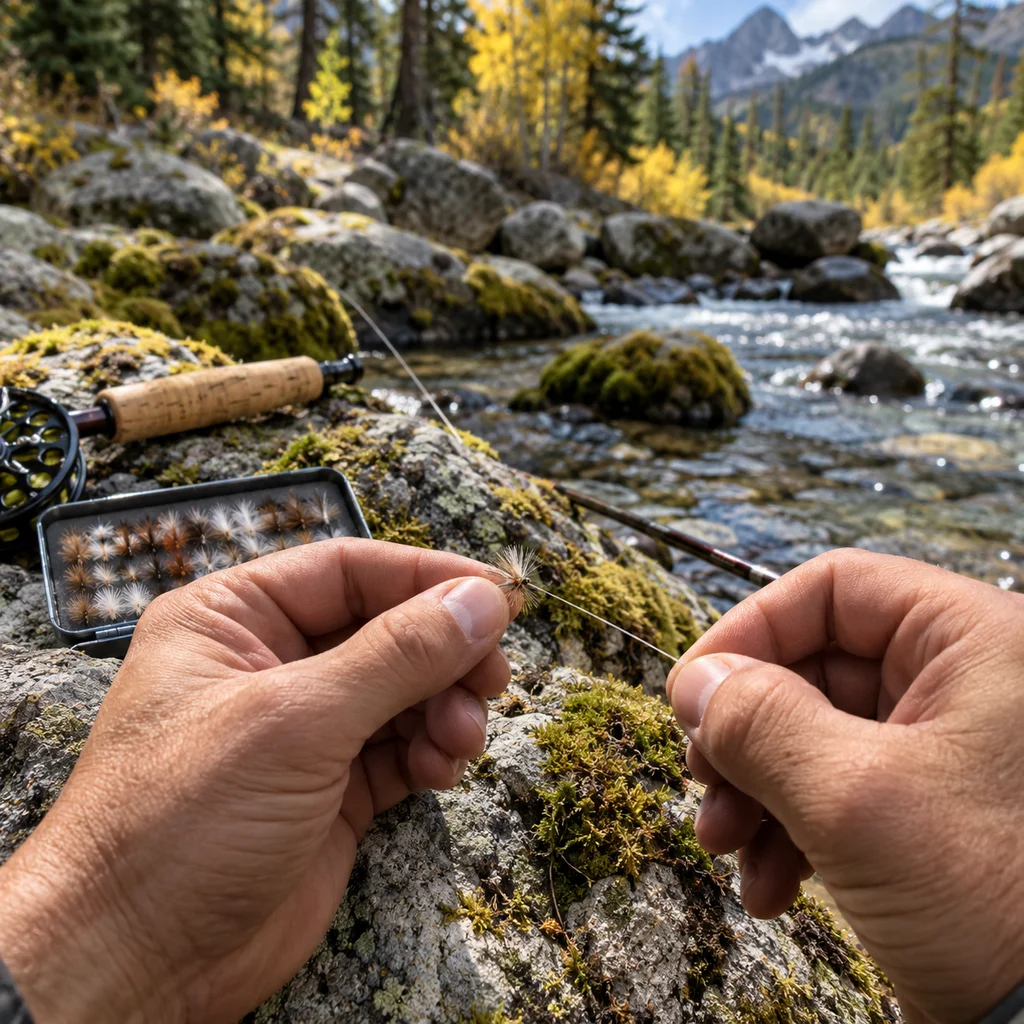
Table of Contents
How Fly Fishing Is Different
The Line Does the Work
With a spinning rod, a heavy lure pulls thin line off the reel. With a fly rod, the thick, weighted fly line itself is what you cast, and the fly weighs almost nothing. That is why the motion looks so different: you are flexing the rod to throw a loop of line through the air.
You Fish What Trout Eat
Most flies imitate real insects at a particular stage of life, from the larva on the riverbed to the adult on the surface. Trout feed heavily on mayflies, caddisflies and stoneflies, so a lot of fly fishing comes down to matching what is hatching that day.
It Rewards Patience More Than Strength
Good casting is about timing, not muscle. Plenty of beginners overpower the rod in the first week and get tangled. Slow down, let the line straighten behind you, and the rod does most of the work.
Fly Fishing for Beginners: The Gear You Need
You do not need a vest full of gadgets. A rod, a matched reel and line, a leader, some tippet and a handful of flies will catch fish on day one. Everything else can wait, and that restraint is the best advice in fly fishing for beginners.
Rod: Start With a 9 Foot 5 Weight
Fly rods are rated by weight, from tiny 1 weights for small brook trout up to 12 weights for saltwater. A 9 foot 5 weight is the classic all-rounder for trout, panfish and small bass, and it is what most guides hand to a beginner. Four-piece rods pack down small enough for a car trunk or a backpack.
Reel: Simple Is Fine
On trout water the reel mostly stores line. A basic aluminum reel with a smooth drag, matched to your rod weight, is all you need. Large arbor reels pick up line faster and reduce coils in the line, which helps with tangles.
Line: Weight-Forward Floating
Buy a weight-forward floating line that matches the rod, so a 5 weight line on a 5 weight rod. Floating line handles dry flies, nymphs under an indicator and small streamers, which covers almost all beginner fishing.
Leader and Tippet
The leader is the tapered clear section between fly line and fly, usually 9 feet long. Tippet is the thin replaceable piece at the end that you tie the fly to. Sizes run in X ratings: 5X is a sensible all-purpose trout size, and 4X is better for bigger flies.
Buy an Outfit to Start
The easiest path is a matched outfit that arrives with rod, reel, line and leader already set up. The Orvis Encounter outfit is a long-standing beginner favorite, the Wild Water starter kit adds flies and a case, and the Maxcatch Extreme combo is a well-reviewed budget option. All three come ready to fish.
Beginner Gear at a Glance
| Item | What to Buy | Why It Matters |
|---|---|---|
| Rod | 9 ft, 5 weight, 4 piece | Handles trout, panfish and small bass |
| Reel | Aluminum, matched to the rod | Stores line, smooth drag for bigger fish |
| Line | Weight-forward floating, 5 wt | Easiest line to cast and mend |
| Leader | 9 ft, 5X tapered | Turns the fly over and hides the line |
| Tippet | 4X and 5X spools | Replace the end as you change flies |
| Flies | A dozen dries, nymphs and streamers | Covers most situations on trout water |
| Extras | Nippers, forceps, net, polarized glasses | Cut line, unhook fish, see into water |
Waders are not essential in summer, but they make fall and spring fishing far more comfortable. A warm layer from our insulated jacket picks helps on frosty mornings too. Our picks for the best fishing waders cover options for every budget, and good layering matters just as much on a cold river.
Knots and Casting Basics
Fly fishing for beginners really comes down to two skills you can practice anywhere: tying a couple of reliable knots and making a clean cast. Neither takes long to learn.
Improved Clinch Knot
The clinch knot ties the fly to the tippet. Thread the tippet through the eye, wrap it around itself five or six times, pass the tag end back through the small loop near the eye, then through the big loop you just made. Wet it and pull tight slowly.
Surgeon’s Knot
Use a double surgeon’s knot to add tippet to the end of your leader. Lay the two lines side by side, tie a simple overhand knot with both, pass them through a second time, and pull all four ends evenly. It is quick and strong, even with cold fingers.
Tie each knot twenty times at the kitchen table with a hook that has the point cut off. By the time you are on the water, they should feel automatic, which matters when fish are rising and the light is fading.
The Basic Overhead Cast
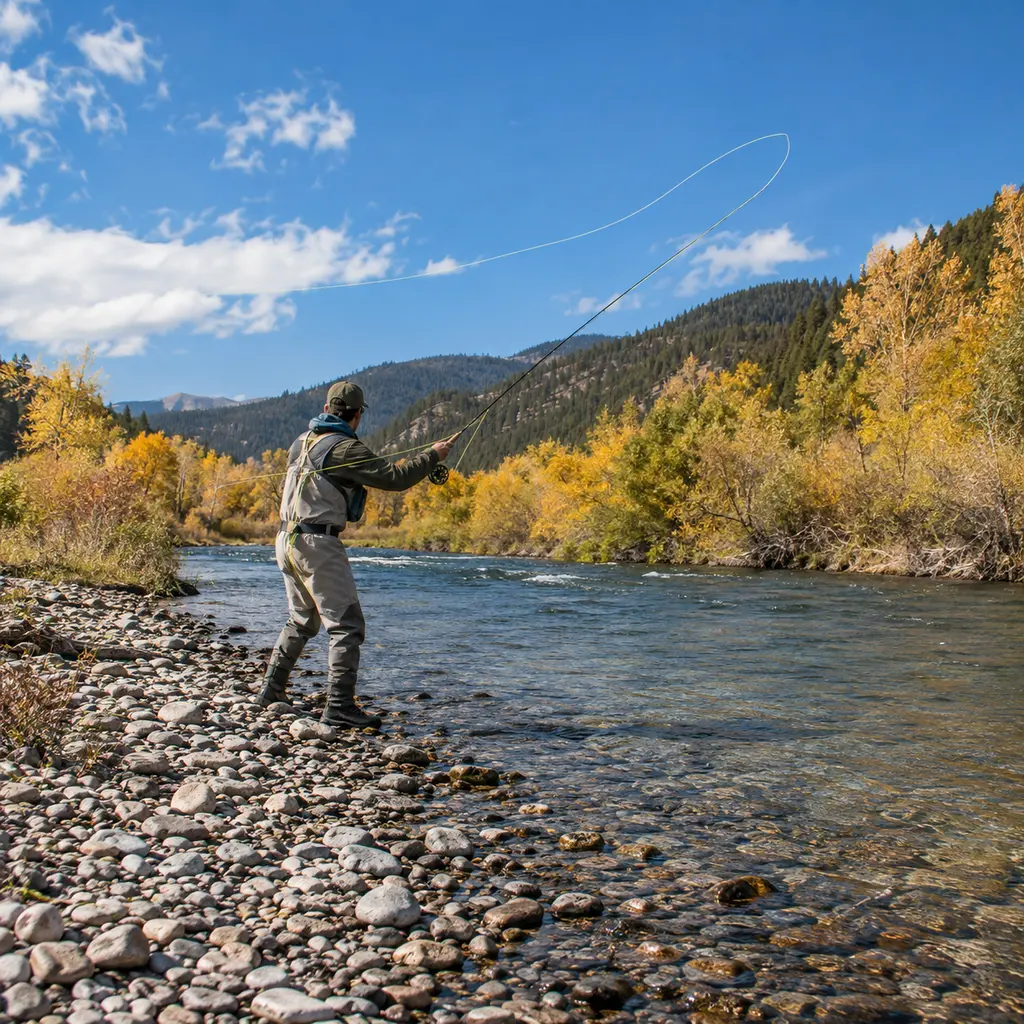
Start with twenty to thirty feet of line out in front of you on the water or the grass. Lift the rod smoothly and accelerate to a firm stop just past vertical, around the one o’clock position. Pause and let the line straighten behind you, then push forward and stop again at about ten o’clock. The stop is what forms the loop.
The Roll Cast
When there are trees or a bank behind you, use a roll cast. Slowly raise the rod so a curve of line hangs beside and slightly behind your shoulder, then make a crisp forward stroke. The line rolls out across the water without ever going behind you. On small streams, this cast catches a huge share of fish.
Common Casting Mistakes
Most problems come from rushing the back cast, so the line has not straightened before you go forward, or from wrist flopping, which opens the loop. Keep your wrist fairly firm, move the rod in a straight line, and listen: if you hear a crack like a whip, you went forward too early.
Choosing Flies
Dry Flies
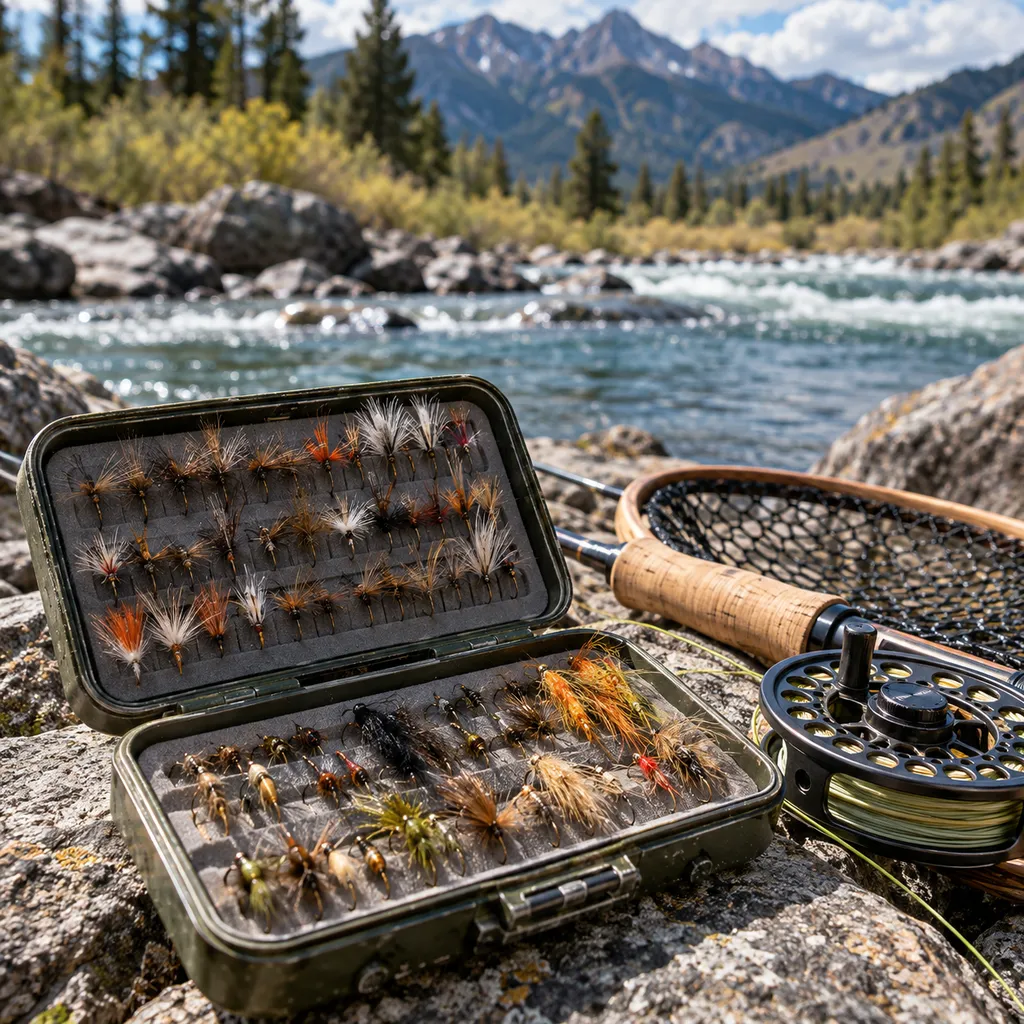
Dry flies float and imitate adult insects on the surface. Watching a trout rise to a dry fly is the moment that hooks most people for life. An Elk Hair Caddis, a Parachute Adams and a small ant or beetle cover a lot of water.
Nymphs
Nymphs sink and imitate the immature stage of aquatic insects, which trout eat most of the time. A Pheasant Tail and a Hare’s Ear under a small indicator, basically a fly fishing bobber, are the most reliable way for beginners to catch rainbow trout and brown trout.
Streamers
Streamers imitate small fish, leeches and crayfish. You cast them across the current and strip them back in short pulls. A Woolly Bugger in olive or black catches trout, bass and panfish almost anywhere, and it is the single most useful fly to carry.
Reading Water and Finding Trout
Trout want three things: food, oxygen and shelter from fast current and predators. Our guide on how to read a river goes deep on this, but the short version is to look for seams where fast water meets slow, the heads and tails of pools, and anything that breaks the current, like boulders and logs.
Riffles, Runs and Pools
Riffles are shallow and choppy and full of insects. Runs are deeper and smoother, and hold feeding fish. Pools are deep and slow, where big trout rest. Start by fishing the seams at the edges of riffles and runs.
Approach Quietly
Trout face upstream, so approach from downstream and keep a low profile. Heavy footsteps on rocks and shadows on the water send fish running. Polarized sunglasses help you spot fish and underwater structure.
Fly Fishing in Fall
Fall is one of the best seasons for fly fishing for beginners. Rivers drop and clear, crowds thin out, and brown trout feed aggressively before they spawn. Small blue-winged olive mayflies hatch on gray afternoons, and streamers work well as the water cools. Dress for cold water, check the forecast with our guide to trail weather apps, and pack a headlamp from our headlamp picks for the walk out at dusk.
Avoid wading on gravel beds where browns are spawning in late fall. These redds look like clean, light patches of gravel, and stepping on them destroys eggs.
Licenses, Ethics and Safety
Get a License
Every state requires a fishing license for adults, and most sell them online in a few minutes. Check local regulations for seasons, limits and special waters that are fly fishing only or catch and release.
Catch and Release Done Right
Catch and release only works if the fish survives. Use barbless hooks or pinch the barb down, keep fish in the water as much as possible, wet your hands before touching them, and release them facing upstream until they swim away on their own.
Wade Carefully
Moving water is stronger than it looks. Shuffle your feet, face upstream, and never wade above your thighs in current. A wading staff, or even a trekking pole, gives you a third point of contact. If you fish from a boat, our guide to kayak life jackets applies, and a fishing kayak opens up lakes that are hard to reach from shore.
Frequently Asked Questions
Is fly fishing hard to learn?
The basics are not. Most people can make a usable cast within an hour of practice. Mastering casting, flies and reading water takes years, which is a big part of why people love it.
What size fly rod should a beginner buy?
A 9 foot 5 weight. It is versatile enough for trout streams, ponds and small bass, and it is the most common size, so line, reels and advice are easy to find.
Do I need waders to start fly fishing?
No. In warm weather you can wet wade in quick-dry pants and wading shoes, or fish from shore. Waders become worthwhile once the water is cold, which is most of fall and spring.
What is the best fly for beginners?
A Woolly Bugger. It sinks, it moves like food, and it catches nearly every species of fish in fresh water. Pair it with an Elk Hair Caddis for the surface and a Pheasant Tail nymph and you are covered.
Where can I practice fly fishing?
Practice casting on a lawn first, then try a pond with sunfish, which bite readily and forgive mistakes. Many states stock trout in easy-access rivers in fall. Our guide to dispersed camping can help you find a base close to the water.
Fly fishing for beginners comes down to a few simple pieces: a 9 foot 5 weight outfit, a handful of proven flies, two good knots and the overhead and roll casts. Get those right, approach the water quietly, and your first trout will come sooner than you expect. When you are ready for more gear, see our guide to the best rod and reel combos for spinning setups, and our cold water kayaking guide if you want to fish from a boat as the season turns.
Discover more from Maive Verse
Subscribe to get the latest posts sent to your email.