
This post may contain affiliate links. If you buy through them, we may earn a small commission at no extra cost to you.
Learning how to read a river is the difference between fishing and casting. A river looks like moving water until you know what to look for, and then it resolves into a small number of places fish actually sit, separated by long stretches where they never do. Most beginners spend most of their day on the empty stretches, which is the same mistake as fishing water rather than structure on a lake, covered in our autumn guide.
Fish in current are solving one problem: how to eat without swimming hard. Everything below follows from that. They hold wherever the current is slow but the food is still arriving fast, and once you can spot those seams you can walk up to unfamiliar water and know where to start. If you are new to the whole thing, our fall fishing guide covers the seasonal side.
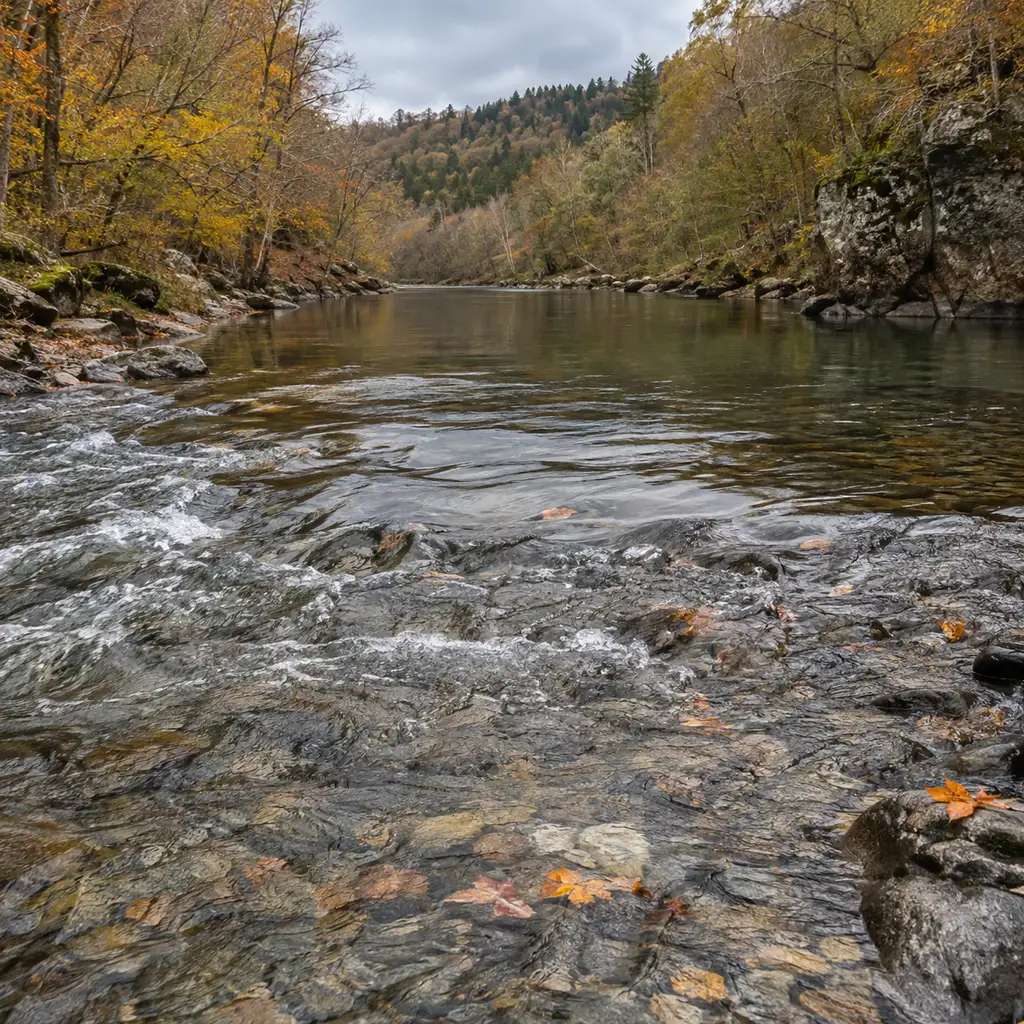
Table of Contents
The One Rule Behind All of It
Slow Water Next to Fast Water
A fish holding in fast current burns more calories than the current delivers. A fish holding in dead water gets no food. So they sit in the slow water immediately beside the fast water, letting the fast lane carry food past their nose while they hold still. Every spot in this guide is a version of that arrangement.
The Seam Is the Target
The visible line where fast and slow water meet is called a seam, and it is the single most productive feature on any river. On the surface it shows as a distinct edge, often with a line of bubbles or foam running along it. Fish sit on the slow side of that line, facing upstream.
Foam Lines Are Food Lines
Foam collects where current converges, and so does everything else floating: insects, seeds, dead things. A foam line is a conveyor belt of food, visible from the bank, and it tells you exactly where the drift concentrates without you having to guess.
How to Read a River: The 7 Places Fish Hold
1. Behind Boulders
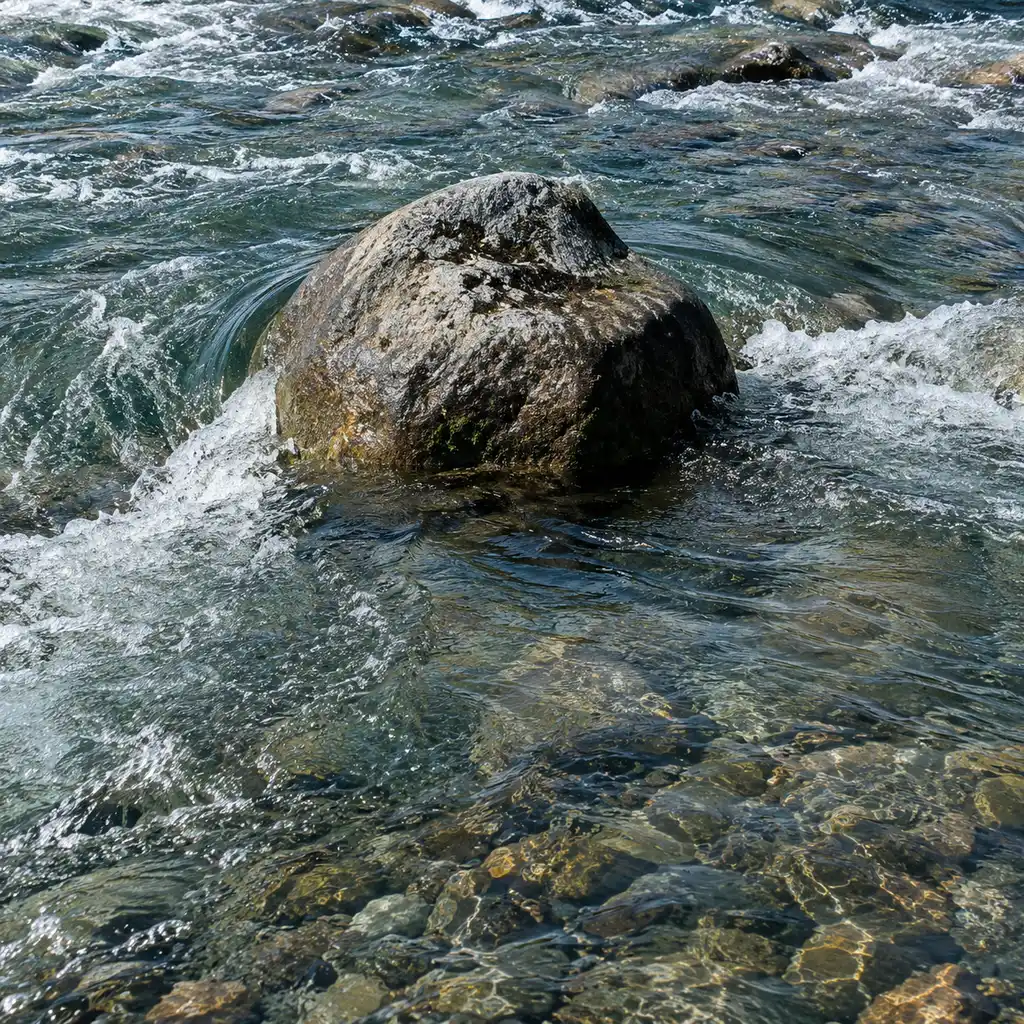
Any rock breaking the surface creates a pocket of slack water immediately downstream, and often a smaller one immediately upstream where the flow piles up. Both hold fish. The downstream pocket is the classic one, and it is usually much smaller than people expect, often no bigger than a bath mat. Precision beats distance here, the way it does with a rod you can actually control.
2. The Head of a Pool
Where fast riffle water tips into deeper slower water, food arrives concentrated and oxygen is high. This is the best water in most pools and the first place to fish. Work it before you wade into it, because walking through the head of a pool empties the whole thing. Approach it the way you would a shy bird, which is to say from downstream and slowly, as in any wildlife watching.
3. Undercut Banks
On any bend, the current runs to the outside and digs the bank away underneath. That overhang is shade, protection from above and slow water all in one, which makes it prime holding cover for the largest fish in the stretch. Cast tight to the bank, not out in the middle. Undercut banks are also where a wader lets you reach a cast you cannot make from dry ground.
4. Current Seams
Anywhere two flows of different speed run side by side: below an island, where a tributary enters, along the edge of the main channel. Fish stack along these lines. If you can only fish one type of water all day, fish seams.
5. Below Riffles
The choppy shallow water of a riffle is a food factory, and the fish sit just downstream of it where the bottom drops and the surface smooths. In autumn this is often the most reliable water on the river, because cooling temperatures push fish out of the deepest pools. It is the same seasonal shift that moves fish shallow in autumn on lakes and reservoirs, and it pairs with a walk in to reach quieter water.
6. Around Wood
A fallen tree or a log jam creates slack water, overhead cover and a place for insects to live, which is the full set. It also eats tackle, so expect to lose some. Fish the upstream edge and the downstream tail before you try to get into the middle of it, and keep spare line and hooks in a pocket rather than back at the car, per the pack-what-you-use principle.
7. Depth Changes
Any shelf where shallow water drops into deeper water is a holding line, whether or not there is anything else there. Fish use the drop the way you would use a hedge, sitting on the deep side and moving up onto the shallow shelf to feed. On bigger water a kayak gets you to drops you cannot reach from the bank.
Reading the Surface From the Bank
Smooth Water Means Depth or Slack
A smooth patch in an otherwise broken surface is telling you the water beneath it is either deeper or slower. Both are worth a cast. Learning to see these takes an afternoon and pays for years, and one familiar stretch teaches more than five new ones, as with learning bird song on a home patch.
Standing Waves Mean Rock
A wave that stays in one place is water piling over something solid underneath. The rock is slightly upstream of the wave crest, and the holding pocket is behind the rock, which means the fish are usually a little upstream of where the wave makes you want to cast.
Colour Tells You Depth
On a clear river, the water reads pale over shallow gravel and dark over depth. Learn your local river in low water and the colour map stays useful when it rises. Polarised sunglasses roughly double how much of this you can see, which is why they are the one piece of kit worth buying before anything else. Low light is when it matters most, so plan the day the way you would an outing that runs into dusk and carry a headlamp.
Working a Stretch in Order
Fish it in this sequence and you will cover the productive water before you disturb it.
| Order | Where | Why First |
|---|---|---|
| 1 | Nearest water, close to the bank | You would otherwise wade through it |
| 2 | The seam or foam line | Highest concentration of holding fish |
| 3 | Head of the pool | Best food delivery and oxygen |
| 4 | Behind visible rocks | Small, precise pockets |
| 5 | Undercut bank on the outside of the bend | Holds the biggest fish, needs a careful approach |
| 6 | The tail of the pool | Fish move here to feed, spooks easily |
The general principle is to fish from near to far and from downstream to upstream, because fish face into the current and cannot see you coming from behind. Wade less than you think you need to.
Wading Safely
Read the Water Before You Step In
The same skills that find fish keep you upright. Smooth fast water is deeper than it looks, standing waves mean rocks you can trip on, and the outside of a bend is the deep side. Cross at the shallow tail of a pool, never at the head.
Face Upstream and Shuffle
Turn slightly into the current, keep both feet in contact with the bottom, and shuffle rather than stepping over things. A wading staff is worth more than it looks, and a third point of contact changes what is crossable, the same way poles do on a steep trail.
Know When to Stop
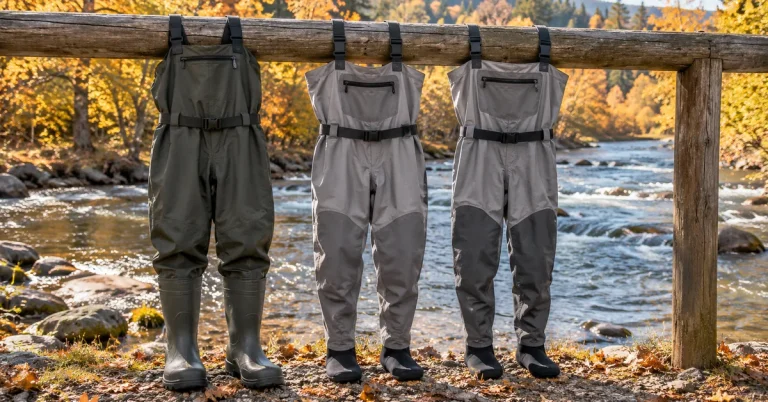
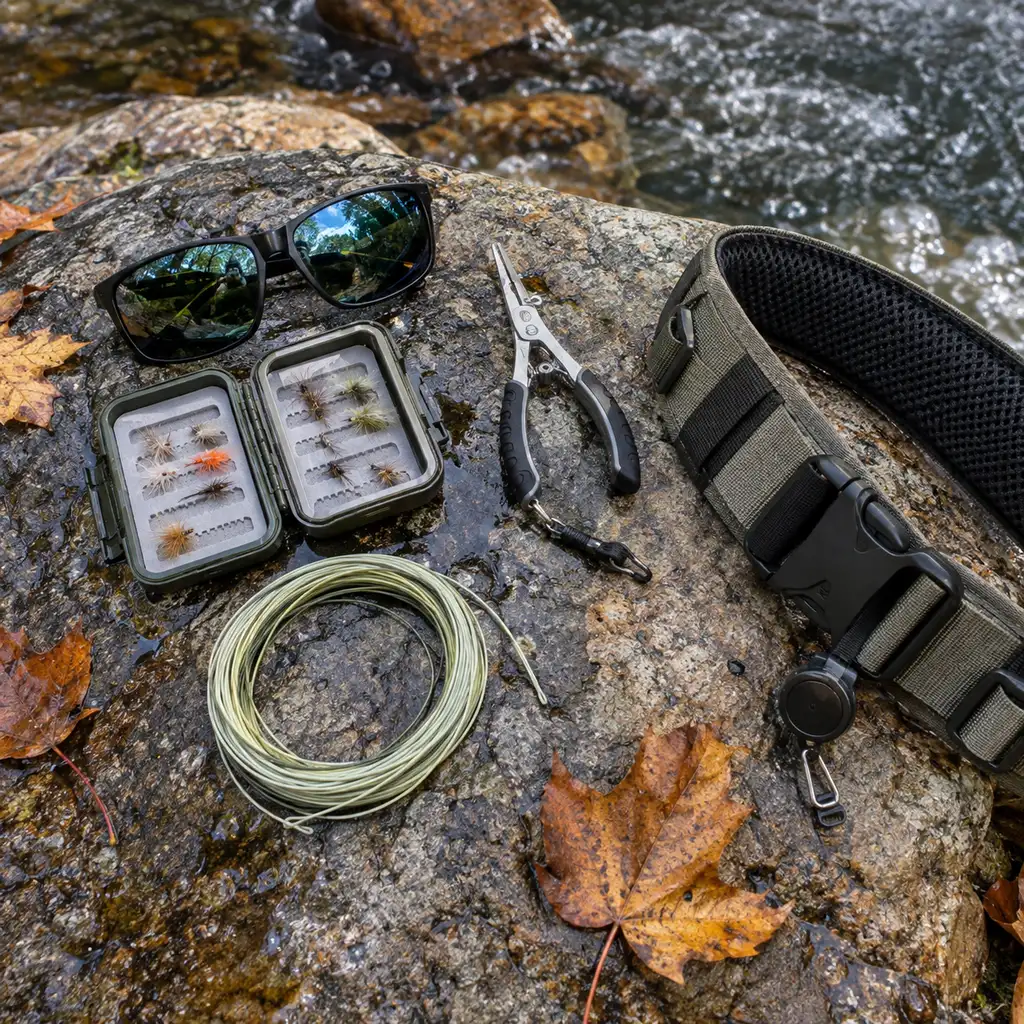
Above your thighs in real current you have very little grip left, and cold water takes your strength faster than you expect. In autumn and winter, waders plus a belt are not optional. Our round up of the best fishing waders covers what to look for, and the cold water rules matter as much as the fishing. For standing in cold water the Foxelli 4mm neoprene bootfoot waders are the warm option; if you walk to your spots, a breathable stockingfoot pair like the Frogg Toggs Canyon II includes the wading belt you should be wearing regardless. The most tested all rounder is the TIDEWE chest wader.
Common Mistakes
- Casting into the fast water rather than the slow edge beside it.
- Wading straight to the middle, which empties the near bank you should have fished first.
- Fishing the head of a pool after walking through it.
- Ignoring pockets behind rocks because they look too small. They are small, and they hold fish.
- Missing the foam line, which is the most visible food conveyor on the river.
- Skipping polarised sunglasses, which is the cheapest upgrade to how much water you can actually read.
- Wading deep in cold water without a belt, which is the difference between a soaking and a genuine emergency. See how fast cold takes your strength.
Frequently Asked Questions
What is a seam in a river?
The visible line where two flows of different speed meet, often marked by bubbles or foam. Fish hold on the slow side of it, facing upstream, letting the fast side deliver food. It is the most productive feature on most rivers.
Where do fish sit in a river?
In slow water immediately next to fast water: behind boulders, along seams, below riffles, under cut banks, and on the deep side of any depth change. They are solving how to eat without swimming hard, and every good spot is a version of that.
Should I fish upstream or downstream?
Work upstream where you can. Fish face into the current, so approaching from behind them keeps you out of sight, and any silt you kick up drifts away behind you rather than through the water you are about to fish.
How do I find fish in a river I have never fished?
Stand still and look for the foam line first, then the head of the nearest pool, then any rock breaking the surface. Those three features are visible from the bank and will cover most of the holding water in a stretch.
Do I need waders to fish a river?
Not in summer, and increasingly yes as the water cools. Waders extend your season by months and let you reach seams you cannot cast to from the bank. Always wear a wading belt with them.
How to read a river comes down to one habit: stop looking at the water and start looking for the edges in it. Find the seam, find the foam line, find the slow pocket beside the fast lane, and fish those before you fish anything else. Our fall fishing guide covers when to go, our combo picks cover what to carry, and the wader round up covers getting into the water safely.
Discover more from Maive Verse
Subscribe to get the latest posts sent to your email.