
This post may contain affiliate links. If you buy through them, we may earn a small commission at no extra cost to you.
Most people trying to work out how to attract birds to your yard start and finish with a feeder, then wonder why only sparrows turn up. A feeder is one of four things birds need, and on its own it is the least important of them. Add the other three and the range of species that visits changes completely, usually within a fortnight.
What birds are actually looking for is food, water, cover and somewhere safe to nest. This guide works through all four in the order that gets results fastest, and it costs almost nothing to start. Autumn is the ideal moment, because birds are settling their winter routes right now and a yard that is ready gets written into the map.
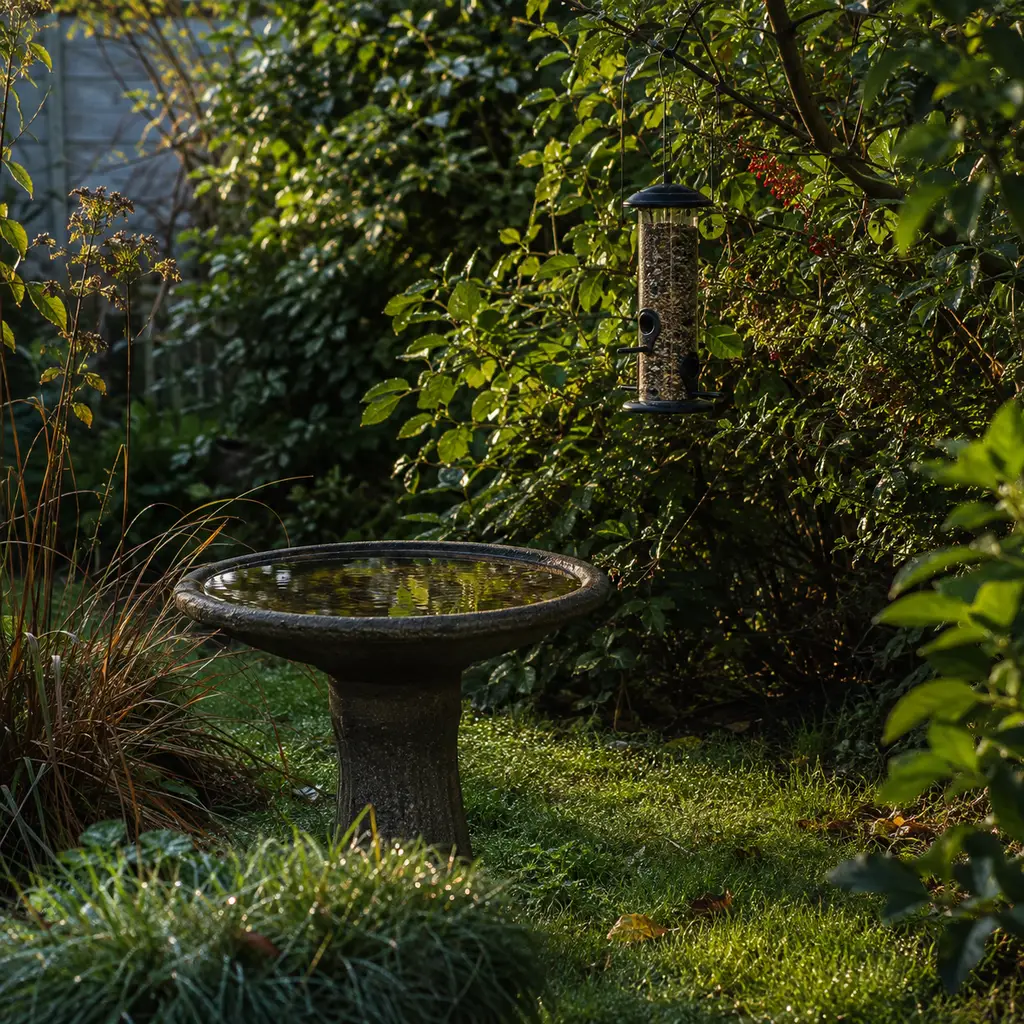
Table of Contents
The Four Things Every Yard Needs
Think of it as a checklist rather than a shopping list. A yard that offers all four will out perform a yard with three feeders and nothing else, every time.
- Water. The single highest return addition, and the one almost everybody skips. Birds that never touch a feeder will still drink and bathe.
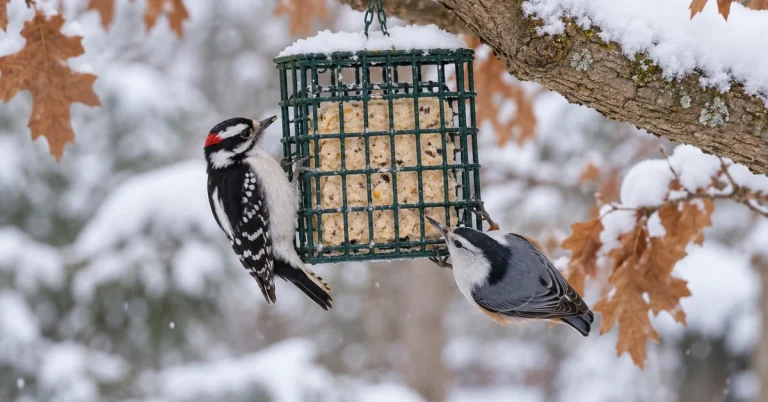
- Food. The right food for the birds you want, rather than the cheapest mixed sack. This is where a feeder comes in.
- Cover. Shrubs and trees within a short flight of the feeding area. Without an escape route, cautious species will not come down at all.
- Nesting sites. Dense shrubs, mature trees or nest boxes turn visitors into residents that stay all season.
If you do only one thing this weekend, put out water. Everything else is an improvement on a yard birds already use, and our round up of the best bird feeders covers the food half once the basics are in place.
How to Attract Birds to Your Yard: The 7 Steps
In order of return on effort. The first three cost very little and do most of the work.
1. Put Out Water First
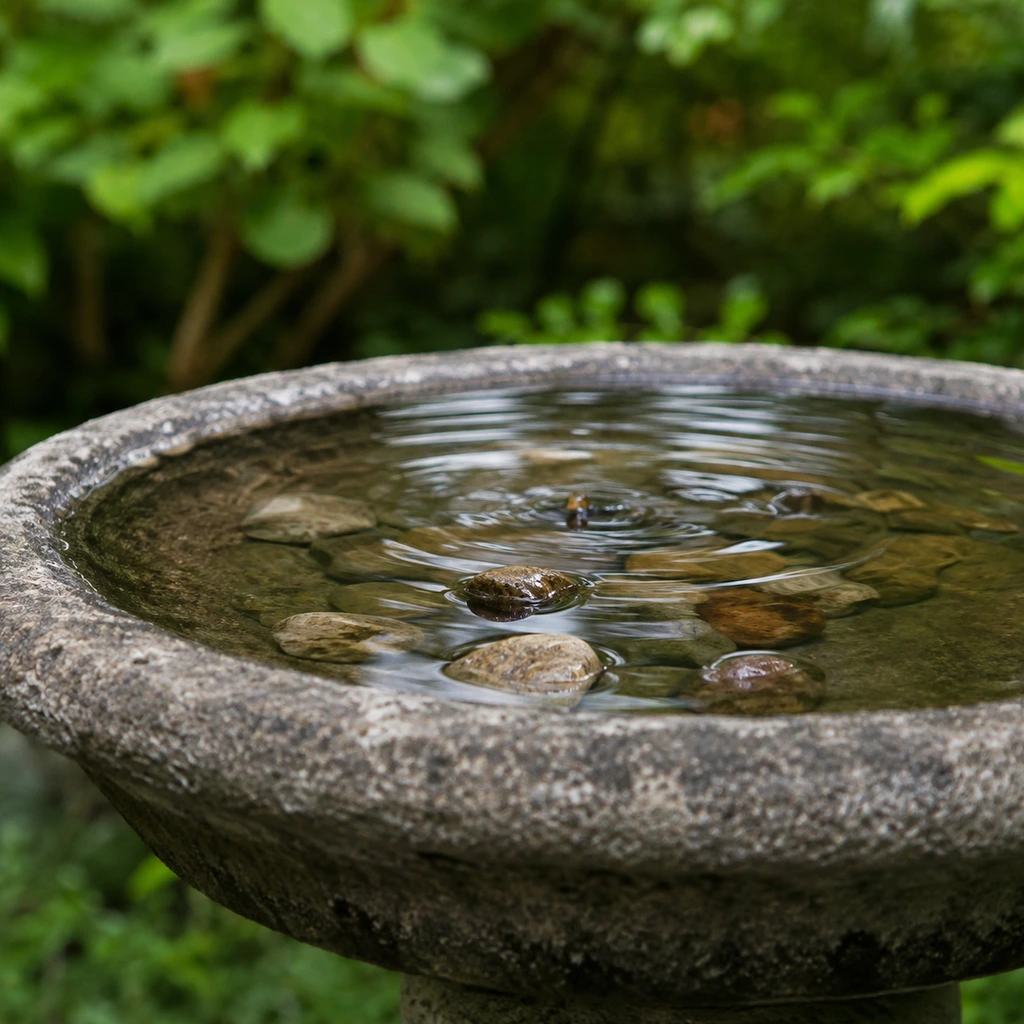
A shallow dish is enough. Birds need water no more than two inches deep with a rough surface to grip, and a bath that is too deep or too slippery gets ignored. Add a few stones to break the surface and give smaller birds somewhere to stand.
Moving water is the upgrade that changes everything. Birds detect the sound and the glint from a long way off, so a small dripper or solar fountain will pull in species a static bath never does. Keep it clean and refill it often, because standing water goes bad quickly in warm weather.
2. Plant or Keep Native Cover
Birds will not feed in the open if there is nowhere to escape to. Native shrubs and trees within about ten feet of the feeding area give them that escape route, and native species also carry the insects that most birds actually feed their chicks on. A tidy lawn with nothing on it is, to a bird, an empty field. It is the same habitat logic behind our eco friendly hiking rules.
3. Choose the Right Food, Not the Cheapest
Cheap mixed seed is padded with filler that most birds throw on the ground. Black oil sunflower is the single best all round choice: thin shelled, high in fat and eaten by the widest range of species. Add nyjer for finches and mealworms for insect eaters, and skip anything heavy on red milo.
4. Site the Feeder Properly
Roughly ten feet from cover, which is close enough to dive for safety but far enough that a squirrel cannot leap across. Then the window rule: either within three feet of glass or beyond thirty feet, because the middle distance is where birds build up enough speed to hurt themselves.
5. Add Nesting Sites
Nest boxes turn a yard birds visit into a yard birds live in. Different species want different entrance hole sizes, so pick the box for the bird rather than the other way round, and site it away from prevailing weather and out of reach of cats. Leaving dense shrubs unpruned does much the same job for nothing.
6. Stop Tidying So Much
Leaf litter holds the insects that ground feeders live on. Seed heads left standing through winter are food. A log pile is habitat. Much of attracting birds is simply doing less, and the yards that hold the most species tend to be the ones that are slightly untidy in the right places. Leaving habitat alone is the domestic version of the Leave No Trace principles.
7. Be Consistent, Then Be Patient
Birds work on routes and routine. A feeder filled sporadically gets dropped from the circuit, while one that is always stocked becomes a fixture. Give it two to four weeks before you judge anything, and resist the urge to keep moving things around while they settle.
Common Mistakes
Almost every disappointing yard has one of these in it.
- No water at all. The commonest and most costly omission, and the cheapest to fix.
- Cheap filler seed. Red milo and cracked corn get kicked to the ground, which feeds rodents rather than birds.
- A feeder in the open. With no cover within a short flight, only the boldest species will use it.
- Dirty feeders and baths. These concentrate birds around mouldy food and spread disease. Clean seed feeders fortnightly and baths every few days.
- Giving up in week two. Birds need time to find a new food source and fold it into a daily route.
- Free roaming cats. No amount of habitat offsets a cat at the feeder. Keep them in at dawn and dusk if you can, which the National Audubon Society has long campaigned on.
What to Do Each Season
Autumn Is the Best Time to Start
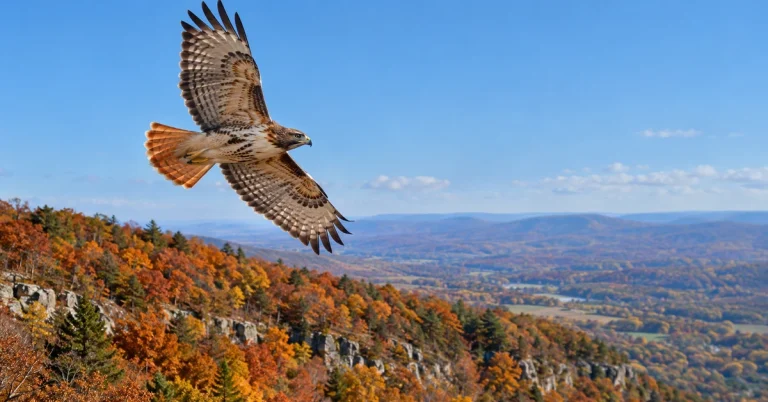
Birds are establishing winter feeding routes from late August onwards, so a yard that is stocked now gets found and remembered. This is also migration season, which means species passing through that do not live near you at all. It is the same movement that makes autumn day hiking so good for wildlife.
Winter Is When It Matters Most
Natural food runs out and short days leave little time to find more, so high fat foods earn their keep. Keep water from freezing if you can, because open water in a hard frost is scarcer than food and will draw birds from a long way. Once you commit through winter, keep going.
Spring and Summer Bring Families
Breeding birds need protein rather than fat, so mealworms come into their own and insects matter more than seed, which is the real argument for native planting. Expect adults to bring fledglings to the feeder in early summer, which is the point most people decide the effort was worth it. It is also the easiest wildlife there is to show children.
Watching What Arrives
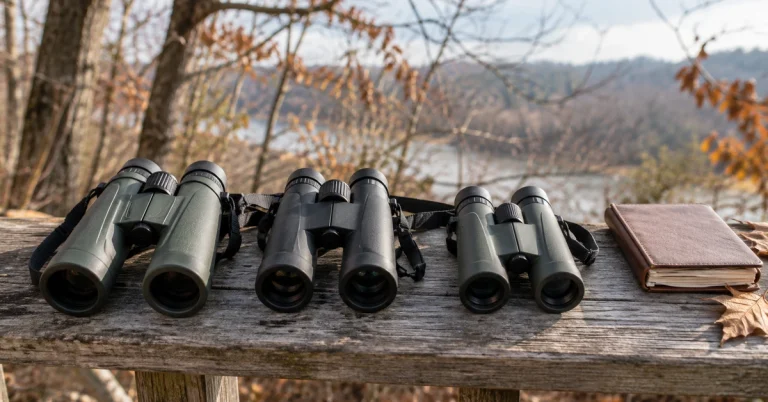
Once the yard is working, the hobby starts. Learn the ten commonest visitors by shape and behaviour before you worry about anything rare, since everything unusual then announces itself by not fitting. Our beginner birdwatching guide covers the identification method in full, and a pair of 8×42 binoculars turns a blurred silhouette into a species.
Two free tools do the rest. The Cornell Lab All About Birds guide has photographs and call recordings for every North American species, and the eBird platform lets you keep a yard list that also feeds real conservation science. Recording what visits is also the fastest way to notice when something changes.
If you would rather be told what landed, a camera feeder with species recognition will name it for you, and a clear window feeder brings birds close enough to read the field marks yourself. For squirrel country, a weight-activated feeder such as the Squirrel Buster Plus keeps the seed where it belongs.
Frequently Asked Questions
How long does it take for birds to find a new feeder?
Usually one to three weeks, and occasionally longer in a yard with little cover. Birds find food by watching each other, so the first visitor is the slow part and the rest follow quickly. Keep it stocked and leave it in one place while they settle.
What is the fastest way to attract more birds?
Water, particularly moving water. It works on every species rather than only seed eaters, it is cheap, and it often produces results within days. A dripper or a small solar fountain outperforms almost any feeder upgrade, including anything in our feeder round up.
Do I need to stop feeding birds in summer?
No. Year round feeding is fine and helps most during breeding season and hard weather. Switch the emphasis toward protein such as mealworms in spring and summer, and keep everything scrupulously clean, because warm weather spoils food faster.
How do I keep squirrels off without hurting them?
Use a weight-activated feeder, which simply closes the ports under their weight, and site it more than ten feet from anything they can jump off. Baffles help. Repellents, greased poles and chilli powder are unreliable and some are unkind.
Will a bird bath attract mosquitoes?
Only if you let the water stand. Mosquitoes need several still days to breed, so refilling every two or three days prevents it entirely, and moving water prevents it outright. That refill schedule is what the birds want anyway.
Water, food, cover and a nest site, in that order, is the whole of how to attract birds to your yard. Start with a shallow dish this weekend, add a feeder that suits the birds you want from our guide to the best bird feeders, and give it a fortnight before you judge it. Then learn what arrived with our birdwatching guide for beginners.
Discover more from Maive Verse
Subscribe to get the latest posts sent to your email.